
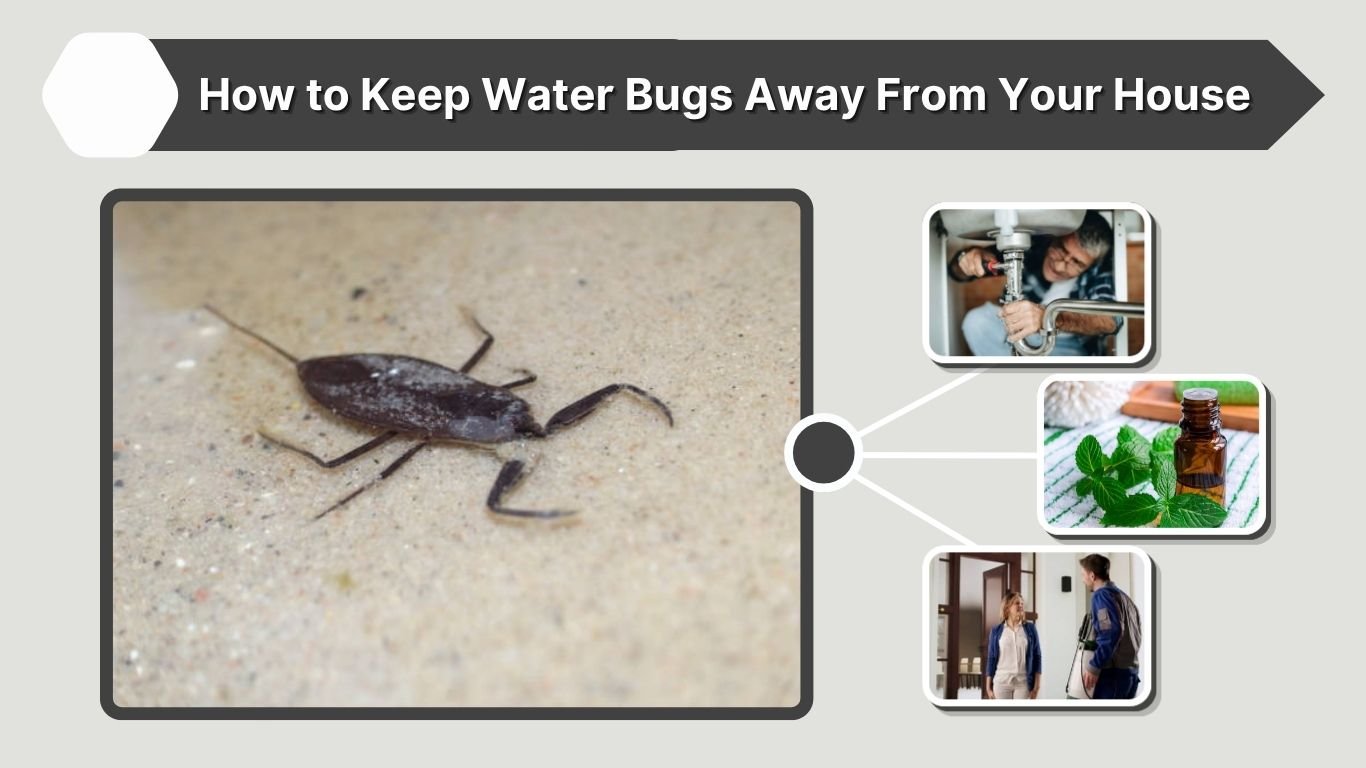
Keeping water bugs away starts with identifying what people commonly call a “water bug.” Inside a house, the insect is often an Oriental or American cockroach rather than a true aquatic bug. These cockroaches enter through drains, gaps beneath doors, foundation cracks and plumbing openings while searching for food, water and shelter. Long-term prevention requires moisture control, sanitation, exclusion and monitoring—not simply spraying insects after they enter.
What Keeps Water Bugs Away?
The most dependable preventive methods remove the resources cockroach-type water bugs need to survive.
| Prevention method | Why it works |
| Repair plumbing leaks | Removes an important water source |
| Seal cracks and gaps | Blocks common entry routes |
| Store food securely | Reduces indoor feeding opportunities |
| Remove rubbish and clutter | Eliminates food and hiding places |
| Install door sweeps | Stops outdoor insects entering below doors |
| Use sticky traps | Detects activity before it becomes severe |
| Apply labeled bait when needed | Controls insects already hiding nearby |
Sanitation and exclusion are essential because pesticides alone rarely solve a cockroach problem when food, moisture and shelter remain available.
Keep the House Dry
Oriental cockroaches are strongly associated with cool, dark and damp places such as basements, crawl spaces, sewers and areas around plumbing. Moisture reduction is therefore one of the most important preventive measures.
Repair Water Problems
Inspect the house for:
- Leaking taps and pipes
- Moisture beneath sinks
- Washing-machine leaks
- Water beneath refrigerators
- Damp crawl spaces
- Condensation around air-conditioning equipment
- Basement drainage problems
- Standing water in plant saucers
Dry sinks and counters at night, improve ventilation in humid rooms and repair leaks promptly. Plumbing leaks, condensation and standing water can support insect survival even when food is limited.
Keep Drains Maintained
Cockroaches may use sewer lines and damaged drainpipes to invade buildings. Oriental cockroaches can sometimes become trapped in tubs or sinks after entering through plumbing defects.
Use suitable drain covers where practical, repair damaged pipes and keep little-used drains from becoming dry according to local plumbing guidance. Do not pour pesticides, gasoline or random household chemicals into drains.
Remove Food Sources
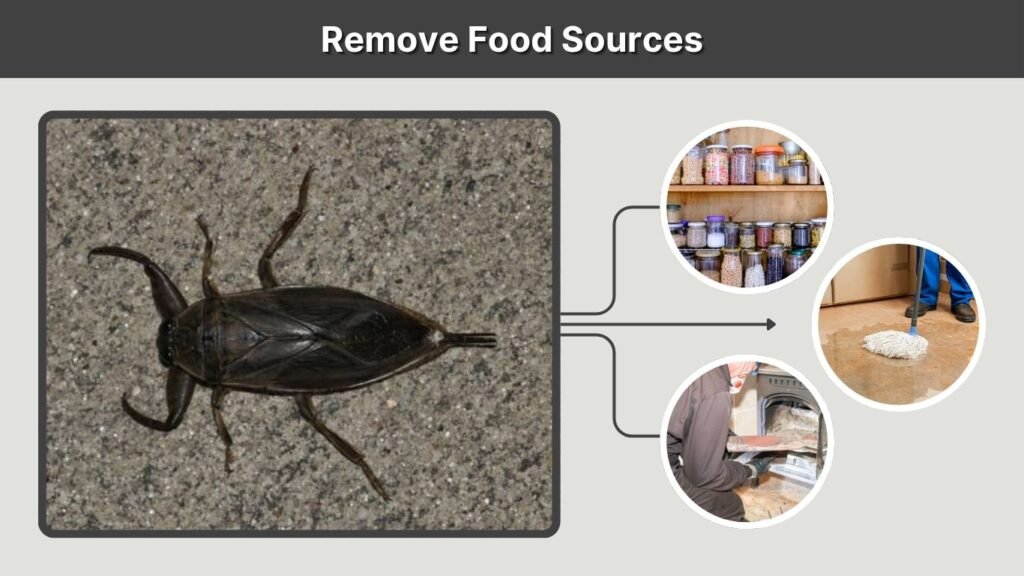
Cockroach-type water bugs can survive on crumbs, grease, rubbish, pet food and decaying organic material.
To make your home less attractive:
- Store food in tightly sealed containers.
- Wipe up spills immediately.
- Clean beneath stoves and refrigerators.
- Empty indoor rubbish regularly.
- Rinse recyclable food containers.
- Keep pet food covered.
- Avoid leaving pet food out overnight.
- Vacuum crumbs from cupboards and floor edges.
Removing food and water improves prevention and makes cockroach bait more effective when treatment becomes necessary.
Seal Water Bugs Out of the House
Outdoor cockroaches can enter through very small structural openings. Inspect the exterior from the foundation to the roofline.
Block Common Entry Points
Seal or repair:
- Foundation cracks
- Gaps around pipes and cables
- Openings beside utility lines
- Damaged window screens
- Gaps beneath exterior doors
- Loose weather stripping
- Openings around basement windows
- Cracks where siding meets the foundation
Install door sweeps on exterior doors and caulk suitable cracks. Exclusion is particularly important for cockroach species that mainly live outdoors but wander inside.
Clean Around the Foundation
Reduce outdoor shelter by removing:
- Wet leaves
- Decaying vegetation
- Cardboard
- Rubbish
- Dense ground cover touching the walls
- Firewood stacked against the house
- Debris around drains and water meters
Keep outdoor rubbish containers closed and away from entrances whenever practical. Outdoor sanitation and exclusion reduce the likelihood of reinvasion.
How to Keep Water Bugs From Coming Up Drains
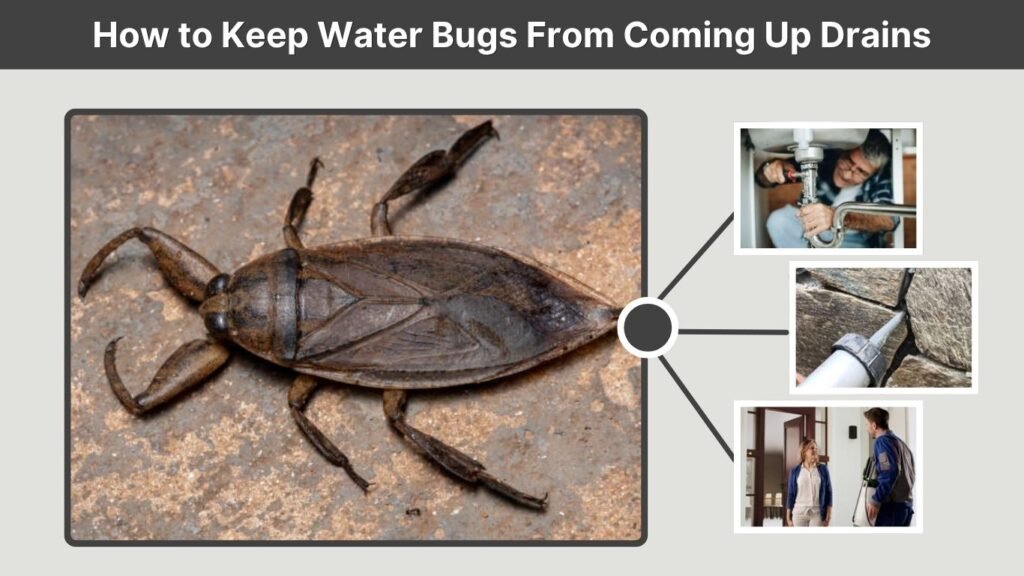
A bug near a drain did not necessarily travel through the drain opening; it may simply be seeking moisture. However, damaged pipes, sewer connections and dry or poorly maintained drains can provide access.
To reduce the risk:
- Repair leaking or broken drainpipes.
- Use properly fitted drain covers.
- Seal gaps where pipes enter walls and floors.
- Keep the areas around drains clean and dry.
- Inspect floor drains in basements and utility rooms.
- Contact a plumber when sewage odors or damaged drain lines are suspected.
Avoid applying insecticides directly into drains unless the product label specifically allows that use. Pesticides placed in drainage systems can create unnecessary exposure and environmental risks.
Use Sticky Traps for Early Detection
Place cockroach sticky traps tightly against walls in locations where water bugs are likely to travel.
Useful locations include:
- Beneath sinks
- Beside water heaters
- Behind refrigerators
- Near floor drains
- In basement corners
- Close to exterior doors
- Around washing machines
Check the traps regularly. They reveal where activity is concentrated and whether preventive measures are working. Sticky traps are primarily monitoring tools and may not eliminate a developed infestation by themselves.
Use Bait When Water Bugs Keep Appearing
When cockroach-type water bugs are already inside, gel bait or enclosed bait stations are generally more useful than spraying floors and walls.
Place a labeled product near hiding areas, following all package directions. Baits work best when competing food and water have been removed. A noticeable reduction can take seven days or longer.
Avoid spraying directly around bait stations. Repellent residues may discourage cockroaches from feeding.
Do Natural Repellents Keep Water Bugs Away?
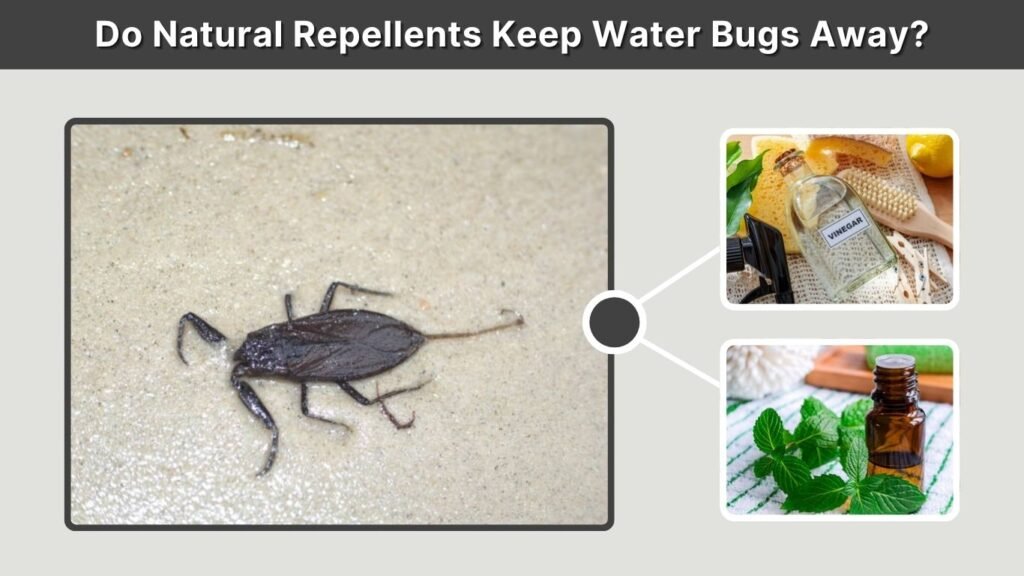
Vinegar, peppermint oil and other strongly scented products may temporarily disturb exposed insects or help clean scent and food residue from surfaces. However, they are unlikely to provide dependable, permanent control of cockroaches hidden in drains, walls or crawl spaces.
No particular houseplant has been proven to reliably keep water bugs out of a building. Moisture control, sanitation and physical exclusion are more dependable than relying on scent alone.
Do Mothballs Keep Water Bugs Away?
Mothballs should not be scattered around kitchens, bathrooms, attics or other open rooms as a cockroach repellent. Mothballs are pesticides intended for specific labeled uses, and misuse can expose people and pets to harmful vapors. The EPA also warns about illegal or improperly labeled household pesticide products.
How to Keep Water Bugs Off the Porch
Porches can attract true aquatic insects and outdoor cockroaches, particularly where lights, moisture and organic debris are present.
Reduce activity by:
- Turning off unnecessary outdoor lights
- Using less-attractive exterior lighting where appropriate
- Repairing leaking outdoor taps
- Removing wet leaves and rubbish
- Cleaning food and drink spills
- Moving pet dishes indoors overnight
- Sealing gaps around the porch door
- Trimming plants away from the structure
A true giant water bug may fly toward lights from a nearby pond or wetland. One occasional visitor does not necessarily indicate an infestation.
How to Keep Water Bugs Out of a Pool
Water boatmen and backswimmers remain in pools that provide algae or other small organisms as food. Remove visible insects with a skimmer, brush algae from surfaces, clean the filter and maintain proper circulation. Water boatmen primarily consume algae and plant material, while backswimmers prey on other pool insects and can bite when handled.
Regularly test the water. The CDC recommends keeping pool pH between 7.0 and 7.8 and maintaining at least 1 ppm free chlorine, or at least 2 ppm when cyanuric acid or stabilized chlorine is used. Follow the pool system and chemical labels, and never mix pool chemicals.
How to Keep Bugs Out of Pet Water Bowls
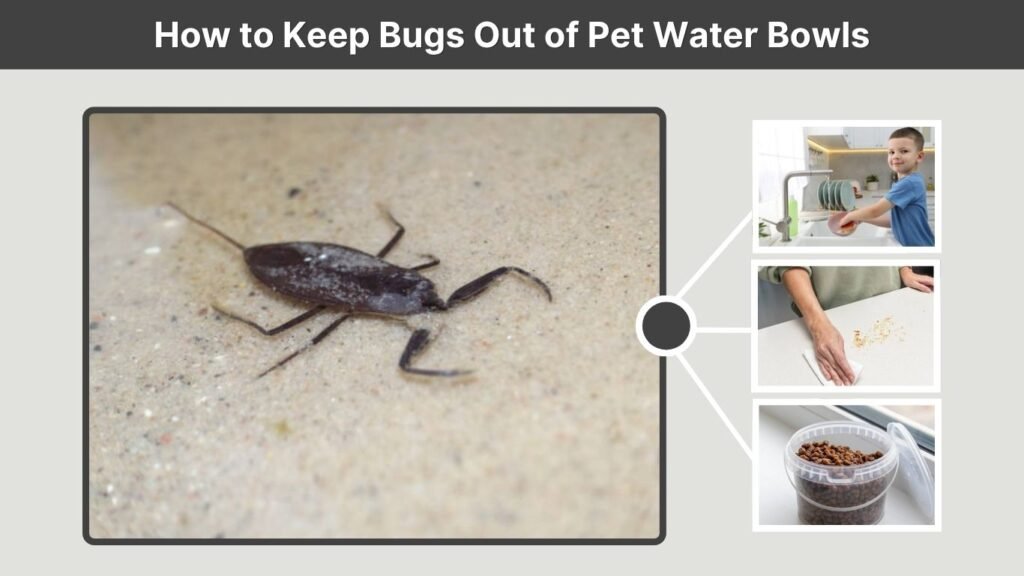
Pet water should remain available, so prevention should focus on cleanliness and placement rather than removing the bowl.
- Replace the water daily.
- Wash the bowl regularly.
- Clean food spills around it.
- Keep the bowl away from wall cracks.
- Do not place pesticide near pet dishes.
- Inspect automatic fountains for trapped debris.
- Keep unused pet food sealed.
Numerous tiny insects around a water bowl may be attracted to spilled food, moisture or mold rather than the clean water itself.
When to Call Pest Control
Contact a pest-management professional when you repeatedly see water bugs, find nymphs or egg cases, or catch insects in traps across several rooms. Professional help is also useful when activity is connected to sewers, inaccessible crawl spaces or shared apartment walls.
Ask the professional to identify the species and explain the sanitation, exclusion and baiting measures included in the treatment plan. Serious infestations are rarely resolved by routine spraying alone.
FAQs
What smell keeps water bugs away?
Peppermint, vinegar and other strong smells may briefly repel exposed insects, but they do not reliably eliminate hidden cockroaches. Sealing openings, correcting leaks and removing food provide stronger long-term prevention.
Why do water bugs keep coming into my house?
They may be entering through door gaps, foundation cracks, drains or plumbing openings while looking for water, food and shelter. Heavy rain and outdoor disturbance can also increase indoor sightings.
Can water bugs come up through the toilet?
Cockroaches can travel through sewer and drain systems, but entry through a functioning toilet is less common than access through damaged pipes, gaps around plumbing or floor drains.
Does keeping the house clean prevent water bugs?
Cleaning greatly reduces food and shelter, but it cannot block insects entering through structural gaps or defective plumbing. Combine sanitation with moisture control, exclusion and monitoring.
What is the best way to keep water bugs away permanently?
Repair leaks, keep food sealed, remove rubbish, install door sweeps, seal cracks, maintain drains and monitor damp areas with sticky traps. Use labeled cockroach bait or professional treatment when insects are already established.
