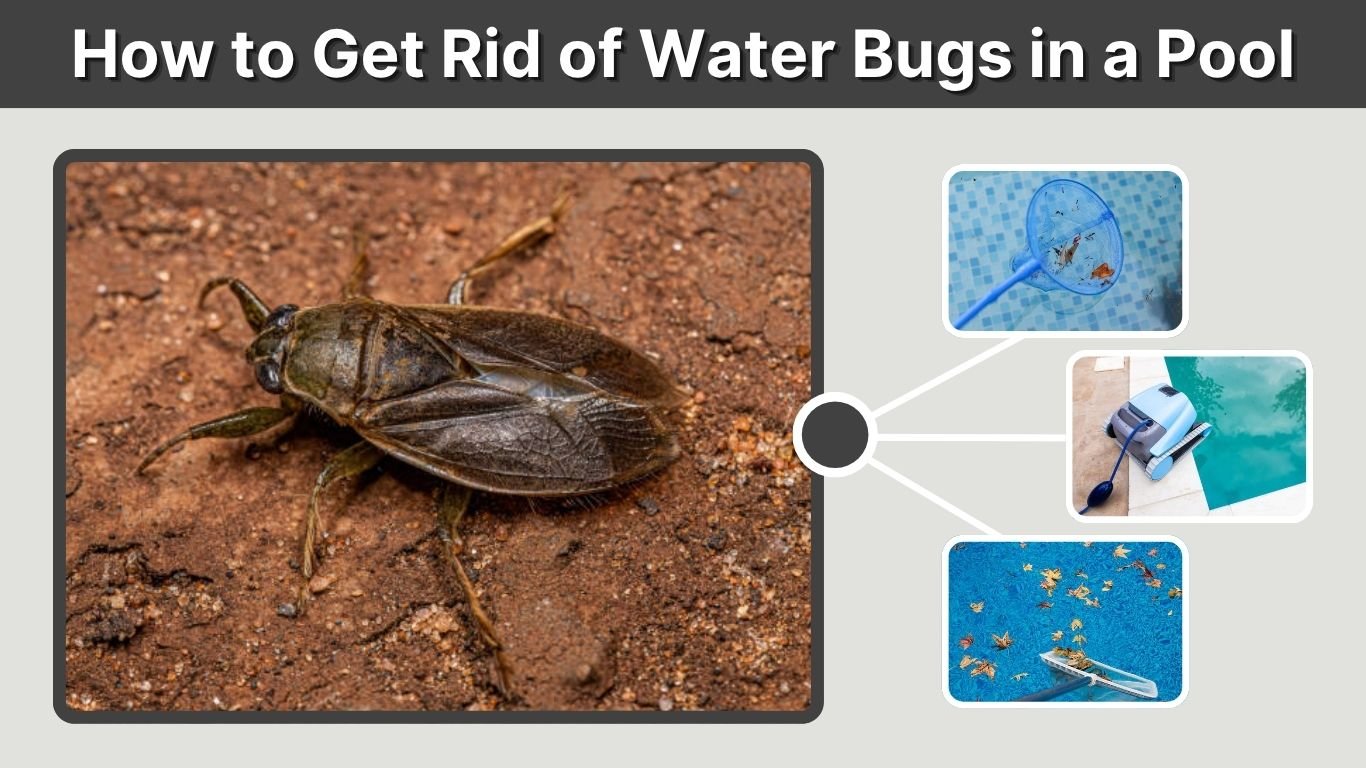
Water bugs often appear in swimming pools when the water contains algae, other small insects or organic debris. The most common visitors are water boatmen and backswimmers, although giant water bugs may occasionally fly into a pool at night. Removing the insects provides temporary relief, but lasting control requires correcting the conditions attracting them. Skim the bugs out, clean the pool thoroughly, restore proper sanitizer and pH levels, improve filtration and prevent algae from returning.
What Types of Water Bugs Live in Pools?
Several aquatic insects may enter swimming pools, but water boatmen and backswimmers are the most common. Identifying them helps determine whether they are harmless visitors or insects capable of delivering a painful bite.
| Feature | Water boatman | Backswimmer | Giant water bug |
| Typical size | Small | Small to medium | Large, sometimes 2–4 inches |
| Swimming position | Upright | On its back | Upright |
| Main food | Algae and plant material | Other insects and small prey | Aquatic animals |
| Bite risk | Usually harmless | Can bite painfully | Can deliver a painful defensive bite |
| Pool presence | Often appears in groups | Follows available prey | Usually an accidental visitor |
Water Boatmen
Water boatmen have oval bodies and long, oar-shaped rear legs. They swim with their backs facing upward and commonly feed on algae and plant material. Their presence can indicate that microscopic algae or organic food is available, even when the pool water appears relatively clear.
Backswimmers
Backswimmers resemble water boatmen but swim upside down. They are predators that feed on water boatmen, mosquito larvae and other small aquatic animals. Backswimmers can use their piercing mouthparts defensively, so they should not be handled with bare hands.
Giant Water Bugs
Giant water bugs are much larger and have thick, grasping front legs. They normally live in ponds, wetlands and slow-moving water but can fly toward outdoor lights and accidentally land in backyard pools. They can deliver a painful defensive bite when handled.
Why Are Water Bugs Attracted to Your Pool?
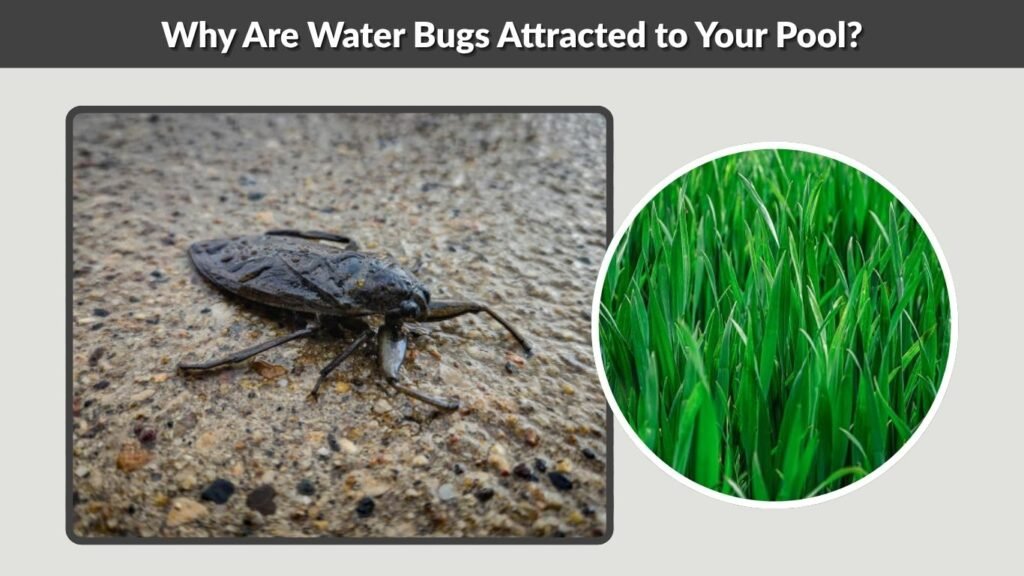
Water bugs rarely choose a properly maintained pool as permanent habitat. They usually remain because the water provides food, shelter or favorable conditions.
Algae Growth
Water boatmen consume algae and related organic material. Visible green water is an obvious sign, but small amounts of algae may grow on steps, ladders, walls and shaded areas before the entire pool changes color.
Backswimmers may then arrive because they prey on water boatmen and other insects. Removing the algae and prey population makes the pool less attractive to both groups.
Low Sanitizer Levels
Low free-chlorine levels allow algae and microorganisms to grow. Sunlight, dirt, heavy swimming and organic debris can reduce the amount of available chlorine.
The CDC recommends maintaining a pH of 7.0–7.8 and at least 1 part per million of free chlorine in pools. When cyanuric acid or stabilized chlorine is used, the CDC recommends at least 2 ppm. Always follow local requirements and the instructions for your pool system.
Leaves and Organic Debris
Leaves, pollen, grass, dead insects and other debris provide food and protected areas. Debris accumulating around steps, skimmer baskets and pool corners can support insect activity.
Outdoor Lighting
Aquatic insects can fly between bodies of water. Bright lights near a pool may attract backswimmers, giant water bugs and other insects during nighttime flights.
How to Get Rid of Water Bugs in Your Pool
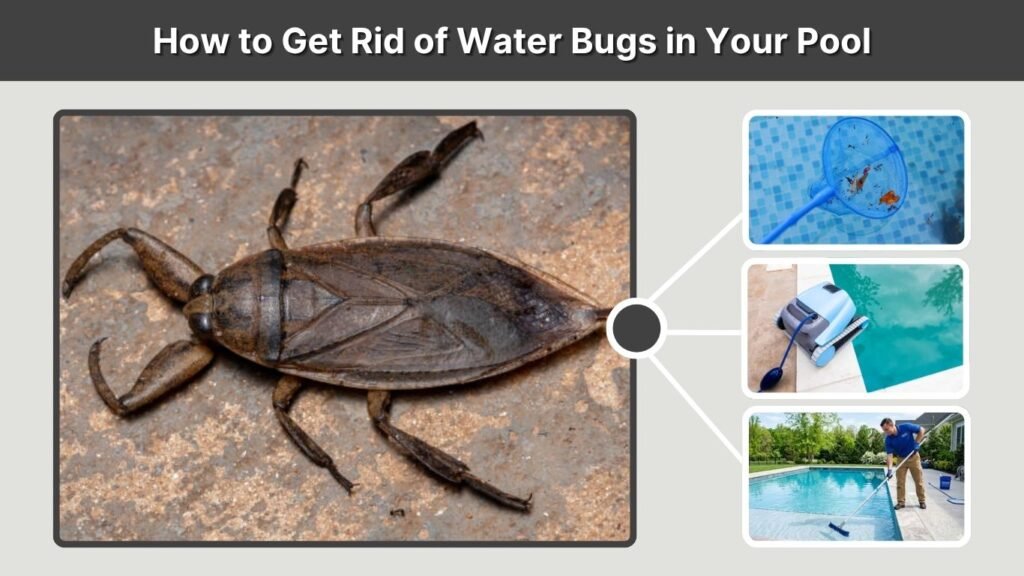
The best strategy combines physical removal with water cleaning and chemical balancing. Killing individual insects without correcting the pool conditions will not stop new ones from arriving.
1. Remove the Bugs With a Pool Net
Use a long-handled skimmer net to collect all visible insects. Wear gloves and avoid touching backswimmers or giant water bugs directly.
Place live insects in a covered container for relocation or dispose of them safely. Do not crush them on the pool deck, where they may attract ants or other pests.
2. Skim and Vacuum the Pool
Remove leaves, pollen, dead insects and floating debris from the water. Empty and clean the skimmer and pump baskets.
Vacuum the floor and pay close attention to:
- Steps and ladders
- Shaded corners
- Areas behind pool fittings
- The waterline
- Places with poor circulation
- Cracks or rough surfaces
Removing organic material reduces available food and improves sanitizer performance.
3. Brush the Pool Surfaces
Brush the walls, floor, steps and corners to loosen algae that may not yet be visible. Choose a brush suitable for the pool’s surface to avoid damaging vinyl, fiberglass, plaster or tile.
Run the filtration system while brushing so loosened material can be captured by the filter.
4. Test the Pool Water
Test free chlorine and pH using a reliable pool-testing kit. Also check other factors required by your pool system, including total alkalinity and cyanuric acid.
For residential pools, CDC guidance recommends a pH between 7.0 and 7.8. Free chlorine should be at least 1 ppm, or at least 2 ppm when cyanuric acid or stabilized chlorine is used.
5. Correct the Water Balance
Adjust pH and sanitizer levels according to the test results and product instructions. Do not guess chemical quantities or add several chemicals simultaneously.
When algae is present, follow the pool manufacturer’s or sanitizer product’s instructions for algae treatment or shock chlorination. Keep swimmers out until the water returns to the safe operating range stated on the product label.
Never mix different pool chemicals. Chemical mixing and improper handling can produce toxic gas, fires or serious chemical burns. Wear the protective equipment required by the label and keep chemicals away from children and pets.
6. Run and Clean the Filter
Operate the circulation and filtration system long enough to remove loosened algae and debris. Clean or backwash the filter according to the manufacturer’s directions.
Check that:
- Water is moving through all return jets
- The skimmer is drawing water correctly
- The filter pressure is within its normal range
- Pump and skimmer baskets are clear
- No part of the pool has poor circulation
Persistent insects can sometimes indicate that the filter or sanitizer system is not operating correctly.
7. Repeat Cleaning Until Activity Stops
Continue skimming, brushing and testing over the following days. Water boatmen can fly away or return, so finding one insect after treatment does not necessarily mean the process failed.
Repeated groups of insects suggest that algae, debris or another maintenance problem remains.
How to Get Rid of Backswimmers
Backswimmers usually appear where prey insects are available. Removing water boatmen and mosquito larvae eliminates their main food source.
Use a pool net rather than your hands because backswimmers can deliver a painful bite. Clean the pool, remove algae and maintain appropriate sanitizer levels. Backswimmers should leave when the pool no longer provides food or suitable habitat.
How to Remove Giant Water Bugs
A giant water bug is usually an accidental visitor rather than evidence of poor pool sanitation. Use a long-handled net to remove it and place it in a container without touching it.
Release it near suitable freshwater away from the pool or dispose of it according to local guidance. Turning off unnecessary outdoor lighting may reduce future nighttime visitors.
Water Bugs in a Saltwater Pool
Saltwater pools can still attract aquatic insects. A saltwater system uses salt to generate chlorine, so insects may appear when chlorine production is insufficient or when algae and debris are present.
Check the salt level, chlorine output, water circulation and cell condition according to the equipment manufacturer’s instructions. Test the water rather than assuming the chlorine generator is producing enough sanitizer. The same recommended pH and free-chlorine principles apply to properly operated chlorinated pools.
How to Prevent Water Bugs From Returning
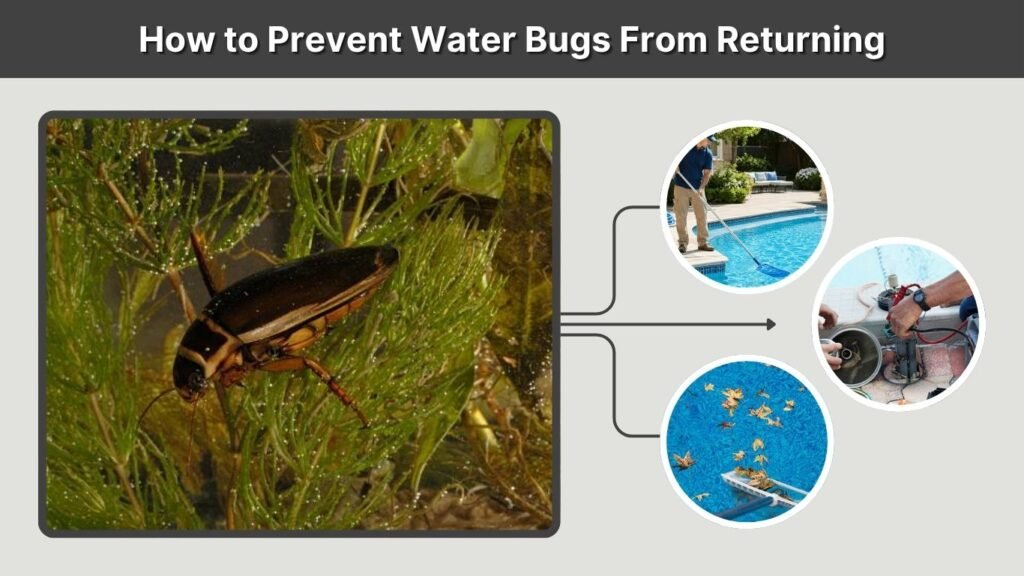
Prevention depends on maintaining clean, balanced water and reducing nighttime attraction.
- Test sanitizer and pH regularly.
- Brush and vacuum the pool every week.
- Remove leaves and insects promptly.
- Clean skimmer and pump baskets.
- Maintain effective water circulation.
- Repair broken lights, leaks and filtration equipment.
- Reduce unnecessary lighting near the water at night.
- Use a fitted pool cover when the pool is not being used.
- Keep nearby rubbish and decaying vegetation under control.
- Treat algae as soon as slippery or discolored areas appear.
The CDC advises home pool owners to test chlorine and pH routinely and follow all chemical labels. Proper sanitation protects swimmers while also making the water less suitable for algae and insects.
FAQs
Are water bugs in a swimming pool dangerous?
Water boatmen are generally harmless. Backswimmers and giant water bugs can deliver painful defensive bites, especially when handled. Remove them with a long-handled net and keep swimmers out until all visible insects have been collected.
Can I swim with water bugs in the pool?
Avoid swimming until the insects have been removed and the water has been tested. Their presence may indicate algae, low sanitizer or poor filtration. Backswimmers may also bite when disturbed.
Will chlorine kill water bugs?
Proper chlorine levels help remove the algae and organisms attracting water bugs, but individual insects may survive temporarily. Physical removal, brushing, filtration and water balancing are more effective than relying on chlorine alone.
Why do water bugs return after I shock the pool?
The shock treatment may not have removed hidden algae, debris or poor circulation. The insects can also fly back from nearby ponds. Brush, vacuum, clean the filter and confirm the water balance with a reliable test kit.
Do water boatmen lay eggs in pools?
Water boatmen can deposit eggs on submerged surfaces or vegetation when conditions are suitable. Regular brushing, sanitation and debris removal make a swimming pool less suitable for feeding and reproduction.