
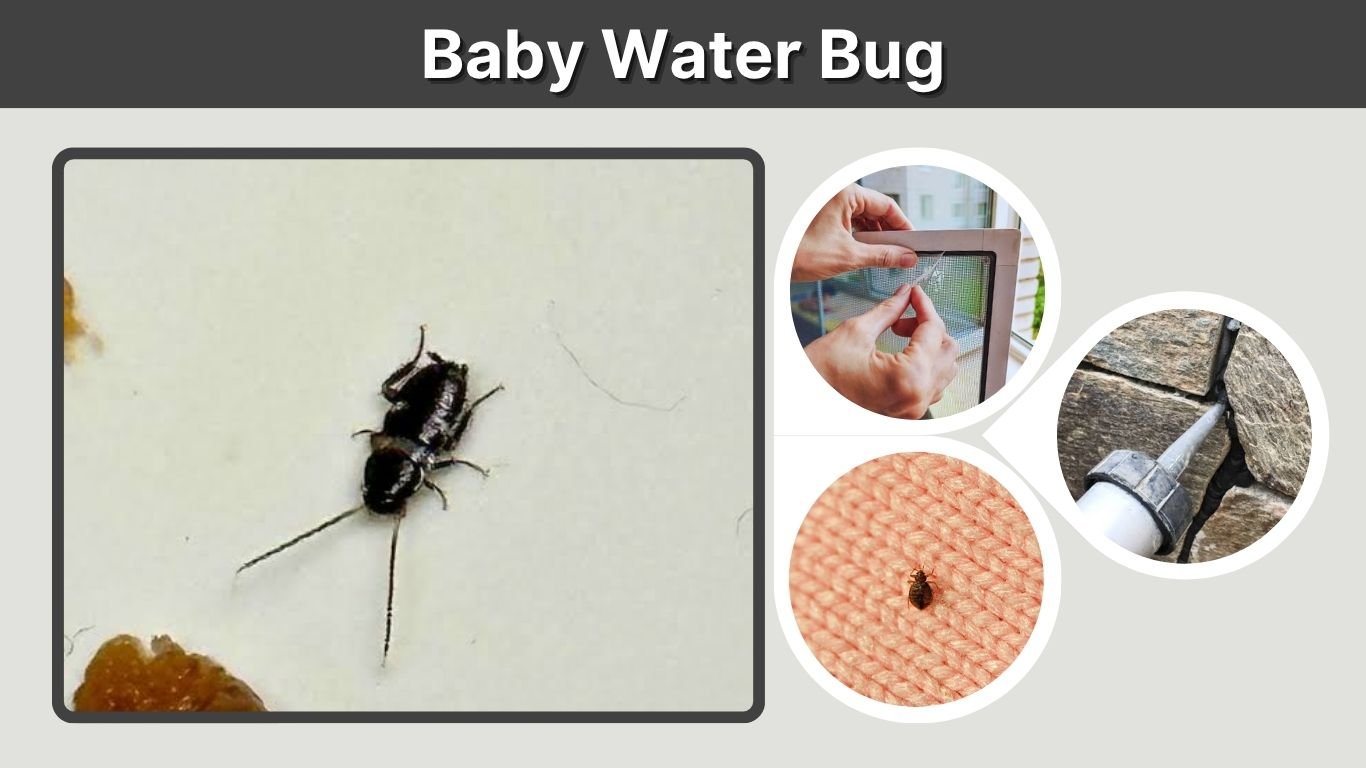
A baby water bug may be a young aquatic insect or, more commonly inside a house, a cockroach nymph. The name “water bug” is often used for Oriental and American cockroaches because they prefer damp areas near drains, basements and plumbing. True giant water bugs live in ponds and lakes and rarely reproduce inside homes. Therefore, finding several small “water bugs” in a kitchen or bathroom may indicate a cockroach infestation that requires prompt attention.
What Is a Baby Water Bug?
The term can describe two very different insects:
- A nymph of a true giant water bug from the family Belostomatidae
- A young cockroach, commonly an Oriental or American cockroach
Both water bugs and cockroaches develop through incomplete metamorphosis. Their life cycle includes egg, nymph and adult stages. The young are called nymphs rather than larvae or babies.
Cockroach nymphs resemble adults but are smaller and wingless. True water bug nymphs also resemble smaller, wingless versions of adults.
What Does a Baby Water Bug Look Like?
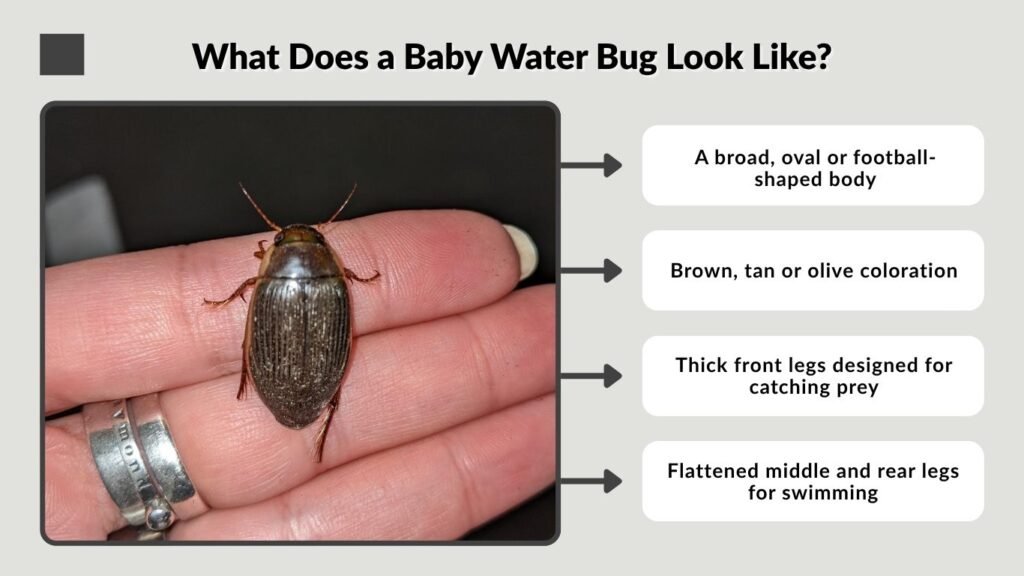
Appearance depends on whether the insect is a true aquatic water bug or a cockroach nymph.
True Baby Giant Water Bug
A giant water bug nymph usually has:
- A broad, oval or football-shaped body
- Brown, tan or olive coloration
- Thick front legs designed for catching prey
- Flattened middle and rear legs for swimming
- Short, less noticeable antennae
- No fully developed wings
- A body commonly found in or beside freshwater
Giant water bugs inhabit shallow ponds, lake margins and slow-moving water containing vegetation. Adults can grow 2–2½ inches long, although nymphs are smaller and vary considerably by growth stage.
Baby Cockroach Called a Water Bug
A cockroach nymph usually has:
- A flattened, oval body
- Very long antennae
- Six spiny legs
- A small head partly covered by the body shield
- No developed wings
- Brown, reddish-brown or nearly black coloring
- Fast running movement
Oriental cockroach nymphs are dark brown or black and resemble smaller, wingless females. American cockroach nymphs are reddish-brown and gradually develop the lighter markings seen on adults.
Baby Water Bug vs. Baby Roach
In most indoor situations, a supposed baby water bug is actually a cockroach nymph.
| Feature | True water bug nymph | Cockroach nymph |
| Natural habitat | Ponds, lakes and wetlands | Buildings, drains and outdoor debris |
| Antennae | Short and less obvious | Very long and visible |
| Front legs | Thick and claw-like | Slender, spiny running legs |
| Movement | Swims or crawls slowly on land | Runs quickly |
| Indoor reproduction | Very unlikely | Common for pest species |
| Body shape | Broad and boat-shaped | Flattened and oval |
| Main risk | Painful defensive bite | Contamination and allergens |
A true giant water bug found indoors is usually an accidental visitor attracted to lights. Small cockroaches repeatedly seen beneath sinks, around drains or behind appliances are more likely part of an indoor or nearby infestation.
Baby Water Bug vs. Bed Bug
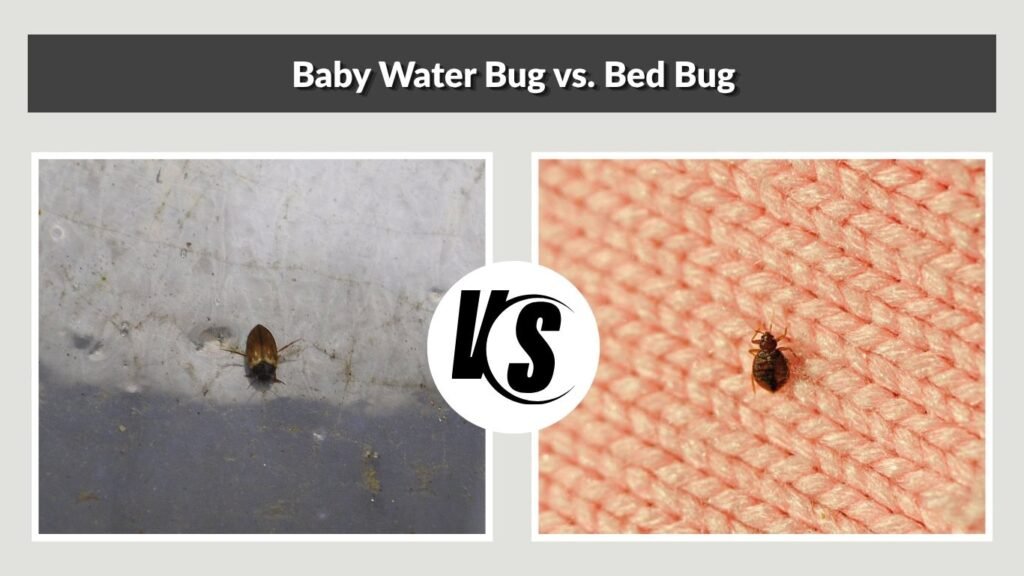
Baby cockroaches are sometimes confused with bed bugs, but their shape and behavior are different.
Bed bugs are broad, flat and reddish-brown, with relatively short antennae. They usually hide close to beds and feed on blood. Cockroach nymphs have longer antennae, more obvious spiny legs and move much faster.
Finding small insects near a bathroom drain or kitchen appliance suggests cockroaches more than bed bugs. Insects hiding in mattress seams, bed frames and nearby furniture should be examined for bed bug characteristics.
Why Are Baby Water Bugs in the House?
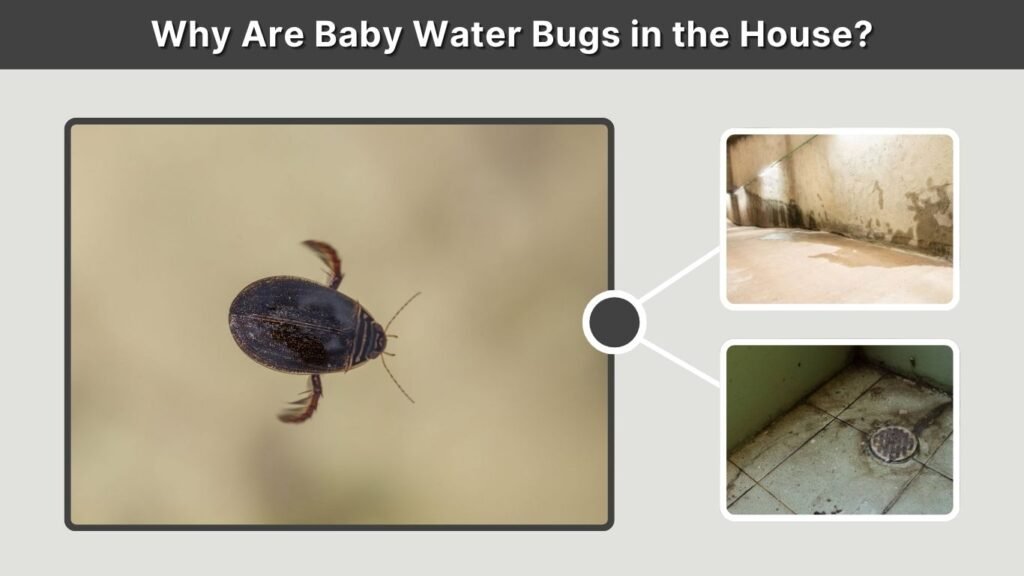
When multiple small bugs appear indoors, they are usually cockroach nymphs that recently hatched nearby.
Moisture
Oriental cockroaches prefer cool, damp locations, including:
- Basements
- Floor drains
- Crawl spaces
- Areas beneath washing machines
- Leaking plumbing
- Spaces under refrigerators
- Sewer and utility openings
They may enter buildings following heavy rainfall, drought or seasonal changes.
Food
Cockroach nymphs feed on crumbs, grease, pet food, rubbish and decaying organic material. Even small amounts of residue beneath appliances can support developing insects.
Hidden Egg Cases
Cockroach eggs develop inside protective capsules called oothecae. Depending on the species, one case can contain numerous eggs. Finding several nymphs of similar size may mean an egg case recently hatched inside or near the house.
Entry Gaps
Small cockroaches may enter through:
- Cracks around foundations
- Gaps beneath exterior doors
- Plumbing penetrations
- Air vents
- Floor drains
- Damaged screens
- Cardboard boxes
- Used furniture or appliances
Does One Baby Water Bug Mean an Infestation?
One true aquatic nymph does not suggest an indoor infestation. It may have entered accidentally from a nearby pond, swimming pool or outdoor lighted area.
One cockroach nymph is more concerning. Nymphs do not fly in from long distances, so their presence may indicate that an egg case or nesting area is nearby. Finding multiple nymphs, droppings, egg cases or adults strongly suggests an established cockroach problem.
Oriental cockroaches may live indoors and outdoors, while German cockroaches are persistent indoor pests commonly transported in boxes, bags and belongings.
Are Baby Water Bugs Dangerous?
True Water Bug Nymphs
True giant water bugs are predators equipped with piercing mouthparts. They do not seek people, but both nymphs and adults should be handled carefully. A defensive jab can be painful. Use a container rather than bare hands to move one.
Cockroach Nymphs
Cockroach nymphs do not normally bite people. Their greater importance is their association with drains, rubbish and unsanitary areas.
Cockroaches can contaminate food and preparation surfaces. Their droppings, saliva and shed skins can also trigger allergies and worsen asthma in sensitive individuals.
How to Get Rid of Baby Water Bugs
First determine whether the insect is a true aquatic bug or a cockroach.
Remove a True Water Bug
Place a container over the insect, slide stiff paper underneath and release it near suitable freshwater habitat away from frequently used areas.
Do not handle it with bare fingers. One accidental visitor does not usually require pesticide treatment.
Inspect for Cockroaches
Use a flashlight to check:
- Beneath sinks
- Behind refrigerators
- Around washing machines
- Near floor drains
- Inside lower cabinets
- Basement and crawl-space corners
- Cracks around plumbing
Look for live nymphs, dark droppings, shed skins and egg cases.
Place Sticky Traps
Put sticky monitoring traps against walls and beneath appliances. Check them regularly to determine where the most activity occurs.
Traps help locate infestations, but they may not eliminate all cockroaches by themselves.
Remove Food and Water
Improve sanitation by:
- Cleaning crumbs and grease
- Sealing food containers
- Removing rubbish regularly
- Washing dishes promptly
- Storing pet food overnight
- Repairing leaking pipes
- Drying sinks and counters
- Removing damp cardboard
Cockroach control works best when food, water and shelter are reduced.
Use Cockroach Bait
Place labeled gel bait or enclosed bait stations near hiding areas and travel routes. Bait is usually more useful than spraying individual nymphs because cockroaches can feed on it and carry contamination back into their hiding areas.
Follow the label and keep pesticides away from children, pets, dishes and food. Baits containing approved active ingredients can provide effective structural control when correctly positioned.
Avoid Foggers
Bug bombs and total-release foggers rarely reach deep cracks where cockroaches hide. They may disperse the insects and unnecessarily expose occupants to pesticide residue.
How to Prevent Baby Water Bugs
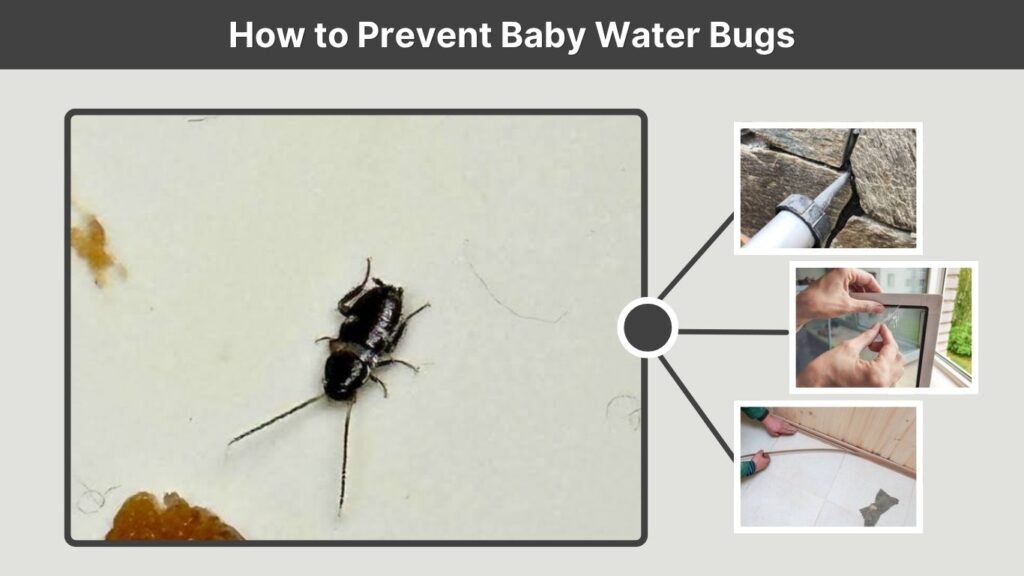
After activity decreases:
- Seal foundation and plumbing gaps
- Install door sweeps
- Cover suitable floor drains
- Repair window and vent screens
- Correct basement drainage problems
- Reduce leaf litter beside the foundation
- Keep rubbish containers closed
- Inspect boxes and used appliances
- Monitor damp rooms with sticky traps
FAQs
What color are baby water bugs?
True giant water bug nymphs are usually tan, brown or olive. Cockroach nymphs called water bugs may be dark brown, black or reddish-brown, depending on the species and age.
Do baby water bugs look like roaches?
True water bug nymphs may look somewhat similar because both have flattened bodies. However, true water bugs have short antennae and thick grasping front legs, while roaches have long antennae and spiny running legs.
Can baby water bugs fly?
Nymphs do not have fully developed wings and cannot fly. Adult giant water bugs can fly and may be attracted to outdoor lights. Some adult cockroach species can also fly or glide.
Why are baby water bugs in my bathroom?
Small insects in a bathroom are commonly cockroach nymphs attracted to water, warmth and hiding spaces around plumbing. Leaks, damp cabinets and gaps around pipes can support their activity.
How do I know whether baby water bugs are breeding indoors?
Repeated sightings, several different-sized nymphs, egg cases, droppings and nighttime activity suggest cockroach reproduction. A single true aquatic water bug entering near a door or light usually does not indicate breeding.
