
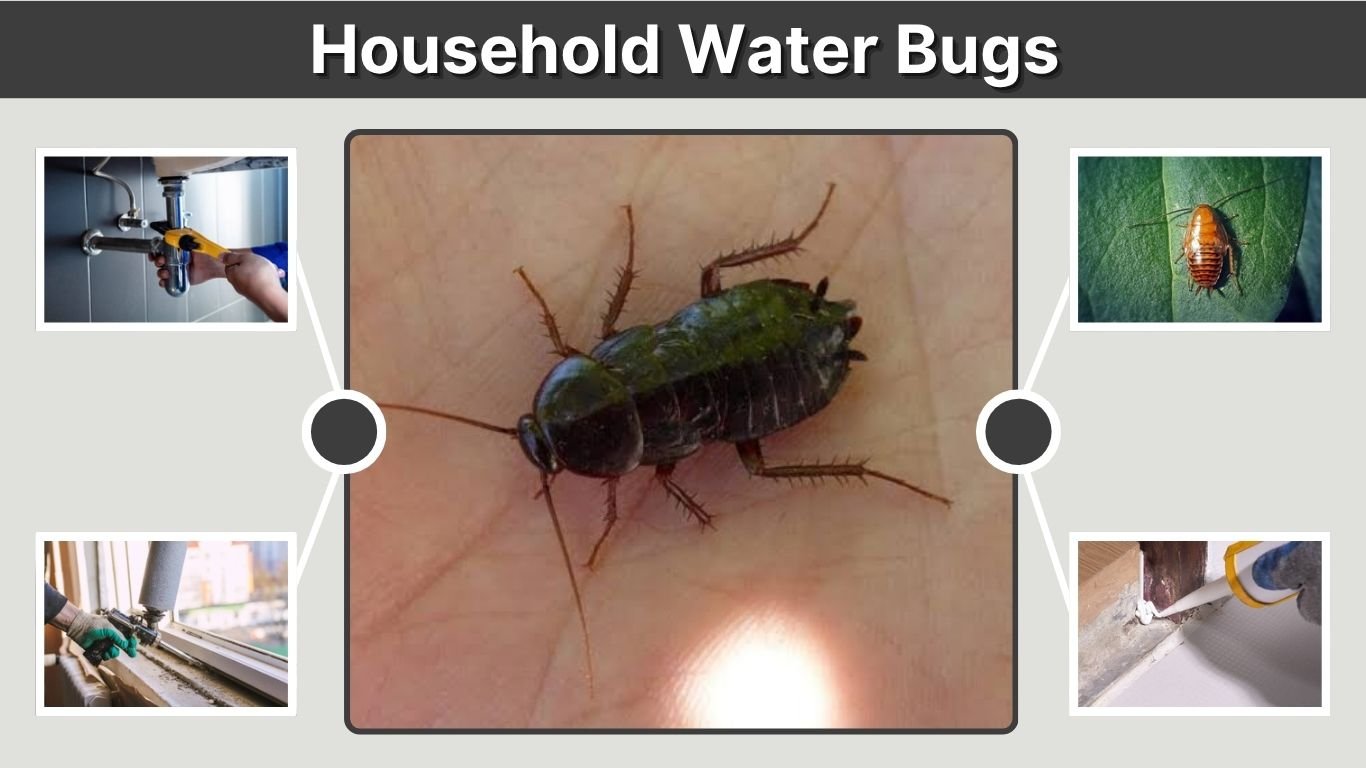
Household water bugs are usually cockroaches or other moisture-loving pests found near sinks, drains, bathrooms, basements, and leaking pipes. The name can be confusing because true water bugs are aquatic insects that rarely live inside homes. Large dark insects are often Oriental or American cockroaches, while tiny bugs around water sources may be springtails or drain flies. Correct identification helps determine whether you have an indoor infestation, a moisture problem, or an accidental visitor.
What Are Household Water Bugs?
“Water bug” is not a precise household-pest name. People commonly use it for large cockroaches associated with dark, cool, and damp environments. Oriental cockroaches are especially likely to receive this nickname because they frequently occur in basements, crawl spaces, sewers, and around drains.
True water bugs, such as giant water bugs, live primarily in freshwater. They may occasionally fly toward outdoor lights or enter through an open door, but they do not normally reproduce in kitchens, bathrooms, or wall cavities.
What Do Household Water Bugs Look Like?
Their appearance depends on the species. Large household “water bugs” generally have flattened bodies and dark coloring, while smaller moisture-loving pests may appear as moving black dots or tiny flies.
| Pest | Typical appearance | Common location | Indoor infestation? |
| Oriental cockroach | Shiny dark brown or nearly black | Basements, drains, crawl spaces | Yes |
| American cockroach | Large and reddish brown | Sewers, utility rooms, kitchens | Yes |
| German cockroach | Small, tan, with two dark stripes | Kitchens and bathrooms | Yes |
| Springtail | Tiny, gray, brown, or black; often jumps | Sinks, tubs, drains, damp soil | Temporary |
| Silverfish | Silver-gray with three tail filaments | Bathrooms, basements, storage | Possible |
| Drain fly | Tiny, fuzzy, mothlike fly | Sink, shower, and floor drains | Yes |
| Giant water bug | Large, broad, with grasping front legs | Pools, patios, outdoor lights | No |
Seven Common Household Water Bugs and Look-Alikes
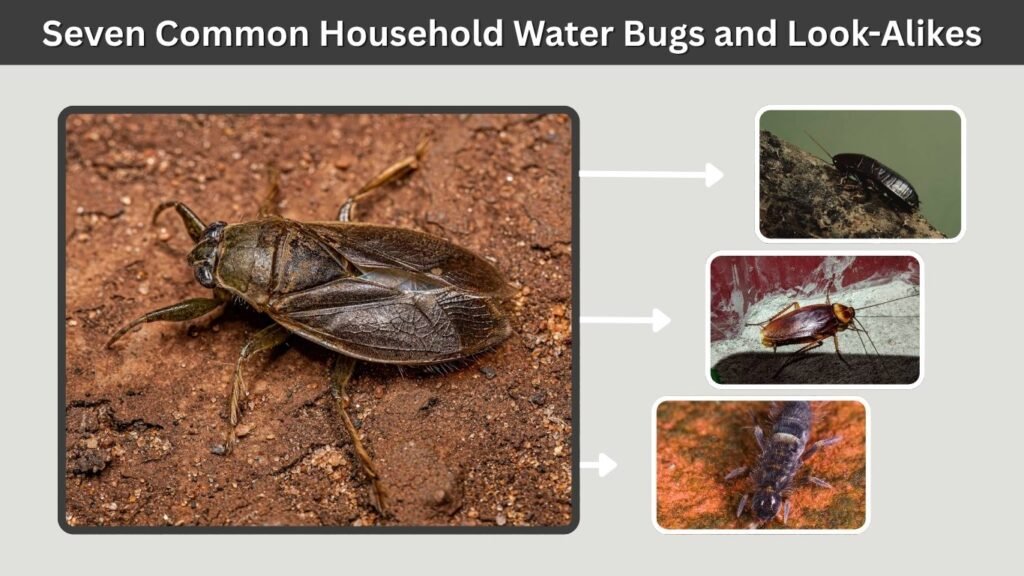
Several insects and insect relatives gather near household water sources. Some require pest treatment, while others disappear after moisture conditions are corrected.
1. Oriental Cockroaches
Oriental cockroaches are the insects most often called household water bugs. Adults are dark brown to almost black, and females have short wing pads rather than fully developed wings. They usually move more slowly than German and American cockroaches.
They prefer cool, damp locations such as basements, cellars, crawl spaces, sewers, floor drains, and spaces beneath leaking sinks. Their strong dependence on moisture explains why they may repeatedly appear in bathrooms and lower levels of buildings.
2. American Cockroaches
American cockroaches are large, reddish-brown insects that can approach two inches in length. Adults usually have a lighter yellowish or tan border behind the head and long antennae extending beyond the body.
They may enter buildings from sewer lines, utility tunnels, commercial kitchens, boiler rooms, and other warm, humid locations. They eat many kinds of organic material and can survive much longer with water than without it.
3. German Cockroaches
German cockroaches are smaller than the dark household bugs commonly called water bugs. Adults are light brown or tan and have two parallel dark stripes on the shield behind the head.
They are the most common cockroach species found in houses and other buildings. They concentrate near warmth, food, and moisture, particularly beneath sinks, behind refrigerators, around dishwashers, and inside kitchen cabinets. Their droppings and shed skins can also contribute to indoor allergens.
4. Springtails
Springtails are extremely small creatures that may look like black, gray, or brown dots around sinks, bathtubs, drains, and windowsills. Many species jump when disturbed, which helps separate them from baby cockroaches.
They thrive where moisture, mold, and decaying organic matter are available. Indoor springtails do not bite, damage household materials, or infest people. Large numbers usually indicate excessive moisture, overwatered houseplants, poor drainage, or a leak.
5. Silverfish
Silverfish are wingless insects with tapered, silver-gray bodies, long antennae, and three bristle-like projections at the rear. Their rapid, fishlike movement contributes to their common name.
They prefer humid areas such as bathrooms, kitchens, basements, laundry rooms, and storage spaces. Silverfish may feed on starch-containing materials, including paper, book bindings, wallpaper paste, and certain stored products.
6. Drain Flies
Drain flies are tiny, fuzzy flies with broad wings that make them resemble miniature moths. They frequently rest on walls beside sinks, showers, floor drains, and utility areas.
Their immature stages develop in the moist organic film that builds up inside neglected plumbing. Simply pouring hot water or ordinary drain cleaner into the pipe may not remove this material. Effective control requires mechanically scrubbing the drain and eliminating the organic coating where the larvae develop.
7. Giant Water Bugs
A giant water bug is a true aquatic insect rather than a household cockroach. It has a wide, flattened body, short or partly hidden antennae, thick front legs for capturing prey, and flattened hind legs for swimming.
One may accidentally land near a porch light, patio, garage, or swimming pool. Unlike cockroaches, it will not establish an indoor colony. Avoid picking it up because giant water bugs can defend themselves with a painful bite.
Household Water Bugs vs. Household Roaches
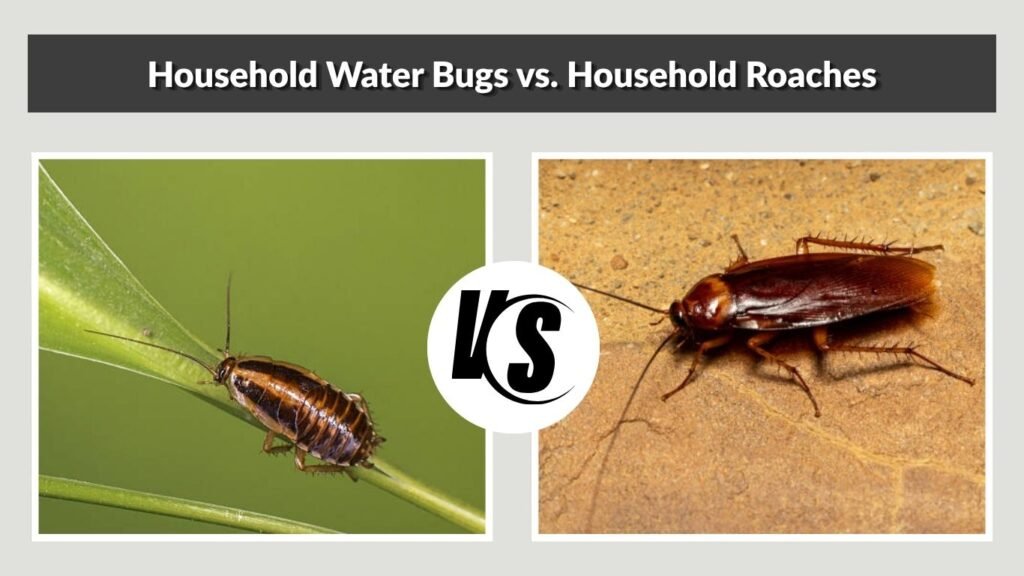
In everyday conversation, the names overlap, but true water bugs and cockroaches are biologically and behaviorally different.
| Feature | True water bug | Household roach |
| Primary environment | Freshwater | Buildings and outdoor hiding places |
| Antennae | Short or difficult to see | Long and threadlike |
| Front legs | Thick and adapted for grabbing | Slender and spiny |
| Movement | Swims well; awkward on land | Runs quickly |
| Number found indoors | Usually one | Adults and nymphs may appear |
| Reproduces in homes | No | Yes |
| Human bite | Possible when handled | Very uncommon |
A single broad insect near a pool or outdoor light may be a true water bug. Repeated sightings inside cabinets, beneath appliances, or around plumbing are much more likely to involve cockroaches.
Why Are Water-Loving Bugs in Your House?
Moisture is the most important attraction. Leaking pipes, sweating plumbing, wet basements, standing water, clogged gutters, and poorly ventilated bathrooms create suitable conditions for many household pests.
Food debris and shelter make the problem worse. Cockroaches can hide inside cracks, cardboard, appliance spaces, wall openings, and cluttered cabinets. Springtails and silverfish become more numerous when humidity remains high, while drain flies reproduce in organic buildup inside plumbing.
Small Black Bugs Near Household Water Sources
Tiny black bugs around sinks and bathtubs are often springtails. Watch whether they jump when disturbed. They commonly gather where condensation, leaks, wet potting soil, or persistent surface moisture is present.
Small insects flying around a drain are more likely to be drain flies. Baby cockroaches are larger, have clearly visible antennae and legs, and run rather than jump or fly.
How to Get Rid of Household Water Bugs
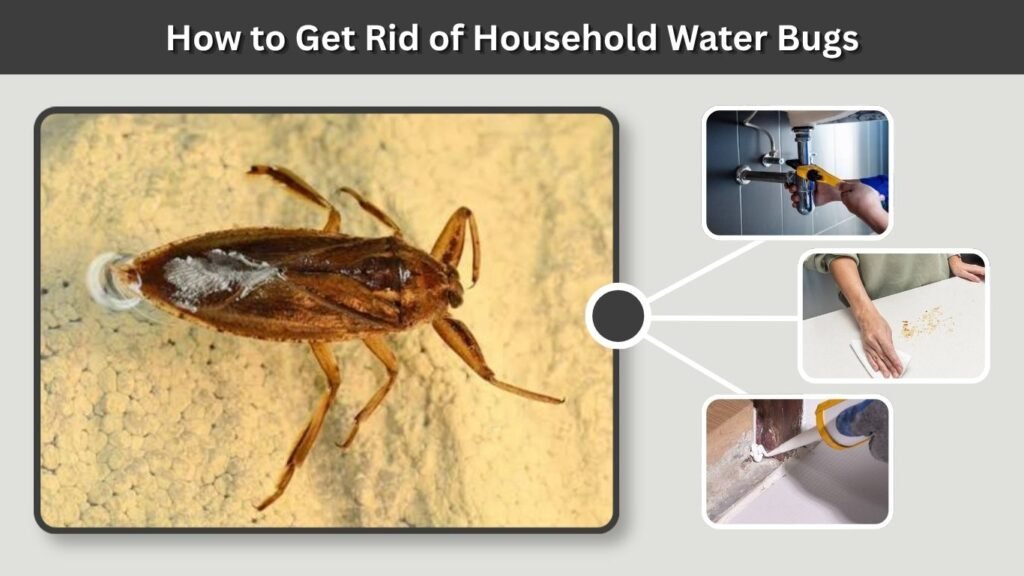
Begin by correcting the environmental conditions supporting the pests. Removing only the visible insects will not stop a cockroach colony or insects breeding inside a dirty drain.
Remove Water and Humidity
Repair leaking pipes, faucets, toilets, and appliance connections. Dry sinks and counters at night, improve bathroom ventilation, and use a dehumidifier in persistently damp basements.
Check for moisture beneath cabinets, around water heaters, and behind washing machines. Springtails and other moisture-dependent invaders usually decline once affected areas dry.
Clean Drains and Food Areas
Scrub the inside of problem drains with a stiff drain brush to remove organic slime. Clean crumbs and grease from beneath appliances, store food in tightly sealed containers, and empty garbage regularly.
Seal Entry Points
Caulk gaps around plumbing, baseboards, cabinets, windows, and utility lines. Repair screens, install door sweeps, and cover floor drains with appropriate screens while ensuring plumbing traps contain water.
Monitor and Treat Cockroaches
Place sticky traps against walls beneath sinks, behind appliances, and near drains. For confirmed cockroaches, apply labeled bait stations or gel bait close to their hiding and travel areas.
Cockroach management works best when food, water, and shelter are removed at the same time. Baits may require a week or longer to reduce the population, so do not expect an established infestation to disappear overnight.
FAQs
Are household water bugs dangerous?
Most moisture-loving household insects are more annoying than dangerous. Springtails do not bite or damage household items. Cockroaches are more concerning because they can contaminate surfaces and contribute allergens, while a true giant water bug may bite if handled.
Do household water bugs mean the house is dirty?
Not necessarily. Clean homes can develop pest problems because of plumbing leaks, sewer access, damp foundations, or insects entering from neighboring units. However, food residue, garbage, cardboard, and clutter can help cockroaches survive after entering.
Can household water bugs come through drains?
Cockroaches may travel through sewer-connected plumbing or enter through gaps around pipes. Drain flies breed in organic film inside drains. Keeping drain traps filled, using suitable screens, cleaning pipes, and sealing plumbing openings can reduce activity.
Are small household water bugs baby cockroaches?
Some may be cockroach nymphs, but tiny bugs near water are often springtails. Springtails may jump and look like moving black dots. Baby roaches have long antennae, visible spiny legs, and usually run into cracks when disturbed.
When should you call pest control?
Contact a licensed professional when cockroaches appear during daylight, traps catch numerous insects, nymphs or egg cases are present, or activity continues after sanitation and baiting. In apartments, notify management because cockroaches may travel through shared walls and plumbing.
