
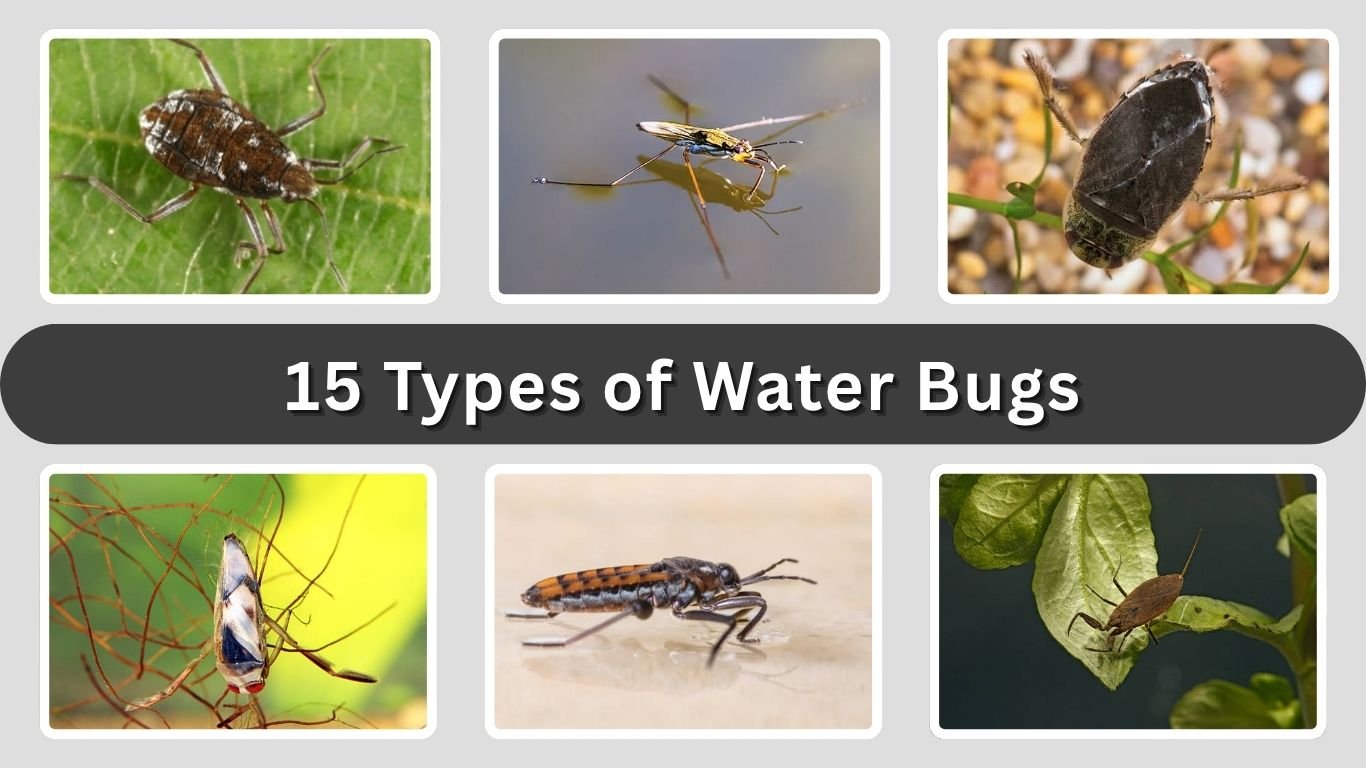
Water bugs are a diverse group of insects that live in ponds, lakes, marshes, streams, and other freshwater habitats. Some glide across the surface, while others swim, crawl underwater, or hide among aquatic plants. These insects vary greatly in size, appearance, diet, and behavior. Many are predators that feed on mosquito larvae, tadpoles, small fish, and other insects, while others consume algae and decaying plant matter. This guide covers 15 common types of water bugs, including their identification, habitat, feeding habits, movement, life cycle, and potential risks to humans. It can help you recognize each species more easily in nature.
1. Giant Water Bug
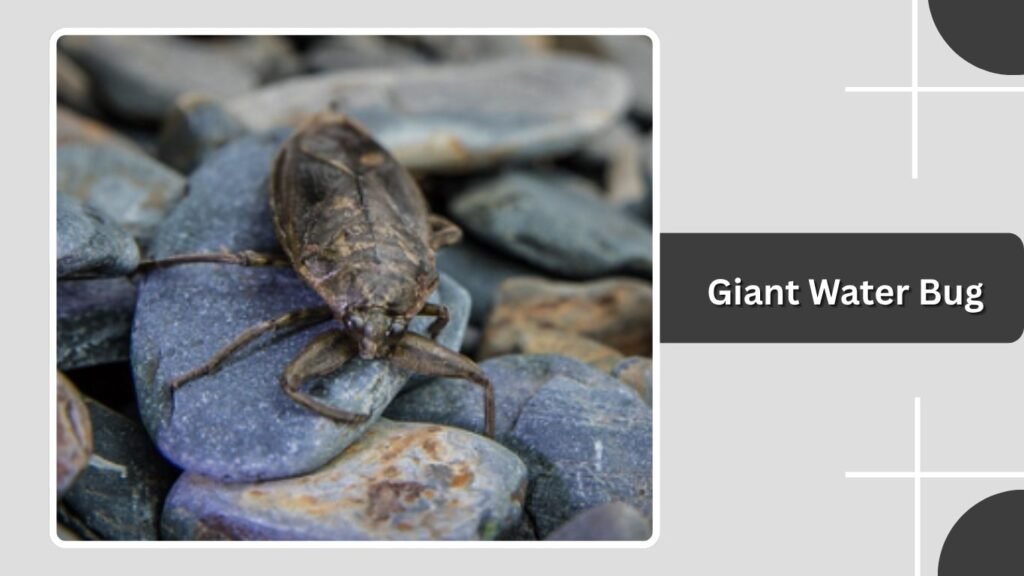
Giant water bugs are large aquatic insects belonging to the family Belostomatidae. They live mainly in freshwater habitats and are sometimes called “toe-biters” because they can deliver a painful defensive bite when handled. Despite their intimidating appearance, they play an important role in controlling populations of small aquatic animals.
Identification
- Broad, flattened, oval-shaped body
- Usually brown, dark brown, or tan
- Large front legs adapted for grabbing prey
- Short, hidden antennae
- Powerful swimming legs with hair-like fringes
- Adults commonly measure 1.5 to 4 inches long
- A breathing tube or air-trapping structure at the rear of the body
Habitat and Distribution
Giant water bugs are commonly found in ponds, lakes, marshes, slow-moving streams, drainage ditches, and other freshwater environments. They usually hide among aquatic plants, mud, submerged branches, and fallen leaves. These insects occur in many parts of North America, South America, Asia, Africa, and Australia. Adults may also fly toward outdoor lights at night, especially during warm weather.
Diet and Hunting Behavior
These water bugs are aggressive ambush predators. They remain motionless underwater and wait for prey to approach before grabbing it with their strong front legs. Their diet includes tadpoles, small fish, snails, aquatic insects, crustaceans, and occasionally small frogs. The bug injects digestive saliva into its prey and then consumes the liquefied tissues.
Bite and Safety
A giant water bug bite can be extremely painful, but it is not normally dangerous to humans. The insect usually bites only when stepped on, disturbed, or picked up. The bite may cause temporary swelling, redness, burning, and soreness. Avoid handling giant water bugs with bare hands. Most mild bites can be cleaned with soap and water and treated with a cold compress.
2. Water Scorpion
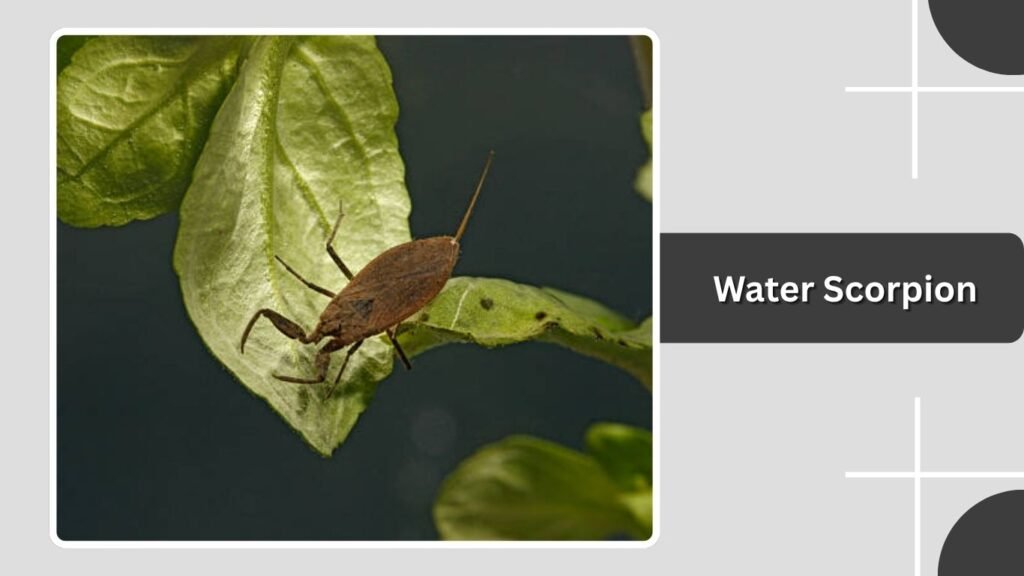
Water scorpions are aquatic insects belonging to the family Nepidae. Despite their name, they are not true scorpions and do not have a venomous stinger. They are slow-moving freshwater predators known for their grasping front legs and long breathing tube, which resembles a scorpion’s tail.
Identification
- Long, narrow, or broad leaf-shaped body
- Usually brown, gray, or dark tan
- Large front legs adapted for catching prey
- Long breathing tube extending from the abdomen
- Small head with prominent eyes
- Adults usually measure 1 to 2 inches long
- Often resemble dead leaves, sticks, or plant debris
Habitat and Distribution
Water scorpions usually live in ponds, marshes, shallow lakes, wetlands, and slow-moving streams. They prefer areas with thick aquatic vegetation, fallen leaves, and muddy bottoms where they can remain hidden. Different species occur across North America, Europe, Asia, Africa, and other temperate and tropical regions.
Diet and Hunting Behavior
Water scorpions are ambush predators that wait quietly among underwater plants. When a small animal comes close, they quickly capture it with their powerful front legs. Their diet includes mosquito larvae, tadpoles, small crustaceans, aquatic insects, and occasionally very small fish. They pierce prey with their beak and inject digestive fluids before feeding.
Bite and Safety
Water scorpions can deliver a painful bite if they are handled carelessly, but they are not considered dangerous to humans. Their long rear tube is used for breathing and cannot sting. A bite may cause temporary pain, redness, or mild swelling. It is best to observe these insects without touching them directly.
3. Water Boatman
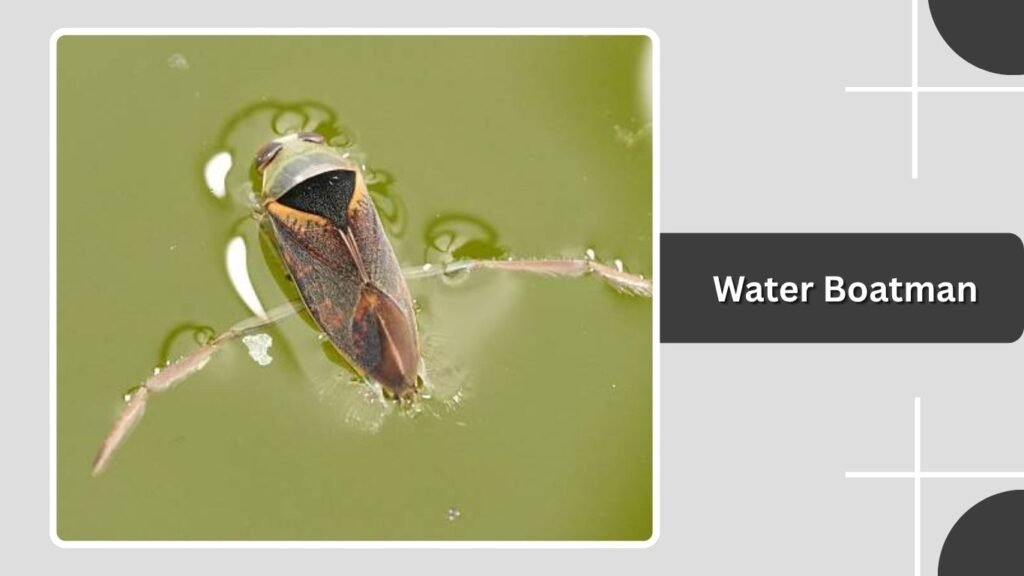
Water boatmen are small aquatic insects belonging to the family Corixidae. They are named for their long, oar-like hind legs, which help them swim through ponds and streams. Unlike many predatory water bugs, most water boatmen feed mainly on algae, plant material, and tiny aquatic organisms.
Identification
- Small, oval, and slightly flattened body
- Usually brown, gray, or mottled in color
- Fine stripes or markings across the back
- Long hind legs covered with swimming hairs
- Shorter front legs adapted for gathering food
- Adults usually measure 0.2 to 0.6 inches long
- Swim upright with their backs facing the water’s surface
Habitat and Distribution
Water boatmen live in ponds, lakes, marshes, ditches, temporary pools, and slow-moving streams. They prefer shallow water with aquatic plants and muddy or sandy bottoms. These insects are widely distributed around the world and can survive in both freshwater and slightly salty environments.
Diet and Feeding Behavior
Most water boatmen feed by scraping algae, microorganisms, and decaying plant material from underwater surfaces. Some species also consume mosquito larvae, tiny crustaceans, and other small aquatic animals. Their feeding activity helps break down organic matter and recycle nutrients within freshwater ecosystems.
Life Cycle and Behavior
Female water boatmen attach their eggs to submerged plants, rocks, or other underwater objects. Young nymphs resemble smaller versions of adults but do not have fully developed wings. They pass through several growth stages before becoming adults. Water boatmen can fly between water sources and are sometimes attracted to bright lights at night.
4. Backswimmer
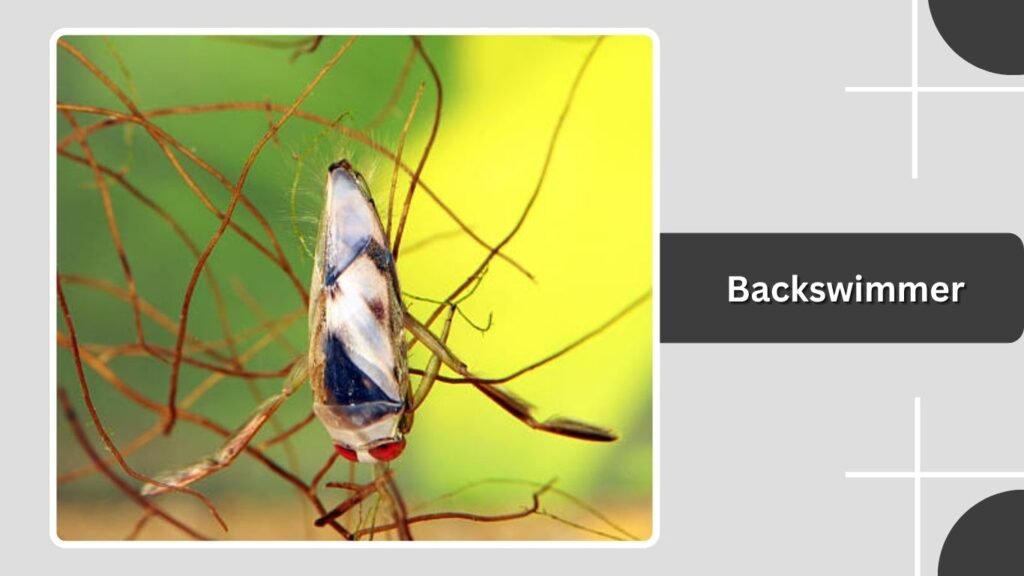
Backswimmers are aquatic insects belonging to the family Notonectidae. They are named for their unusual habit of swimming upside down with their backs facing the bottom of the water. These active predators use long hind legs like oars and are commonly found in ponds, pools, lakes, and slow-moving streams.
Identification
- Slender, boat-shaped body
- Usually light brown, cream, gray, or greenish
- Darker underside than upper body
- Long, powerful hind legs covered with swimming hairs
- Large reddish or dark-colored eyes
- Adults usually measure about 0.4 to 0.7 inches long
- Swim upside down near the water’s surface
Habitat and Distribution
Backswimmers live in freshwater habitats such as ponds, marshes, lakes, ditches, swimming pools, and slow-moving streams. They prefer calm water with aquatic plants where they can hide and hunt. These insects occur in many regions worldwide and may fly to new water sources when their habitat dries out or becomes unsuitable.
Diet and Hunting Behavior
Backswimmers are efficient predators that feed on mosquito larvae, small crustaceans, tadpoles, aquatic insects, and tiny fish. They detect movement in the water, quickly swim toward their prey, and hold it with their front legs. Their sharp beak pierces the prey and injects digestive saliva, allowing the insect to consume the softened tissues.
Bite and Safety
Backswimmers can bite humans when handled, trapped against the skin, or disturbed while swimming. Their bite may feel similar to a bee sting and can cause sharp pain, redness, or temporary swelling. They are not generally aggressive and do not spread diseases. Avoid picking them up with bare hands, and use a net or container when removing them from a swimming pool.
5. Water Strider
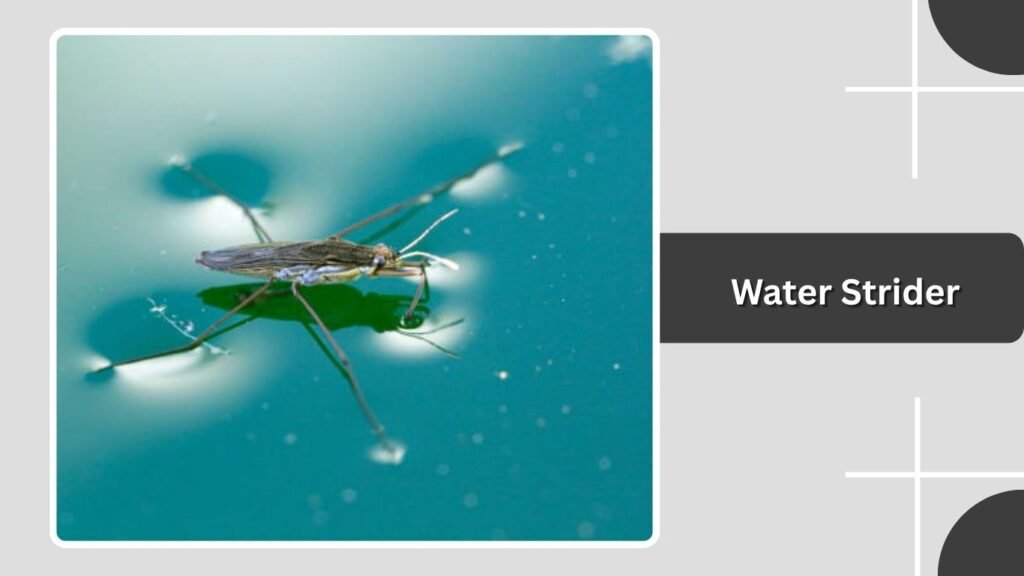
Water striders are slender insects that move across the surface of ponds, streams, and other calm waters. They belong mainly to the family Gerridae and use water-repellent hairs on their legs to stay above the surface. Their lightweight bodies and long legs allow them to move quickly without sinking.
Identification
- Long, narrow, dark-colored body
- Six extremely slender legs
- Middle legs used for movement
- Hind legs used for steering
- Short front legs used for catching prey
- Fine water-repellent hairs covering the legs
- Adults usually measure 0.2 to 0.8 inches long
- Glide or skate across the water’s surface
Habitat and Distribution
Water striders live on ponds, lakes, marshes, slow-moving streams, and temporary pools. They prefer calm areas where the water surface is not heavily disturbed by waves or strong currents. These insects are found throughout much of the world and often gather near aquatic vegetation, shaded banks, and floating debris.
Diet and Feeding Behavior
Water striders mainly feed on small insects that fall onto the water. They detect vibrations created by struggling prey and quickly move toward it. Using their short front legs, they hold the insect and pierce it with a sharp mouthpart. Their diet may include mosquitoes, flies, aphids, small spiders, and other tiny invertebrates.
Movement and Survival
Water striders distribute their weight across their long legs, allowing water tension to support them. Their middle legs push backward like paddles, while the hind legs control direction. Many species can also jump to escape predators. Some have wings and can fly to another pond when their current habitat becomes dry, crowded, or unsuitable.
6. Creeping Water Bug
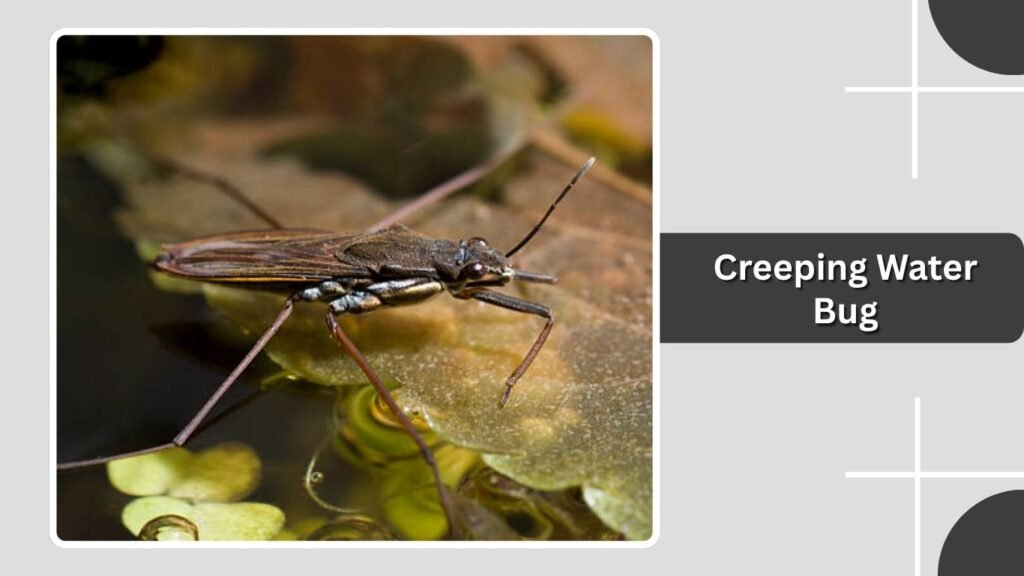
Creeping water bugs are small to medium-sized aquatic insects belonging mainly to the family Naucoridae. Unlike fast-swimming backswimmers, they often crawl slowly across submerged plants, rocks, and muddy bottoms. They are predatory insects equipped with strong front legs and a sharp beak for capturing small aquatic animals.
Identification
- Broad, oval, and flattened body
- Usually brown, dark brown, or yellowish-brown
- Strong front legs adapted for grasping prey
- Short antennae that are difficult to see
- Swimming hairs along the middle and hind legs
- Adults commonly measure 0.2 to 0.8 inches long
- Often crawl along underwater surfaces instead of swimming continuously
Habitat and Distribution
Creeping water bugs live in ponds, marshes, lakes, slow-moving streams, and shallow wetlands. They are commonly found among aquatic vegetation, beneath stones, and within submerged leaf litter. These insects occur in many tropical and temperate regions and usually prefer calm or gently flowing freshwater habitats.
Diet and Hunting Behavior
Creeping water bugs are active predators that feed on mosquito larvae, small crustaceans, aquatic insect larvae, worms, and other tiny invertebrates. They move slowly along the bottom and seize prey with their strong front legs. After capturing an animal, they pierce it with their beak and inject digestive saliva before feeding.
Bite and Safety
Creeping water bugs may bite if they are picked up, squeezed, or trapped against the skin. The bite can cause sharp pain, mild swelling, or temporary redness, but these insects are not usually dangerous to humans. They do not spread diseases and generally avoid contact unless disturbed.
7. Saucer Bug
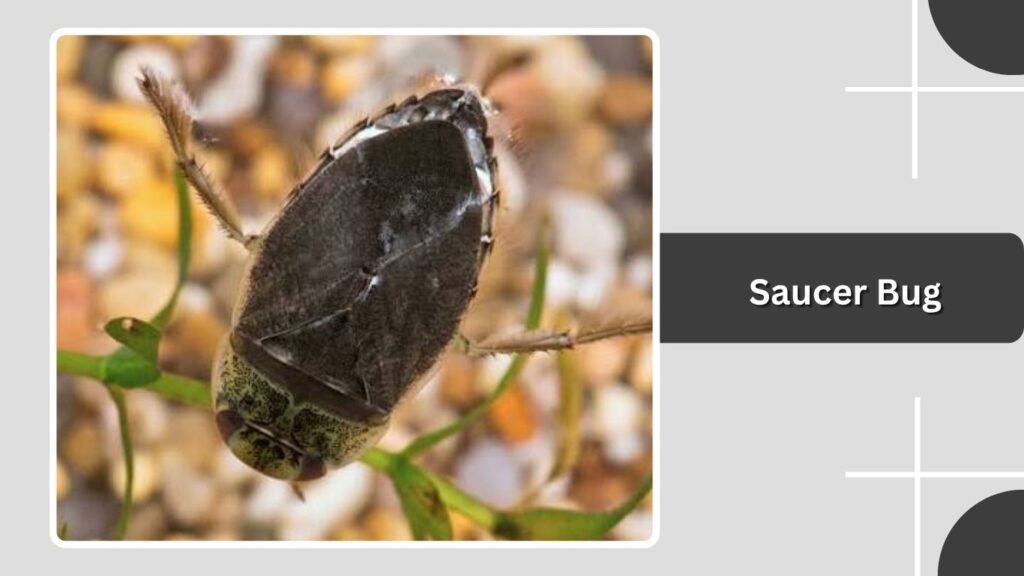
Saucer bugs are flattened aquatic insects belonging to the family Naucoridae. Their rounded, saucer-like bodies help them move beneath stones, plants, and debris in freshwater habitats. They are strong predators that capture small aquatic animals with their powerful front legs and piercing mouthparts.
Identification
- Broad, oval, and strongly flattened body
- Usually dark brown, olive, or yellowish-brown
- Rounded shape resembling a small saucer
- Strong front legs adapted for gripping prey
- Short antennae hidden beneath the head
- Hair-fringed hind legs used for swimming
- Adults commonly measure 0.3 to 0.6 inches long
Habitat and Distribution
Saucer bugs are usually found in ponds, lakes, marshes, streams, and shallow wetlands. They often hide beneath stones, submerged wood, fallen leaves, and aquatic plants. Many species prefer clean freshwater, although some can tolerate muddy or slow-moving environments. They occur in several parts of Europe, Asia, Africa, and other regions.
Diet and Hunting Behavior
Saucer bugs are aquatic predators that feed on mosquito larvae, small insect nymphs, worms, tiny crustaceans, and other small water-dwelling animals. They crawl or swim toward their prey and hold it tightly with their front legs. Their sharp beak injects digestive fluids that break down the prey’s internal tissues before feeding.
Bite and Safety
A saucer bug may bite when handled, squeezed, or accidentally trapped against the skin. The bite can be painful and may cause temporary redness, burning, or mild swelling. However, saucer bugs are not considered dangerous and do not transmit diseases to humans. They should be observed without direct handling.
8. Toe-Biter
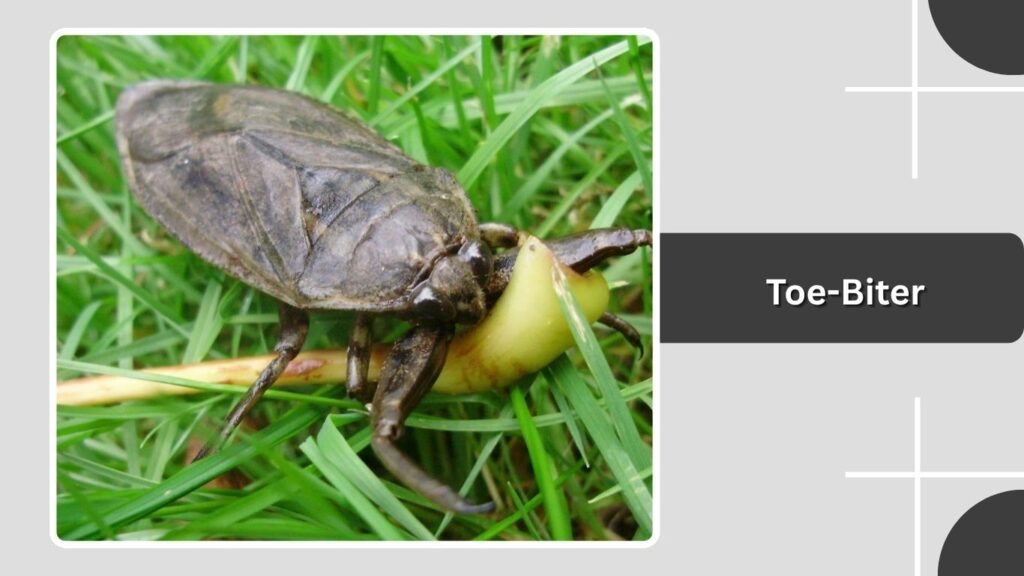
Toe-biter is a common nickname for certain giant water bugs in the family Belostomatidae. The name comes from their ability to deliver a painful defensive bite when stepped on or handled. These large freshwater insects are powerful predators and are commonly found in ponds, marshes, lakes, and slow-moving waterways.
Identification
- Large, broad, and flattened body
- Usually brown, tan, or dark brown
- Strong, curved front legs used for capturing prey
- Short antennae hidden beneath the head
- Flat hind legs adapted for swimming
- Adults commonly measure 1.5 to 4 inches long
- Sharp, pointed beak beneath the head
- Often resembles a large brown leaf underwater
Habitat and Distribution
Toe-biters live in freshwater environments such as ponds, lakes, marshes, drainage ditches, and slow-moving streams. They usually remain hidden among aquatic plants, mud, submerged branches, and fallen leaves. These insects are found in many regions of North America, South America, Asia, Africa, and Australia. Adults can fly and are sometimes attracted to outdoor lights at night.
Diet and Hunting Behavior
Toe-biters are ambush predators that wait quietly for prey to move within reach. They grab victims with their powerful front legs and pierce them with a sharp beak. Their diet includes aquatic insects, tadpoles, snails, small fish, crustaceans, and occasionally small frogs. Digestive saliva is injected into the prey before the softened tissues are consumed.
Bite and Safety
A toe-biter bite can cause intense pain, burning, redness, and temporary swelling. However, these insects do not normally attack people and usually bite only in self-defense. Their bite is not typically dangerous and does not transmit disease. Avoid walking barefoot in shallow water and never handle a toe-biter with bare hands.
9. Belostomatid
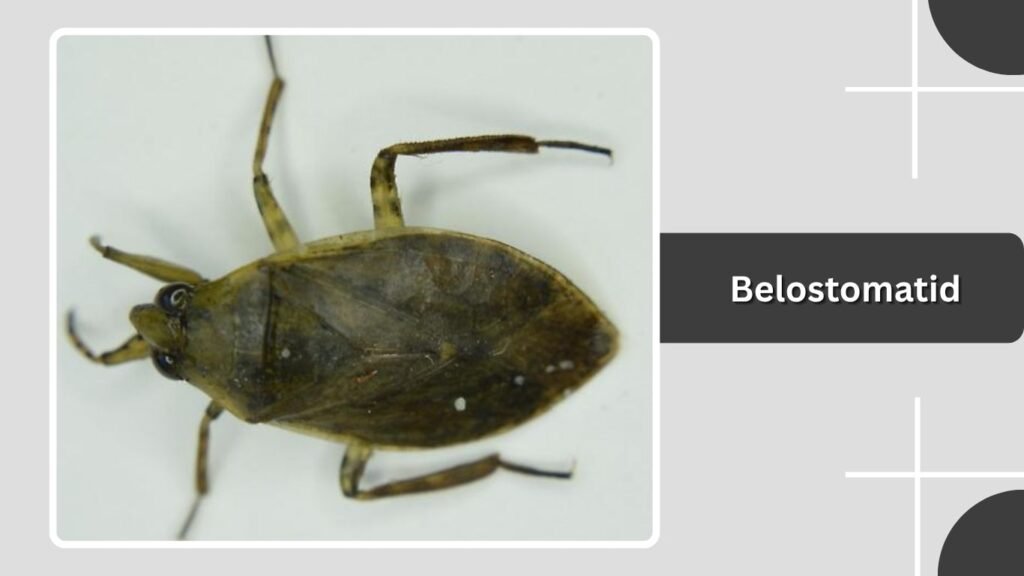
Belostomatids are large aquatic insects belonging to the family Belostomatidae. They are commonly known as giant water bugs, electric-light bugs, or toe-biters. These powerful freshwater predators use grasping front legs and piercing mouthparts to capture fish, tadpoles, insects, and other small aquatic animals.
Identification
- Broad, oval, and flattened body
- Usually brown, tan, or dark olive in color
- Strong, curved front legs for gripping prey
- Short antennae hidden beneath the head
- Wide hind legs adapted for swimming
- Sharp beak folded under the body
- Adults range from about 0.8 to 4 inches long
- Often resemble dead leaves underwater
Habitat and Distribution
Belostomatids inhabit ponds, lakes, marshes, wetlands, drainage ditches, and slow-moving streams. They usually hide among aquatic vegetation, submerged branches, muddy bottoms, and fallen leaves. Members of this family occur worldwide, with the greatest variety found in warm tropical and subtropical regions. Adults can fly between water sources and may gather around bright outdoor lights.
Diet and Hunting Behavior
Belostomatids are ambush predators that remain still until prey comes close. They seize animals with their powerful front legs and insert a sharp beak into the body. Digestive saliva breaks down the prey’s internal tissues, which are then consumed. Their diet includes mosquito larvae, aquatic insects, snails, tadpoles, small fish, crustaceans, and occasionally small amphibians.
Reproduction and Parental Care
Belostomatids are notable for their unusual parental behavior. In some species, females glue eggs onto the male’s back. The male carries, cleans, and aerates the eggs until they hatch. Other species attach eggs to aquatic plants, while males remain nearby to guard and moisten them. This care improves the eggs’ chances of survival.
10. Water Measurer
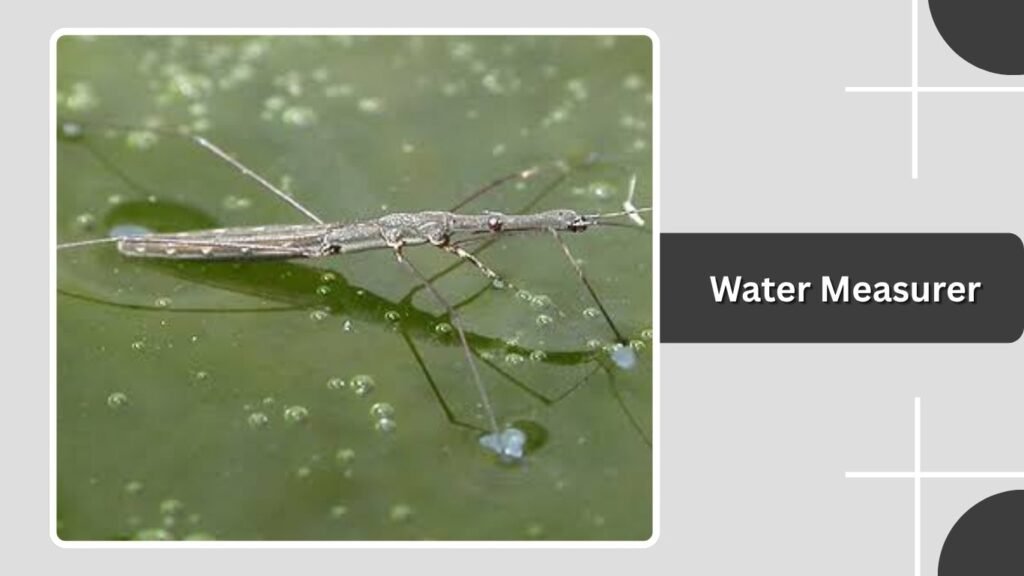
Water measurers are slender aquatic insects belonging to the family Hydrometridae. They move slowly across the surface of ponds, marshes, and quiet streams, appearing to carefully “measure” the water with each step. Their extremely thin bodies and long legs make them easy to distinguish from broader, faster-moving water striders.
Identification
- Extremely long, narrow, stick-like body
- Usually brown, gray, or dark reddish-brown
- Small head with prominent eyes
- Six long, delicate legs
- Slow, careful walking movement
- Adults generally measure 0.3 to 0.5 inches long
- Rest and walk directly on the water’s surface
- Resemble tiny floating twigs or needles
Habitat and Distribution
Water measurers live around ponds, marshes, wetlands, slow streams, and sheltered lake edges. They prefer calm, shallow water with floating vegetation, reeds, algae, or fallen leaves. These insects often remain close to the shoreline, where they can hide among plants. Different species occur across North America, Europe, Asia, Africa, and Australia.
Diet and Feeding Behavior
Water measurers are small predators and scavengers. They feed mainly on tiny insects, springtails, mosquito larvae, and other invertebrates trapped on or near the water’s surface. They approach prey slowly, hold it with their front legs, and pierce it with a slender beak. They may also consume dead insects floating on the water.
Movement and Life Cycle
Water measurers rely on water-repellent hairs and surface tension to keep their lightweight bodies above the water. Unlike water striders, they usually walk slowly rather than skating rapidly. Females lay eggs on aquatic plants and other damp surfaces near the water. Young nymphs resemble miniature adults and pass through several stages before reaching maturity.
11. Water Treader
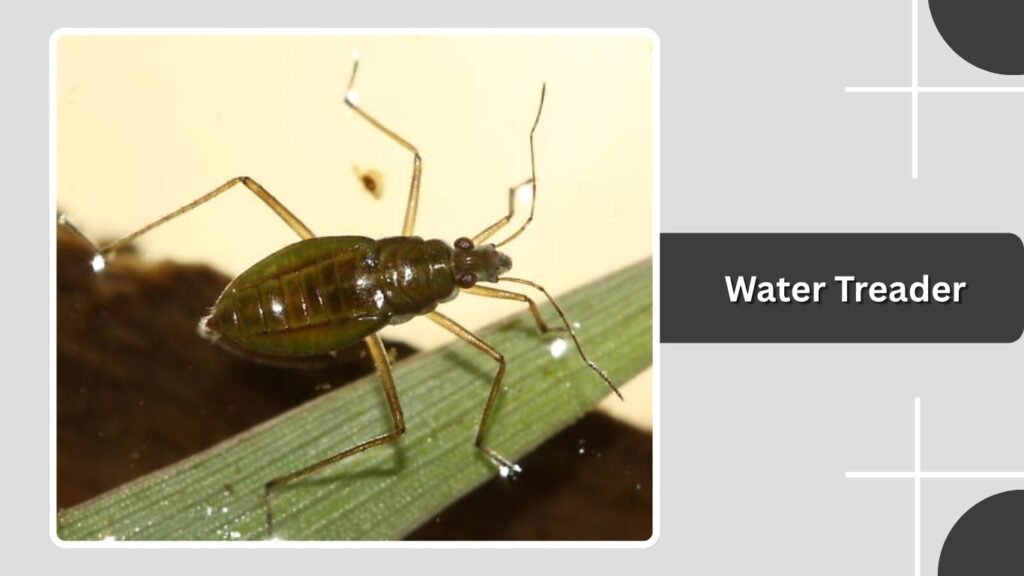
Water treaders are small semiaquatic insects belonging mainly to the family Mesoveliidae. They live along the edges of ponds, streams, marshes, and wetlands, where they walk over floating plants and the water’s surface. Their slender bodies and quick movements help them hunt tiny insects in damp freshwater habitats.
Identification
- Small, narrow, and delicate body
- Usually brown, greenish-brown, or gray
- Six long, slender legs
- Prominent eyes on the sides of the head
- Long antennae extending forward
- Adults usually measure 0.1 to 0.2 inches long
- May have fully developed wings or no visible wings
- Move quickly across floating plants and calm water
Habitat and Distribution
Water treaders are commonly found around ponds, marshes, slow streams, swamps, and wet meadows. They usually stay near shorelines covered with moss, algae, duckweed, fallen leaves, and aquatic vegetation. Some species walk directly on the water, while others remain on damp soil or floating plants. They occur in tropical and temperate regions worldwide.
Diet and Feeding Behavior
Water treaders are predators and scavengers that feed on tiny insects, springtails, mites, insect eggs, and other small invertebrates. They search across floating leaves and moist surfaces for suitable prey. After capturing a small animal with their front legs, they pierce it with a pointed beak and consume its internal fluids.
Life Cycle and Behavior
Female water treaders place their eggs in moist plant tissue, moss, or vegetation near the water. The young nymphs resemble smaller, wingless adults and pass through several growth stages. These insects are active runners and can move rapidly when disturbed. Winged adults may fly to new wetlands when their habitat becomes dry or overcrowded.
12. Broad-Shouldered Water Strider
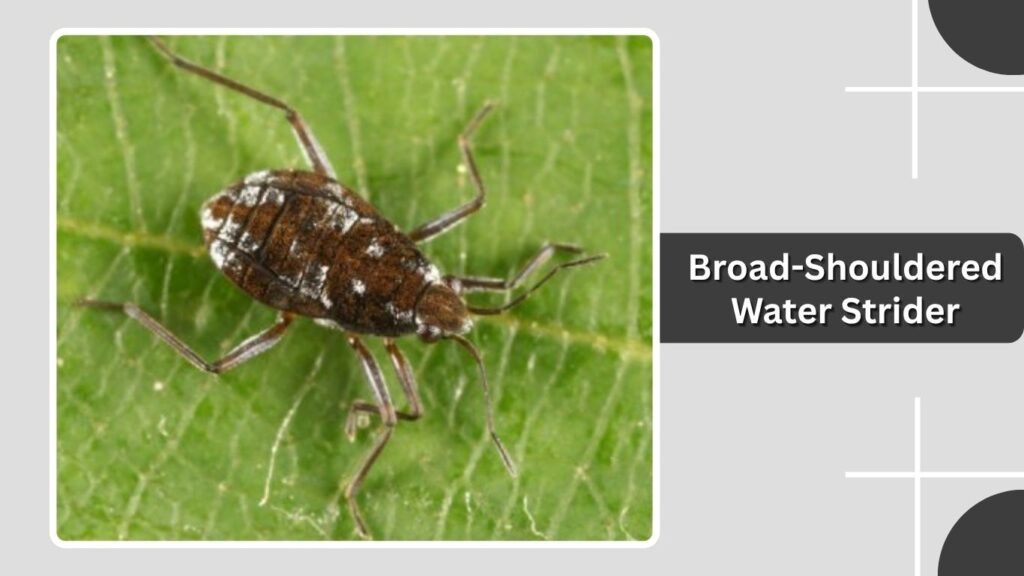
Broad-shouldered water striders are semiaquatic insects belonging mainly to the family Veliidae. They are smaller and more compact than common water striders and often live near shorelines, rocks, and aquatic vegetation. Their water-repellent legs allow them to move across the surface without sinking.
Identification
- Small, compact, and oval-shaped body
- Broad thorax or shoulder area
- Usually dark brown, black, or gray
- Six water-repellent legs
- Shorter legs than common water striders
- Adults commonly measure 0.1 to 0.3 inches long
- May have fully developed, shortened, or absent wings
- Move quickly across calm or gently flowing water
Habitat and Distribution
Broad-shouldered water striders live around ponds, marshes, lakes, slow streams, and sheltered riverbanks. They are often found among floating leaves, algae, rocks, fallen branches, and shoreline vegetation. Some species prefer running water, while others inhabit quiet pools. Members of this group occur in temperate and tropical regions worldwide.
Diet and Feeding Behavior
These insects are small predators and scavengers that feed on mosquitoes, flies, springtails, insect larvae, and other tiny invertebrates. They detect vibrations created by struggling prey on the water’s surface. After approaching quickly, they hold the prey with their front legs and pierce it with a pointed feeding beak.
Movement and Life Cycle
Broad-shouldered water striders use surface tension and water-repellent body hairs to remain above the water. They can run, jump, or glide rapidly when threatened. Females lay eggs on aquatic plants, rocks, or damp surfaces near the shoreline. Nymphs resemble smaller adults and develop through several stages before reaching maturity.
13. Riffle Bug
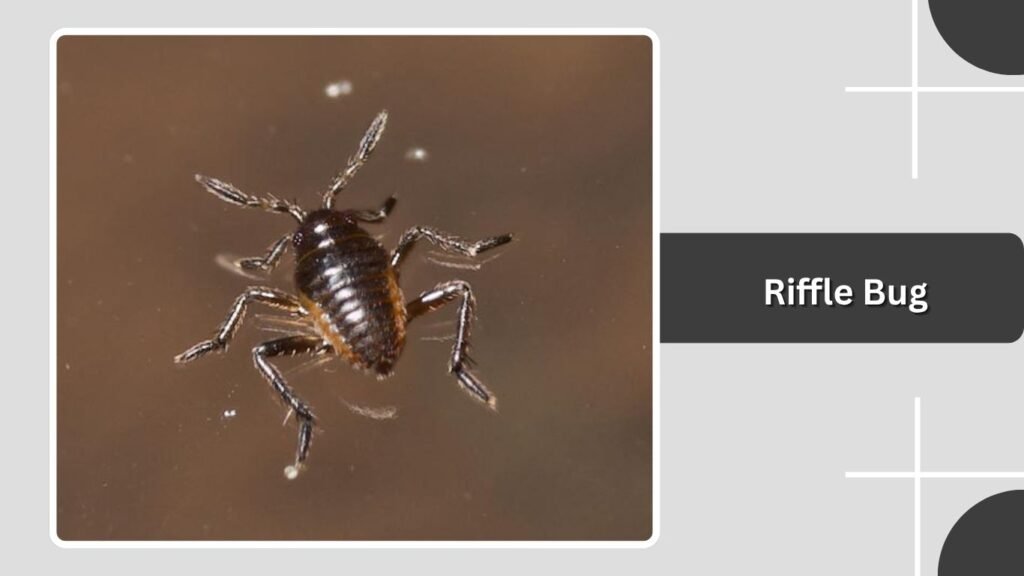
Riffle bugs are small aquatic insects commonly associated with clean, fast-flowing streams and rivers. Most belong to the family Elmidae and are also called riffle beetles. Both adults and larvae live underwater, where they cling to rocks, submerged wood, and aquatic plants in oxygen-rich water.
Identification
- Small, oval, or elongated body
- Usually dark brown, black, or reddish-brown
- Hard, textured wing covers
- Short, sturdy legs with strong claws
- Adults commonly measure 0.04 to 0.3 inches long
- Larvae are narrow, segmented, and worm-like
- Often found crawling on rocks in flowing water
- Rarely swim freely for long periods
Habitat and Distribution
Riffle bugs prefer cool, clean streams and rivers with strong currents and high oxygen levels. They usually live beneath stones, on submerged logs, or among aquatic mosses and algae. Different species occur throughout North America, Europe, Asia, Africa, and other regions with suitable freshwater habitats.
Diet and Feeding Behavior
Most riffle bugs feed on algae, bacteria, fungi, and decaying organic material growing on underwater surfaces. They slowly crawl across rocks and wood while scraping away this thin layer of food. Their feeding activity helps break down plant matter and supports nutrient recycling within streams.
Life Cycle and Environmental Importance
Female riffle bugs lay eggs on submerged rocks, wood, or plants. The larvae remain underwater and pass through several growth stages before pupating in damp areas near the stream. Because many species require clean, well-oxygenated water, their presence can indicate good water quality and a healthy freshwater ecosystem.
14. Marsh Treader
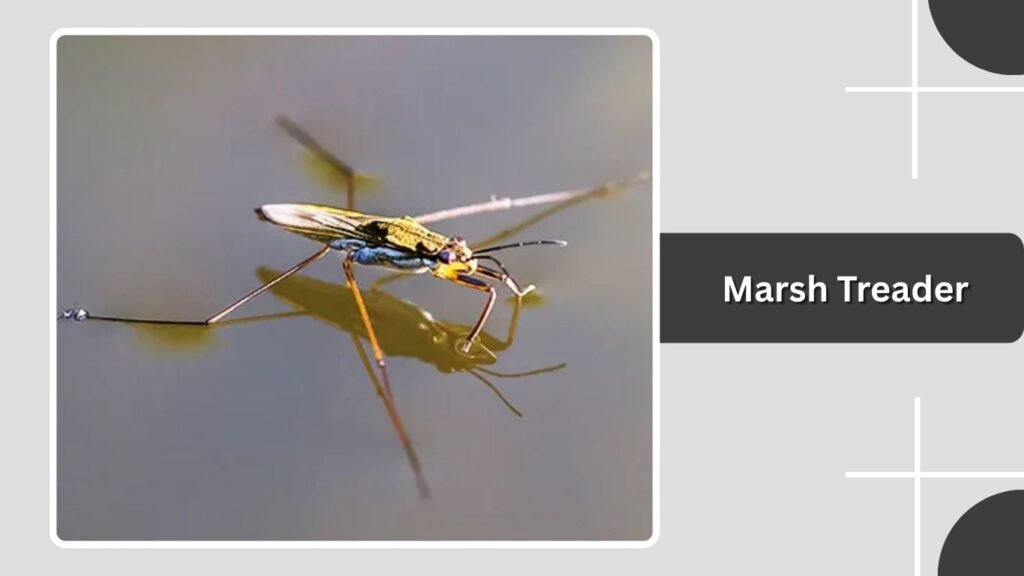
Marsh treaders are small semiaquatic insects belonging to the family Hebridae. They live around damp shorelines, marshes, ponds, and slow-moving streams. These insects are sometimes called velvet water bugs because their bodies are covered with fine hairs that help repel water and give them a slightly fuzzy appearance.
Identification
- Very small, oval, or slightly elongated body
- Usually dark brown, gray, or black
- Fine, velvet-like hairs covering the body
- Long antennae extending from the head
- Six slender legs adapted for walking on wet surfaces
- Adults usually measure about 0.05 to 0.15 inches long
- Wings may be fully developed or shortened
- Often move slowly among moss, mud, and floating vegetation
Habitat and Distribution
Marsh treaders live in moist environments near ponds, marshes, swamps, lakes, and slow streams. They are often found among wet moss, algae, mud, fallen leaves, and dense shoreline vegetation. Some species walk on the water’s surface, but many remain on damp ground close to the water. They occur in many temperate and tropical regions worldwide.
Diet and Feeding Behavior
Marsh treaders are predators and scavengers that feed on mites, springtails, insect eggs, small larvae, and other tiny invertebrates. They search through moist vegetation and organic debris for prey. Their sharp feeding beak pierces the prey’s body, allowing them to consume its fluids. They may also feed on recently dead insects.
Life Cycle and Behavior
Female marsh treaders lay their eggs in moss, damp soil, plant tissue, or decaying vegetation near water. The nymphs resemble smaller versions of the adults and develop through several stages. Their small size and dark coloring help them remain hidden. When disturbed, they may run quickly into vegetation or beneath wet debris.
15. Water Cricket
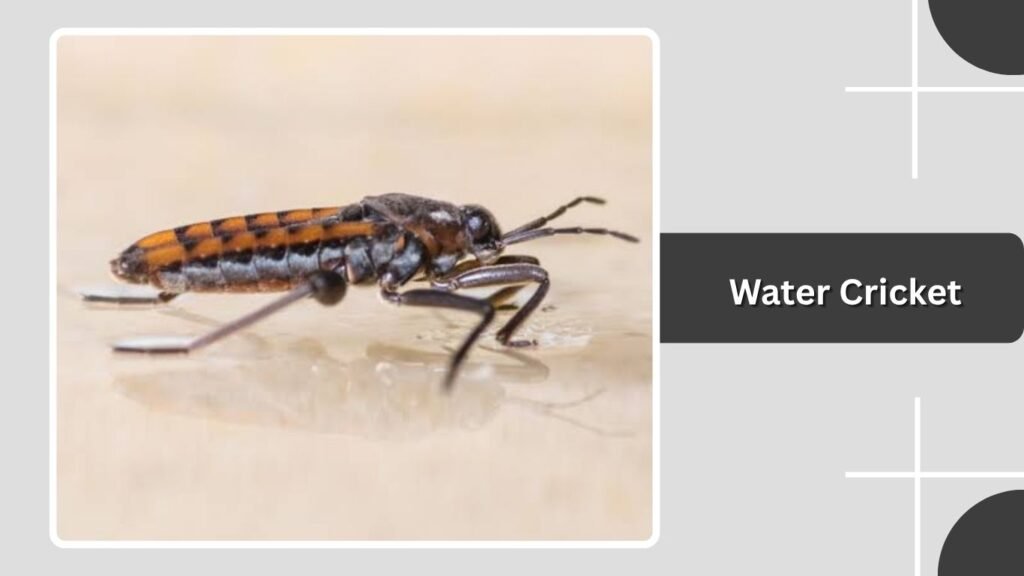
Water crickets are small semiaquatic insects commonly associated with the family Veliidae. They are closely related to water striders but usually have shorter legs and more compact bodies. These insects move rapidly across calm water, wet rocks, and shoreline vegetation while searching for tiny prey.
Identification
- Small, compact, and slightly oval body
- Usually dark brown, black, or reddish-brown
- Six relatively short, water-repellent legs
- Long antennae extending from the head
- Fine hairs covering parts of the body and legs
- Adults generally measure about 0.15 to 0.35 inches long
- May have full wings, short wings, or no functional wings
- Run quickly across water and damp surfaces
Habitat and Distribution
Water crickets usually live along ponds, streams, marshes, springs, and lake edges. They prefer shaded places with stones, moss, algae, fallen leaves, and dense shoreline plants. Some species favor gently flowing water, while others occupy quiet pools. They are found in many temperate and tropical regions around the world.
Diet and Feeding Behavior
Water crickets are predators and scavengers that eat small flies, mosquito larvae, springtails, insect eggs, and other tiny invertebrates. They detect vibrations made by struggling prey and move quickly toward it. The insect holds its prey with its front legs and uses a pointed beak to extract body fluids.
Movement and Life Cycle
Water crickets stay above the surface because microscopic hairs on their bodies repel water. They can run rapidly, jump short distances, and hide beneath plants or stones when threatened. Females lay eggs on damp vegetation or objects near water. The nymphs resemble smaller adults and develop through several stages before reaching maturity.
FAQs
1. What is considered a water bug?
A water bug is an insect that lives in or around freshwater habitats such as ponds, lakes, marshes, and streams. The term includes several groups, including giant water bugs, water striders, backswimmers, water boatmen, water scorpions, and creeping water bugs.
2. Are water bugs dangerous to humans?
Most water bugs are harmless and try to avoid people. However, predatory species such as giant water bugs, backswimmers, and water scorpions can deliver painful defensive bites when handled or trapped against the skin. These bites are usually temporary and do not spread diseases.
3. Do water bugs bite or sting?
Water bugs do not have true stingers, but some species can bite with sharp, piercing mouthparts. Giant water bugs are especially known for painful bites. Water striders, water boatmen, riffle bugs, and marsh treaders rarely cause problems for humans.
4. What do water bugs eat?
Their diets vary by species. Predatory water bugs eat mosquito larvae, aquatic insects, tadpoles, crustaceans, small fish, and snails. Other species, including many water boatmen and riffle bugs, mainly consume algae, microorganisms, decaying plants, and organic debris.
5. How can you tell water boatmen and backswimmers apart?
Water boatmen usually swim upright with their backs facing upward and often feed on algae or organic material. Backswimmers swim upside down with their bellies facing the surface and actively hunt small animals. Backswimmers can also deliver a painful bite when disturbed.
