
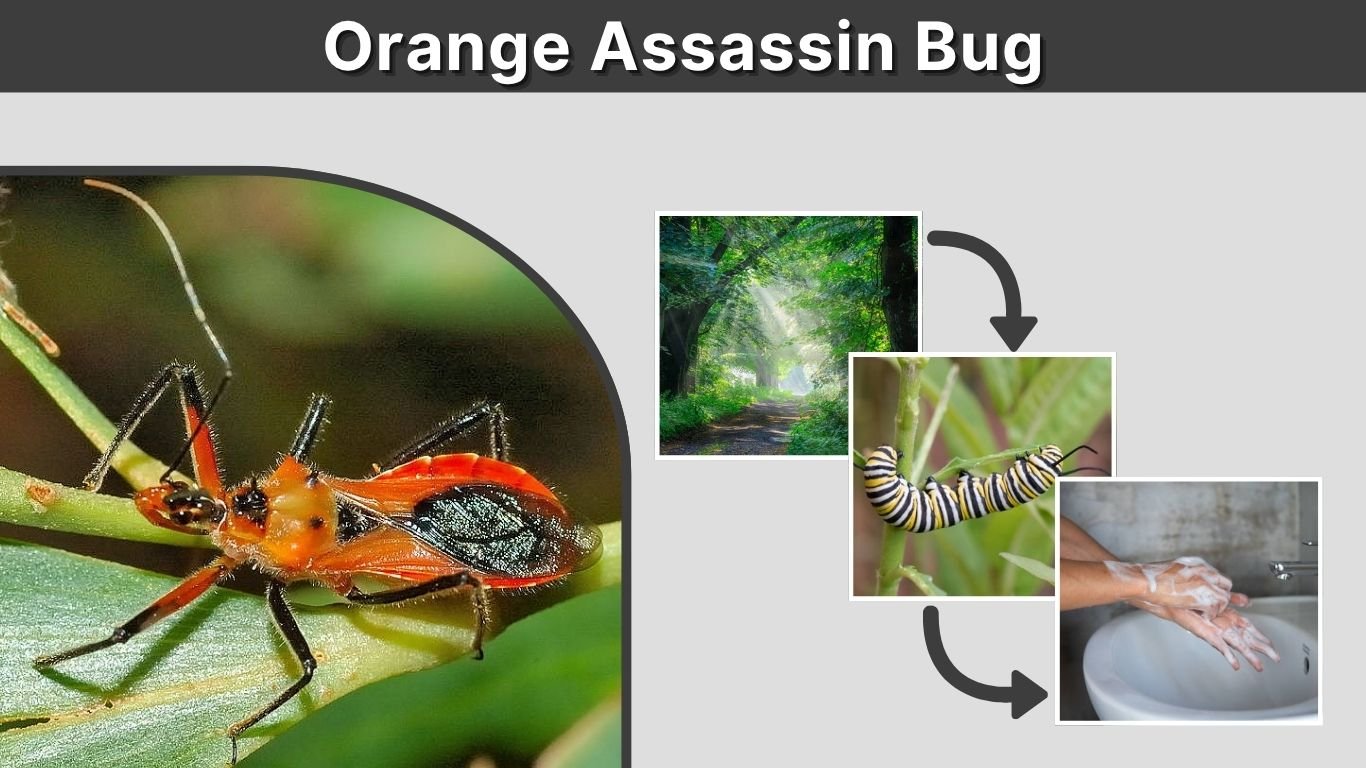
An orange assassin bug is a brightly colored predatory insect commonly seen on leaves, flowers, tree trunks, and garden plants. The name most often refers to Pselliopus barberi, but several other assassin bugs—including milkweed assassin bugs and young wheel bugs—can also appear orange and black. These insects help control plant pests and generally avoid people. However, they have a strong piercing beak and may deliver a painful defensive bite when picked up, trapped against the skin, or handled carelessly.
What Is an Orange Assassin Bug?
The true orange assassin bug is Pselliopus barberi, a member of the assassin bug family Reduviidae. It is recognizable by its vivid orange body, black markings, banded legs, long antennae, and narrow head. Adults are approximately ½ inch long and may overwinter beneath loose tree bark.
However, “orange assassin bug” is also used informally for several similar insects:
| Possible identity | Typical appearance | Main clue |
| Orange assassin bug | Mostly orange with black bands | Broad body and strongly banded legs |
| Milkweed assassin bug | Orange or red body with long black legs | Very slender body and long, hairy legs |
| Wheel bug nymph | Bright orange-red abdomen with dark legs | Wingless; develops a wheel-shaped crest as an adult |
| Ringed assassin bug | Dull orange, black, and white | More pale markings than the orange assassin bug |
Color alone is not enough for an exact identification. Body shape, wings, leg markings, location, size, and life stage should also be examined.
How to Identify an Orange Assassin Bug
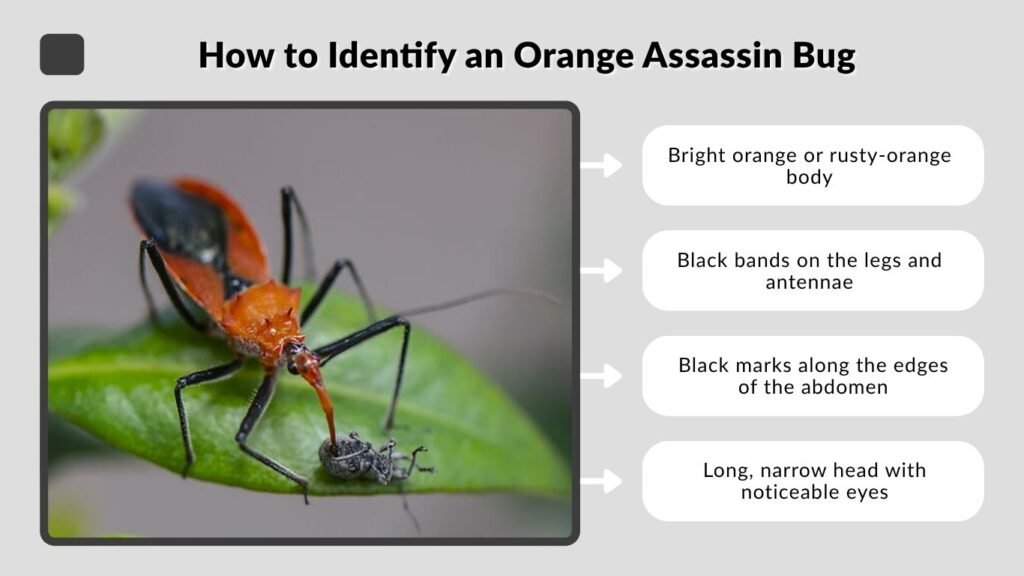
Adult Pselliopus barberi has a compact orange body with dark marks around the abdomen. The legs are orange or yellowish with repeated black bands, creating a striped appearance. The antennae are long and usually display alternating light and dark sections. Photographed adults are commonly around 12–14 millimetres long.
Key Identification Features
- Bright orange or rusty-orange body
- Black bands on the legs and antennae
- Black marks along the edges of the abdomen
- Long, narrow head with noticeable eyes
- Thick, curved beak folded beneath the head
- Six slender legs, sometimes with small spines
- Overlapping wings covering most of an adult’s abdomen
Like other assassin bugs, it has a protruding head and a strong rostrum, or beak, used to pierce prey. Assassin bugs vary greatly in color and may be black, brown, green, red, orange, or patterned. Depending on the species, adults range from about 5 to 30 millimetres long.
Orange Assassin Bug Nymph
An orange assassin bug nymph is an immature insect that has not developed full-sized wings. It may resemble the adult in color but usually has a softer-looking abdomen, visible body segments, and small wing pads—or no visible wings at all.
Some nymphs are more yellow-orange than adults and may have small spines along the body. Their legs and antennae usually retain the distinctive black banding. Young assassin bugs are active predators and use the same piercing mouthparts as adults.
Nymph vs. Adult
| Feature | Nymph | Adult |
| Wings | Absent or present as small pads | Fully developed |
| Body | More segmented and sometimes spiny | Smoother, with wings covering the back |
| Size | Smaller | Around ½ inch in P. barberi |
| Reproduction | Not mature | Reproductively mature |
| Feeding | Predatory | Predatory |
A bright orange nymph is not always Pselliopus barberi. Wheel bug nymphs may be orange-red and black, while milkweed assassin bug nymphs can have orange bodies and unusually long dark legs.
Orange Assassin Bug vs. Milkweed Assassin Bug
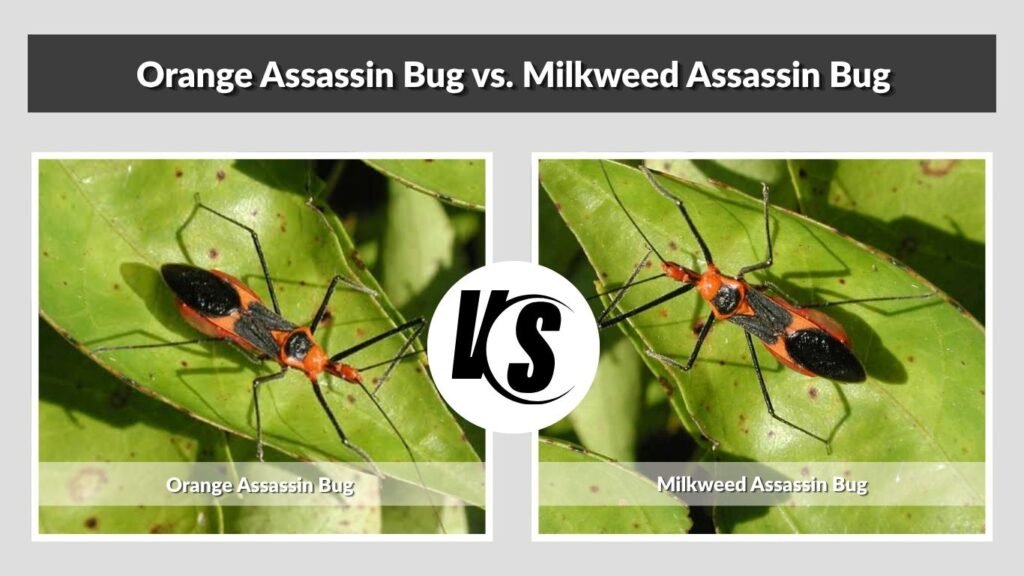
The milkweed assassin bug, Zelus longipes, is another common orange-and-black species. United States populations typically have orange bodies with black markings, pear-shaped heads, narrow necks, and long hairy legs. The species can vary considerably in size and color in other parts of its range.
The two insects can be separated by their proportions:
- Orange assassin bug: Shorter, broader, with strongly banded orange-and-black legs
- Milkweed assassin bug: Longer and slimmer, with very long, mostly black legs
- Orange assassin bug wings: Usually orange or brownish-orange
- Milkweed assassin bug wings: Commonly dark or black against an orange body
Despite its name, the milkweed assassin bug does not feed on milkweed sap. It hunts other insects and may be found on many types of garden and crop plants. UF/IFAS describes it as a generalist predator, while LSU notes that adults are slender, bright orange and black, and approximately one inch long.
Are Orange Assassin Bugs Dangerous?
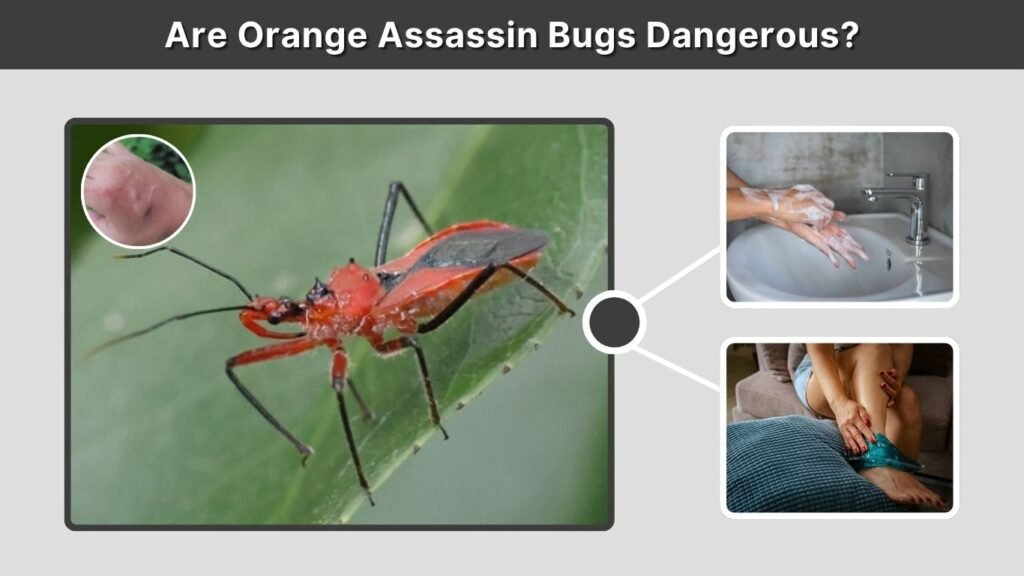
Orange assassin bugs are not aggressive and do not normally seek contact with humans. They are predatory insects that hunt arthropods rather than feeding on human blood. Nevertheless, an assassin bug may defend itself by piercing the skin when squeezed or handled.
The bite can be intensely painful. Penn State Extension advises against directly touching or holding assassin bugs because they can inflict a painful bite.
They do not sting, and they are not “poisonous” in the sense that merely touching the insect causes poisoning. The danger comes from the mechanical puncture and saliva delivered through the beak.
What to Do After a Bite
For a mild reaction:
- Wash the area gently with soap and water.
- Apply a cold, damp cloth or wrapped ice pack for 10–20 minutes.
- Avoid scratching or pressing the affected area.
- Watch for worsening pain, swelling, or signs of infection.
Seek emergency medical help for breathing difficulty, swelling of the face or throat, faintness, a rapid weak pulse, widespread hives, or other signs of a serious allergic reaction. Medical attention is also appropriate when swelling continues to worsen or the wound appears infected.
Is an Orange Assassin Bug a Kissing Bug?
Orange assassin bugs and kissing bugs belong to the same broad insect family, but they have very different feeding habits.
Ordinary orange assassin bugs prey on insects. Kissing bugs are triatomine bugs that consume blood from animals or people. Infected kissing bugs can spread the parasite responsible for Chagas disease when their feces enter broken skin, the eyes, or the mouth.
A typical orange assassin bug has bold black banding across its legs and a predominantly orange body. Kissing bugs are generally broader and flatter, with colored markings along the exposed sides of the abdomen. Because identification can be difficult, avoid touching an unfamiliar assassin bug and preserve it in a closed container when professional identification is needed.
What Do Orange Assassin Bugs Eat?
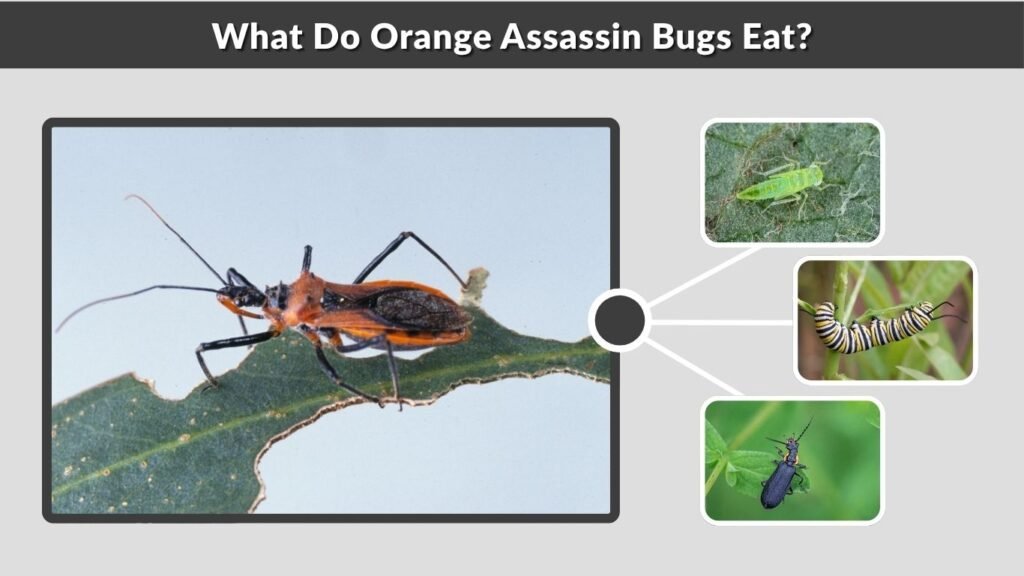
Orange assassin bugs are hunters. They capture leafhoppers, aphids, caterpillars, beetles, flies, and other small arthropods. An assassin bug typically stalks or waits for prey, grabs it with its legs, and inserts its beak into the victim.
Assassin bugs are considered beneficial natural enemies because they consume numerous garden and crop pests. However, they are generalist predators and may occasionally capture pollinators or other useful insects.
They do not normally chew leaves, suck citrus sap, eat fruit, or damage plant roots. Therefore, an orange assassin bug resting on a citrus tree, vegetable plant, or flower is usually hunting rather than harming the plant.
Orange Assassin Bug Habitat and Distribution
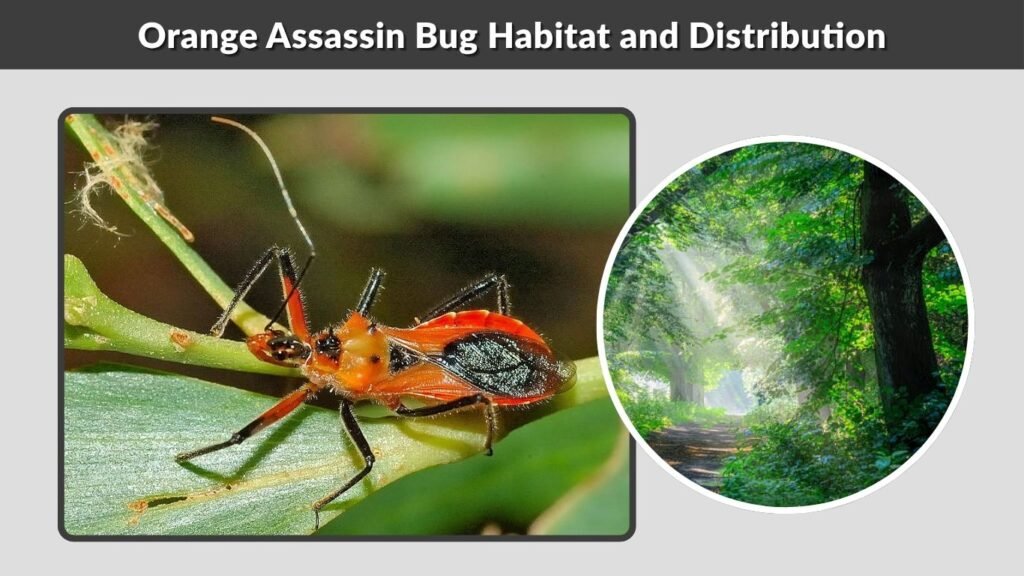
Pselliopus barberi is found in North America and has been recorded in several eastern and central areas. It may be encountered in gardens, woodland edges, parks, meadows, and vegetation near buildings.
Adults and nymphs may be seen:
- On leaves and flower stems
- Beneath or on loose tree bark
- Around shrubs and woodland vegetation
- Near outdoor lights
- On plants where prey insects are abundant
- Under sheltered material during cooler weather
Adults can survive winter beneath loose bark and become active again when conditions warm.
Orange Assassin Bug in the House
An orange assassin bug found indoors is usually an accidental visitor. It may enter through a torn screen, open door, window gap, or space around utility lines. It may also be attracted to lights.
Do not pick it up with your fingers. Place a cup or container over it, slide stiff paper underneath, and release it outdoors away from doors. A single insect normally does not justify spraying indoor pesticides.
Seal gaps around windows and doors, repair screens, and reduce unnecessary outdoor lighting near entrances if assassin bugs or other insects frequently enter the home.
Orange Assassin Bug Look-Alikes
Several orange-and-black insects may be mistaken for assassin bugs.
Milkweed Bugs
Milkweed bugs have flatter, oval bodies and feed on seeds and plant tissues. They lack the assassin bug’s narrow neck and heavy predatory beak.
Boxelder Bugs
Boxelder bugs are mostly black with thin orange-red lines on their wings. Their bodies are flatter and less brightly colored.
Leaf-Footed Bug Nymphs
Young leaf-footed bugs may have orange bodies and long dark legs. Older nymphs often develop widened hind legs, while adults have leaf-shaped expansions on the rear legs.
Wheel Bug Nymphs
Wheel bug nymphs have bright orange-red abdomens and dark legs. Adults become grayish or brown and develop a distinctive toothed wheel on the upper back. Wheel bugs are beneficial predators but can also bite painfully.
FAQs
Are orange assassin bugs bad for gardens?
No. They are usually beneficial because they prey on caterpillars, leafhoppers, aphids, and other insects. They do not normally damage leaves, fruit, or plant roots, although they may occasionally catch beneficial insects.
Can an orange assassin bug fly?
Adult orange assassin bugs have developed wings and can fly. Nymphs cannot fly because they have no functional wings. An orange insect with exposed abdominal segments and small wing pads is probably immature.
How large is an orange assassin bug?
The true orange assassin bug, Pselliopus barberi, is approximately ½ inch long. Milkweed assassin bugs are longer and may approach one inch, so size can help separate the two species.
Why is an orange assassin bug on my plant?
It is probably searching for prey. Assassin bugs patrol leaves, flowers, and stems where caterpillars, aphids, flies, and other small insects are available. Its presence does not usually indicate plant damage.
Should I kill an orange assassin bug?
Killing one is generally unnecessary. Leave it alone outdoors or relocate it safely with a container when it enters a house. Avoid bare-hand contact because it may deliver a painful defensive bite.
