
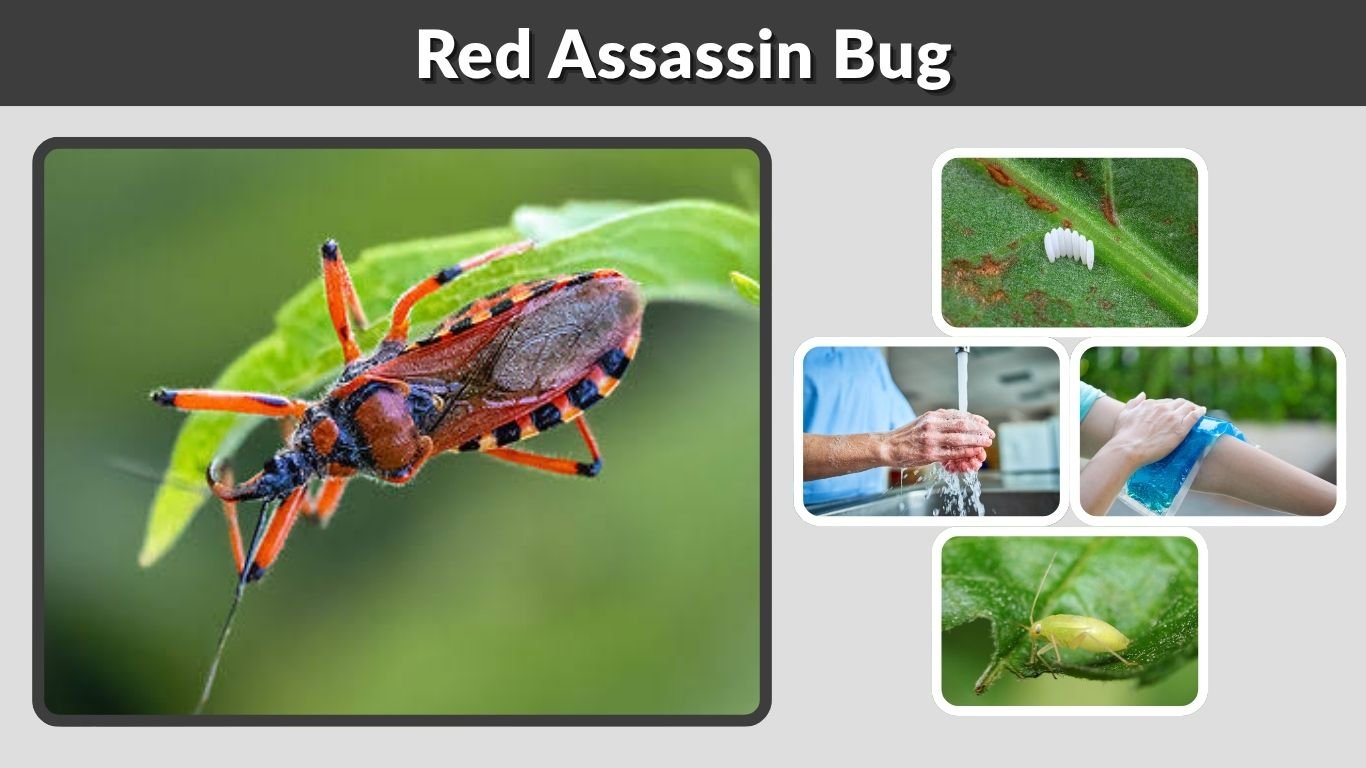
A red assassin bug can look alarming, especially when its bright abdomen contrasts with black legs, wings, or markings. However, “red assassin bug” is not the official name of one insect. People use it for several members of the assassin bug family, including red-and-black wheel bug nymphs, some Zelus species, and the red bull assassin bug. Most are helpful predators, but they should not be handled because their piercing beak can deliver a painful defensive bite.
What Is a Red Assassin Bug?
Assassin bugs belong to the family Reduviidae. Most species are predators with an elongated head, a narrow neck-like section, long legs, and a strong beak folded beneath the body. They capture insects and other arthropods, pierce them with the beak, and feed on their internal fluids.
Red coloring is especially common in immature assassin bugs. University of Florida information notes that nymphs may be brightly colored red, green, or tan, often with darker markings. As they grow, some species become brown, gray, or black and develop full-sized wings.
Common Insects Called Red Assassin Bugs
| Possible identity | Typical appearance | Main identification clue |
| Wheel bug nymph | Bright red abdomen with a black head, thorax, and legs | Wingless; adult later develops a wheel-shaped crest |
| Zelus assassin bug | Slender red, orange, green, or brown body | Long legs and a narrow head |
| Red bull assassin bug | Red-orange and black body | Scientific name: Repipta taurus |
| Other assassin bug nymph | Red or red-and-black, sometimes very small | Curved piercing beak beneath the head |
The red bull assassin is recognized taxonomically as Repipta taurus, a species in the assassin bug family. Color alone, however, is not enough for reliable identification. Body shape, wings, spines, size, location, and developmental stage are more useful.
How to Identify a Red Assassin Bug
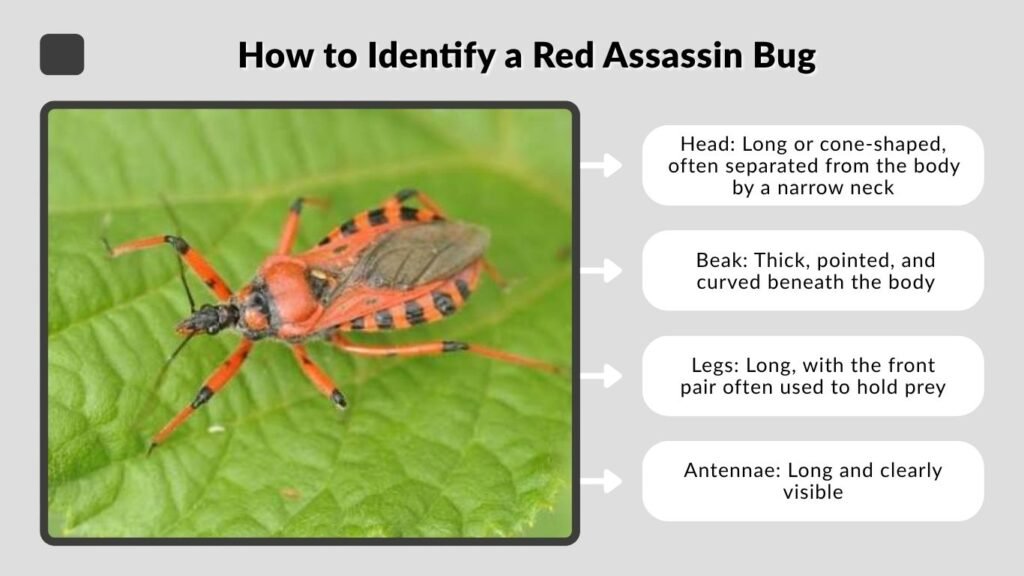
A true assassin bug generally has a narrow, elongated body rather than the rounded shape of a lady beetle. The head usually appears long, and a thick, pointed beak rests under the head or chest when the insect is not feeding.
Key Identification Features
- Head: Long or cone-shaped, often separated from the body by a narrow neck
- Beak: Thick, pointed, and curved beneath the body
- Legs: Long, with the front pair often used to hold prey
- Antennae: Long and clearly visible
- Body: Slender or moderately broad rather than round
- Color: Red, orange, and black are common in nymphs
- Wings: Missing in nymphs and fully developed in adults
Assassin bug nymphs resemble smaller, wingless adults. Texas A&M explains that they pass through five immature stages before becoming adults. Their color and appearance can change noticeably between molts.
Red Assassin Bug Nymph
A red assassin bug nymph is an immature insect, not a separate species. It has six legs, antennae, and functional piercing mouthparts, but it does not yet have adult wings.
Wheel bug nymphs are among the most common red-and-black assassin bugs reported in the United States. They typically have a vivid red abdomen with dark legs and a dark thorax. The adult looks very different: it becomes grayish-brown and develops a raised, toothed ridge resembling part of a wheel. Adult wheel bugs may reach about 1¼ inches in length.
Young nymphs may briefly remain near an egg mass after hatching. Later, they spread across branches, shrubs, garden plants, and tree trunks while searching for prey. Assassin bug eggs are commonly deposited in clusters on vegetation and other outdoor surfaces.
Are Red Assassin Bug Nymphs Dangerous?
Nymphs do not normally chase or attack people. However, their beak can pierce skin if the insect is squeezed, trapped in clothing, or picked up. Even a small nymph should be moved without direct hand contact.
Place a cup or container over the insect, slide stiff paper underneath, and carry it outdoors. This method reduces the chance of a bite while preserving a useful predator.
Red and Black Assassin Bugs in Texas
Texas has many assassin bug species, so a red-and-black insect cannot be identified by color alone. Possible matches include wheel bug nymphs, Zelus species, and the red bull assassin bug, Repipta taurus.
A Texas insect with a red abdomen, black legs, and no wings may be a wheel bug nymph. A narrower red-orange insect with developed black wings may belong to another assassin bug species. Clear photographs from above and from the side are important because several unrelated true bugs share similar colors.
For accurate identification, record the county, date, approximate size, plant or surface where it was found, and whether it had wings. Place a ruler nearby for scale, but do not handle the insect.
What Do Red Assassin Bugs Eat?
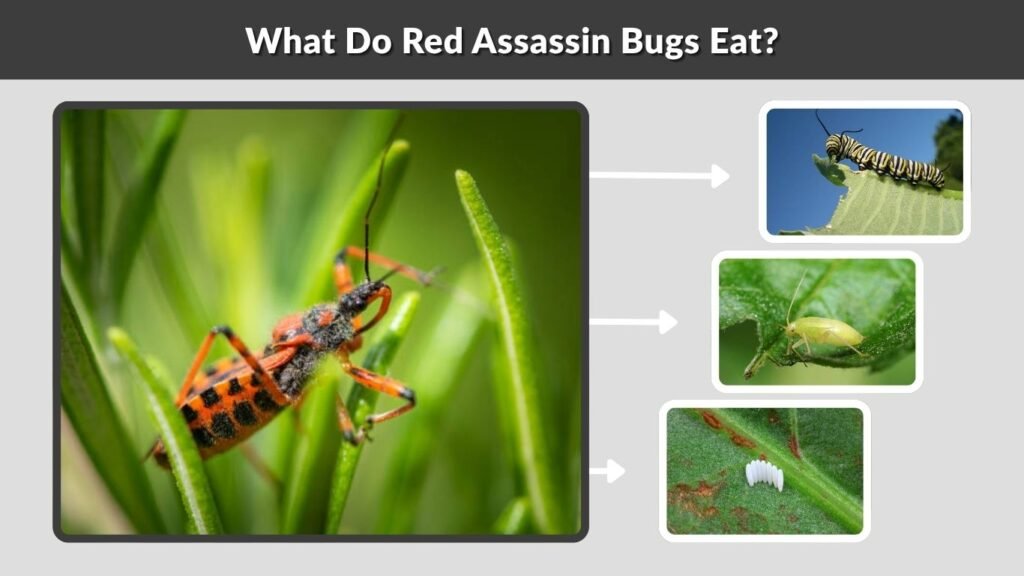
Most red assassin bugs are predators. They commonly feed on caterpillars, aphids, insect eggs, beetles, plant bugs, and other arthropods. Mississippi State University describes assassin bugs found in crops as generalist predators that attack caterpillar eggs and larvae, plant bugs, and other insects.
The bug usually stalks slowly or waits for prey. It then grabs the victim, inserts its beak, injects saliva, and consumes the softened contents. This feeding behavior is the reason for the dramatic name “assassin bug.”
Because they eat many plant pests, assassin bugs are generally considered beneficial in gardens. However, they are not selective and may occasionally capture pollinators or other helpful insects.
Are Red Assassin Bugs Dangerous to Humans?
Most predatory red assassin bugs do not feed on people and are not aggressive. Their main risk is a painful defensive bite. Extension sources compare some assassin bug bites to a bee sting and note that temporary swelling or numbness may occur.
The insect does not sting. It punctures the skin with the same beak used to capture prey. Bites usually happen after accidental contact or handling.
Red Assassin Bug vs. Kissing Bug
Kissing bugs are members of the assassin bug family, but they differ from common garden assassin bugs. Kissing bugs feed on blood and can spread the parasite responsible for Chagas disease through infected feces.
The CDC specifically lists wheel bugs among insects commonly mistaken for kissing bugs and notes that these look-alikes do not carry the Chagas parasite. Kissing bugs are generally flattened, with long heads and colored bands or markings along the outer abdomen. A red-and-black pattern by itself does not prove that an insect is a kissing bug.
Do not crush a suspected kissing bug with bare hands. Capture it in a sealed container and contact a local extension office, health department, or qualified insect-identification service.
What to Do After a Red Assassin Bug Bite
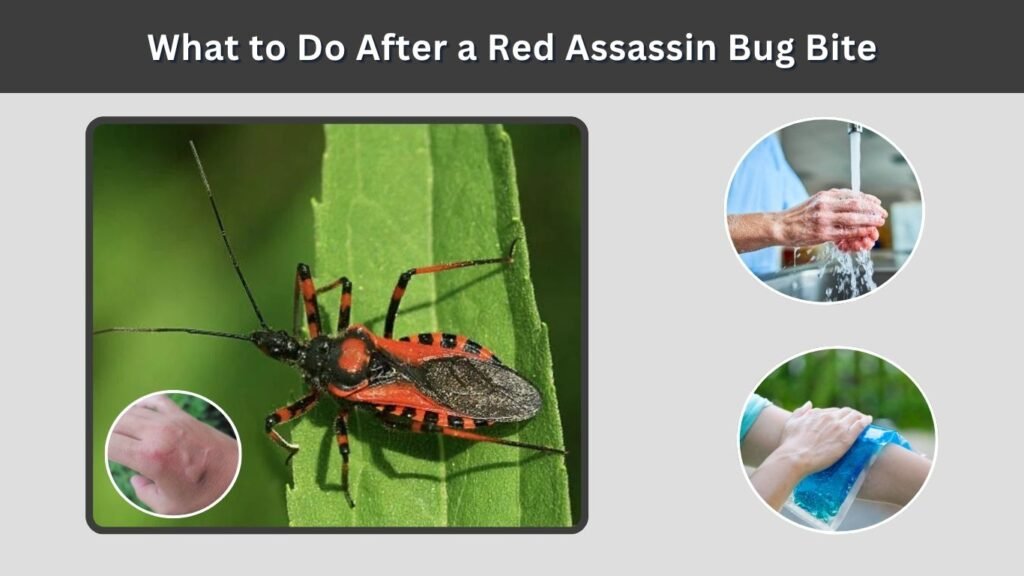
Wash the area gently with soap and water. Apply a cool, damp cloth or an ice pack wrapped in fabric for 10–20 minutes to reduce discomfort and swelling. Avoid scratching the puncture.
Seek urgent medical care for difficulty breathing, swelling of the face or throat, faintness, or other signs of a severe allergic reaction. Medical advice is also appropriate if pain becomes severe, redness continues to spread, or the area develops drainage or other signs of infection.
Should You Remove Red Assassin Bugs?
Outdoor assassin bugs usually do not need to be killed. They do not normally damage plants, furniture, clothing, or stored food. In a garden, they may help reduce populations of caterpillars and other pests.
Move the insect when it is indoors or in a place where children or pets may touch it. Use a container rather than grabbing it. Broad insecticide treatment is rarely justified for a single assassin bug and may kill harmless or beneficial insects.
FAQs
Is a red assassin bug poisonous?
It is not poisonous to touch, but it can deliver a painful bite with its piercing beak. The bite may cause localized pain, redness, swelling, or temporary numbness.
Can a red assassin bug fly?
Adults of many species can fly because they have developed wings. Nymphs cannot fly. A bright red, wingless insect may therefore be an immature assassin bug.
Why does an assassin bug have a red abdomen?
Red coloring may be part of the species’ normal pattern or a feature of the immature stage. Wheel bug nymphs are a common example of assassin bugs with bright red abdomens.
Are red assassin bugs good for gardens?
Generally, yes. They hunt caterpillars, aphids, plant bugs, beetles, and other arthropods. They are general predators, so they may occasionally capture beneficial insects as well.
How can I identify one accurately?
Examine the beak, head shape, wings, legs, spines, size, and location instead of relying only on color. Clear top and side photographs can help an extension specialist confirm the species.
