
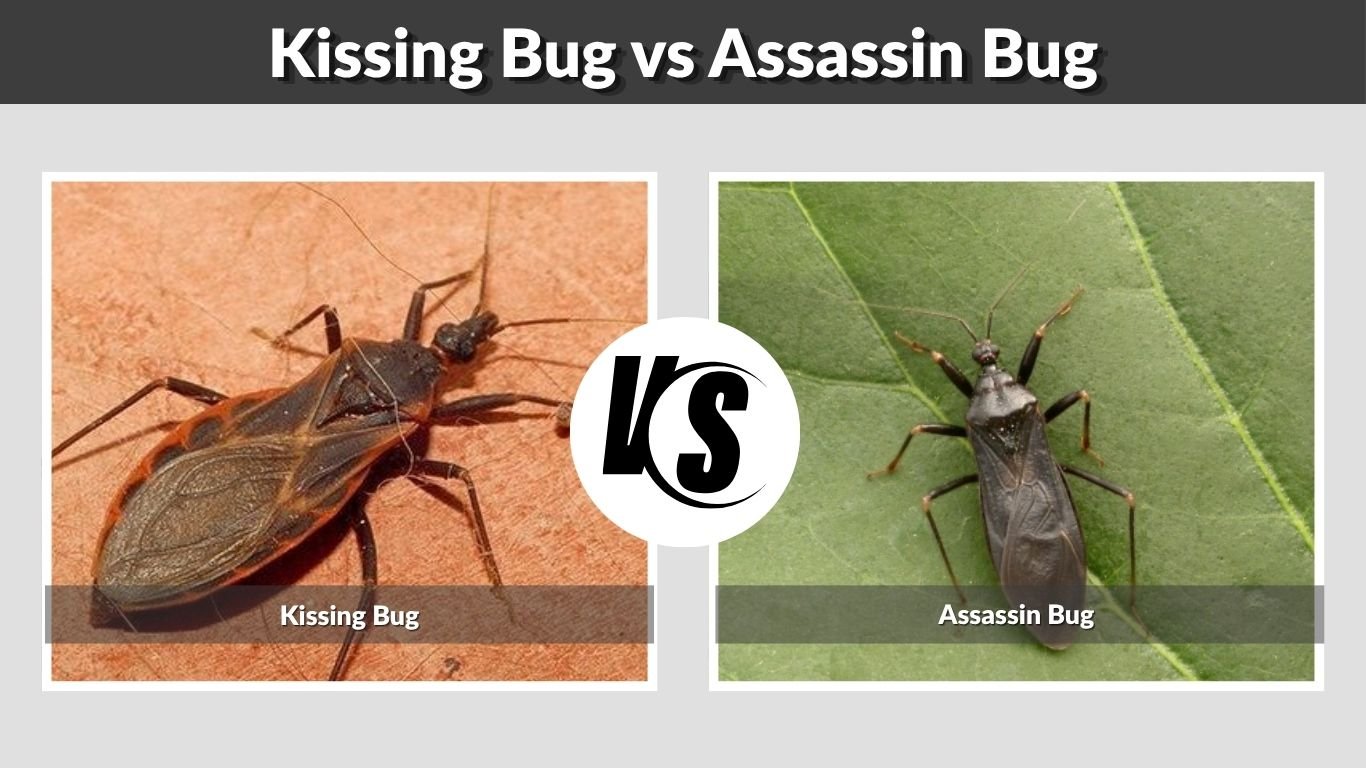
Kissing bugs and assassin bugs are closely related, but the terms are not interchangeable. Every kissing bug is an assassin bug, but most assassin bugs are not kissing bugs. Typical assassin bugs hunt insects and can help control garden pests. Kissing bugs form a specialized blood-feeding group that may carry the parasite responsible for Chagas disease. Learning to compare their heads, bodies, feeding habits and bite reactions can help you identify them safely.
Kissing Bug vs. Assassin Bug: Quick Comparison
Assassin bugs belong to the family Reduviidae, which contains thousands of species. Most are predators of insects and other arthropods. Kissing bugs belong to the subfamily Triatominae within that same family, but they feed primarily on the blood of vertebrates.
| Feature | Kissing bug | Typical assassin bug |
| Classification | A specialized assassin bug | Any member of the Reduviidae family |
| Diet | Blood from mammals, birds or reptiles | Insects and other arthropods |
| Head | Long, narrow and cone-shaped | Usually narrow, but shape varies |
| Body | Broad, flattened abdomen | Slender, robust, spiny or oddly shaped |
| Common colors | Dark brown or black with colored abdominal edges | Green, brown, black, red, orange or gray |
| Activity | Often active at night | Many are active during the day |
| Human bite | Often painless while feeding | Usually immediately painful and defensive |
| Disease concern | Some can transmit Trypanosoma cruzi | Ordinary predatory species do not transmit Chagas |
| Garden role | Blood-feeding insect | Often a beneficial predator |
How Are Kissing Bugs and Assassin Bugs Related?
“Kissing bug” does not refer to a separate insect family. Kissing bugs are blood-feeding members of the assassin bug family.
Most assassin bugs use a short, strong beak to pierce caterpillars, flies, beetles and other prey. Kissing bugs have adapted their mouthparts and behavior for taking blood meals from vertebrates. This dietary difference is the most important distinction between them.
Why Are They Called Kissing Bugs?
Kissing bugs sometimes bite exposed skin around the face and lips while people sleep, leading to their common name. They may also feed on other exposed parts of the body.
However, their name does not mean that every bite occurs near the mouth. They are also called conenose bugs because of their elongated, cone-shaped heads.
Kissing Bug vs. Assassin Bug Identification
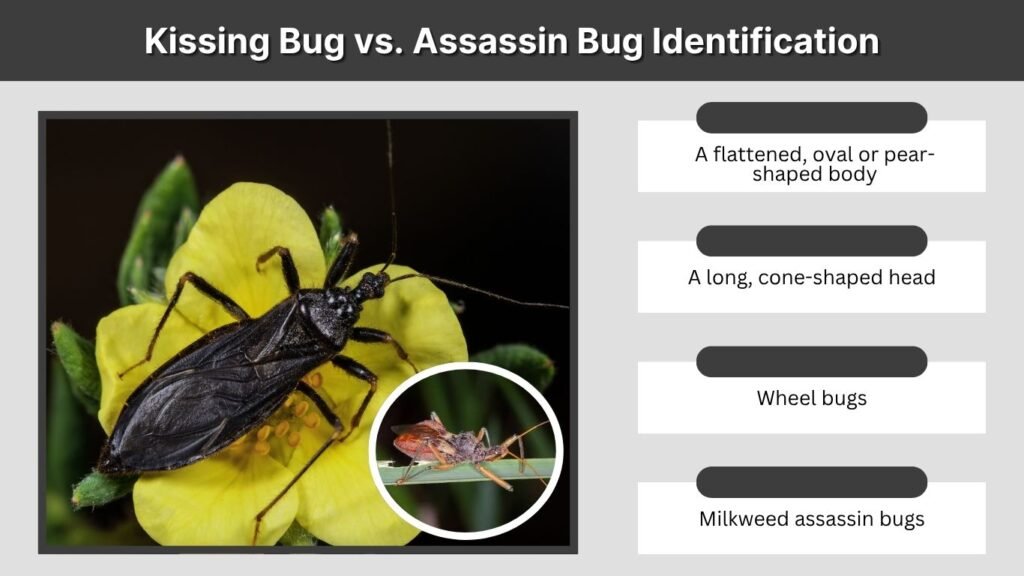
Both insects have six legs, folded wings, long antennae and piercing mouthparts. Identification therefore requires looking at several features rather than relying on color alone.
Kissing Bug Identification
A kissing bug commonly has:
- A flattened, oval or pear-shaped body
- A long, cone-shaped head
- A narrow neck behind the head
- Dark brown or black wings
- Orange, red or yellow markings along the abdomen
- Long, thin legs without leaf-shaped expansions
- A visible abdomen that may extend beyond the wings
Adult size varies by species, but many are approximately 0.5–1 inch long. Some species are larger or smaller.
Predatory Assassin Bug Identification
Ordinary assassin bugs are much more varied. Adults range from about 4–40 millimetres and may be brown, black, red, orange, green or gray. Most have an elongated head, a narrow neck, prominent eyes and a curved three-segmented beak beneath the body.
Common examples include:
- Wheel bugs
- Milkweed assassin bugs
- Pale green assassin bugs
- Leafhopper assassin bugs
- Bee assassins
- Masked hunters
- Ambush bugs
Some are thin and delicate, while others have spines, thick front legs or unusual structures on their backs.
Size and Appearance Differences
Size alone cannot confirm the insect’s identity because the two groups overlap. Head shape, abdominal markings and overall body form provide better clues.
| Identification point | Kissing bug | Other assassin bugs |
| Typical adult length | Often around 0.5–1 inch | Approximately 0.16–1.6 inches |
| Head | Very elongated and cone-like | Narrow but often shorter or differently shaped |
| Abdomen | Usually broad and flattened | May be thin, rounded or angular |
| Side markings | Frequently orange, red or yellow bands | Highly variable; may be absent |
| Front legs | Usually slender | Sometimes sticky, thickened or spiny |
| Special structures | Usually lacks a wheel-like crest | Some have crests, spines or enlarged legs |
A wheel bug is unlikely to be confused once its raised, cogwheel-like crest is visible. Green Zelus species are also easy to separate from the usually dark-colored kissing bugs.
Kissing Bug Bite vs. Assassin Bug Bite
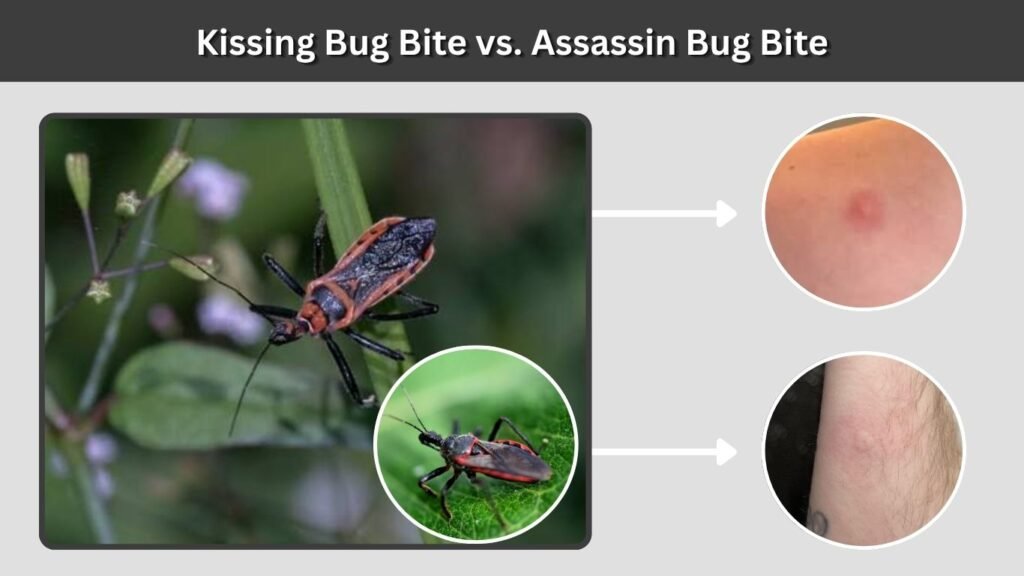
Both can pierce human skin, but the reason for biting and the immediate sensation are different.
Typical Assassin Bug Bite
Predatory assassin bugs do not hunt humans. They usually bite only when picked up, squeezed, trapped in clothing or pressed against the skin.
The bite may cause:
- Immediate sharp or burning pain
- A small puncture mark
- Redness and swelling
- Tenderness
- Itching or temporary numbness
Colorado State University notes that insect-eating assassin bugs can produce immediate pain, whereas the bites of night-feeding kissing bugs may initially go unnoticed.
Kissing Bug Bite
A kissing bug bites to obtain blood. Its bite may initially be painless, particularly when it feeds while a person is sleeping.
Possible reactions include:
- A small red bump
- Local itching
- Mild or moderate swelling
- Hives in sensitive individuals
- Several bites in an exposed area
The skin mark alone cannot reliably prove that a kissing bug caused it. Mosquitoes, fleas, bed bugs and other insects can produce similar bumps.
| Bite feature | Kissing bug | Predatory assassin bug |
| Purpose | Blood feeding | Self-defense |
| Immediate feeling | Often painless | Usually sharply painful |
| Bite timing | Commonly at night | Usually during handling or accidental contact |
| Disease relevance | Possible Chagas concern | No recognized Chagas transmission |
| Basic first aid | Wash and monitor | Wash, cool and monitor |
Do All Assassin Bugs Carry Chagas Disease?
No. Common predatory assassin bugs—including milkweed, pale green, leafhopper and wheel bugs—are not considered Chagas disease vectors.
Chagas disease is caused by the parasite Trypanosoma cruzi and is associated with infected triatomine kissing bugs. The parasite is generally passed through infected bug feces rather than injected directly during the bite. Infection can occur when contaminated feces are rubbed into the bite, eyes, mouth or another break in the skin.
Not every kissing bug carries the parasite, and finding one does not mean a person has Chagas disease. Diagnosis requires appropriate medical testing.
Milkweed Assassin Bug vs. Kissing Bug
Milkweed assassin bugs are slender predators with long legs and bright orange, red and black coloring. Their bodies are generally narrower than those of kissing bugs.
They hunt insects on flowers, shrubs and crop plants. They do not feed on human blood or transmit Chagas disease. However, they can inflict a painful defensive bite if handled.
Kissing bugs tend to have broader, flatter abdomens with contrasting bands along the outer edges. They hide during the day and emerge at night to take blood meals.
Bee Assassin vs. Kissing Bug
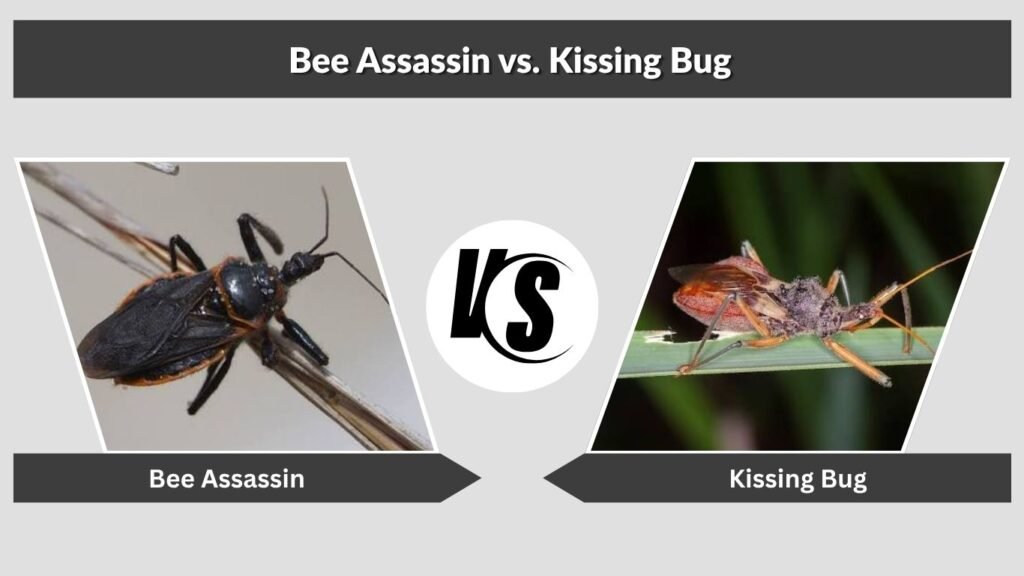
Bee assassin bugs often wait near flowers to capture bees, flies, wasps and other visiting insects. Many have strong or sticky front legs adapted for grasping prey.
Unlike kissing bugs, bee assassins:
- Hunt insects rather than vertebrates
- Usually remain on flowers and foliage
- Bite humans only in self-defense
- Are not associated with Chagas transmission
Because colors vary among species, check the head, abdomen, legs and feeding behavior rather than relying on one marking.
What to Do When You Find a Suspected Kissing Bug
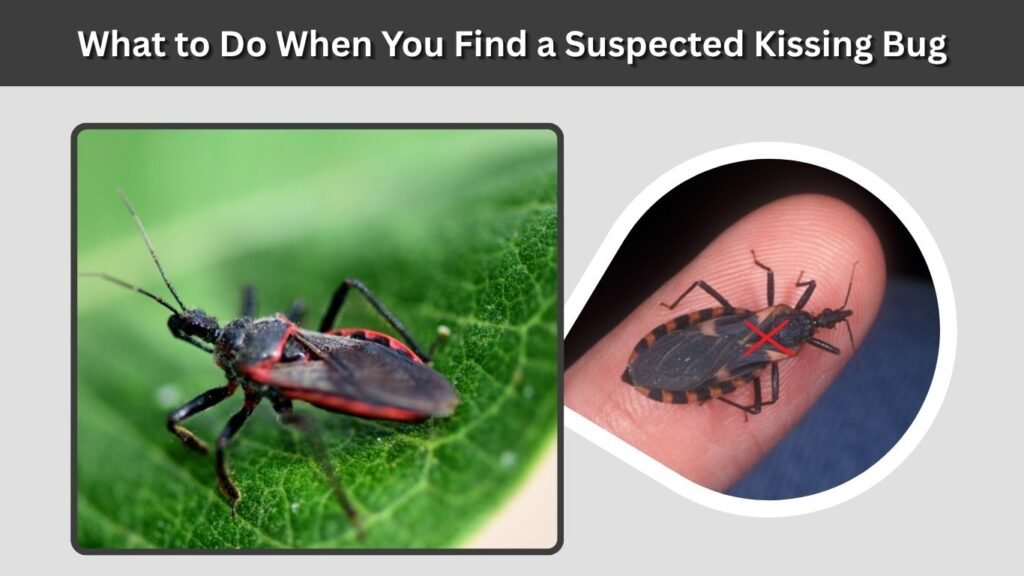
Do not crush the insect or touch it with bare hands. Place a container over it, slide stiff paper underneath and transfer it into a sealed bag or jar. Wash your hands afterward.
Take clear photographs showing the top of the body, head and abdominal edges. Contact a local health department, university extension office or qualified insect-identification service. Saving the specimen may allow experts to identify or test it.
After any bite, wash the skin with soap and water. Seek emergency help for breathing difficulty, facial or throat swelling, dizziness or widespread hives. Contact a healthcare professional when swelling or pain becomes severe, infection develops or you have a credible kissing bug exposure and are concerned about Chagas disease.
FAQs
Are kissing bugs more dangerous than assassin bugs?
Kissing bugs present a greater potential health concern because some can carry the parasite that causes Chagas disease. Most predatory assassin bugs do not transmit disease, although their defensive bites can be extremely painful.
Can an assassin bug be mistaken for a kissing bug?
Yes. Milkweed assassin bugs, masked hunters, bee assassins and other family members share long legs and narrow heads. Kissing bugs are usually broader, flatter and marked along the outer edges of the abdomen.
Do kissing bugs fly?
Adult kissing bugs generally have wings and can fly, although flight ability varies among species. Nymphs cannot fly because their wings are not fully developed.
Is a wheel bug a kissing bug?
No. A wheel bug is an insect-eating assassin bug recognized by the cogwheel-like crest on its thorax. It can bite painfully when handled but does not feed on blood or transmit Chagas disease.
Should I kill an assassin bug in my garden?
Most predatory assassin bugs should be left alone because they consume plant pests. Avoid handling them. A suspected kissing bug found inside should be captured safely and submitted for professional identification.
