
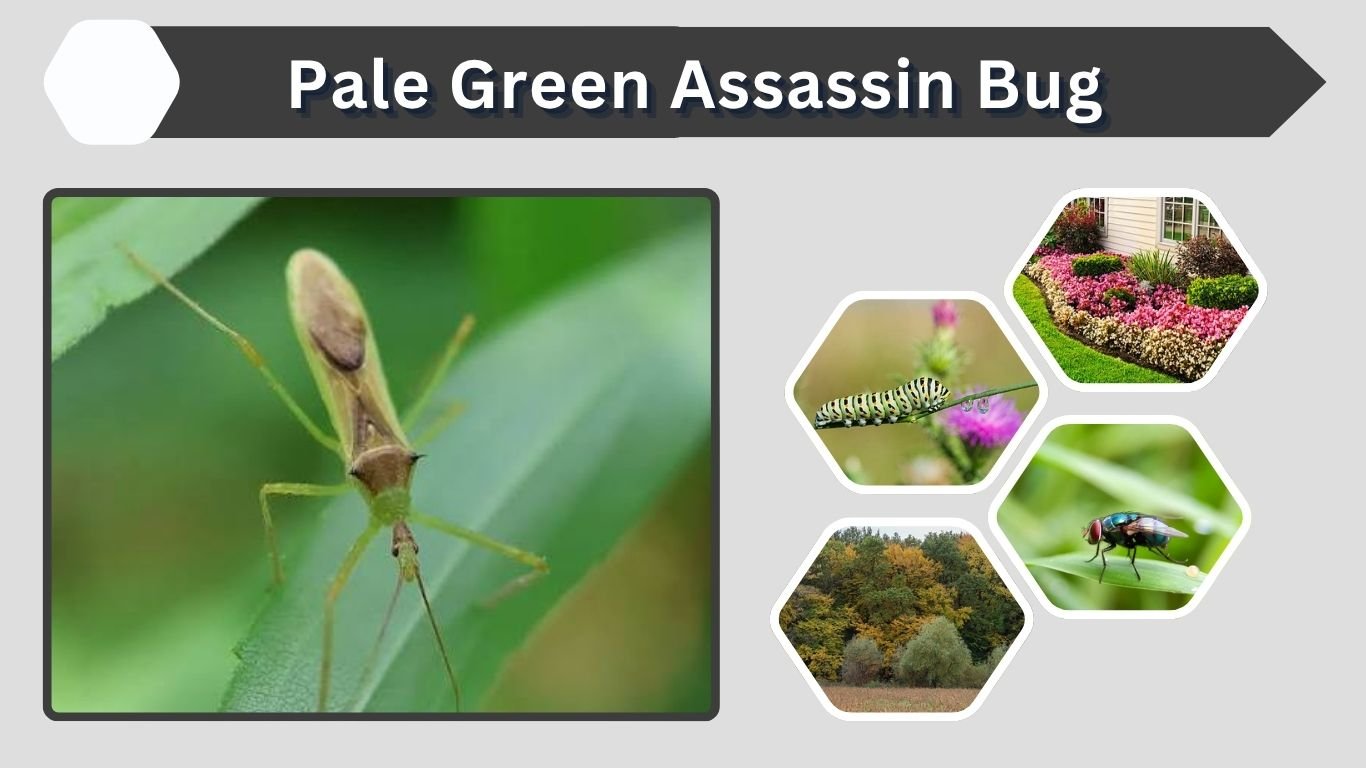
The pale green assassin bug is a slender predatory insect commonly found hunting on leaves, shrubs and garden plants. Its light green body provides excellent camouflage, allowing it to ambush flies, caterpillars and other small insects. Although it benefits gardens by consuming plant pests, it can deliver a painful defensive bite when handled or trapped against the skin. This guide covers its size, appearance, habitat, diet, nymphs, eggs, bite symptoms and safe removal.
What Is a Pale Green Assassin Bug?
The pale green assassin bug, scientifically known as Zelus luridus, belongs to the assassin bug family Reduviidae. It is a true bug rather than a beetle, fly or wasp.
Like other assassin bugs, it has piercing mouthparts that it uses to capture prey. It normally waits on vegetation or slowly approaches another insect before grabbing and piercing it. Zelus luridus is especially common in eastern North America, although its range extends into other parts of the continent.
| Feature | Description |
| Scientific name | Zelus luridus |
| Family | Reduviidae |
| Average size | Males 14 mm; females 16 mm |
| Main color | Pale green to yellow-green |
| Diet | Flies, caterpillars, wasps and other insects |
| Habitat | Trees, shrubs, gardens and forest edges |
| Life stages | Egg, five nymph stages and adult |
| Garden role | Beneficial generalist predator |
| Human risk | Painful defensive bite |
Pale Green Assassin Bug Identification
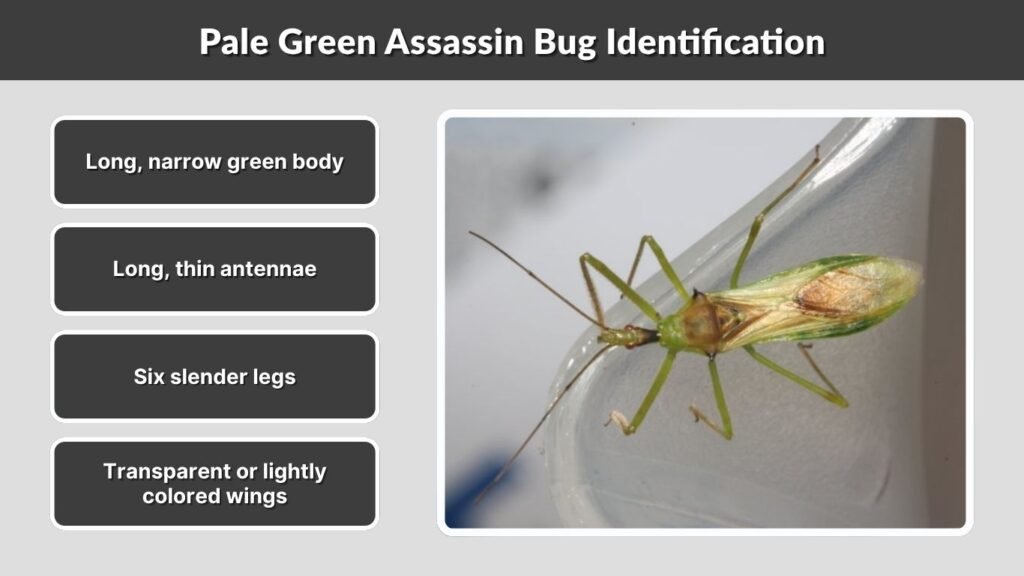
The pale green assassin bug has a delicate appearance, but several physical traits separate it from leafhoppers, plant bugs and other green insects.
Adult Identification
Look for the following features:
- Long, narrow green body
- Narrow head with a neck-like area behind the eyes
- Long, thin antennae
- Six slender legs
- Pointed or beak-like mouthpart folded beneath the body
- Transparent or lightly colored wings
- Yellow, red or brown markings on some individuals
- Small spines near the rear corners of the thorax
Adult colors vary. Some are almost entirely pale green, while others have reddish-brown, yellow or dark markings along the back and legs. Adults have functional wings covering much of the abdomen. The narrow head and strong, curved beak are especially useful identification features.
Pale Green Assassin Bug Size
Adult females average about 16 millimeters, or approximately 0.63 inches, long. Males are slightly smaller, averaging about 14 millimeters, or 0.55 inches.
Their long legs and antennae can make them appear larger than their actual body length. Females may also have broader abdomens, particularly when carrying eggs.
Pale Green Assassin Bug Nymph
Nymphs are immature assassin bugs. They are generally brighter green, narrower and more delicate-looking than adults. Because they do not yet have developed wings, their segmented abdomens remain completely visible.
Young nymphs may have:
- Bright red or orange eyes
- Dark bands on the legs and antennae
- Wingless, narrow bodies
- Long front legs
- A pointed head and curved beak
Newly hatched nymphs may remain around the egg mass for several days. They eventually scatter across nearby plants and begin hunting independently.
Pale Green Assassin Bug Eggs
Females attach their eggs upright to leaves in tightly packed groups. An egg mass commonly contains a few dozen eggs held together by sticky, brown material.
The complete mass is slightly cone-shaped with a flat top. The exposed circular caps of the individual eggs can make it resemble a cluster of tiny bottles or pipes. Females may produce multiple egg masses from late June through August, although timing varies with climate.
After hatching, first-stage nymphs collect sticky material from the egg mass and apply it to their legs. This substance helps them hold struggling prey until they become capable of producing their own sticky secretion.
Pale Green Assassin Bug Habitat and Distribution
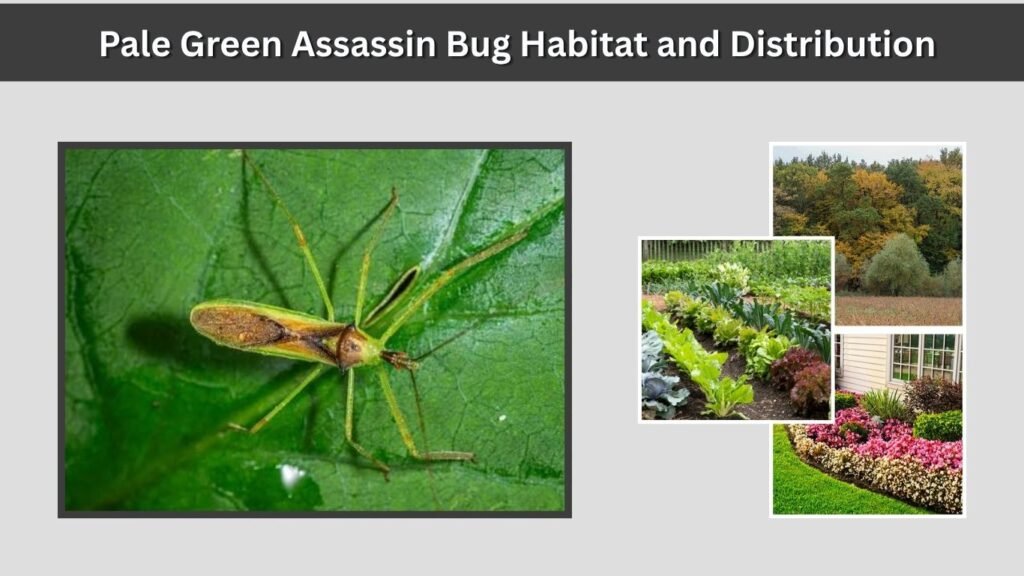
Pale green assassin bugs are associated mainly with deciduous trees, bushes and other leafy vegetation. They occur in forested areas, residential landscapes and gardens where insect prey is plentiful.
Common places to find them include:
- Vegetable gardens
- Flower beds
- Deciduous trees
- Shrubs and hedges
- Woodland edges
- Meadows
- Agricultural fields
- Plants infested with caterpillars or flies
They spend much of their time on leaves, where their green coloration helps them remain concealed. Individuals may occasionally appear on windows or walls when seeking shelter.
Pale Green Assassin Bug in the House
One found indoors is normally an accidental visitor, not evidence of an infestation. It does not damage furniture, clothing, stored food or building materials.
Avoid picking it up. Cover it with a cup, slide paper or thin cardboard underneath and release it outdoors. Repairing window screens and sealing gaps around doors can reduce future entry.
What Do Pale Green Assassin Bugs Eat?
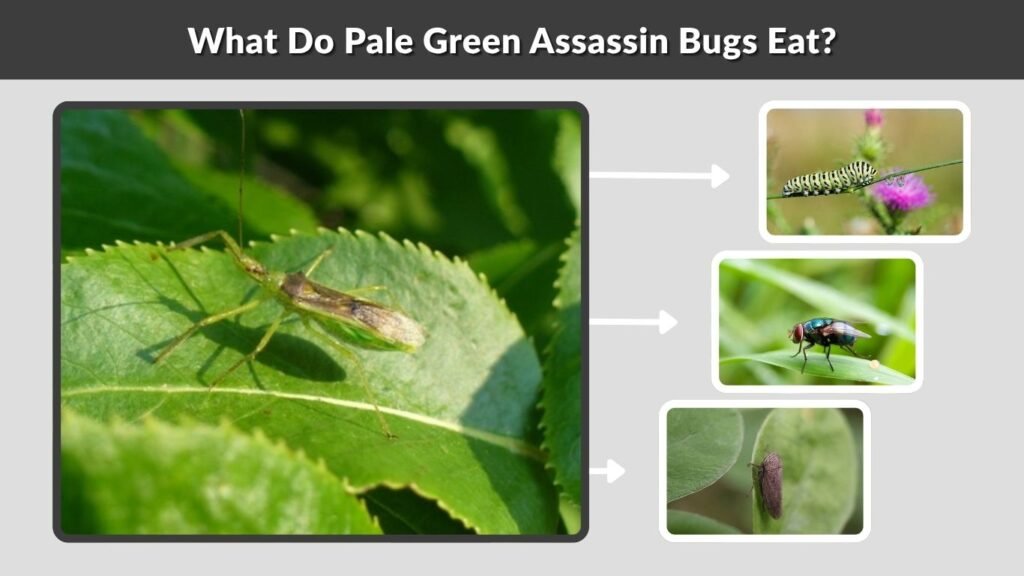
Pale green assassin bugs are carnivorous predators. They feed on insects rather than leaves, flowers or plant sap.
Their prey may include:
- Small flies
- Aphids
- Caterpillars
- Sawflies
- Leafhoppers
- Small wasps
- Beetle larvae
- Other soft-bodied insects
They may remain motionless on a leaf until an insect comes close or actively stalk prey. After catching the victim with their sticky legs, they insert their beak and release digestive saliva. The liquefied contents are then consumed through the same mouthpart.
Are Pale Green Assassin Bugs Good or Bad?
Pale green assassin bugs are generally beneficial in gardens because they consume caterpillars, aphids, leafhoppers and other plant-feeding insects. Neither adults nor nymphs normally eat garden plants.
However, they are generalist predators. They may occasionally capture harmless insects, pollinators or other beneficial species. A few individuals in a garden usually provide more benefit than harm and do not require treatment. Assassin bugs are widely recognized as natural enemies of garden pests.
Do Pale Green Assassin Bugs Bite?
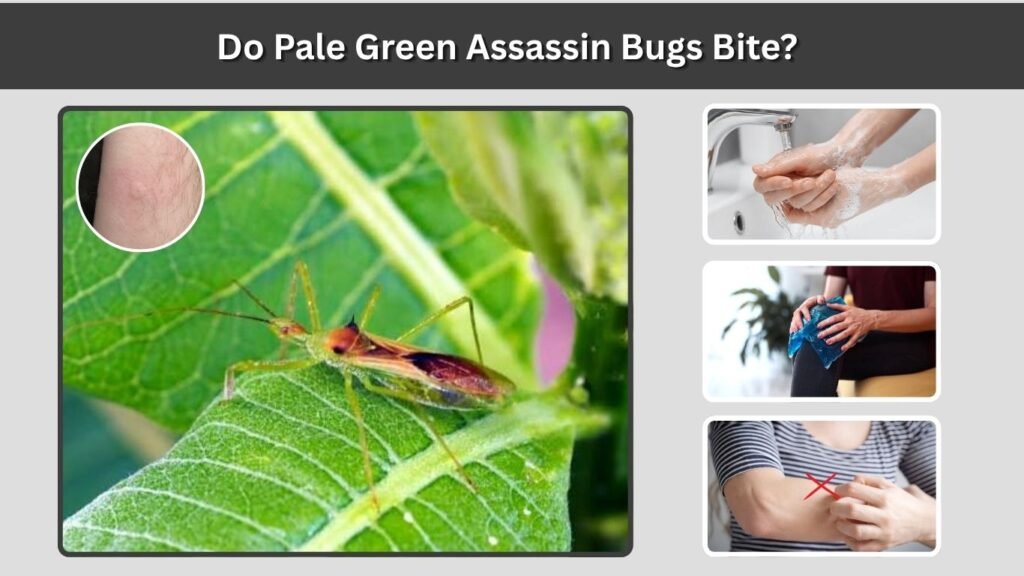
Pale green assassin bugs can bite people, but they do not seek humans for food. Bites generally happen when the bug is picked up, squeezed, trapped inside clothing or pressed against bare skin.
They bite with their mouthparts rather than sting with an abdominal stinger. Both adults and wingless nymphs are capable of defensive bites.
What Does the Bite Look Like?
A pale green assassin bug bite may produce:
- Immediate sharp or burning pain
- A small puncture mark
- Redness around the bite
- A raised or swollen welt
- Tenderness
- Itching
- Temporary tingling or numbness
The mark does not have a unique appearance and can resemble bites or stings from other insects. The reaction may remain small or develop into a larger swollen area, depending on individual sensitivity.
Assassin bug bites are often described as intensely painful, and related species may produce discomfort comparable to a bee sting.
Pale Green Assassin Bug Bite Treatment
For a mild local reaction:
- Wash the area gently with soap and water.
- Apply a wrapped cold compress for 10–15 minutes.
- Elevate a bitten arm or leg if it becomes swollen.
- Avoid scratching or breaking any blister.
- Ask a pharmacist about appropriate pain or itch relief.
- Monitor the area for worsening symptoms.
Seek urgent medical care for difficulty breathing, swelling of the lips or throat, faintness, widespread hives or other signs of a severe allergic reaction. Contact a healthcare professional if redness keeps spreading or the wound becomes increasingly warm, painful or filled with pus.
Do Pale Green Assassin Bugs Carry Chagas Disease?
Pale green assassin bugs are not the blood-feeding kissing bugs associated with Chagas disease. Zelus luridus hunts insects and is not recognized as a Chagas disease vector.
Chagas disease is associated with infected triatomine, or kissing, bugs. The parasite is usually transmitted when infected bug feces enter broken skin, the eyes or the mouth. Kissing bugs are typically darker, broader insects with long, flattened heads and contrasting markings along the abdominal edges.
Pale Green Assassin Bug Life Cycle
The species develops through incomplete metamorphosis:
- Egg: Eggs are attached to leaves in groups.
- Nymph: The young pass through progressively larger wingless stages.
- Adult: The final molt produces a winged, reproductive insect.
Assassin bugs generally pass through five nymph stages without forming a pupa. Depending on the region, Zelus luridus may overwinter as a late-stage nymph in fallen leaves or another protected location. Adults begin appearing during late spring, followed by egg-laying during summer.
FAQs
Are pale green assassin bugs poisonous?
They are not poisonous to touch and do not have a venomous stinger. However, their piercing beak can introduce saliva into the skin during a defensive bite, causing considerable pain, redness and swelling.
Can pale green assassin bugs fly?
Adults have developed wings and can fly between plants or approach buildings. Nymphs cannot fly because their wings are still developing.
Are they harmful to plants?
No. Pale green assassin bugs are predators and do not normally damage leaves, stems, roots or fruit. Seeing one on a plant usually means it is searching for insect prey.
Should I kill a pale green assassin bug?
Killing one outdoors is usually unnecessary. It provides natural pest control. Leave it undisturbed or relocate it carefully without touching it when it is in an inconvenient location.
Can a pale green assassin bug hurt a child or pet?
It may bite a child or pet when grabbed, pawed at or trapped against the skin. Teach children not to handle unfamiliar insects. Contact a doctor or veterinarian if a bite causes severe swelling, breathing trouble or other unusual symptoms.
