
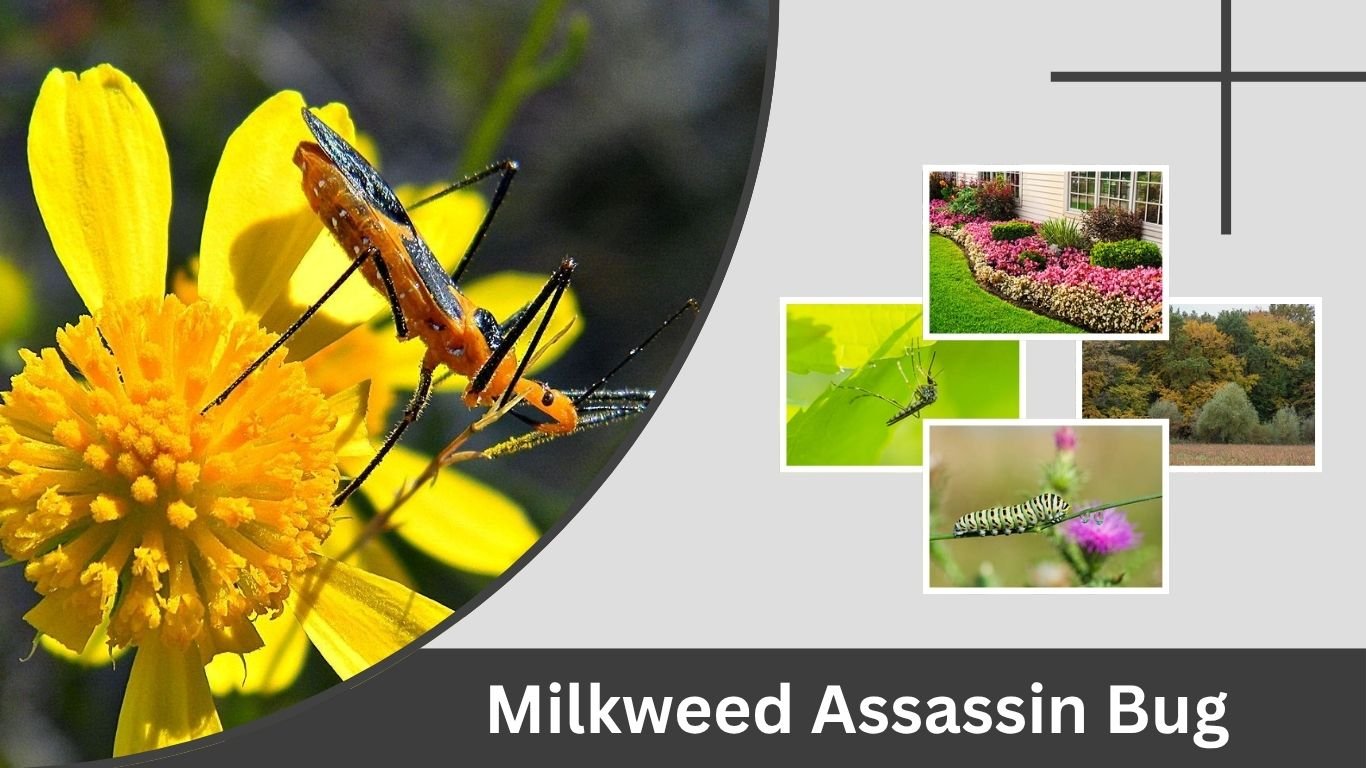
The milkweed assassin bug is a striking orange-and-black predator commonly seen hunting on flowers, shrubs and garden plants. Despite its name, it does not feed on milkweed sap like ordinary milkweed bugs. Instead, it captures flies, aphids, beetles, caterpillars and other insects. Its long legs and bright colors make it easy to notice, but they also cause confusion with kissing bugs and leaf-footed bugs. Here is how to identify this useful but potentially painful garden predator.
What Is a Milkweed Assassin Bug?
The milkweed assassin bug’s scientific name is Zelus longipes. It belongs to the assassin bug family Reduviidae and is also called the long-legged assassin bug or Zelus assassin bug.
The insect received its common name because its orange-and-black coloring resembles that of plant-feeding milkweed bugs. However, the milkweed assassin bug is a daytime predator rather than a plant feeder.
| Feature | Description |
| Scientific name | Zelus longipes |
| Family | Reduviidae |
| Adult size | Approximately 14.5–20.4 mm |
| Color | Orange, reddish brown and black |
| Diet | Insects and other small prey |
| Habitat | Gardens, farms, flowers, shrubs and fields |
| Activity | Mainly daytime |
| Bite risk | Painful when handled or trapped |
| Garden role | Beneficial generalist predator |
Milkweed Assassin Bug Identification
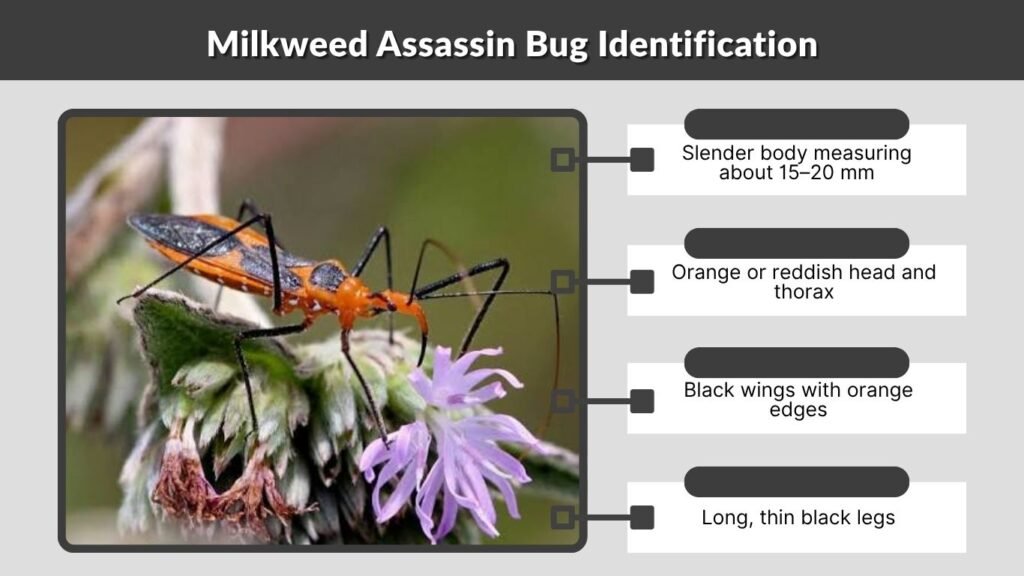
Adult milkweed assassin bugs have slender bodies, long antennae and unusually long legs. Their narrow heads are separated from the thorax by a noticeable neck-like constriction.
The most important feature is the short, curved, three-segmented beak held beneath the body. The bug uses this mouthpart to pierce prey and consume its liquefied tissues.
Adult Identification
Look for these features on an adult:
- Slender body measuring about 15–20 mm
- Orange or reddish head and thorax
- Black wings with orange edges
- Long, thin black legs
- Long antennae, sometimes with pale bands
- Narrow, pear-shaped head
- Curved beak folded beneath the thorax
- Fully developed wings covering much of the abdomen
Color varies by location. American populations are usually distinctly orange and black, while individuals elsewhere may be brownish orange, dark brown or almost entirely black. Females are generally slightly larger than males.
Milkweed Assassin Bug Nymph
Nymphs resemble adults but do not have fully developed wings. Young nymphs may have bright orange or reddish bodies, black legs, long antennae and small pale spots along the abdomen.
As they mature, dark wing pads become more visible. Later nymphs may reach approximately 11 mm long before becoming adults. Groups of tiny nymphs sometimes remain close together shortly after hatching, which may explain clusters seen on leaves or fruit.
Milkweed Assassin Bug Eggs
Females lay groups of at least 15 cylindrical brown eggs on leaves or stems. Each egg is approximately 2–2.3 mm long and has a lighter cap-like structure at the top.
The eggs are cemented together at their bases and surrounded by a sticky protective material. They may resemble a compact group of tiny brown bottles or tubes standing upright.
Milkweed Assassin Bug Habitat and Distribution
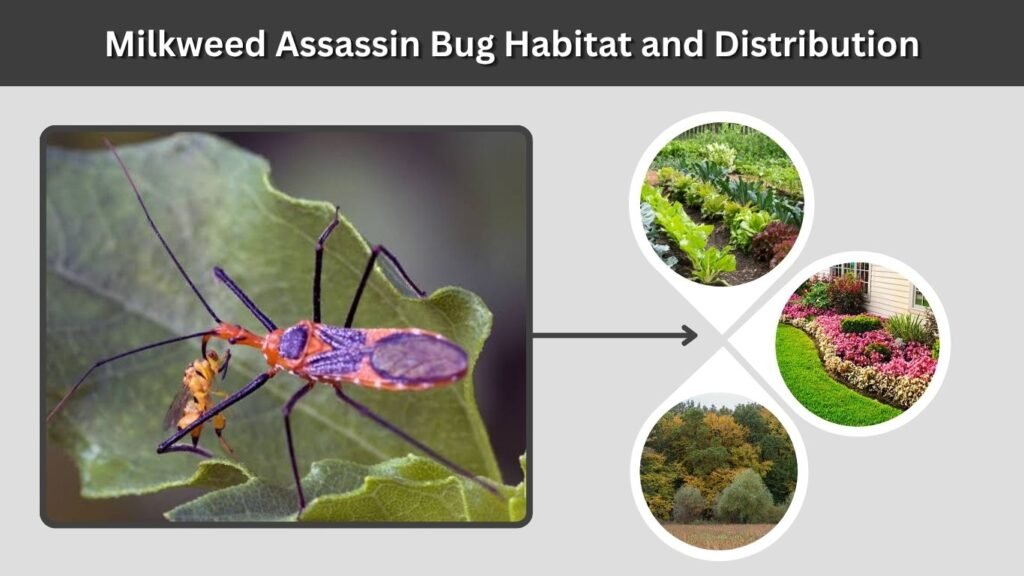
Milkweed assassin bugs occur across the southeastern United States, Gulf Coast, parts of southern California and southwestern Arizona. Their broader range extends through Central America, the West Indies and much of South America.
They are particularly common in warm locations such as Florida and Texas, where they may be seen throughout much of the year.
Typical habitats include:
- Vegetable gardens
- Flower beds
- Milkweed patches
- Cornfields and agricultural areas
- Shrubs and hedges
- Forest edges
- Weedy fields
- Plants attracting flies and other insects
They do not depend on milkweed plants. They visit any vegetation that offers suitable hunting opportunities.
What Do Milkweed Assassin Bugs Eat?
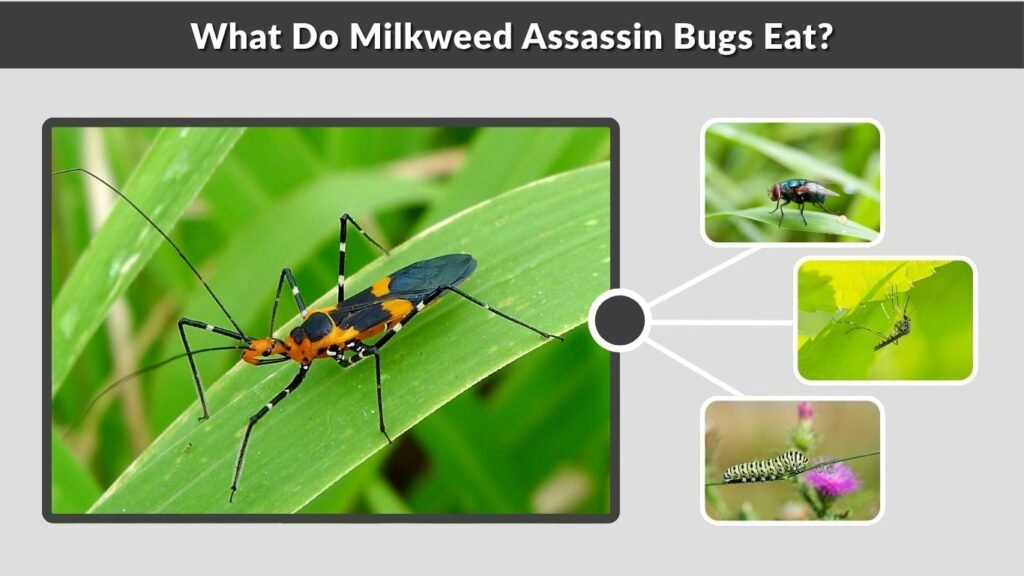
Milkweed assassin bugs are generalist predators. Their documented prey includes flies, mosquitoes, cucumber beetles, caterpillars, Asian citrus psyllids and fall armyworms. They may also capture aphids, leafhoppers, small moths and other bugs encountered on vegetation.
How They Capture Prey
The insect uses a hunting technique called the sticky-trap strategy. It waits among leaves or flowers with its front legs raised. A sticky substance on the legs helps hold an insect once contact is made.
The assassin bug then inserts its sharp mouthparts, immobilizes the victim and releases digestive enzymes. These enzymes break down the tissues so the predator can draw out the resulting liquid. It can sometimes capture prey considerably larger than itself.
Do They Eat Monarch Caterpillars?
Milkweed assassin bugs are not monarch specialists, but they do eat caterpillars. Therefore, one hunting on milkweed could potentially capture a small monarch caterpillar or egg if the opportunity arises.
They may reduce harmful garden pests, but they do not distinguish between pests and desirable insects. Gardeners raising monarchs may relocate assassin bugs away from protected milkweed rather than killing them.
Are Milkweed Assassin Bugs Good or Bad?
Milkweed assassin bugs are generally beneficial because they naturally control insects that damage garden and agricultural plants. They do not normally suck sap, chew leaves, bore into stems or damage vegetables.
However, they are indiscriminate hunters. Along with pests, they may catch pollinators and beneficial insects. Their overall effect depends on which prey species are present.
Benefits in the Garden
- Consume plant-feeding insects
- Help control caterpillars and beetles
- Require no pesticides
- Hunt during daylight
- Visit numerous garden plants
- Do not form destructive colonies
A few individuals usually do not require control. Avoid broad insecticide treatments, which could also kill bees, butterflies and other useful predators.
Do Milkweed Assassin Bugs Bite?
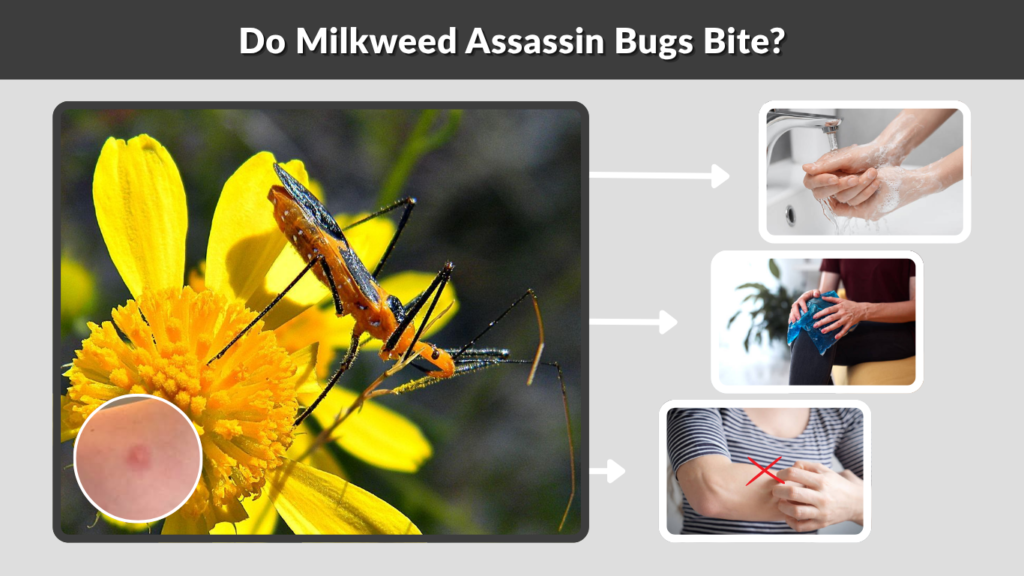
Adults and nymphs can bite humans when picked up, squeezed or trapped against the skin. They do not sting and do not normally approach people to feed.
The bite may cause immediate burning pain, localized redness and swelling that can remain for several days. The University of Florida describes the species as not generally threatening to humans but warns that improper handling can result in a painful reaction.
Milkweed Assassin Bug Bite Treatment
After an accidental bite:
- Wash the area with soap and clean water.
- Apply a wrapped cold compress for 10–15 minutes.
- Avoid scratching or breaking any blister.
- Monitor the bite for spreading redness or worsening swelling.
- Ask a pharmacist or doctor about suitable pain or itch relief.
Seek urgent medical attention for difficulty breathing, facial swelling, faintness or widespread hives. A doctor should also examine increasing pain, warmth, pus, fever or redness that continues spreading.
Does the Milkweed Assassin Bug Carry Chagas Disease?
Milkweed assassin bugs are not kissing bugs and are not recognized as Chagas disease vectors. They belong to a predatory assassin bug group called Harpactorinae, while blood-feeding kissing bugs belong to the Triatominae. Most assassin bugs consume arthropods; kissing bugs are the specialized blood feeders associated with Chagas transmission.
Milkweed Assassin Bug vs. Similar Bugs
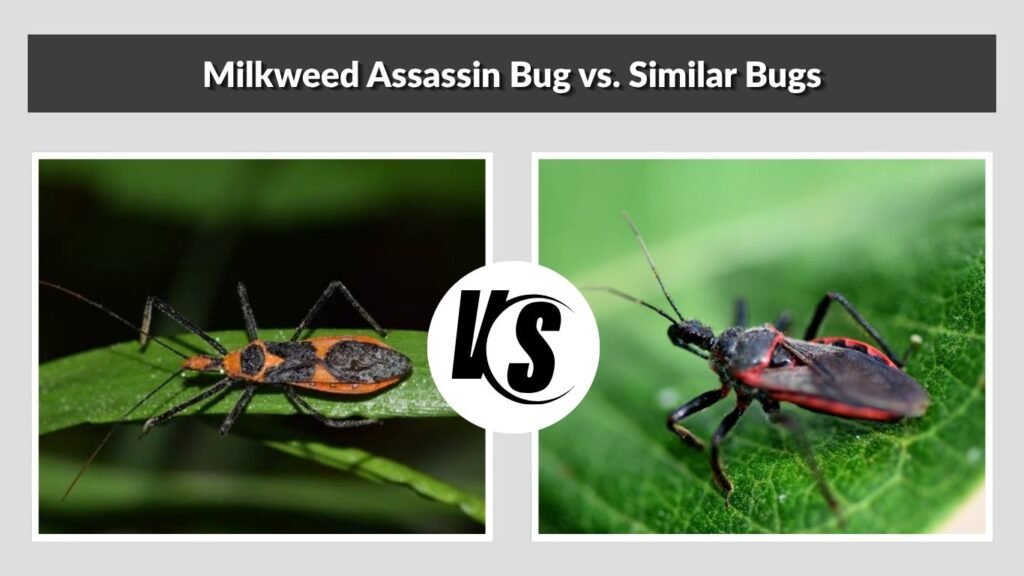
| Insect | How to Tell the Difference |
| Large milkweed bug | Broader body with a bold black pattern; feeds mainly on milkweed seeds |
| Kissing bug | Wider, flattened abdomen; blood-feeding species with contrasting abdominal edges |
| Leaf-footed bug | Usually has expanded, leaf-shaped sections on the hind legs |
| Milkweed assassin bug | Very long slender legs, narrow neck and curved predatory beak |
Large milkweed bugs primarily center their feeding on milkweed seeds, while Zelus longipes actively captures animal prey.
Milkweed Assassin Bug in the House
A milkweed assassin bug inside a home is usually an accidental visitor. It does not normally infest food, furniture or building materials.
Do not handle it directly. Place a cup over the insect, slide stiff paper underneath and release it outdoors away from doors. A vacuum can also remove it, although the vacuum contents should be emptied outside.
Seal damaged screens and gaps around doors or windows when individuals enter repeatedly. Indoor pesticides are rarely necessary for a single accidental visitor.
FAQs
Are milkweed assassin bugs poisonous?
They are not poisonous to touch and do not have a stinger. However, their piercing beak can produce a painful defensive bite. The affected area may burn, swell or remain tender for several days.
Can milkweed assassin bugs fly?
Adult milkweed assassin bugs have developed wings and can fly between plants while searching for prey or mates. Nymphs cannot fly because they have only developing wing pads.
Are milkweed assassin bugs harmful to dogs?
They do not hunt dogs or feed on their blood. However, a bug may defend itself if a dog paws at or mouths it. Contact a veterinarian if a pet develops facial swelling, excessive drooling, vomiting or breathing difficulty.
Do milkweed assassin bugs eat plants?
They are predators and do not normally feed on plant leaves, stems or roots. Seeing one on a pepper, corn or milkweed plant usually means it is hunting insects rather than eating the plant.
How do you get rid of milkweed assassin bugs?
Control is generally unnecessary outdoors. Wear gloves and relocate individuals from sensitive areas. Reduce excessive plant debris, repair screens and seal entry gaps. Avoid spraying flowering plants, as insecticides can harm pollinators and other beneficial insects.
