
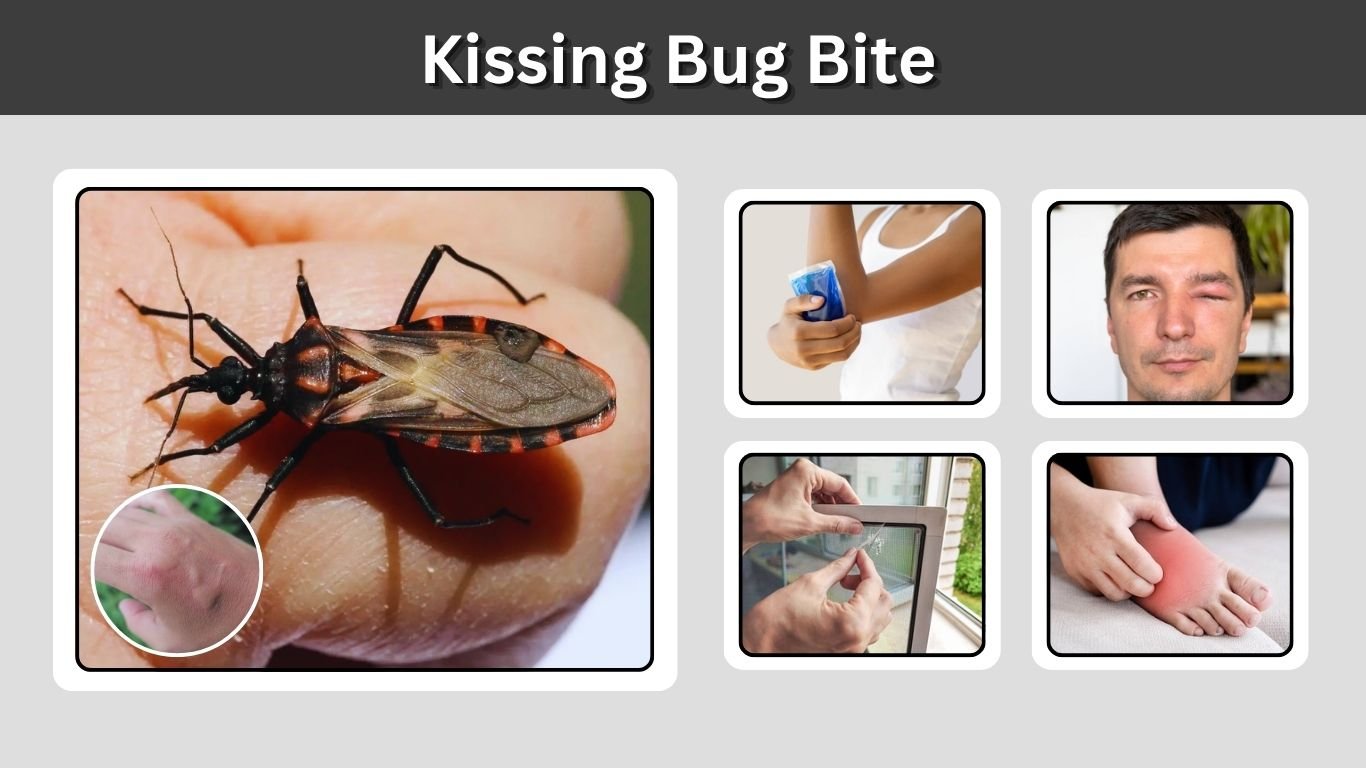
A kissing bug bite may leave an itchy, swollen red mark, but it often goes unnoticed while the insect is feeding. The appearance varies considerably, so bite pictures alone cannot confirm that a kissing bug caused the reaction. Identification is easier when the insect is found nearby. Most bites cause only a localized skin reaction, although some people develop severe allergies. Kissing bugs may also carry the parasite responsible for Chagas disease, but infection occurs through contact with infected bug feces rather than through the bite itself.
What Does a Kissing Bug Bite Look Like?
Kissing bug bite marks can resemble mosquito, flea, bed bug, or other insect bites. There is no single pattern or skin reaction that appears in every person.
Common Bite Mark Appearance
A kissing bug bite may appear as:
- A small red or pink bump
- Localized swelling
- Itchy or irritated skin
- A raised welt
- Several marks close together
- A larger swollen area in sensitive people
Some bites develop a visible central puncture, while others look like ordinary red bumps. The reaction depends on the person’s immune response, previous exposure and sensitivity to the bug’s saliva.
Kissing bugs attempt to feed without alerting their hosts, so their bites are generally painless at first. A person may notice itching, redness or swelling several hours later.
Kissing Bug Bite Pictures
Pictures of kissing bug bites commonly show red bumps, swollen eyelids, facial swelling or inflamed patches of skin. However, those reactions can also be caused by mosquitoes, bed bugs, fleas, allergies and skin infections.
A photo of the bite is therefore less useful than a photo of the suspected insect. Adult kissing bugs are usually dark brown or black, approximately 0.5 to more than 1 inch long, with narrow cone-shaped heads and red, orange or yellow markings around the abdomen.
Where Do Kissing Bugs Bite?
Kissing bugs can feed on any exposed skin. Common locations include the:
- Face
- Lips
- Neck
- Arms
- Hands
- Legs
- Feet
They are associated with facial bites because they often feed while people are sleeping. They locate hosts using body heat, skin odors and carbon dioxide from breathing.
Kissing Bug Bite Symptoms in Humans
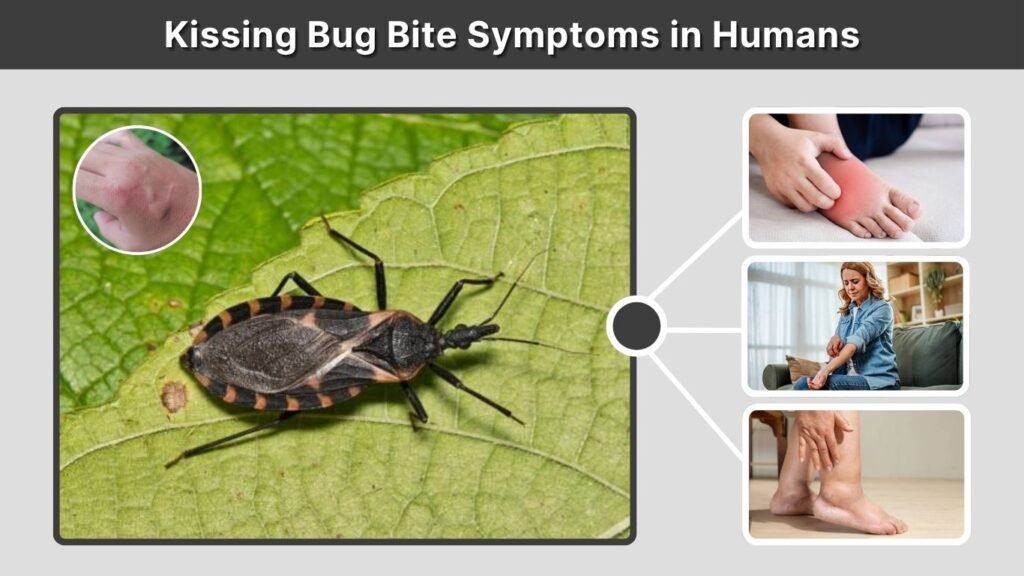
Symptoms can range from no noticeable reaction to substantial swelling. Local symptoms do not necessarily mean that the person has Chagas disease.
| Reaction | Possible signs |
| Mild local reaction | Redness, itching and a small raised bump |
| Larger local reaction | Significant swelling, warmth and tenderness |
| Allergic reaction | Hives or swelling beyond the bite area |
| Severe allergic reaction | Breathing difficulty, throat swelling, weakness or faintness |
| Possible infection | Increasing pain, spreading redness, pus or fever |
Does a Kissing Bug Bite Hurt?
Many people do not feel the insect feeding. Its bite may initially be painless and become itchy, sore or swollen later. By comparison, predatory assassin bugs that resemble kissing bugs may deliver an immediately painful defensive bite when handled.
Do Kissing Bug Bites Itch?
Yes, they can itch. The intensity may range from mild irritation to persistent itching and swelling. Scratching should be avoided because broken skin can become infected.
How Long Does a Kissing Bug Bite Last?
There is no fixed duration. A mild reaction may begin improving within several days, while a larger allergic reaction can remain noticeable longer. Seek medical advice when swelling continues to increase, the affected area becomes very painful or symptoms fail to improve.
Kissing Bug Bites on the Face, Lip or Eye
Facial bites can look alarming because the lips and eyelids swell easily. Ordinary swelling from a bite does not automatically indicate Chagas disease.
Kissing Bug Bite on the Lip
A bite near the mouth may cause redness, itching and localized lip swelling. Emergency care is necessary if swelling spreads to the tongue or throat, or if the person has difficulty breathing or swallowing.
Kissing Bug Bite Near the Eye
Swelling around one eye may result from a local allergic response. However, painless swelling of one eyelid can also be associated with Romaña’s sign, a possible sign of acute Chagas disease. This can occur when infected bug feces are accidentally rubbed into the eye or into nearby broken skin.
Eye pain, visual changes, substantial swelling or possible contact with bug feces should be evaluated by a healthcare professional.
Are Kissing Bug Bites Dangerous?
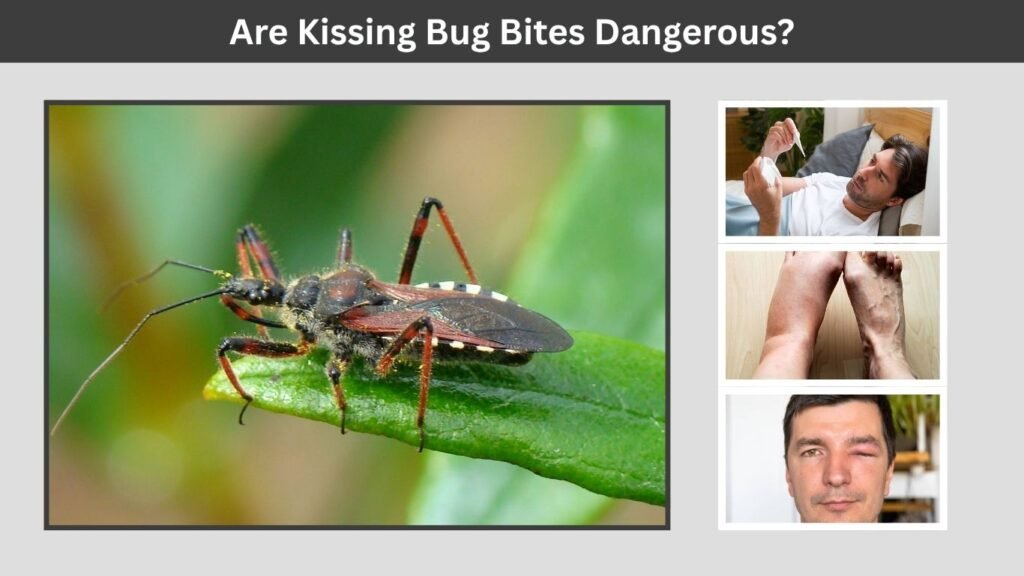
The two main concerns are an allergic reaction and possible exposure to Trypanosoma cruzi, the parasite that causes Chagas disease.
Allergic Reaction
Some people become increasingly sensitive after repeated kissing bug bites. Severe reactions can include widespread hives, facial or throat swelling, breathing problems, dizziness or fainting. These symptoms require immediate emergency assistance.
Chagas Disease Risk
A kissing bug does not normally transmit the Chagas parasite through its saliva. An infected bug may defecate during or after feeding. Infection can occur when contaminated feces enter the bite, another break in the skin, the mouth or an eye—often after the person rubs or scratches the area.
Not every kissing bug carries the parasite, and a bite does not mean that transmission occurred. Locally acquired Chagas disease has been documented in the United States, but it remains uncommon. Risk is generally greater in areas of Mexico, Central America and South America where infected bugs can colonize poorly constructed housing.
Possible Acute Chagas Symptoms
The early phase frequently causes no symptoms or only mild, nonspecific illness. Possible signs include:
- Fever
- Fatigue or general discomfort
- Swollen lymph nodes
- Swelling around the entry site
- A firm skin lesion called a chagoma
- Painless swelling around one eye
Rarely, acute infection can involve the heart or nervous system. Chagas disease cannot be diagnosed from a bite mark; laboratory testing is required.
Kissing Bug Bite Treatment
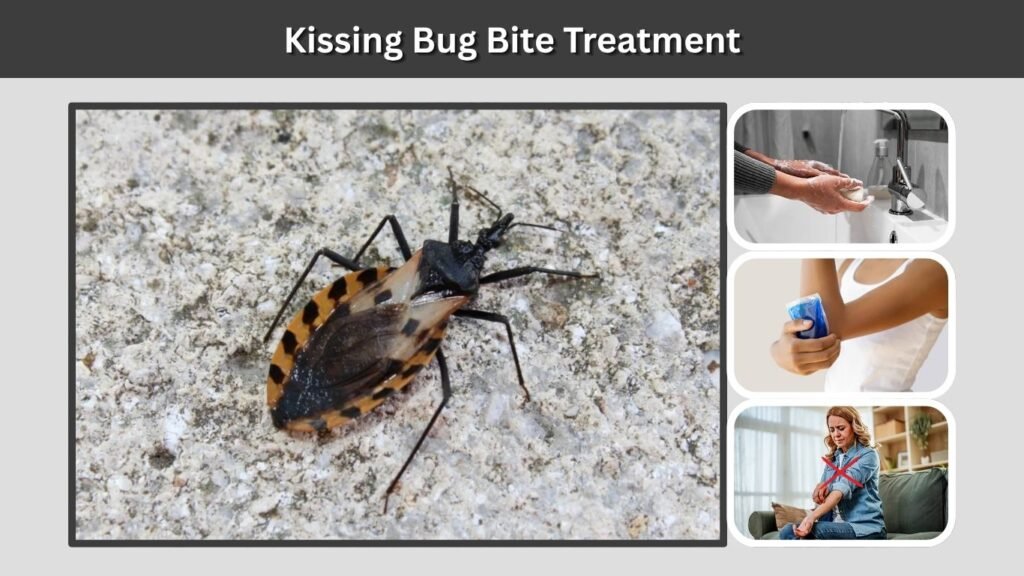
There is no special home treatment that removes the Chagas parasite. Home care is intended only to relieve an uncomplicated local skin reaction.
Treating a Mild Bite
Standard insect-bite first aid includes:
- Wash the skin gently with soap and water.
- Apply a cold, damp cloth or wrapped ice pack for 10–20 minutes.
- Avoid scratching the area.
- Consider calamine lotion or nonprescription hydrocortisone for itching, following the product label.
- Ask a pharmacist or doctor whether an oral antihistamine is appropriate.
These measures can reduce ordinary itching and swelling but do not prevent or treat Chagas disease.
When to Contact a Doctor
Seek medical advice when:
- A kissing bug was positively identified after biting someone
- Bug feces may have entered an eye, mouth or open wound
- Swelling is severe or continues to spread
- Fever or unexplained illness develops
- The bite becomes increasingly painful, warm or infected
- The person has lived in or traveled through a Chagas-endemic region
Finding one bug or receiving a bite does not always require Chagas testing. A healthcare provider can assess the location, exposure circumstances and symptoms before deciding whether testing is appropriate.
What to Do With a Suspected Kissing Bug
Do not crush or collect the insect with bare hands. Use gloves, forceps or a plastic bag to place it in a sealed container. Photograph the insect from above and record where and when it was found.
The specimen may be submitted to a local health department, university extension service or insect identification program. Preserving the bug can help experts determine whether it is a kissing bug rather than a leaf-footed bug, wheel bug, stink bug or another look-alike.
How to Prevent Kissing Bug Bites
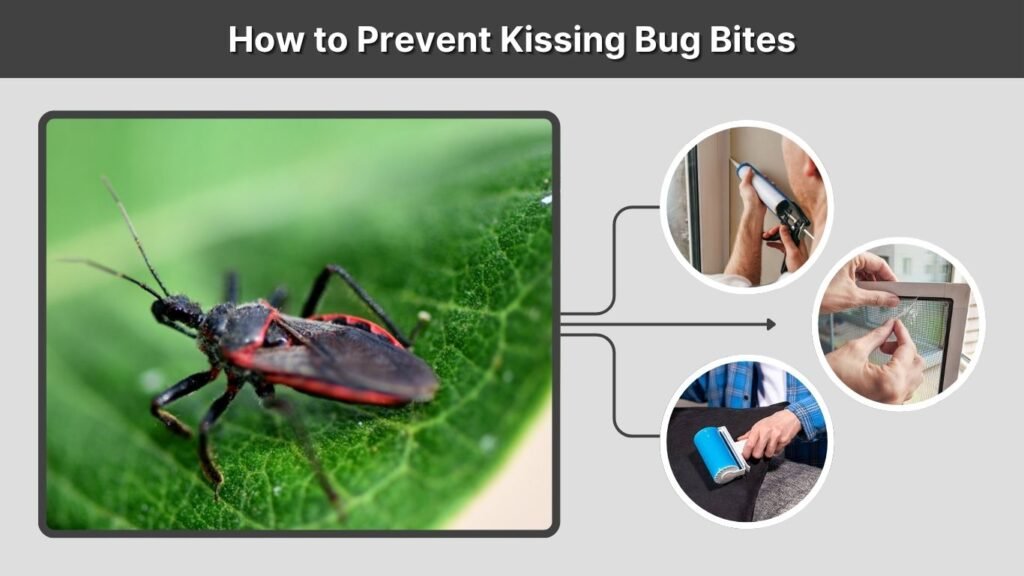
Reduce the possibility of kissing bugs entering or living near the home by:
- Sealing gaps around doors, windows and walls
- Repairing torn window and door screens
- Closing entrances to attics and crawlspaces
- Removing wood, brush and rock piles near the house
- Moving outdoor lights away from doors
- Cleaning pet bedding regularly
- Keeping pets indoors at night
- Checking bedrooms and pet sleeping areas for insects
When staying in higher-risk rural areas, screened accommodation, protective clothing and treated bed nets can reduce contact with triatomine bugs.
FAQs
Can you identify a kissing bug bite from a picture?
No. Kissing bug bites do not have a unique appearance. Mosquito, flea, bed bug and other insect bites can produce similar red, itchy bumps. A photograph of the insect is more useful than a photograph of the skin reaction.
Do kissing bugs always bite the lips?
No. They can bite any exposed skin, including the arms, legs, face and neck. Their nickname comes from their tendency to feed near the face of a sleeping person, not because they exclusively target the lips.
What happens if a kissing bug bites you?
You may experience no immediate sensation, followed later by itching, redness or swelling. Severe allergic reactions are possible but uncommon. Chagas transmission requires contact with feces from an infected bug rather than the bite alone.
Is a kissing bug bite worse than a mosquito bite?
The initial skin reactions can look similar. The greater concern with kissing bugs is the possibility of a serious allergy or exposure to the parasite associated with Chagas disease. The actual risk depends on the insect, location and exposure circumstances.
Can kissing bug bites be treated at home?
Mild redness and itching can usually be managed with washing, a cold compress and an appropriate nonprescription anti-itch treatment. Medical care is needed for breathing problems, severe swelling, signs of infection or concern about possible Chagas exposure.
