
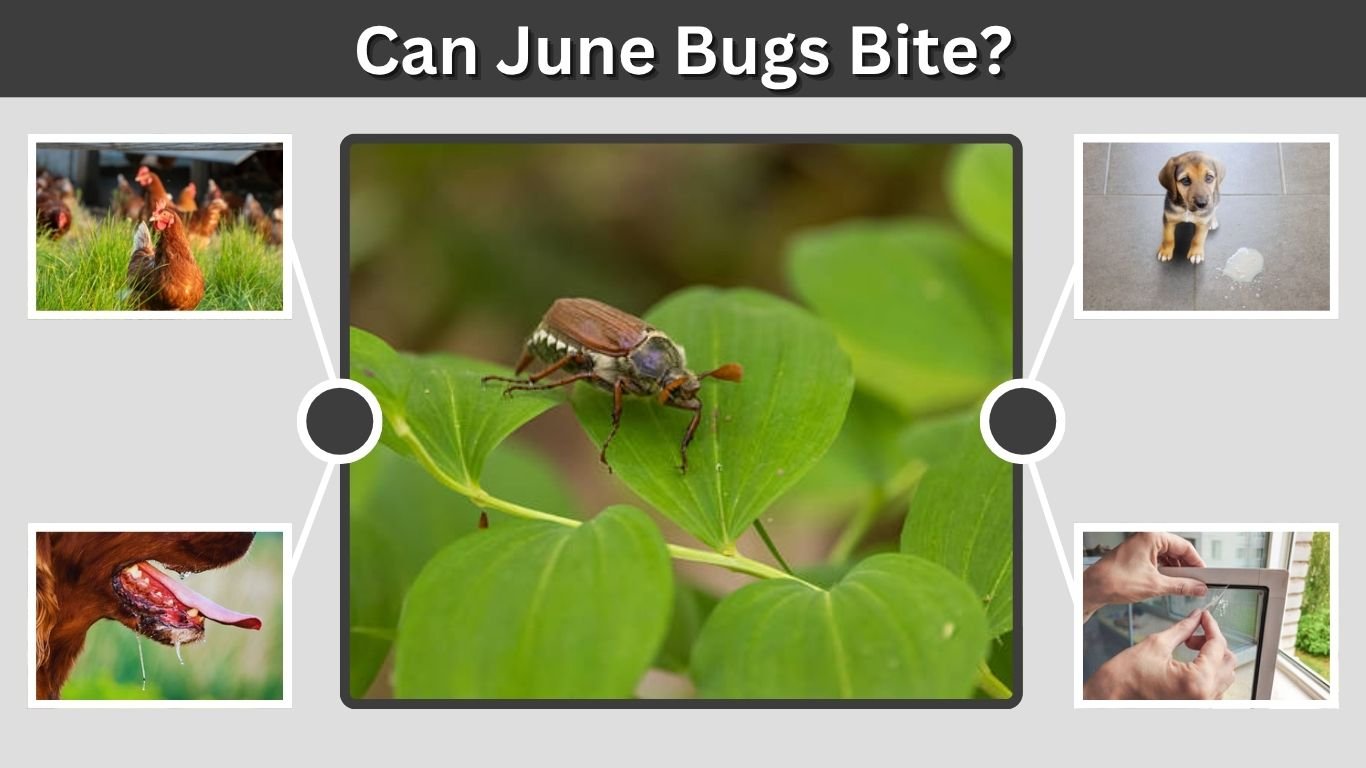
June bugs may look scary when they buzz around porch lights, but they are not dangerous insects. They can fly, crawl, cling to clothing, and bump into people, but they do not normally bite humans or sting. Most June bugs are harmless adult beetles, while their underground larvae can damage lawns and plant roots. This guide answers the most common “can June bugs…” questions about bites, pets, flying, swimming, size, and safety.
Can June Bugs Bite Humans?
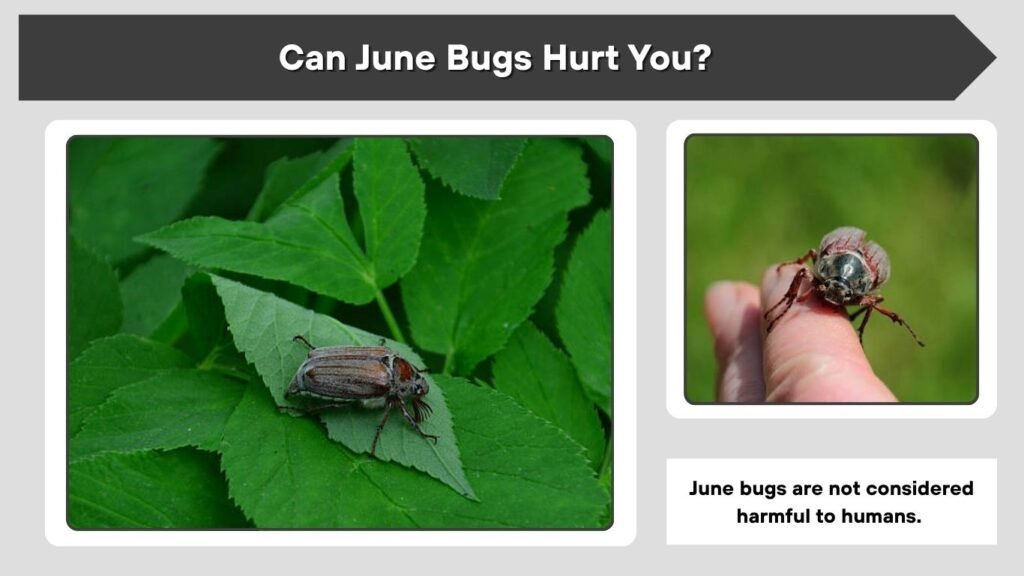
June bugs do not normally bite humans. They are beetles, not blood-feeding insects like mosquitoes or fleas. They may feel scratchy when they land on skin because their legs have tiny spines used for gripping surfaces. Green June beetles are also described as harmless to humans by NC State Extension.
Can a June Bug Bite You?
A June bug can move its mouthparts, but it is not interested in biting people. If you handle one roughly, you may feel a tiny pinch or scratch, but this is not a harmful bite.
Can June Bugs Sting?
No, June bugs cannot sting. They do not have a stinger, venom gland, or defensive sting like bees, wasps, or hornets.
Can June Bugs Hurt You?
June bugs are not considered harmful to humans. The adult beetles are mostly a nuisance because they fly clumsily, hit windows, land in hair, and gather around lights. Their larvae, called white grubs, are more troublesome because they feed on plant roots underground. Wisconsin Horticulture notes that May/June beetle grubs feed on roots and can damage turf.
| Question | Quick Answer |
| Can June bugs bite? | Not normally |
| Can June bugs sting? | No |
| Can June bugs hurt humans? | Usually no |
| Can June bugs fly? | Yes |
| Can June bugs damage lawns? | Yes, as grubs |
Can June Bugs Fly?
Yes, June bugs can fly. Adult May/June beetles are often active in the evening and are attracted to lights at night. This is why they often appear around porch lights, garages, windows, and patios.
Why Do June Bugs Fly Into People?
June bugs are clumsy fliers. They may crash into walls, doors, windows, hair, or people while trying to reach light. They are not attacking you.
Can June Bugs Fly After They Land?
Yes, a healthy June bug can fly again after landing. However, they often flip onto their backs and struggle because of their round, hard bodies and awkward legs.
Can June Bugs See?
June bugs can see well enough to move, find plants, and respond to light. Their attraction to artificial lights is one reason people notice them at night. They do not “chase” people; they are usually confused by bright lights and movement.
Can Dogs Eat June Bugs?
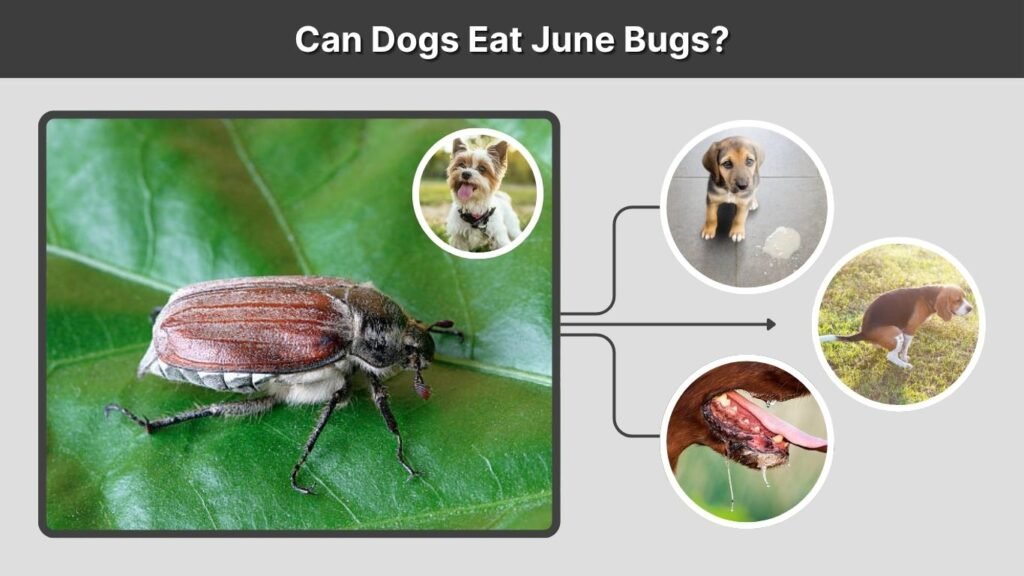
Dogs sometimes eat June bugs because the beetles move, buzz, and crunch. Eating one or two June bugs is not usually a major problem, but dogs that eat many hard-bodied insects may get stomach upset. AKC gives similar advice for crunchy insects like cicadas: a few may be fine, but gorging can make the exoskeleton hard to digest.
Can June Bugs Make Dogs Sick?
Yes, they can if a dog eats too many. Possible signs include:
- Vomiting
- Diarrhea
- Drooling
- Loss of appetite
- Belly discomfort
- Weakness or unusual behavior
If symptoms are serious or continue, contact a veterinarian.
Can Cats Eat June Bugs?
Cats may chase or eat June bugs, especially if one gets indoors. One beetle is usually not a major concern, but eating many insects may upset the stomach. Outdoor insects may also carry pesticides or other contaminants, so it is better not to let pets eat them regularly.
Can Bearded Dragons Eat June Bugs?
It is better not to feed wild June bugs to bearded dragons. Bearded dragons do eat insects as part of their diet, but wild-caught insects may carry pesticides or toxins. University of Illinois veterinary guidance warns that some backyard insects can be toxic or may carry pesticides, and reptile owners should not allow pet reptiles to eat random outdoor insects.
Can Other Reptiles Eat June Bugs?
Do not feed wild June bugs to geckos, chameleons, turtles, or other reptiles without veterinary guidance. VCA notes that wild-caught insects are not generally recommended for pet turtles because fertilizers and insecticides on insects can be toxic.
Can Chickens, Ducks, Frogs, and Toads Eat June Bugs?
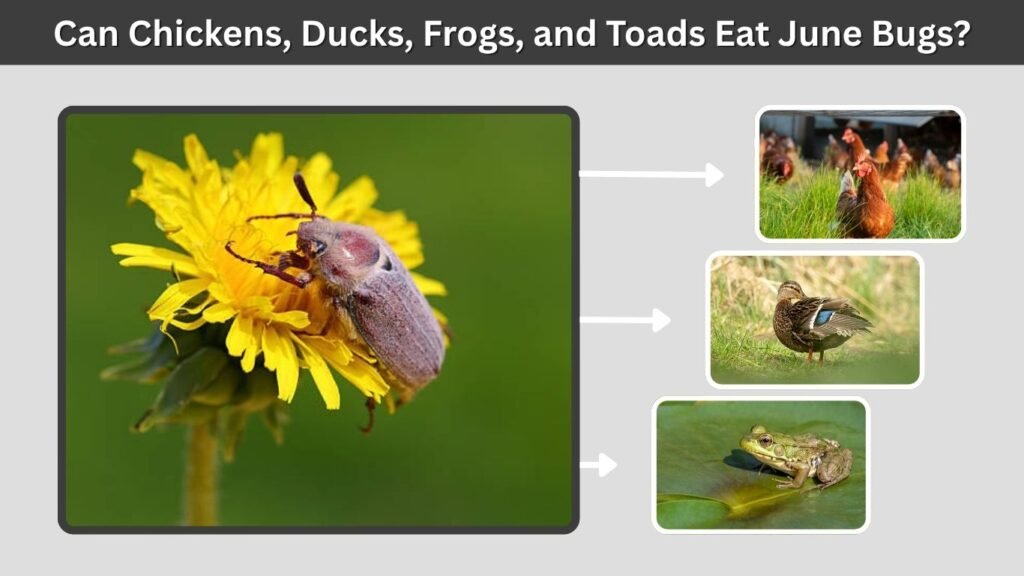
Many outdoor animals may eat June bugs naturally. Chickens, ducks, frogs, toads, birds, bats, spiders, and other wildlife may feed on beetles or grubs. For backyard birds or pets, avoid insects exposed to pesticides.
Can Humans Eat June Bugs?
Some insects and grubs are edible in certain cultures, and NC State Extension notes that green June beetle grubs are edible. However, that does not mean you should eat random June bugs from your yard, especially raw. Wild insects may carry pesticides, parasites, bacteria, or other contaminants.
Can You Eat June Bugs Raw?
Eating wild June bugs raw is not recommended. If someone is interested in edible insects, it is safer to use insects raised for human consumption instead of collecting beetles from lawns, gardens, or roadsides.
Can June Bugs Swim or Survive in Water?
June bugs are not true aquatic insects. They may float or move briefly if they fall into water, but they are not built to live underwater. If trapped in a pool, bucket, or water dish, they can eventually drown.
How Big Can June Bugs Get?
June bug size depends on the species. Many brown May/June beetles are around ½ to 1 inch long, while green June beetles are often close to 1 inch and have a shiny metallic green body. NC State describes green June beetles as large, attractive scarab beetles.
Can June Bugs Be Black, Brown, or Green?
Yes. “June bug” is a common name used for different scarab beetles. Some are reddish-brown, dark brown, tan, blackish, or metallic green.
| Type | Common Color | Main Behavior |
| Brown May/June beetle | Brown to reddish-brown | Night flying, attracted to lights |
| Green June beetle | Metallic green | Often active in daylight |
| Blackish June beetle | Dark brown to black | Similar scarab beetle behavior |
Can You Get Rid of June Bugs?
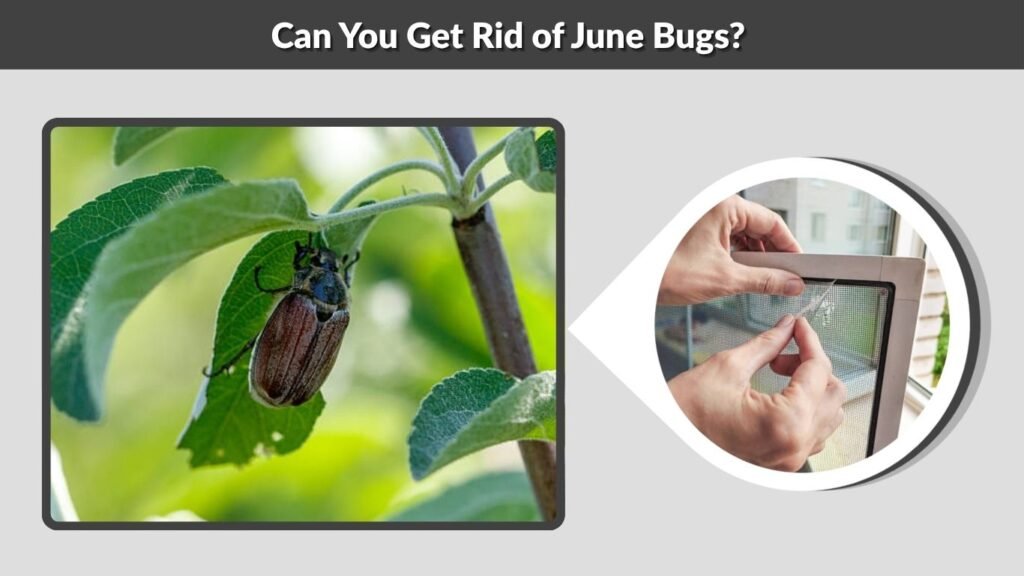
You can reduce June bugs around your home, but you usually cannot remove every beetle outdoors. The easiest step is reducing bright outdoor lights at night, because adult beetles are attracted to lights. Managing white grubs in the lawn may also help reduce future adult beetles.
Simple Ways to Reduce June Bugs
- Turn off porch lights when not needed
- Use yellow outdoor bulbs
- Repair window and door screens
- Keep doors closed at night
- Check lawns for white grubs
- Avoid overwatering lawns
- Ask a local extension office about grub control timing
FAQs
Can June bugs bite humans?
June bugs do not normally bite humans. If one lands on you, its spiny legs may feel scratchy or pinch-like. That feeling is usually from the beetle clinging to your skin or clothing, not from a true harmful bite.
Can June bugs sting?
No, June bugs cannot sting. They are beetles and do not have a stinger or venom. They may buzz loudly and fly into people by accident, but they are not aggressive stinging insects like wasps or bees.
Can dogs eat June bugs?
Dogs can eat June bugs, but it is not a good habit. One or two may not cause problems, but eating many hard beetles can upset a dog’s stomach. Watch for vomiting, diarrhea, weakness, or appetite loss.
Can bearded dragons eat June bugs?
It is safer not to feed wild June bugs to bearded dragons. Wild insects may carry pesticides, parasites, or natural toxins. Use properly raised feeder insects from trusted sources and ask a reptile veterinarian about safe diet choices.
Can June bugs fly?
Yes, adult June bugs can fly. They are often seen flying at dusk or night near lights. Their flight is clumsy, so they may crash into windows, doors, screens, walls, or people without trying to attack.
