
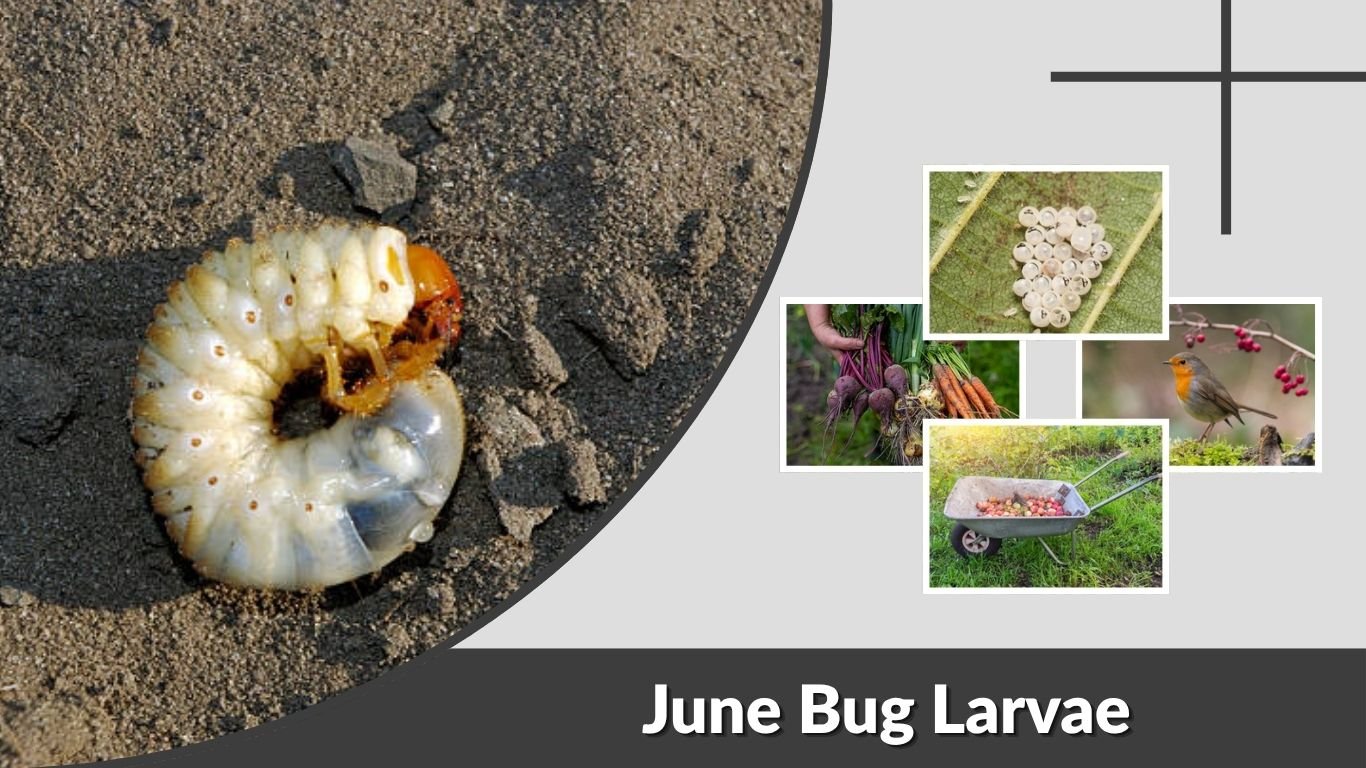
June bug larvae are the immature stage of June bugs, also called June beetles or May beetles. They are better known as white grubs because they live underground and curl into a C-shape when disturbed. While adult June bugs may annoy people around porch lights, the larvae can cause more serious problems in lawns and gardens. They feed on grass roots, plant roots, and sometimes decaying organic matter, depending on the species.
What Are June Bug Larvae?
June bug larvae are young beetles that hatch from eggs laid in soil. They spend most of their early life underground before becoming adult beetles. During this stage, they are soft-bodied grubs rather than hard-shelled flying insects.
June bug larvae are part of the beetle life cycle:
- Egg
- Larva
- Pupa
- Adult beetle
The larval stage is often the most damaging stage because the grubs feed on roots below the soil surface. Homeowners may not notice them until grass turns brown, plants weaken, or animals start digging in the yard.
What Do June Bug Larvae Look Like?
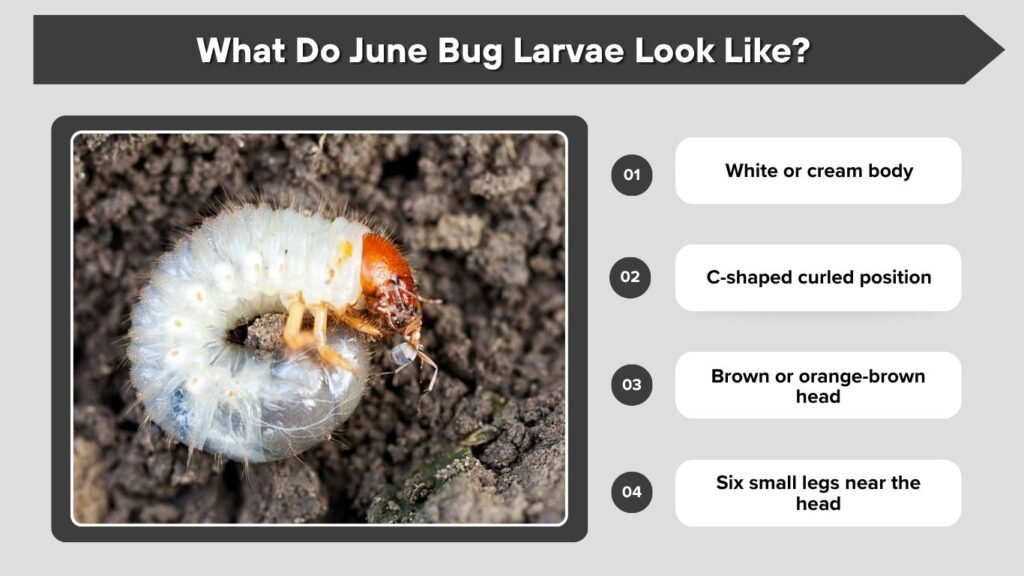
June bug larvae look like white or cream-colored grubs with brownish heads. They usually curl into a C-shape when picked up or disturbed. Their bodies are soft, wrinkled, and thicker toward the rear.
Common identification features include:
- White or cream body
- C-shaped curled position
- Brown or orange-brown head
- Six small legs near the head
- Soft, segmented body
- Found in soil, lawns, compost, or garden beds
- Slow movement when exposed
They do not look like adult June bugs. A baby June bug is not a tiny flying beetle; it is a grub living underground.
June Bug Larvae Size
June bug larvae size depends on age and species. Young larvae are small and thin, while mature grubs become larger and thicker before pupating.
| Stage | Approximate Size | Appearance |
|---|---|---|
| Newly hatched larva | Very small | Pale, soft, hard to notice |
| Young grub | Under ½ inch | White, curled, small head |
| Mature June bug larva | About ¾–2 inches | Thick, C-shaped white grub |
| Green June bug larva | Often larger | Thick grub, may crawl on its back |
Some June bug larvae can become quite large compared with Japanese beetle grubs. Green June beetle larvae are especially noticeable because they may be larger and sometimes move near the soil surface.
June Bug Larvae Stages
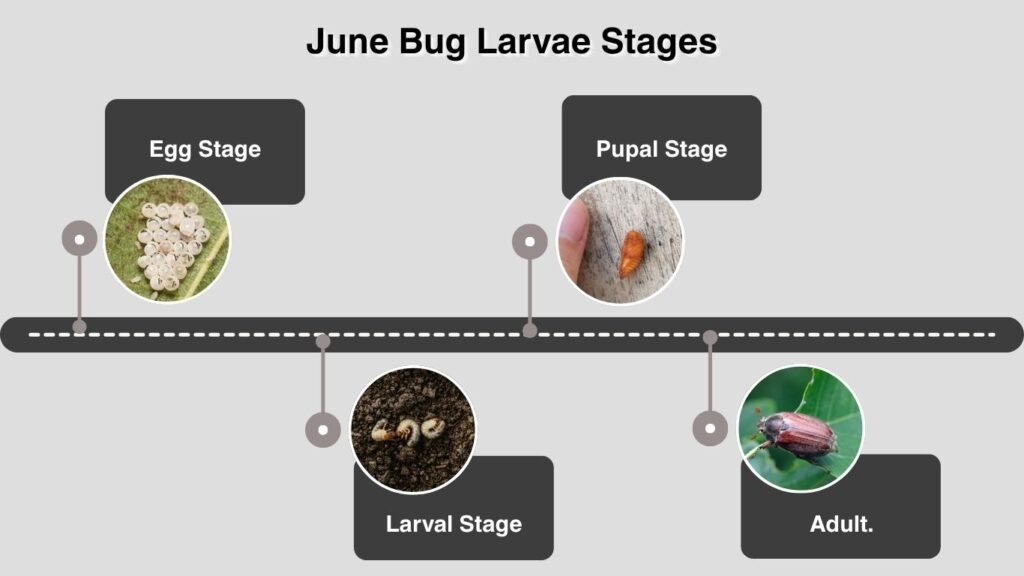
June bug larvae pass through several growth stages, often called instars. They hatch from eggs, feed underground, grow larger, then pupate before becoming adult beetles.
The full life cycle can vary depending on the species and climate. Some June bugs complete development in one year, while others may take longer.
Egg Stage
Female June bugs lay eggs in soil, usually in grassy or planted areas where larvae will have access to roots. The eggs are small, pale, and round to oval. Most people never notice them because they are hidden underground.
Larval Stage
This is the grub stage. The larvae feed heavily and grow larger. They may feed on grass roots, vegetable roots, flower roots, or organic matter in the soil.
This is the stage most responsible for lawn damage.
Pupal Stage
After feeding and growing, the larva forms a pupa in the soil. During this stage, it changes from a soft grub into an adult beetle. Pupae are usually hidden underground and are not commonly seen.
Adult Stage
The adult June bug emerges from the soil and begins flying, feeding, and mating. Adults are the beetles people see around lights at night or flying near lawns and gardens.
What Do June Bug Larvae Eat?
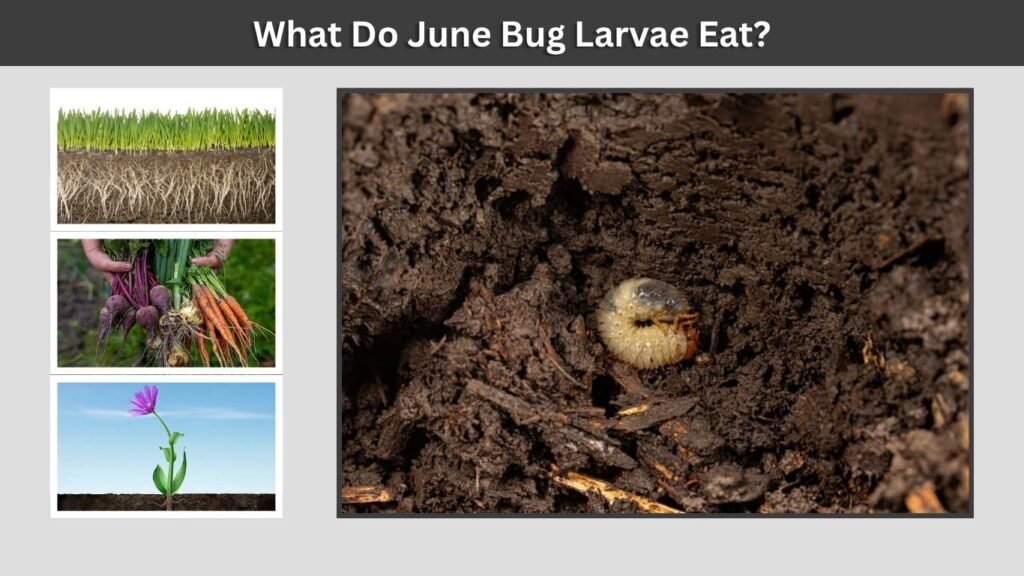
June bug larvae mostly eat roots. This is why they can damage lawns, gardens, and young plants. Their exact diet depends on the species.
June bug larvae may eat:
- Grass roots
- Vegetable plant roots
- Flower roots
- Tree seedling roots
- Shrub roots
- Decaying organic matter
- Compost material
- Roots of garden plants
Brown June bug larvae are commonly linked to lawn root damage. Green June bug larvae may also feed on organic matter and can be found in compost-rich soil.
Are Grubs June Bug Larvae?
Some grubs are June bug larvae, but not all grubs are June bug larvae. “Grub” is a general word for beetle larvae, especially white, C-shaped larvae found in soil.
Grubs may come from:
- June bugs
- Japanese beetles
- European chafers
- Masked chafers
- Green June beetles
- Other scarab beetles
Because many beetle larvae look similar, it can be hard to identify the exact species without close inspection.
June Bug Larvae in Lawns
June bug larvae are often found in lawns because grass roots provide food. When grubs feed underground, they damage the root system. This makes the grass weak and easier to pull up.
Signs of June bug larvae in lawns include:
- Brown or yellow grass patches
- Grass that lifts like loose carpet
- Spongy turf
- Birds digging in the lawn
- Skunks or raccoons tearing up grass
- More adult June bugs appearing each year
- White grubs found below the soil surface
A few grubs in the soil are normal. The problem begins when there are enough larvae to cause visible damage.
June Bug Larvae in Gardens
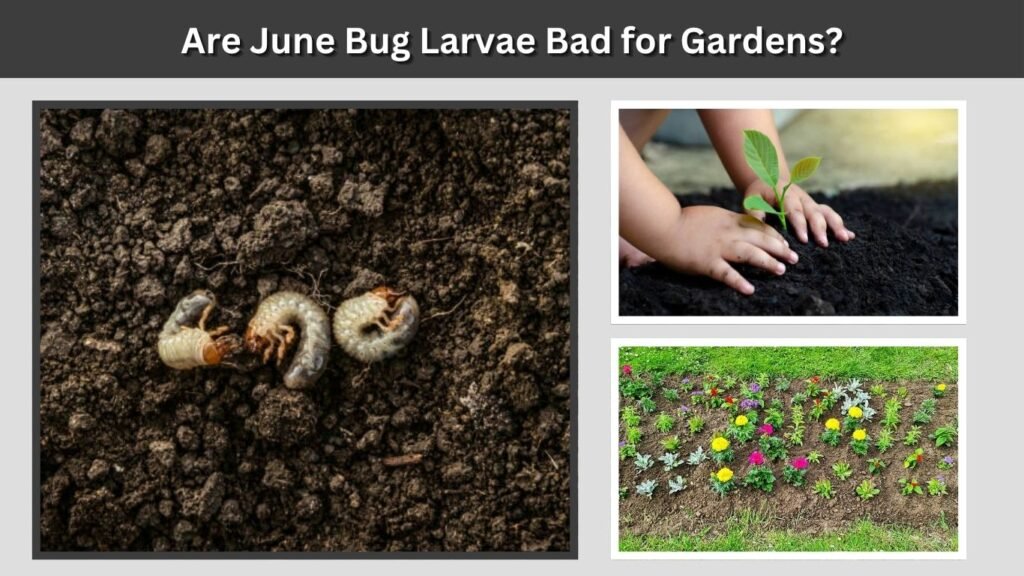
June bug larvae can also be found in gardens, especially where soil is rich, moist, and full of roots. They may damage vegetables, flowers, and young plants by eating roots below the soil.
Garden damage may look like:
- Wilting plants
- Slow growth
- Seedlings dying
- Loose root systems
- Plants pulling out easily
- Grubs found while digging
If plants are dying even though they receive enough water, underground grub damage may be one possible cause.
Are June Bug Larvae Bad for Gardens?
June bug larvae can be bad for gardens if their numbers are high. One or two grubs may not cause serious harm, but many larvae can weaken plant roots and reduce plant growth.
They are most harmful to:
- Young seedlings
- Root vegetables
- Lawns near garden beds
- Newly planted flowers
- Small shrubs
- Plants with shallow root systems
In compost piles, some green June bug larvae may help break down organic matter, but in lawns and planting beds, heavy grub activity can become a problem.
Green June Bug Larvae
Green June bug larvae are the immature form of green June beetles. These grubs can look larger and thicker than many other lawn grubs. They are usually white or cream-colored with brown heads, like other scarab larvae.
One unusual thing about green June bug larvae is that they may crawl on their backs. They are sometimes found near the soil surface, in compost, or in areas with decaying organic matter.
Green June Bug Larvae vs Brown June Bug Larvae
Green June bug larvae may be larger and more likely to appear in organic-rich soil. Brown June bug larvae are more often noticed because of lawn root damage. Both are grub-like and can be difficult to identify without experience.
June Bug Larvae vs Japanese Beetle Larvae
June bug larvae and Japanese beetle larvae look very similar. Both are white, C-shaped grubs with brown heads and legs near the front. Both live in soil and feed on roots.
| Feature | June Bug Larvae | Japanese Beetle Larvae |
|---|---|---|
| Body shape | White, C-shaped grub | White, C-shaped grub |
| Head color | Brown or orange-brown | Brown or orange-brown |
| Food | Roots, grass roots, organic matter | Grass roots and plant roots |
| Lawn damage | Common | Common |
| Size | Often larger depending on species | Usually smaller |
| Identification | May need close inspection | May need close inspection |
The most accurate way to separate them is by looking at the raster pattern on the underside of the grub near the rear end. For most homeowners, the exact species matters less than the level of damage and the best timing for control.
Cicada Larvae vs June Bug Larvae
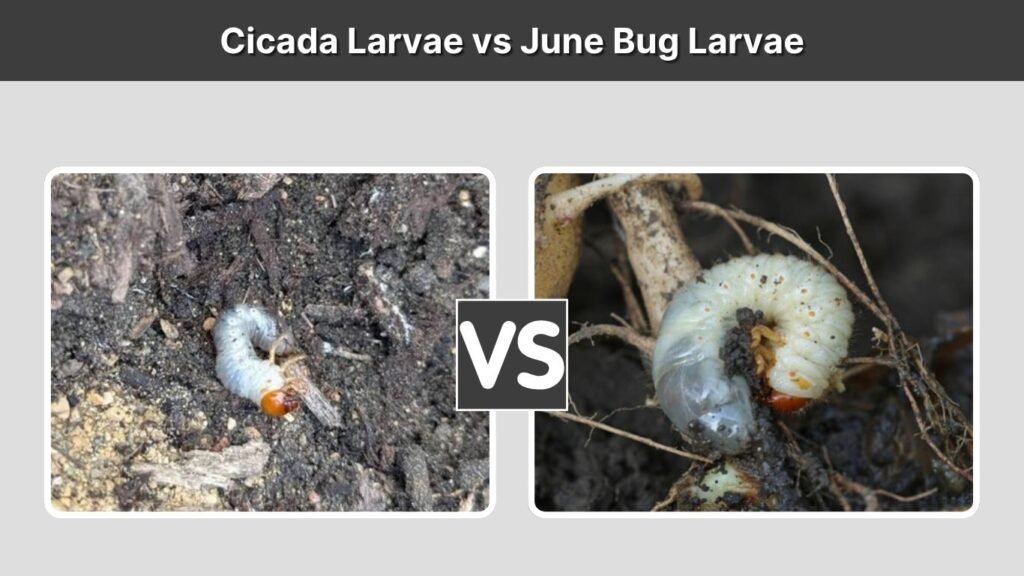
Cicada larvae and June bug larvae are different, although both may live underground. June bug larvae are soft white grubs with a C-shaped body. Cicada nymphs have a more insect-like shape, stronger front legs, and do not look like white grubs.
Cicada nymphs feed on tree root fluids, while June bug larvae chew grass roots and plant roots.
Do June Bug Larvae Bite?
June bug larvae are not dangerous to people. They do not sting or inject venom. A large grub may move or pinch slightly with its mouthparts if handled, but they are not considered biting pests.
It is still best to avoid handling them too much with bare hands. Wear gloves when digging in soil, especially in garden beds or compost.
Are June Bug Larvae Edible?
June bug larvae may be technically edible in some survival or traditional food contexts, but they are not something most people should eat from a yard or garden. Wild grubs may carry soil bacteria, parasites, or pesticide residue.
If someone is interested in edible insects, it is safer to buy insects raised for human consumption rather than eating random larvae from the soil.
What Eats June Bug Larvae?
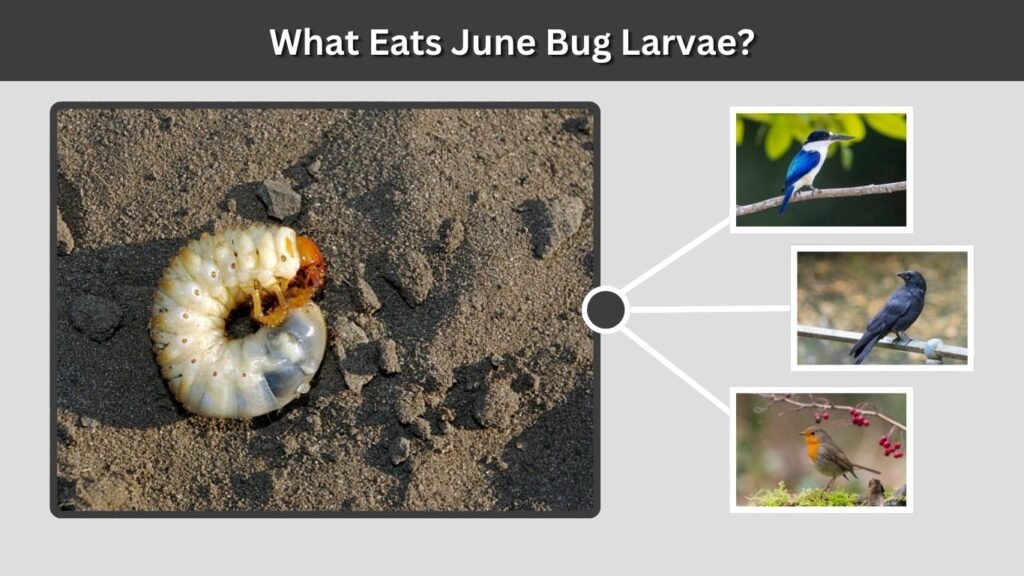
June bug larvae are food for many animals. In fact, animals digging up lawns often indicate that grubs are present.
Common grub predators include:
- Birds
- Crows
- Robins
- Skunks
- Raccoons
- Possums
- Moles
- Chickens
- Ducks
- Some wasps
- Beneficial nematodes
These predators can help reduce larvae naturally, but animals like skunks and raccoons may also damage the lawn while searching for grubs.
How to Get Rid of June Bug Larvae
The best way to get rid of June bug larvae is to treat them while they are young and close to the soil surface. Waiting until they are large and deep in the soil can make control harder.
| Control Method | Best Use | Notes |
|---|---|---|
| Beneficial nematodes | Natural grub control | Apply to moist soil |
| Milky spore | Long-term control for some grubs | Works better for certain species |
| Lawn inspection | Confirming infestation | Dig small test patches |
| Healthy lawn care | Prevention | Strong roots resist damage |
| Targeted grub products | Heavy infestations | Follow label directions carefully |
Use Beneficial Nematodes
Beneficial nematodes are a natural option for killing June bug larvae. They are microscopic organisms that attack grubs in the soil.
For best results:
- Apply in the evening or on cloudy days.
- Water the soil before application.
- Keep soil moist after application.
- Use the correct nematode type for grubs.
- Apply when grubs are active near the surface.
Improve Lawn Health
A healthy lawn can tolerate minor grub feeding better than weak turf. Proper mowing, watering, and soil care can reduce stress and help grass recover.
Avoid overwatering because overly moist soil can encourage some pest activity and weaken turf health.
Remove Larvae by Hand in Gardens
If you find grubs while digging in garden beds, remove them by hand and dispose of them. Chickens may eat them if you keep backyard birds, but do not feed them grubs from pesticide-treated soil.
How to Kill June Bug Larvae Without Killing Worms
Many gardeners want to control grubs without harming earthworms. Natural options like beneficial nematodes are often preferred because they target soil pests more directly than broad insecticides.
To protect worms and beneficial soil life:
- Avoid unnecessary chemical insecticides.
- Use targeted grub treatments only when needed.
- Apply beneficial nematodes correctly.
- Do not overtreat healthy soil.
- Test for grubs before applying products.
No control method is perfect, but targeted treatment is safer than applying broad-spectrum pesticides without confirming an infestation.
How to Prevent June Bug Larvae
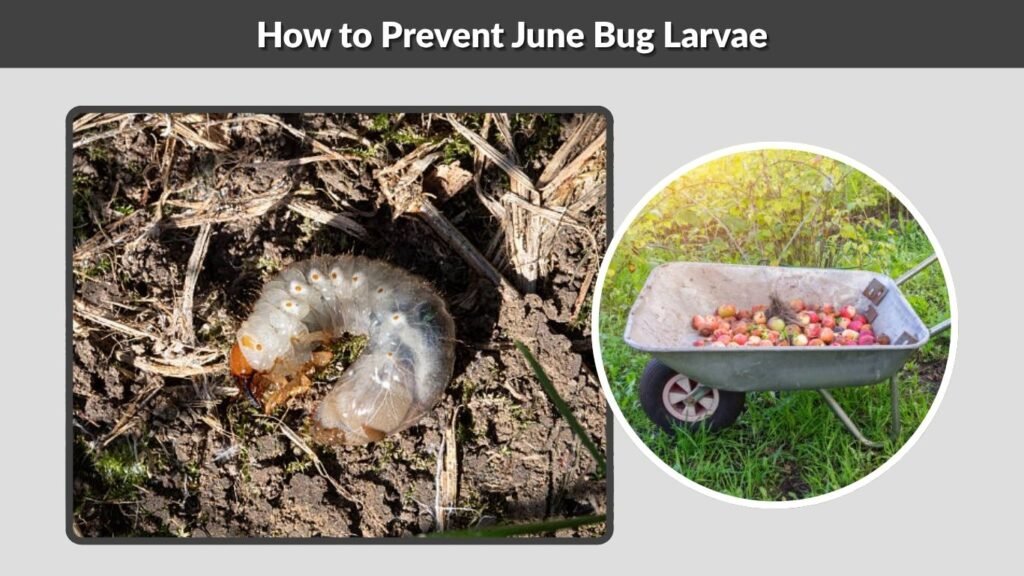
Prevention starts with reducing adult beetles and keeping the lawn less favorable for heavy grub populations.
Helpful prevention steps include:
- Reduce outdoor lights during adult June bug season.
- Keep lawns healthy and not overly wet.
- Remove fallen fruit and garden debris.
- Inspect soil before damage becomes severe.
- Encourage birds and natural predators.
- Treat young grubs at the right time.
- Avoid attracting adult beetles to porch and garden lights.
Adult June bugs lay eggs in soil, so reducing adult activity around the yard can help lower future grub numbers.
FAQs
What do June bug larvae look like?
June bug larvae look like white or cream-colored C-shaped grubs with brown heads. They have soft, wrinkled bodies and six small legs near the front. They are usually found underground in lawns, gardens, compost, or soil near plant roots.
What do June bug larvae eat?
June bug larvae mostly eat roots. They commonly feed on grass roots, garden plant roots, flower roots, and sometimes decaying organic matter. Heavy feeding can damage lawns and weaken plants, especially seedlings or shallow-rooted garden plants.
Are grubs June bug larvae?
Some grubs are June bug larvae, but not all grubs come from June bugs. Japanese beetles, chafers, and other scarab beetles also have white grub larvae. Many look similar, so exact identification can be difficult without close inspection.
How do you get rid of June bug larvae?
You can get rid of June bug larvae by using beneficial nematodes, improving lawn health, removing grubs by hand in garden beds, and applying targeted grub control when needed. Treatments work best when larvae are young and close to the soil surface.
Are June bug larvae damaging?
Yes, June bug larvae can be damaging when many are present. They feed on grass roots and plant roots, causing brown lawn patches, weak turf, wilting plants, and poor garden growth. A few grubs are normal, but heavy infestations need control.
