
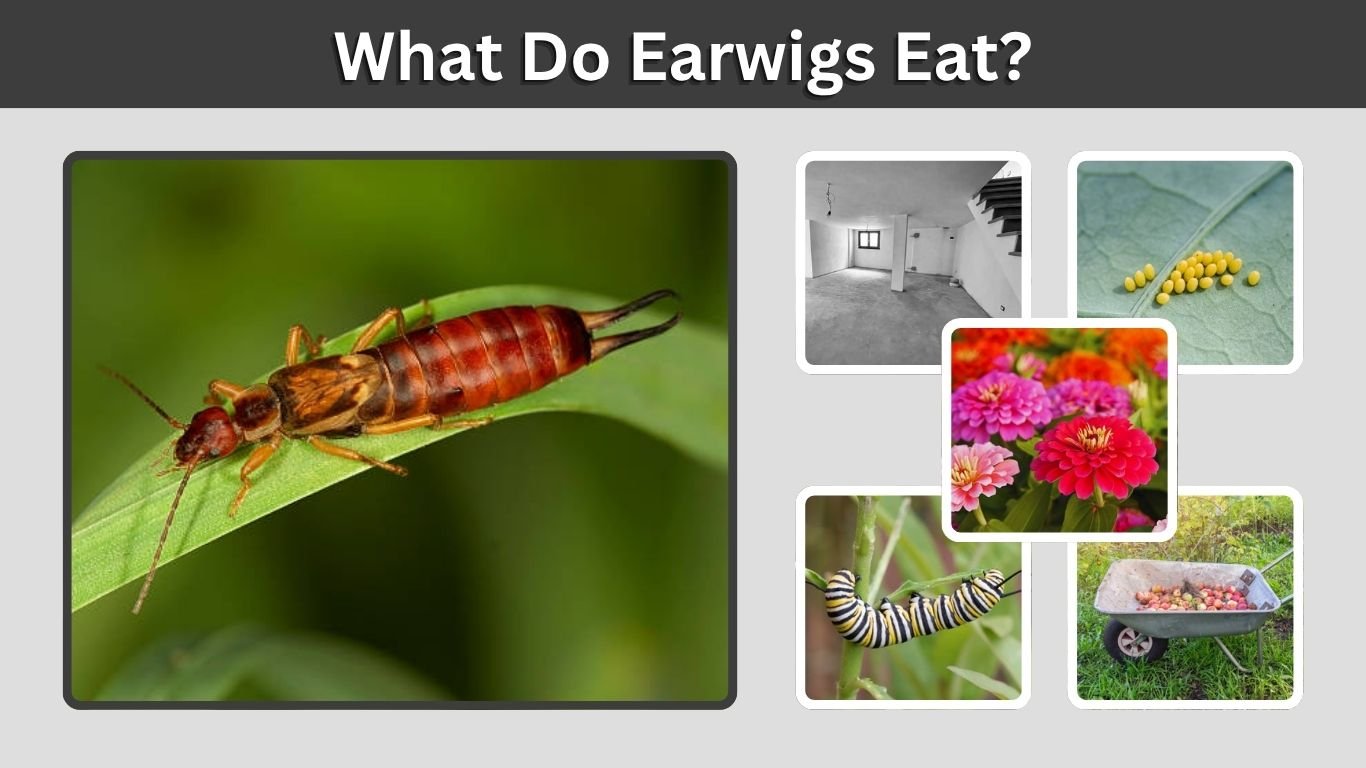
Earwigs are omnivorous insects, which means they eat both plant and animal material. In gardens, they can be helpful because they feed on aphids, mites, and insect eggs, but they can also damage soft leaves, flowers, fruits, and seedlings. If you are asking “what do earwigs eat,” the answer depends on where they live, what food is available, and whether they are feeding as scavengers, predators, or plant pests.
What Do Earwigs Eat?
Earwigs eat a wide range of foods, including decaying plant matter, fungi, small insects, insect eggs, tender plant shoots, flowers, fruits, and vegetables. The European earwig is described as an omnivore that feeds on detritus, fungi, plants, and insects.
| Food Type | Do Earwigs Eat It? | Helpful or Harmful? |
| Aphids | Yes | Helpful |
| Mites | Yes | Helpful |
| Insect eggs | Yes | Helpful |
| Dead insects | Yes | Helpful/scavenging |
| Decaying leaves | Yes | Helpful decomposition |
| Fungi | Yes | Natural diet |
| Tender leaves | Yes | Harmful if plants are damaged |
| Flowers | Yes | Harmful if blooms are chewed |
| Soft fruits | Yes | Harmful |
| Seedlings | Yes | Harmful |
| Vegetables | Yes | Harmful in large numbers |
| Plant debris | Yes | Helpful/scavenging |
12 Foods Earwigs Commonly Eat
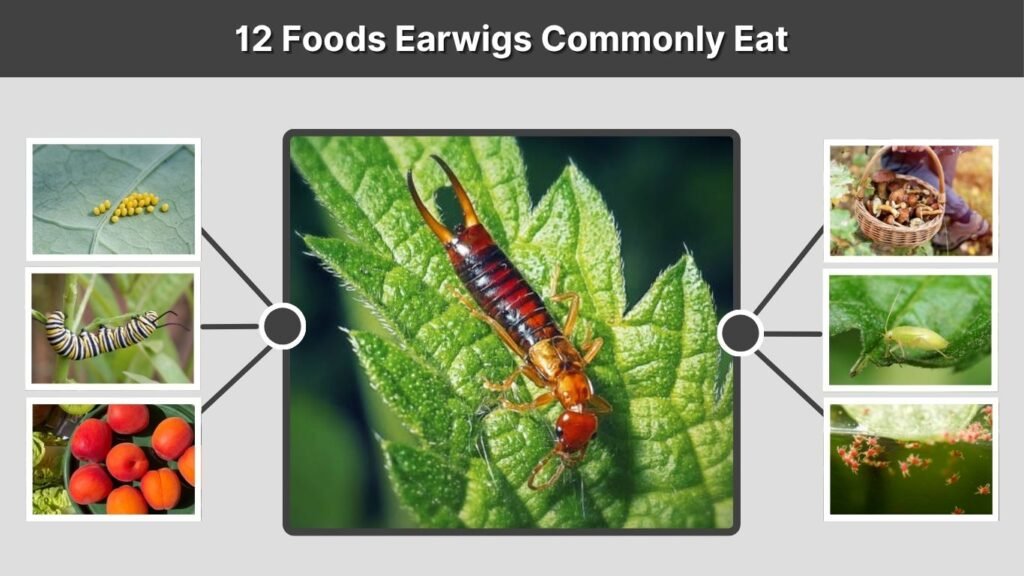
Earwigs are opportunistic feeders. They usually eat what is easiest to find at night, especially in damp, dark garden areas. UC IPM notes that European earwigs feed on both dead and living organisms, including insects, mites, and growing plant shoots.
1. Decaying Leaves
Decaying leaves are one of the most common foods for earwigs. They hide under leaf litter during the day and may feed on the soft, broken-down plant material at night.
This is one reason earwigs are often found in damp garden beds, compost areas, and under mulch. In small numbers, this feeding helps break down organic material.
2. Compost and Plant Debris
Earwigs also eat composting plant matter, rotting stems, dead flowers, and other garden debris. They are often found in places where organic material stays moist.
This is not always bad. Earwigs can help recycle dead material, but too much damp debris near vegetables or flowers may also support large earwig populations.
3. Fungi
Fungi are part of the earwig diet, especially in damp habitats. Since earwigs like moist areas, they may feed on fungal growth found around rotting wood, mulch, compost, or dead plant material. Utah State University Extension includes fungi as part of the European earwig’s diet.
4. Aphids
Aphids are one of the most important foods earwigs eat in gardens and orchards. Earwigs can act as natural predators of aphids, which makes them useful in some situations.
Washington State University notes that European earwigs are important predators of some fruit pests, including aphids, pear psylla, mites, and insect eggs.
5. Mites
Earwigs also eat mites. This can be helpful because some mites damage plants by feeding on leaves, buds, and fruit crops.
If earwigs are present in low numbers, they may help reduce small pest populations. However, if their numbers become too high, they may begin feeding more heavily on plant material as well.
6. Insect Eggs
Earwigs may eat insect eggs, including eggs of plant pests. This makes them useful predators in some gardens and orchards.
Their role depends on balance. A small earwig population may help control pests, while a large population can chew flowers, seedlings, and fruit.
7. Caterpillars and Larvae
Earwigs may eat small caterpillars, larvae, and other soft-bodied insects. Colorado State University Extension notes that the main food of earwigs includes insects, especially plant pests such as aphids.
This predatory feeding is one reason gardeners do not always need to remove every earwig they see.
8. Dead or Weak Insects
Earwigs are scavengers as well as predators. They may feed on dead insects, weakened insects, and small organisms. University of Minnesota Extension describes earwigs as scavengers that feed on damaged and decaying plant matter, weakened or dead insects, and other small organisms.
This helps explain why earwigs appear in damp corners, under pots, or near dead bugs inside garages and basements.
9. Tender Leaves
Earwigs may chew tender leaves, especially on young plants. Their damage often appears as irregular holes or ragged edges.
Commonly affected plants may include lettuce, basil, beans, dahlias, marigolds, and young vegetable seedlings. Damage is usually worse when earwig numbers are high and plants are soft or newly growing.
10. Flowers and Buds
Earwigs sometimes feed on flower petals and buds. This can be frustrating in ornamental gardens because the damage may appear overnight.
They may chew small holes in petals or hide inside flower heads during the day. Dahlias, marigolds, zinnias, and other soft-petaled flowers may be affected when earwig activity is heavy.
11. Soft Fruits
Earwigs can feed on soft fruits, especially when fruit is ripe, damaged, or close to the ground. They may chew into strawberries, peaches, apricots, plums, and other soft-skinned fruits.
In many cases, earwigs are attracted to fruit that is already cracked, overripe, or damaged by another pest. However, large numbers can still make fruit damage worse.
12. Vegetables and Seedlings
Earwigs may eat vegetables and seedlings in the garden. They can chew young leaves, soft stems, and sometimes corn silk or tender plant growth. Utah State University Extension notes that earwigs can injure buds, leaves, flowers, and fruits of many plants, including fruits, vegetables, and ornamentals.
Seedlings are especially vulnerable because they have soft tissue and little ability to recover from repeated chewing.
What Do Earwigs Eat in the Garden?
In the garden, earwigs eat both pests and plants. Their helpful side comes from eating aphids, mites, insect eggs, and small soft-bodied insects. Their harmful side appears when they chew leaves, flowers, seedlings, fruits, and vegetables.
| Garden Food | Result |
| Aphids and mites | Helps control pests |
| Insect eggs | Helps reduce pest numbers |
| Decaying leaves | Helps break down organic matter |
| Tender seedlings | Can cause plant damage |
| Flower petals | Can ruin blooms |
| Soft fruits | Can cause crop damage |
| Vegetable leaves | Can create ragged holes |
Earwigs are usually most active at night. If you suspect earwig damage, check plants after dark with a flashlight. During the day, look under pots, mulch, boards, stones, and garden debris.
What Do Earwigs Eat Inside the House?
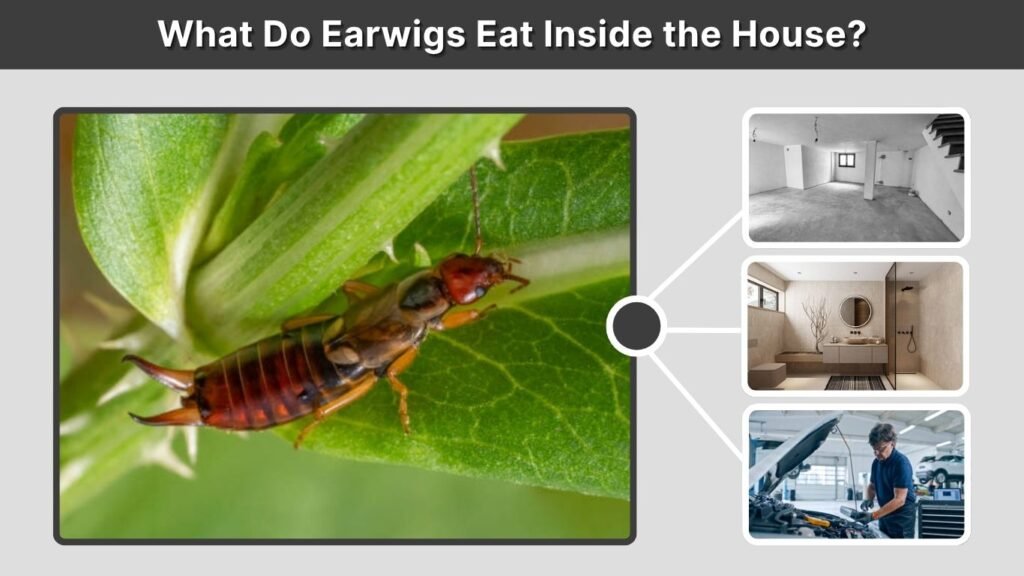
Inside the house, earwigs usually do not find as much food as they do outdoors. They may feed on crumbs, dead insects, damp organic matter, moldy material, or plant debris around houseplants. Most indoor earwigs are accidental invaders looking for moisture and shelter rather than a long-term indoor food source.
You may find them in:
- Bathrooms
- Basements
- Laundry rooms
- Garages
- Kitchens
- Damp entryways
- Around houseplants
If you find earwigs indoors, reduce moisture, vacuum them up, seal cracks, and check outdoor mulch or debris near the foundation.
Do Earwigs Eat Plants?
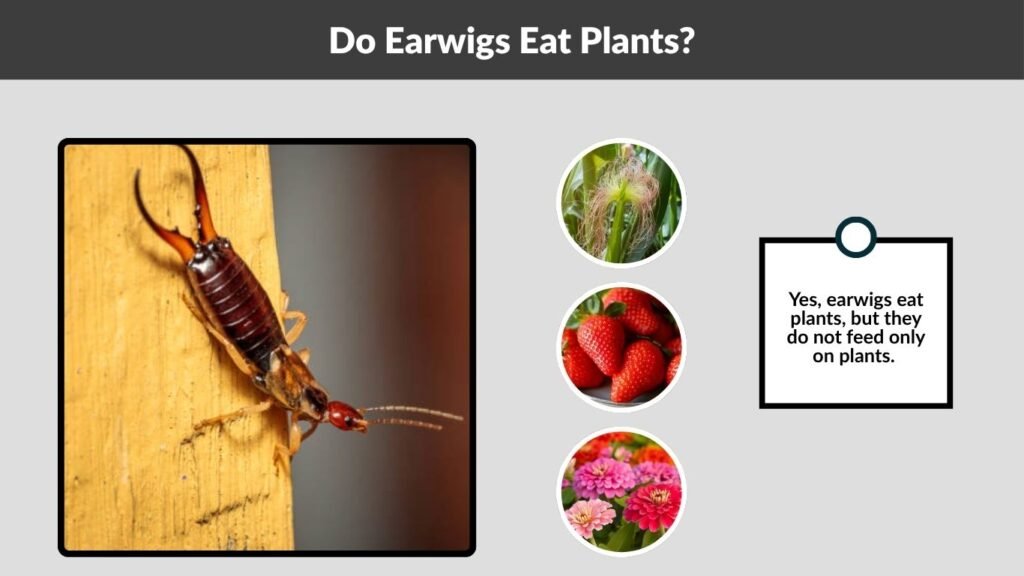
Yes, earwigs eat plants, but they do not feed only on plants. They are mixed feeders. Plant damage usually happens when earwig populations are high, food is limited, or soft plant tissue is easy to reach.
Plants Earwigs May Damage
- Lettuce
- Basil
- Beans
- Corn silk
- Strawberries
- Dahlias
- Marigolds
- Zinnias
- Young vegetable seedlings
- Soft fruits
- Tender herbs
- Flower buds
Earwig plant damage often looks like small, irregular holes. Since slugs, caterpillars, and beetles can cause similar damage, night inspection is the best way to confirm the pest.
Are Earwigs Helpful or Harmful?
Earwigs can be both helpful and harmful. They are helpful when they eat aphids, mites, insect eggs, and decaying organic matter. They are harmful when they chew vegetables, flowers, fruits, and seedlings.
In a mature garden with only a few earwigs, they may be more helpful than harmful. In a vegetable bed, flower garden, or strawberry patch with heavy damage, they may need control.
How to Reduce Earwig Feeding Damage
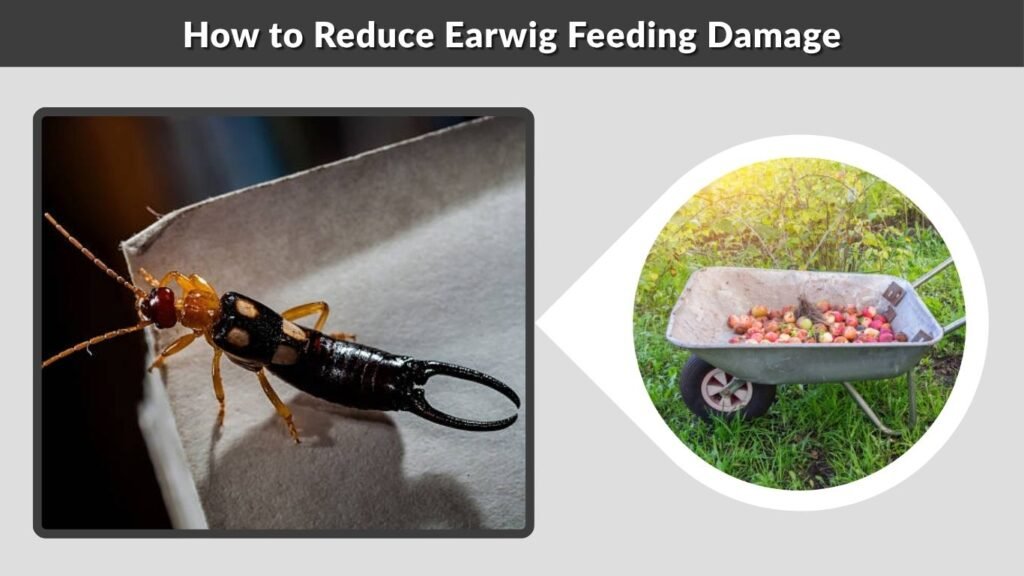
You do not always need to kill every earwig. The goal is to reduce damage and keep their numbers balanced.
Simple Control Tips
- Remove damp leaf litter near vulnerable plants
- Keep mulch thinner around seedlings
- Water in the morning instead of evening
- Pick ripe fruit quickly
- Remove fallen fruit from the ground
- Use rolled newspaper or cardboard traps
- Place oil traps near damaged plants
- Check plants at night with a flashlight
- Protect seedlings with covers or collars
Trapping works well because earwigs hide in dark, tight spaces during the day. Rolled newspaper, cardboard tubes, and shallow oil traps can reduce numbers without broad garden sprays.
FAQs
What is an earwig’s favorite food?
Earwigs often prefer soft-bodied insects, decaying plant matter, and tender plant tissue. Aphids, mites, insect eggs, dead insects, soft leaves, flowers, and ripe fruit are common foods.
Do earwigs eat aphids?
Yes. Earwigs eat aphids and can help reduce aphid populations in gardens and orchards. This is one reason they are sometimes considered beneficial insects.
Do earwigs eat vegetables?
Yes. Earwigs may eat vegetable seedlings, tender leaves, soft stems, and sometimes corn silk. Damage is usually worse when plants are young or earwig numbers are high.
Do earwigs eat fruit?
Yes. Earwigs can feed on soft fruits such as strawberries, peaches, plums, and other ripe or damaged fruit. They are especially attracted to fruit that is soft, cracked, or near the ground.
Do earwigs eat wood?
Earwigs do not eat wood like termites. They may hide under wood, bark, logs, or mulch because these places are dark and damp, but they mainly feed on organic debris, insects, fungi, and soft plant material.
