
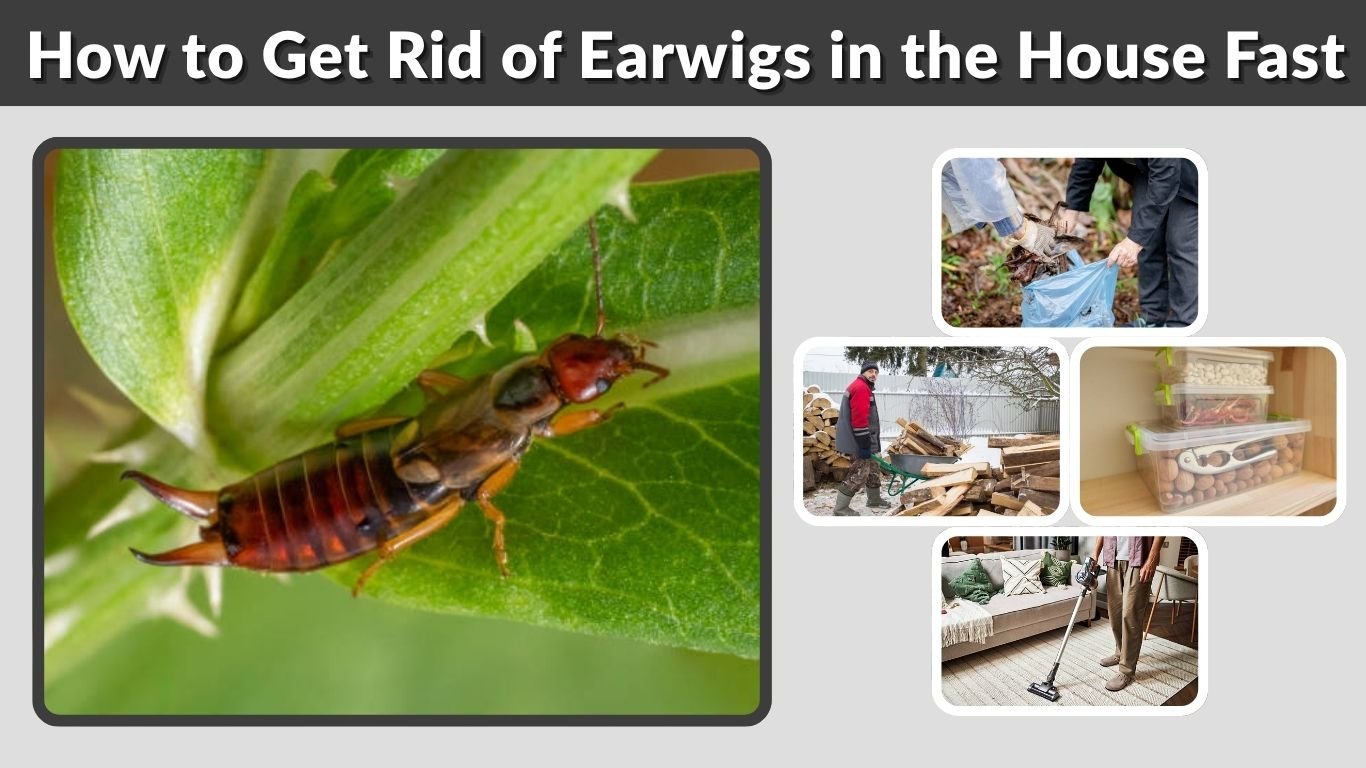
Earwigs in the house can be annoying, especially when they appear in bathrooms, kitchens, basements, laundry rooms, or near houseplants. These insects look scary because of their rear pincers, but they are not dangerous to people. Most earwigs enter homes looking for moisture, shelter, or food. The best way to get rid of earwigs indoors is to remove them, reduce dampness, seal entry points, and control outdoor hiding places near your home.
Why Are Earwigs in Your House?
Earwigs prefer dark, damp, and protected areas. They usually live outdoors under mulch, leaves, logs, stones, flowerpots, and garden debris. When outdoor conditions become too wet, dry, hot, or crowded, they may move indoors through cracks, gaps, doors, windows, vents, or foundation openings.
| Common Cause | Why It Attracts Earwigs |
| High moisture | Earwigs need damp hiding places |
| Mulch near foundation | Provides shelter close to entry points |
| Cracks and gaps | Allows earwigs to enter easily |
| Outdoor lights | Can attract insects near doors |
| Potted plants | Earwigs may hide in soil or saucers |
| Basement dampness | Creates a suitable indoor hiding area |
A few earwigs indoors does not always mean you have an infestation. However, seeing them repeatedly means there may be moisture, outdoor clutter, or entry points that need attention.
How to Get Rid of Earwigs in Your House Fast
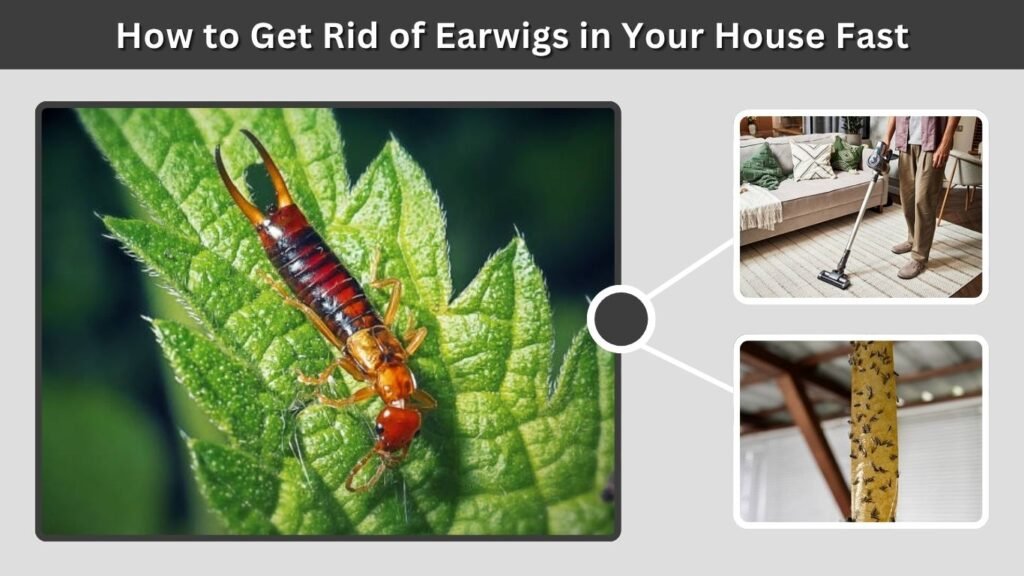
Fast control starts with physical removal. Earwigs do not usually establish large colonies inside homes like ants or termites, so removing the ones you see can quickly reduce the problem.
1. Vacuum or Sweep Them Up
The quickest way to get rid of earwigs inside is to vacuum or sweep them up. Focus on corners, baseboards, doorways, bathrooms, laundry rooms, and basement edges. University extension guidance recommends vacuuming or sweeping invading earwigs indoors instead of relying only on sprays.
After vacuuming, empty the vacuum canister or bag outside in a sealed trash bag.
2. Use Sticky Traps
Place sticky traps where you often see earwigs. Good places include:
- Behind toilets
- Under sinks
- Along basement walls
- Near door thresholds
- Beside washing machines
- Around houseplants
- Near garage corners
Sticky traps help catch active earwigs and show where they are entering or hiding.
3. Make a Simple DIY Trap
A rolled cardboard trap can catch earwigs because they like tight, dark hiding spaces. Utah State University Extension describes cardboard traps as a low-cost way to reduce earwig numbers in specific areas.
To make one, roll a strip of corrugated cardboard, tie it with string, and place it near earwig activity overnight. In the morning, seal the trap in a bag and throw it away.
How to Get Rid of Earwigs Naturally in the House
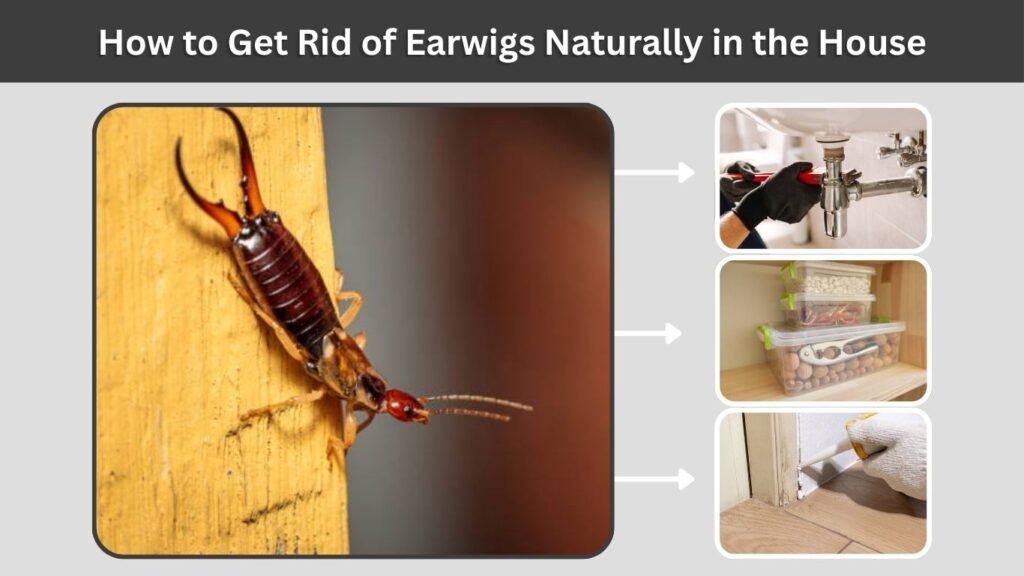
Natural control is often enough when the problem is mild. The goal is to make your home less attractive to earwigs.
Natural Earwig Control Tips
- Reduce indoor humidity with a dehumidifier
- Fix leaking faucets, pipes, and drains
- Keep bathrooms dry after showers
- Remove cardboard clutter from damp areas
- Store items in sealed plastic bins
- Keep floors clean and dry
- Use sticky traps instead of chemical sprays
- Seal cracks around doors, windows, and pipes
Diatomaceous earth may also be used in dry cracks and voids, but it works best when dry. Avoid spreading it heavily where children or pets may disturb the dust.
How to Get Rid of Earwigs in House Plants
Earwigs sometimes hide in houseplant soil, saucers, or decorative pots, especially if the plant was recently brought indoors from outside.
Steps for Houseplants
- Check under the pot, saucer, and soil surface.
- Remove dead leaves and decaying plant matter.
- Let the top layer of soil dry slightly between watering.
- Place sticky traps near the plant.
- Rinse the outside of the pot if earwigs are hiding around the rim.
- Move heavily infested plants outside temporarily and inspect the root area.
Avoid overwatering. Damp soil and plant debris give earwigs a perfect hiding place.
Stop Earwigs from Coming Back
Indoor removal will not solve the problem if earwigs keep entering from outside. Long-term prevention depends on moisture control, exclusion, and outdoor cleanup.
| Prevention Step | What to Do |
| Seal entry points | Caulk cracks, gaps, and foundation openings |
| Improve doors | Add door sweeps and weather stripping |
| Reduce mulch | Keep mulch away from the foundation |
| Remove debris | Clear leaves, logs, stones, and damp clutter |
| Fix moisture | Repair leaks and improve drainage |
| Manage lights | Reduce bright lights near doors at night |
| Check plants | Inspect pots before bringing them indoors |
University of Minnesota Extension recommends sealing gaps around doors, windows, siding, foundation areas, faucets, and vents to reduce earwig entry.
Outdoor Control Around the House
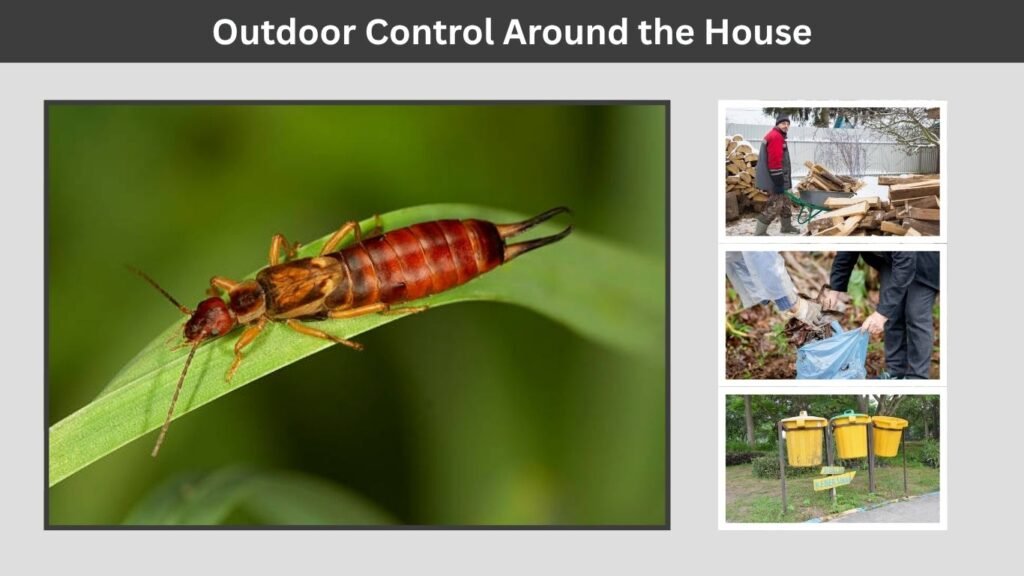
Most indoor earwig problems start outdoors. If your yard has damp mulch, thick leaf litter, or piles of wood near the house, earwigs may gather there and then move inside.
To reduce outdoor earwigs:
- Move firewood away from the house
- Pull mulch back from the foundation
- Clean up wet leaves and garden debris
- Trim dense vegetation near walls
- Improve drainage around the foundation
- Avoid overwatering flower beds
- Empty water from plant saucers
- Keep trash areas clean and dry
Earwigs hide during the day in dark, moist spaces such as mulch, topsoil, bark crevices, and protected plant material, then come out at night to feed.
Should You Use Sprays for Earwigs?
Sprays are not always needed for earwigs in the house. If you only see a few, vacuuming, traps, moisture reduction, and sealing gaps are usually better first steps.
For heavier problems, outdoor perimeter treatment may help, but always follow the product label. Avoid spraying randomly inside living spaces, especially around kitchens, children, pets, and houseplants. Extension sources recommend using traps and exclusion before insecticides, and using registered products only when necessary.
If earwigs keep returning in large numbers, a pest control professional can inspect foundation gaps, moisture problems, and outdoor harborage areas.
Signs of an Earwig Infestation in the House
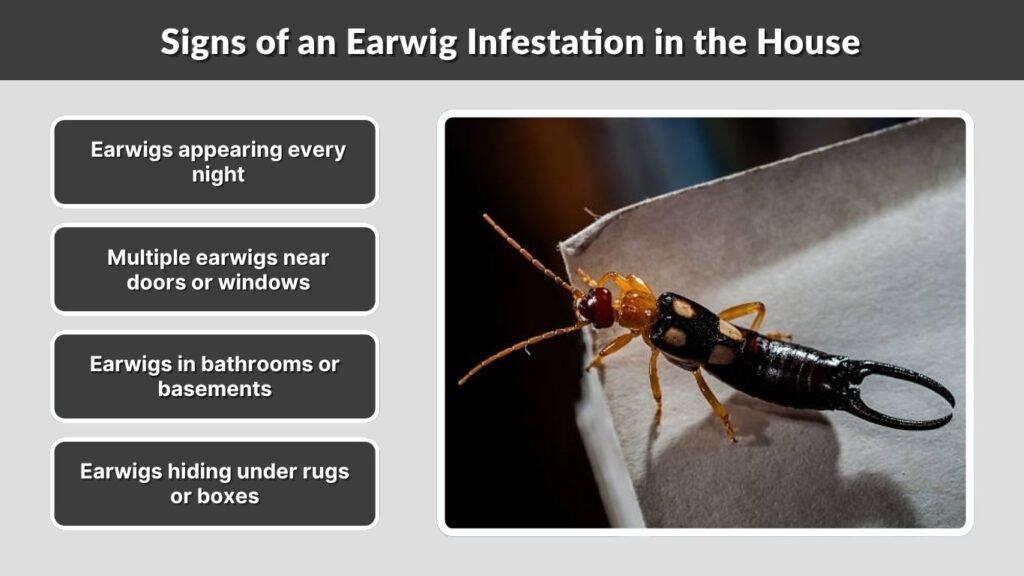
Earwigs do not form indoor colonies like some pests, but repeated sightings can still feel like an infestation.
Common signs include:
- Earwigs appearing every night
- Multiple earwigs near doors or windows
- Earwigs in bathrooms or basements
- Earwigs hiding under rugs or boxes
- Earwigs in houseplant pots
- Dead earwigs near baseboards
- Garden damage near the foundation
If you see many earwigs indoors, focus first on where they are coming from. The main source is often outside, not deep inside the house.
Are Earwigs Dangerous in the House?
Earwigs are not considered a health hazard. They do not spread serious disease, and they do not damage wood, walls, or furniture like termites. They can pinch with their rear pincers if handled, but they are not venomous.
Their main problem indoors is nuisance activity. Outdoors, they may chew flowers, seedlings, fruits, and tender leaves, although they also eat pests such as aphids and mites.
FAQs
What kills earwigs instantly in the house?
Vacuuming is the fastest indoor method. It removes live earwigs immediately without spreading chemicals inside the home. Sticky traps can also catch earwigs overnight.
How do I get rid of earwigs in my house naturally?
Reduce moisture, fix leaks, remove clutter, use sticky traps, vacuum visible earwigs, and seal cracks around doors and windows. Natural control works best when you also clean up outdoor hiding places.
Why do I suddenly have earwigs in my house?
Sudden earwig activity usually happens because of weather changes, moisture, outdoor mulch, heavy rain, dry conditions, or gaps around the home. They often enter from nearby damp hiding places.
Do earwigs lay eggs inside the house?
Earwigs usually lay eggs in protected soil chambers outdoors, not inside normal living spaces. Indoor sightings are usually accidental invaders coming from outside.
How do I get rid of an earwig infestation in the house?
Vacuum visible earwigs, set sticky traps, dry damp rooms, inspect houseplants, seal entry points, and clean up mulch, leaves, and debris near the foundation. For severe or repeated infestations, consider professional pest control.
