
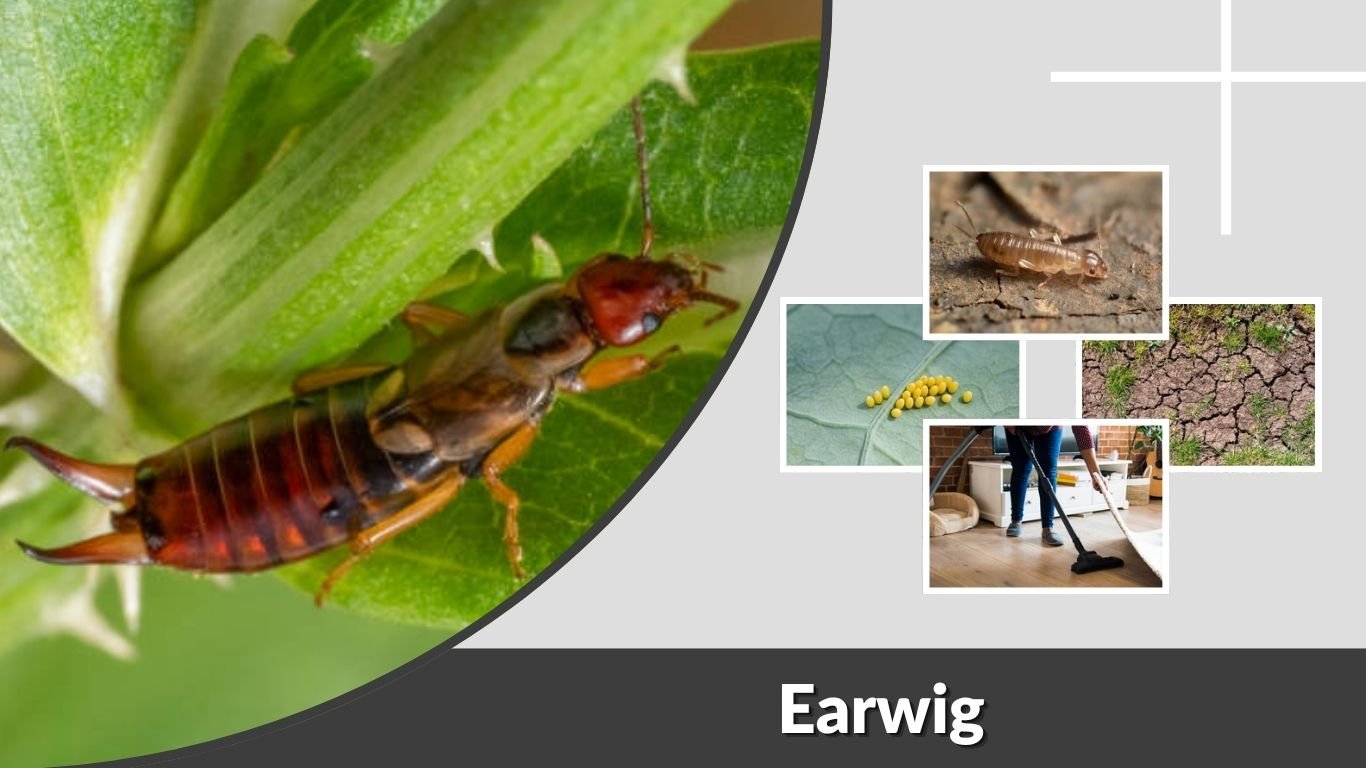
Earwigs are small insects best known for the pair of pincers at the end of their bodies. Many people call them “pincher bugs,” and they are often found in damp, dark places around gardens, basements, bathrooms, mulch, and doorways. Although earwigs look scary, they are not dangerous to humans. This guide explains earwig types, size, habitat, diet, lifespan, life cycle, and image-based identification tips.
What Is an Earwig?
Earwigs are insects in the order Dermaptera. They have long, flattened bodies, chewing mouthparts, slender antennae, and forceps-like pincers called cerci at the back of the abdomen. Many species have wings, but most earwigs rarely fly.
Earwigs are mostly active at night. During the day, they hide in cool, moist, protected spaces such as soil cracks, mulch, leaf litter, rocks, logs, and damp corners around buildings.
Earwig Identification
Earwigs are easy to identify once you focus on their body shape and pincers. They are often confused with beetles or rove beetles, but the rear pincers are the biggest clue.
Key Features of Earwigs
- Long, narrow, flattened body
- Brown, reddish-brown, black, or yellowish color
- Pair of pincers at the end of the abdomen
- Long, beaded antennae
- Six legs
- Chewing mouthparts
- Short wing covers in winged species
- Fast movement when disturbed
| Identification Feature | What to Look For |
| Body shape | Long, narrow, and flattened |
| Color | Brown, reddish-brown, black, or yellowish |
| Rear end | Pincer-like cerci |
| Antennae | Long and slender |
| Wings | Present in some species, absent in others |
| Activity | Mostly nocturnal |
| Common hiding spots | Mulch, soil, logs, stones, basements, garages |
Male and female earwigs can look slightly different. In many species, males have larger, more curved pincers, while females usually have shorter and straighter pincers.
Common Types of Earwigs
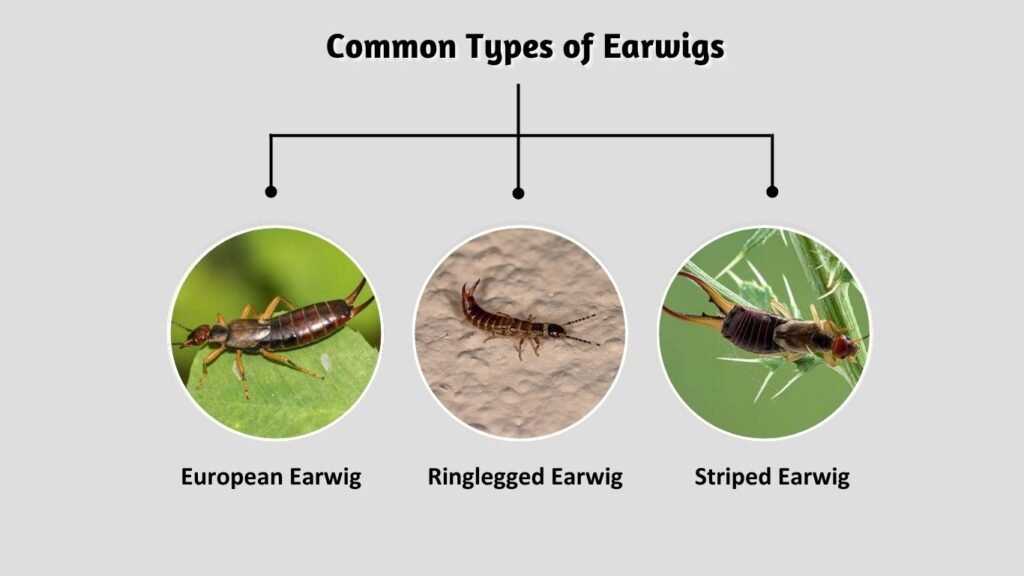
There are many earwig species worldwide. North Carolina State University notes that Dermaptera includes about 1,800 species worldwide and about 27 species in North America.
European Earwig
The European earwig (Forficula auricularia) is one of the most common earwigs around homes and gardens. It is usually reddish-brown and about ½ to ¾ inch long. It has banded legs, a reddish head, and wings, although it rarely flies.
This species is both helpful and harmful. It eats aphids, mites, caterpillars, maggots, and other soft-bodied pests, but it may also chew leaves, flowers, and soft plant tissue.
Ringlegged Earwig
The ringlegged earwig (Euborellia annulipes) is another common type. It is usually darker, with yellowish markings underneath and dark or pale bands around the legs. In the United States, this species is often wingless.
Ringlegged earwigs are often found outdoors in damp places. They may feed on small insects and other invertebrates and are usually less damaging to living plants than European earwigs.
Striped Earwig
The striped earwig is more common in fields and gardens in warmer regions. Clemson Extension notes that striped earwigs can be beneficial because they feed on pests such as aphids, scales, mites, and other small plant insects.
Shore or Riparian Earwig
The shore earwig or riparian earwig is often associated with sandy, moist, or waterside areas. Some sources describe it as one of the larger earwig types, reaching around 1 inch long. It is mainly predatory and may feed on small insects such as cutworms, caterpillars, grubs, and maggots.
Earwig Size
Earwig size depends on the species and age. Most common household and garden earwigs are small to medium insects, usually around ¼ inch to 1¼ inches long, not counting the pincers.
| Earwig Type or Stage | Approximate Size |
| Young nymph | Very small; smaller than adults |
| European earwig | ½ to ¾ inch |
| Ringlegged earwig | ½ to ⅗ inch |
| Larger earwig species | Around 1 inch or slightly more |
| General earwig range | About ¼ to 1¼ inches |
Young earwigs, called nymphs, look like smaller versions of adults. They usually lack fully developed wings, and their pincers are shorter than those of mature earwigs.
Earwig Habitat
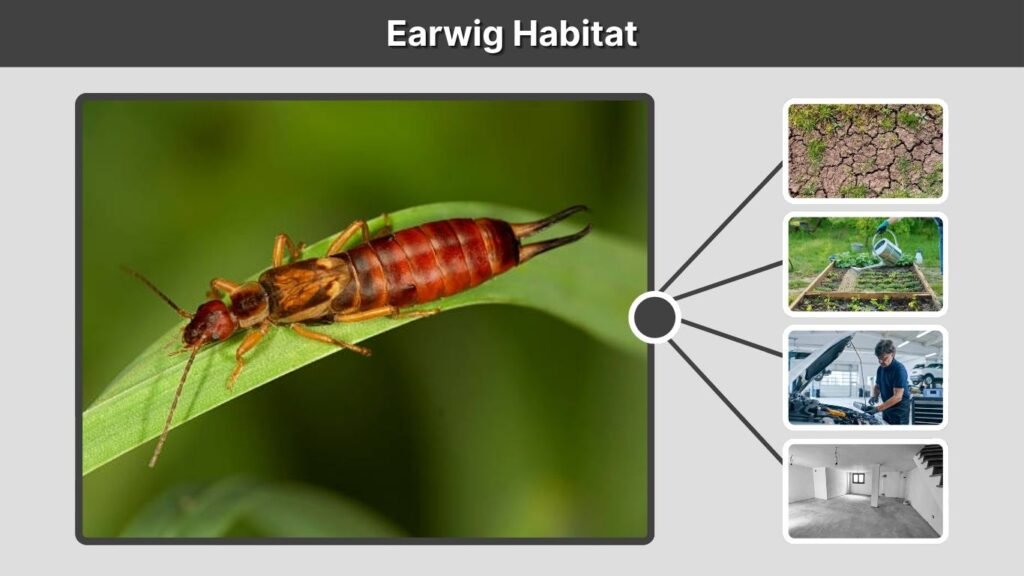
Earwigs prefer dark, moist, and protected habitats. They do not do well in hot, dry conditions, so they usually hide where moisture is available.
Outdoor Habitat
Outdoors, earwigs commonly live in:
- Mulch
- Compost piles
- Leaf litter
- Garden beds
- Under rocks
- Under logs
- Woodpiles
- Soil cracks
- Flowerpots
- Dense weeds or plant growth
Earwigs often become more noticeable after rain, irrigation, or seasonal weather changes. If their outdoor hiding places become too dry, wet, crowded, or disturbed, they may move toward buildings.
Indoor Habitat
Inside homes, earwigs are usually accidental invaders. They may appear in:
- Basements
- Bathrooms
- Garages
- Laundry rooms
- Crawl spaces
- Door frames
- Window areas
- Damp carpets
- Potted plants brought indoors
They are not indoor wood destroyers like termites, and they do not damage structures. However, repeated indoor sightings usually mean there is moisture or outdoor shelter near the foundation.
What Do Earwigs Eat?
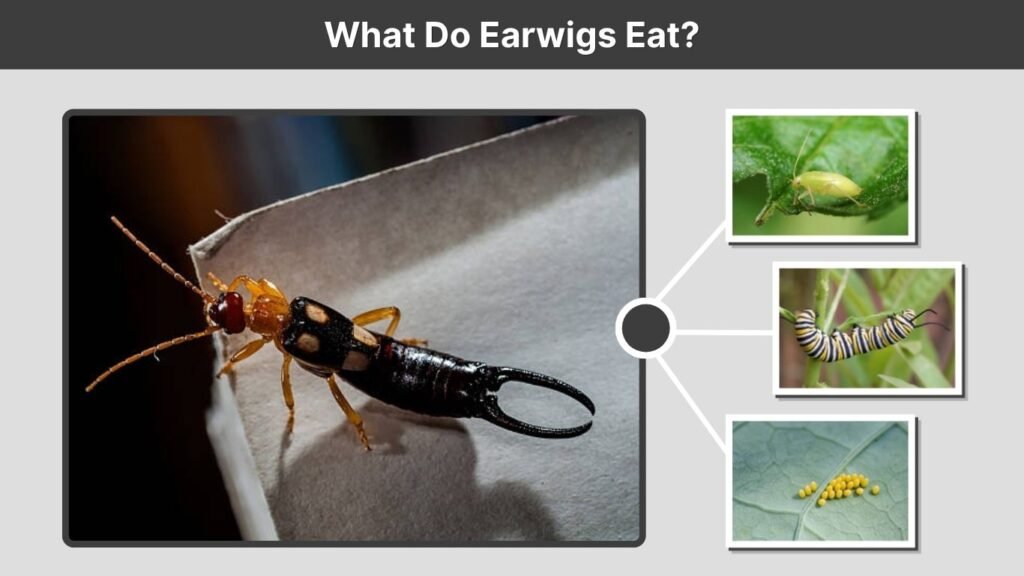
Earwigs are omnivores, meaning they eat both plant and animal material. Their diet can include decaying organic matter, fungi, soft plant tissue, and small insects.
Common Earwig Foods
- Aphids
- Mites
- Scales
- Caterpillars
- Maggots
- Small insects
- Insect eggs
- Fungi
- Decaying leaves
- Dead plant matter
- Soft fruits
- Flowers
- Seedlings
- Tender leaves
Earwigs can be beneficial in gardens because they eat pest insects. However, they may become pests when they chew irregular holes in leaves, flowers, fruits, or young plants. This damage can sometimes look similar to caterpillar damage.
Earwig Lifespan
Earwig lifespan varies by species and climate. Many earwigs live for about one year, while some adults may live several months after becoming mature. Clemson Extension notes that adults may live up to seven months, and young earwigs can take two to three months to become adults.
Their survival depends on moisture, temperature, food, predators, and shelter. Earwigs are more likely to thrive in damp environments with plenty of hiding places and organic matter.
Earwig Life Cycle
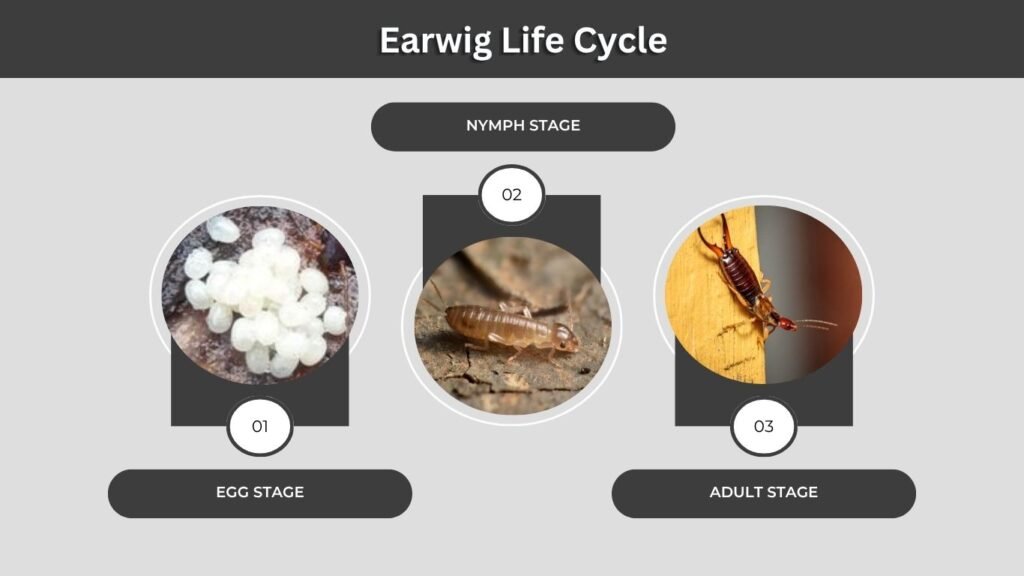
Earwigs go through incomplete metamorphosis, which means they develop through three main stages: egg, nymph, and adult. They do not have a pupal stage like butterflies, bees, or beetles.
Egg Stage
Female earwigs usually lay eggs in protected soil chambers, often in late winter, spring, or autumn depending on the species and climate. A female may lay around 20 to 50 smooth, white or cream-colored eggs.
One interesting fact about earwigs is maternal care. Female earwigs guard, clean, and move their eggs to protect them from danger, mold, and fungus. This level of parental care is unusual among insects.
Nymph Stage
After hatching, young earwigs are called nymphs. They look like small adults but usually have no wings or only developing wing pads. Nymphs may stay near the nest at first, then gradually move out to search for food.
As they grow, nymphs molt several times. With each molt, they become larger and more adult-like.
Adult Stage
Adult earwigs are active mainly at night. They search for food, hide during the day, mate, and continue the life cycle. Some adult earwigs overwinter in soil or protected places to survive cold weather.
Earwig Images: What to Notice
When looking at earwig images, focus on the pincers, body color, wings, and leg markings. These features help separate one type from another.
Image Identification Tips
- Rear pincers: Curved pincers are often more noticeable in males.
- Body color: European earwigs are usually reddish-brown; ringlegged earwigs are darker with marked legs.
- Wings: Some species have short wing covers; others are wingless.
- Leg bands: Ringlegged earwigs often show dark or pale bands around the leg joints.
- Size: Larger earwigs may be shore or riparian species, depending on location.
Good article images should include a full-body earwig photo, a close-up of the pincers, a comparison of male and female pincers, and a habitat image showing mulch, leaves, or damp garden soil.
Are Earwigs Dangerous?
Earwigs are not dangerous to humans. They do not crawl into ears to lay eggs, and that belief is an old myth. They may pinch with their rear forceps if handled, but they are not venomous and are not considered harmful to people.
Earwigs may release a foul-smelling liquid when crushed or disturbed. This is a defense mechanism, not a serious health threat.
How to Prevent Earwigs Around the Home
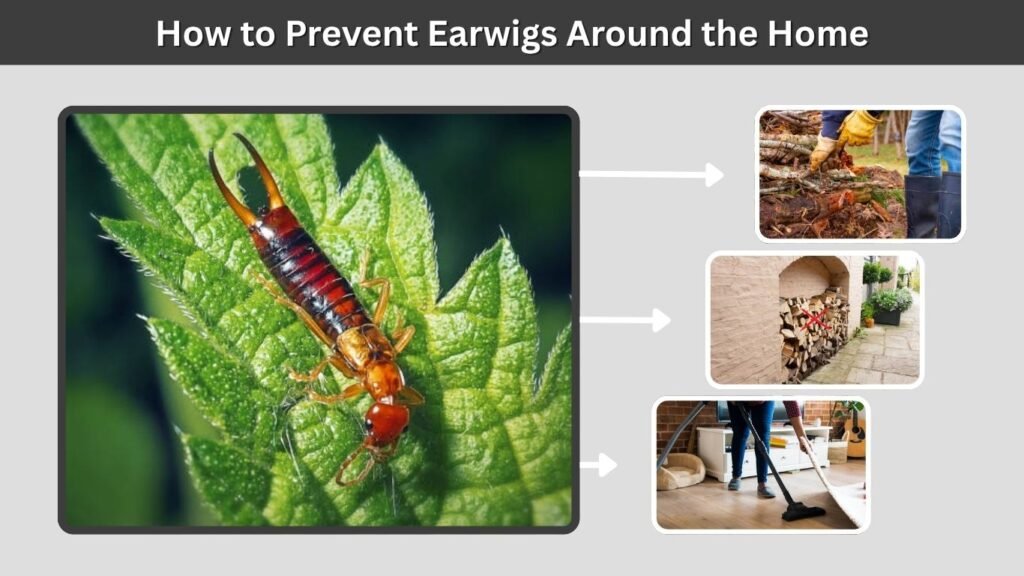
The best way to prevent earwigs is to reduce moisture and hiding places near the house. Chemical control is rarely the first step unless the population is large or persistent.
Prevention Tips
- Move mulch away from the foundation
- Remove leaf litter, logs, and damp debris
- Keep firewood away from walls
- Repair leaky outdoor faucets
- Reduce overwatering near the house
- Seal cracks around doors and windows
- Install door sweeps and weather stripping
- Shake out potted plants before bringing them indoors
- Use sticky traps in basements or garages
- Vacuum indoor earwigs when only a few are present
Long-term control works best when damp hiding places are removed or dried out. Insecticides may give temporary relief, but habitat reduction is usually more effective.
FAQs
Do earwigs really go inside human ears?
No. Earwigs do not intentionally crawl into human ears or lay eggs there. That idea comes from an old superstition, not normal earwig behavior.
What is the most common type of earwig?
The European earwig is one of the most common species around homes and gardens in many areas. It is reddish-brown, about ½ to ¾ inch long, and has noticeable rear pincers.
How long do earwigs live?
Many earwigs live around one year, although adult lifespan can vary. Some adults may live up to seven months after reaching maturity.
What do earwigs eat in the garden?
Earwigs eat decaying organic matter, fungi, aphids, mites, caterpillars, small insects, flowers, fruits, and tender leaves. They can be helpful predators but may also damage soft plant tissue.
Why do I keep finding earwigs in my house?
Earwigs usually enter homes because of moisture, cracks, outdoor mulch, wet plant material, or weather changes. They are often found near doors, windows, basements, garages, bathrooms, and potted plants.
