
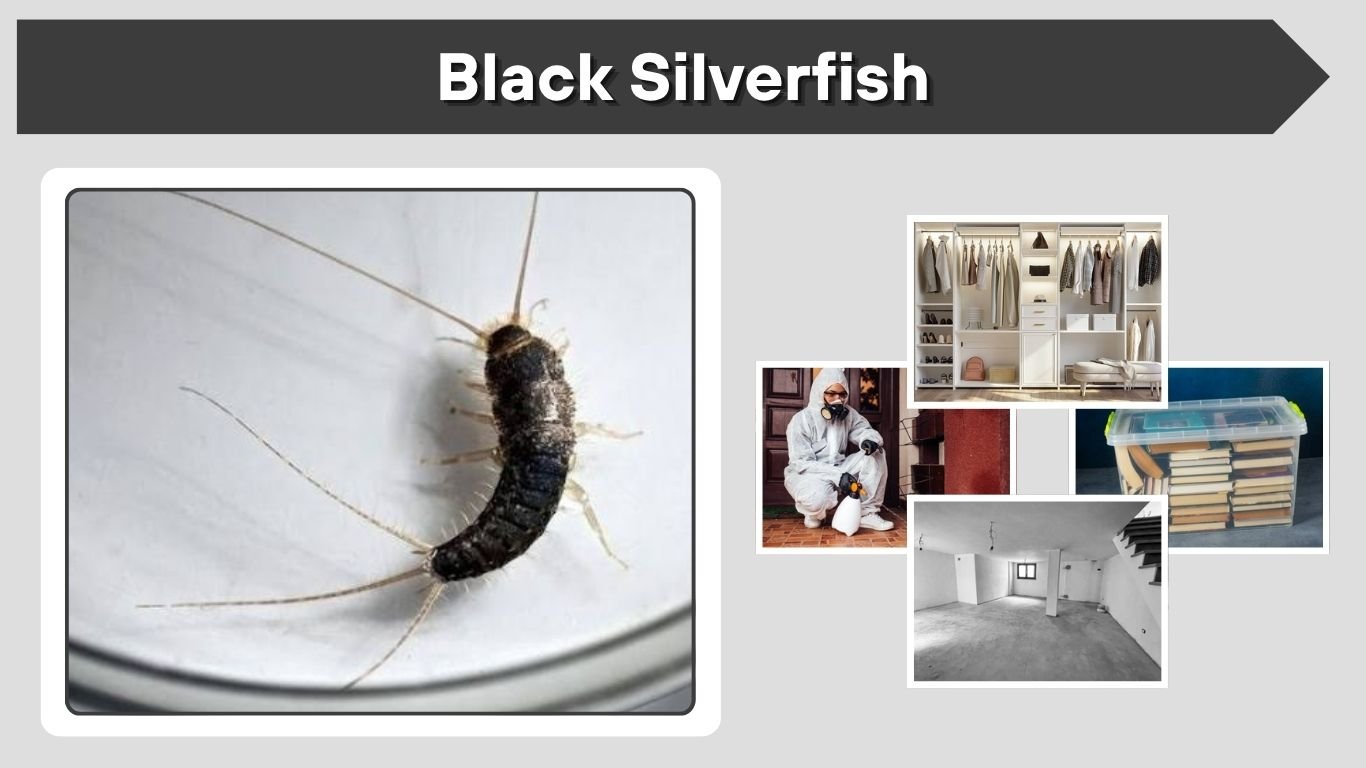
A black silverfish can be confusing because most silverfish are silver, gray, or metallic-looking. If you see a black bug that looks like a silverfish in your bathroom, bedroom, ceiling, carpet, or walls, it may be a dark-colored silverfish, a firebrat, a bristletail, a carpet beetle larva, or another household pest. This guide explains how to identify black silverfish-like bugs, why they appear indoors, whether they bite, and how to get rid of them.
Can Silverfish Be Black?
Silverfish are usually silver-gray, but they can sometimes look dark gray, charcoal, or almost black depending on lighting, age, dust, moisture, or species. A true silverfish has a flat, teardrop-shaped body, long antennae, and three thin tail-like bristles at the back.
However, many “black silverfish” sightings are not true silverfish. Homeowners often use the name for any small, fast, dark bug that looks long and narrow.
| Bug Type | Color | Main Identification Clue |
| Silverfish | Silver, gray, sometimes dark gray | 3 tail bristles, flat body |
| Firebrat | Gray-brown, dark mottled | Similar to silverfish, prefers heat |
| Bristletail | Gray, brown, dark | Jumps and has tail bristles |
| Carpet beetle larva | Brown, black, striped | Hairy or fuzzy body |
| Earwig | Brown or black | Pincers at the back |
| House centipede | Tan, gray, brownish | Many long legs |
If the bug is truly black, fuzzy, hairy, has wings, or has pincers, it is probably not a silverfish.
What Does a Black Silverfish Look Like?
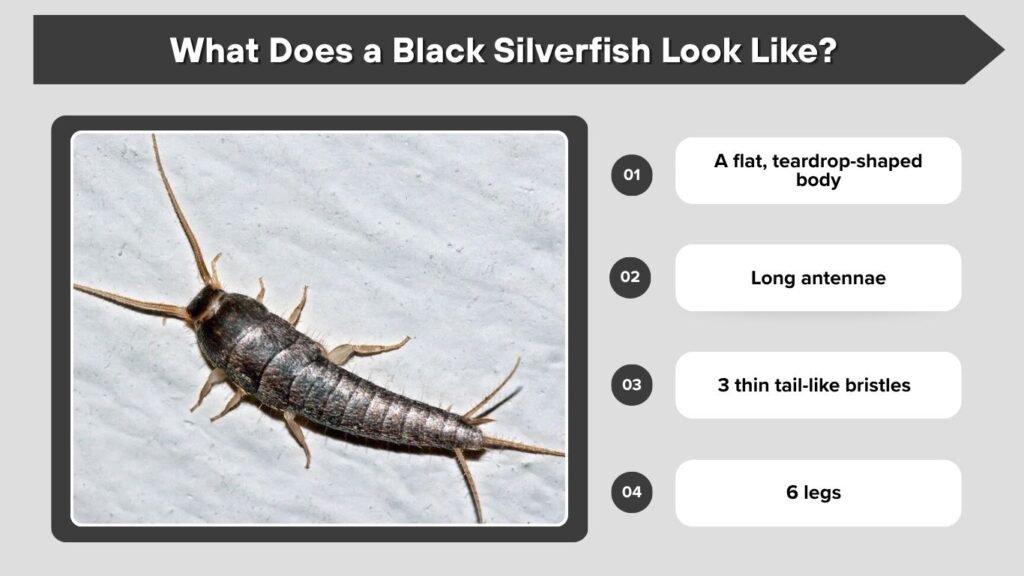
A black silverfish-like bug usually appears small, narrow, and fast-moving. It may run across bathroom floors, walls, carpets, closets, or baseboards at night. Since silverfish avoid light, many people only see them for a few seconds.
Key Features of a True Silverfish
A true silverfish usually has:
- A flat, teardrop-shaped body
- Long antennae
- 3 thin tail-like bristles
- 6 legs
- No wings
- Fast, wiggling movement
- Silver, gray, or dark gray color
If the bug has these features but looks very dark, it may be a dark silverfish or a related pest such as a firebrat.
Black Bugs That Look Like Silverfish
Many black bugs can look like silverfish from a distance. This is especially true when the bug moves quickly or is seen in a dark room. The most common lookalikes include firebrats, bristletails, carpet beetle larvae, earwigs, and small roach nymphs.
A black bug that looks like a silverfish should be checked carefully. The tail, legs, body texture, and movement style are the best clues.
Common Black Silverfish Lookalikes
Here are the most common pests people confuse with black silverfish:
- Firebrats
- Bristletails
- Carpet beetle larvae
- Earwigs
- Roach nymphs
- House centipedes
- Clothes moth larvae
- Booklice
If the bug is hairy or fuzzy, it may be a carpet beetle larva. If it has pincers, it is probably an earwig. If it has many long legs, it may be a house centipede.
Black Silverfish vs Firebrat
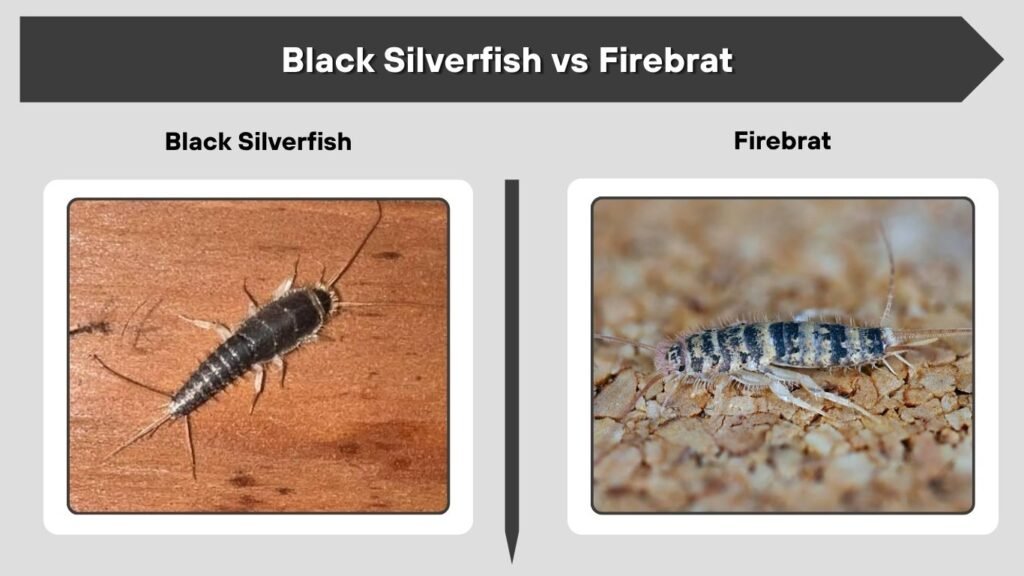
Firebrats are one of the closest silverfish lookalikes. They have a similar body shape, long antennae, and three tail-like bristles. The main difference is color and habitat. Firebrats are often darker, brownish-gray, or mottled instead of shiny silver.
Firebrats also prefer warmer areas. You may find them near furnaces, water heaters, ovens, fireplaces, laundry rooms, and boiler rooms.
| Feature | Black or Dark Silverfish | Firebrat |
| Color | Gray, silver, dark gray | Gray-brown, mottled, darker |
| Body shape | Flat and teardrop-shaped | Flat and teardrop-shaped |
| Tail bristles | 3 | 3 |
| Wings | No | No |
| Preferred area | Damp, dark places | Warm, humid places |
| Common rooms | Bathroom, basement, closet | Kitchen, furnace room, laundry area |
If the bug looks like a silverfish but is black, brown, or mottled, firebrat should be one of the first possibilities.
Black Silverfish in Bathroom
Bathrooms are one of the most common places to find black silverfish-like bugs. These pests like moisture, darkness, warmth, and small cracks where they can hide during the day.
A bathroom may attract silverfish because of humidity, leaky pipes, wet towels, condensation, and hidden gaps around baseboards or cabinets. If you see black silverfish in the bathroom often, check for moisture problems first.
Why They Appear in Bathrooms
Black silverfish-like bugs may appear in bathrooms because of:
- High humidity
- Leaky sinks or tubs
- Damp baseboards
- Poor ventilation
- Cracks near tile or trim
- Wet towels or laundry
- Paper products
- Warm hiding places
Using an exhaust fan, fixing leaks, and keeping the bathroom dry can reduce activity.
Black Silverfish in House
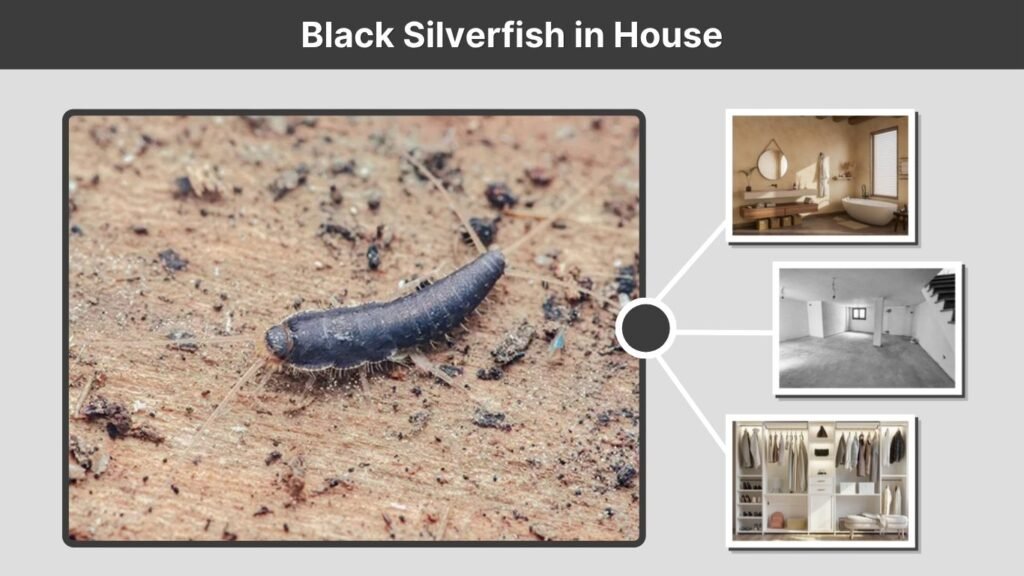
Black silverfish in the house usually means there is moisture, food, and hiding space. These pests are nocturnal, so they hide during the day and come out at night.
Silverfish and similar pests can feed on many household materials. They may eat starch, paper, glue, cardboard, wallpaper paste, crumbs, cereal, flour, fabric starch, dead insects, and organic debris.
Common places to find them include:
- Bathrooms
- Basements
- Kitchens
- Laundry rooms
- Closets
- Attics
- Bookshelves
- Storage boxes
- Under sinks
- Around baseboards
- Behind furniture
If you see them in several rooms, the infestation may be established.
Black Silverfish on Walls, Ceilings, and Carpet
Seeing black silverfish on walls or ceilings can be alarming, but silverfish can climb rough surfaces. They may travel along walls while searching for food, moisture, or hiding places. They may also hide behind wallpaper, baseboards, trim, and wall gaps.
Black silverfish on carpet may actually be carpet beetle larvae, especially if the bug looks fuzzy or hairy. Carpet beetle larvae are common in bedrooms, closets, rugs, and storage areas.
What to Check Nearby
If you see black silverfish-like bugs on walls, ceilings, or carpets, inspect:
- Baseboard cracks
- Closet corners
- Stored cardboard
- Old books or papers
- Damp carpet edges
- Leaky walls or pipes
- Pet hair buildup
- Fabric storage
- Wallpaper damage
Correct identification is important because carpet beetle larvae and silverfish require slightly different control methods.
Black Silverfish With Pincers, Wings, or Hair
A true silverfish does not have pincers, wings, or a fuzzy body. If the bug has any of these features, it is probably another pest.
A black silverfish with pincers is most likely an earwig. Earwigs have forceps-like pincers at the back of the body. A black silverfish with wings may be a small roach, beetle, or other insect. A black fuzzy or hairy silverfish-like bug is often a carpet beetle larva.
Quick ID Clues
Use these clues:
- Pincers at back = likely earwig
- Wings = not a silverfish
- Fuzzy body = likely carpet beetle larva
- Many long legs = house centipede
- Oval dark body = roach nymph
- Three tail bristles = silverfish, firebrat, or bristletail
A phone photo can help you compare the bug later if it moves too fast to inspect closely.
Are Black Silverfish Dangerous or Poisonous?
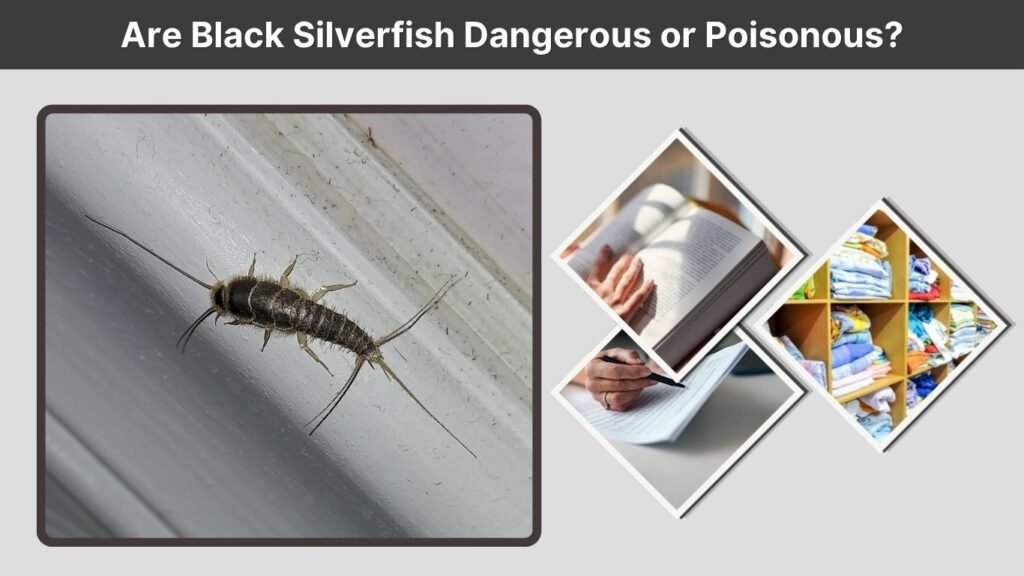
Black silverfish-like bugs are usually not dangerous to people. True silverfish and firebrats are not poisonous, do not sting, and are not known for spreading serious disease in normal household conditions.
The main concern is damage to household items. Silverfish can scrape or chew materials that contain starch, glue, or natural fibers.
They may damage:
- Books
- Paper documents
- Cardboard boxes
- Wallpaper
- Photos
- Stored clothes
- Cotton and linen fabrics
- Dry food packaging
- Book bindings
A few silverfish may not cause serious damage, but a growing infestation can become annoying and costly if valuable items are stored in damp areas.
Do Black Silverfish Bite?
Black silverfish do not usually bite people. Silverfish have mouthparts designed for scraping food sources like paper, glue, and starch. They are not blood-feeding pests like bed bugs, fleas, or mosquitoes.
If you notice bites, itchy marks, or skin irritation, another pest may be responsible. Check for bed bugs, fleas, mites, mosquitoes, or spiders before blaming silverfish.
Silverfish may crawl near beds or clothing, but they do not seek humans as food.
Why Are Some Silverfish Black?
Some silverfish may look black because of shadow, poor lighting, age, dirt, or natural dark coloring. Newly seen bugs in bathrooms or basements may appear darker when wet or when moving across light-colored surfaces.
However, if the bug is clearly black, it may be a different insect. Firebrats, bristletails, earwigs, roach nymphs, and carpet beetle larvae are common possibilities.
The best way to know is to look for three tail bristles. If the bug has them and no wings, it may be a silverfish-type insect. If it does not, it is likely another pest.
How to Get Rid of Black Silverfish
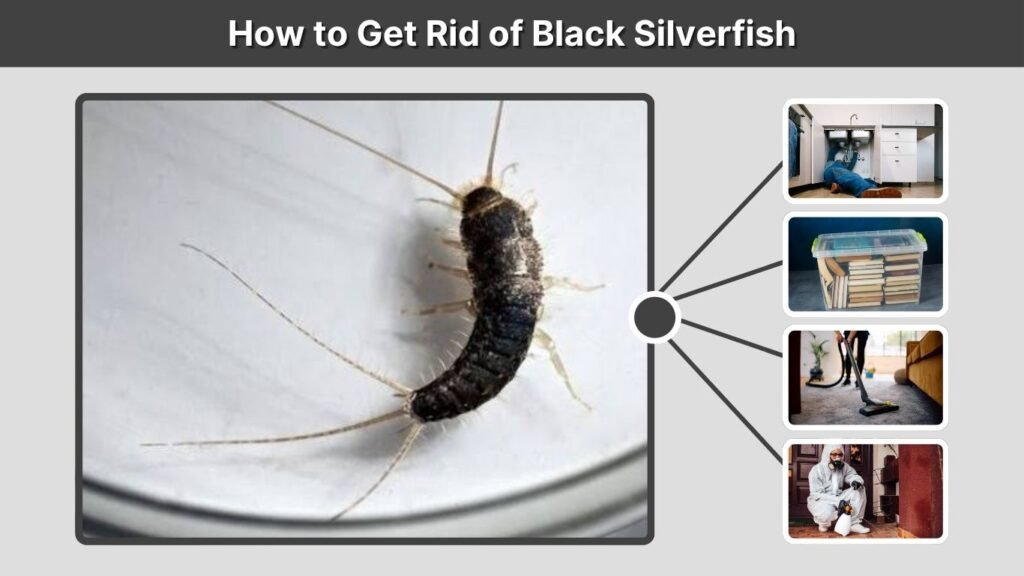
Getting rid of black silverfish starts with reducing moisture and removing food sources. Silverfish and firebrats thrive in damp, dark, cluttered areas.
Step-by-Step Removal Tips
Follow these steps:
- Fix leaks under sinks, tubs, and laundry areas.
- Use a dehumidifier in basements or damp rooms.
- Run bathroom fans after showers.
- Remove cardboard boxes from storage areas.
- Store books, papers, and clothes in sealed bins.
- Keep dry foods in airtight containers.
- Vacuum baseboards, closets, and corners.
- Seal cracks around walls, trim, and cabinets.
- Use sticky traps to monitor activity.
- Call pest control if the problem spreads.
Sticky traps are useful because they help confirm what pest you have. They can catch silverfish, firebrats, roach nymphs, and carpet beetle larvae.
How to Prevent Black Silverfish in the House
Prevention is easier than dealing with a full infestation. The goal is to make your home less comfortable for silverfish and similar pests.
Keep humidity low, especially in bathrooms, kitchens, basements, laundry rooms, and closets. Avoid storing books, papers, or clothes in damp spaces. Replace cardboard boxes with plastic bins when possible.
Also clean areas that are easy to ignore, such as behind furniture, under appliances, inside closets, and around baseboards. These places collect dust, crumbs, hair, dead insects, and paper fibers that pests may use as food.
FAQs
Can silverfish be black?
Silverfish are usually silver, gray, or metallic, but they can sometimes look dark gray or nearly black in certain lighting. A truly black silverfish-like bug may actually be a firebrat, bristletail, earwig, carpet beetle larva, or roach nymph.
What bug looks like a silverfish but is black?
Firebrats and bristletails can look like dark silverfish. Carpet beetle larvae, earwigs, roach nymphs, and house centipedes may also be mistaken for black silverfish, especially when seen quickly.
Are black silverfish poisonous?
No, true silverfish are not poisonous. They do not sting and are not considered dangerous to humans. Their main problem is that they can damage paper, books, wallpaper, cardboard, and some fabrics.
Do black silverfish bite?
Silverfish do not usually bite people. If you are seeing bite marks, another pest such as bed bugs, fleas, mosquitoes, mites, or spiders may be responsible.
How do I get rid of black silverfish in the bathroom?
Reduce bathroom humidity, fix leaks, run the exhaust fan, seal cracks near baseboards, remove damp clutter, and vacuum regularly. Sticky traps can help monitor activity and confirm whether the bug is truly a silverfish.
