
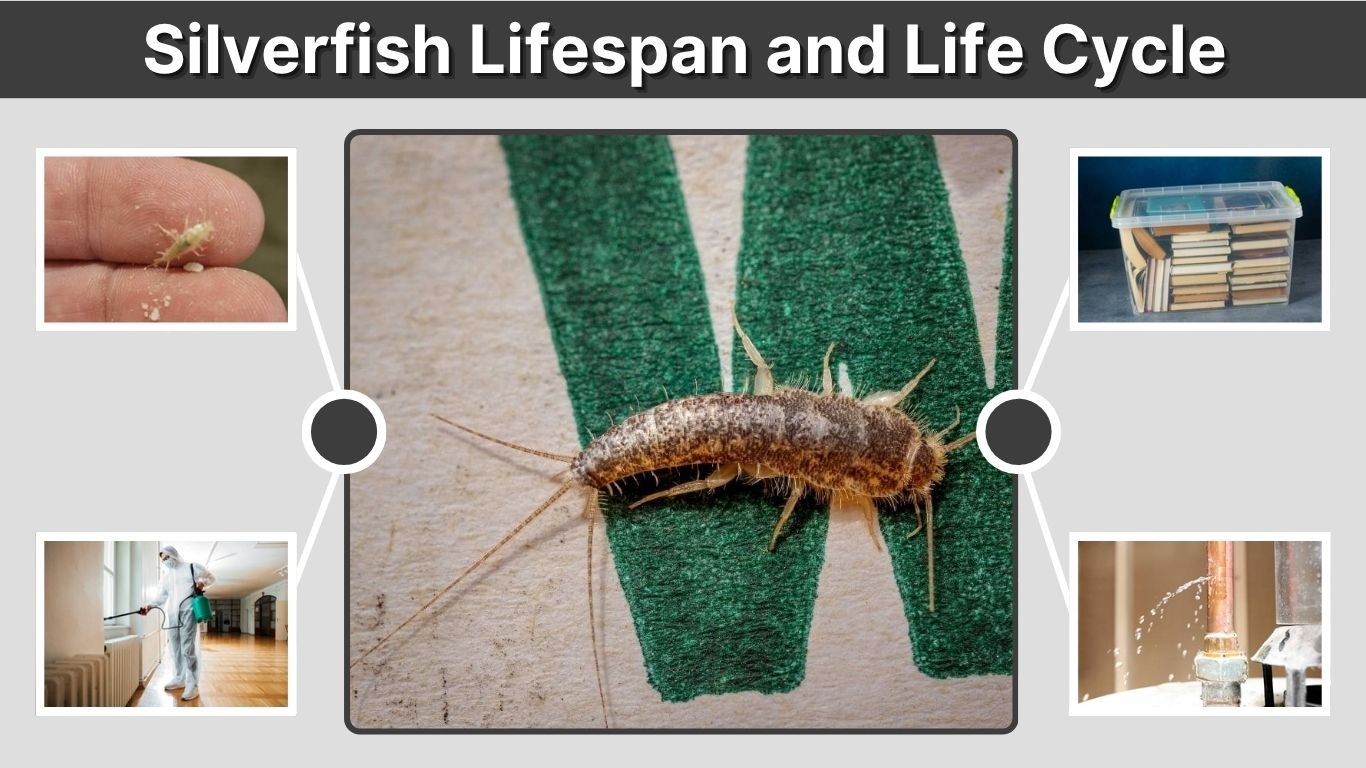
Silverfish are long-lived household pests that can survive much longer than many people expect. Their life cycle is different from moths, beetles, or flies because they do not have a true larval stage. Instead, silverfish hatch from eggs as tiny nymphs that look like small adults. Understanding the silverfish lifespan and life cycle helps you know why infestations can last so long and why moisture control is important.
Silverfish Lifespan: How Long Do Silverfish Live?
Silverfish can live for several years, which makes them harder to control than many short-lived household insects. Their exact lifespan depends on temperature, humidity, food, species, and indoor conditions.
Some extension sources report that silverfish can have a total potential lifespan of about six years, including the time from egg to adult and the adult stage. Other sources note that adult silverfish may live two to eight years, depending on conditions.
| Life Stage | Average Description | Notes |
| Egg | Hidden in cracks and crevices | Small, pale, and hard to notice |
| Nymph | Looks like a tiny adult | Often called “silverfish larvae” |
| Adult | Long-lived, active pest | Can keep molting through life |
| Full lifespan | Often several years | Depends on humidity, warmth, and food |
This long lifespan is one reason silverfish problems can continue for months or years if the home still has moisture, hiding places, and food sources.
Silverfish Life Cycle Overview
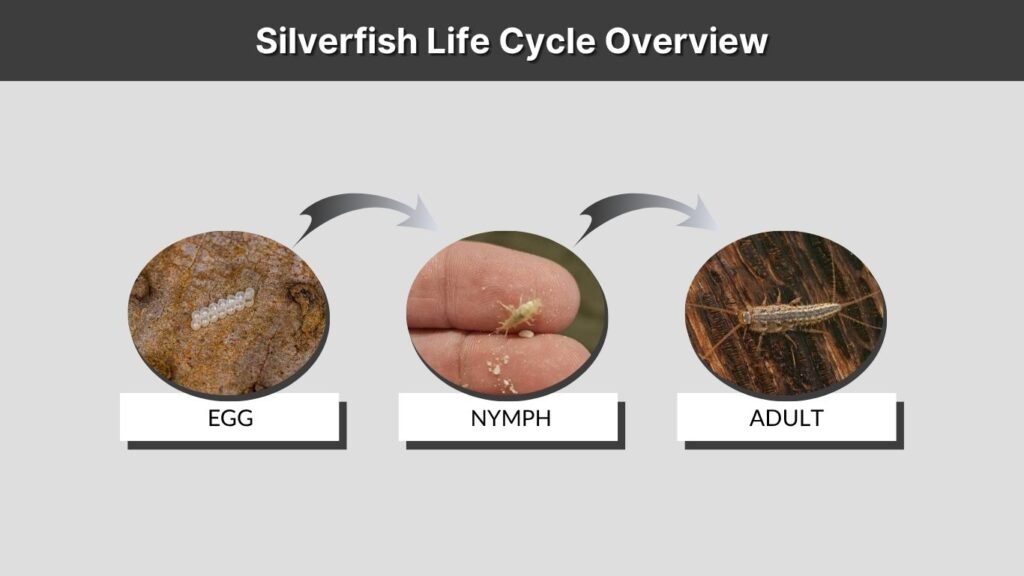
Silverfish go through a simple type of development. They do not change from egg to worm-like larva to pupa to adult. Instead, they hatch as small nymphs that already resemble adults.
Penn State Extension explains that insects with simple metamorphosis hatch looking like tiny adults and grow by shedding their skin, and silverfish are one example of this type of development.
The 3 Main Silverfish Life Stages
The silverfish life cycle has three main stages:
- Egg
- Nymph
- Adult
This is different from insects with complete metamorphosis, such as moths or beetles, which have egg, larva, pupa, and adult stages.
Silverfish Egg Stage
The silverfish life cycle starts with eggs. Female silverfish usually place eggs in hidden, protected spaces where the young can hatch safely. These places often include cracks, baseboards, wall gaps, bathrooms, laundry rooms, attics, basements, closets, and storage areas.
Purdue Extension notes that silverfish eggs are laid singly or in small groups and hatch in about three weeks. Texas A&M also describes silverfish eggs as being placed in cracks and crevices, with young silverfish appearing similar to adults after hatching.
Where Silverfish Lay Eggs
Silverfish eggs are commonly hidden in:
- Cracks near baseboards
- Behind wallpaper
- Under sinks
- Bathroom corners
- Laundry rooms
- Attics and basements
- Cardboard storage boxes
- Bookshelves
- Wall voids
- Closet corners
Most homeowners do not notice silverfish eggs because they are small and hidden. Usually, people first notice the problem when they see baby silverfish or adult silverfish crawling at night.
Silverfish Nymph Stage
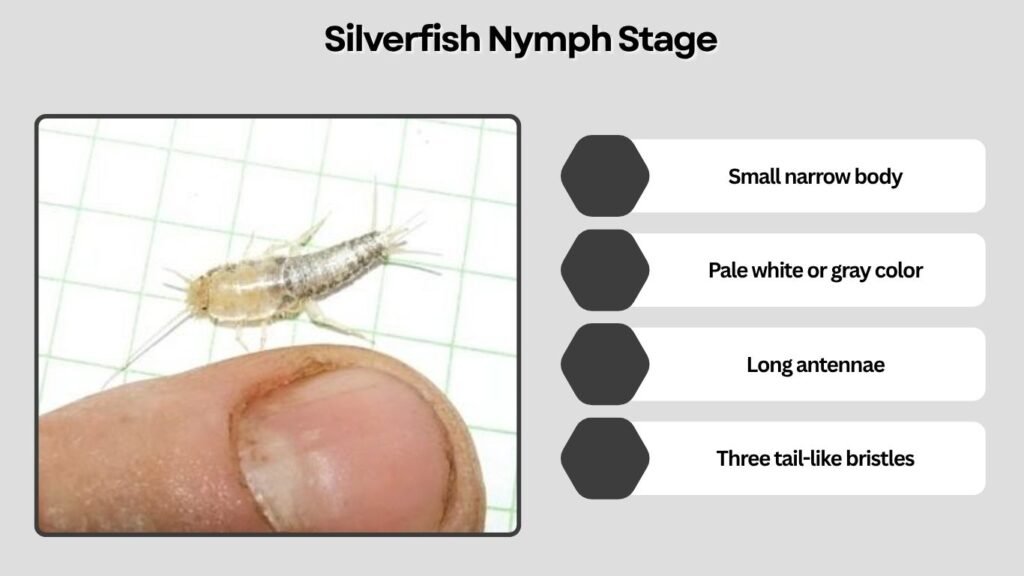
Young silverfish are called nymphs. Many people search for “silverfish larvae,” but silverfish do not have true larvae. A nymph looks like a tiny version of an adult silverfish, although it is usually paler, softer, and smaller.
Newly hatched silverfish are often whitish or light gray. As they grow, they develop a more silver, shiny, metallic appearance. They also have long antennae and three tail-like bristles at the back.
What Baby Silverfish Look Like
Baby silverfish usually have:
- Small narrow body
- Pale white or gray color
- Long antennae
- Three tail-like bristles
- No wings
- Fast, wiggling movement
- Similar shape to adult silverfish
Nymphs molt as they grow. Molting means they shed their outer skin. This process allows the silverfish to become larger over time.
Silverfish Molting Stage
Molting is one of the most important parts of the silverfish life cycle. Unlike many insects, silverfish can continue molting even after they become adults. This is one reason you may find pale shed skins in areas where silverfish are active.
The University of Missouri Extension states that adult silverfish continue to molt for the rest of their lives. Orkin also notes that silverfish may go through many molts during development and continue molting throughout life.
Signs of Silverfish Molting
You may find:
- Tiny pale shed skins
- Dead silverfish bodies
- Baby silverfish and adults together
- Yellowish stains
- Small feeding marks on paper
- Silverfish activity near books or cardboard
Shed skins can be a sign that silverfish are growing and reproducing nearby. If you see both small and large silverfish, the infestation may include several life stages.
Adult Silverfish Stage
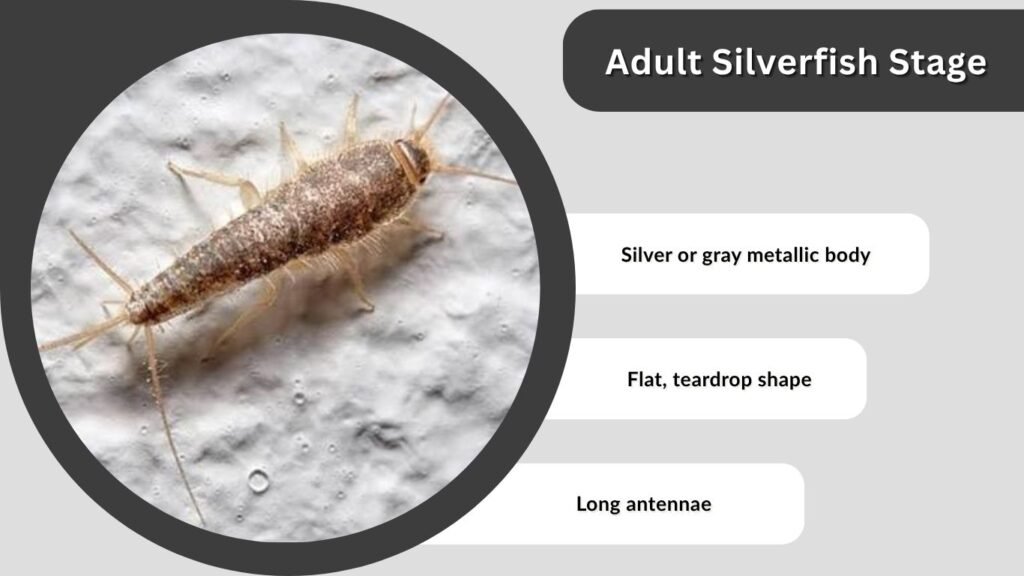
Adult silverfish are wingless insects with flattened bodies, long antennae, and three bristles at the rear. Their bodies are usually silver-gray or metallic, and they move with a quick, fish-like motion.
Adults are active mostly at night. They hide during the day in dark, quiet spaces and come out to search for food when the home is still. Silverfish can feed on starches, glue, paper, book bindings, wallpaper paste, fabric, cereal, flour, crumbs, and dead insects.
Adult Silverfish Features
Adult silverfish are easy to identify by these features:
- Silver or gray metallic body
- Flat, teardrop shape
- Long antennae
- Three tail-like bristles
- No wings
- Fast movement
- Usually found in damp, dark areas
Adults are the main stage homeowners notice because they are larger and more visible than eggs or nymphs.
How Long Does the Silverfish Life Cycle Take?
The time from egg to adult can vary widely. Some sources report development in weeks under favorable conditions, while others report that development may take months or even years in cooler or less ideal conditions.
Texas A&M says silverfish may develop from egg to young to adult in 4 to 6 weeks, while the University of Missouri Extension reports that silverfish development from egg to adult may take from three months to three years.
| Condition | Effect on Life Cycle |
| Warm temperature | Can speed up development |
| High humidity | Helps eggs and nymphs survive |
| Plenty of food | Supports growth and reproduction |
| Cool temperature | Can slow development |
| Dry conditions | Makes survival harder |
| Clean storage areas | Reduces food and hiding places |
This wide range is why silverfish infestations can feel unpredictable. In a warm, humid home with plenty of paper and starch, they may reproduce more successfully.
Why Silverfish Live So Long Indoors
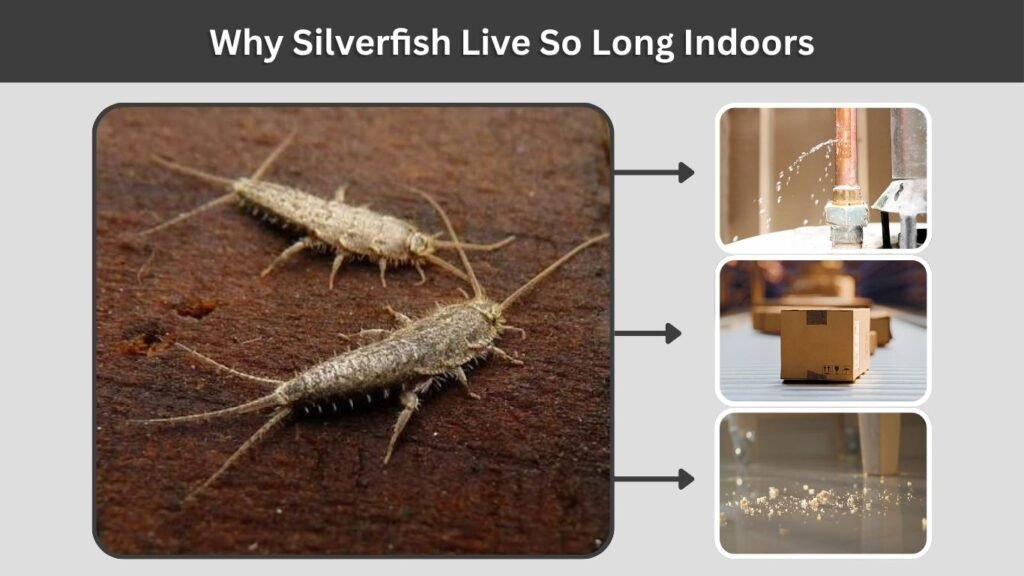
Silverfish often survive well indoors because homes can provide everything they need: moisture, darkness, warmth, hiding places, and food. Bathrooms, kitchens, attics, basements, laundry rooms, and storage closets are common problem areas.
They do not need large food pieces to survive. They may feed on tiny crumbs, paper fibers, glue, wallpaper paste, book bindings, cardboard, and fabric starch. Because these materials are common in homes, silverfish can survive even when they are not seen often.
Indoor Conditions That Help Silverfish Survive
Silverfish are more likely to live longer when they have:
- High humidity
- Leaky pipes
- Poor ventilation
- Cardboard boxes
- Paper clutter
- Old books
- Food crumbs
- Dark hiding places
- Warm rooms
- Undisturbed storage areas
Removing these conditions can shorten their survival and reduce reproduction.
Silverfish Lifespan in Bathrooms, Bedrooms, and Basements
Silverfish can live in many parts of the house, but they are most common in damp and quiet areas.
Bathrooms are attractive because of moisture, warm air, and small cracks. Basements are common because they may be humid, dark, and full of boxes or stored items. Bedrooms can attract silverfish if there are books, cardboard, fabric, crumbs, or clutter near the bed.
Seeing one silverfish does not always mean a major infestation. However, seeing baby silverfish, adults, shed skins, and damage together can mean they are breeding inside the home.
Do Silverfish Die Without Moisture?
Silverfish need moisture to survive well. Dry air makes it harder for eggs and nymphs to survive, and it can reduce adult activity. This is why dehumidifiers, ventilation, and leak repair are important parts of silverfish control.
Reducing humidity does not always kill every silverfish immediately, but it makes the home less suitable for their life cycle. Over time, fewer eggs hatch, fewer nymphs survive, and adult activity may drop.
How to Break the Silverfish Life Cycle
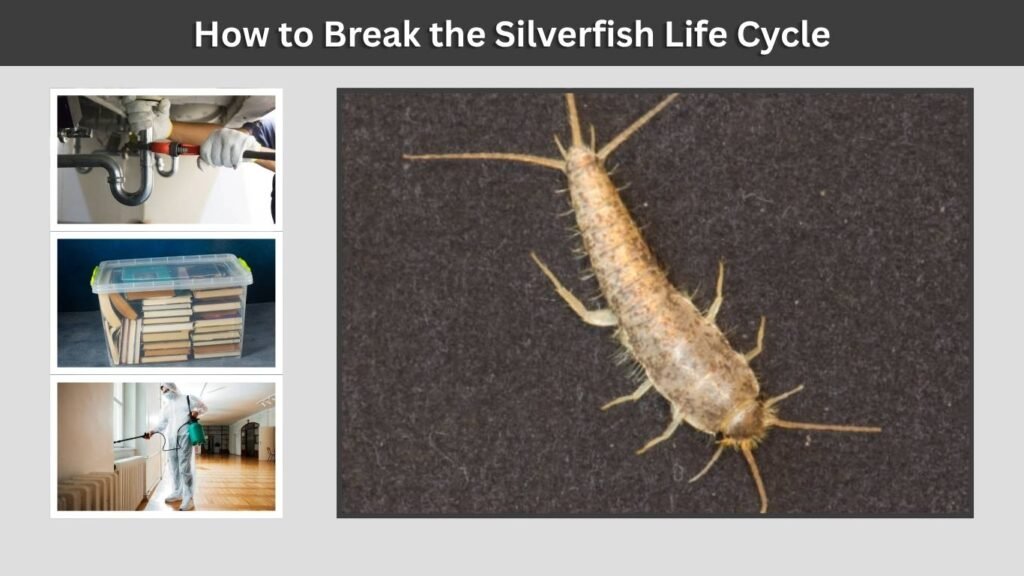
To stop silverfish from coming back, you need to target more than the visible adults. Eggs and nymphs may be hidden in cracks, wall gaps, closets, and storage areas.
Steps to Stop Silverfish Reproduction
Use these steps to break the silverfish life cycle:
- Reduce indoor humidity with a dehumidifier.
- Fix leaks under sinks, tubs, and laundry areas.
- Improve bathroom and basement ventilation.
- Remove cardboard boxes from damp rooms.
- Store papers, books, and clothes in sealed bins.
- Vacuum baseboards, closets, and storage corners.
- Seal cracks around trim, walls, and cabinets.
- Keep dry food in airtight containers.
- Use sticky traps to monitor activity.
- Call pest control if the infestation is widespread.
The goal is to remove moisture, food, and hiding spaces so silverfish cannot complete their life cycle indoors.
Silverfish Life Cycle vs Other Household Pests
Silverfish are often confused with carpet beetle larvae, clothes moth larvae, and firebrats. Their life cycle is different from many of these pests.
Carpet beetles and clothes moths have true larval stages that look worm-like. Silverfish do not. Baby silverfish look like small adults, which makes them easier to recognize if you know what to look for.
| Pest | Life Cycle Type | Young Stage Appearance |
| Silverfish | Simple development | Tiny adult-like nymph |
| Carpet beetle | Complete metamorphosis | Hairy larva |
| Clothes moth | Complete metamorphosis | Pale worm-like larva |
| Firebrat | Similar to silverfish | Small adult-like nymph |
If the bug is pale, narrow, fast, and has three tail bristles, it is likely a young silverfish. If it is hairy or worm-like, it may be another pest.
FAQs
How long do silverfish live?
Silverfish can live for several years. Some sources report a total potential lifespan of about six years, while others note that adults may live two to eight years depending on species and conditions.
What are the stages of the silverfish life cycle?
The silverfish life cycle has three main stages: egg, nymph, and adult. Silverfish do not have a true larval or pupal stage because they develop through simple metamorphosis.
Do silverfish have larvae?
No, silverfish do not have true larvae. The young are called nymphs. They look like tiny adult silverfish and become larger by molting.
How fast do silverfish reproduce?
Silverfish reproduction depends on humidity, temperature, food, and hiding places. In good indoor conditions, eggs and nymphs survive better, which can make the infestation grow over time.
Why do I keep seeing baby silverfish?
Seeing baby silverfish usually means eggs are hatching somewhere nearby. Check damp, dark areas such as bathrooms, basements, closets, baseboards, storage boxes, and wall cracks.
