
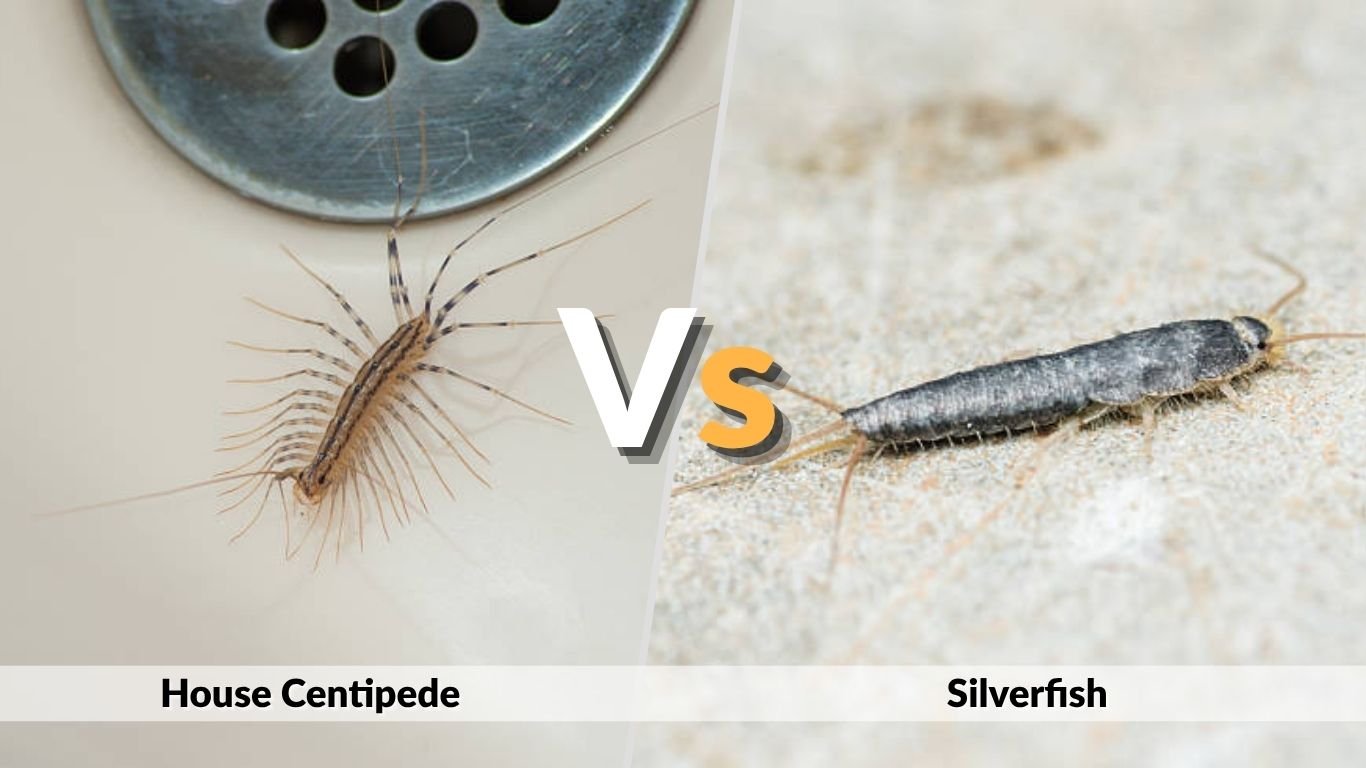
House centipedes and silverfish are two common household pests that many people confuse. Both are fast, small, and usually appear in damp indoor areas like bathrooms, basements, laundry rooms, and kitchens. However, they are very different creatures. A house centipede has many long legs and hunts other insects, while a silverfish has a flat, teardrop-shaped body and feeds on starch, paper, glue, and fabric. This guide explains the key differences, behavior, risks, and control methods.
House Centipede vs Silverfish: Quick Comparison
House centipedes and silverfish may appear in the same rooms, but they do not look or behave the same. A house centipede is a predator with long legs, while a silverfish is a crawling insect-like pest that feeds on household materials.
| Feature | House Centipede | Silverfish |
| Body shape | Long and narrow | Flat and teardrop-shaped |
| Legs | Many long legs | 6 legs |
| Speed | Very fast | Fast, but more wiggly |
| Color | Yellowish-gray with dark stripes | Silver, gray, or metallic |
| Diet | Insects, spiders, roaches, flies | Paper, glue, starch, fabric, crumbs |
| Main concern | Scary appearance | Damage to books, paper, and clothes |
| Common areas | Basements, bathrooms, closets | Bathrooms, attics, kitchens, storage areas |
| Benefit | Eats other pests | No major household benefit |
The easiest way to tell them apart is by looking at the legs. If the bug has many long, thin legs spreading from the body, it is likely a house centipede. If it has a smooth silver body with three tail-like bristles at the end, it is likely a silverfish.
What Is a House Centipede?
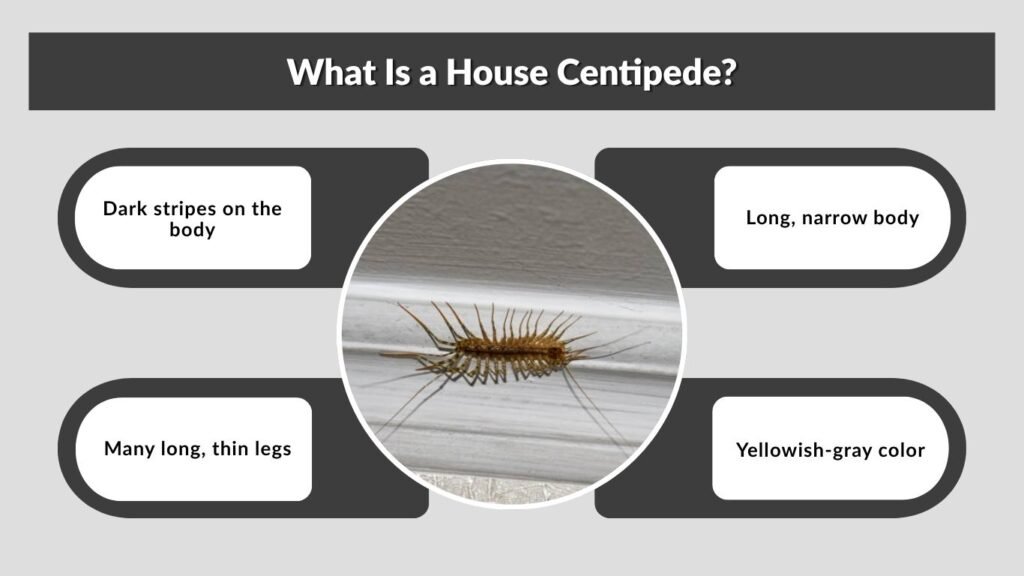
A house centipede is a fast-moving arthropod commonly found indoors. It has a long body, many legs, and a frightening appearance. Even though it looks dangerous, it usually helps by eating other small pests in the home.
House centipedes prefer damp, dark, and quiet areas. You may see them running across basement floors, bathroom walls, closets, garages, or under sinks. They are most active at night and often hide during the day.
How to Identify a House Centipede
A house centipede is easy to recognize once you know its main features:
- Long, narrow body
- Yellowish-gray color
- Dark stripes on the body
- Many long, thin legs
- Very fast movement
- Long antennae
- Often seen on walls, floors, or ceilings
A mature house centipede can look much larger than it really is because its legs are very long. This is one reason many homeowners panic when they see one indoors.
What Is a Silverfish?
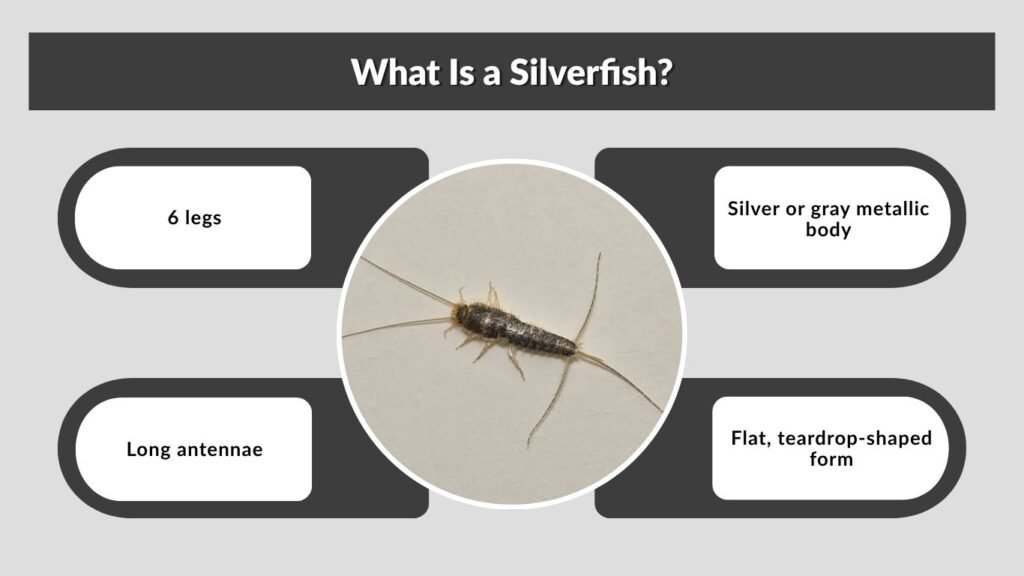
A silverfish is a small, wingless pest with a shiny, silver-gray body. It moves in a fish-like motion, which is where the name “silverfish” comes from. Unlike house centipedes, silverfish do not hunt other pests. They feed on starches, sugars, paper products, glue, fabrics, and organic debris.
Silverfish are usually found in damp and humid areas. They like bathrooms, kitchens, laundry rooms, attics, basements, closets, and storage boxes. They are also nocturnal, so you may only notice them when turning on a light at night.
How to Identify a Silverfish
Silverfish have a very different body shape from house centipedes. Look for these signs:
- Silver or gray metallic body
- Flat, teardrop-shaped form
- 6 legs
- Long antennae
- 3 tail-like bristles at the back
- No wings
- Wiggling, fish-like movement
Silverfish are often found near books, cardboard boxes, wallpaper, stored clothes, cereal, flour, or paper materials. If you see small holes or surface scraping on paper or fabric, silverfish may be the cause.
Main Differences Between House Centipedes and Silverfish
The main difference between a house centipede and a silverfish is their body structure and diet. A house centipede has many legs and eats other pests. A silverfish has 6 legs and feeds on household materials.
| Difference | House Centipede | Silverfish |
| Pest type | Predator | Material-feeding pest |
| Number of legs | Many pairs of legs | 6 legs |
| Body texture | Segmented and leggy | Smooth and scaly-looking |
| Movement | Runs quickly in straight bursts | Wiggles side to side |
| Damage | Usually does not damage items | Can damage paper, books, and fabric |
| Indoor meaning | Other pests may be present | Moisture and food sources may be present |
If you see house centipedes often, it may mean your home has other insects for them to eat. If you see silverfish often, it may mean your home has moisture problems, paper clutter, or stored food sources.
Bugs That Look Like Centipedes in the House
Many people search for “silverfish bugs that look like centipedes in my house” because both pests are fast and appear in similar damp areas. However, silverfish do not have many legs. They only have 6 legs, like insects.
Other bugs that may be confused with house centipedes include millipedes, small roaches, firebrats, earwigs, and carpet beetle larvae. The leg count, body shape, and movement style are the best clues.
House Centipede vs Silverfish vs Similar Bugs
| Pest | Looks Like | Key Difference |
| House centipede | Long-legged crawler | Many long legs and fast running |
| Silverfish | Shiny gray crawler | 3 tail bristles and fish-like movement |
| Firebrat | Similar to silverfish | More brown or mottled color |
| Millipede | Worm-like crawler | Many tiny legs, curls when disturbed |
| Earwig | Long dark insect | Has pincers at the back |
| Carpet beetle larva | Fuzzy small larva | Hairy body, damages fabric |
If the bug is silver, flat, and has three tail-like points, it is probably a silverfish. If it has long legs all along the body and runs very fast, it is probably a house centipede.
Are House Centipedes Dangerous?
House centipedes look scary, but they are not usually dangerous to people. They can bite, but bites are rare. Most house centipedes prefer to run away rather than attack. Their venom is mainly used to catch small insects, not to harm humans.
For most people, a house centipede is more of a nuisance than a serious danger. However, some people may have mild irritation if bitten. Pets may try to chase them, but house centipedes are generally not a major threat to cats or dogs.
The biggest issue is their appearance. Many people dislike seeing them because they move quickly and have many legs.
Are Silverfish Dangerous?
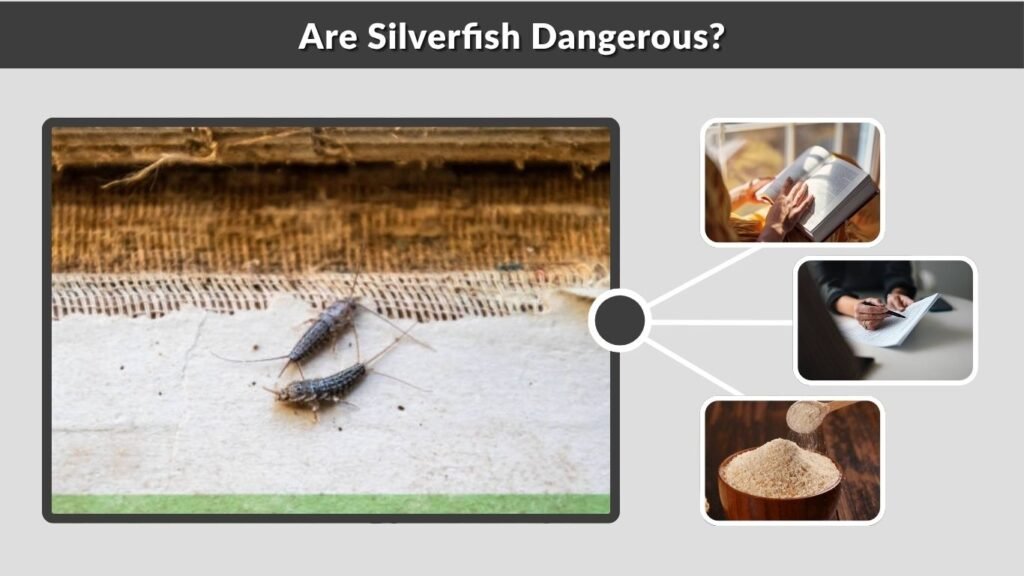
Silverfish are not dangerous in the same way as biting or stinging pests. They do not bite people, sting, or spread serious disease in normal household situations. However, they can damage personal items over time.
Silverfish may feed on:
- Books
- Paper
- Cardboard
- Wallpaper glue
- Stored documents
- Photos
- Cotton or linen fabric
- Cereal, flour, and dry food crumbs
A few silverfish may not cause major damage, but a larger infestation can be annoying. They are especially a problem in storage rooms, libraries, closets, and areas with paper clutter.
Why Are They in Your House?
Both house centipedes and silverfish like moisture. If you see either pest often, your home may have damp areas that need attention. Bathrooms, basements, crawl spaces, laundry rooms, and kitchens are common hiding places.
House centipedes also come inside because they are hunting other bugs. If there are roaches, flies, spiders, ants, or silverfish, centipedes may stay because food is available.
Silverfish come inside for moisture, darkness, and food. They can survive on tiny crumbs, paper fibers, glue, and organic material. Cardboard boxes and old books are common hiding spots.
How to Get Rid of House Centipedes
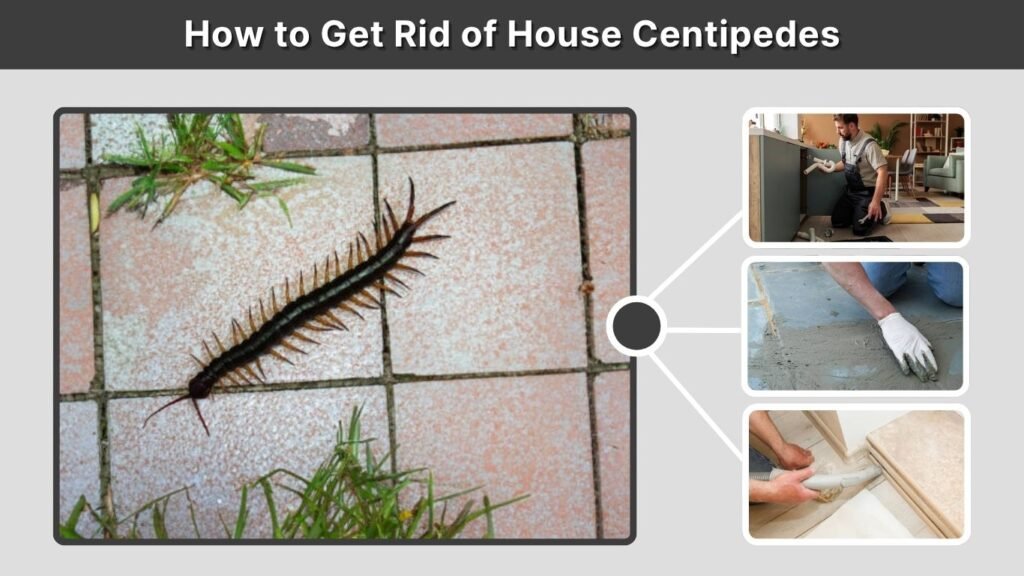
The best way to reduce house centipedes is to remove moisture and reduce their food supply. Since they eat other pests, frequent sightings may mean you need broader pest control.
House Centipede Control Tips
- Reduce indoor humidity
- Fix plumbing leaks
- Use a dehumidifier in basements
- Seal cracks around doors and windows
- Remove clutter from floors
- Vacuum corners and baseboards
- Control other insects inside the home
- Keep bathrooms and laundry areas dry
You can also use sticky traps in basements, closets, and along walls to monitor activity. If you keep seeing many house centipedes, there may be a hidden pest problem attracting them.
How to Get Rid of Silverfish
Silverfish control focuses on moisture reduction, cleaning, and removing food sources. They hide in small cracks, so long-term control takes patience.
Silverfish Control Tips
- Store books and papers in sealed containers
- Remove cardboard clutter
- Vacuum under shelves and furniture
- Fix leaks and reduce humidity
- Seal gaps around baseboards
- Keep dry foods in airtight containers
- Wash and store clothes properly
- Use sticky traps near problem areas
If silverfish are damaging books, documents, or clothing, act quickly. Move valuable items to dry, sealed storage and clean the area thoroughly.
Which Is Worse: House Centipede or Silverfish?
Silverfish are usually worse for household damage because they can chew paper, books, wallpaper, and fabric. House centipedes look scarier, but they can actually help by eating other pests.
However, seeing many house centipedes can still be a warning sign. It may mean your home has enough insects to attract them. Seeing many silverfish usually points to moisture, clutter, and available food sources like paper or starch.
In simple terms, silverfish are more likely to damage your belongings, while house centipedes are more likely to frighten you.
Prevention Tips for Both Pests
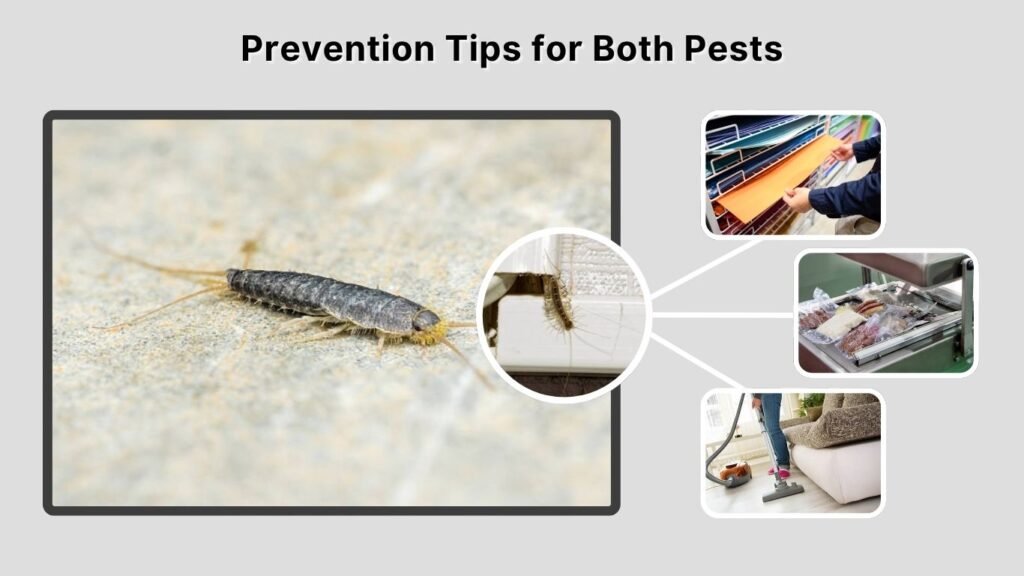
The same prevention steps can help reduce both house centipedes and silverfish. Both pests prefer damp, dark, and cluttered spaces, so controlling the environment is important.
Use these prevention methods:
- Keep humidity low
- Fix leaks quickly
- Improve ventilation
- Seal cracks and gaps
- Store paper items properly
- Reduce cardboard storage
- Vacuum regularly
- Keep food sealed
- Clear clutter from basements and closets
- Use door sweeps where needed
A clean, dry, well-sealed home is less attractive to both pests.
FAQs
Are house centipedes and silverfish the same?
No, house centipedes and silverfish are not the same. A house centipede has many long legs and hunts other insects. A silverfish has 6 legs, a silver body, and feeds on paper, glue, starch, and fabric.
How can I tell if I saw a silverfish or house centipede?
Look at the legs and body shape. A house centipede has many long legs and moves very fast. A silverfish has a flat, silver, teardrop-shaped body with three tail-like bristles at the back.
Do house centipedes eat silverfish?
Yes, house centipedes may eat silverfish. House centipedes are predators and feed on small indoor pests, including insects and other arthropods. If you have silverfish, centipedes may be attracted to them.
Which pest damages clothes and books?
Silverfish are more likely to damage clothes, books, paper, cardboard, and wallpaper glue. House centipedes usually do not damage household items because they feed on other pests.
Why do I keep seeing house centipedes and silverfish?
You may have moisture, clutter, and food sources in your home. Damp basements, bathrooms, storage boxes, paper clutter, and other insects can attract these pests. Reducing humidity and sealing entry points can help.
