
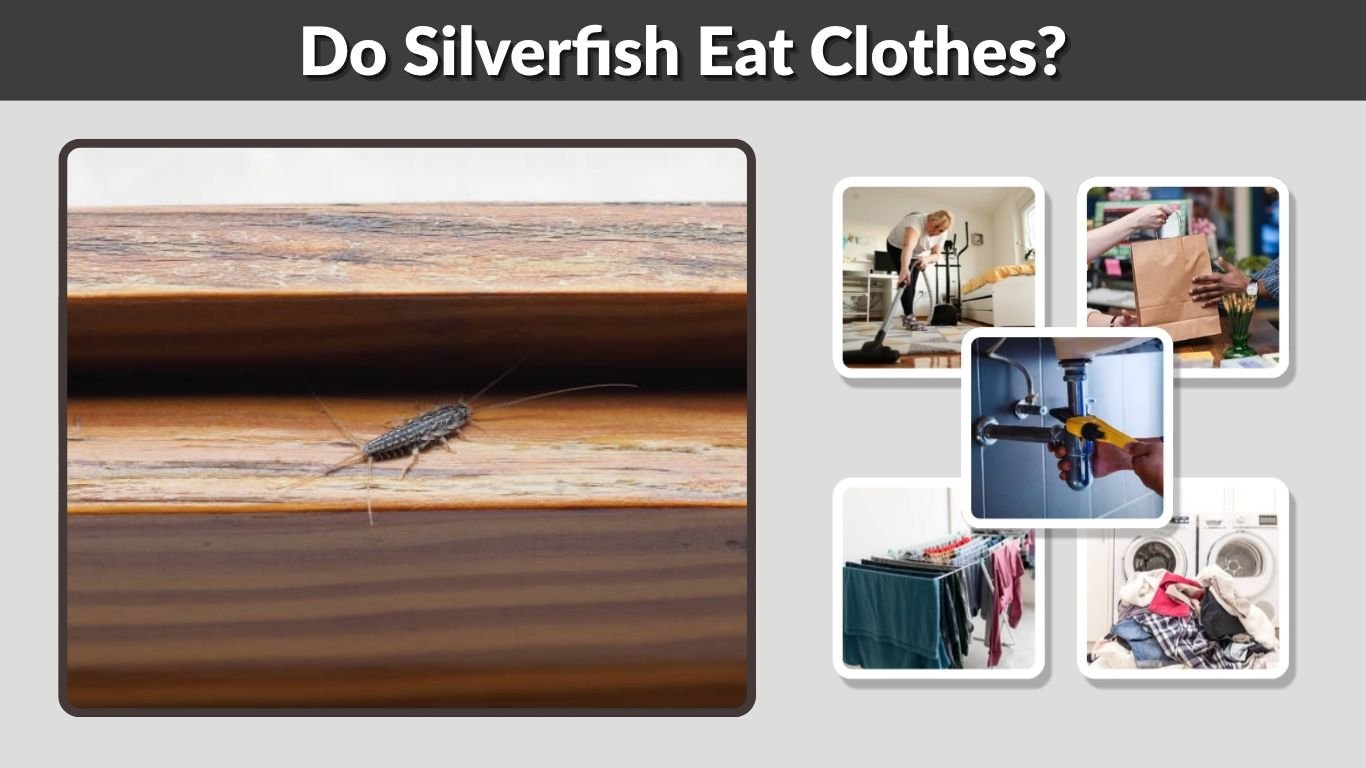
Yes, silverfish can eat clothes, especially if the fabric contains starch, sweat, body oils, food stains, or natural fibers. They do not usually attack clothing as aggressively as clothes moth larvae or carpet beetle larvae, but they can still create small holes, yellow stains, rough patches, and fabric damage in closets, drawers, laundry baskets, and storage boxes. Silverfish prefer dark, damp, quiet places, so clothes stored in humid closets, basements, bathrooms, or cardboard boxes are more at risk.
Do Silverfish Eat Clothes?
Silverfish can eat clothes, but they are mainly attracted to the starches, sugars, proteins, and residues on fabric. They may feed on natural fibers, laundry starch, glue, sweat, dead skin, dandruff, food spills, and body oils. Clean synthetic clothing is less attractive, but silverfish may still crawl through it if the closet is damp or there are food stains.
Silverfish are scavengers. They do not need fresh food like many pests. A small amount of organic residue on clothing can be enough to attract them.
Why Do Silverfish Eat Clothes?
Silverfish eat clothing because some fabrics and stains contain materials they can digest. They especially like starch and protein-based substances. Old-fashioned laundry starch, food stains, sweat, and natural fibers can turn stored clothes into a food source.
They may be attracted to:
- Starched shirts
- Sweat-stained clothing
- Clothes with food spills
- Cotton and linen
- Silk and rayon
- Wool blends
- Dirty laundry
- Stored seasonal clothes
- Damp towels
- Clothes stored in cardboard boxes
Will Silverfish Eat My Clothes?
Silverfish may eat your clothes if they are stored in a dark, humid place and contain natural fibers or stains. A clean, dry closet is less likely to have clothing damage. However, if you keep finding silverfish in clothes drawers or closets, it is a sign that the area has moisture, shelter, and possible food sources.
Do Silverfish Like Clothes?
Silverfish do not like clothing in the same way they like paper, glue, cardboard, and book bindings. However, clothes can become attractive when they contain starch, sweat, dead skin, food residue, or natural fibers. This is why dirty laundry and stored clothes are more likely to be damaged than clean, dry clothing.
Silverfish Clothes Damage
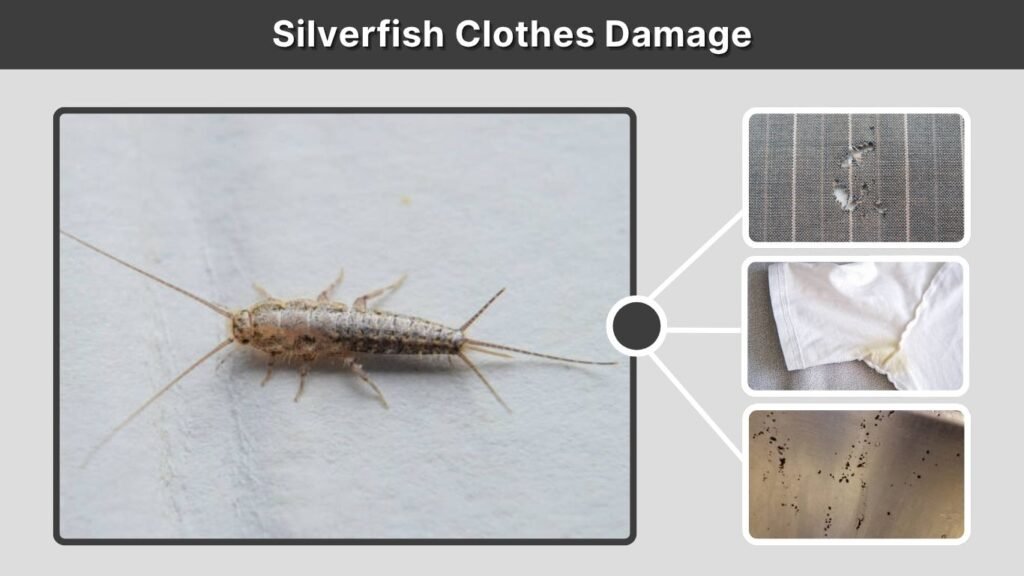
Silverfish clothing damage may appear as tiny holes, yellow stains, scraped areas, or irregular patches. The damage is usually scattered rather than neat. Since silverfish are small and active at night, you may not see them feeding directly.
What Does Silverfish Damage Look Like on Clothes?
Silverfish damage can look like small, uneven holes or thin scraped spots. Sometimes the fabric looks rough, weak, or stained. Yellow marks may appear where silverfish have fed or left waste behind.
Common signs include:
- Small holes in clothes
- Yellow stains
- Irregular scraped patches
- Thin or weakened fabric
- Tiny dark droppings nearby
- Shed skins in drawers
- Silverfish running from folded clothes
- Damage near collars, cuffs, or stained areas
Do Silverfish Make Holes in Clothes?
Yes, silverfish can make holes in clothes. They scrape and chew fabric, especially if the clothing has food stains, starch, or natural fibers. The holes may be small, uneven, and scattered.
However, not every clothing hole is caused by silverfish. Clothes moth larvae, carpet beetle larvae, rough washing, old fabric, and sharp drawer edges can also cause holes.
Silverfish Yellow Stains on Clothes
Silverfish may leave yellowish stains on clothing or paper. These stains can come from feeding activity, waste, or body scales. Yellow stains are more likely to appear on light-colored clothing, stored linens, or fabric kept in humid areas.
Do Silverfish Eat Different Types of Fabric?
Silverfish may damage several types of clothing, but they do not treat all fabrics equally. Natural fibers and dirty fabrics are usually more attractive than clean synthetic materials.
| Fabric Type | Silverfish Risk | Why |
|---|---|---|
| Cotton | Medium to high | Natural fiber, absorbs sweat and stains |
| Linen | Medium to high | Plant fiber, often stored long-term |
| Silk | Medium | Protein fiber, delicate fabric |
| Wool | Medium | Natural fiber, especially if dirty |
| Rayon | Medium | Cellulose-based fiber |
| Polyester | Low | Synthetic, less attractive |
| Nylon | Low | Synthetic, not preferred |
| Blended fabric | Medium | Depends on natural fiber content and stains |
| Starched clothes | High | Starch attracts silverfish |
| Dirty laundry | High | Sweat, oils, food residue, dead skin |
Do Silverfish Eat Wool Clothes?
Silverfish can damage wool clothes, especially if the wool is dirty, damp, or stored for a long time. However, wool holes are often caused by clothes moth larvae or carpet beetle larvae. If your wool sweaters have many holes, check for other fabric pests too.
Do Silverfish Eat Cotton?
Yes, silverfish may damage cotton, especially if it has sweat, food stains, or starch. Cotton shirts, stored bedsheets, towels, and old linens can be at risk in damp storage spaces.
Do Silverfish Eat Polyester?
Silverfish do not usually eat clean polyester because it is synthetic. However, they may damage polyester blends if the fabric has food spills, body oils, or natural fiber mixed in.
Do Silverfish Eat Silk?
Silverfish may damage silk because it is a natural protein fiber. Silk is also delicate, so even light feeding can leave visible marks.
Silverfish in Clothes Closet
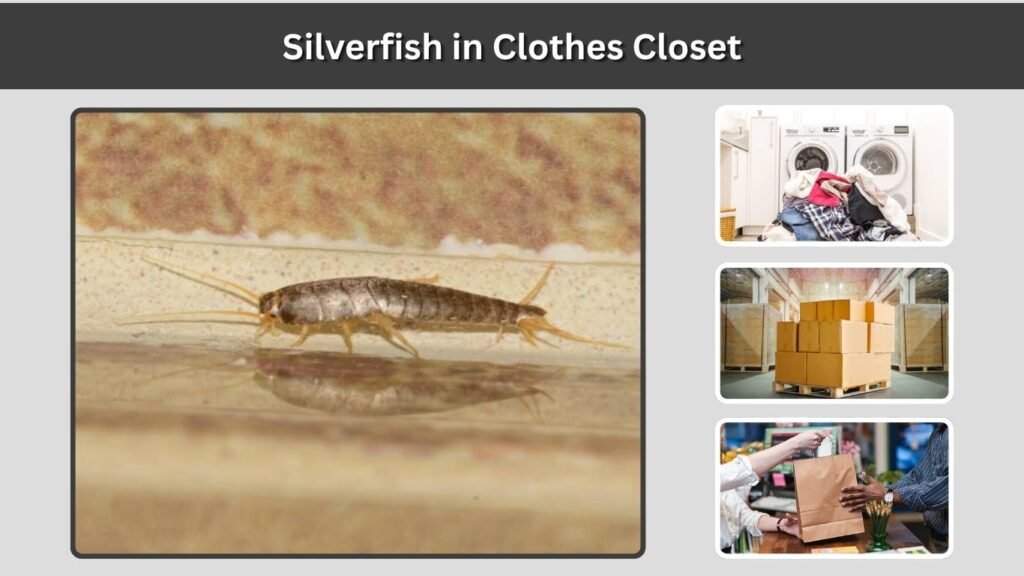
A silverfish in a clothes closet usually means the area has darkness, shelter, and possibly moisture. Closets that share walls with bathrooms, basements, laundry rooms, or plumbing areas are more likely to attract silverfish.
Why Are Silverfish in My Closet?
Silverfish may enter closets because they provide quiet hiding places and food sources. They can hide behind baseboards, inside cracks, under storage boxes, and between folded clothes.
Closet silverfish may be caused by:
- High humidity
- Dirty laundry
- Cardboard storage boxes
- Paper bags
- Old books or documents
- Poor airflow
- Damp walls
- Leaky nearby plumbing
- Food crumbs
- Long-term clothing storage
Silverfish in Clothes Drawers
Silverfish in clothes drawers may hide in corners, under drawer liners, behind furniture, or inside folded clothing. Drawers that are rarely opened are more attractive because they stay dark and undisturbed.
To reduce silverfish in drawers, remove all clothing, vacuum the drawer, wipe it dry, check for cracks, and store only clean clothes.
Do Silverfish Lay Eggs in Clothes?
Silverfish can lay eggs in hidden cracks near clothes, but they do not usually choose fabric as their main egg-laying site. They prefer protected, dark, humid cracks and crevices. However, eggs may be found near clothing storage if the closet or drawer has suitable conditions.
What Do Silverfish Eggs Look Like?
Silverfish eggs are tiny, oval, and whitish. They are hard to notice without close inspection. Eggs may be hidden in cracks, behind baseboards, inside storage boxes, under shelves, or near folded materials.
Baby Silverfish in Clothes
Finding tiny silverfish near clothing may suggest silverfish are breeding nearby. Baby silverfish look like smaller versions of adults, but they are lighter in color at first. If you see both adults and young silverfish, inspect the closet for moisture and hiding places.
Can Silverfish Travel on Clothes?
Yes, silverfish can travel on clothes, especially if clothing is stored in boxes, bags, or piles. They may hide in folded fabric and move to another room or home through laundry baskets, storage bins, old books, or cardboard boxes.
Are Silverfish Transmitted by Clothes?
Silverfish can be accidentally moved with clothes, but they do not “infect” clothing like germs. If you bring home stored clothes from a damp basement, thrift store, storage unit, or old box, inspect and wash them before placing them in your closet.
Does Washing Clothes Kill Silverfish?
Washing clothes can kill silverfish and remove the stains, sweat, food residue, and body oils that attract them. Hot washing and machine drying are especially helpful for washable fabrics. Always follow the care label, especially for wool, silk, or delicate items.
Does Washing Clothes Kill Silverfish Eggs?
Washing may kill silverfish eggs if they are on the clothing and the wash cycle is thorough. Heat from a dryer can also help. However, if eggs are hidden in closet cracks, drawer joints, baseboards, or cardboard boxes, washing clothes alone will not solve the problem.
How to Wash Clothes After Finding Silverfish
Use these steps:
- Shake clothing outside if possible.
- Wash washable clothes according to the care label.
- Use warm or hot water when safe for the fabric.
- Dry clothes completely.
- Dry-clean delicate wool or silk if needed.
- Clean the drawer or closet before putting clothes back.
- Store seasonal clothes in sealed bins.
Silverfish vs Clothes Moths and Carpet Beetles
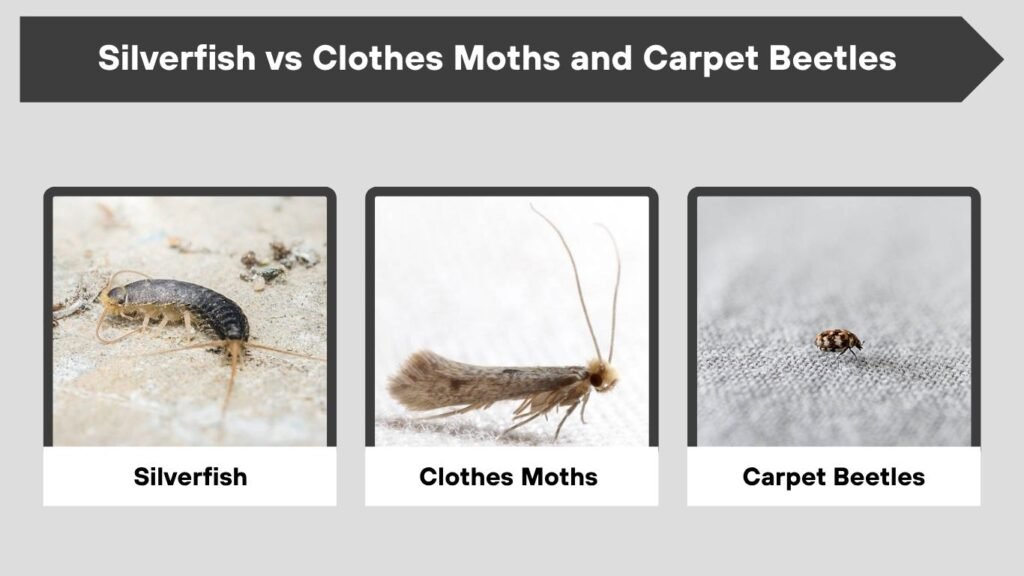
Silverfish are not the only pests that damage clothes. Clothes moth larvae and carpet beetle larvae are often more destructive, especially on wool, fur, feathers, silk, and natural fabrics.
| Pest | Main Damage | Common Signs |
|---|---|---|
| Silverfish | Small holes, stains, scraped fabric | Silver insects, yellow stains, paper damage |
| Clothes moth larvae | Holes in wool, silk, fur | Webbing, larvae, moths, fabric holes |
| Carpet beetle larvae | Irregular holes in natural fibers | Fuzzy larvae, shed skins, damage near edges |
| Cockroaches | Stains and chewing on dirty fabric | Droppings, odor, food contamination |
| Crickets | Chewed holes in dirty fabric | Noisy insects, rough fabric damage |
How to Tell If Silverfish Caused the Holes
Silverfish are more likely if you also see damage to paper, cardboard, books, or wallpaper nearby. They also prefer damp areas. If the damage is mainly on wool, fur, feathers, or silk, inspect for moth larvae and carpet beetle larvae too.
Carpet Beetle or Silverfish Holes in Clothes?
Carpet beetle larvae often leave irregular holes in natural fabrics and may leave hairy shed skins. Silverfish damage may come with yellow stains, paper damage, and sightings of silver-gray insects. Both pests can exist in the same home, so inspect carefully.
How to Get Rid of Silverfish in Clothes
Getting rid of silverfish in clothes requires treating the closet or storage area, not just the clothing. If the humidity and hiding places remain, they may return.
Step 1: Empty the Closet or Drawer
Remove all clothing, shoes, bags, boxes, and paper items. Inspect corners, cracks, shelves, baseboards, and the backs of drawers. Look for live silverfish, shed skins, droppings, and damage.
Step 2: Wash and Dry Clothes
Wash clothing that can be laundered. Dry everything fully before storage. Do not return damp towels, sweaty clothes, or half-dry laundry to drawers.
Step 3: Vacuum Thoroughly
Vacuum closet corners, drawer joints, baseboards, shelf edges, and under furniture. Vacuuming removes insects, eggs, skins, dust, and food particles.
Step 4: Remove Cardboard and Paper
Cardboard boxes attract silverfish. Replace them with sealed plastic storage bins. Avoid keeping old papers, paper shopping bags, or book stacks in clothes closets.
Step 5: Reduce Humidity
Use a dehumidifier, improve airflow, or add moisture absorbers in damp closets. If the closet wall feels damp, check for plumbing leaks or condensation.
Step 6: Use Traps
Place sticky traps along closet edges, under drawers, and near baseboards. Traps help monitor activity and catch hidden insects.
How to Keep Silverfish Away from Clothes
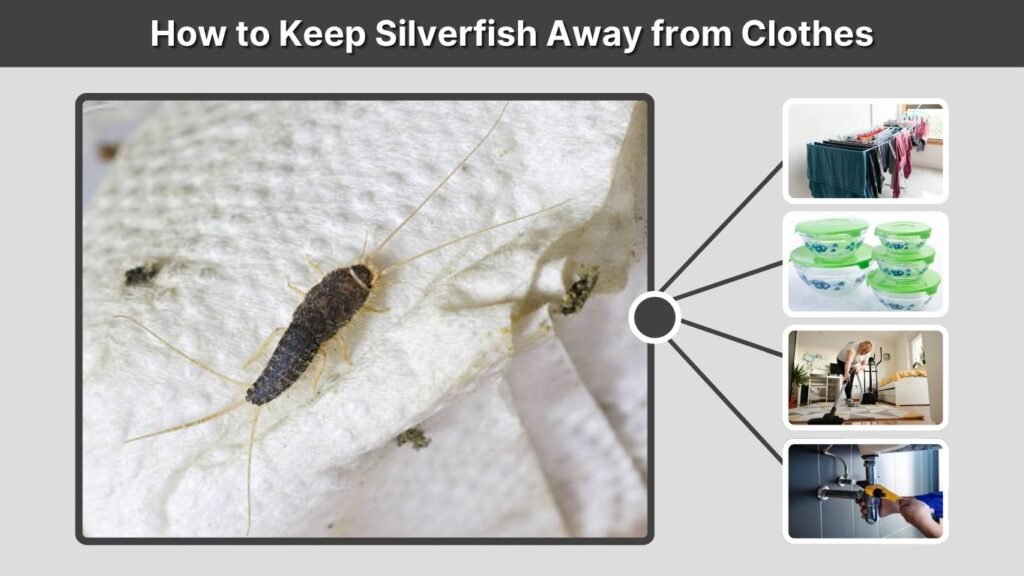
Prevention is easier than treating damaged clothing. The goal is to make closets dry, clean, and unattractive to silverfish.
Clothes Protection Tips
Use these methods:
- Store only clean clothes.
- Dry clothes fully before storage.
- Use sealed plastic bins.
- Avoid cardboard boxes.
- Vacuum closets regularly.
- Keep humidity low.
- Repair leaks near closets.
- Use garment bags for delicate clothing.
- Move stored clothes occasionally.
- Keep paper clutter out of closets.
- Use sticky traps for monitoring.
Silverfish Repellent for Clothes
Cedar blocks, lavender sachets, and bay leaves may help make storage areas less attractive, but they should not be your only solution. Moisture control, cleaning, and sealed storage are much more important.
How to Protect Clothes from Moths and Silverfish
Because silverfish, clothes moths, and carpet beetles can all damage fabric, use broad fabric protection habits.
Best Storage Method
For seasonal clothes, wash or dry-clean everything first. Let clothes dry completely. Then store them in sealed plastic bins or garment bags. Keep the bins in a dry room instead of a damp basement or bathroom closet.
For valuable wool, silk, or vintage clothing, inspect items regularly and avoid long-term storage in cardboard.
FAQs
Do silverfish eat clothes?
Yes, silverfish can eat clothes, especially if the fabric has starch, sweat, food stains, body oils, or natural fibers such as cotton, linen, silk, or wool.
Do silverfish cause holes in clothes?
Yes, silverfish can cause small holes in clothes. Their damage is usually irregular and may appear with yellow stains or scraped fabric patches.
Do silverfish lay eggs in clothes?
Silverfish may lay eggs near clothing in dark, humid cracks, but they do not usually lay eggs directly on clothes. Closets, drawers, baseboards, and storage boxes are more common hiding places.
Does washing clothes kill silverfish?
Washing clothes can kill silverfish on the fabric and remove the sweat, stains, and starch that attract them. Drying clothes fully is also important.
How do you stop silverfish from eating clothes?
Store only clean, dry clothes; reduce humidity; remove cardboard boxes; vacuum closets; seal cracks; use sticky traps; and keep seasonal clothes in sealed plastic bins.
