
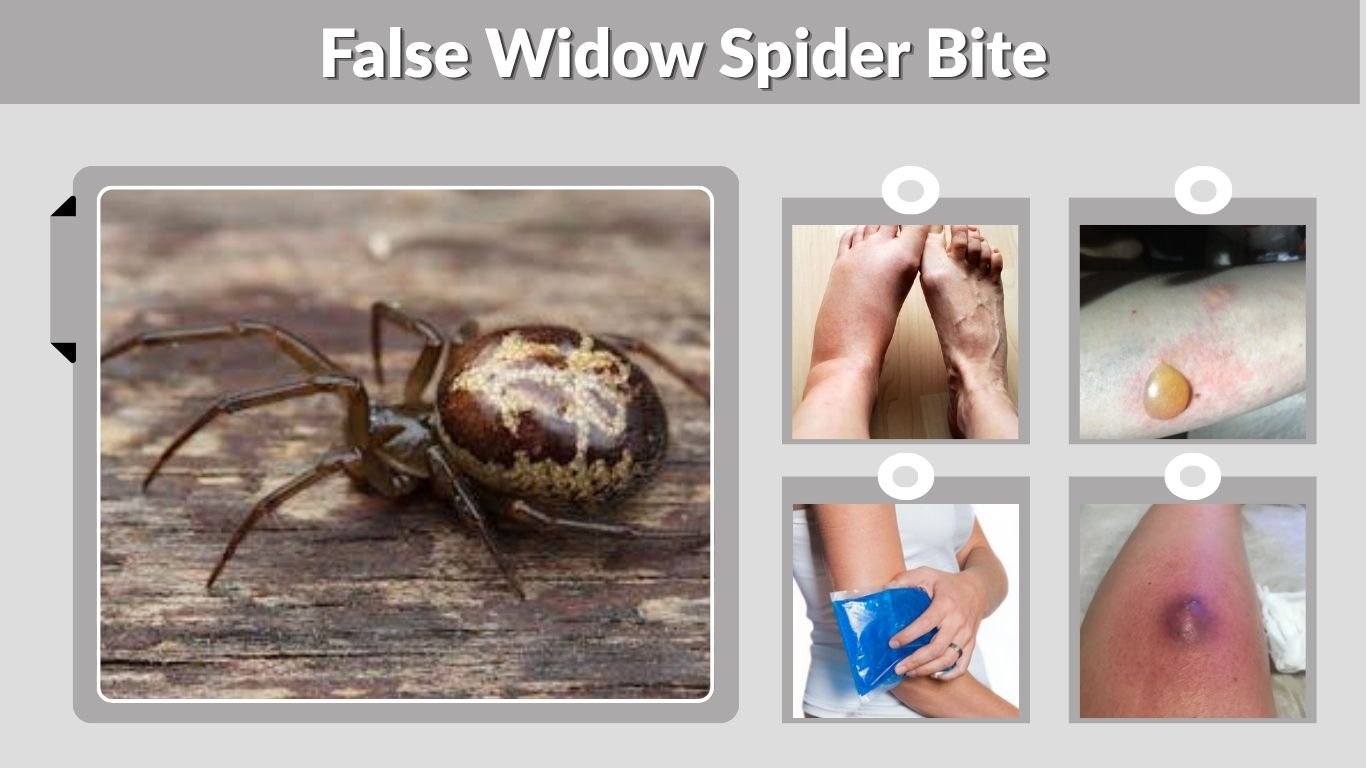
A false widow spider bite can cause pain, redness, swelling, itching, or a small blister near the bite area. Most bites are mild and improve with basic first aid, but some reactions can become uncomfortable or infected. Knowing the early signs, treatment steps, and danger symptoms helps you respond calmly and decide when medical care is needed.
What Is a False Widow Spider Bite?
A false widow spider bite is a skin injury caused by a spider from the Steatoda group. The noble false widow is one of the best-known species, especially in the UK and Ireland. These spiders are venomous, but their bites are usually not life-threatening for healthy adults.
False widow spiders do not normally bite unless they are trapped, pressed, or disturbed. Bites may happen when someone puts on clothing, moves stored boxes, cleans sheds, handles garden items, or accidentally presses against a spider indoors.
The bite may feel like a sharp sting, pinch, or burning sensation. Some people notice pain quickly, while others only see swelling or redness later. The reaction depends on the person, bite location, skin sensitivity, and whether the wound becomes irritated or infected.
What Does a False Widow Spider Bite Look Like?
A false widow spider bite may look like a small red bump, a swollen patch, or a tender mark on the skin. Sometimes there are tiny puncture marks, but they are not always visible. The bite can look similar to a wasp sting, ant bite, mosquito bite, or infected hair follicle.
Common Bite Marks
The appearance can vary from person to person. A mild bite may remain small, while a stronger reaction may spread around the surrounding skin.
- Small red bump
- Slight swelling around the bite
- Tender or painful skin
- Itchy patch
- Warm feeling near the bite
- Tiny puncture marks
- Small blister in some cases
- Red rash around the area
A bite on the leg, arm, hand, neck, or foot may swell more if the area rubs against clothing or shoes. If the swelling spreads quickly or the skin becomes very hot and painful, it may need medical attention.
False Widow Spider Bite Symptoms
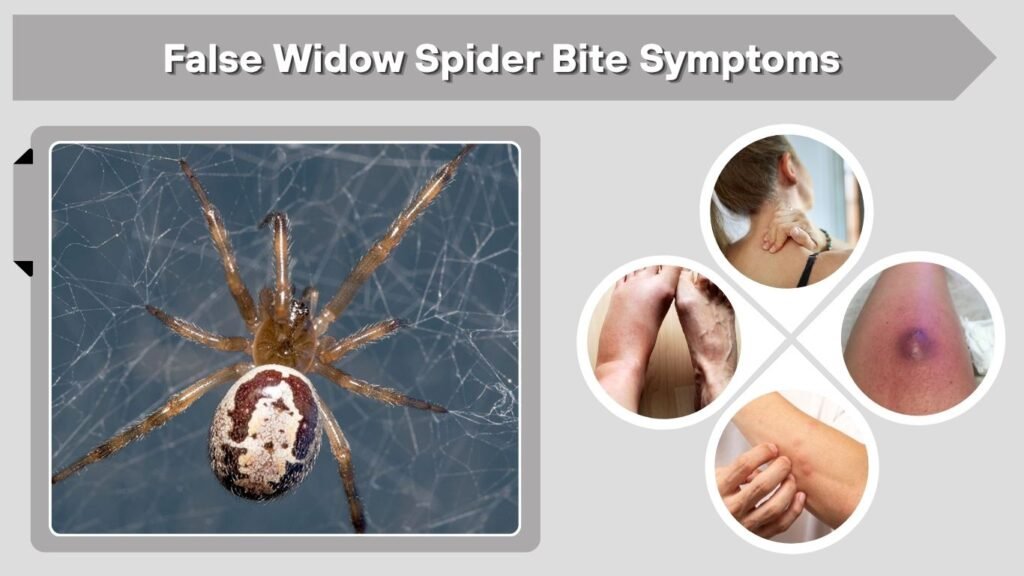
Most false widow spider bite symptoms stay around the bite site. Pain, redness, itching, and swelling are the most common signs. Some people describe the pain as similar to a bee or wasp sting.
Mild Symptoms
Mild symptoms usually improve with home care. The bite may be sore for several hours and then slowly settle.
- Local pain or stinging
- Redness
- Mild swelling
- Itching
- Tenderness
- Warm skin
- Small raised lump
These symptoms are usually not dangerous if they stay mild and begin improving within a day or two.
Stronger Reaction Symptoms
Some people may have a stronger reaction. This can include a larger swollen area, more intense pain, or a feeling of being unwell. A stronger reaction does not always mean the bite is dangerous, but it should be watched carefully.
Possible stronger symptoms include headache, nausea, tiredness, muscle aches, and pain spreading from the bite site. If the symptoms worsen after the first day, medical advice is recommended.
False Widow Spider Bite Stages
A false widow spider bite may change over several hours or days. The timeline below shows what commonly happens, but every bite is different.
| Time After Bite | Possible Signs | What to Do |
| First few minutes | Sharp sting, burning, or sudden pain | Move away from the spider and wash the area |
| First few hours | Redness, swelling, itching, tenderness | Apply a cold compress and monitor the bite |
| Day 1 | Pain may continue; swelling may become clearer | Keep it clean and avoid scratching |
| Day 2–3 | Mild bites often improve | Seek help if redness spreads or pain increases |
| After 3 days | Irritation may fade, but infection signs may appear | Contact a doctor if the wound worsens |
A bite that improves slowly is usually less concerning than one that gets larger, hotter, more painful, or starts leaking fluid.
Day 1 False Widow Spider Bite
The first day is when most people notice pain, swelling, or redness. The bite may feel sore when touched. Some people also feel a burning sensation around the skin.
During day 1, clean the bite with soap and water. Use a cold compress for short periods to reduce swelling. Keep the area raised if it is on an arm or leg. Avoid scratching, squeezing, or cutting the bite.
If the bite becomes severe within the first few hours, or if you feel dizzy, weak, short of breath, or very unwell, seek urgent medical help.
False Widow Spider Bite Blister
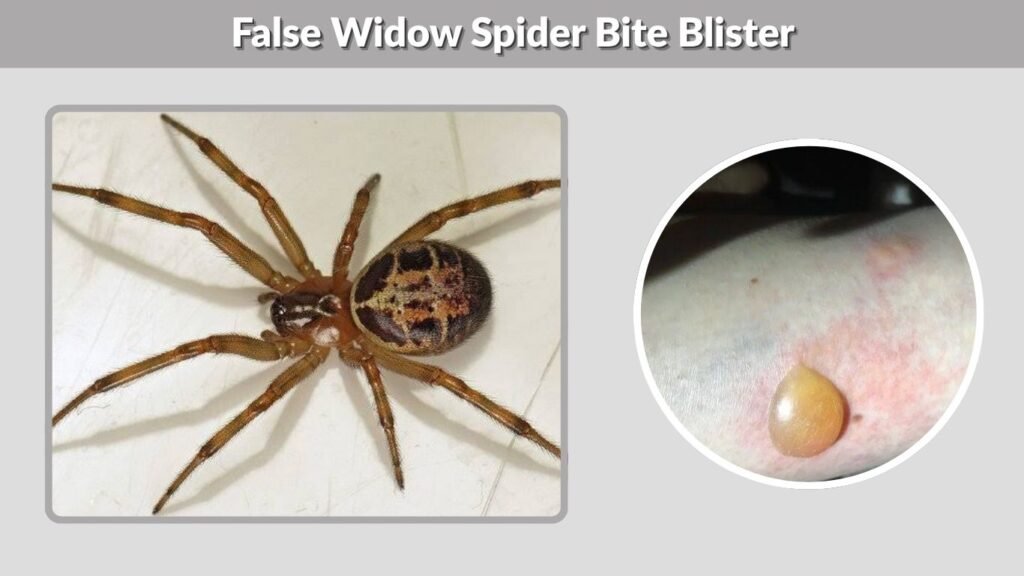
A blister can sometimes form near a bite. This may happen because of skin irritation, scratching, swelling, or a stronger local reaction. A small blister is not always an emergency, but it should be kept clean and protected.
Do not pop the blister. Breaking it can allow bacteria to enter the skin and increase the risk of infection. Cover it with a clean dressing if clothing rubs against it. If the blister becomes painful, filled with pus, or surrounded by spreading redness, contact a healthcare professional.
A black, spreading, or open wound should be checked quickly, especially if it comes with fever, chills, or severe pain.
How to Treat a False Widow Spider Bite
Treatment focuses on cleaning the bite, controlling swelling, reducing pain, and preventing infection. Most mild bites can be managed at home.
First Aid Steps
Follow these steps after a suspected bite:
- Wash the bite with soap and clean water.
- Apply a cold compress for 10–15 minutes.
- Keep the bitten area raised if possible.
- Avoid scratching or squeezing the wound.
- Use a clean dressing if the skin is broken.
- Take suitable pain relief if needed.
- Watch the bite for 24–48 hours.
- Take a photo to compare changes.
Do not try to suck out venom. Do not cut the skin. Do not apply strong chemicals or random home remedies. These actions can damage the skin and make infection more likely.
Best Home Care for Pain and Swelling
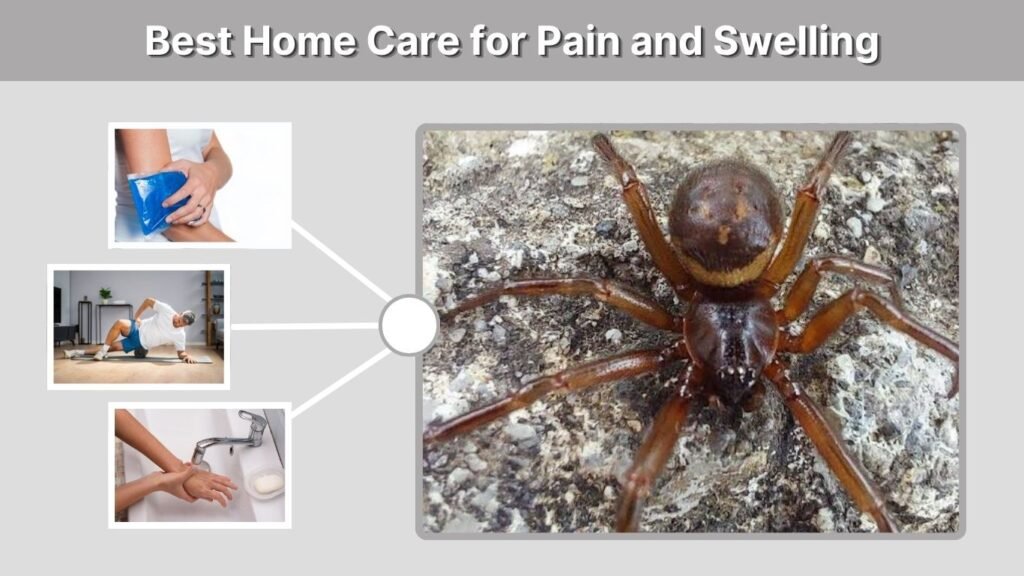
Cold compresses are useful for swelling and discomfort. Wrap ice or a cold pack in a cloth before placing it on the skin. Use it for short sessions and give the skin breaks between applications.
For itching, avoid scratching. Scratching can turn a mild bite into an infected wound. A pharmacist may suggest an antihistamine or anti-itch product if suitable. For pain, over-the-counter pain relief may help, but people with medical conditions, pregnancy, allergies, stomach problems, or regular medications should ask a healthcare professional first.
Keep the bite clean and dry. If it is on the leg or foot, avoid tight socks or shoes that rub the area.
When Is a False Widow Spider Bite Dangerous?
Most false widow spider bites are not dangerous. However, a bite can become serious if the person has an allergic reaction, the wound becomes infected, or symptoms spread beyond the bite area.
Warning Signs
Seek medical advice if you notice:
- Rapidly spreading redness
- Increasing swelling
- Severe or worsening pain
- Pus or yellow fluid
- Red streaks from the bite
- Fever or chills
- Dizziness or fainting
- Nausea that does not settle
- Muscle cramps
- A wound that turns dark or opens
- Symptoms lasting more than a few days
Call emergency services if there is trouble breathing, swelling of the lips or throat, chest tightness, confusion, collapse, or signs of a severe allergic reaction.
False Widow Spider Bite Infection
Any bite can become infected if bacteria enter the skin. Infection may happen from scratching, dirty hands, broken skin, or poor wound care. The spider venom itself is not always the main problem.
An infected false widow bite may become hotter, more painful, and more swollen over time. The redness may spread instead of shrinking. Pus, bad smell, fever, or red streaks can also suggest infection.
If you think the bite is infected, do not squeeze it. Wash gently, cover it with a clean dressing, and seek medical advice. A doctor may decide whether antibiotics or other treatment is needed.
False Widow Spider Bite in the UK and Ireland
False widow spiders are often discussed in the UK and Ireland because some species live around homes, sheds, garages, gardens, and buildings. The noble false widow has received attention because it can bite humans when disturbed.
Most bites are still mild. The bigger issue is fear, misidentification, and delayed care when a wound becomes infected. Many skin problems blamed on spiders may actually be caused by other insects, allergies, boils, or bacterial infections.
If a bite-like mark worsens, focus on symptoms rather than guessing the exact spider. Medical care is important when the skin becomes infected or the body reacts strongly.
How to Identify a False Widow Spider Bite
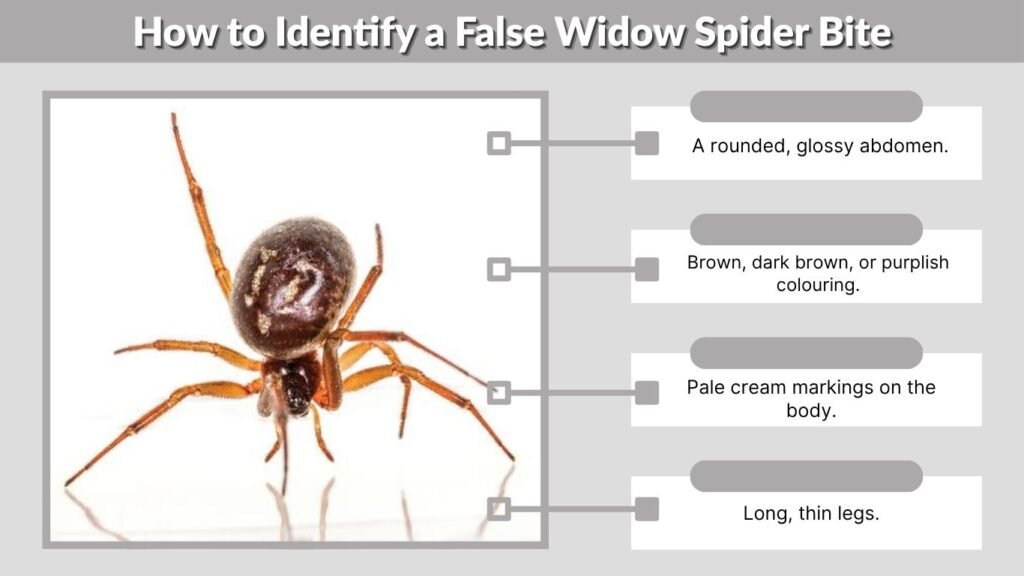
It is difficult to identify a false widow bite by the skin mark alone. Many bites and rashes look similar. A bite is more likely to be from a false widow if you saw the spider bite you or found the spider trapped in clothing, bedding, gloves, or a nearby hiding place.
Spider Identification Clues
False widow spiders may have:
- A rounded, glossy abdomen
- Brown, dark brown, or purplish colouring
- Pale cream markings on the body
- Long, thin legs
- A messy, tangled web
- A habit of hiding in quiet corners
- Indoor or sheltered outdoor locations
Do not handle the spider with bare hands. If possible, take a clear photo from a safe distance. This may help with identification if symptoms become serious.
False Widow Spider Bite on Dogs and Cats
Pets can also be bitten, especially if they disturb spiders in corners, sheds, bedding, or garden areas. A dog or cat may lick, scratch, limp, whine, or show swelling near the bite area.
If your pet seems unwell, has facial swelling, vomits, becomes weak, or the bite area worsens, contact a vet. Do not give human painkillers to pets unless a vet tells you to. Some human medicines are dangerous for animals.
Keep pet bedding clean and check quiet indoor corners if false widow spiders are common in the home.
How to Prevent False Widow Spider Bites
Prevention is mostly about avoiding accidental contact. False widow spiders usually bite when trapped or pressed against skin.
Practical Prevention Tips
Use these simple habits around the home and garden:
- Shake out shoes, gloves, and clothing before use.
- Wear gloves when moving boxes or firewood.
- Check towels, bedding, and stored fabrics.
- Clean sheds, garages, and window corners.
- Reduce clutter in storage areas.
- Seal cracks around doors and windows.
- Vacuum webs in quiet corners.
- Use sealed storage boxes.
- Avoid touching unknown spiders.
- Keep outdoor items away from sleeping areas.
You do not need to panic if you see one spider. Careful cleaning and reduced clutter can lower the chance of bites.
FAQs
What does a false widow spider bite look like?
A false widow spider bite may look like a small red bump, swollen patch, or tender mark. Some bites show tiny puncture marks, while others only show redness and swelling. A blister can appear in some cases. Because many bites look similar, symptoms and changes over time matter more than appearance alone.
How long does a false widow spider bite last?
A mild false widow spider bite may improve within one to three days. Pain and itching often settle first, while redness may last a little longer. If swelling, pain, heat, or redness becomes worse after the first day, the bite may be infected or reacting strongly and should be checked.
Are false widow spider bites dangerous?
Most false widow spider bites are not dangerous for healthy adults. They usually cause local pain, swelling, redness, and itching. However, allergic reactions and infections can be serious. Get medical help if you develop breathing problems, spreading redness, severe pain, fever, pus, dizziness, or a rapidly worsening wound.
How do you treat a false widow spider bite?
Wash the bite with soap and water, apply a cold compress, keep the area raised, and avoid scratching. Cover broken skin with a clean dressing. Pain relief or antihistamines may help if suitable for you. Do not cut, squeeze, or apply harsh chemicals to the bite.
Can a false widow spider bite cause a blister?
Yes, a blister may develop after a false widow spider bite, especially if the skin reacts strongly or becomes irritated. Do not pop the blister. Keep it clean and covered if needed. If the blister becomes painful, leaks pus, spreads, or the skin around it becomes hot and red, seek medical advice.
