
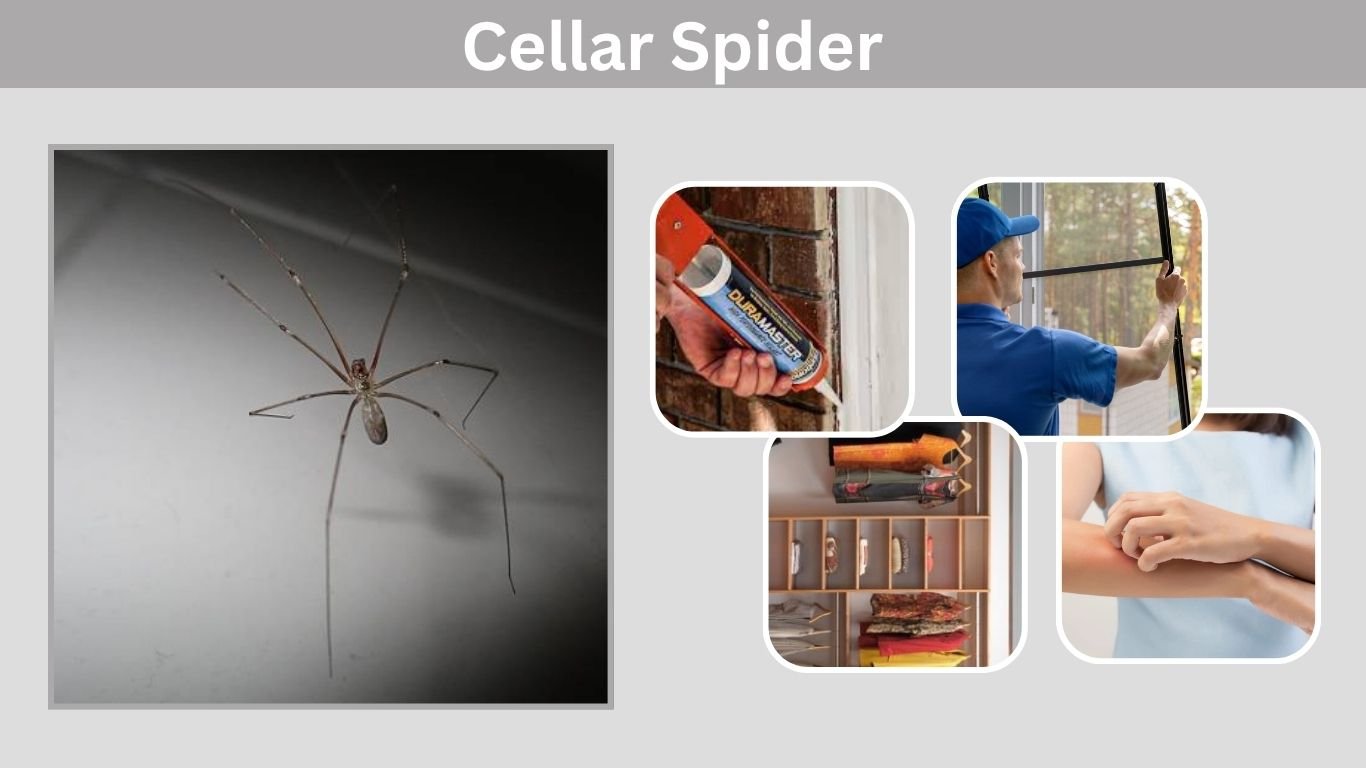
Cellar spiders are among the most common spiders found inside homes, especially in basements, garages, bathrooms, closets, and quiet ceiling corners. Their long, thin legs and loose tangled webs often make people uneasy, but these spiders are usually harmless and even helpful. Learning how to identify a cellar spider can prevent unnecessary fear, especially when people confuse it with brown recluse spiders or daddy long legs.
What Is a Cellar Spider?
A cellar spider is a small, long-legged spider from the Pholcidae family. It is often called a “daddy long legs spider,” although that name can also refer to harvestmen or crane flies. This confusion is one reason many homeowners are unsure whether the spider in their basement is harmless or dangerous.
Cellar spiders usually have delicate bodies, very long legs, and a pale gray, tan, yellowish, or light brown color. They often hang upside down in messy, irregular webs. When disturbed, many cellar spiders shake or vibrate rapidly in their webs, which is why some people also call them vibrating spiders.
These spiders prefer quiet areas where they can build webs and catch small insects. They are not aggressive toward humans and are generally more interested in staying hidden than moving around openly.
How to Identify a Cellar Spider
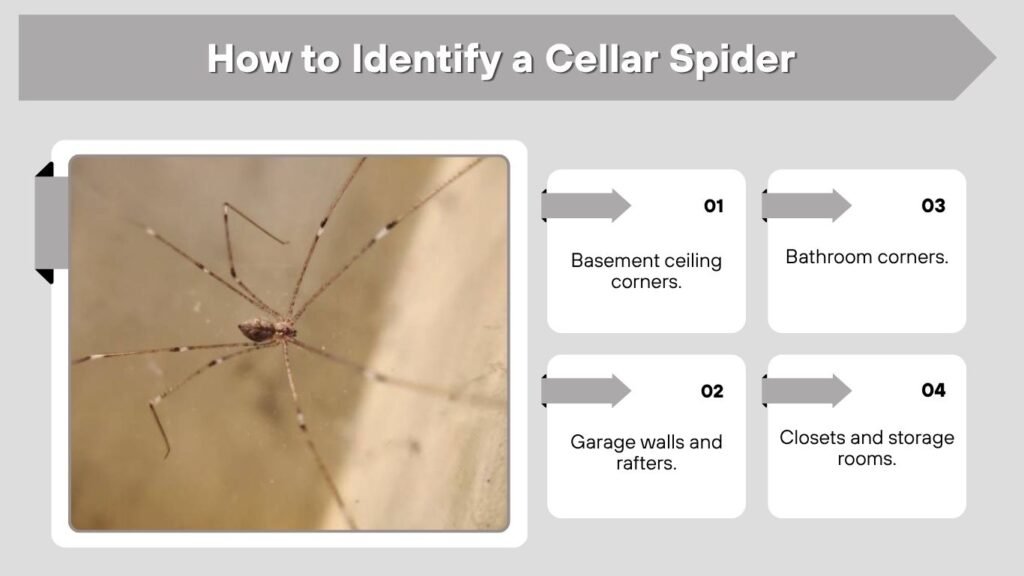
Cellar spiders have a few clear features that make them easier to recognize once you know what to look for.
Body Shape and Color
Most cellar spiders have small, narrow bodies compared to their long legs. Some are long-bodied, while others may look rounder depending on the species. Their color is usually light brown, gray, beige, or pale yellow. Because of their thin legs and delicate build, they can look fragile.
Their body is often much smaller than people expect. The legs create the impression of a large spider, but the actual body may be only a few millimeters long. This is one reason cellar spiders appear scarier than they really are.
Legs and Movement
The most noticeable feature is the spider’s extremely long, thin legs. These legs are often several times longer than the body. Cellar spiders move slowly compared with hunting spiders like wolf spiders, and they usually stay close to their webs.
When threatened, they may vibrate quickly. This behavior can make them harder for predators to see clearly. For homeowners, the shaking can look strange, but it is a defense response rather than a sign of aggression.
Web Appearance
Cellar spider webs look messy and uneven. They are not neat circular webs like orb-weaver webs. Instead, they form loose, tangled sheets in corners, ceiling edges, basements, crawl spaces, garages, and storage rooms.
Common web locations include:
- Basement ceiling corners
- Garage walls and rafters
- Bathroom corners
- Closets and storage rooms
- Under stairs
- Around rarely moved boxes or furniture
If you see a long-legged spider hanging upside down in a tangled web, it is likely a cellar spider.
Cellar Spider vs Daddy Long Legs
Many people use the name “daddy long legs” for cellar spiders, but the term can mean different creatures. This causes a lot of confusion.
A true cellar spider is a spider. It has two main body sections, produces silk, builds webs, and has venom used to subdue small prey. A harvestman, often also called daddy long legs, is not a true spider. It has a more rounded body that looks like one piece, does not make webs, and does not have venom glands like spiders.
Here is a simple comparison:
| Feature | Cellar Spider | Harvestman Daddy Long Legs | Brown Recluse |
| Body shape | Two body sections, often small and pale | One rounded-looking body | Compact brown body |
| Webs | Builds messy tangled webs | Does not build webs | Does not make messy hanging webs |
| Legs | Very long and thin | Very long and thin | Long but not extremely threadlike |
| Indoor location | Corners, ceilings, basements | Often outdoors or damp areas | Hidden dry storage areas |
| Risk to humans | Very low | Very low | Medically important in some regions |
The easiest clue is the web. If the long-legged creature is hanging in a messy indoor web, it is probably a cellar spider, not a harvestman.
Cellar Spider vs Brown Recluse
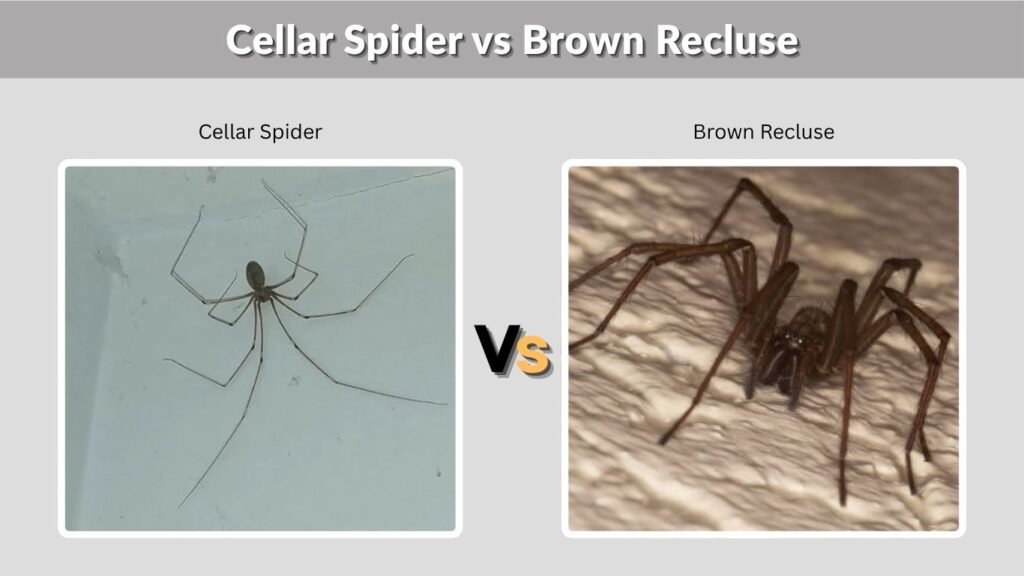
One of the biggest reasons people search for cellar spiders is fear of brown recluse spiders. Both can appear brownish and may be found indoors, but they are very different.
Main Visual Differences
Cellar spiders have very long, thin legs and a delicate body. Brown recluse spiders have a more compact shape, shorter-looking legs compared with cellar spiders, and a smoother brown body. Brown recluse spiders are also known for a violin-like marking on the front part of the body, though this mark can be hard to see and is not always the best identification method.
Cellar spiders often stay openly in their webs. Brown recluse spiders are more likely to hide in quiet, dry, undisturbed places such as boxes, shoes, clothing piles, closets, or storage areas.
Behavior Differences
Cellar spiders are web builders. They remain in tangled webs and catch small insects. Brown recluse spiders are more secretive hunters. They do not usually sit in messy ceiling webs like cellar spiders.
A spider hanging upside down in a web in your basement corner is much more likely to be a cellar spider than a brown recluse.
Safety Differences
Cellar spiders are not considered dangerous to people. Brown recluse spiders can cause medically significant bites, although they are also shy and do not bite unless trapped or pressed against skin.
If you live in an area where brown recluse spiders are known to occur and you find a suspicious spider, avoid handling it. Take a clear photo or capture it safely in a container for identification by a pest professional or local extension office.
Do Cellar Spiders Bite?
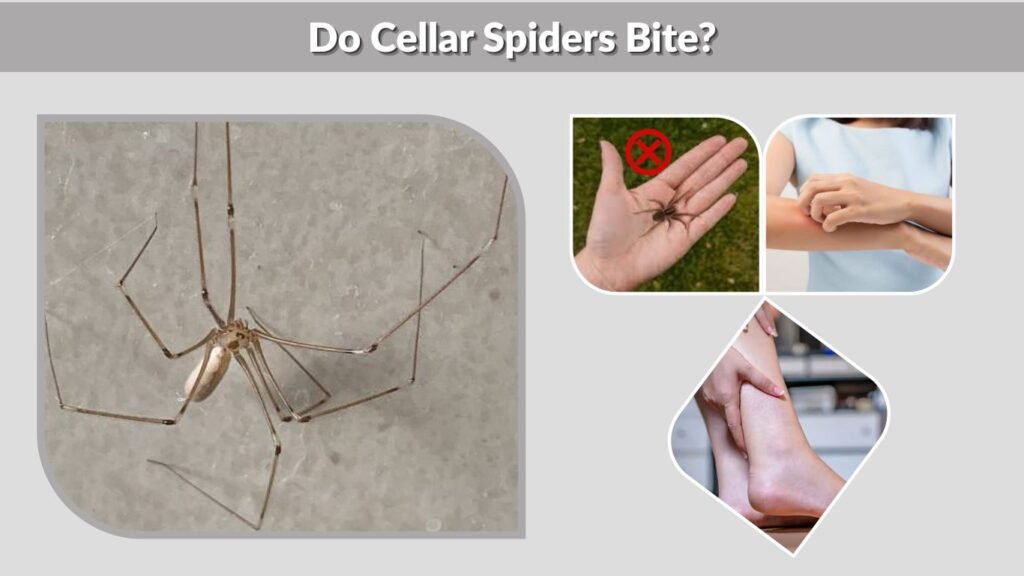
Cellar spiders can technically bite, as most spiders can, but bites are rare. They are not aggressive and usually avoid people. Most encounters happen when someone removes webs, moves stored items, or accidentally touches the spider.
The common myth that cellar spiders are “the most venomous spiders” is misleading. Their venom works on tiny prey, but they are not considered harmful to humans. A typical cellar spider is not something most homeowners need to fear.
Possible Bite Symptoms
If a bite does happen, symptoms are usually mild. A person may notice:
- Slight redness
- Minor itching
- Mild swelling
- A small irritated spot
- Temporary discomfort
These symptoms can also come from many other causes, including mosquitoes, fleas, bed bugs, skin irritation, allergies, or minor infections. Many suspected spider bites are never confirmed as spider bites.
When to Seek Medical Advice
You should seek medical help if a bite-like mark becomes severe, spreads quickly, forms an open sore, causes intense pain, or comes with fever, chills, nausea, or other unusual symptoms. This is especially important if you did not actually see the spider bite you.
Do not assume every red bump is from a spider. Accurate identification matters, and serious skin symptoms should be checked by a medical professional.
Why Cellar Spiders Come Indoors
Cellar spiders enter or settle in homes because indoor spaces can provide shelter, humidity, and prey. They are especially common in areas that are quiet and not cleaned often.
Common Attractants
Cellar spiders are usually attracted by conditions that also attract small insects. If your home has many flies, gnats, mosquitoes, ants, or other small pests, cellar spiders may stay because food is available.
They may be more common when a home has:
- Damp basement areas
- Cluttered storage rooms
- Gaps around windows or doors
- Outdoor lights attracting insects
- Undisturbed boxes or furniture
- Corners that are rarely cleaned
Seeing one or two cellar spiders does not always mean you have an infestation. They are common household spiders and often appear in small numbers.
Are Cellar Spiders Good for Your Home?
Cellar spiders can be beneficial because they eat other small pests. Their diet may include flies, mosquitoes, small moths, ants, and even other spiders. In this sense, they act as natural pest control.
However, many homeowners dislike their messy webs. The webs can collect dust and make corners look dirty. The spider itself may not be a problem, but the web buildup can be annoying.
Whether you leave them alone or remove them depends on your comfort level. If they are in a basement corner and not bothering anyone, they may help reduce insects. If they are in living areas, removing webs and reducing hiding places is reasonable.
How to Get Rid of Cellar Spiders Naturally
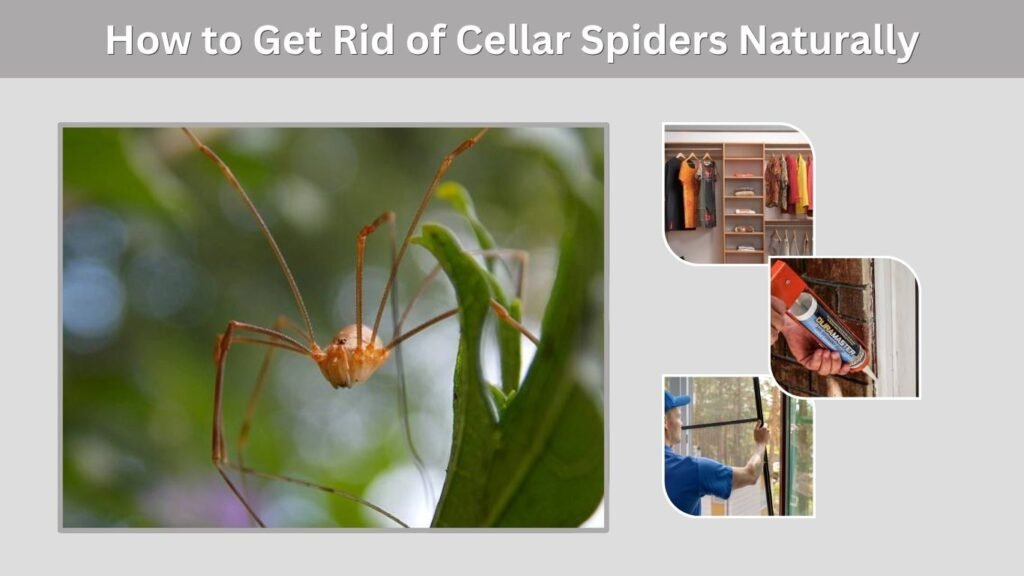
You usually do not need harsh chemicals for cellar spiders. A clean, dry, low-clutter home is often enough to reduce them.
Simple Control Steps
Start with physical removal and prevention:
- Vacuum webs, spiders, and egg sacs from corners
- Clean ceiling edges, closets, and storage areas regularly
- Reduce clutter in basements and garages
- Seal cracks around windows, doors, and utility openings
- Fix moisture issues in basements or bathrooms
- Use screens on windows and vents
- Reduce indoor insects that serve as food
Vacuuming is one of the easiest methods because it removes both the spiders and their webs at the same time. Pay special attention to corners, ceiling joints, rafters, and areas behind stored items.
Reduce Moisture and Food Sources
Cellar spiders often prefer damp, protected places. Using a dehumidifier in a basement, improving ventilation, and repairing leaks can make the area less attractive.
You should also reduce the insects they eat. Keep trash sealed, clean food crumbs, repair window screens, and avoid leaving doors open at night when lights attract flying insects.
Should You Use Pesticides?
Pesticides are usually not necessary for ordinary cellar spider problems. Since cellar spiders stay in webs, direct removal is often more effective than spraying random surfaces. Sprays may also fail if the underlying conditions remain unchanged.
Consider professional pest control only if:
- Spider numbers are unusually high
- You also have a larger insect problem
- You suspect brown recluse or black widow spiders
- Someone in the home has strong spider anxiety
- Webs return quickly after repeated cleaning
A professional can confirm the spider species and recommend a targeted plan.
Cellar Spider Eggs and Life Cycle
Female cellar spiders carry their eggs in a small loose sac held near the mouthparts. This can look like the spider is holding a tiny bundle. After the eggs hatch, young spiderlings may remain near the web before dispersing.
If you want to reduce future spiders, remove egg sacs when vacuuming. Cleaning only the visible web but leaving egg sacs behind may allow spider numbers to return.
Cellar spiders can live for months or longer depending on conditions. Indoors, where temperatures are stable and predators are limited, they may survive comfortably if food is available.
FAQs
Are cellar spiders poisonous?
Cellar spiders have venom for catching small prey, but they are not considered dangerous to humans. The idea that they are extremely poisonous is a common myth. They rarely bite people, and when they do, symptoms are usually mild. Most homeowners should see them as nuisance spiders rather than harmful pests.
How can I tell if it is a cellar spider or brown recluse?
Look at the legs, web, and behavior. Cellar spiders have very long, thin legs and usually hang upside down in messy webs. Brown recluse spiders are more compact, secretive, and usually hide in dry, undisturbed places. If you are unsure, avoid touching the spider and ask a professional for identification.
Do cellar spiders eat other spiders?
Yes, cellar spiders can eat other small spiders and insects. They catch prey in their loose, tangled webs and may help reduce flies, mosquitoes, moths, and other pests indoors. This makes them useful in some areas of the home, even though their webs can look messy.
Why are there cellar spiders in my bathroom?
Bathrooms can attract cellar spiders because they often provide moisture, warmth, and small insects. Corners, ceiling edges, and areas behind fixtures may stay undisturbed, making them good web sites. Reducing humidity, improving ventilation, and cleaning corners regularly can help keep them away.
Should I kill cellar spiders?
You do not have to kill cellar spiders. They are usually harmless and may help control small insects. If you do not want them indoors, vacuuming them and removing webs is usually enough. You can also reduce clutter, seal entry points, and lower moisture to make your home less attractive.
