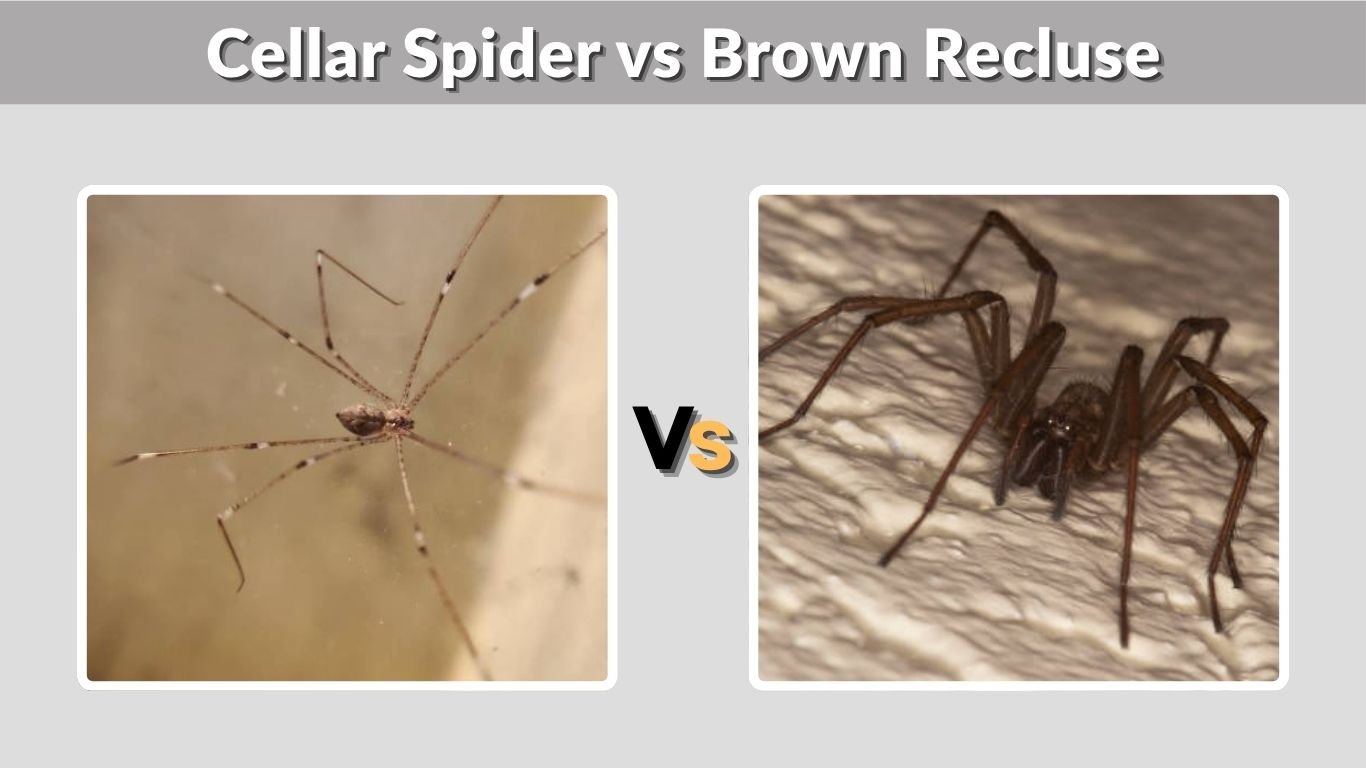
A brown spider in your basement, garage, or closet can make you worry, especially if you think it might be a brown recluse. Cellar spiders and brown recluse spiders can both appear indoors, but they are not the same. They differ in body shape, legs, webs, behavior, and risk level. Knowing these signs can help you identify them more safely and accurately.
What Is a Cellar Spider?
A cellar spider is a common indoor spider often seen in basements, garages, bathrooms, storage rooms, sheds, and ceiling corners. It is sometimes called a daddy long legs spider because it has a very small body and extremely long, thin legs.
Cellar spiders usually build loose, messy webs in quiet indoor areas. They often hang upside down in their webs and wait for small insects to get trapped. If disturbed, they may shake or vibrate quickly, which is a defensive behavior.
These spiders may look strange because of their long legs, but they are not considered dangerous to humans. In many homes, they are helpful because they catch flies, mosquitoes, gnats, moths, and even other spiders.
Common Signs of a Cellar Spider
You may be looking at a cellar spider if you notice:
- Very long, thin, delicate legs
- A small pale, gray, tan, or light brown body
- A messy web in a ceiling corner or basement
- The spider hanging upside down
- Quick shaking or vibrating when disturbed
- A spider that stays in one web for a long time
Cellar spiders are usually easy to recognize because their legs are much longer than their body. Their webs are also an important clue.
What Is a Brown Recluse?
A brown recluse is a venomous spider that is taken more seriously because its bite can sometimes cause medical problems. It is often called a fiddleback spider or violin spider because many brown recluses have a dark violin-shaped marking on the top of the front body section.
Brown recluse spiders are usually tan, brown, or dark brown. They have a more compact body than cellar spiders, and their legs are not extremely long and thread-like. Their legs are usually plain brown and smooth-looking, without obvious bands or strong markings.
Unlike cellar spiders, brown recluses do not usually sit in open messy webs. They prefer hidden, quiet, undisturbed areas. They may hide in boxes, closets, shoes, clothing, drawers, basements, garages, attics, and cluttered storage spaces.
Cellar Spider vs Brown Recluse Comparison
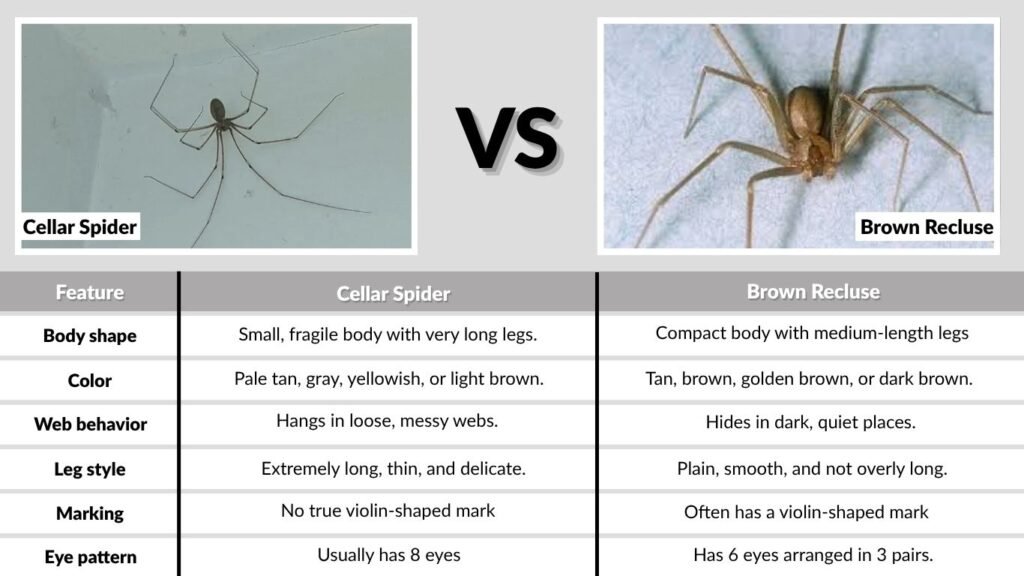
| Feature | Cellar Spider | Brown Recluse |
|---|---|---|
| Body shape | Small, fragile body with very long legs | Compact body with medium-length legs |
| Color | Pale tan, gray, yellowish, or light brown | Tan, brown, golden brown, or dark brown |
| Web behavior | Hangs in loose, messy webs | Hides in dark, quiet places |
| Leg style | Extremely long, thin, and delicate | Plain, smooth, and not overly long |
| Marking | No true violin-shaped mark | Often has a violin-shaped mark |
| Eye pattern | Usually has 8 eyes | Has 6 eyes arranged in 3 pairs |
| Risk level | Not considered dangerous | Venomous and should be handled with caution |
How to Tell the Difference Quickly
The fastest way to tell the difference is to look at the legs, web, and hiding place. A cellar spider usually looks fragile and has very long legs. A brown recluse looks more compact, smoother, and less delicate.
A cellar spider is often visible in a messy corner web. A brown recluse is more likely to be found hiding in dark, undisturbed places. If the spider is hanging upside down in a loose web, it is probably a cellar spider, not a brown recluse.
Quick Identification Checklist
Use these simple checks:
- Very long legs and tiny body? Likely cellar spider.
- Messy web in a corner? Likely cellar spider.
- Compact brown body? Could be brown recluse or another brown spider.
- Violin-shaped mark? Possible brown recluse.
- Found inside shoes, boxes, or stored clothes? Be cautious.
- Six eyes in three pairs? Strong brown recluse clue.
Do not identify a spider by color alone. Many harmless spiders are brown, and not every brown spider is a brown recluse.
Body Shape Differences
Cellar spiders have a delicate body structure. Their bodies are usually small and narrow, while their legs are extremely long and thin. When they hang in webs, their legs may look like fine threads stretched around the body.
Brown recluse spiders look more solid. Their body is not large, but it is more compact and balanced. Their legs are medium-length compared with the body. They do not have the extremely fragile, long-legged appearance of a cellar spider.
This body shape difference is one of the most useful clues for homeowners. If the spider looks like a tiny body with oversized legs, it is more likely a cellar spider. If it looks like a smooth, compact brown spider, look more carefully before touching anything nearby.
Web and Behavior Differences
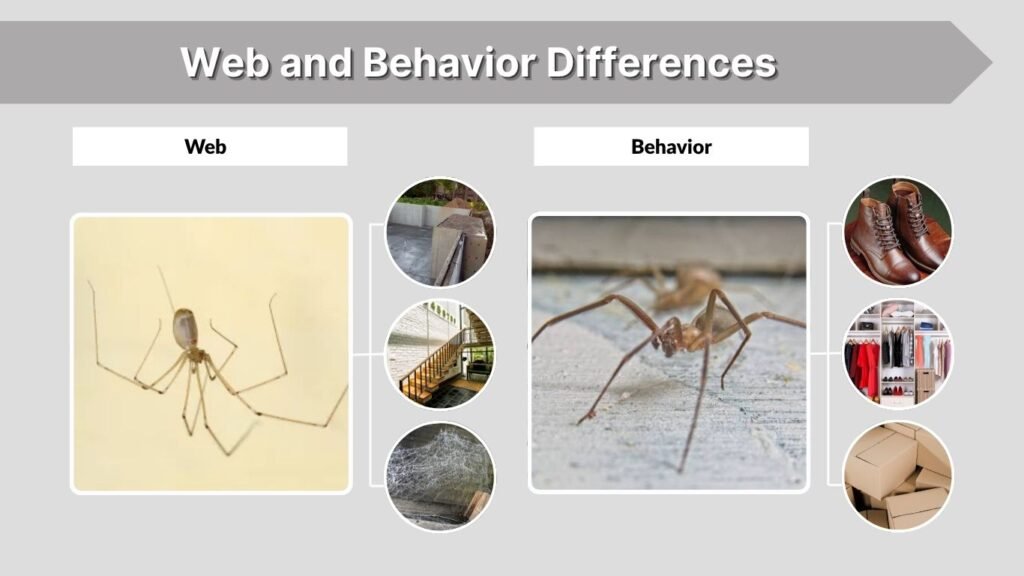
Cellar spiders are web spiders. They build messy, irregular webs in corners, under ceilings, behind furniture, and in quiet areas. Their webs may look untidy, but they are useful traps for insects.
Brown recluses do not behave the same way. They may create small silk retreats, but they are not usually seen hanging in large open webs. They prefer to stay hidden during the day and may move around at night.
Places Cellar Spiders Usually Stay
Cellar spiders are commonly found in:
- Basement corners
- Garage ceilings
- Bathroom corners
- Storage rooms
- Sheds and barns
- Under stairways
- Behind furniture
Places Brown Recluses May Hide
Brown recluses may hide in:
- Shoes and boots
- Cardboard boxes
- Stored clothing
- Closets and drawers
- Attics and basements
- Garages and sheds
- Woodpiles or clutter
If you find a spider in a visible web, it is less likely to be a brown recluse. If you find a compact brown spider hiding in stored items, be more careful.
The Violin Mark on Brown Recluse Spiders
The violin mark is one of the most famous brown recluse features. It appears on the top of the front body section. The narrow part of the violin points toward the abdomen.
However, this mark is not always easy to see. Young brown recluses may have a faint mark, and lighting can make markings unclear. Some harmless spiders also have dark marks that people mistake for a violin shape.
For this reason, the violin mark should not be your only identification method. Use it with other signs, such as body shape, eye pattern, leg appearance, web behavior, and location.
Eye Pattern: A Stronger Brown Recluse Clue
Most spiders have eight eyes, but brown recluse spiders have six eyes arranged in three pairs. This is one of the strongest identification features. However, it is hard to see without a close view or magnification.
You should not try to handle a spider just to check its eyes. If you are unsure, take a clear photo from a safe distance or capture the spider carefully in a sealed container. A pest professional, local extension office, or spider identification expert may be able to help.
Cellar spiders do not match the brown recluse’s six-eye pattern. Still, for most people, body shape and web behavior are easier signs to use.
Are Cellar Spiders Dangerous?
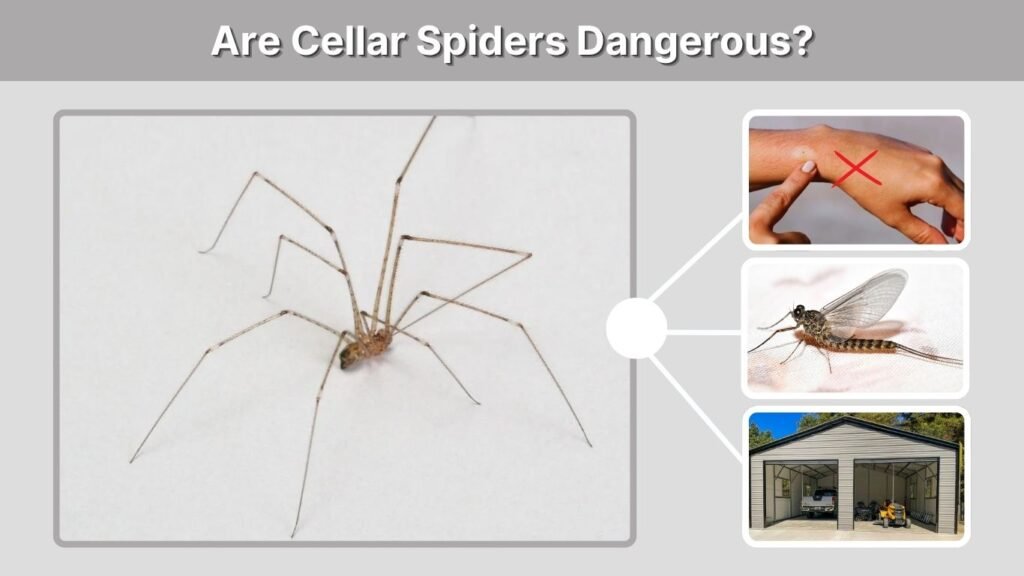
Cellar spiders are not considered dangerous to humans. They have venom for catching tiny prey, but they are not aggressive toward people. Bites are rare and are usually not serious.
In fact, cellar spiders can be useful indoors. They eat small insects and may even catch other spiders in their webs. Some people leave them alone in basements or garages because they help reduce household pests.
The main problem with cellar spiders is their messy webs. If the webs bother you, you can remove them with a broom or vacuum and gently move the spider outside.
Are Brown Recluses Dangerous?
Brown recluses are venomous, and their bites can sometimes cause serious skin reactions. However, bites are not always severe, and many suspected brown recluse bites are actually caused by other insects, infections, or skin problems.
Still, you should treat a possible brown recluse with caution. Do not pick it up with bare hands. Be careful when moving boxes, clothing, shoes, or stored items in places where brown recluses may live.
Seek medical attention if a suspected bite becomes very painful, forms an open sore, spreads, shows signs of infection, or comes with fever, chills, nausea, or other concerning symptoms.
Can Cellar Spiders Eat Brown Recluses?
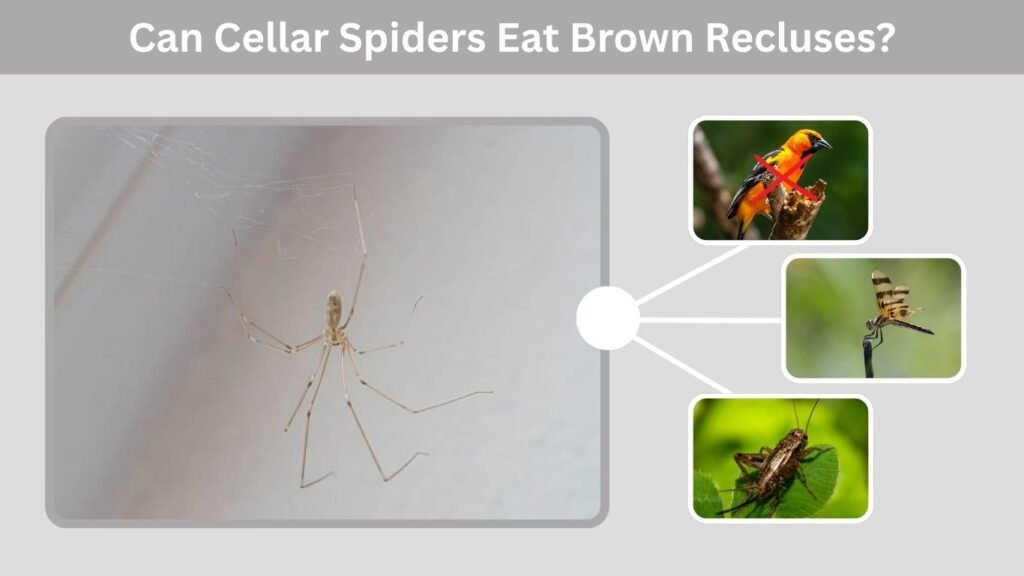
Cellar spiders can catch and eat other spiders, including spiders that enter their webs. This means a cellar spider may sometimes prey on a brown recluse or another indoor spider. However, this does not mean cellar spiders are a complete solution for brown recluse control.
If you have brown recluses in your home, use proper prevention methods. Reduce clutter, inspect stored items, seal entry points, vacuum regularly, and use sticky traps to monitor spider activity. If the problem is serious, contact a pest control professional.
What to Do If You Find One
If you find a cellar spider, you can usually leave it alone. It is harmless and may help control insects. If you prefer not to have it inside, use a cup and paper to move it outdoors.
If you think you found a brown recluse, avoid direct contact. Take a photo if possible, or capture it safely without touching it. Be extra careful around shoes, clothes, boxes, and dark storage areas.
Prevention Tips for Both Spiders
To reduce spider activity indoors:
- Clean ceiling corners and remove old webs
- Reduce clutter in storage areas
- Store items in sealed plastic containers
- Shake out shoes and clothes before use
- Seal cracks around doors and windows
- Vacuum basements, closets, and garages
- Wear gloves when moving stored items
These steps reduce insects and hiding places, which makes your home less attractive to spiders.
FAQs
How can I tell a cellar spider from a brown recluse?
A cellar spider has very long, thin legs and usually hangs in a messy web. A brown recluse has a more compact brown body, plain medium-length legs, and may have a violin-shaped mark. Web behavior is a major clue because brown recluses usually hide instead of sitting openly in corner webs.
Is a cellar spider as dangerous as a brown recluse?
No, a cellar spider is not considered dangerous like a brown recluse. Cellar spiders may look unpleasant because of their long legs and messy webs, but they are generally harmless to humans. Brown recluses are venomous, and their bites can sometimes cause medical problems, so they should be treated with caution.
Can a brown recluse look like a cellar spider?
A brown recluse can be confused with many brown spiders, but it usually does not look like a typical cellar spider. Cellar spiders have extremely long, delicate legs and a tiny body. Brown recluses look more compact and smooth, with plain legs and a possible violin-shaped marking on the front body section.
Do cellar spiders kill brown recluses?
Cellar spiders can catch and eat other spiders if those spiders enter their webs. This may include brown recluses in some situations. However, you should not rely on cellar spiders to control brown recluses. Cleaning, reducing clutter, sealing gaps, and professional pest control are more reliable for serious problems.
Should I worry about a brown spider in my basement?
Not every brown spider in a basement is a brown recluse. Many harmless spiders are brown, including cellar spiders and common house spiders. Look for key signs such as a messy web, very long legs, compact body shape, violin mark, and hiding behavior. If you are unsure, avoid handling it directly.