
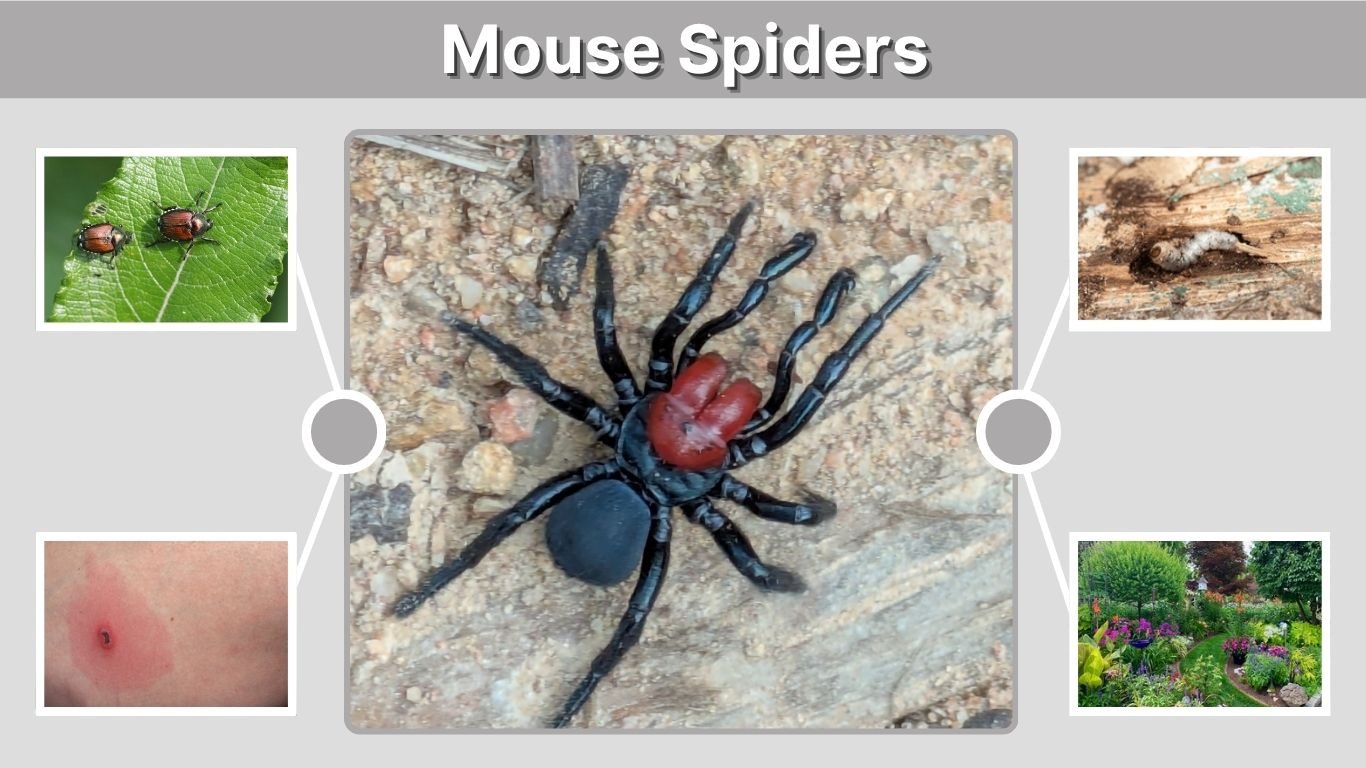
Mouse spiders are stocky, burrowing spiders best known from Australia. Their name can sound strange, but they do not hunt mice as a normal food source. Instead, they live in silk-lined burrows, ambush small prey, and are often noticed because some males have bold red, blue, or glossy black coloring. Although they are venomous and should be treated with caution, bites are uncommon.
What Are Mouse Spiders?
Mouse spiders belong mainly to the genus Missulena, a group of mygalomorph spiders related to trapdoor spiders and funnel-web spiders. They have strong bodies, large jaws, short spinnerets, and a rounded head region that makes them look heavier than many house spiders.
The name “mouse spider” comes from an old belief that these spiders dug deep burrows like mice. That idea is not the full story, but the name remained. Today, mouse spiders are known more for their underground lifestyle, powerful fangs, and medically important venom than for any connection to rodents.
Key Features of Mouse Spiders
Mouse spiders can look different depending on the species and sex. Females are usually darker, heavier, and less often seen because they spend much of their lives in burrows. Males are smaller and may wander above ground when searching for mates.
Common features include:
- Glossy black, dark blue, or dark brown body
- Large, bulbous head and jaw region
- Stout legs and compact body shape
- Strong fangs that point downward
- Burrow-dwelling behavior
- Possible red or bluish markings in males
Because of their shape and color, mouse spiders are often confused with funnel-web spiders. This matters because both groups can be medically important, and non-experts should avoid handling either one.
Mouse Spider Identification Guide
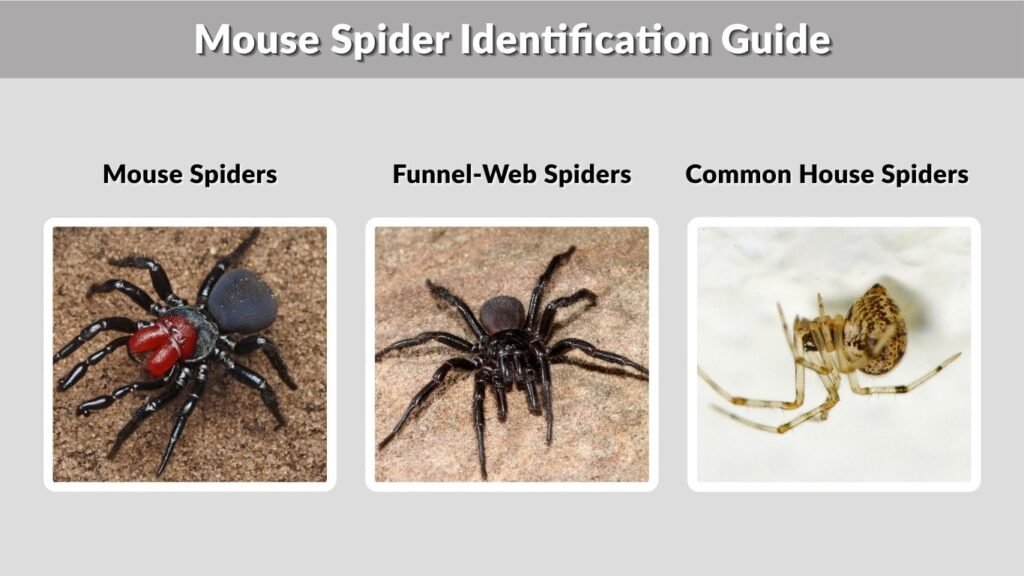
Identifying a mouse spider can be difficult because several species look similar. The safest approach is to observe from a distance and avoid touching it. Many people notice mouse spiders after heavy rain, during mating season, or when a wandering male crosses paths with humans.
| Feature | Mouse Spiders | Funnel-Web Spiders | Common House Spiders |
| Body shape | Stocky, compact, heavy-looking | Glossy, robust, often powerful-looking | Usually lighter or more delicate |
| Lifestyle | Burrow-dwelling, often with trapdoor-like cover | Burrows or sheltered retreats | Corners, walls, webs, sheds |
| Human risk | Venomous; serious bites are rare but possible | Some species highly dangerous | Usually low risk |
| Best response | Do not handle; relocate only with caution | Do not handle; seek expert help | Usually harmless if left alone |
Red-Headed Mouse Spiders
The red-headed mouse spider is one of the best-known species. Males are especially striking, often showing a bright red head region with dark legs and a dark abdomen. This dramatic coloring is one reason people search for pictures of mouse spiders online.
Females usually look darker and less colorful. They are also more secretive because they remain in their burrows for long periods. The red-headed mouse spider is mostly associated with mainland Australia and is often discussed when people ask whether mouse spiders are poisonous or dangerous.
Eastern Mouse Spiders
Eastern mouse spiders are another well-known group, especially in eastern parts of Australia. They may be confused with funnel-web spiders because of their dark, glossy appearance and robust build. Like other mouse spiders, they should not be handled.
The eastern mouse spider is often mentioned in safety discussions because its venom has been studied and because it occurs in areas where people may also be aware of funnel-web spiders.
Are Mouse Spiders Dangerous?
Mouse spiders can be dangerous, but the risk needs context. They are venomous spiders, and some species have venom that may cause serious symptoms. However, confirmed serious bites are uncommon. These spiders are not usually aggressive toward people and generally prefer to retreat or remain hidden.
Most human encounters happen when a spider is disturbed, stepped on, trapped in clothing, or handled. Males may be seen more often because they wander in search of females. Females are less visible because they stay in their burrows.
Are Mouse Spiders Poisonous or Venomous?
The more accurate word is “venomous,” not “poisonous.” A poisonous animal causes harm when touched or eaten. A venomous animal injects toxins through a bite or sting. Mouse spiders use venom through their fangs to subdue prey.
So, when people ask “are mouse spiders poisonous?” they usually mean “are mouse spiders venomous?” The answer is yes. They are venomous and should be treated with caution.
Are Mouse Spiders Aggressive?
Mouse spiders are not considered aggressive in the sense of chasing people or seeking contact. Like many spiders, they may defend themselves if threatened. A spider that is trapped, squeezed, or handled may bite as a defensive response.
A defensive mouse spider may raise its front legs or show its fangs. This posture is a warning, not an invitation to attack. The best response is to step back and leave the spider alone.
Do Mouse Spiders Bite?
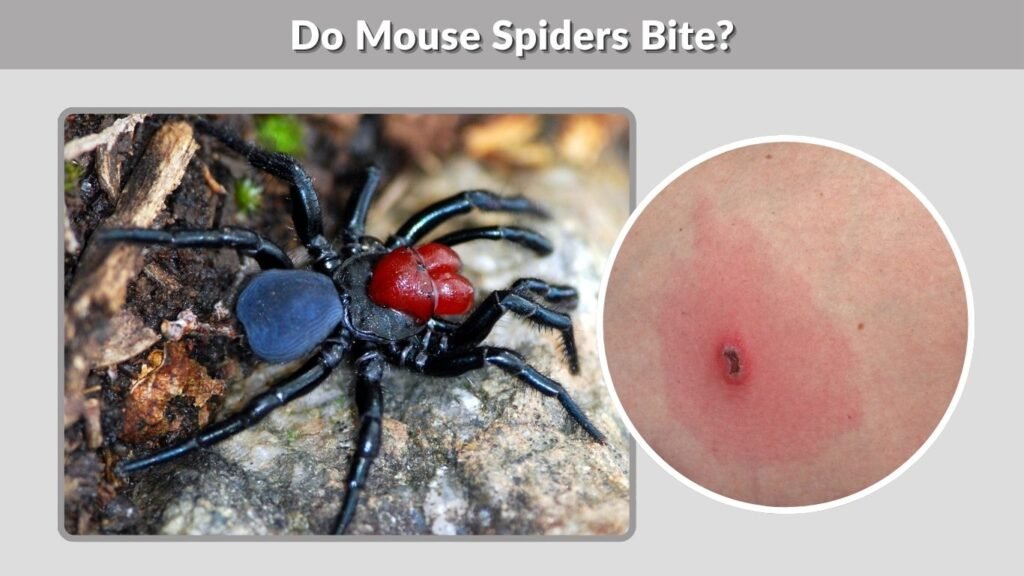
Yes, mouse spiders can bite. Their fangs are strong enough to pierce skin, and a bite may be painful. Because their venom can be medically significant, any suspected mouse spider bite should be taken seriously.
Bites are still rare compared with the number of spiders living in the environment. Mouse spiders spend most of their time hidden underground, which reduces contact with people.
Mouse Spider Bite Symptoms
Symptoms can vary depending on the species, amount of venom injected, bite location, and the person’s reaction. Some bites may be mild, while others can produce more serious effects.
Possible symptoms include:
- Immediate pain at the bite site
- Redness, swelling, or local irritation
- Sweating or nausea
- Tingling or muscle discomfort
- Headache or feeling unwell
- More severe systemic symptoms in rare cases
Because mouse spider bites can resemble more serious spider envenomation, it is better to be cautious than to wait and guess.
What To Do After a Bite
If you suspect a mouse spider bite, stay calm and seek urgent medical advice. Do not try to catch the spider with bare hands. If it can be safely photographed from a distance, that may help identification, but medical care should not be delayed.
Basic steps include:
- Keep the bitten person still and calm
- Avoid washing the bite area if medical identification may be needed
- Apply pressure immobilization if advised in your region for serious Australian spider bites
- Call emergency services or a poison information center
- Go to a hospital or emergency clinic quickly
Do not cut the wound, suck out venom, apply ice directly for long periods, or rely on home remedies.
Where Are Mouse Spiders Found?
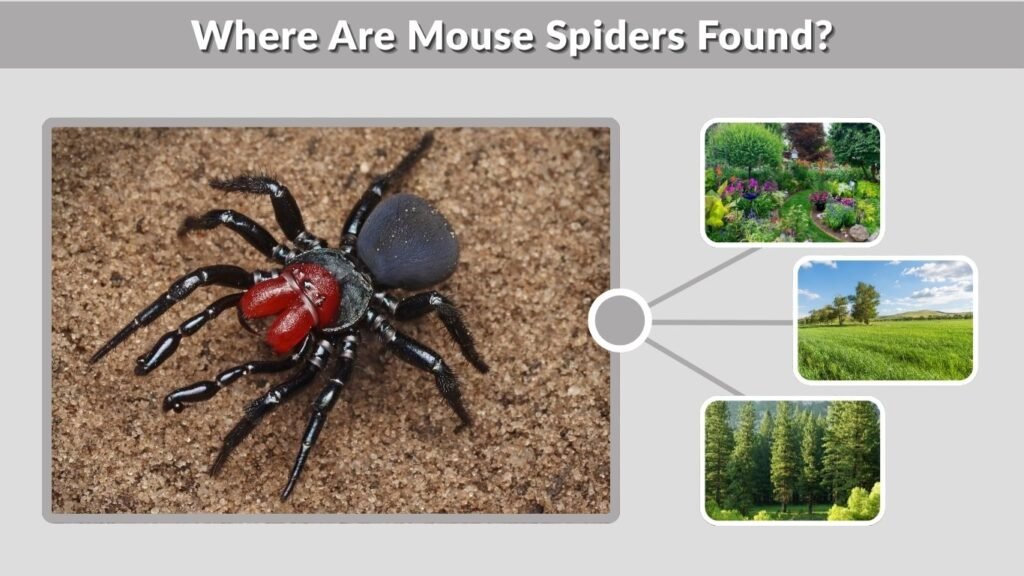
Mouse spiders are most strongly associated with Australia. Different species occur across parts of the continent, including eastern, southern, northern, and western regions. Some related or named species are also discussed outside Australia, but many location-based searches in the US or UK come from confusion with other spiders that share similar common names.
People often search for mouse spiders in Michigan, Oregon, California, Wisconsin, Maryland, North Carolina, New York, and the UK. In many of these cases, the spider being discussed may not be a true Australian Missulena mouse spider. Common names can overlap, and local “mouse spider” references may point to different species.
Mouse Spiders in Australia
Australia is the main place associated with true mouse spiders. They are usually found in natural areas, woodland, open ground, gardens, and places with suitable soil for burrows. They are not usually abundant in heavily populated urban areas, although occasional encounters can happen.
Their burrows provide protection from heat, dryness, predators, and parasites. A burrow may have a covering or entrance that blends with the soil, making the spider hard to spot.
Are There Mouse Spiders in the US?
True Missulena mouse spiders are not a common US spider group. When people in the United States report “mouse spiders,” they may be referring to a different spider, a misidentified trapdoor spider, a ground spider, or another dark, stocky species.
This does not mean every dark spider is dangerous. Many spiders look intimidating but are not medically significant. If there is a safety concern, the best step is to contact a local extension service, pest expert, or arachnology group for identification.
Where Do Mouse Spiders Live?
Mouse spiders live mainly in burrows. These burrows are built in soil and lined with silk. The spider waits inside or near the entrance and ambushes prey that comes close. This lifestyle makes them different from web-building spiders that create large capture webs in corners or trees.
They prefer places where the ground is suitable for digging and where prey is available. Burrows also help them avoid extreme temperatures and low humidity.
Can Mouse Spiders Climb Walls or Swim?
Mouse spiders are built more for digging and ground movement than climbing smooth walls. They may climb rough surfaces, but they are not typically seen as agile wall-climbers like some house spiders.
They are not aquatic spiders, but some spiders can survive brief contact with water. After heavy rain, burrow-dwelling spiders may be forced above ground, which can increase sightings around homes, paths, and gardens.
What Do Mouse Spiders Eat?
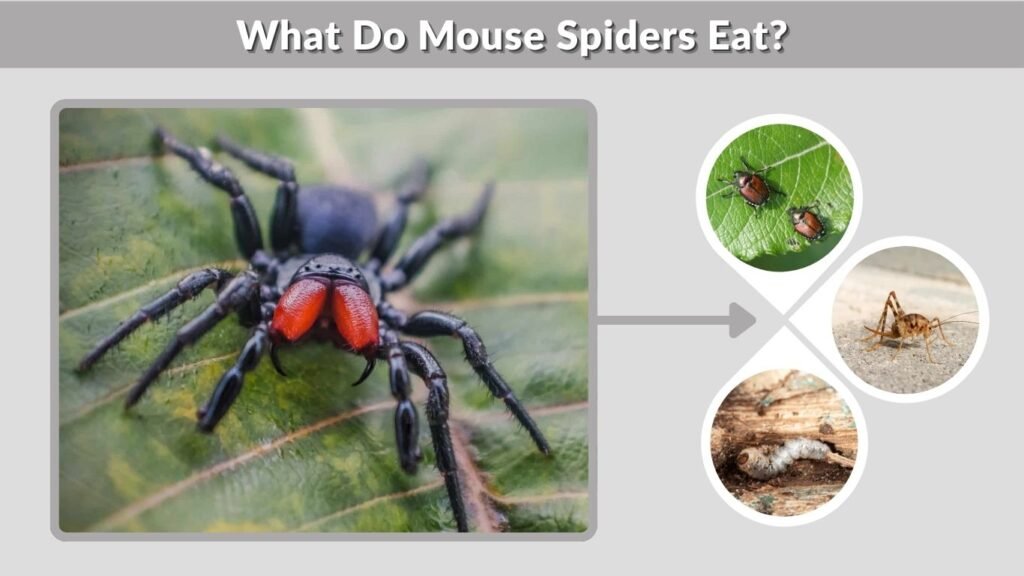
Mouse spiders are predators. They mainly eat insects and other small invertebrates. They may also take other spiders and, occasionally, very small vertebrates if the opportunity appears. Despite the name, mice are not their usual food.
Their hunting method is based on ambush. Instead of chasing prey over long distances, the spider waits in or near its burrow. When prey comes close, it strikes quickly with its strong fangs.
Do Mouse Spiders Eat Mice?
No, mouse spiders do not normally eat mice. The name is misleading. Although a large spider may occasionally overpower very small animals in rare circumstances, mouse spiders are not rodent hunters. Their regular diet is much smaller and more typical for burrowing spiders.
Most of their food comes from:
- Beetles and other insects
- Crickets and small ground-dwelling prey
- Other spiders
- Small arthropods near the burrow entrance
- Occasionally tiny vertebrates in rare cases
How Big Are Mouse Spiders?
Mouse spiders are medium to large spiders. Their body length varies by species and sex, but they are often described as compact and heavy-bodied rather than extremely long-legged. Females can be noticeably larger and bulkier than males.
Some mouse spiders may reach around 35 mm in body length, while smaller individuals may be closer to 10–15 mm. Leg span can make them appear larger than body measurements suggest.
Male vs Female Mouse Spiders
Male and female mouse spiders often look different. This difference is called sexual dimorphism. Females are usually larger, darker, and more secretive. Males may be smaller, more colorful, and more likely to wander.
Male mouse spiders are often the ones people see because they leave shelter while searching for mates. A bright red-headed male can look alarming, but it is usually not trying to interact with people.
How Long Do Mouse Spiders Live?
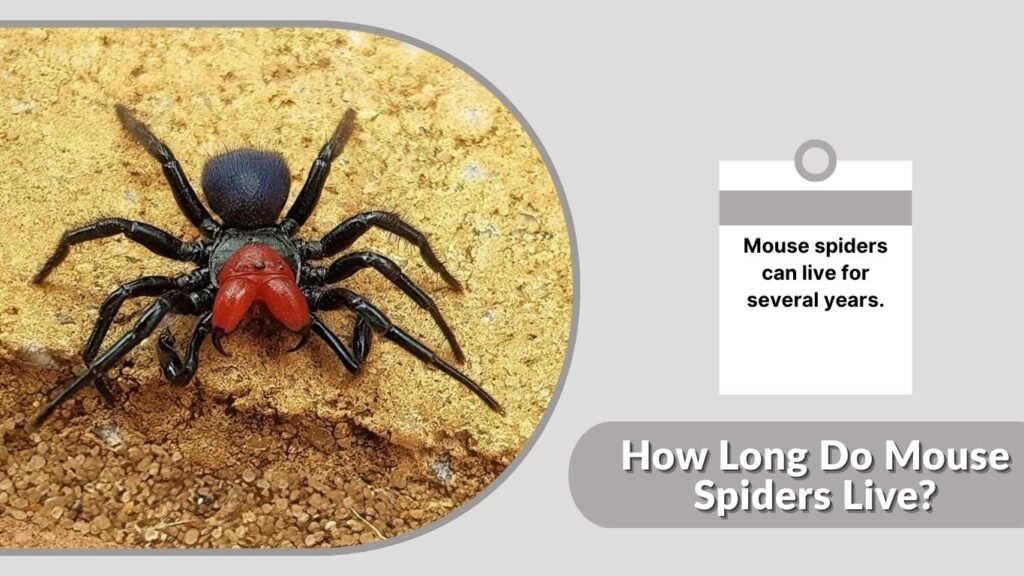
Mouse spiders can live for several years, especially females that remain protected in burrows. Males generally have a shorter active adult phase because they spend energy searching for females and are more exposed to predators and environmental hazards.
Their slow, hidden lifestyle is one reason people may not notice them often. A female may live quietly in the same general area while humans nearby never see her.
How To Get Rid of Mouse Spiders Safely
If you live in an area where mouse spiders occur, prevention is safer than direct handling. These spiders are part of the natural ecosystem and help control insect populations, but you may still want to reduce encounters around the home.
Practical steps include:
- Wear gloves when gardening or moving logs, rocks, and debris
- Keep shoes, boots, and gloves indoors or shake them out before use
- Seal gaps around doors, windows, and foundations
- Reduce clutter, leaf litter, and wood piles near entrances
- Use a container and stiff card for safe relocation only if you are confident
- Call a pest professional if spiders are repeatedly found indoors
Never pick up a mouse spider with bare hands. If you are unsure whether it is a mouse spider, funnel-web spider, or another species, treat it with caution.
Mouse Spiders vs Similar Spiders
Mouse spiders are often confused with funnel-web spiders, trapdoor spiders, black house spiders, and other dark ground-dwelling spiders. The confusion is understandable because several medically important spiders share a glossy, dark, robust appearance.
For non-experts, identification from a quick glance is unreliable. Photos can help, but even experts may need details such as body shape, spinnerets, eye arrangement, and location.
Why Misidentification Happens
Misidentification is common because people often notice spiders during stressful situations. A dark spider in a garage, garden, shoe, or laundry room can look more dangerous than it really is. Online images can also mix up species, especially when common names are used loosely.
When safety matters, focus less on naming the spider immediately and more on avoiding contact. Identification can come later through a museum, local expert, or pest professional.
Facts About Mouse Spiders
Mouse spiders are fascinating animals, even if they make many people nervous. Their secretive behavior means people often know them only from dramatic photos or bite warnings.
Useful facts include:
- They are burrow-dwelling spiders
- They are mostly associated with Australia
- Some species have medically significant venom
- Serious bites are uncommon
- They do not normally eat mice
- Males are seen more often because they wander for mates
- Females often remain hidden underground
- They can be confused with funnel-web spiders
- They help control insect populations
- They should never be handled casually
FAQs
Are mouse spiders dangerous to humans?
Mouse spiders can be dangerous because they are venomous and some species have medically significant venom. However, serious bites are uncommon, and these spiders do not usually seek contact with humans. The safest approach is to avoid handling them, wear gloves when gardening, and seek medical help after any suspected bite.
Are red-headed mouse spiders poisonous?
Red-headed mouse spiders are venomous rather than poisonous. Their venom can be medically important, so they should be treated with caution. Males are often noticed because of their bright red coloring, while females are darker and more hidden. Any suspected bite should be handled as a serious spider bite.
Do mouse spiders live in the US?
True Australian mouse spiders from the genus Missulena are not commonly found in the United States. Many US searches for mouse spiders involve misidentified ground spiders, trapdoor spiders, or other dark species. Local experts, extension services, or pest professionals can help identify spiders found in specific states.
Do mouse spiders bite people?
Mouse spiders can bite if they are disturbed, trapped, stepped on, or handled. Their fangs are strong, and the bite may be painful. Although bites are rare, they should not be ignored. If a mouse spider bite is suspected, keep the person calm and seek urgent medical advice.
What do mouse spiders eat?
Mouse spiders mainly eat insects, other spiders, and small ground-dwelling arthropods. They are ambush predators that wait in or near their burrows for prey to come close. Despite their name, they do not normally eat mice, and rodents are not a regular part of their diet.
