
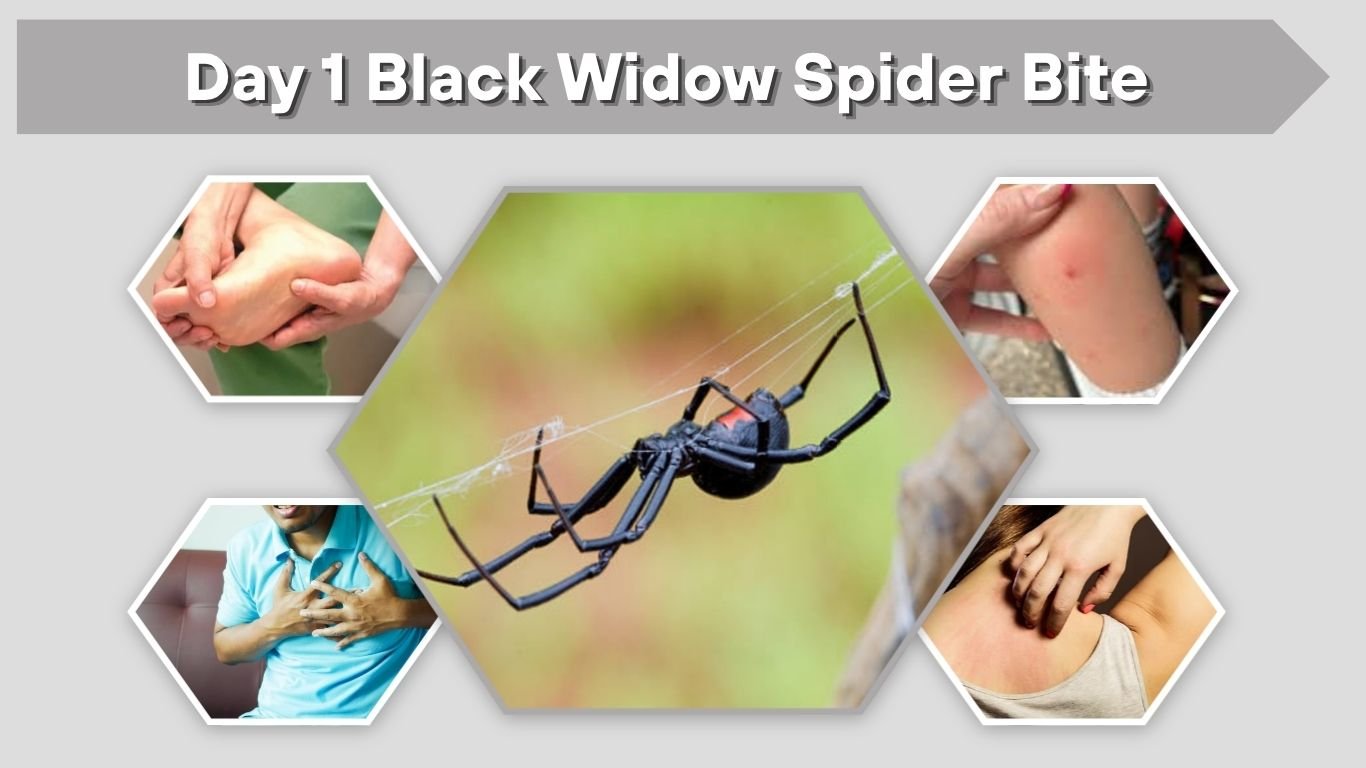
A day 1 black widow spider bite can feel frightening because symptoms may change quickly within the first few hours. Some bites cause only local pain and redness, while others lead to muscle cramps, sweating, nausea, or pain that spreads to the abdomen, chest, or back. Knowing what may happen during the first 24 hours can help you respond calmly, watch for warning signs, and seek medical care when needed.
What a Day 1 Black Widow Spider Bite May Look Like
A black widow bite does not always look dramatic at first. In the early stage, the bite may appear as a small red bump, mild swelling, or two tiny puncture marks. Some people feel a sharp pinprick-like pain when the bite happens, while others notice symptoms later.
The skin around the bite may become red, tender, or slightly raised. Unlike some spider bites that mainly damage the skin, black widow venom affects the nervous system. This means the most important symptoms may be pain, cramping, sweating, and body-wide discomfort rather than a large open wound.
Common Day 1 Appearance
During the first day, a black widow spider bite may show:
- Small red mark or bump
- Mild swelling around the bite
- Local tenderness or burning pain
- Two tiny puncture marks in some cases
- Redness that may stay limited or spread slightly
Pictures of a day 1 black widow spider bite can vary widely. Some bites look like a minor insect bite, while others become more swollen and painful. A photo alone is not enough to confirm the spider type, so symptoms and exposure history matter too.
Day 1 Black Widow Spider Bite Symptoms
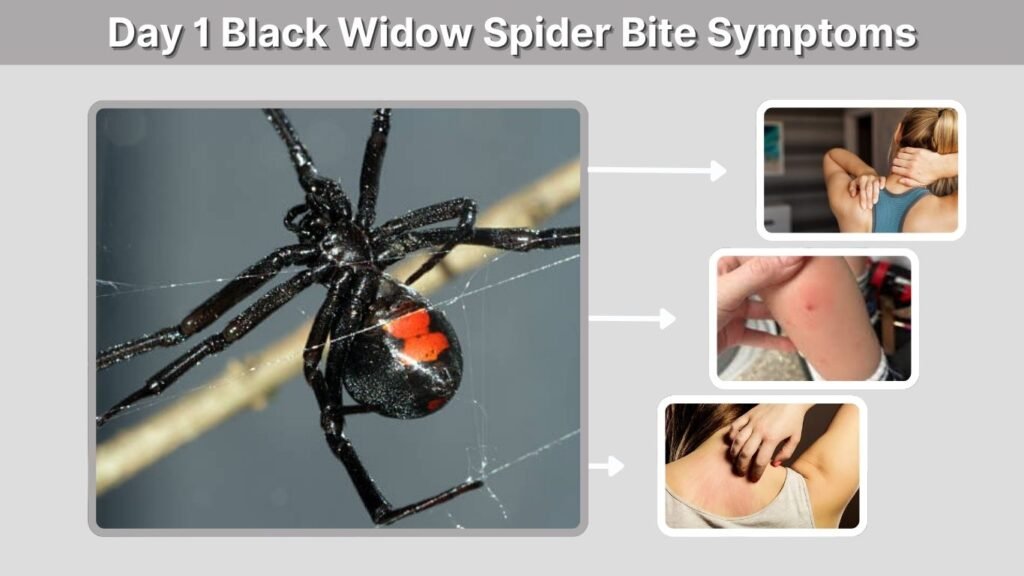
The first 24 hours are important because symptoms can begin locally and then spread. A mild bite may cause pain, redness, and swelling near the skin. A stronger reaction may cause muscle pain and cramping away from the bite area.
Local Symptoms Near the Bite
Local symptoms usually start first. The bite area may feel sharp, burning, numb, or sore. Redness and swelling can develop within minutes to hours. Some people describe the bite as feeling like a bee sting at first.
Local symptoms may include:
- Immediate or delayed pain
- Redness around the bite
- Mild swelling
- Tingling or numbness
- Warmth or tenderness
- Itching in some cases
These symptoms can happen with many insect or spider bites, so they do not prove that a black widow caused the bite.
Body-Wide Symptoms to Watch
Black widow venom can cause symptoms beyond the skin. These may begin within a few hours, especially after a more serious bite.
Possible body-wide symptoms include:
- Muscle cramps or spasms
- Abdominal pain or tightness
- Back, chest, or shoulder pain
- Sweating
- Nausea or vomiting
- Headache
- Weakness
- Tremors
- Restlessness or anxiety
Severe abdominal cramping from a black widow bite can sometimes feel similar to a serious stomach problem. Chest pain, breathing trouble, fainting, or severe weakness should be treated as urgent symptoms.
Day 1 Black Widow Spider Bite Stages
A black widow spider bite does not follow the same timeline for everyone, but many cases move through a similar pattern during the first day.
| Time After Bite | What May Happen | What to Do |
| 0–30 minutes | Sharp pain, redness, small bump, or mild swelling | Wash the area and apply a cold compress |
| 30 minutes–2 hours | Pain may increase or spread from the bite | Monitor symptoms closely |
| 2–6 hours | Muscle cramps, sweating, nausea, or abdominal pain may appear | Seek medical advice, especially if symptoms spread |
| 6–12 hours | Symptoms may peak in more serious cases | Get urgent care for severe pain or body-wide symptoms |
| 12–24 hours | Pain may improve or continue depending on severity | Continue monitoring and follow medical guidance |
Stage 1: The First Few Minutes
Right after the bite, some people feel a sharp sting. Others may not notice the bite until redness or pain appears. The skin may show a small mark, but serious-looking skin damage is not always present.
At this stage, clean the area with soap and water. Avoid squeezing, cutting, or trying to remove venom. These actions can worsen irritation and increase infection risk.
Stage 2: The First Two Hours
Pain may become stronger and spread from the bite area. The bite may look slightly red or swollen, but the overall appearance can still seem mild. This is why a black widow bite can be confusing: the skin may not look severe, even when the body is reacting.
Use a cold compress wrapped in cloth for short periods. Keep the bite area still and, when possible, elevated. Call a healthcare provider or poison control center if you suspect a black widow bite.
Stage 3: Two to Six Hours
This is often when more concerning symptoms may appear. Muscle cramps, sweating, nausea, and pain in the abdomen, chest, or back may develop. Children, older adults, pregnant people, and those with serious health conditions may be more vulnerable to complications.
If symptoms spread beyond the bite area, medical care is the safest choice. Pain from a black widow bite can be intense, and healthcare professionals may use medications to manage pain and muscle spasms.
Stage 4: Six to Twenty-Four Hours
Symptoms may peak during this period. Some people begin to feel better, while others continue to have severe cramping or pain. If the bite causes severe symptoms, doctors may consider stronger treatment, including antivenom in selected cases.
Do not ignore worsening symptoms just because the bite mark looks small. With black widow bites, the nervous system reaction is often more important than the skin appearance.
What to Do on Day 1 After a Black Widow Bite
The first goal is to stay calm and reduce irritation while deciding whether medical care is needed. If you saw the spider and can safely take a photo, that may help with identification. Do not try to capture the spider if doing so could lead to another bite.
First Aid Steps
Take these steps after a suspected black widow spider bite:
- Wash the bite with soap and water.
- Apply a cold compress wrapped in cloth.
- Keep the bitten area still and elevated if possible.
- Remove tight jewelry or clothing near swelling.
- Avoid scratching the bite.
- Contact poison control or a healthcare provider for guidance.
Over-the-counter pain relief may help mild symptoms, but do not rely on home care if pain spreads or muscle cramps begin.
What Not to Do
Some traditional bite remedies can make things worse. Avoid cutting the bite, sucking out venom, applying heat, or using a tourniquet. These methods do not reliably help and may cause tissue damage.
You should also avoid using online pictures as your only guide. A day 1 black widow spider bite can look mild, and other medical problems can mimic bite reactions.
When to Seek Medical Care
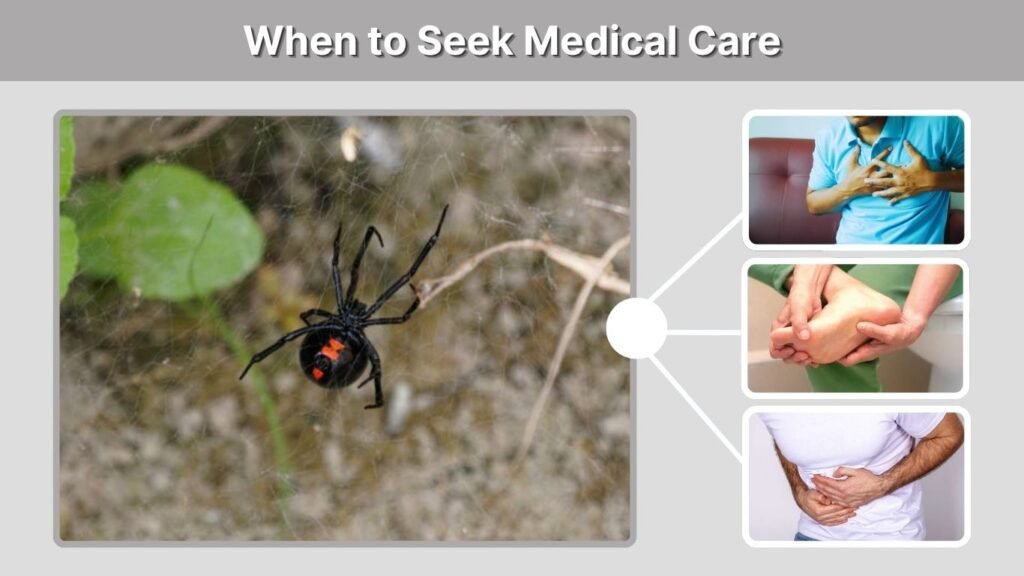
A suspected black widow bite deserves caution. Medical care is especially important if symptoms are more than mild or if the person bitten is a child, older adult, pregnant, or medically fragile.
Get Urgent Help for These Symptoms
Seek urgent medical care if any of the following occur:
- Severe or worsening pain
- Muscle cramps or spasms
- Abdominal, chest, or back pain
- Trouble breathing
- Fainting or dizziness
- Heavy sweating
- Nausea or vomiting
- High blood pressure symptoms, such as severe headache
- Swelling of the face or throat
- Signs of allergic reaction
Call emergency services right away for breathing problems, chest pain, loss of consciousness, or signs of a severe allergic reaction.
Day 1 Black Widow Bite vs Other Bites
Many skin bumps are blamed on spiders, but not every red or swollen mark is a spider bite. Mosquitoes, fleas, bed bugs, ticks, skin infections, and allergic reactions can all create similar marks.
A black widow bite is more likely when there was contact with dark, quiet spaces such as garages, sheds, woodpiles, crawl spaces, outdoor furniture, or stored boxes. Black widows often build irregular webs in protected areas.
Black Widow vs Brown Recluse
Black widow bites are known for nerve-related symptoms such as muscle cramps, sweating, and spreading pain. Brown recluse bites are more associated with local skin injury that may worsen over time. A black widow bite on day 1 may not show major skin breakdown.
If the bite becomes dark, blistered, infected, or increasingly painful, medical evaluation is important regardless of the spider type.
Can a Day 1 Bite Be Mild?
Yes. Not every black widow bite causes severe symptoms. Some bites may involve a small amount of venom or no venom at all. These may cause limited redness, soreness, and swelling.
However, mild symptoms at first do not always guarantee the bite will stay mild. The first several hours matter. Monitor the person closely, especially for muscle cramps, sweating, nausea, spreading pain, or unusual weakness.
How Doctors May Treat a Black Widow Bite
Treatment depends on symptom severity. A healthcare provider may examine the bite, ask about where it happened, check vital signs, and treat pain or muscle cramping. In more serious cases, care may include stronger pain medicine, muscle relaxants, observation, or antivenom.
Antivenom is not used for every bite. It is generally reserved for severe pain or dangerous symptoms because it can carry risks, including allergic reactions. The decision should be made by a medical professional.
How Long Symptoms May Last After Day 1
Some people improve within 24 hours, especially with mild bites. Others may have pain, soreness, or muscle discomfort for several days. Severe symptoms can last longer and may require follow-up care.
The bite site itself may remain tender or red for a while. Watch for signs of infection, such as increasing warmth, pus, fever, red streaks, or swelling that keeps getting worse.
Preventing Black Widow Spider Bites
Black widows usually bite when they are trapped, touched, or disturbed. Prevention is especially important in areas where black widows are common.
Practical Prevention Tips
Use these habits to reduce risk:
- Wear gloves when moving firewood, boxes, stones, or outdoor equipment.
- Shake out shoes, gloves, and clothing stored in garages or sheds.
- Reduce clutter in basements, sheds, and storage areas.
- Seal cracks and gaps where spiders may enter.
- Use caution around woodpiles, crawl spaces, and dark corners.
- Teach children not to touch spiders or webs.
If you find many spiders around your home, consider safe pest-control steps and regular cleaning of undisturbed spaces.
FAQs
What does a day 1 black widow spider bite look like?
On day 1, it may look like a small red bump, mild swelling, or two tiny puncture marks. Some bites look minor even when pain or cramping develops. Because appearance varies, symptoms such as spreading pain, sweating, nausea, or muscle cramps are important warning signs.
How soon do black widow bite symptoms start?
Some people feel sharp pain immediately, while others notice symptoms later. More serious symptoms, such as muscle cramps, abdominal pain, sweating, or nausea, can appear within the first few hours. The first 24 hours are important for monitoring symptom progression.
Should I go to the ER for a black widow bite?
Go to urgent care or the emergency room if pain is severe, symptoms spread beyond the bite, or you develop muscle cramps, chest pain, abdominal pain, trouble breathing, vomiting, fainting, or heavy sweating. Children, older adults, pregnant people, and medically fragile people should be evaluated promptly.
Are black widow spider bite pictures reliable for diagnosis?
Pictures can help show changes over time, but they are not enough to confirm a black widow bite. Many insect bites, skin infections, and allergic reactions look similar. A healthcare provider considers symptoms, exposure history, and the bite’s progression.
What should I do first after a suspected black widow bite?
Wash the area with soap and water, apply a cold compress, keep the area still, and contact a healthcare provider or poison control center for advice. Do not cut the bite, apply a tourniquet, use heat, or try to suck out venom.
