
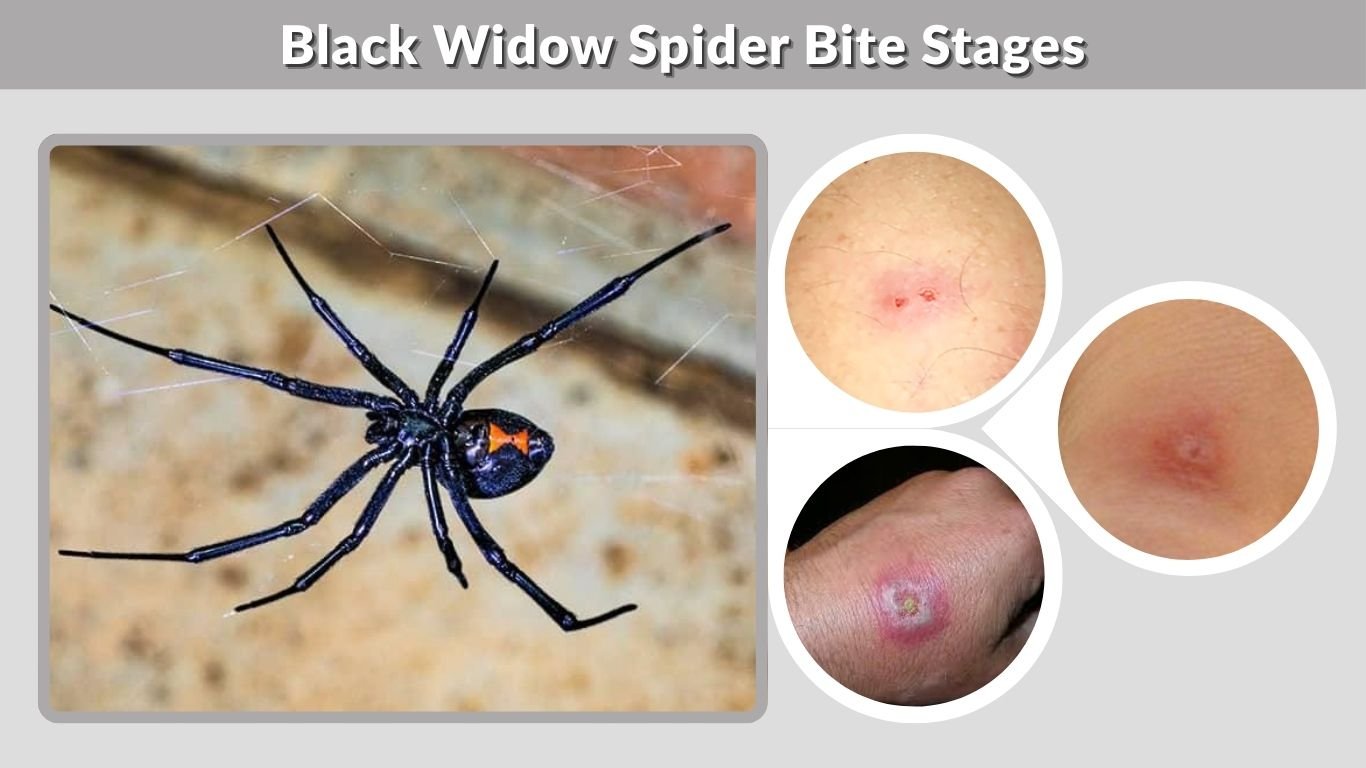
A black widow spider bite can be frightening because symptoms may change quickly. Many people search for black widow spider bite stages because they want to know what the bite looks like on day 1, day 2, and later. However, black widow bites do not always follow a simple skin-stage pattern. The most important symptoms are often pain, muscle cramps, sweating, nausea, and body-wide discomfort rather than a large open wound.
What Makes a Black Widow Bite Different?
Black widow spiders are venomous spiders known for the red hourglass marking on the underside of the female’s abdomen. Bites usually happen when the spider is accidentally pressed, trapped, or disturbed near its web. They are not aggressive spiders that go looking for people to bite.
A black widow bite is different from many ordinary insect bites because the venom affects the nervous system. The bite site may look small, but the pain and muscle symptoms can spread beyond the skin. This is why a mild-looking bite can still feel serious.
Important Safety Note
If you think you were bitten by a black widow, especially if symptoms are more than mild, contact a healthcare provider or Poison Control. Get urgent medical help if you have severe pain, stomach cramping, chest pain, trouble breathing, trouble swallowing, faintness, or symptoms in a child, older adult, pregnant person, or someone with a medical condition.
Black Widow Spider Bite Stages Timeline
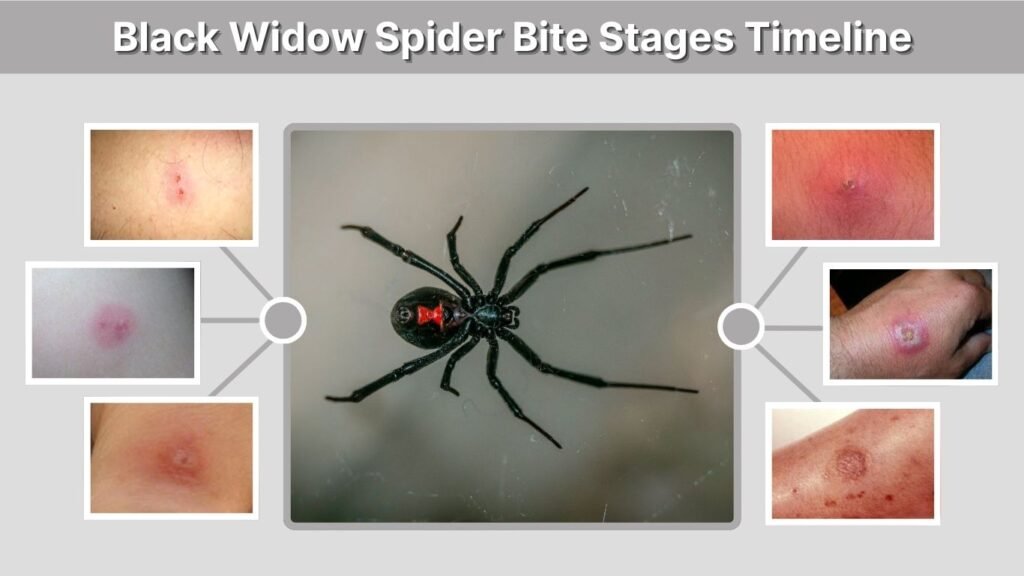
Not every bite follows the same timeline. Some bites cause only local pain. Others cause severe cramps and body-wide symptoms. The timeline below explains what may happen after a confirmed or suspected black widow bite.
Stage 1: The First Minutes After the Bite
In the first few minutes, the bite may feel like a sharp pinprick, sting, or burning sensation. Some people notice the bite right away, while others do not realize what happened until pain begins.
The skin may show:
- Mild redness
- Slight swelling
- Two tiny puncture marks
- A small raised spot
- Local tenderness
- Burning or stinging pain
The bite site may not look dramatic. This is important because people often expect a black widow bite to become large, dark, or severely swollen immediately. In many cases, the skin changes are mild compared with the pain.
Stage 2: Early Stage, 30 Minutes to 2 Hours
During the early stage, pain may increase around the bite area. Some people feel tightness, numbness, or tingling. The discomfort may begin spreading away from the bite.
Possible early symptoms include:
- Increasing local pain
- Redness around the bite
- Mild swelling
- Tingling or numbness
- Muscle tightness near the bite
- Anxiety or restlessness
This is also the time when more serious symptoms may begin after a bad bite. Severe muscle pain and cramps can start within a couple of hours. The pain may spread to the back, chest, abdomen, shoulders, or legs.
Stage 3: Systemic Symptoms, 2 to 6 Hours
This is often the most concerning stage. The bite mark itself may still look small, but the venom can cause symptoms throughout the body.
Symptoms may include:
- Severe muscle cramps
- Abdominal pain
- Back pain
- Chest tightness
- Sweating
- Nausea
- Vomiting
- Headache
- Weakness
- Restlessness
- High blood pressure in some cases
Abdominal cramps from a black widow bite can be intense and may feel similar to a serious stomach problem. Chest symptoms can also be alarming. Because these symptoms can overlap with other medical conditions, medical evaluation is important when symptoms are strong or spreading.
Stage 4: Day 1 Black Widow Spider Bite Stages
Day 1 is usually when symptoms are most noticeable. The bite site may still be small, but pain and muscle symptoms can become severe in some people.
On day 1, you may see or feel:
- A small red bump or puncture mark
- Pain near the bite
- Muscle cramps
- Stiffness
- Sweating
- Nausea
- Abdominal or back pain
- General discomfort
The bite may not look as bad as it feels. This is one reason pictures of black widow spider bites in stages can be misleading. A person may have serious symptoms even if the skin looks only mildly irritated.
Stage 5: Day 2 Black Widow Spider Bite Stages
By day 2, symptoms may begin improving in mild to moderate cases. However, some people may still have muscle soreness, weakness, cramps, or fatigue. The bite site may remain red or tender, but it usually does not develop the severe tissue damage associated with brown recluse bites.
On day 2, possible symptoms include:
- Less intense pain
- Ongoing muscle soreness
- Mild swelling or redness
- Fatigue
- Occasional cramps
- Tenderness around the bite
If symptoms are worsening on day 2, medical advice is important. Increasing redness, pus, fever, spreading warmth, or a growing wound may suggest infection or another condition rather than a typical black widow bite.
Stage 6: Recovery Stage
Recovery time varies. Some people feel better within a day or two. Others may have soreness, weakness, or discomfort for several days. Severe cases may need medical treatment for pain and muscle spasms.
During recovery, the bite area may slowly calm down. The skin may remain slightly red, itchy, or tender. Most black widow bites do not turn into large open ulcers. If a wound grows, turns black, drains pus, or becomes increasingly painful, it should be checked by a healthcare professional.
Black Widow Spider Bite Pictures in Stages
Many people search for black widow spider bite stages pictures because they want to compare their bite to images online. This can be helpful in a limited way, but it can also be misleading.
Why Pictures Can Be Misleading
A black widow bite may look like:
- A small red bump
- A tiny puncture mark
- Mild swelling
- Slight redness
- A sore insect-bite-like spot
But the symptoms may be much stronger than the appearance. Unlike brown recluse bites, black widow bites are not mainly known for skin death or large necrotic wounds. If you see dramatic blackened skin, a spreading ulcer, or a large open sore, it may be another problem and should be medically evaluated.
Pictures also cannot tell you whether venom has caused muscle cramping, blood pressure changes, or body-wide symptoms. The way you feel matters as much as, or more than, the way the bite looks.
Early Stage Black Widow Spider Bite Symptoms
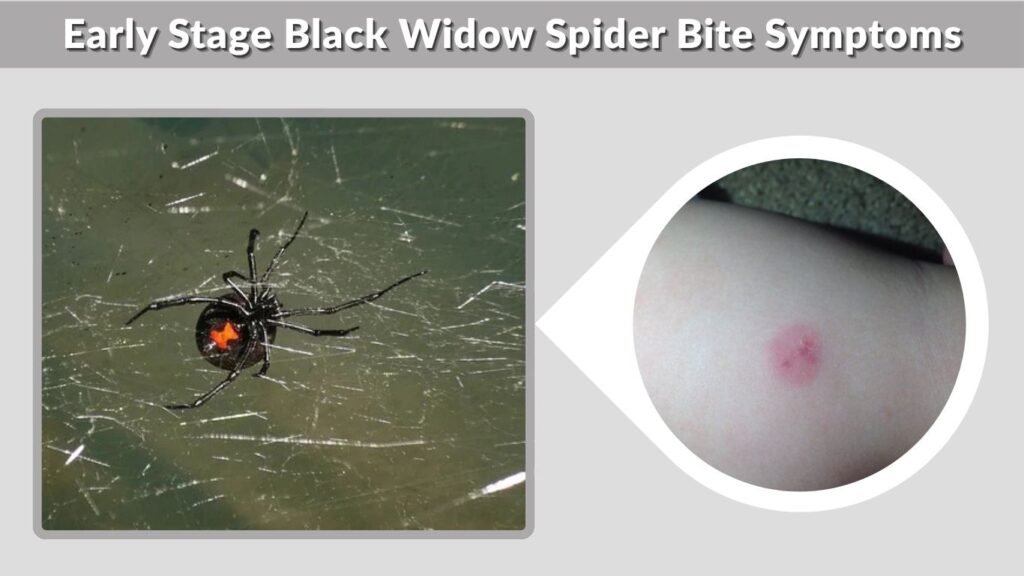
The beginning stages of a black widow spider bite may be subtle. Some people notice pain quickly, while others first see a small red mark and only later develop stronger symptoms.
Early Signs to Watch
Early symptoms may include:
- Sharp sting or pinprick feeling
- Burning pain
- Small red spot
- Mild swelling
- Tenderness
- Tingling
- Numbness
- Muscle tightness near the bite
A black widow bite can become more serious if pain spreads, cramps begin, or symptoms affect the chest, abdomen, or entire body.
Final Stage of a Black Widow Spider Bite
The final stage is usually recovery, not skin breakdown. Pain and cramps gradually ease. The person may feel tired or sore for a while, especially after a more severe reaction.
What Normal Recovery May Look Like
During recovery, you may notice:
- Reduced pain
- Less cramping
- Mild soreness
- Improved movement
- Fading redness
- Tiredness for a short time
A worsening wound is not a typical “final stage” that should be ignored. If the bite area becomes larger, infected-looking, blackened, or more painful, get medical help.
Black Widow Bite vs Other Spider Bites
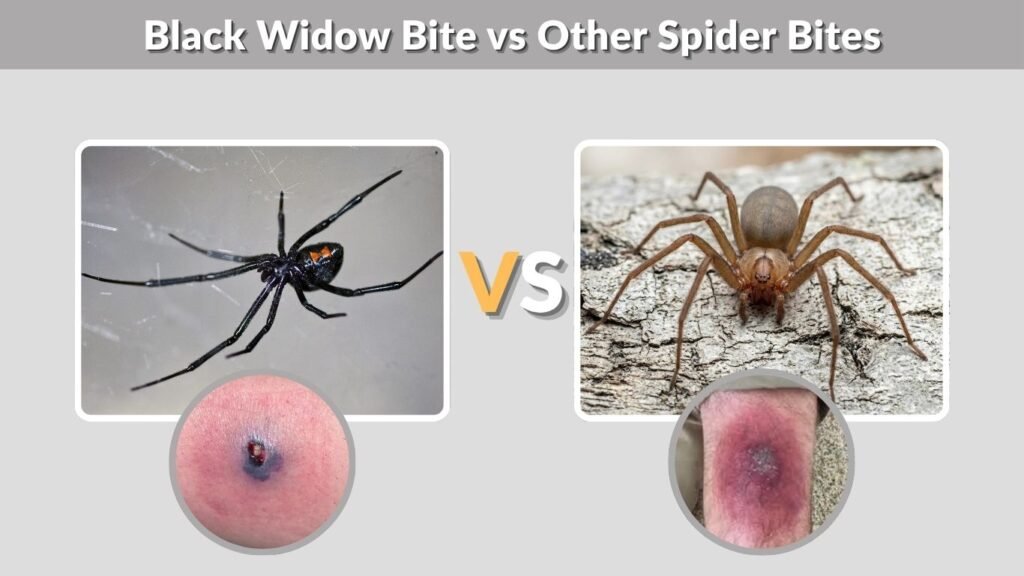
Black widow bites are often confused with other bites, stings, skin infections, and allergic reactions. Many skin bumps blamed on spiders are caused by something else.
Black Widow vs Brown Recluse Bite
A black widow bite is more associated with nerve and muscle symptoms. A brown recluse bite is more associated with local skin damage and, in some cases, tissue injury.
Black widow bite signs may include:
- Muscle cramps
- Abdominal pain
- Sweating
- Nausea
- Pain that spreads from the bite
Brown recluse bite signs may include:
- A growing painful lesion
- Blistering
- Skin discoloration
- Possible ulcer formation
- Tissue damage in some cases
Because symptoms can overlap with infections and other medical conditions, a healthcare professional should evaluate serious or worsening cases.
What to Do for a Suspected Black Widow Bite
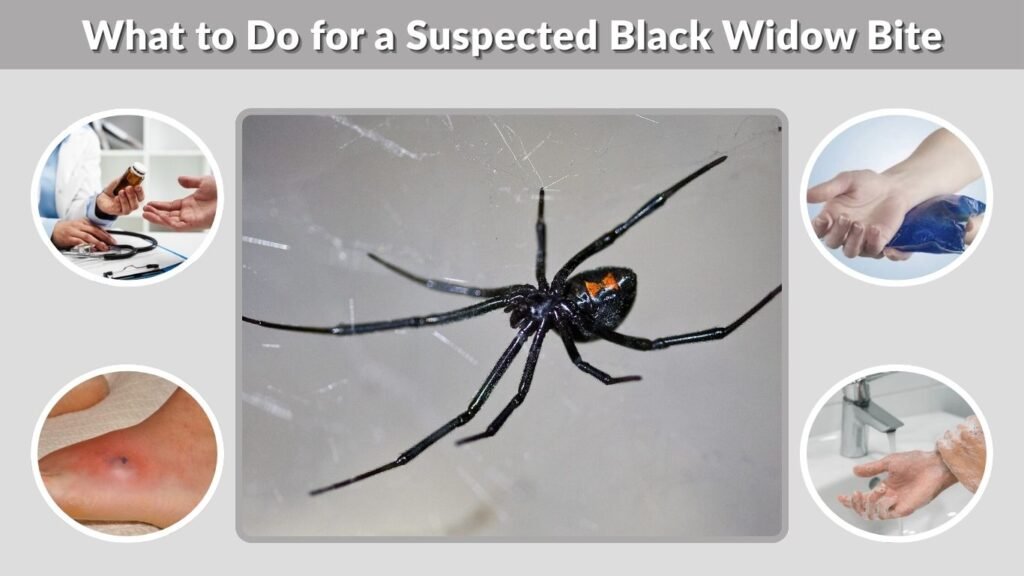
First aid can help while you seek guidance. Do not cut the bite, apply a tourniquet, or try to suck out venom.
First Aid Steps
Use these steps:
- Wash the bite with soap and water.
- Apply a cool compress or ice pack wrapped in cloth.
- Keep the bitten area still and elevated if possible.
- Remove tight jewelry or clothing near swelling.
- Take a photo of the spider only if it is safe.
- Contact Poison Control or a healthcare provider.
- Seek urgent care for severe or spreading symptoms.
If the person is a child, older adult, pregnant, or has heart disease, breathing problems, or another serious condition, be more cautious and get medical advice quickly.
When to Get Emergency Help
Seek emergency care right away if:
- You know or suspect the bite was from a black widow.
- Severe pain or stomach cramping develops.
- Pain spreads to the chest, abdomen, back, or whole body.
- The person has trouble breathing or swallowing.
- The person feels faint, confused, or very weak.
- Symptoms involve a baby, child, older adult, or pregnant person.
- The wound is growing, draining pus, or becoming severely swollen.
- You are not sure whether the bite came from a dangerous spider.
Black widow bites are rarely fatal, but they can be very painful and may require medical treatment.
How Doctors May Treat a Black Widow Bite
Treatment depends on severity. Mild cases may need wound care, ice, pain control, and observation. Moderate or severe cases may require stronger pain medicine, medicine for muscle spasms, monitoring, and rarely antivenom.
Doctors may also check for other conditions if the symptoms do not match a black widow bite. Skin infections, allergic reactions, other insect bites, and medical problems can sometimes mimic spider bites.
FAQs
What are the stages of a black widow spider bite?
The stages may include the initial sting, early local pain, spreading muscle symptoms, day 1 peak symptoms, day 2 improvement, and recovery. Not every bite follows the same timeline. Some remain mild, while others cause severe cramps, sweating, nausea, and body-wide pain.
What does a black widow bite look like in early stages?
In early stages, a black widow bite may look like a small red bump, tiny puncture mark, or mildly swollen area. The skin may not look severe. Pain, burning, tingling, or muscle tightness may be more important clues than appearance.
What happens on day 1 after a black widow bite?
Day 1 may include local pain, redness, swelling, muscle cramps, sweating, nausea, back pain, abdominal pain, or chest discomfort. Symptoms can become intense within the first few hours after a bad bite. Medical advice is recommended for severe or spreading symptoms.
Do black widow spider bites get worse on day 2?
Some bites improve by day 2, but soreness or cramps may continue. If redness spreads, pus appears, fever develops, or the wound becomes larger and more painful, seek medical care. Worsening skin damage may suggest infection or another condition.
Are black widow spider bite pictures reliable?
Pictures can help show possible bite appearances, but they are not enough to diagnose a black widow bite. Many bites look mild, while symptoms can be severe. Diagnosis depends on symptoms, exposure history, and medical evaluation, not photos alone.
