
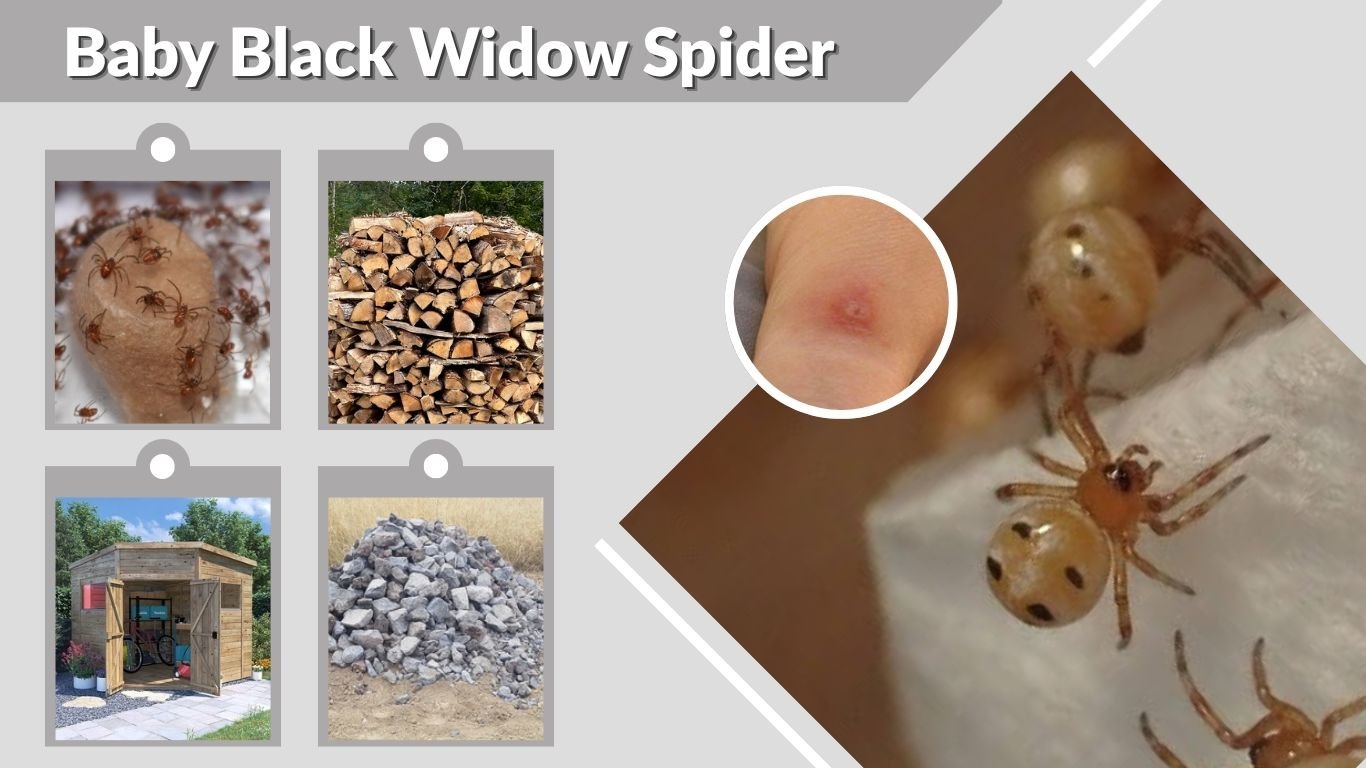
A baby black widow spider can be difficult to identify because it does not always look like the famous adult female. Adult female black widows are glossy black with a red hourglass marking, but young black widows may be pale, tan, brown, gray, or lightly patterned. This difference often causes confusion when people find tiny spiders near an egg sac, garage corner, shed, woodpile, or outdoor storage area.
What Is a Baby Black Widow Spider?
A baby black widow spider is called a spiderling. Spiderlings hatch from an egg sac and begin life as tiny immature spiders. They go through several molts before becoming adults. During each molt, the spider sheds its outer skin and grows larger.
Black widows belong to the genus Latrodectus. In North America, common widow spiders include southern black widows, northern black widows, and western black widows. Baby black widows are the young stage of these spiders, but they usually do not have the same dark, smooth, adult appearance right away.
Why Baby Black Widows Are Confusing
Many people expect a baby black widow to look like a miniature adult female. In reality, young black widows often have lighter colors, stripes, spots, or bands. Some may look brownish, whitish, orange-marked, or patterned. Because of this, they can be mistaken for harmless house spiders, false widow spiders, or young cobweb spiders.
The classic glossy black body normally becomes more obvious as females mature. Males may stay smaller, lighter, and less dramatic in appearance.
What Does a Baby Black Widow Spider Look Like?
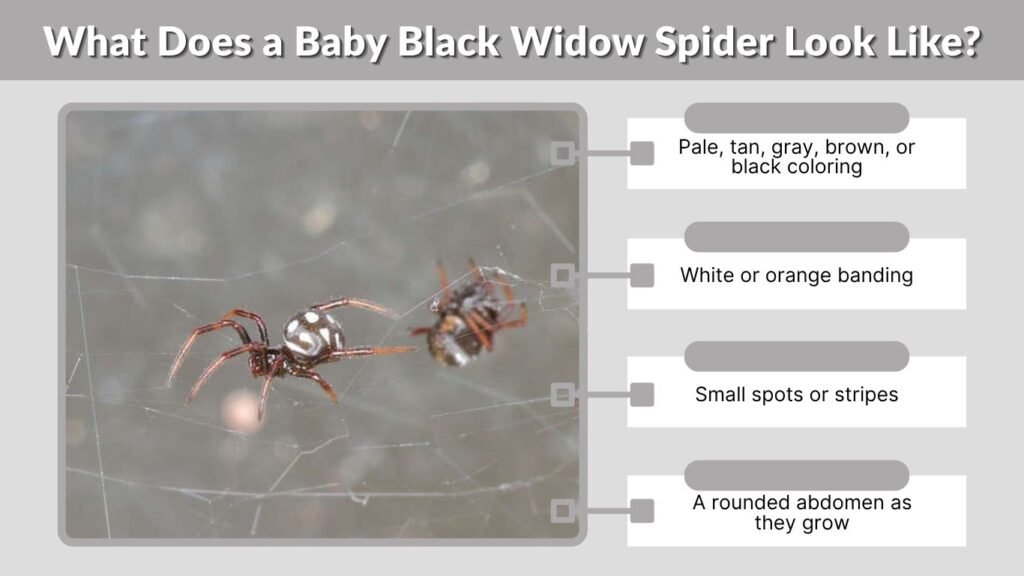
A baby black widow spider is very small and may have markings that change as it grows. Freshly hatched spiderlings are often pale and delicate. Older juveniles may develop darker bodies with white, yellow, orange, or reddish markings.
Common Appearance Features
Baby black widow spiders may have:
- Tiny bodies
- Pale, tan, gray, brown, or black coloring
- White or orange banding
- Small spots or stripes
- Thin legs
- A rounded abdomen as they grow
- Less obvious hourglass markings than adult females
A young black widow may not look dangerous at first glance. That is why location and context matter. If many tiny spiders are found near a round silk egg sac in a messy cobweb, they may be widow spiderlings or another cobweb spider species.
Do Baby Black Widows Have an Hourglass?
Some young black widows may show red, orange, or pale markings, but the hourglass may not be clear or fully developed. The red hourglass is most useful for identifying adult females. Juveniles and males can have markings that look broken, striped, spotted, or incomplete.
If you cannot see a perfect hourglass, that does not automatically mean the spider is not a black widow. On the other hand, many other spiders also have markings, so identification should not rely on color alone.
Baby Black Widow Spider Size
Baby black widow spiders are tiny when they hatch. They may be only a few millimeters long. As they grow, they become larger through repeated molts. Juveniles remain much smaller than adult females for some time.
Actual Size of a Baby Black Widow
A newly hatched black widow spiderling is very small, often difficult to notice without looking closely. Older juveniles may be easier to see, especially if they are crawling near a web, egg sac, or sheltered corner.
Body size can vary depending on age, food supply, species, and sex. Females eventually grow much larger than males. Adult females may look about 1 to 1.5 inches across with legs extended, while males remain much smaller.
Black Widow Spider Babies and Egg Sacs
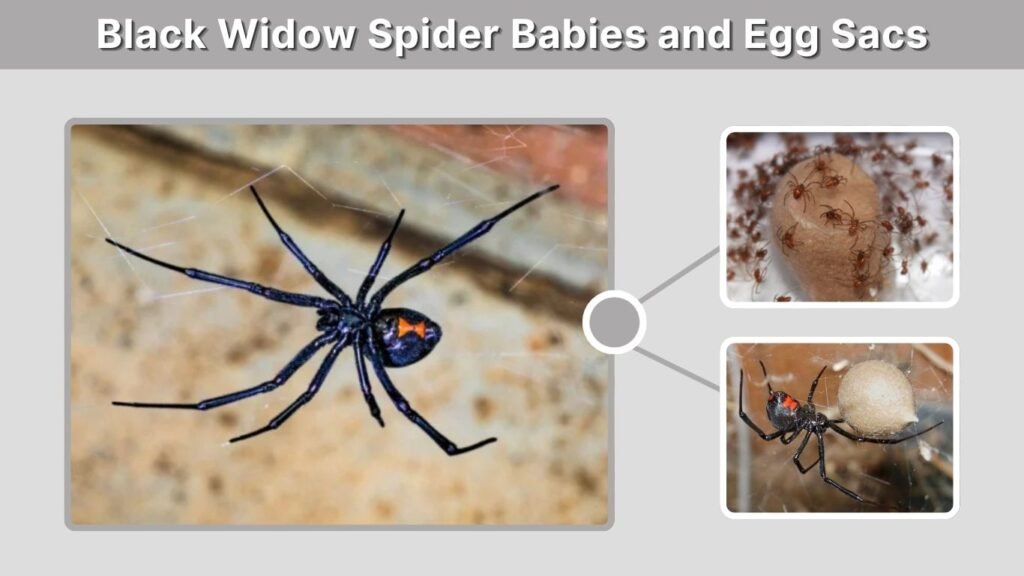
Black widow spider babies hatch from silk egg sacs. These sacs are often found in the female’s irregular web. The web is usually messy, tangled, and built in a protected place rather than shaped like a neat orb.
What Does a Black Widow Egg Sac Look Like?
A black widow egg sac is usually small, round to pear-shaped, and made of silk. It may be off-white, cream, tan, or grayish. It is often suspended in the web near the female.
Common egg sac locations include:
- Garages
- Sheds
- Woodpiles
- Crawl spaces
- Outdoor furniture
- Storage boxes
- Fence corners
- Meter boxes
- Basement corners
- Garden equipment
- Under decks or porches
A female black widow may guard her egg sac. Bites are more likely when an adult female is disturbed, especially near a web or egg sac.
How Many Babies Can a Black Widow Spider Have?
A single egg sac can contain many eggs. The exact number varies, but black widow egg sacs can produce dozens to hundreds of spiderlings. Not all spiderlings survive. Many disperse, get eaten, fail to find food, or die from environmental conditions.
When spiderlings hatch, they may remain near the sac for a short time before spreading out. Finding many tiny spiders in one area can mean an egg sac has recently hatched.
Are Baby Black Widow Spiders Poisonous?
People often ask whether baby black widow spiders are poisonous. The better word is venomous, not poisonous. A venomous animal injects venom through a bite or sting. A poisonous animal causes harm when touched or eaten.
Baby black widows are venomous in the sense that they belong to a venomous spider group. However, very young spiders are tiny, and immature spiders are much less likely to cause a medically serious bite than adult females.
Are Baby Black Widows More Venomous Than Adults?
No. The idea that baby spiders are more dangerous than adults is a common myth. Adult female black widows are the main concern because they are larger and capable of delivering a more significant bite. Immature and male black widows are much less commonly responsible for bites.
Baby black widows should still not be handled, but they are not considered more dangerous than adult females.
Baby Black Widow Spider Bite
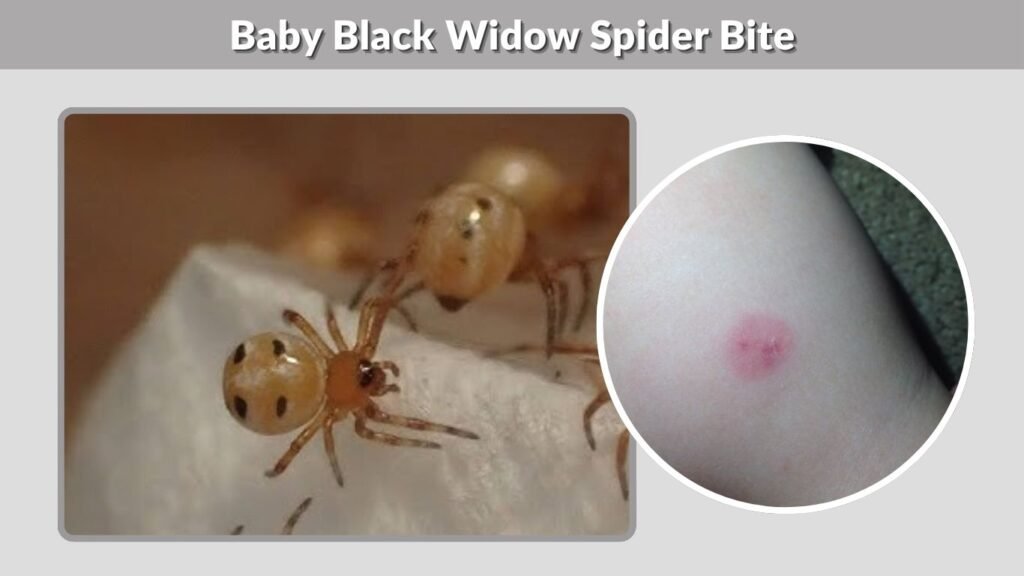
A baby black widow spider bite is unlikely compared with a bite from an adult female. Their small size makes it harder for them to bite effectively. Most medically important black widow bites involve adult females.
That said, any suspected spider bite should be watched carefully, especially in babies, young children, older adults, pregnant people, and anyone with health problems.
What Does a Black Widow Bite Feel Like?
Black widow bites can cause local pain and, in more serious cases, muscle cramps, sweating, nausea, abdominal pain, back pain, or spreading discomfort. Poison Control notes that black widow bites can be dangerous, but fatal bites are rare, and severe muscle cramps may develop after a bad bite.
Baby Black Widow Spider Bite Symptoms
Possible symptoms after a widow spider bite may include:
- Pain at the bite area
- Redness or swelling
- Two small puncture marks
- Muscle cramps
- Sweating
- Nausea
- Headache
- Abdominal or back pain
- Restlessness or weakness
The CDC notes that black widow venom is a neurotoxin and may cause pain that spreads from the bite area to the chest, abdomen, or entire body. It also notes that bites often happen when a spider is trapped or touched rather than because spiders are aggressive.
What to Do After a Suspected Bite
If you suspect a black widow bite, wash the area with soap and water, apply a cool compress, and seek medical guidance if symptoms are more than mild. Contact a poison center or healthcare provider if the bite involves a child, if severe pain develops, or if symptoms spread.
Get urgent help for severe muscle cramps, trouble breathing, chest pain, severe abdominal pain, faintness, or rapidly worsening symptoms.
Baby Black Widow Spider Facts
Baby black widows are not just smaller versions of adult females. Their color, pattern, and behavior can be different.
Quick Facts
- A baby black widow is called a spiderling.
- Spiderlings hatch from silk egg sacs.
- They may be pale, tan, brown, gray, or patterned.
- They may not have a clear red hourglass.
- They grow by molting.
- Females eventually become larger than males.
- Young spiders may disperse after hatching.
- Adult females are the main medical concern.
- They are usually found near messy cobwebs in sheltered areas.
- They should not be handled with bare hands.
Baby Male Black Widow Spider
A baby male black widow may look similar to other young black widows at first. As males mature, they stay smaller and lighter than females. Adult males are often brownish or patterned, with a slimmer body and less rounded abdomen.
Male vs Female Development
Female black widows become larger, darker, and more rounded as they mature. Males remain smaller and more delicate. This is one reason many people never notice male black widows or mistake them for another spider.
Adult female black widows are usually easier to identify because of their glossy black body and underside red hourglass. Young females may pass through several patterned stages before they look like the classic adult.
Baby False Black Widow Spider
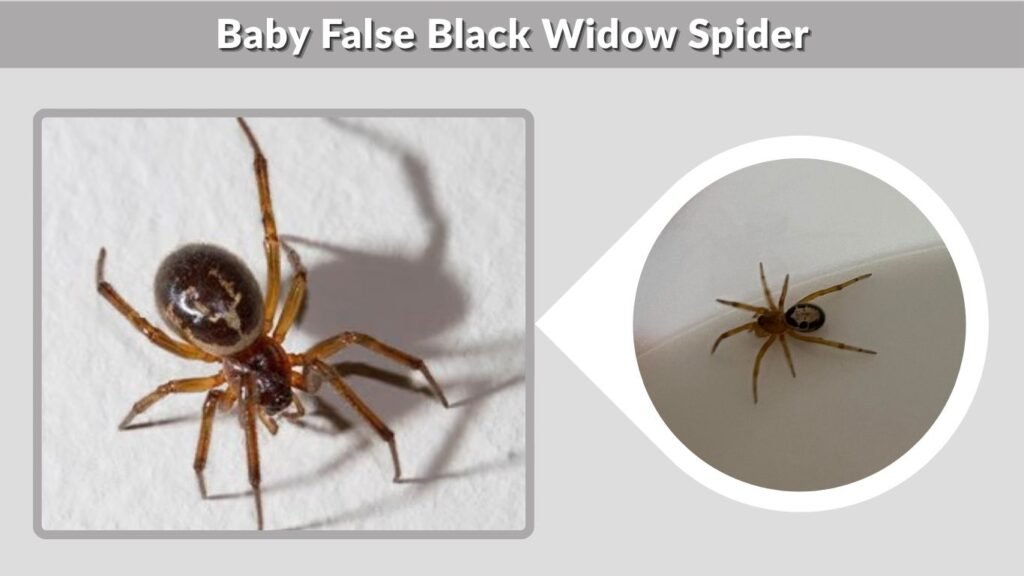
A baby false black widow spider can look similar to a young true black widow. False widows are usually spiders in the genus Steatoda. They are cobweb spiders and may have round bodies, dark colors, and messy webs.
Baby Black Widow vs Baby False Widow
It can be difficult to separate baby black widows from baby false widows without close inspection. Both may be small, patterned, and found in sheltered areas.
A true black widow is more likely if:
- Adult glossy black females are nearby
- Egg sacs are found in a strong messy web
- The spider has widow-like body shape
- Red or orange markings appear as it matures
- You are in an area where black widows are common
A false widow is more likely if the spider is brownish, purplish, or mottled without the classic adult female black widow appearance. When unsure, avoid handling and use professional identification.
Where Baby Black Widow Spiders Are Found
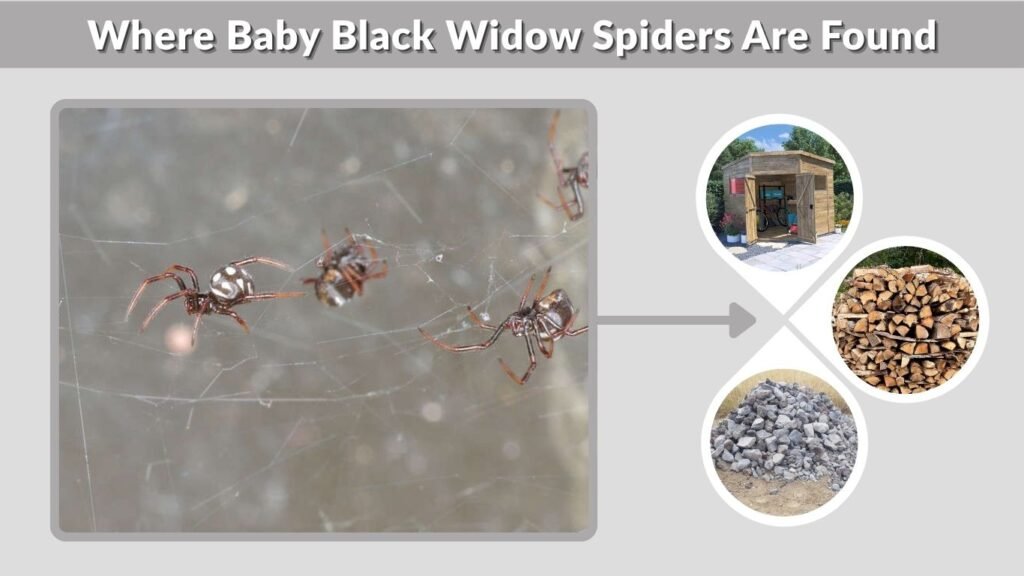
Baby black widows are usually found near the places where adult females build webs. They prefer dark, quiet, protected areas with insects for food.
Common Hiding Places
Look carefully in:
- Corners of garages and sheds
- Woodpiles and firewood stacks
- Outdoor storage bins
- Under patio furniture
- Crawl spaces
- Basements
- Rock piles
- Garden pots
- Fence posts
- Utility boxes
- Cluttered storage areas
They are not usually found running across open floors like some hunting spiders. Black widows are web-building spiders, so look near tangled, irregular webs.
What to Do If You Find Baby Black Widow Spiders
If you find what may be baby black widows, do not crush them with bare hands or try to pick them up. Treat the area carefully, especially if you see an adult female or egg sacs nearby.
Safe Removal Tips
Use these steps:
- Wear gloves when cleaning the area.
- Keep children and pets away.
- Vacuum spiderlings, webs, and egg sacs if safe to do so.
- Empty the vacuum outside into a sealed bag.
- Remove clutter where spiders hide.
- Seal cracks and gaps around doors and foundations.
- Shake out gloves, shoes, and stored clothing before use.
- Contact pest control if you find many spiders or adult females.
If you live in an area where black widows are common, regular cleaning and clutter reduction can lower the chance of webs forming near people.
How to Prevent Black Widow Spider Babies
Prevention focuses on removing hiding places and egg sacs before spiderlings hatch. Black widows prefer undisturbed spaces, so regular cleaning makes your home and yard less attractive.
Prevention Checklist
- Keep garages and sheds organized.
- Store firewood away from the house.
- Wear gloves when moving outdoor items.
- Remove old webs from corners and storage areas.
- Seal gaps around doors, windows, and foundations.
- Keep outdoor lights from attracting too many insects.
- Inspect patio furniture before use.
- Check rarely used shoes, gloves, and boots.
- Avoid leaving boxes directly on garage floors.
The goal is to make sheltered areas less stable for adult females. Fewer adult females means fewer egg sacs and fewer baby spiders.
FAQs
What is a baby black widow spider called?
A baby black widow spider is called a spiderling. Spiderlings hatch from egg sacs and grow through several molts. They are tiny at first and may look pale, tan, brown, gray, or patterned instead of glossy black like adult females.
What does a baby black widow spider look like?
A baby black widow spider may have a pale or brownish body with white, orange, yellow, or reddish markings. It may not have a clear red hourglass. Young black widows can look very different from adult females, making identification difficult.
Are baby black widow spiders poisonous?
Baby black widows are venomous, not poisonous, but they are not considered more dangerous than adult females. Adult females are the main concern because they are larger and can deliver a more significant bite. Baby black widows should still not be handled.
Can a baby black widow spider bite you?
A baby black widow may be capable of biting, but serious bites from immature spiders are uncommon. Most medically important black widow bites involve adult females. If a child or adult develops severe pain, muscle cramps, sweating, or spreading symptoms, seek medical advice.
How many babies does a black widow spider have?
A black widow egg sac can contain dozens to hundreds of eggs, though not all spiderlings survive. The young may stay near the egg sac briefly after hatching and then disperse. Finding many tiny spiders may mean an egg sac recently hatched.
