

A black widow spider egg sac can be a serious warning sign around your home, garage, shed, crawl space, or outdoor storage area. These sacs may contain many spiderlings, and the female black widow may be hiding nearby. If you find a suspicious round, tan, white, or gray sac in a messy web, do not touch it with bare hands. Safe identification and careful removal are the best ways to reduce the risk of more spiders hatching nearby.
What Is a Black Widow Spider Egg Sac?
A black widow spider egg sac is a protective silk case made by a female black widow to hold her eggs. Instead of laying exposed eggs, the spider wraps them inside a firm sac and attaches it to her web. The sac protects the eggs until the spiderlings hatch and begin to disperse.
Black widow egg sacs are usually found close to the female’s hiding place. The web may look messy, tangled, and irregular rather than neat or circular. This is different from the classic round web many people imagine when they think of spiders.
Why Egg Sacs Matter
Finding one black widow spider egg sac can mean there is an adult female black widow nearby. It can also mean more spiderlings may hatch if the sac is left alone. For homeowners, this is especially concerning in areas where children, pets, or people frequently reach into dark storage spaces.
A single egg sac does not always mean a large infestation, but it should be handled seriously. If you find several sacs in one area, the problem may be more established and professional pest control may be the safest option.
What Do Black Widow Spider Egg Sacs Look Like?
Black widow spider egg sacs are usually small, round or pear-shaped, and made of silk. Their color can range from white or cream to tan, beige, gray, or light brown. Some sacs look smooth and papery, while others may appear slightly cottony or textured.
They are often about the size of a small marble, though size can vary. The sac may be suspended in a tangled web or tucked into a protected corner. If the female spider is nearby, she may stay hidden in a crack, crevice, or cluttered area.
Common Appearance Features
A black widow spider egg sac may have these features:
- Round, oval, or slightly pear-shaped form
- White, cream, tan, gray, or light brown color
- Papery, silky, or cottony surface
- Small marble-like size
- Attached inside an irregular, messy web
- Found in dark, quiet, low-traffic areas
- Sometimes located near an adult black widow
The egg sac alone can be hard to identify with certainty. The surrounding web, location, and presence of a black widow spider can help confirm the identification.
Black Widow Spider Egg Sac Identification
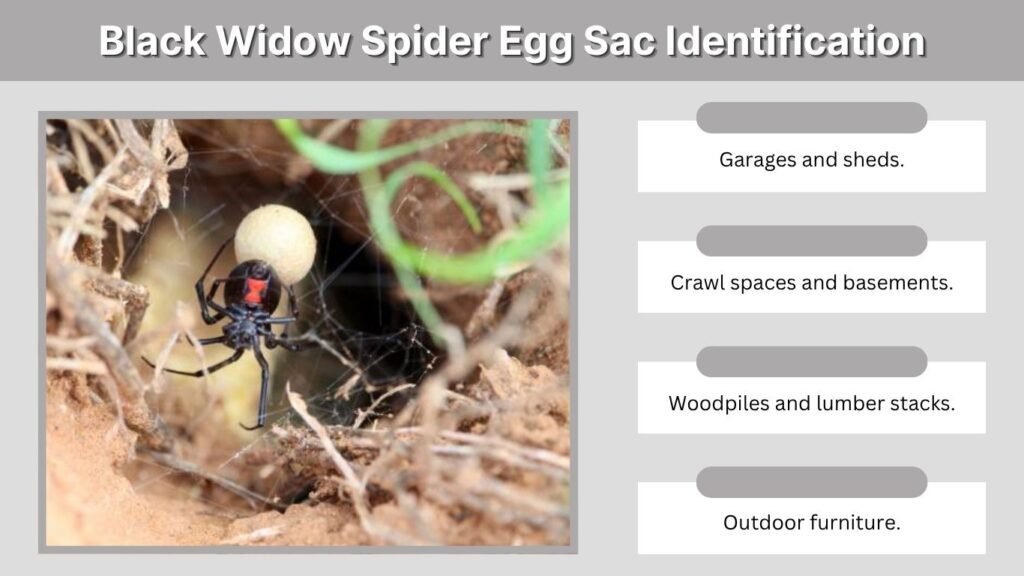
To identify a black widow spider egg sac, look at three things: appearance, location, and nearby spider activity. A sac in a messy web inside a garage corner, crawl space, shed, woodpile, or under outdoor furniture may be more suspicious than a random sac in an open area.
Adult female black widows are usually shiny black with a red hourglass marking on the underside of the abdomen. However, you should not pick up or flip over a spider to check. A photo from a safe distance is better.
| Feature | Black Widow Egg Sac | Other Spider Egg Sacs |
| Shape | Round, oval, or pear-shaped | Varies by species |
| Color | White, tan, cream, gray, or light brown | White, brown, greenish, or gray |
| Texture | Silky, papery, or cottony | Smooth, fluffy, spiky, or loose |
| Web style | Messy and irregular | May be neat, loose, or hidden |
| Common location | Dark, undisturbed areas | Many indoor or outdoor places |
| Risk level | Higher if female is nearby | Usually lower, depending on species |
Where Black Widows Place Egg Sacs
Black widows prefer places where they are unlikely to be disturbed. They often hide close to the ground or in protected corners. Their webs may be difficult to see until you shine a light into the area.
Common locations include:
- Garages and sheds
- Crawl spaces and basements
- Woodpiles and lumber stacks
- Outdoor furniture
- Storage boxes and clutter
- Utility rooms
- Fence corners and meter boxes
- Under decks or porches
- Window wells
- Dark corners near foundations
Be careful when moving old boxes, tools, firewood, or stored items. These are common places where black widows and their egg sacs may be hidden.
Black Widow Spider With Egg Sac
If you see a black widow spider with an egg sac, do not disturb it with your hands. Female black widows are usually not aggressive, but they may bite if they are trapped, squeezed, or threatened. A female guarding an egg sac may stay close to the web.
If the sac is in a living area, play area, garage, or another place people use often, removal is usually recommended. If it is outside in a remote area where people and pets do not go, you may still want to monitor it or call a professional if you are unsure.
What to Do Before Removal
Before you remove a suspected egg sac, prepare carefully:
- Wear thick gloves, long sleeves, pants, and closed shoes
- Use a flashlight to check for the adult spider
- Keep children and pets away from the area
- Avoid crushing the sac with bare hands
- Use a vacuum hose or long-handled tool when possible
- Have a sealed bag ready for disposal
If you are uncomfortable or see several spiders or egg sacs, call a pest control professional.
How to Get Rid of Black Widow Spider Egg Sacs
The safest way to get rid of black widow spider egg sacs is to remove them without direct contact. A vacuum with a hose attachment is often useful because it lets you keep distance from the sac and web. After vacuuming, the contents should be sealed and disposed of outside.
For outdoor areas, a long-handled brush, web removal tool, or vacuum may help. Be careful not to knock the sac onto your body or into a cluttered area where it is harder to find.
Step-by-Step Egg Sac Removal
Follow this process:
- Put on protective clothing and gloves.
- Keep children and pets away from the area.
- Use a flashlight to inspect the web and surrounding cracks.
- Vacuum the egg sac, web, and visible spider if safe to do so.
- Immediately empty the vacuum contents into a sealed plastic bag.
- Place the sealed bag in an outdoor trash bin.
- Clean the area and remove clutter where spiders can hide.
- Monitor the spot for new webs or egg sacs.
Do not leave the vacuum bag or canister sitting indoors after removal. If spiderlings hatch or survive, they may escape.
How to Kill Black Widow Spider Egg Sacs
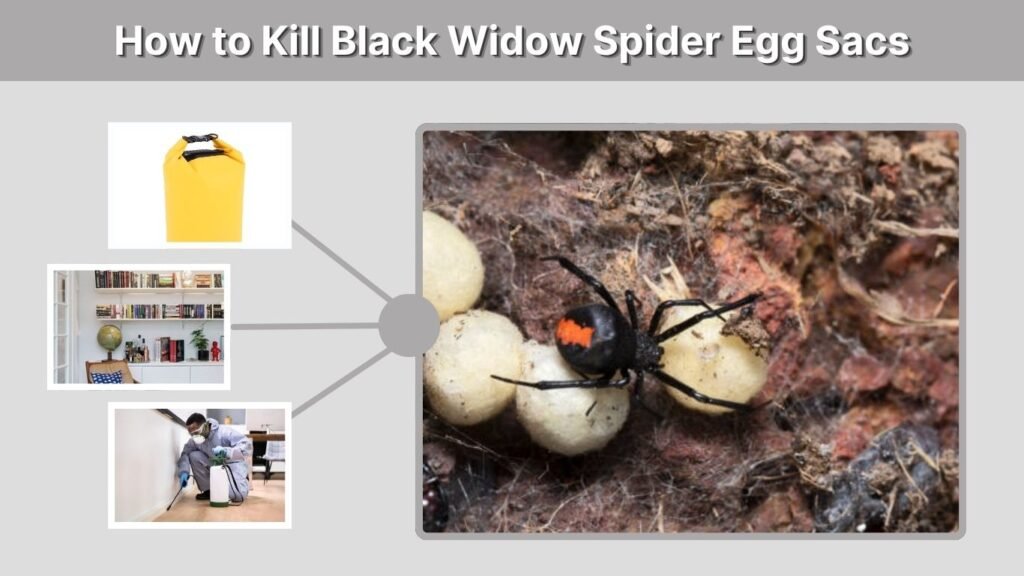
Many people search for how to kill a black widow spider egg sac because they want to make sure spiderlings do not hatch. Physical removal and sealed disposal are usually more reliable than simply spraying the sac. The silk covering can protect the eggs from some surface treatments.
Crushing the sac is risky because it puts your hand close to the spider’s web and may release contents. If you must destroy the sac, do it from a distance with proper protection, then seal and discard the material.
Best Practical Methods
Common options include:
- Vacuuming the sac and disposing of the contents outside
- Removing the sac with a long-handled tool and sealing it in a bag
- Calling a pest control professional for multiple sacs
- Treating surrounding cracks and hiding areas after removal
- Reducing clutter so new webs are easier to spot
Sprays may kill exposed spiders, but they may not fully penetrate an egg sac. If you use any pesticide, follow the product label exactly and avoid applying it where children, pets, food, or water may be exposed.
Black Widow Spider Egg Sac Hatching
Black widow spider egg sacs hatch after the eggs develop inside the silk case. The exact timing depends on temperature, humidity, season, and species. Warmer conditions may speed development, while cooler conditions may slow it down.
After hatching, spiderlings may remain in or near the sac for a short time before dispersing. This is why early removal is important. If the sac opens and spiderlings spread, the problem becomes harder to control.
Signs an Egg Sac May Have Hatched
A hatched or old egg sac may look torn, collapsed, empty, or damaged. You may also notice tiny spiderlings around the web or nearby corners. However, it can be hard to tell whether a sac is active just by looking.
If you find an old sac, still remove it carefully. Then inspect the surrounding area for more sacs, webs, and adult spiders.
False Black Widow Spider Egg Sac
False widow spiders can also make egg sacs, and their sacs may look similar to black widow egg sacs. This makes identification difficult for homeowners. False widows are related but are generally considered less dangerous than true black widows, though their bites can still be painful.
A false black widow egg sac may appear light-colored, round, or silky and may also be placed in a messy web. The spider itself may look brown, dark brown, or purplish rather than glossy black with a clear red hourglass.
When Identification Is Unclear
If you cannot tell whether the sac belongs to a black widow, false widow, or another spider, treat it with caution. Avoid direct contact and remove it safely. If you see a shiny black spider with a red marking or find multiple suspicious sacs, contact a professional.
Black Widow Egg Sac vs Other Spider Egg Sacs

Many spider egg sacs look similar. Some are round and smooth, while others are fluffy, spiky, or hidden inside leaves or webs. Wolf spiders carry their egg sacs with them, while house spiders may place sacs in corners or webs.
The location matters. A round sac in a tangled web in a dark garage corner is more concerning than an egg sac found outdoors in a garden web away from people. Still, visual identification is not always perfect.
Common Lookalikes
Black widow egg sacs may be confused with:
- False widow spider egg sacs
- Common house spider egg sacs
- Cellar spider egg sacs
- Wolf spider egg sacs
- Brown widow egg sacs
- Small insect cocoons
- Dust balls or debris caught in webs
Brown widow egg sacs may have a more spiky or tufted appearance, while black widow egg sacs are often smoother or papery. However, there can be variation, so use caution with any unknown sac in a widow-like web.
Are Black Widow Egg Sacs Dangerous?
The egg sac itself does not bite, but it can indicate risk. The adult female black widow may be close by, and the sac may eventually release many spiderlings. The main danger comes from accidental contact with the adult spider during cleaning, reaching, or moving stored items.
Black widow bites can cause pain and other symptoms, so avoiding contact is important. Anyone bitten by a suspected black widow should seek medical advice, especially if symptoms include severe pain, muscle cramps, sweating, nausea, abdominal pain, chest discomfort, or trouble breathing.
How to Prevent Black Widow Egg Sacs

Prevention focuses on making your home and yard less attractive to black widows. These spiders like quiet, cluttered, sheltered places where insects are available as food. Removing hiding places and reducing insect activity can help.
Prevention Checklist
Use these steps to lower the risk:
- Clear clutter from garages, sheds, and storage areas
- Store boxes off the floor when possible
- Wear gloves when moving firewood or outdoor items
- Keep firewood away from the house
- Seal gaps around doors, foundations, and utility lines
- Sweep or vacuum webs regularly
- Reduce outdoor lighting that attracts insects
- Keep outdoor furniture clean and inspected
- Trim vegetation away from walls and foundations
- Check shoes, gloves, and stored clothing before use
Regular inspection is especially helpful in warm months or in areas where black widows are common.
When to Call a Professional
You should consider professional pest control if you find multiple black widow spider egg sacs, see adult black widows regularly, or find sacs in hard-to-reach places such as crawl spaces, wall voids, garages, or cluttered sheds. Professional help is also smart if children, elderly family members, pets, or anyone with health concerns uses the area.
A professional can inspect hiding spots, remove webs and sacs safely, apply targeted treatments, and recommend prevention steps. This is often safer than repeated DIY spraying or reaching into unknown spaces.
FAQs
What does a black widow spider egg sac look like?
A black widow spider egg sac is usually small, round or pear-shaped, and white, cream, tan, gray, or light brown. It often has a silky, papery, or slightly cottony texture and is commonly found in a messy web in dark, undisturbed areas.
How many eggs are in a black widow spider egg sac?
A black widow egg sac can contain many eggs, sometimes dozens to hundreds depending on the species and conditions. Not all spiderlings survive, but one sac can still lead to many young spiders if it hatches undisturbed.
Should I remove a black widow spider egg sac?
Yes, removal is usually recommended if the sac is near your home, garage, shed, play area, or anywhere people and pets may come into contact with it. Use gloves, avoid direct contact, and consider a vacuum or professional removal.
Can I spray a black widow egg sac?
Spray may not fully penetrate the protective silk of an egg sac. Physical removal and sealed disposal are usually more reliable. If you use pesticide, follow the label carefully and treat surrounding hiding spots rather than relying only on spraying the sac.
What should I do if the egg sac has already hatched?
Vacuum the area carefully, remove webs, seal and discard the vacuum contents outside, and inspect nearby cracks, corners, and clutter. If you see many spiderlings or adult black widows, contact a pest control professional for safer treatment.
