

Dung beetles are nature’s tireless recyclers, famous for rolling balls of dung across the ground with astonishing strength and precision. To most people, this behavior might seem odd, but for dung beetles, it’s a critical survival strategy. From food storage and reproduction to soil enrichment, rolling dung serves multiple purposes that sustain both the beetle and the environment. Let’s explore why these remarkable insects roll dung and how this activity benefits the planet.
Understanding Dung Rolling Behavior
What Is Dung Rolling?
Dung rolling is a specialized behavior where beetles shape a portion of animal feces into a spherical ball and push it away from the main pile. This rolling process allows beetles to transport their food or breeding material to a safer, private spot, free from the chaos of competing insects.
The Origins of the Behavior
Scientists believe dung rolling evolved as an adaptive strategy to avoid competition. Large dung piles attract numerous insects, so beetles that learned to roll and relocate their portion had a survival advantage. Over time, this behavior became instinctive, allowing beetles to claim their share of food or nesting material without interference.
Reasons Dung Beetles Roll Dung
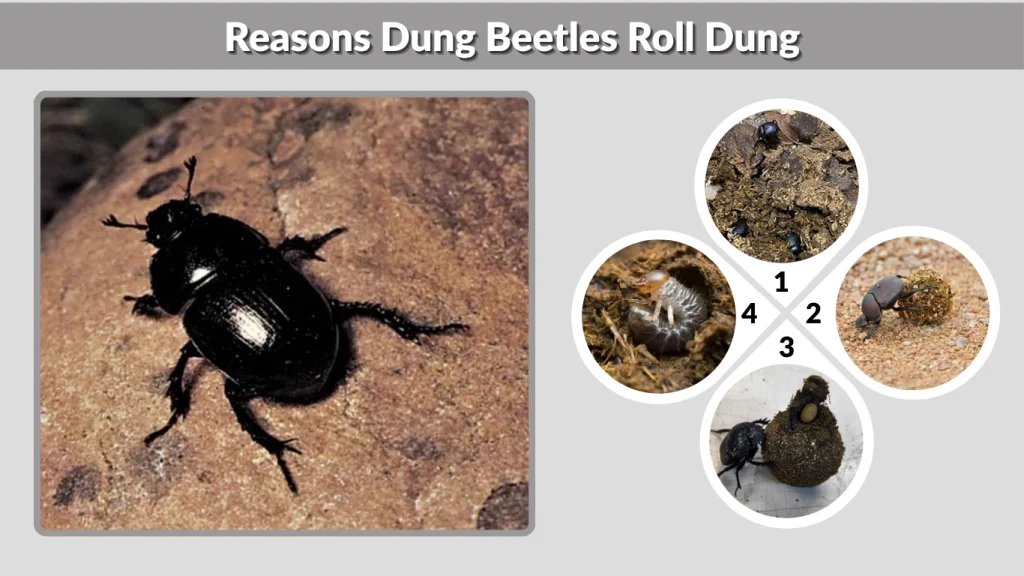
Food Storage and Consumption
One of the primary reasons dung beetles roll dung is to store food. Once they’ve formed a perfect ball, they roll it away and bury it underground. This protects the dung from rivals and harsh weather. Later, the beetle feeds on the stored ball, extracting nutrients from decaying organic matter, bacteria, and plant remnants. This efficient system ensures a steady food supply even when fresh dung is scarce.
Reproduction and Nesting
Dung rolling also plays a vital role in reproduction. Female beetles lay their eggs inside dung balls, which are then buried underground. The larvae feed exclusively on this nutrient-rich dung until they mature into adults. This buried environment shields them from predators and keeps them moist, providing the perfect nursery.
Competition Avoidance
In the wild, competition for fresh dung can be fierce. By rolling a dung ball away, a beetle reduces the risk of confrontation with other beetles. This strategy ensures that each individual secures enough food or nesting material without constant battles.
Temperature and Moisture Control
Burying dung balls underground isn’t just about hiding them—it’s also about regulating conditions. Underground chambers maintain steady temperatures and humidity, protecting both food and offspring from drying out or overheating. This natural insulation is essential for species living in hot, arid environments.
How Dung Beetles Roll Dung
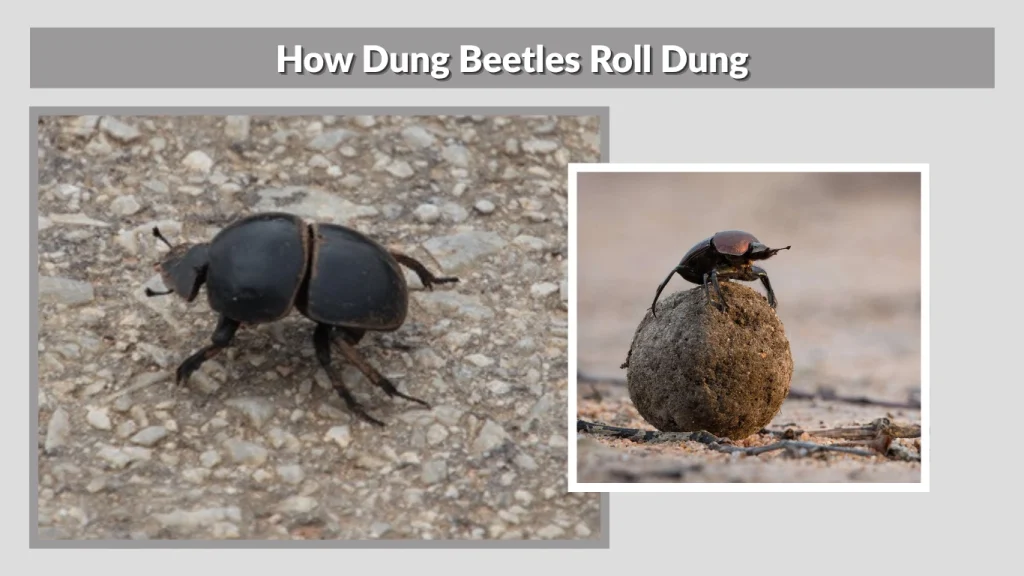
Using Their Strength
Dung beetles are among the strongest insects on Earth, capable of moving loads over 200 times their body weight. They use their powerful hind legs to push dung balls backward while navigating obstacles. This strength not only showcases their physical endurance but also helps them secure their resource quickly before others can steal it.
Navigation Techniques
Rolling dung in a straight line might seem simple, but it’s actually a display of remarkable navigation skills. Research reveals that some species use the Milky Way and moonlight to orient themselves. By maintaining a straight path, beetles ensure they reach their destination efficiently without circling back to crowded dung piles.
Pair Work and Team Effort
In many dung beetle species, the rolling process is a joint effort. The male often shapes and rolls the ball, while the female follows closely behind. Once they find a suitable burial site, the female prepares the nesting chamber. This teamwork strengthens pair bonds and increases reproductive success.
Ecological Benefits of Dung Rolling
Beyond survival, dung rolling has profound environmental effects. Each ball rolled and buried helps fertilize and aerate the soil. The process promotes nutrient cycling, reduces waste buildup, and limits disease spread among animals. In agricultural areas, dung beetles are considered natural allies of farmers, as they keep pastures clean and improve crop productivity through soil enrichment.
Ecological Benefits of Dung Rolling (continued)

Soil Aeration and Fertilization
Every time dung beetles roll and bury dung, they naturally till the soil. This underground activity loosens compacted earth, allowing oxygen, moisture, and nutrients to circulate more freely. As the buried dung decomposes, it releases nitrogen, phosphorus, and other minerals essential for plant growth. In agricultural systems, this natural fertilization process improves soil fertility without the need for chemical additives.
Waste Reduction and Pest Control
Dung beetles play a crucial role in keeping ecosystems clean. By quickly removing animal feces from the surface, they prevent the spread of parasites and diseases that attract flies and other pests. This behavior is particularly beneficial in livestock areas, where dung beetles can significantly reduce fly populations and improve animal health. Farmers often view them as silent workers that maintain environmental hygiene.
Carbon and Nitrogen Recycling
Dung decomposition contributes to nutrient recycling, but if left on the surface, it can also release methane and nitrous oxide—two potent greenhouse gases. By burying dung underground, beetles help trap these gases and slow their release into the atmosphere. This small-scale action, multiplied across millions of beetles, has a measurable impact on carbon and nitrogen cycles, supporting climate balance.
Interesting Facts About Dung Rolling
- Exceptional Strength: Some dung beetles can move dung balls more than 50 times their own weight, making them among the strongest animals relative to size.
- Strategic Cooling: During hot conditions, beetles often climb onto their dung balls to cool down, using the moist surface to regulate body temperature.
- Dung Theft: “Ball thieves” are a common sight—rival beetles that try to steal dung balls from hardworking rollers.
- Species Diversity: There are over 6,000 species of dung beetles worldwide, each with unique rolling techniques and dung preferences.
- Selective Taste: They usually prefer fresh herbivore dung, as it’s softer and easier to shape than that of carnivores.
Cultural and Scientific Significance
Symbolism in Ancient Egypt
The ancient Egyptians revered dung beetles, or scarabs, as sacred symbols of rebirth and cosmic order. They associated the beetle’s rolling of dung with the movement of the sun across the sky. Just as a beetle rolls its dung ball to nourish life, the sun god Ra was believed to roll the sun through the heavens each day, representing renewal and eternity.
Modern Scientific Applications
Modern researchers study dung beetles for inspiration in robotics and navigation. Their ability to orient themselves using celestial cues—like stars and moonlight—has influenced the design of autonomous robots capable of navigating complex terrains without GPS. This natural engineering marvel continues to inspire advancements in technology, especially in space exploration and environmental monitoring.
FAQs
Why do dung beetles roll balls of dung?
Dung beetles roll dung balls to transport food or create safe nesting sites. Rolling allows them to move their portion away from competitors and ensures a secure supply of nutrients or a protected place for egg-laying.
How do dung beetles decide which way to roll?
They use natural navigation cues such as sunlight, moonlight, and even the Milky Way. This celestial guidance helps them move efficiently in straight lines, minimizing the risk of losing their dung to rival beetles.
Do all dung beetles roll dung?
No, not all species roll dung. There are three main types: rollers, which transport dung; tunnelers, which bury dung beneath the pile; and dwellers, which live inside and consume dung without moving it.
What happens to the dung balls after they’re buried?
Buried dung balls serve multiple purposes. Some become food stores for adult beetles, while others house eggs. Once larvae hatch, they consume the dung until they mature, leaving behind nutrient-rich soil in the process.
Why is dung rolling important for the environment?
Dung rolling enhances soil fertility, reduces surface waste, prevents pest infestations, and supports plant growth. By burying dung, beetles recycle nutrients, protect ecosystems, and even help reduce greenhouse gas emissions—making them essential contributors to ecological balance.
