
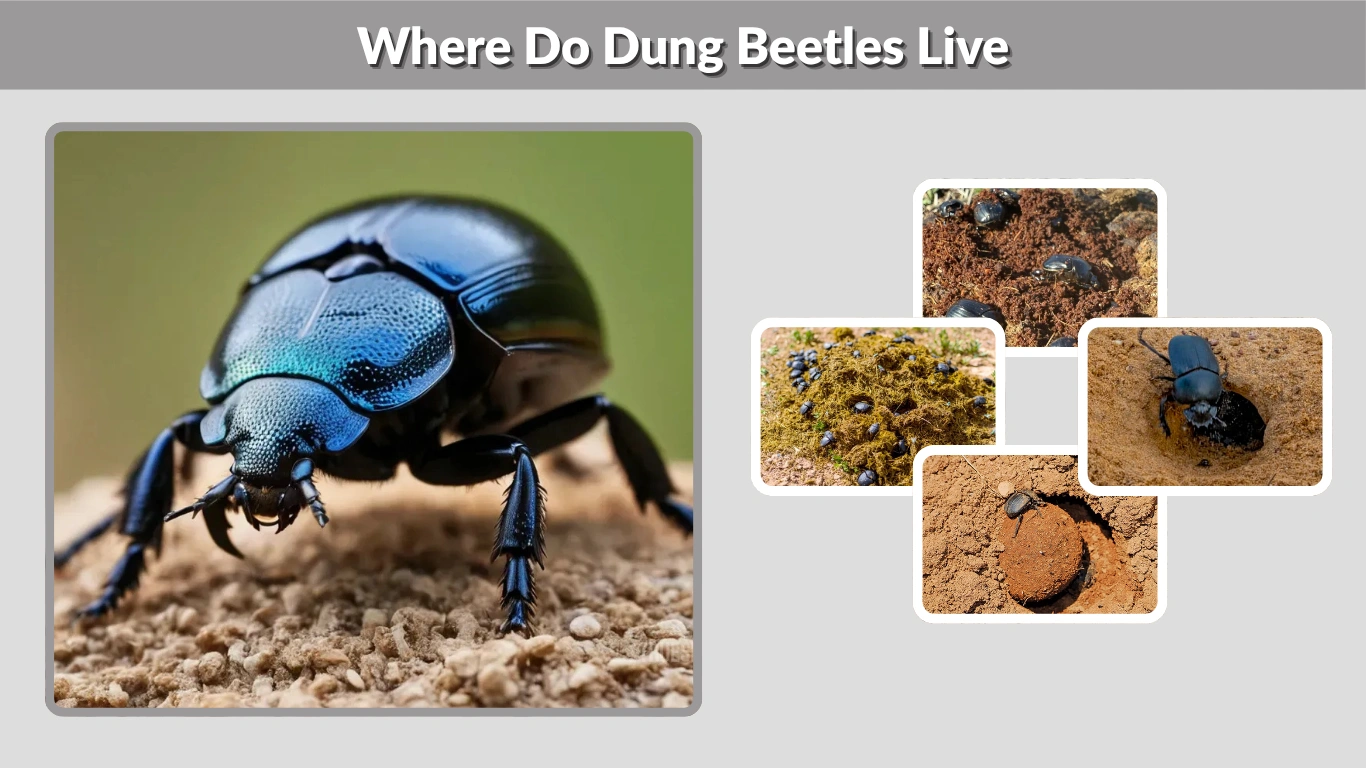
Dung beetles are one of the most adaptable insects on Earth, found in almost every type of environment where animals exist. From lush African savannas to arid deserts and temperate forests, they thrive wherever dung is available. Their ability to survive in diverse climates makes them a vital part of global ecosystems. In this article, we’ll explore where dung beetles live, how they adapt to different regions, and why their underground lifestyle is so essential to nature’s balance.
Global Distribution of Dung Beetles
Where Dung Beetles Live in the World
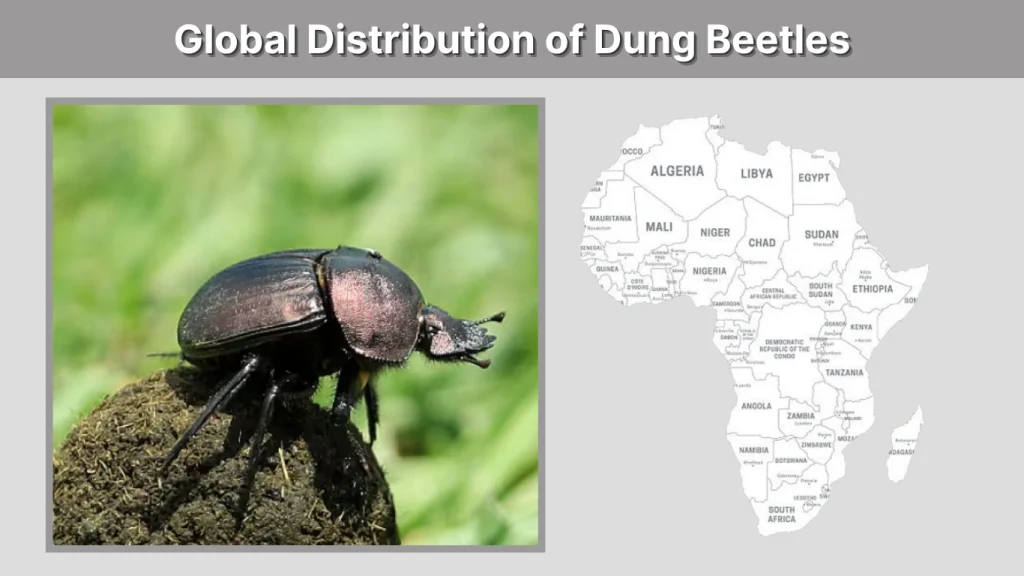
Dung beetles live on every continent except Antarctica. They are especially abundant in tropical and subtropical regions, where warmth and animal activity create perfect conditions. Africa hosts the greatest diversity, while South America, Asia, and Australia also support vast populations. These beetles thrive wherever herbivores—such as cows, elephants, and deer—produce dung in abundance.
Country and Regional Presence
- Africa: Home to the largest and most diverse dung beetle population, especially across savannas and grasslands.
- South America: Found throughout the Amazon Basin, feeding on dung from tapirs, monkeys, and livestock.
- Asia: Abundant in tropical forests and agricultural areas where cattle and buffalo roam.
- Europe: Common in meadows, farms, and Mediterranean woodlands.
- Australia: Introduced dung beetle species have been crucial for managing livestock waste and improving soil fertility.
Where Dung Beetles Live in the US
In the United States, dung beetles are widespread across southern states, the Midwest, and parts of the West Coast. They thrive in farmlands, grasslands, and forest edges where they find cattle, horses, and deer droppings. States like Texas, Florida, and California are particularly rich in dung beetle populations due to their warm climates and agricultural activity.
Habitat Preferences of Dung Beetles
Open Grasslands and Savannas
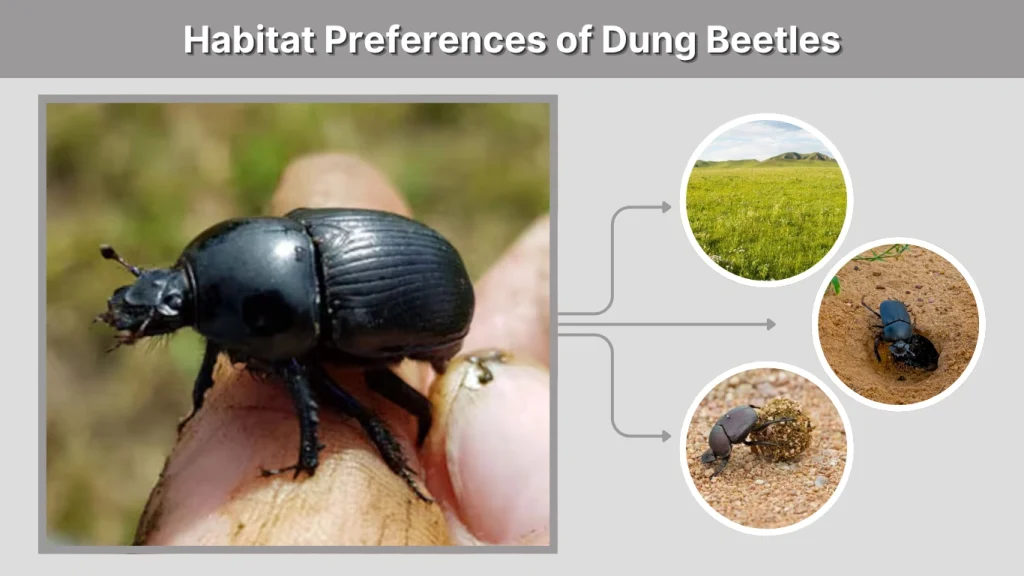
Grasslands are ideal for dung beetles because they provide an endless supply of herbivore dung. Warm, open soil allows for easy rolling and burrowing. African and Australian grasslands host some of the most iconic dung beetle species, including rollers that can move balls several times their size.
Forests and Woodland Areas
In forests, dung beetles feed on feces from forest mammals like deer, monkeys, and wild boars. The shaded, moist soil is perfect for tunneling species that prefer to bury dung rather than roll it. These beetles play a key role in nutrient recycling within dense vegetation.
Deserts and Arid Environments
Surprisingly, some dung beetles thrive in deserts. Adapted to hot, dry climates, these beetles work mainly at night to avoid extreme temperatures. They feed on smaller, drier pellets from animals like camels and antelopes and often bury dung deeper underground to retain moisture.
Agricultural and Rural Areas
Farms and ranches provide dung beetles with constant access to manure. Here, they are ecological allies—reducing pest populations, improving pasture quality, and increasing soil fertility. In fact, dung beetles in livestock areas can bury more than 80% of waste produced by animals each day.
Seasonal and Environmental Adaptations
Where Dung Beetles Live in the Winter
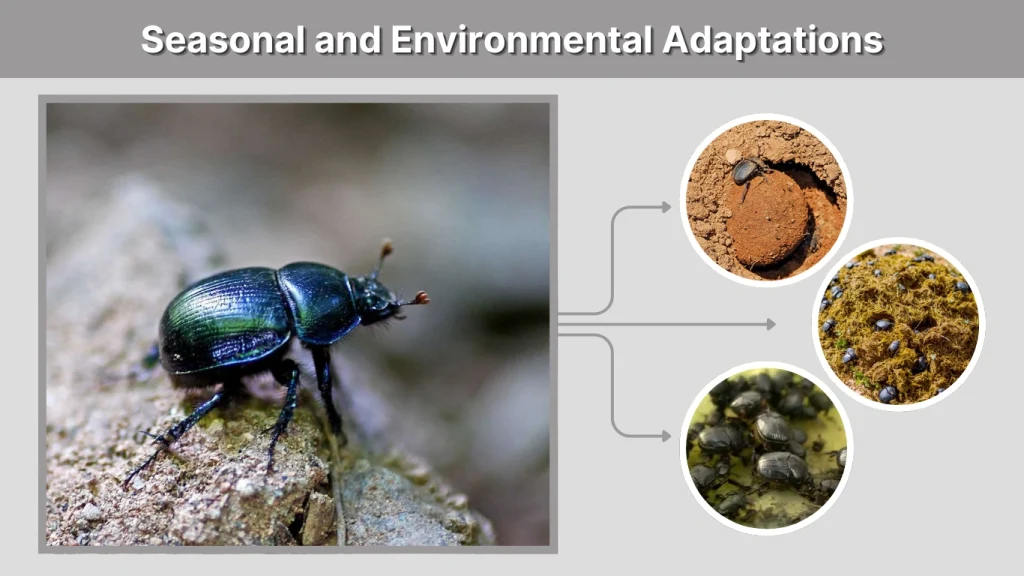
During cold seasons, most dung beetles go underground to survive. In regions with harsh winters, they enter a state of dormancy similar to hibernation. Buried deep in the soil, they conserve energy until temperatures rise again. In warmer climates, some species remain active underground, feeding on stored dung through winter.
Temperature and Moisture Needs
Dung beetles are most active in warm, humid conditions. Tropical species thrive year-round, while temperate beetles synchronize their activity with the rainy season, when fresh dung is abundant. Their adaptability allows them to inhabit both rain-soaked jungles and dry plains with minimal resources.
Underground Behavior and Nesting
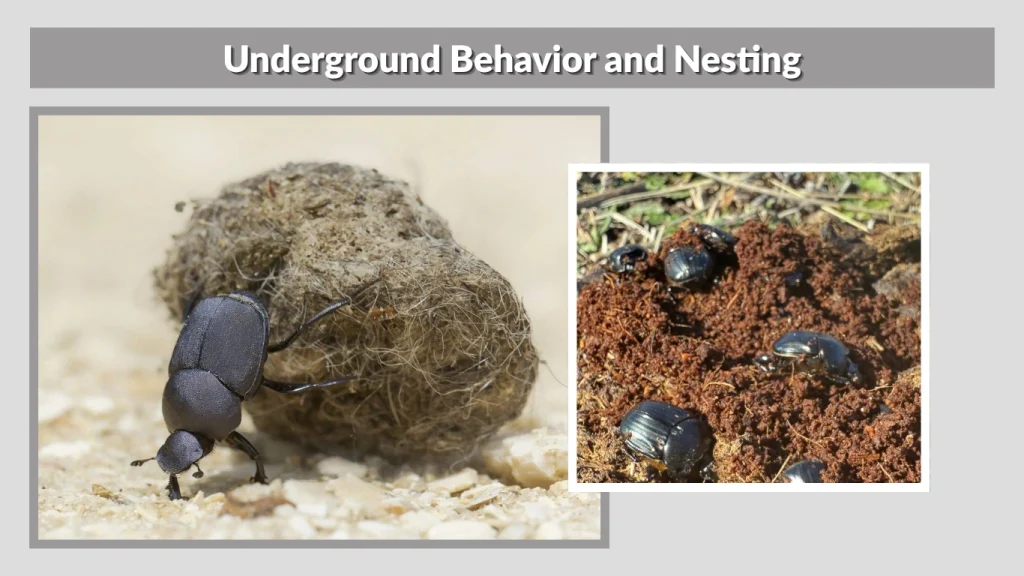
Do Dung Beetles Live Underground?
Yes. Many dung beetles spend much of their lives underground. After rolling dung balls, they bury them beneath the surface for feeding or reproduction. Living underground protects them from predators, temperature fluctuations, and desiccation. This subterranean lifestyle also benefits the ecosystem by aerating soil and redistributing nutrients.
How Deep Do They Burrow?
Tunneling dung beetles can dig several inches to a few feet below the surface. Some species create elaborate tunnel systems with multiple chambers for storing dung and raising young. The depth depends on soil type—loose, rich soil allows deeper tunnels, while compact or rocky ground restricts their digging.
Role of Soil Type
Soil composition directly influences where dung beetles can live. Soft, sandy, or loamy soils are ideal because they’re easy to dig. Hard clay soils can limit their burrowing depth, pushing beetles to surface activity instead. The right soil ensures safe storage of dung and stable nesting chambers.
Special Habitats of Horned and Unique Species
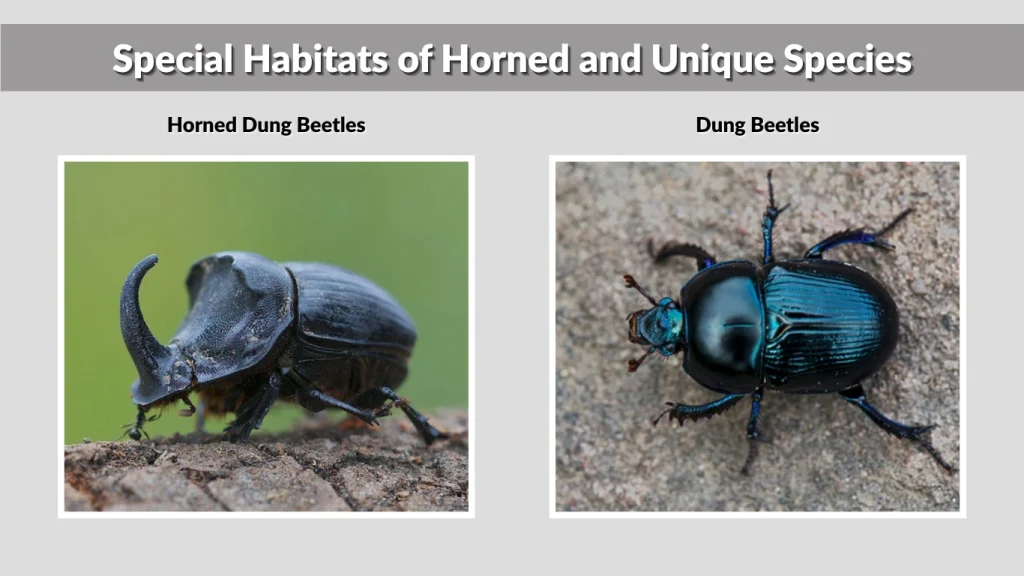
Where Horned Dung Beetles Live
Horned dung beetles, known for their distinctive head structures, are primarily found in Africa and Asia, particularly in savannas and forest borders. The males use their horns to fight rivals over dung balls or mates. These beetles rely heavily on large mammal dung, such as that from elephants, rhinos, and buffaloes.
Where Most Dung Beetles Live
Most dung beetles live in tropical and subtropical regions where dung is available year-round. These climates provide consistent warmth, moisture, and a reliable food source, making them ideal for dung beetle breeding and activity.
Dung Beetles’ Role in Each Habitat
Soil Fertilization
By burying dung underground, dung beetles naturally enrich the soil with organic nutrients like nitrogen and phosphorus. This promotes healthier plant growth and supports the overall fertility of the ecosystem. Farmers benefit greatly from this process, as it helps maintain pasture quality without synthetic fertilizers.
Ecosystem Balance
Dung beetles are vital for maintaining ecological balance. They remove waste, reduce fly and parasite populations, and recycle nutrients efficiently. In doing so, they help control greenhouse gas emissions and sustain biodiversity by supporting healthier soil and vegetation.
FAQs
Where do dung beetles live around the world?
Dung beetles are found on every continent except Antarctica. They thrive in warm regions such as Africa, South America, and Asia but also live in forests, deserts, and farmlands wherever animal dung is available.
Do dung beetles live underground?
Yes, many species live underground. They dig tunnels to bury dung, which serves as food storage and nesting space. This underground habitat keeps them safe from predators and extreme weather.
Where do dung beetles live in the winter?
In winter, dung beetles either hibernate underground or remain active below the surface in milder climates. Buried dung provides insulation and nourishment during cold months.
Where do most dung beetles live?
Most dung beetles live in tropical and subtropical regions where dung is plentiful year-round. These areas offer the warmth, soil quality, and animal presence needed for survival.
Where do horned dung beetles live?
Horned dung beetles are mainly found in Africa and Southeast Asia. They prefer savannas and forest edges where large herbivores like elephants and buffaloes provide a constant supply of dung.
Dung beetles are extraordinary survivors, adapting to nearly every climate and habitat on Earth. Whether they live beneath desert sands, within forest floors, or under farmlands, these insects perform crucial ecological work. By rolling, burying, and consuming dung, they recycle nutrients, fertilize soil, and sustain the planet’s natural balance—proving that even the smallest creatures can have the biggest impact.
