
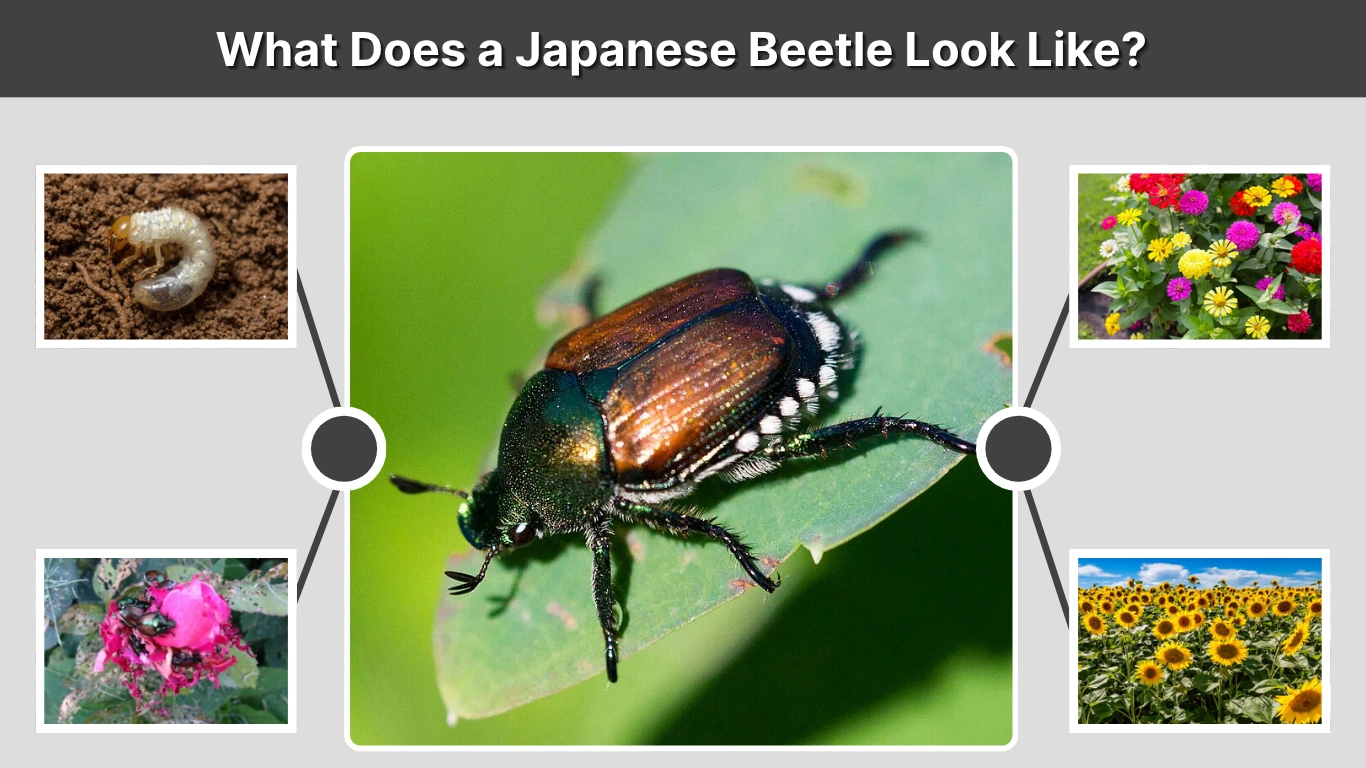
Japanese beetles are small, shiny insects known for their striking metallic colors and destructive feeding habits. They can quickly strip plants of leaves, flowers, and fruit, leaving behind lace-like damage. Recognizing what a Japanese beetle looks like — and distinguishing it from similar insects like ladybugs — is the first step in controlling them. This guide explains how to identify adult beetles, grubs, eggs, and the plants they prefer.
What Is a Japanese Beetle?
The Japanese beetle (Popillia japonica) is an invasive species that originated in Japan and was accidentally introduced to North America in the early 1900s. In its native environment, natural predators keep it under control, but in the U.S., it has become one of the most destructive garden pests.
These beetles are part of the scarab beetle family and typically appear from June through August, depending on the climate. They thrive in warm, humid weather and are especially active in sunny gardens and open fields.
Adult Japanese beetles feed on the foliage, flowers, and fruits of over 300 plant species, while their larvae — known as grubs — feed on grass and plant roots underground. Together, these stages can cause severe damage to lawns, trees, and gardens.
What Does a Japanese Beetle Look Like?
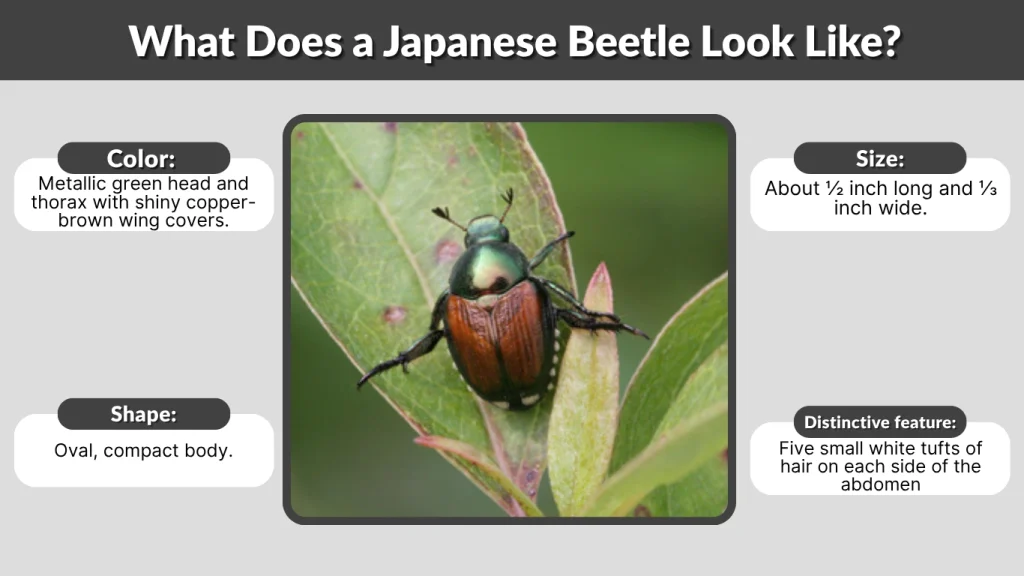
Adult Japanese beetles are easy to identify once you know what to look for.
Physical characteristics:
- Color: Metallic green head and thorax with shiny copper-brown wing covers.
- Size: About ½ inch long and ⅓ inch wide.
- Shape: Oval, compact body.
- Distinctive feature: Five small white tufts of hair on each side of the abdomen and two at the rear tip.
When sunlight hits their wings, they shimmer with iridescent tones — which makes them visually striking but also easy to spot on plants.
Japanese beetles often feed in clusters, starting from the tops of plants and moving downward. If you see several shiny beetles on your roses, grapevines, or fruit trees, you’re likely dealing with this pest.
Bugs That Look Like Japanese Beetles (Lookalikes)
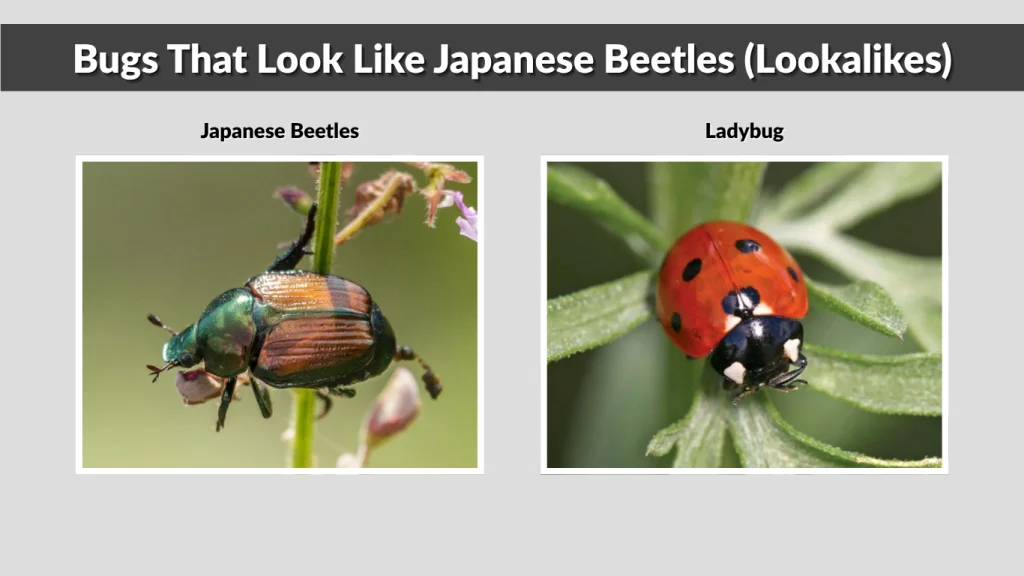
Several insects resemble Japanese beetles in color or shape, which can cause confusion. Knowing how to tell them apart helps you avoid unnecessary treatments or protect beneficial insects like ladybugs.
Japanese Beetle vs Ladybug
This is the most common mix-up. At a glance, both beetles are similar in size and rounded shape, but they have very different colors and behaviors.
Japanese Beetle:
- Metallic green and bronze color.
- Smooth, shiny shell with no black spots.
- Feeds on plants, flowers, and leaves.
Ladybug:
- Bright red or orange shell with black spots.
- Dome-shaped and smaller than Japanese beetles.
- Beneficial insect that eats aphids and plant pests.
So, if you see a shiny green and copper beetle chewing your flowers, it’s a Japanese beetle, not a ladybug.
Keywords like “Japanese beetle looks like ladybug” or “Japanese beetle that looks like a lady bug” stem from this common confusion.
Japanese Beetle vs Rose Chafer
Another insect often mistaken for a Japanese beetle is the rose chafer beetle (Macrodactylus subspinosus).
Here’s how to tell them apart:
- Rose Chafers: Light tan or beige color with a fuzzy texture and long legs.
- Japanese Beetles: Shiny green with bronze wings and smooth bodies.
Rose chafers appear around the same time of year and also feed on roses, but they’re less destructive and easier to manage.
Other Lookalike Beetles
A few other species resemble Japanese beetles in shape or color:
- Green June Beetles: Larger (nearly 1 inch long) and noisier in flight.
- False Japanese Beetles: Dull bronze color without the metallic sheen.
- Brown Leaf Beetles: Similar size but matte brown with no green coloration.
If the beetle is bright and metallic, it’s almost always a Japanese beetle rather than one of these lookalikes.
What Do Japanese Beetle Grubs and Larvae Look Like?
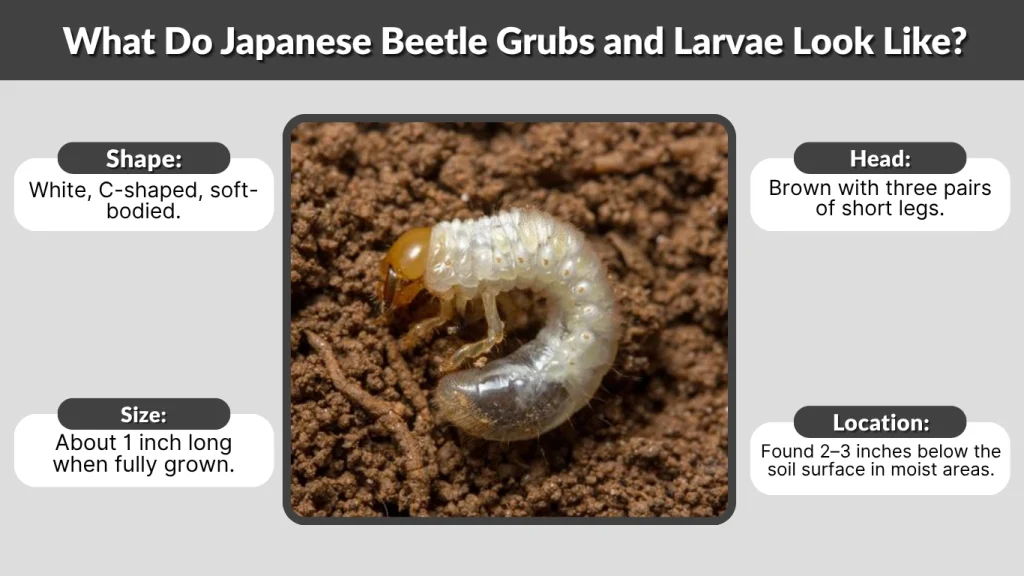
The larval stage of the Japanese beetle is just as damaging as the adult. These grubs live underground and feed on grass roots, leading to brown patches and dying turf in lawns.
How to identify Japanese beetle grubs:
- Shape: White, C-shaped, soft-bodied.
- Head: Brown with three pairs of short legs.
- Size: About 1 inch long when fully grown.
- Location: Found 2–3 inches below the soil surface in moist areas.
When disturbed, the grubs curl into a tight “C” shape. They are most visible when you dig into the soil near dying grass or after heavy rain.
Japanese beetle eggs are tiny (about 1.5 mm long), oval, and white. Females lay them in clusters under the soil in midsummer, where they hatch into larvae within two weeks.
Recognizing grubs early is important because controlling them in the soil can prevent large adult infestations later.
What Does Japanese Beetle Damage Look Like?
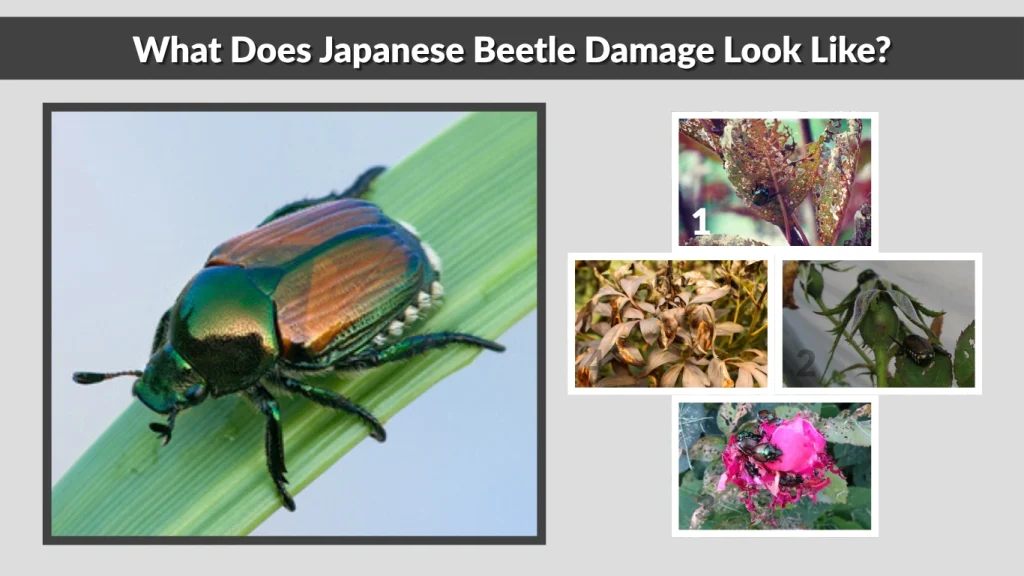
Japanese beetle damage is easy to spot because of its distinctive pattern. They chew on the soft tissue between leaf veins, leaving behind a “skeletonized” appearance that looks like lace.
Typical signs of beetle damage:
- Leaves reduced to fine, net-like veins.
- Ragged flower petals or missing buds.
- Clusters of beetles on the same plant.
- Premature leaf drop and browning foliage.
- Holes in fruit or flower centers.
In lawns, grub damage shows as irregular brown patches where the grass lifts easily, indicating that roots have been eaten.
What Do Japanese Beetles Like? (Plants They Attack Most)
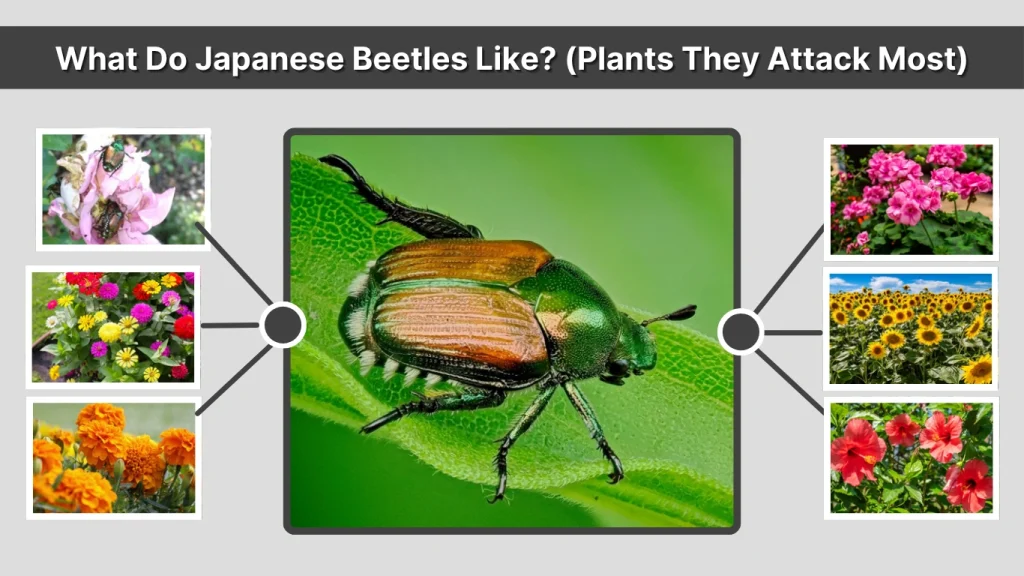
Japanese beetles are not picky eaters — they feed on more than 300 species of plants. However, some flowers, trees, and shrubs are far more appealing to them. These preferred plants release stronger scents and have softer foliage that’s easier for the beetles to chew.
Favorite Flowers and Garden Plants
- Roses: Their soft petals and fragrance make them one of the beetles’ top choices.
- Zinnias: Brightly colored blooms attract large clusters of beetles.
- Marigolds: Their scent draws beetles, even though they repel many other insects.
- Geraniums: Beetles love them, but the flowers can temporarily paralyze them — a strange but useful defense for gardeners.
- Petunias and Sunflowers: High in sugars, these are irresistible to hungry beetles.
- Hibiscus and Basil: Tender leaves and sweet aroma attract adult beetles in midsummer.
Trees and Shrubs They Prefer
- Linden Trees: Among the beetles’ favorite food sources.
- Birch and Elm Trees: Often heavily infested in mid to late summer.
- Cherry, Apple, and Peach Trees: Popular in orchards and backyard gardens alike.
- Japanese Maple: Its delicate leaves are easily skeletonized.
If these plants are in your garden, it’s wise to monitor them daily during beetle season. Protecting them with neem oil, netting, or pheromone traps placed away from the plants can reduce damage significantly.
What Do Japanese Beetles Not Like? (Plants They Avoid)
Fortunately, not every plant appeals to Japanese beetles. Many herbs, perennials, and trees naturally repel them due to their strong scents, thick leaves, or chemical composition.
Flowers and Herbs They Dislike
- Lavender: Its fragrant oils repel beetles and many other pests.
- Catnip and Mint: The strong menthol aroma discourages feeding.
- Garlic and Citronella: Both act as natural deterrents when planted near vulnerable species.
- Begonias and Lantana: These ornamental plants are generally ignored by beetles.
- Dahlias and Marigold Varieties: Some cultivars emit scents that repel beetles rather than attract them.
Trees and Shrubs They Rarely Touch
- Dogwood and Boxwood: Their dense foliage and waxy leaves deter beetles.
- Oak and Hemlock: These trees have thick, fibrous leaves that are difficult to chew.
- Magnolia and Spruce: Less appealing due to their leaf texture and natural oils.
Planting a mix of resistant species alongside vulnerable ones can help protect your garden and reduce the likelihood of heavy infestations.
What Do Japanese Beetles Smell Like and Do They Bite?
Japanese beetles release a faint, musky odor, especially when crushed. This smell acts as a chemical signal that attracts more beetles to the area — which is why squashing them near plants can worsen the problem. Instead, drop them into soapy water to kill them discreetly without alerting others.
As for biting — Japanese beetles do not bite humans. They lack strong mouthparts for piercing skin. Any irritation from handling them usually comes from their rough legs or mild allergic reactions in sensitive individuals.
So, while they’re harmless to people, they can be devastating to gardens if left uncontrolled.
Beetle Behavior and Habits
Japanese beetles are most active during sunny, warm days from late morning to mid-afternoon. They prefer humid weather and are often found in open, well-lit gardens rather than shaded areas.
Typical habits include:
- Feeding in groups: Beetles release pheromones that attract others, leading to mass infestations.
- Starting from the top: They begin feeding on upper leaves and flowers, moving downward.
- Attraction to water and moisture: Females prefer moist soil for laying eggs.
- Life cycle timing: Eggs hatch into larvae within two weeks, feeding underground until the next spring.
Knowing when and where they feed can help you apply treatments — such as neem oil or milky spore — at the most effective times.
Summary Table: Japanese Beetle Identification & Preferences
| Category | Description |
| Color | Metallic green head, copper-brown wings |
| Size | About ½ inch long |
| Body Shape | Oval with white hair tufts on sides |
| Lookalikes | Ladybugs, rose chafers, green June beetles |
| Grubs | White C-shaped larvae with brown heads |
| Eggs | Tiny white ovals in moist soil |
| Favorite Plants | Roses, zinnias, hibiscus, basil, grapevines |
| Disliked Plants | Lavender, mint, garlic, boxwood, oak |
| Activity Season | June to August (warm, sunny days) |
This quick-reference guide helps gardeners identify beetles at every stage and understand which plants are most at risk.
FAQs
What does a Japanese beetle look like?
A Japanese beetle has a metallic green head and bronze wings with white tufts along its sides. It’s about ½ inch long and oval-shaped, often seen feeding on plants in midsummer.
Do Japanese beetles look like ladybugs?
No. Ladybugs are red or orange with black spots, while Japanese beetles are shiny green and copper-colored. Ladybugs are beneficial predators; Japanese beetles are plant-eating pests.
What do Japanese beetle grubs look like?
Grubs are white, C-shaped larvae found in soil, with brown heads and small legs. They feed on grass roots and are responsible for brown, dead patches in lawns.
What plants do Japanese beetles like the most?
They love roses, zinnias, hibiscus, basil, grapes, and fruit trees like cherry and apple. These plants have soft leaves and strong scents that attract beetles in large numbers.
What plants do Japanese beetles not like?
They avoid aromatic or thick-leaved plants such as lavender, mint, catnip, garlic, and oak trees. Planting these alongside your flowers can help deter beetles naturally.
