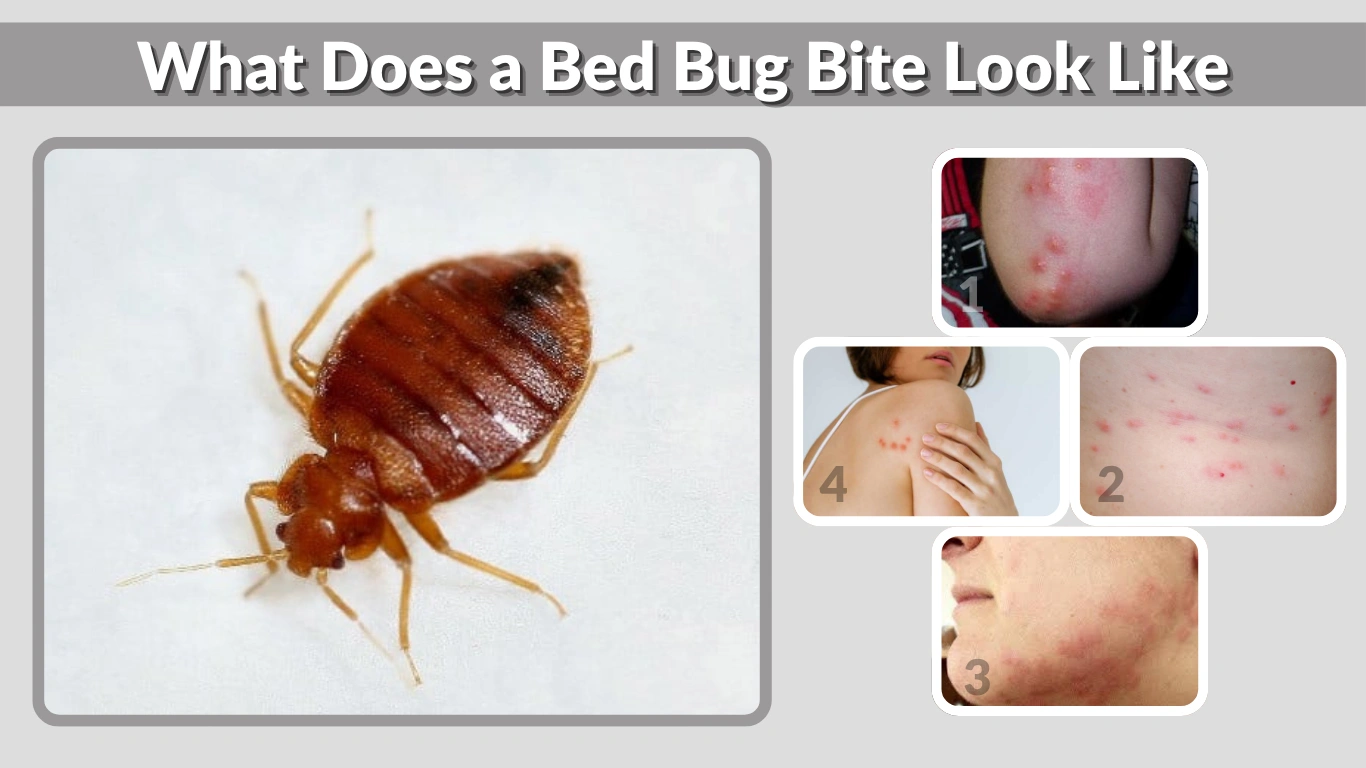
Bed bug bites can be confusing to recognize because they look similar to mosquito or flea bites. These tiny, itchy red bumps often appear overnight in clusters or straight lines on exposed skin. While they are not dangerous, their appearance and discomfort can cause anxiety. Understanding what bed bug bites look like, how they change over time, and where they tend to appear helps you confirm infestations early and take proper action.
Understanding Bed Bug Bites
How Bed Bugs Feed
Bed bugs are nocturnal parasites that feed exclusively on blood. Using their sharp, straw-like mouthpart, they pierce human skin and inject a mild anesthetic and anticoagulant, allowing them to feed unnoticed for about 5–10 minutes. They typically feed just before dawn, then retreat to cracks, mattress seams, or furniture joints to digest their meal.
Although the bites themselves are painless, irritation begins a few hours later as your immune system reacts to their saliva. People who are repeatedly bitten may experience stronger, faster reactions over time.
Why Reactions Differ
Not everyone reacts to bed bug bites the same way. Some individuals develop large, itchy welts, while others show no visible signs at all. Sensitivity depends on a person’s immune system and exposure history. In some cases, bites may take 1–2 days to appear, leading to confusion about when or where the bites occurred.
Common symptoms include mild itching, redness, and swelling. Severe allergic reactions are rare but can cause blistering or intense discomfort.
What Bed Bug Bites Look Like on Skin
General Appearance
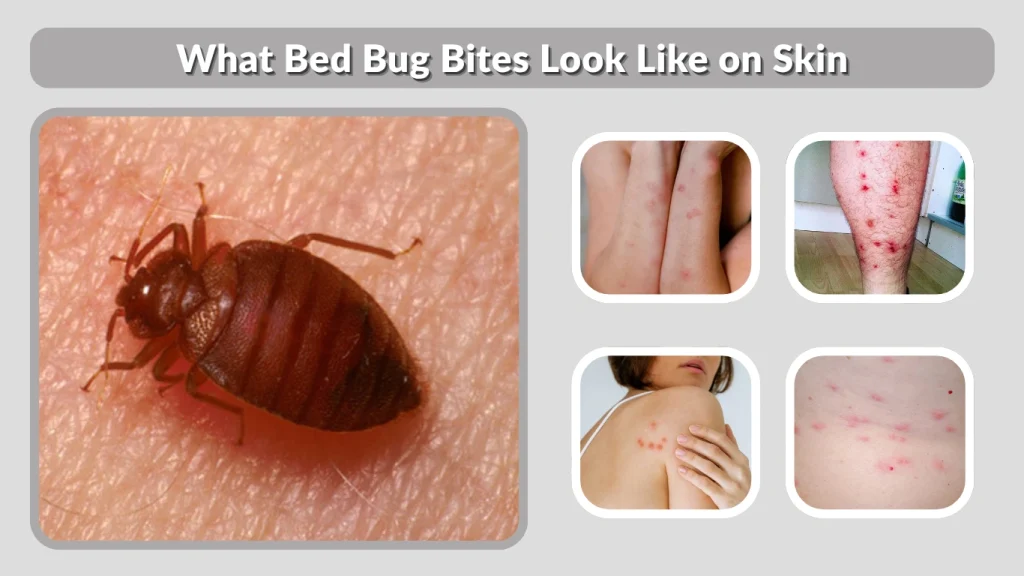
Bed bug bites usually appear as small, red, slightly raised bumps with a darker dot in the center — this marks the point where the bug’s mouthpart entered the skin. The surrounding area may be pink or swollen, and the bumps can resemble mosquito bites.
Unlike random insect bites, bed bug bites often form clusters or straight lines, sometimes called the “breakfast, lunch, and dinner” pattern. This occurs when a bug feeds multiple times while moving along the skin.
Color and Size
Fresh bed bug bites are bright red or pink and about 2–5 millimeters wide. Over time, they may darken slightly or develop into inflamed welts. The color and severity can differ depending on skin tone — appearing darker on light skin and purplish on darker complexions.
If scratched repeatedly, the bites may scab or scar, prolonging healing. People with sensitive skin may develop hives or mild rashes around the affected area.
Common Bite Locations
Bed bugs bite any area of exposed skin while you sleep. Common locations include the:
- Arms and shoulders
- Neck and face
- Legs, ankles, and feet
- Back and hands
Because bed bugs are attracted to warmth and carbon dioxide, they prefer areas closest to your body’s heat while you rest. They rarely bite under tight clothing but can hide in loose pajamas, socks, or blankets.
Bed Bug Bite Progression Over Time
Stage 1: Fresh Bite (First Few Hours)
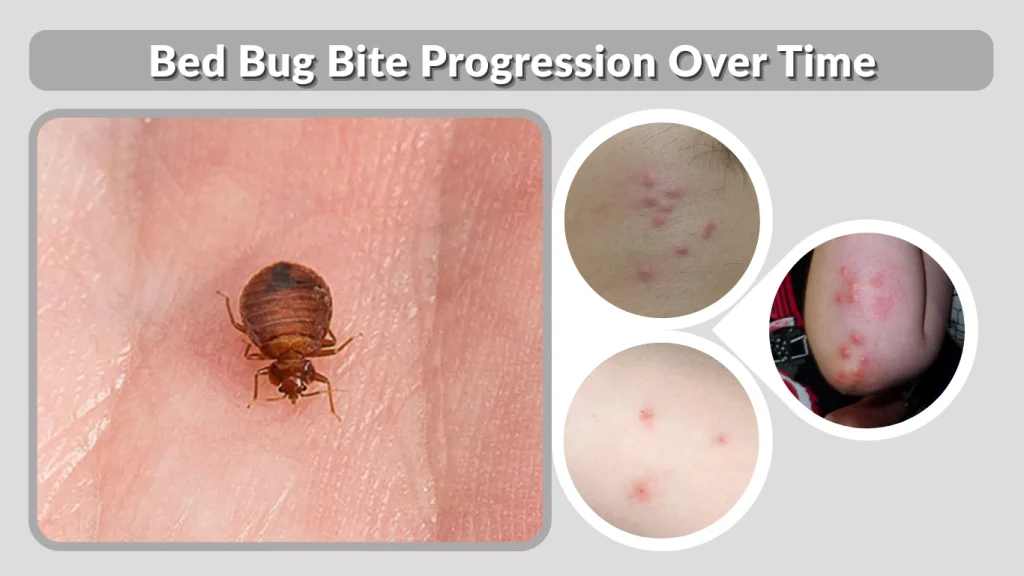
Immediately after feeding, bed bug bites may not be visible at all. As the skin reacts, small flat red dots appear. These early bites are often mistaken for minor skin irritation or heat rash. They may not itch right away but can become sensitive to touch after several hours.
Stage 2: Reaction Phase (1–2 Days Later)
Within 24 to 48 hours, the bites become raised and itchier. In this phase, they’re easiest to recognize — red welts or small blisters with a darker puncture mark in the center. Scratching can make them more inflamed and increase the risk of infection.
People who experience stronger allergic reactions may notice swelling or clusters of large, round bumps. Applying cold compresses or topical anti-itch creams helps reduce irritation.
Stage 3: Healing Phase (3–10 Days)
As the body heals, the redness fades to light pink or brown. The itching subsides gradually, but the marks can linger for up to two weeks. Avoid scratching to prevent scarring or hyperpigmentation. Keeping the skin clean and moisturized helps speed up healing.
Bed Bug Bites vs. Other Insect Bites
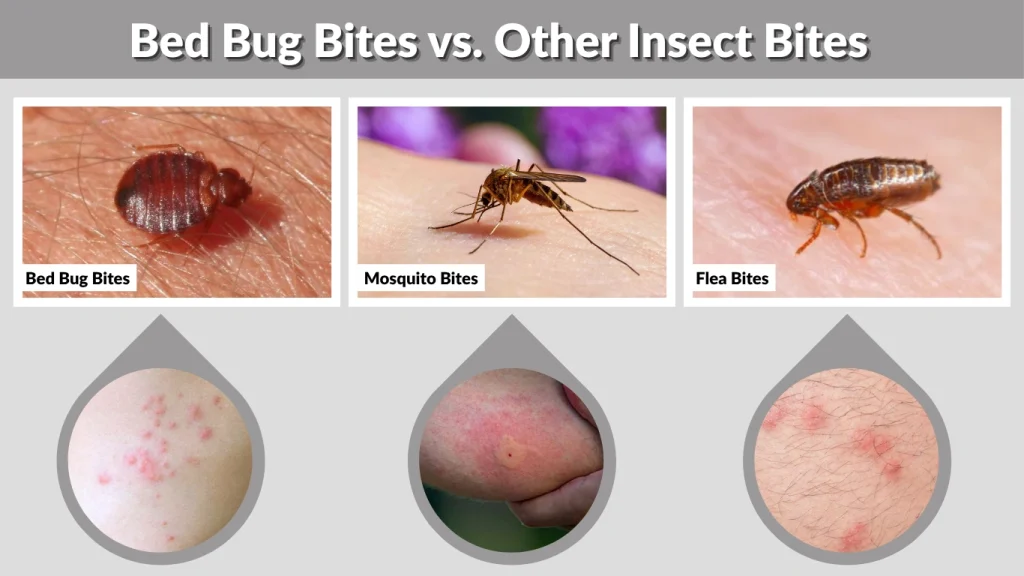
Because bed bug bites resemble many other insect bites, they are often misdiagnosed. Understanding the visual differences helps confirm the cause and choose the right treatment.
Visual Comparison Table
| Insect | Appearance | Pattern | Duration | Distinguishing Feature |
| Bed Bug | Red bumps with dark center | Rows or clusters | 7–10 days | Appears overnight on exposed skin |
| Mosquito | Larger, soft bumps | Random | 1–3 days | Fade faster and appear after outdoor activity |
| Flea | Small red dots with halo | Around ankles | 5–7 days | Intense itching, mostly on lower legs |
| Spider | Isolated swollen bump | Single | Varies | Painful center, may blister or bruise |
Feeling and Sensation
Bed bug bites typically itch but don’t hurt. Some people report a burning or crawling sensation on the skin, especially when several bites appear close together. The itching can be more severe at night or when the skin is warm. Unlike mosquito bites, bed bug bites rarely cause immediate swelling.
If the itching is intense or you notice spreading redness, consult a doctor to rule out an allergic reaction or infection.
What Bed Bug Bite Rashes Look Like

Mild Reactions
When multiple bites occur in one area, they can merge into a red patch or rash-like cluster. The skin may feel slightly warm, dry, and irritated. Mild rashes usually fade within a week, especially with proper care.
Severe or Allergic Reactions
Some individuals develop strong allergic responses that cause large, inflamed welts or fluid-filled blisters. These reactions can spread beyond the original bite area. In rare cases, scratching may lead to infection or secondary rash.
If you experience fever, swelling, or pus, seek medical help immediately. Applying an antiseptic ointment and keeping the area clean helps prevent complications.
Bed Bug Bites on Different People
Adults
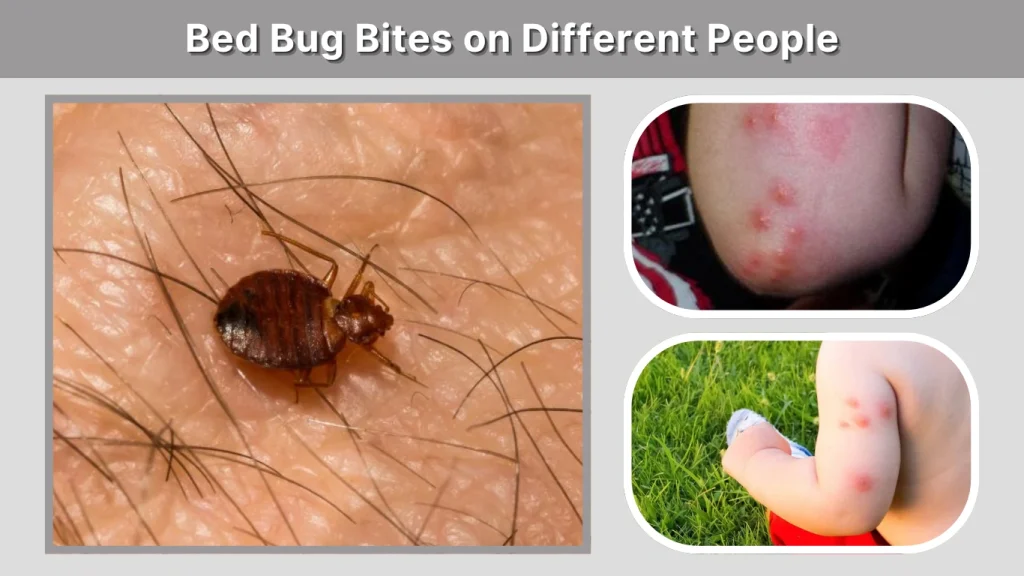
In most adults, bed bug bites appear as small, red welts grouped together on areas exposed during sleep. These bites often form a straight line or zigzag pattern along the arms, legs, or neck. Some adults may barely notice them, while others experience extreme itching and irritation that lasts for several days.
Adults who travel frequently or live in shared housing are more likely to encounter recurring bites. Continuous exposure can cause skin thickening or hyperpigmentation from scratching. In rare cases, prolonged infestations may lead to anxiety or sleep disturbances due to fear of being bitten.
Children and Babies
Children tend to have more sensitive skin, so their reactions to bed bug bites are often stronger. Bites appear larger, redder, and itchier, sometimes turning into raised welts or mild rashes. They commonly show up on the face, arms, or feet — areas left uncovered while sleeping.
If your child develops clusters of red marks that worsen overnight, inspect bedding and mattress seams immediately. Always monitor for excessive scratching, which can cause infection. Applying a soothing lotion or pediatric-safe hydrocortisone cream helps reduce discomfort.
Pets (Dogs and Cats)
While bed bugs prefer human hosts, they can bite animals when humans aren’t available. Look for clusters of small red bumps on your pet’s belly, legs, or near the ears where fur is thin. Pets may scratch or bite at these areas frequently.
Wash your pet’s bedding in hot water and vacuum surrounding areas thoroughly. Consult a veterinarian if irritation persists.
What Bed Bug Bites Look Like Up Close
Identifying Marks
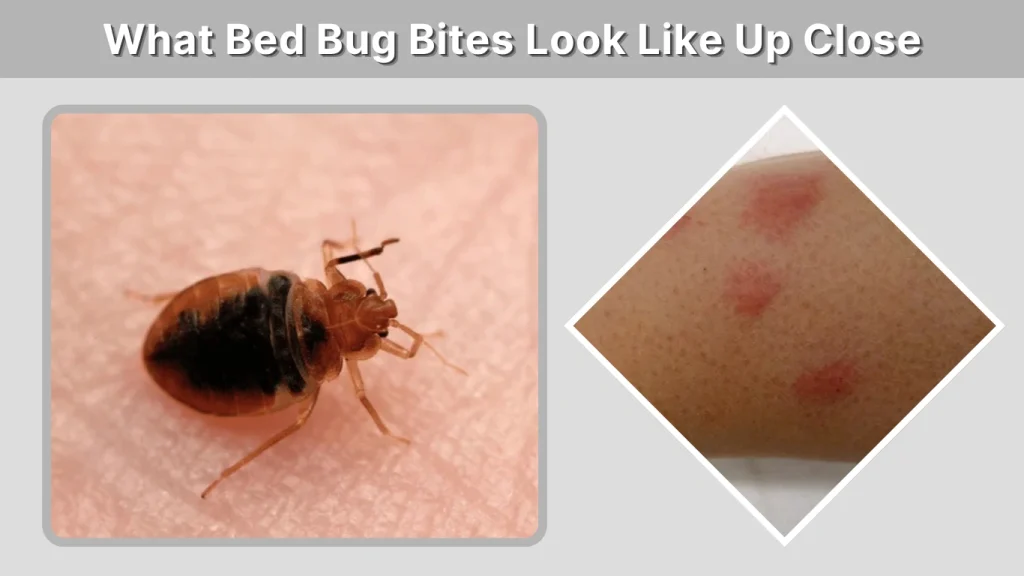
When viewed up close, bed bug bites appear as round, slightly swollen welts about 2–5 mm wide. A small puncture mark or dark red dot often sits at the center, representing the feeding site. The surrounding area may show a faint halo of inflammation.
These bites are smooth and firm to the touch — unlike acne or pimples, which have raised, rough centers. On darker skin tones, they may appear purplish or darker brown instead of red.
Photographic Cues
If you compare photos of verified bed bug bites, you’ll notice several consistent traits:
- Linear or clustered arrangement on exposed skin.
- Uniform size and color among multiple bites.
- No pus or central hole (unlike spider bites).
Visual comparison can help confirm suspicions, but physical inspection of bedding and furniture remains essential for proof of infestation.
Healing, Relief, and Prevention
Home Treatment
Most bed bug bites heal naturally within 7–10 days. You can speed up the healing process and ease discomfort with simple home remedies:
- Clean the bites gently with soap and warm water to prevent infection.
- Apply hydrocortisone cream or calamine lotion to reduce redness and itching.
- Use cold compresses or ice packs to calm inflammation.
- Avoid scratching to prevent scarring or secondary infection.
For severe itching, an oral antihistamine such as diphenhydramine (Benadryl) can provide temporary relief.
When to Seek Medical Help
Seek medical attention if:
- Bites become blistered or infected.
- You experience fever, swelling, or allergic reactions.
- Symptoms persist for more than two weeks.
Doctors may prescribe stronger corticosteroid creams or antibiotics if the skin shows signs of infection.
Preventing Future Bites
Since bites will recur if the infestation remains, focus on eliminating bed bugs:
- Wash bedding, clothing, and curtains in hot water (120°F / 49°C+).
- Dry items on high heat for at least 30 minutes.
- Vacuum mattresses, furniture, and baseboards regularly.
- Use bed bugs–proof encasements for mattresses and pillows.
- Reduce clutter to remove hiding places.
For severe infestations, professional extermination with heat or chemical treatments is the most reliable solution.
Regional and Environmental Differences
In the UK
Bed bug bites in the UK often take longer to appear because cooler indoor temperatures slow down the bugs’ metabolism and the body’s reaction. Bites may be smaller and heal slower during colder months. Infestations are common in densely populated urban areas, especially hotels and older apartment buildings.
In Warm or Humid Climates
In tropical or warm regions, bed bugs feed more frequently and reproduce faster. Bites may appear in larger numbers, often with stronger swelling due to heat and sweat. Keeping bedrooms cool, dry, and clutter-free helps reduce their activity.
FAQs
What does a bed bug bite look like right away?
At first, it looks like a small, flat red dot. The swelling and itching usually appear within a few hours as your skin reacts to the bite.
How can I tell bed bug bites apart from mosquito bites?
Bed bug bites appear in straight lines or small clusters, while mosquito bites are random and larger. Bed bug bites also tend to appear overnight, usually on areas exposed during sleep.
Do bed bug bites always itch?
Most do, but not everyone reacts. Some people show no symptoms, while others develop red welts and intense itching within hours.
What does a healing bed bug bite look like?
Healing bites fade to light brown or pink and may leave faint marks for one to two weeks. Keeping the area clean helps them fade faster.
Can bed bug bites spread disease?
No. Bed bugs are not known to transmit diseases, but scratching can lead to bacterial infections or allergic irritation.