
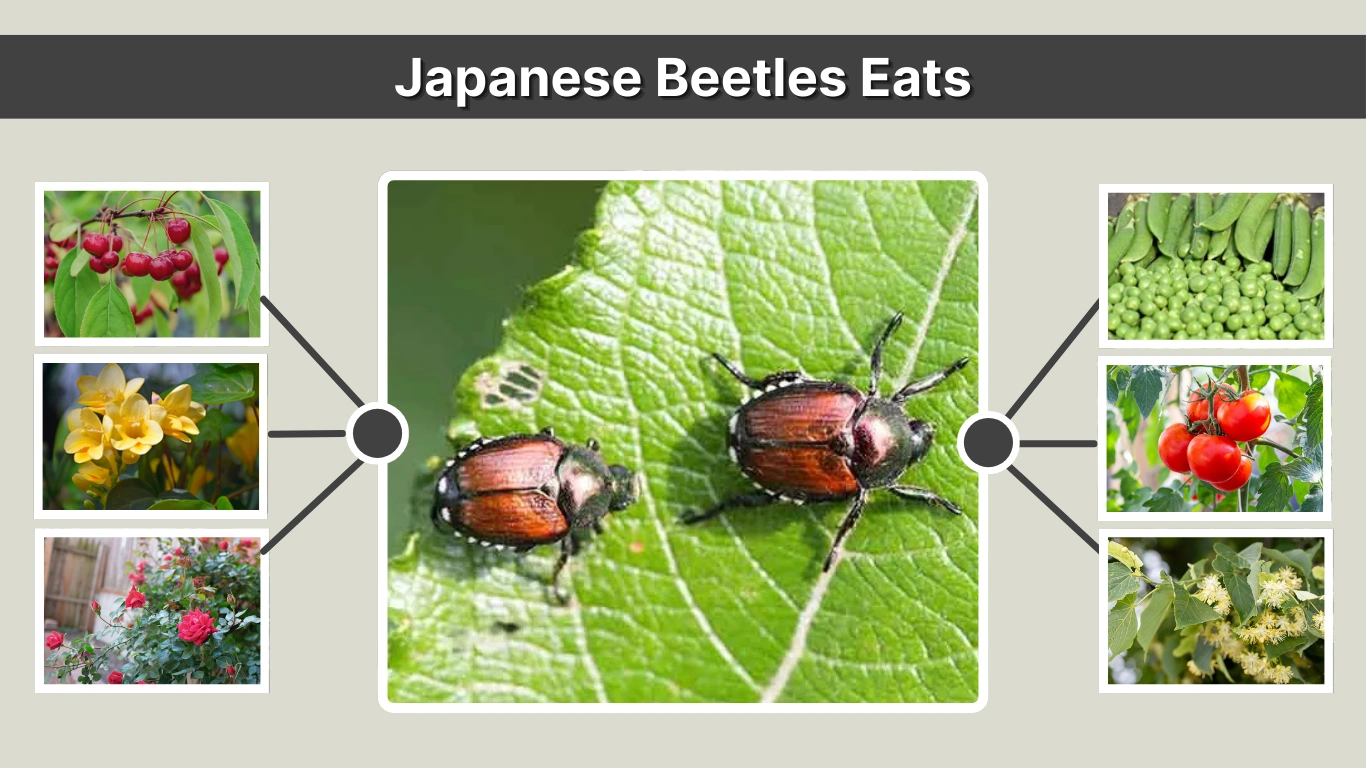
Japanese beetles (Popillia japonica) are small metallic-green insects with copper-colored wings that have become a notorious garden pest in North America. Native to Japan, where natural predators keep them in balance, they were first discovered in the United States in the early 1900s. Since then, they have spread rapidly, damaging lawns, gardens, and crops. Gardeners often ask one important question: what do Japanese beetles eat? Knowing their diet is the first step toward controlling them.
General Feeding Habits of Japanese Beetles

The diet of Japanese beetles is remarkably broad. Adults feed on more than 300 plant species, making them one of the most destructive invasive pests. Their feeding behavior is highly visible: they chew away the soft leaf tissue between veins, leaving a delicate, lace-like pattern called “skeletonization.”
In general, Japanese beetles eat:
- Leaves of ornamental and fruit trees.
- Flowers with bright colors and strong scents.
- Fruits and vegetables in gardens and farms.
Unlike some insects, they don’t drink water directly. Instead, they consume plant juices, nectar, and fruit sap to stay hydrated. Their larvae (grubs), which live in the soil, have an entirely different diet focused on grass roots.
Japanese Beetles in Gardens
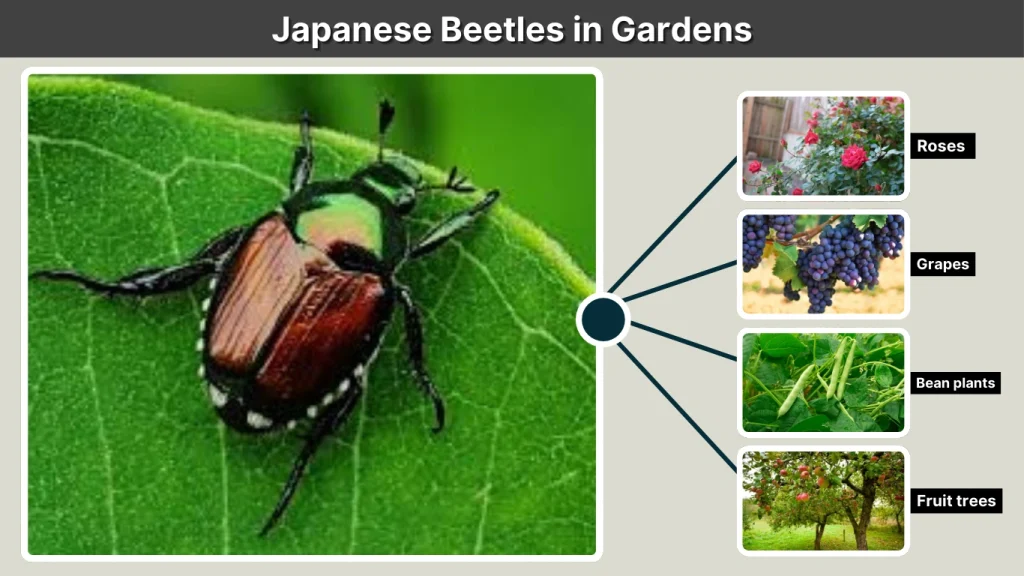
Gardeners are often the first to notice the damage caused by Japanese beetles. During summer, adult beetles appear in groups and feed aggressively on popular garden plants. They often prefer gardens because of the wide availability of ornamental flowers, fruits, and vegetables.
Commonly attacked garden plants include:
- Roses – one of their top choices.
- Grapes and raspberries – both leaves and fruits are consumed.
- Bean plants – leaves are stripped quickly.
- Fruit trees such as apples and cherries.
The visible damage not only weakens plants but also reduces yields and destroys the beauty of ornamental gardens.
Flowers They Like to Eat
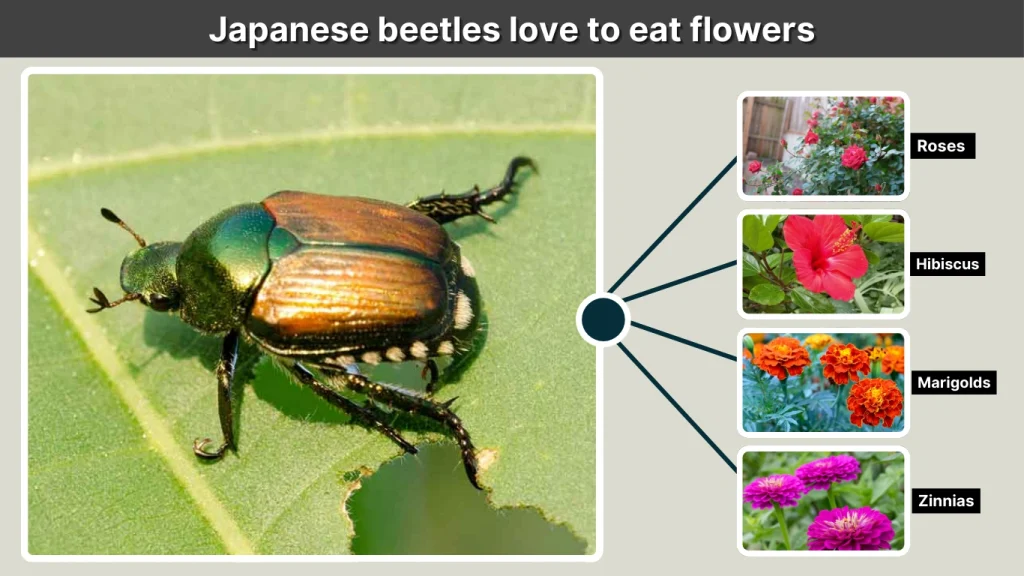
When people ask “what flowers do Japanese beetles eat,” the answer is: quite a lot of them. These beetles are highly attracted to flowers because they offer both food and fragrance.
Some favorite flowers include:
- Roses – perhaps the most well-known victim.
- Hibiscus – colorful blooms attract swarms of beetles.
- Marigolds – although often considered pest-resistant, Japanese beetles still feed on them.
- Zinnias and sunflowers – large, bright blossoms are easy targets.
Their preference for colorful, fragrant flowers means homeowners often see them clustered in large groups on ornamental blooms, creating significant damage within days.
Flowers They Rarely Eat
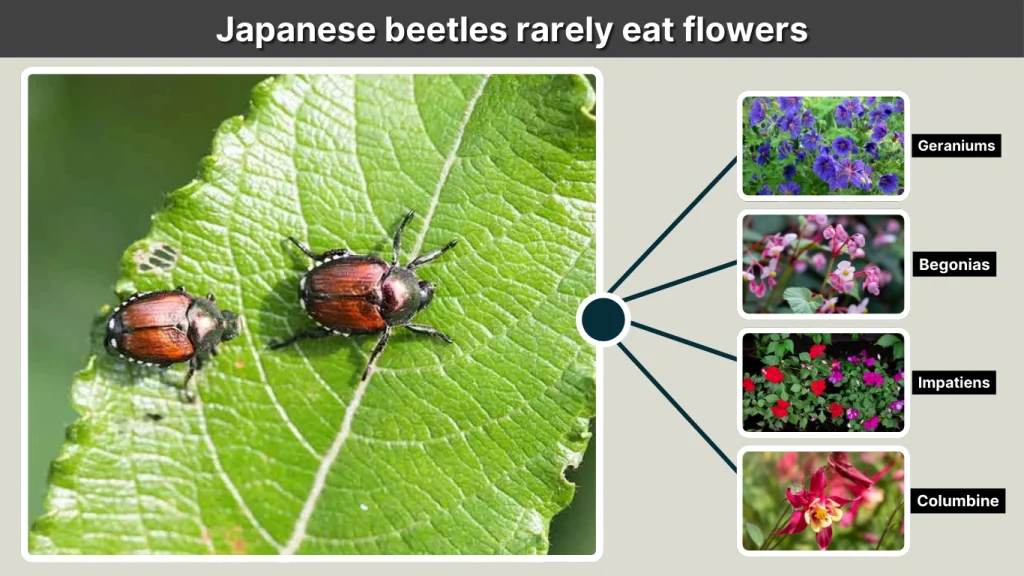
On the other hand, not all flowers are at risk. Certain plants naturally repel or discourage beetle feeding. This is why many gardeners ask “what flowers do Japanese beetles not eat.”
Some resistant flowers include:
- Geraniums – toxic to Japanese beetles, causing temporary paralysis.
- Begonias – not appealing to beetles’ taste.
- Impatiens – avoided due to their chemistry.
- Columbine – less attractive compared to other blooms.
Planting these resistant flowers is a simple, eco-friendly way to protect a garden. Many landscapers even recommend mixing resistant plants among vulnerable ones to reduce overall beetle impact.
Trees Commonly Targeted
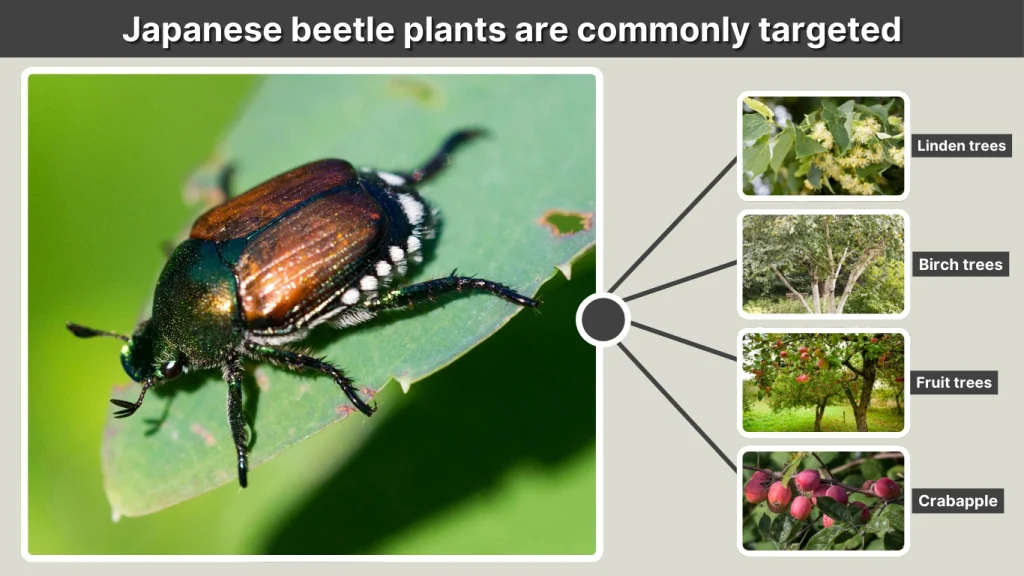
Japanese beetles don’t stop at flowers and vegetables—they also attack a variety of trees. When people search “what trees do Japanese beetles eat,” the list is unfortunately long.
Common targets include:
- Linden trees – one of their absolute favorites.
- Birch trees – especially white birch.
- Fruit trees such as apple, cherry, peach, and plum.
- Crabapple – highly vulnerable.
- Japanese maple – often heavily defoliated in summer.
Large trees can usually survive beetle feeding, but repeated attacks over several years may weaken them and make them vulnerable to disease. For young or ornamental trees, damage can be much more severe.
Trees They Rarely Eat
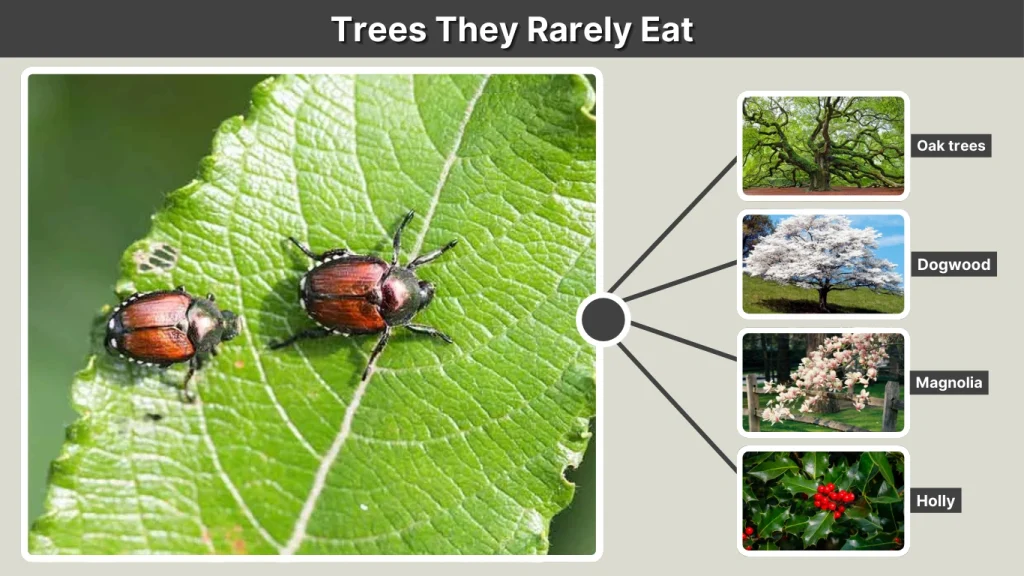
Luckily, not all trees are equally attractive to these pests. Gardeners often ask “what trees do Japanese beetles not eat,” hoping to choose safer landscaping options.
Resistant trees include:
- Oak trees – most species are rarely affected.
- Dogwood – unattractive to beetles.
- Magnolia – large glossy leaves discourage feeding.
- Holly – thick, waxy leaves are not appealing.
- Evergreens like pine, spruce, and fir.
By choosing these resistant trees, homeowners can reduce the risk of widespread beetle damage. Landscape designers often recommend these species for areas heavily infested with Japanese beetles.
Vegetables in Their Diet
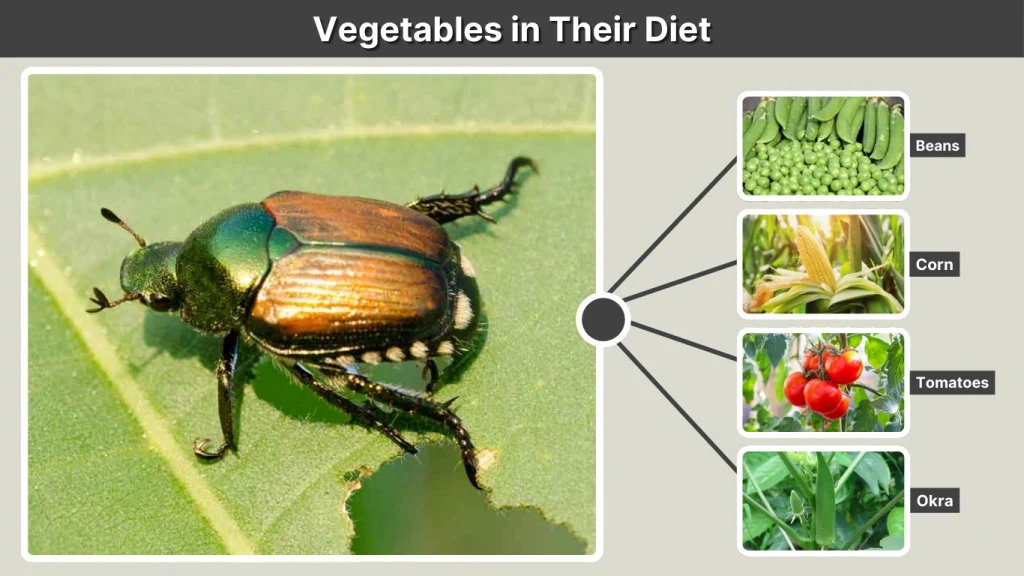
When it comes to vegetable gardens, Japanese beetles are relentless feeders. Many gardeners ask, “what vegetables do Japanese beetles eat?” Unfortunately, the list includes several popular crops.
Some of their favorite vegetables include:
- Beans and peas – highly vulnerable and often left with skeletonized leaves.
- Corn – silk is chewed, which can interfere with pollination.
- Tomatoes and peppers – fruits may be damaged, but the leaves are the primary target.
- Okra and asparagus – occasionally attacked depending on availability.
The biggest issue is yield reduction. While mature plants may survive, damaged leaves reduce photosynthesis, weakening the crop and lowering harvest quality.
Crops and Annual Plants
In agriculture, Japanese beetles pose serious threats to commercial crops. Farmers frequently worry about “what crops do Japanese beetles eat?” The answer includes several high-value plants.
Major crops targeted:
- Grapes – both leaves and fruits are damaged, affecting vineyards.
- Soybeans – extensive leaf feeding impacts yields.
- Hops – critical for beer production, making beetle infestations especially costly.
- Raspberries and strawberries – both foliage and fruits are consumed.
Annual flowers are also vulnerable. Favorites include sunflowers, morning glories, and marigolds. For farmers and home growers alike, infestations can mean significant economic losses.
Shrubs and Other Plants
Japanese beetles are not selective—they also feed on shrubs, making ornamental landscapes a common target. Homeowners often ask “what shrubs do Japanese beetles eat?”
Some common examples are:
- Rose shrubs – among their top favorites.
- Hydrangeas – flowers and foliage are attacked.
- Elderberries and ninebark – frequently damaged in gardens.
These shrubs are often chosen for decorative purposes, so infestations not only harm plant health but also ruin aesthetic appeal. Gardeners may choose to replace vulnerable shrubs with resistant varieties if infestations are persistent.
Regional Feeding Preferences (Michigan & Beyond)
Japanese beetles are found across much of the United States, but feeding habits vary by region. In Michigan, where summers are ideal for beetle activity, gardeners often ask “what plants do Japanese beetles eat in Michigan?”
Common Michigan targets include:
- Roses, grapes, and linden trees.
- Beans and corn in vegetable gardens.
While these plants are also targeted elsewhere, local climate conditions and plant availability influence which species are hit hardest. Across the Midwest, Northeast, and even parts of the South, beetles adapt to regional crops and ornamentals. Gardeners benefit from local extension service lists of resistant and vulnerable plants.
Life Cycle Diet: Larvae vs Adults
One unique aspect of Japanese beetles is that their diet changes dramatically during their life cycle. People often ask about “what do Japanese beetle grubs eat” or “what do Japanese beetle larvae eat.”
- Larvae (grubs): Found in the soil, they feed primarily on the roots of grasses and turf plants. This causes lawn patches to turn brown and die. Heavy infestations can ruin entire yards.
- Adults: Once above ground, they shift to leaves, flowers, and fruits.
As for “what do Japanese beetles eat and drink,” adults consume plant tissue, nectar, and fruit sap rather than plain water. This dual diet—roots underground and foliage above—makes them particularly destructive.
Other Japanese Beetles (Special Cases)
Sometimes people confuse the invasive Japanese beetle with other insects that have “Japanese” in their name. To clarify:
- Japanese rhinoceros beetle: Popular in Japan as a pet, it feeds on tree sap and fruits.
- Japanese lady beetle (Asian lady beetle): Actually beneficial, as it eats aphids and soft-bodied insects.
- Japanese water beetle: Aquatic, feeding on small fish, insects, and other water-dwelling prey.
- Japanese wood beetle: Tunnels into wood and feeds on decaying plant matter.
- Japanese green beetle: Similar diet to the common Japanese beetle—leaves, flowers, fruits.
Understanding these differences helps avoid confusion, as not all “Japanese beetles” are harmful pests.
Plants They Avoid & Protection Tips
Many gardeners search for “what plants do Japanese beetles not eat.” Resistant plants provide a natural solution to reduce garden damage.
Plants beetles usually avoid:
- Boxwood, dogwood, holly, magnolia, geraniums.
- Evergreens such as pine and spruce.
If Japanese beetles are attacking sensitive crops like beans, immediate action is needed. Effective strategies include:
- Hand-picking: Dropping beetles into soapy water.
- Neem oil: Acts as a natural repellent.
- Traps: Useful but should be placed far from gardens.
- Encouraging natural predators: Birds, nematodes, and predatory insects.
Combining these methods, often called Integrated Pest Management (IPM), helps keep beetle populations under control without overreliance on chemicals.
