
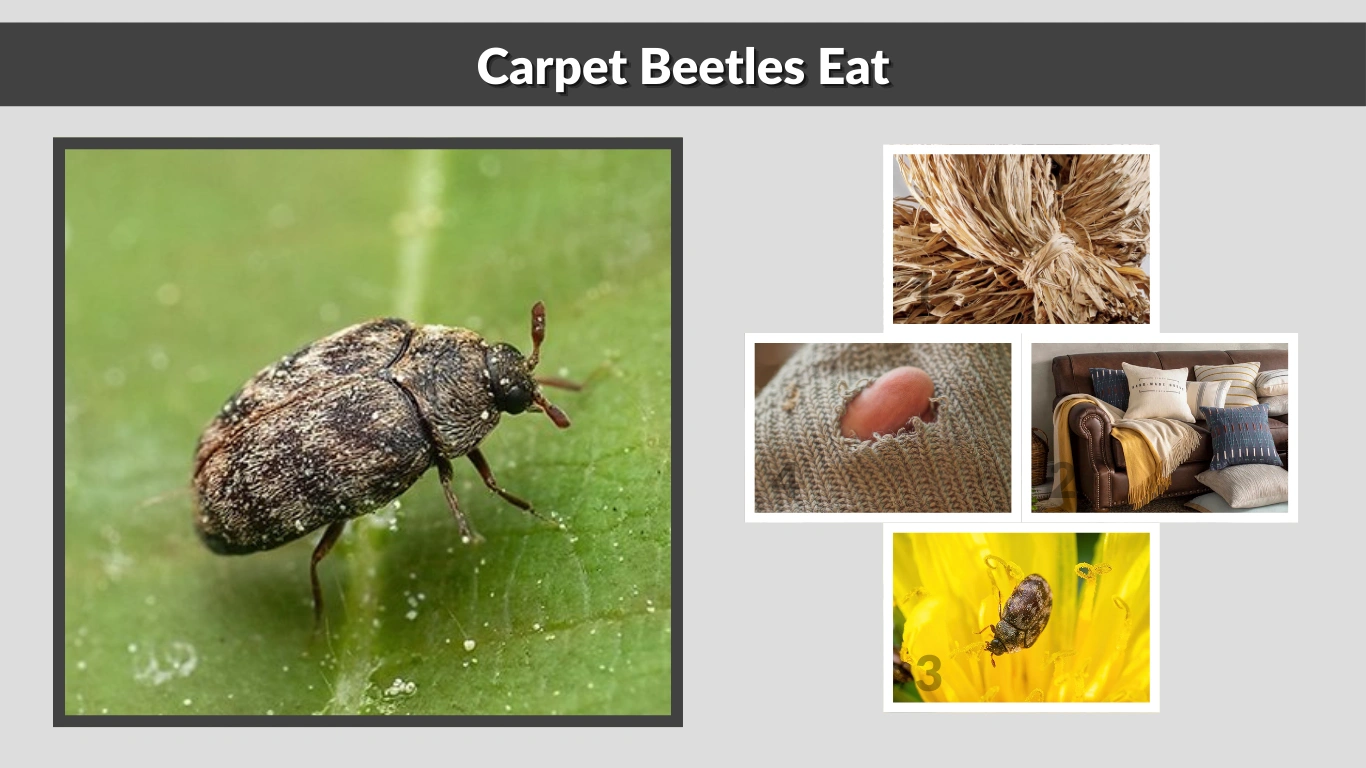
Carpet beetles, small insects from the Dermestidae family, are notorious household pests. While adults often go unnoticed, their larvae are highly destructive, feeding on natural fibers and stored products. Understanding what carpet beetles eat is essential for protecting fabrics, clothing, and food supplies. Their diverse diet explains why infestations are common in homes, museums, and storage areas.
General Feeding Habits
Carpet beetles are scavengers with wide-ranging diets. The most damage occurs during the larval stage, when they consume protein-rich materials like wool, feathers, and leather. Adults, on the other hand, mainly feed on nectar and pollen outdoors. Their ability to thrive on both natural and stored products makes them persistent indoor pests.
What Carpet Beetle Larvae Eat
Natural Fibers
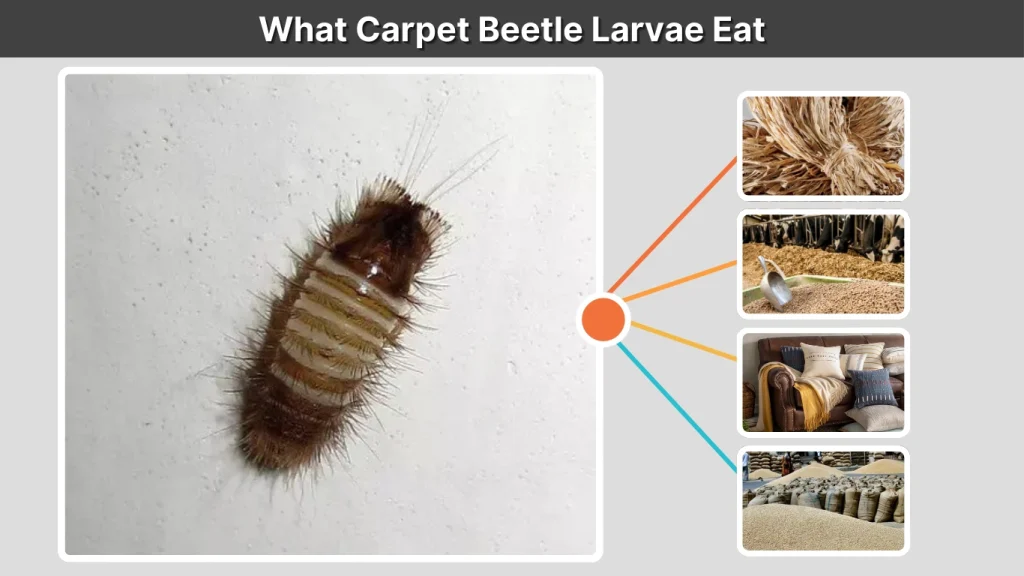
Larvae prefer natural animal-based fibers such as wool, silk, fur, and feathers. These materials contain keratin, which provides essential nutrients for growth. Infestations often appear in carpets, clothing, and blankets made of organic fibers. This preference makes them especially damaging to expensive garments and home décor made from natural textiles.
Animal-Based Products
Leather, hides, and even mounted taxidermy specimens are common food sources for carpet beetle larvae. They chew through these protein-rich materials, leaving holes and weakened surfaces. Museums and collectors often battle infestations to protect artifacts. Their appetite for animal-derived items underscores their role as natural recyclers in the environment.
Household Fabrics
Carpet beetle larvae attack upholstery, rugs, and stored clothing. They feed on fibers in hidden or dark spaces, such as under furniture or inside closets. Infestations are usually noticed when holes appear in fabric or larvae skins are found nearby. Their hidden feeding makes them difficult to detect until damage occurs.
Stored Food Products
In addition to fabrics, larvae feed on dried goods like flour, cereals, grains, and pet food. They infest pantry items by chewing into packaging. While less common than fabric damage, contaminated food supplies pose a hygiene risk. Regular inspection and airtight storage are essential to reduce infestations in kitchens and storage areas.
Dead Insects and Organic Debris
Carpet beetle larvae consume insect carcasses, shed skins, and hair in hidden areas like basements or attics. This behavior makes them efficient recyclers of organic debris. However, indoors, their feeding on such materials contributes to ongoing infestations. Cleaning neglected spaces reduces their food supply and helps prevent reoccurrence.
What Adult Carpet Beetles Eat
Pollen and Nectar
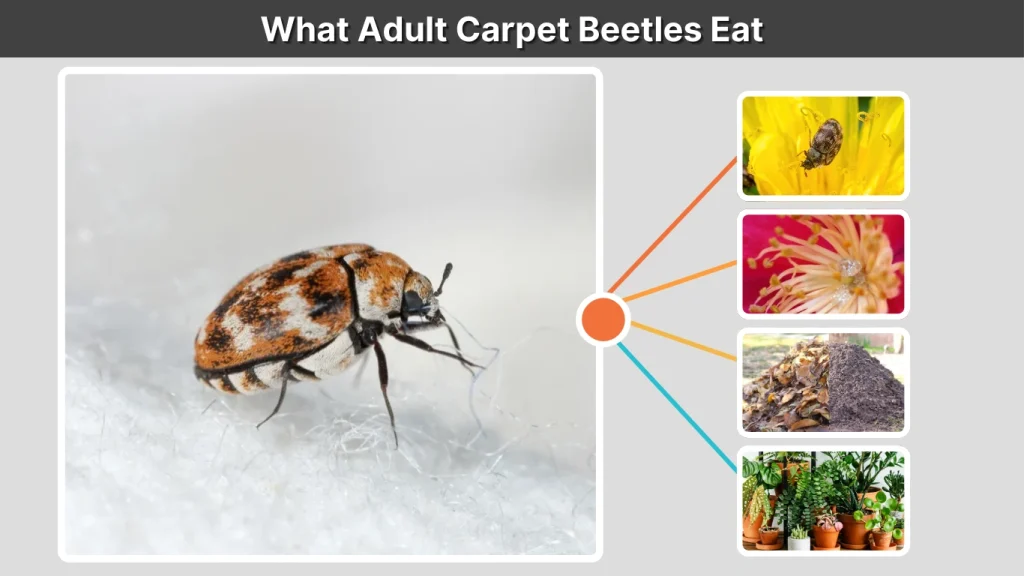
Unlike their larvae, adult carpet beetles primarily feed on pollen and nectar. They are commonly found outdoors on flowering plants during spring and summer. While adults do not damage household fabrics, they play a key role in reproduction, often laying eggs indoors where larvae later cause significant destruction.
Plant Material
Adult beetles may also nibble on flower petals or soft leaves while foraging outdoors. These plant-based foods provide extra nourishment alongside pollen. Although their feeding has little economic impact, their movement between plants and homes increases the risk of larvae being introduced indoors, where they cause the most harm.
Household Attraction
Though adults do not feed on fabrics, they are drawn to homes by light and the scent of food sources. Once inside, they may settle near windowsills or houseplants. Their main contribution to infestations is egg-laying, ensuring larvae emerge in areas with access to natural fibers and stored products.
Household Risk Factors
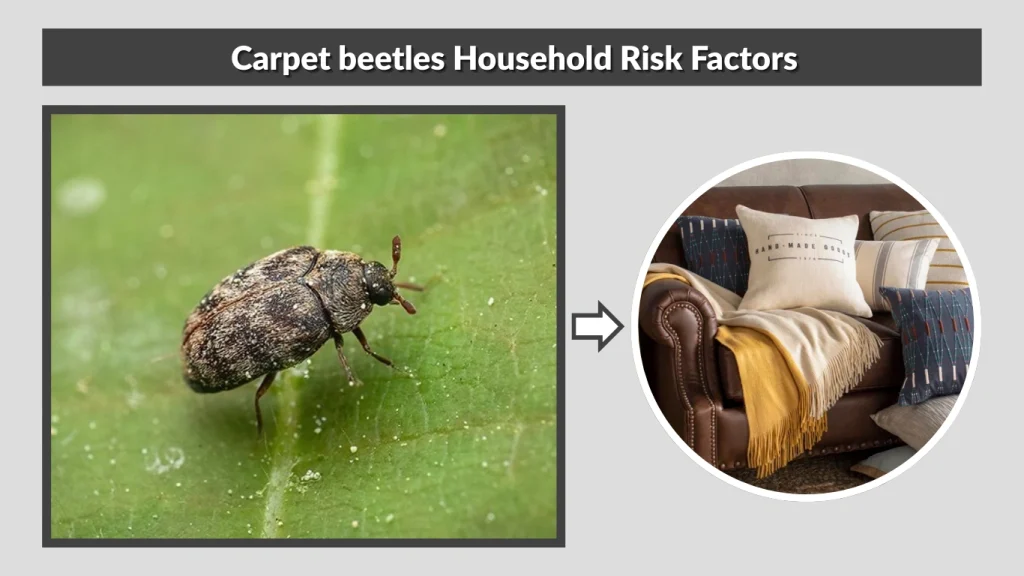
Carpet beetles thrive in homes with abundant fabrics, clutter, or poorly stored goods. Seasonal activity peaks in warmer months, when adults seek indoor egg-laying sites. Larvae exploit dark, undisturbed areas such as closets, attics, and under carpets. Understanding these risk factors helps identify vulnerable spaces and prevent infestations.
Environmental Influence on Diet
Carpet beetle diets vary depending on environment. Indoors, larvae target clothing, carpets, and stored foods. Outdoors, adults rely on nectar and pollen. Seasonal shifts also matter—spring blooms feed adults, while indoor conditions provide larvae year-round resources. Human activity, such as storing woolens or grains, expands their available food supply.
Signs of Carpet Beetle Feeding
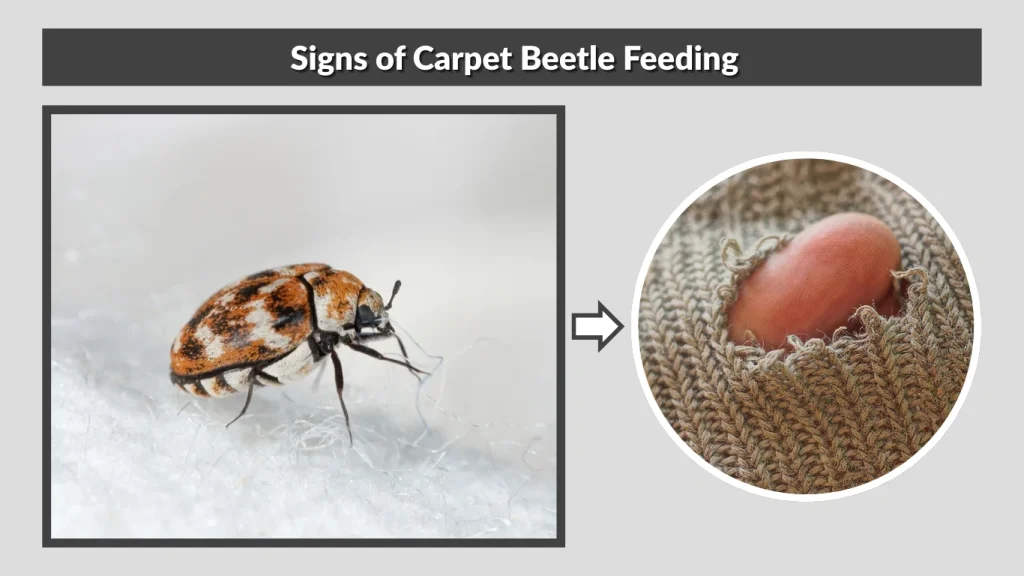
Infestations are often identified by holes in clothing, thinning patches in carpets, or damaged upholstery. Shed larval skins, resembling brown husks, are another clear indicator. In kitchens, contaminated grains or pet food point to larvae feeding. Detecting these early signs is key to minimizing damage and managing outbreaks effectively.
Role in Ecosystems
In nature, carpet beetles act as recyclers, consuming feathers, fur, carcasses, and organic debris. This helps return nutrients to soil and maintains ecological balance. However, when they invade human spaces, their recycling behavior becomes destructive. Recognizing their dual role highlights both their environmental importance and their household pest status.
Conclusion
Carpet beetles eat a wide variety of materials, with larvae targeting fabrics, animal products, and stored food, while adults feed mainly on pollen and nectar. Their scavenging role supports ecosystems, but indoors, they pose a major pest problem. By learning what carpet beetles eat, homeowners can take steps to prevent damage and protect valuable belongings.
FAQs
1. What do carpet beetle larvae eat?
Carpet beetle larvae feed on natural fibers such as wool, silk, feathers, fur, and leather. They also attack stored food products like flour, cereals, and pet food. Indoors, they target carpets, clothing, and upholstery, causing noticeable damage. Their keratin-rich diet makes them particularly harmful to households with organic textiles.
2. Do adult carpet beetles eat fabrics?
No, adult carpet beetles do not eat fabrics. Instead, they feed on pollen, nectar, and sometimes soft plant materials outdoors. Their role in homes is primarily reproductive, as females lay eggs in hidden areas. Once larvae hatch, they become responsible for fabric and food damage, making the adult stage less destructive.
3. Can carpet beetles infest food?
Yes, carpet beetle larvae can infest food supplies, especially dried goods such as cereals, grains, flour, and pet food. They chew into packaging and contaminate products, making them unsafe to eat. Infestations in kitchens and pantries require immediate cleaning, discarding of contaminated items, and proper storage in sealed containers.
4. Why are carpet beetles attracted to my house?
Carpet beetles are attracted to homes with abundant food sources. Larvae seek natural fibers, stored foods, and organic debris, while adults are drawn indoors by light and warmth. Poorly stored clothing, cluttered spaces, and open food packages increase the risk of infestation, making household cleanliness and storage practices crucial.
5. Do carpet beetles serve any purpose in nature?
Yes, carpet beetles are important recyclers in natural ecosystems. They feed on animal remains, feathers, fur, and other organic debris, returning nutrients to the soil. While beneficial outdoors, their scavenging habits become destructive when they move indoors, damaging household fabrics and stored foods. Their ecological role contrasts with their pest status.
