
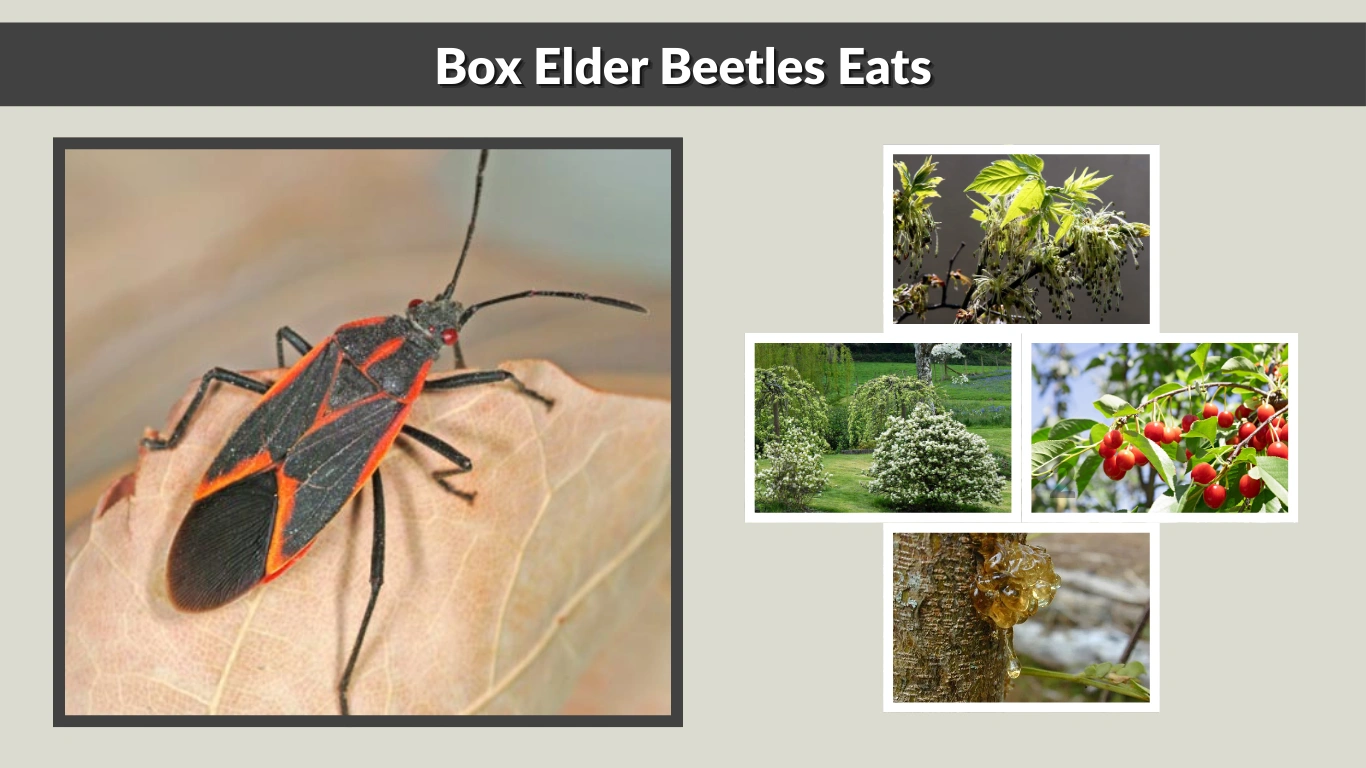
Box elder beetles are small, red-and-black insects often seen clustering on trees or sun-warmed walls. While they aren’t dangerous to humans, their diet can become a nuisance for homeowners and gardeners. Understanding what box elder beetles eat helps explain why they gather in large numbers and how to prevent infestations. Below are seven common foods these insects love to feed on.
1. Box Elder Tree Seeds
Box elder beetles are strongly attracted to box elder trees, their primary food source. They especially love the seeds, which provide easy nutrition. During the fall, when seeds drop in abundance, beetles gather in large clusters, making it their peak feeding season.
2. Box Elder Tree Leaves
Beyond seeds, box elder beetles also feed on the tree’s young leaves. They use their piercing-sucking mouthparts to extract sap, leaving behind tiny marks. While this rarely kills the tree, heavy infestations can weaken it over time.
3. Maple Tree Seeds
These insects don’t limit themselves to box elders. Maple trees, particularly the seed pods (often called “helicopters”), attract box elder beetles as well. The seeds are rich in nutrients and easy to pierce, making them a reliable food source.
4. Ash Tree Seeds

When box elder seeds are less available, beetles turn to ash trees. The seeds of ash trees provide a good alternative, helping the beetles survive during seasonal changes. This adaptability explains why they’re often found in areas with mixed tree species.
5. Fruits from Trees
Though less common, box elder beetles sometimes feed on fruit trees, such as apple, plum, and cherry. They puncture the fruit surface to extract juices, leaving behind spots or minor damage. While they rarely destroy entire crops, their presence can frustrate gardeners.
6. Ornamental Trees and Shrubs
Box elder beetles may also feed on ornamental plants, especially those with softer leaves or sap. Species like locust trees and flowering shrubs can attract them. This feeding behavior can harm decorative landscapes, reducing their visual appeal.
7. Plant Sap
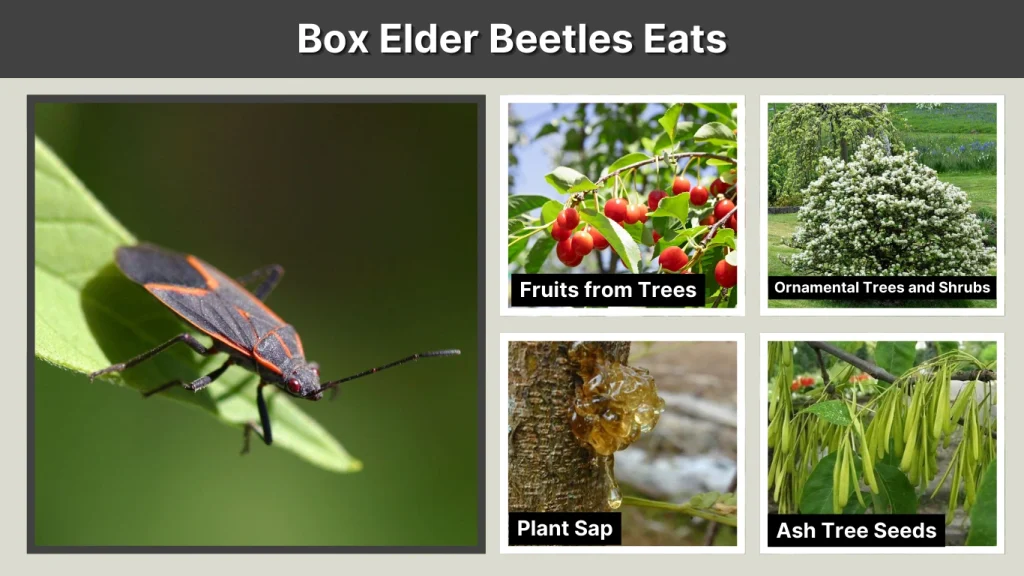
Finally, plant sap is a consistent part of their diet. Instead of chewing, they pierce stems, seeds, or fruits and suck out the liquid. This method of feeding allows them to survive on various plants, even when seeds are scarce.
Feeding Process of Box Elder Beetles
Box elder beetles use specialized mouthparts designed for piercing and sucking. Unlike chewing insects, they insert a needle-like beak into plant tissue and draw out sap or seed fluids. Their feeding process leaves behind small puncture marks, but the real issue is their tendency to cluster in large groups, multiplying the damage.
Damage Caused by Box Elder Beetles
Although box elder beetles don’t pose serious agricultural threats, they can cause noticeable problems. On trees, their feeding may lead to cosmetic damage such as spots, yellowing, or curling leaves. In gardens, they sometimes damage fruits, leaving unsightly blemishes. Inside homes, the nuisance is worse—they invade in large numbers during cooler months, leaving behind stains on walls and fabrics and producing an unpleasant odor when crushed.
Prevention and Control Methods
The best way to deal with box elder beetles is through prevention. Sealing cracks, gaps, and windows helps keep them from entering homes. In yards, reducing their favorite food sources, like female box elder trees that produce seeds, can minimize attraction. For stubborn infestations, safe insecticidal sprays or natural deterrents such as soapy water may be used around entry points. Regular yard maintenance is another effective step in controlling their population.
Ecological Role
Despite being pests for homeowners, box elder beetles play a minor role in nature. By feeding on seeds, they contribute to seed recycling and natural decay processes. Their presence also provides food for birds and other small predators. However, their ecological contribution is relatively limited compared to the inconvenience they create for humans.
Conclusion
Box elder beetles survive mainly on seeds, sap, and fruits from box elder, maple, ash, and ornamental plants. While their feeding rarely kills trees, their clustering behavior, staining, and foul odor make them unwanted visitors. By understanding their diet and feeding habits, homeowners can take practical steps to prevent infestations and reduce damage indoors and outdoors.
FAQs
1. Do box elder beetles eat wood or furniture?
No, they don’t eat wood or furniture. They survive on seeds, sap, and plant material, making them harmless to wooden structures.
2. Can box elder beetles damage crops?
They rarely damage large-scale crops but may occasionally harm fruits in small gardens or orchards by piercing the skin.
3. Are they harmful to houseplants?
It’s uncommon, but if houseplants have soft leaves or produce sap, beetles may feed on them if they enter indoors.
4. What attracts box elder beetles into homes?
Warmth and sunlight attract them to walls, while cracks and gaps allow them to enter homes, especially in fall and winter.
5. How can I keep box elder beetles away from my yard?
Seal entry points, trim seed-producing box elder trees, and use natural repellents like soapy sprays. Reducing their food sources is the most effective method.
