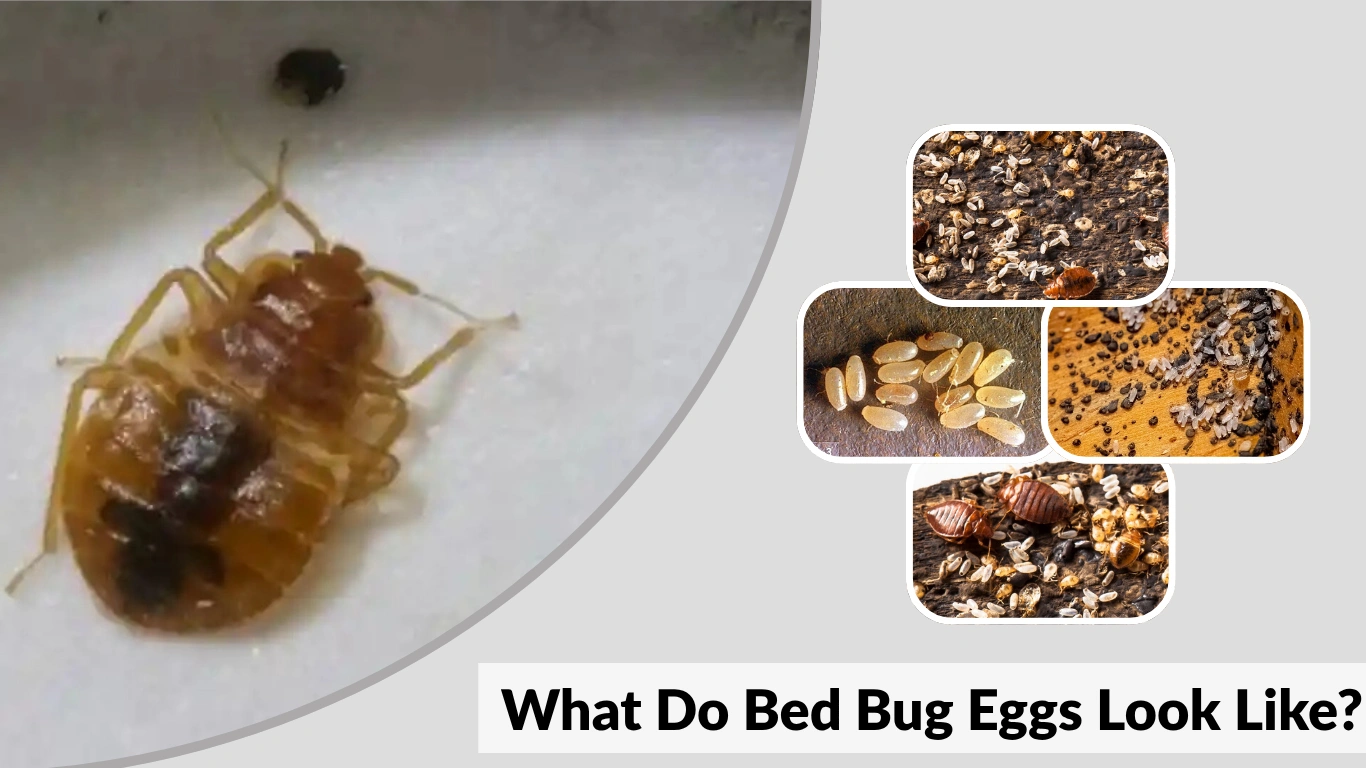
Bed bug infestations often start small and unnoticed, and one of the earliest signs is the presence of bed bug eggs. These eggs are tiny, sticky, and often hidden deep in seams or cracks, making them easy to miss but extremely important to identify. Knowing what bed bug eggs look like—on mattresses, sheets, clothing, furniture, and other surfaces—helps you detect an infestation early and take action before it spreads.
This guide covers the appearance of bed bug eggs, where they are found, how they change before and after hatching, and how to distinguish them from similar household debris.
What Bed Bug Eggs Look Like (Basic Identification)
Size and Dimensions
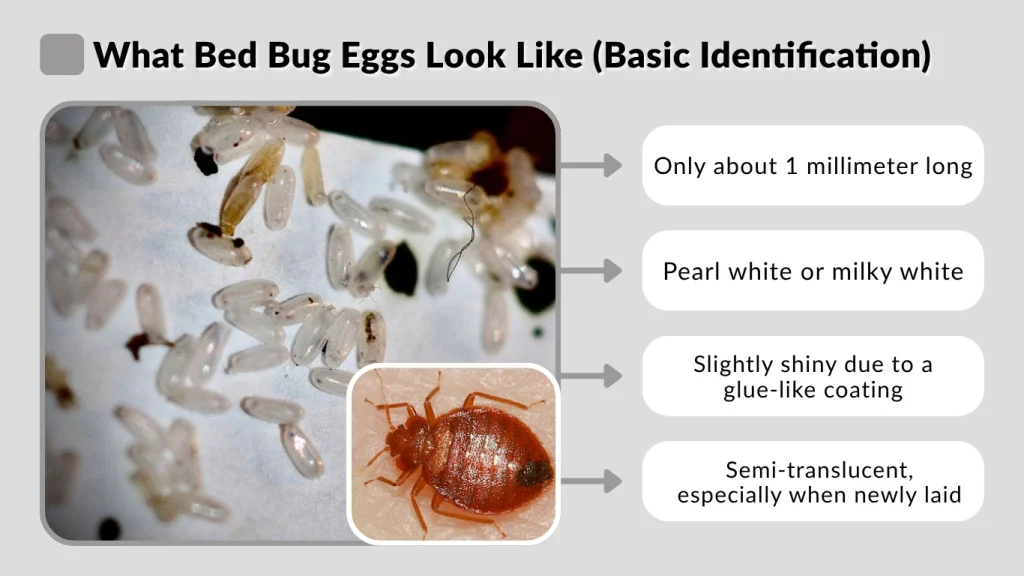
Bed bug eggs are incredibly small—only about 1 millimeter long, roughly the size of a grain of salt or the head of a pin. Their tiny size makes them easy to overlook, especially on light-colored surfaces. When viewing up close, they appear elongated rather than round, with a smooth casing that holds the developing nymph inside.
Color and Texture
Fresh bed bug eggs are:
- Pearl white or milky white
- Slightly shiny due to a glue-like coating
- Semi-translucent, especially when newly laid
This shiny coating helps the egg stick securely to surfaces, which is why they do not brush away easily like dust or lint.
Shape and Structure
Each egg has a slightly curved, oval shape with a tiny “cap” at the narrow end. This cap opens when the nymph hatches. Before hatching, the egg appears smooth and intact; afterwards, the cap is lifted or ruptured, revealing a distinctive opening.
Where Bed Bugs Lay Their Eggs
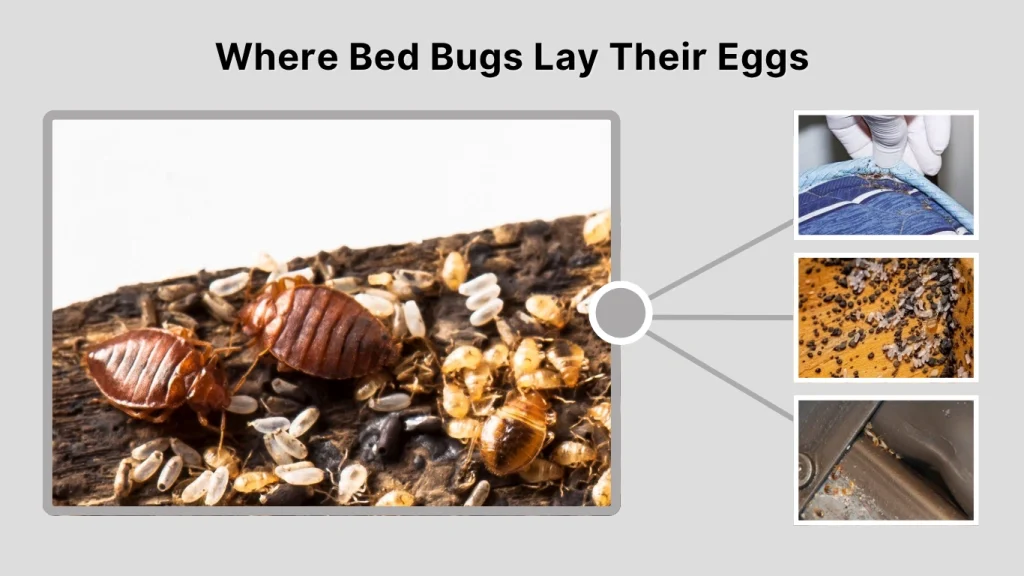
Female bed bugs lay eggs in hidden, tight spaces where they are unlikely to be disturbed.
Common Hiding Places
Some of the most frequent egg locations include:
- Mattress seams and piping
- Box spring edges
- Bed frame joints
- Behind headboards
- Cracks in walls or baseboards
Because females lay eggs close to feeding sites, areas near sleeping humans are hotspots.
Less Common Spots
While less frequent, bed bug eggs can also be found:
- Behind wallpaper
- Under carpeting
- Inside electrical outlets
- In folds of curtains or drapes
These eggs are laid when infestations grow and bugs spread outward from the bed.
Why Location Matters for Identification
Finding eggs far from the bed often indicates a larger infestation. Bed bugs typically stay close to their food source, so eggs found on furniture, wood, or clothing may signal that the population has expanded.
What Bed Bug Eggs Look Like on Different Household Surfaces
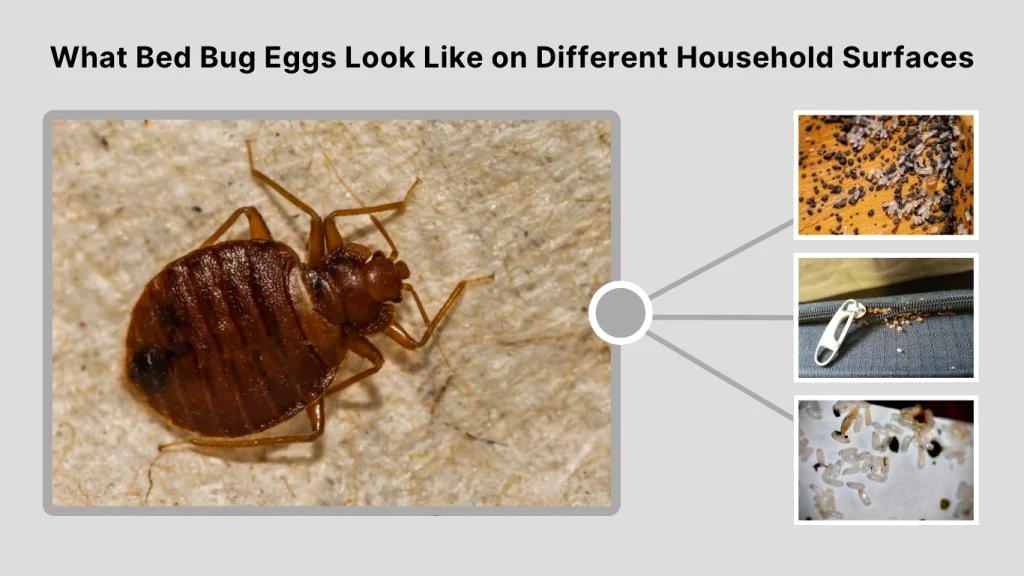
On Mattresses and Box Springs
This is the most common place to find eggs. They appear as tiny white dots glued along:
- Seams
- Edges
- Tufting
- Stitch lines
Eggs often appear alongside fecal spots, shed skins, and live bugs.
On Sheets, Blankets, and Pillows
Because sheets are not as textured as mattresses, eggs may stand out more clearly. They look like small white specks that do not rub off easily. If an object brushes off with your finger, it is likely lint, not an egg.
On Clothing and Fabric Items
Bed bug eggs on clothing usually hide in:
- Folds
- Seams
- Inside pockets
- Underside of collars
These eggs stick firmly and may go unnoticed until laundering.
On Furniture and Upholstery
Eggs on sofas or chairs appear near:
- Cushion seams
- Zipper linings
- Under cushion flaps
- Beneath the couch itself
Fabric texture helps hide eggs effectively.
On Wood Surfaces
Eggs blend differently depending on the wood color:
- On dark wood: bright white, easy to see
- On light wood: slightly harder to spot
They are often tucked into cracks, grooves, screw holes, and joints.
On Dark Surfaces
Dark materials create high contrast, making eggs easier to notice. The white color stands out sharply, especially under flashlight inspection.
Bed Bug Eggs vs Other Household Debris
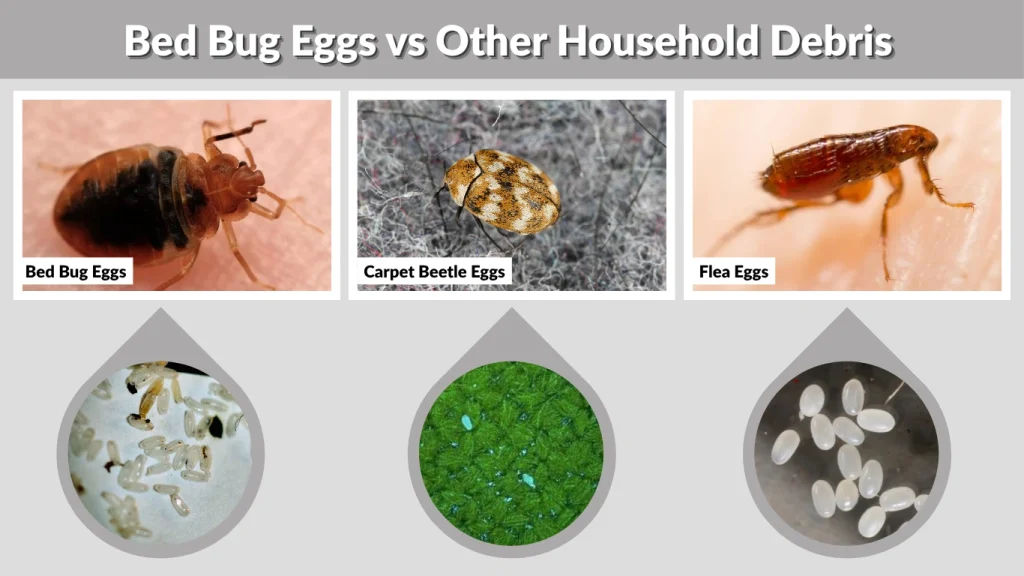
Bed Bug Eggs vs Dust, Lint, and Crumbs
Dust and lint scatter easily; eggs remain firmly glued.
Crumbs are granular and uneven, while bed bug eggs are smooth and shiny.
Bed Bug Eggs vs Carpet Beetle Eggs
Carpet beetle eggs are:
- Cream-colored
- Ribbed
- More rounded
Unlike bed bug eggs, they are not shiny or sticky.
Bed Bug Eggs vs Flea Eggs
Flea eggs are:
- Oval but more rounded
- Pearl-white
- NOT sticky—they roll like tiny grains of sand
If the speck moves freely when touched, it is not a bed bug egg.
What Bed Bug Eggs Look Like Before and After Hatching
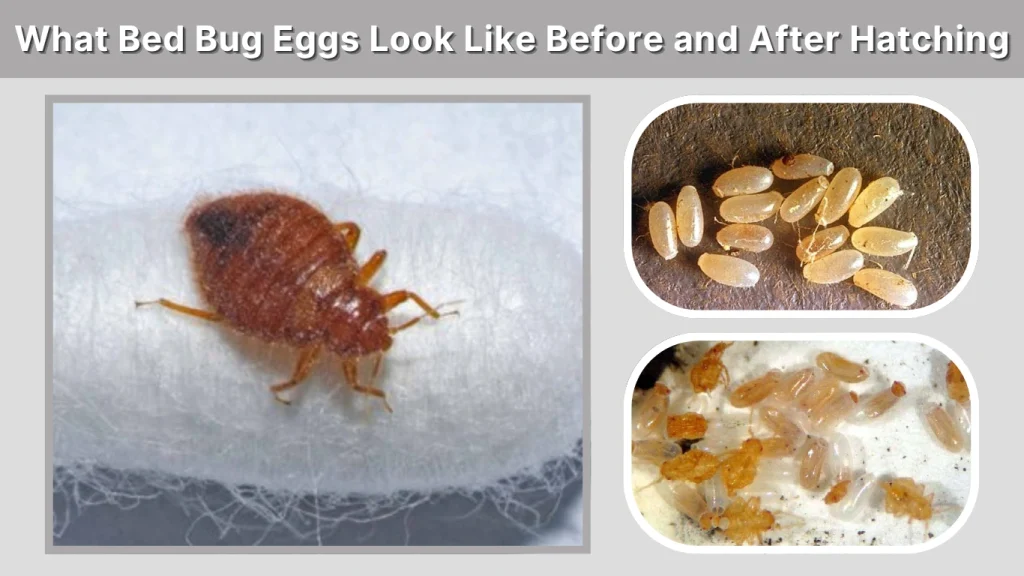
Before Hatching
Before they hatch, bed bug eggs appear:
- Smooth and firmly sealed
- Pearl white or slightly translucent
- Moist and shiny due to the sticky glue covering
The top “cap” of the egg is closed tightly. Under magnification, you may see a faint line where the cap will eventually open.
After Hatching
Once the egg has hatched, the cap at the top pops open like a tiny door. A hatched egg looks:
- Tubular
- Dull white instead of shiny
- Split open at one end
This small opening is one of the most reliable signs that the egg has already released a nymph.
Dried, Dead, or Old Eggs
Old or dead eggs look very different from fresh ones:
- Shriveled or flattened
- Yellowish or tan instead of white
- Brittle, papery texture
Dead or dried eggs are often found after heat treatments or when infestations are older.
What Empty Egg Shells Look Like
Empty shells are extremely light and fragile. They may appear:
- Like flakey white dust
- Scattered in clusters
- Mixed with shed skins or fecal spots
These indicate ongoing reproduction and should not be ignored.
Bed Bug Egg Clusters and Egg Laying Patterns
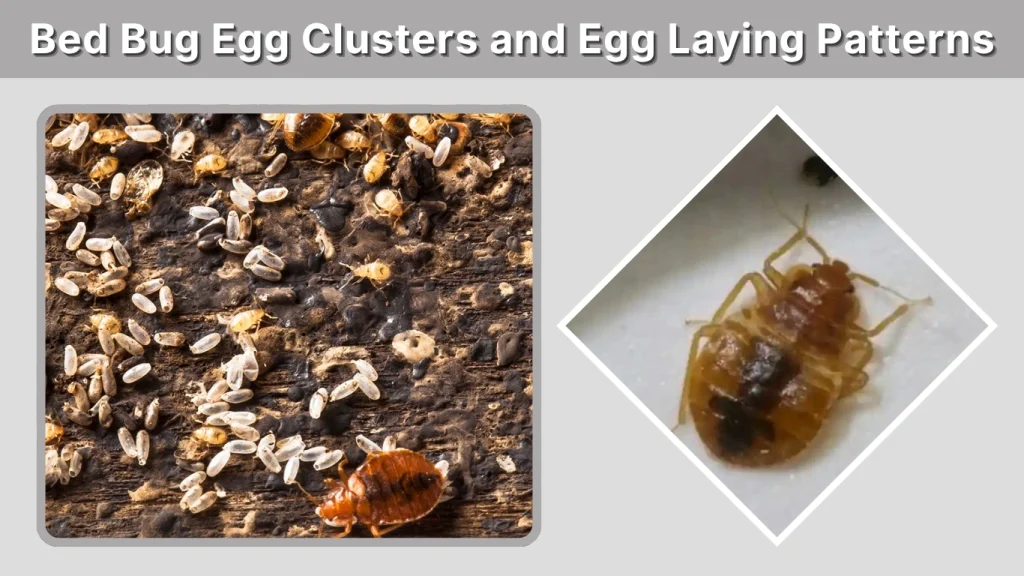
Single Eggs vs Clusters
A female bed bug lays 1–7 eggs at a time and may place them:
- Alone
- In small clusters
- In larger groups during heavy infestations
Clusters often appear in creases or near hiding places.
Glue-Like Substance
Bed bugs use a natural adhesive to cement the eggs onto surfaces. This sticky layer:
- Helps eggs stay in place
- Makes them hard to scrape off
- Causes them to collect dust or fibers
If the egg does not move when you blow on it, it’s likely glued and not debris.
Signs of Heavy Infestation
Multiple egg clusters across different surfaces indicate:
- A large, active infestation
- Many breeding females
- Bugs expanding beyond the bed area
Eggs far from sleeping areas mean the infestation has spread.
Bed Bug Eggs and Newly-Hatched Nymphs
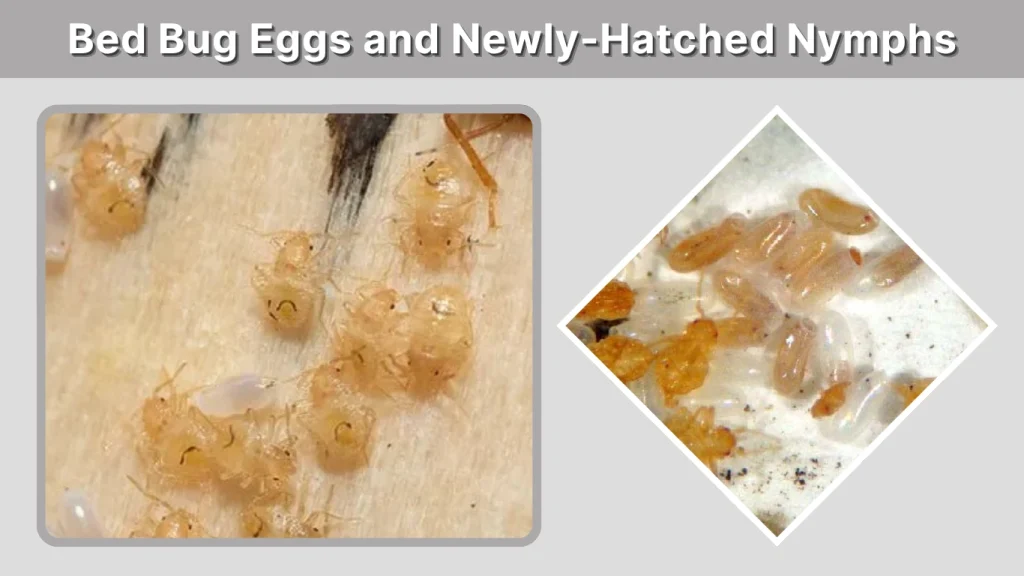
What Baby Bed Bugs Look Like
When nymphs hatch, they are:
- 1 mm long
- Almost transparent
- Very hard to see against pale surfaces
After their first blood meal, they turn reddish with a visible dark spot in the abdomen.
How Nymphs Appear Next to Eggs
You may find:
- Empty shells beside moving pale nymphs
- Multiple nymphs in the same area
- Nymphs congregating with adults in harborages
The presence of nymphs confirms active breeding.
Nymph Behavior Compared to Adults
Nymphs are more sensitive to temperature and moisture and must feed frequently. They hide in smaller cracks than adults and may be seen earlier in an infestation.
What Bed Bug Eggs Look Like in Photos (Description-Based)
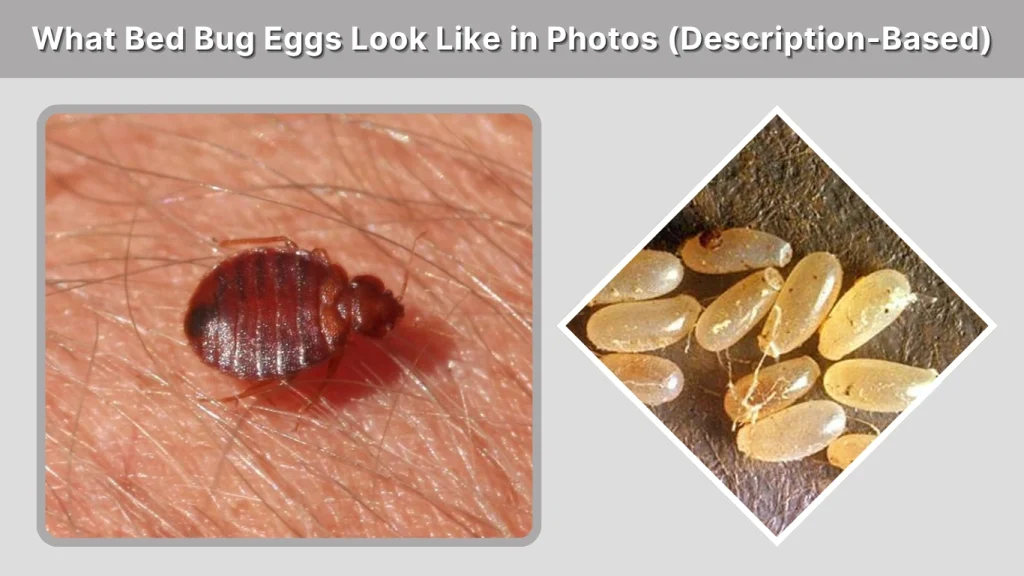
Close-Up Egg Photos
In magnified images, bed bug eggs look like:
- Tiny white capsules
- Smooth and glossy
- Firmly attached to fibers or surfaces
The shape resembles a miniature grain of white rice, elongated and neatly rounded.
Eggs on Different Background Colors
- On light backgrounds: harder to see, blend with fabric
- On dark backgrounds: bright white contrast
- On wood: stand out if the wood is dark or polished
Flashlight angles often reveal the glossy shine.
Eggs Mixed With Fecal Spots or Skins
Eggs are often found near:
- Black fecal spots (digested blood)
- Shed nymph skins
- Live adults
This combination is one of the strongest signs of infestation.
What Bed Bug Egg Sacs, Cases, and Encasements Look Like
Do Bed Bugs Have Egg Sacs?
Unlike other insects (such as spiders), bed bugs do not create egg sacs. They lay each egg individually and glue it in place. When people refer to “egg sacs,” they are usually seeing:
- Clusters of eggs
- Glue residue
- Fecal spot patches
Egg “Encasements” or Glue Residue
The sticky residue around eggs may look like:
- A thin clear shell
- A smeared patch
- A coating around clusters
But it is not an actual sac or container.
Egg Shells After Hatching
Once hatched, shells appear dry, dull, and slightly curled. They remain glued to the surface until removed manually.
Spotting Bed Bug Eggs on Pets or Animals
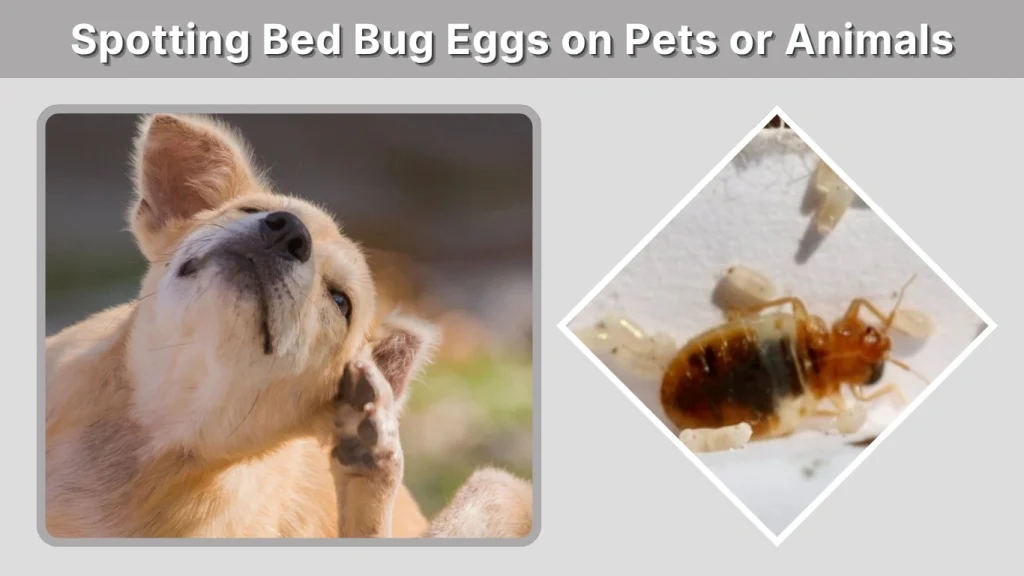
Bed Bug Eggs on Cats and Dogs (Rare)
It is highly uncommon for bed bug eggs to appear on pets because:
- Bed bugs do not cling to fur
- They prefer solid surfaces
- They feed and then retreat to hiding places
If you think eggs are on a pet, they are far more likely flea eggs.
What People Mistake for Bed Bug Eggs on Pets
Most commonly confused items include:
- Flea eggs (not sticky & roll off)
- Dandruff flakes
- Pet dander
Safely Inspecting Pets and Bedding
Check:
- Pet bedding
- Crate seams
- Sleeping areas
Bed bugs may hide near pets but not on them.
How to Inspect Your Home for Bed Bug Eggs
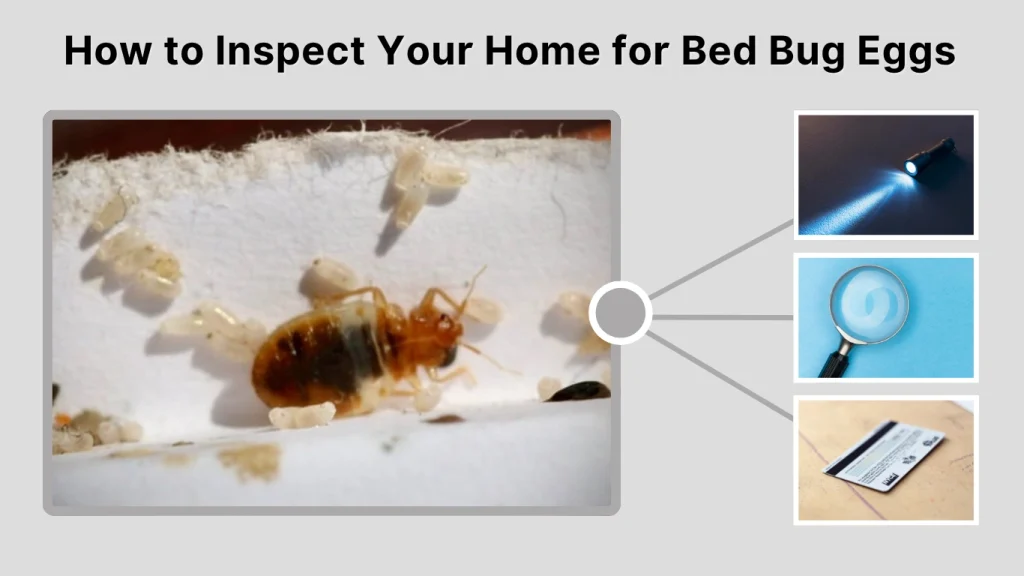
Tools You Need
- Flashlight
- Magnifying glass
- Credit card (to scrape seams)
- Tweezers
- White paper or sheet
Hotspots to Check
- Mattress seams and piping
- Bed frame cracks
- Back of headboards
- Couch cushions and zippers
- Baseboards and flooring gaps
How to Conduct a Systematic Inspection
- Start with the bed.
- Check adjacent furniture.
- Inspect floors and baseboards.
- Move outward from sleeping areas.
Eggs found outside the bed area suggest a more advanced infestation.
How to Remove and Kill Bed Bug Eggs
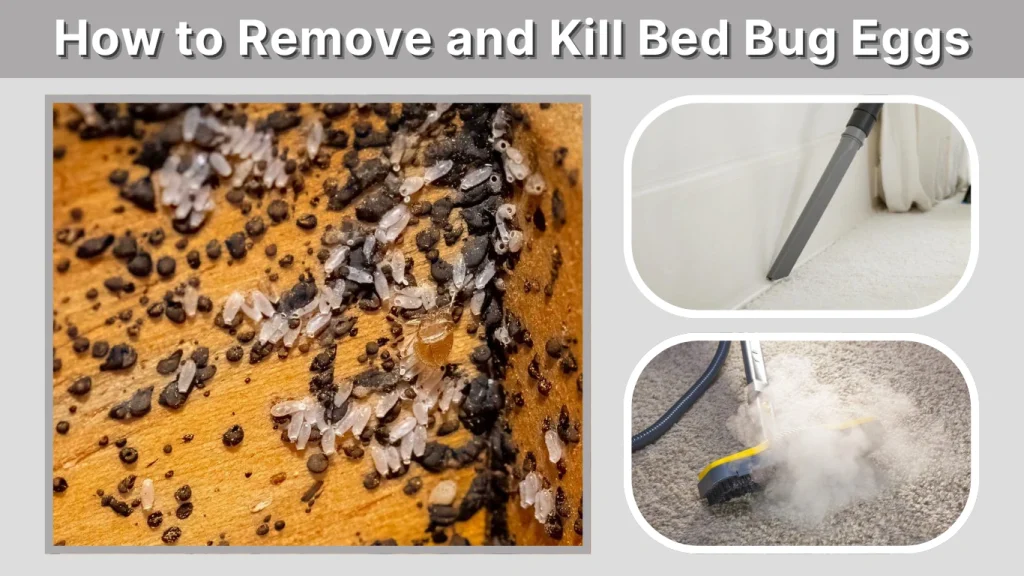
Washing and Drying
Wash infested fabrics in hot water and dry on high heat for at least 30 minutes. Heat kills eggs instantly.
Vacuuming and Steaming
Use:
- A vacuum with a crevice tool
- A steamer producing 120–180°F steam
Direct steam contact destroys eggs immediately.
Heat Treatment vs DIY Methods
Professional heat treatments kill eggs throughout the home. DIY methods often miss eggs hidden deep in cracks.
Why Chemicals Alone Often Fail
Most insecticides do not penetrate egg shells. Multiple treatments are needed to target newly hatched nymphs.
Preventing Bed Bug Eggs From Returning
Mattress Encasements
Encasements trap existing bed bugs and prevent new egg-laying in seams.
Decluttering and Cleaning
Clutter creates more egg-laying spaces. Regular cleaning reduces hiding spots.
Prevention After Travel
- Inspect luggage
- Wash travel clothes immediately
- Avoid placing bags on hotel beds
These precautions help prevent future infestations.
FAQs
What do bed bug eggs look like to the human eye?
Bed bug eggs appear as tiny, pearl-white, grain-of-salt–sized capsules about 1 mm long. They’re smooth, oval, and slightly shiny because they’re coated with a sticky substance. This glue helps them stay firmly attached to fabric, wood, seams, or cracks.
Where are bed bug eggs usually found?
Bed bug eggs are most commonly found in mattress seams, box springs, bed frames, couch cushions, baseboards, and tight cracks. Females hide eggs near feeding areas, so bedrooms are the first place to inspect. Large infestations may spread to furniture, closets, and behind walls.
What do bed bug eggs look like after they hatch?
Hatched bed bug eggs look like tiny dull-white shells with an open “cap” at one end. They appear dry, fragile, and slightly wrinkled. These empty casings often remain glued to the surface and are a strong sign that nymphs have already emerged.
How can I tell the difference between bed bug eggs and flea eggs?
Flea eggs are smooth, oval, pearl-white, and roll freely when touched. Bed bug eggs are more elongated, slightly shiny, and glued firmly to surfaces. If an egg doesn’t move when you brush or blow on it, it’s far more likely to be a bed bug egg.
Do bed bug eggs die in the washing machine?
Yes—but only if washed in hot water and dried on high heat for at least 30 minutes. Heat kills bed bug eggs instantly. Cold or lukewarm washes won’t kill them, so always use maximum heat when treating infested clothing, bedding, or fabrics.