
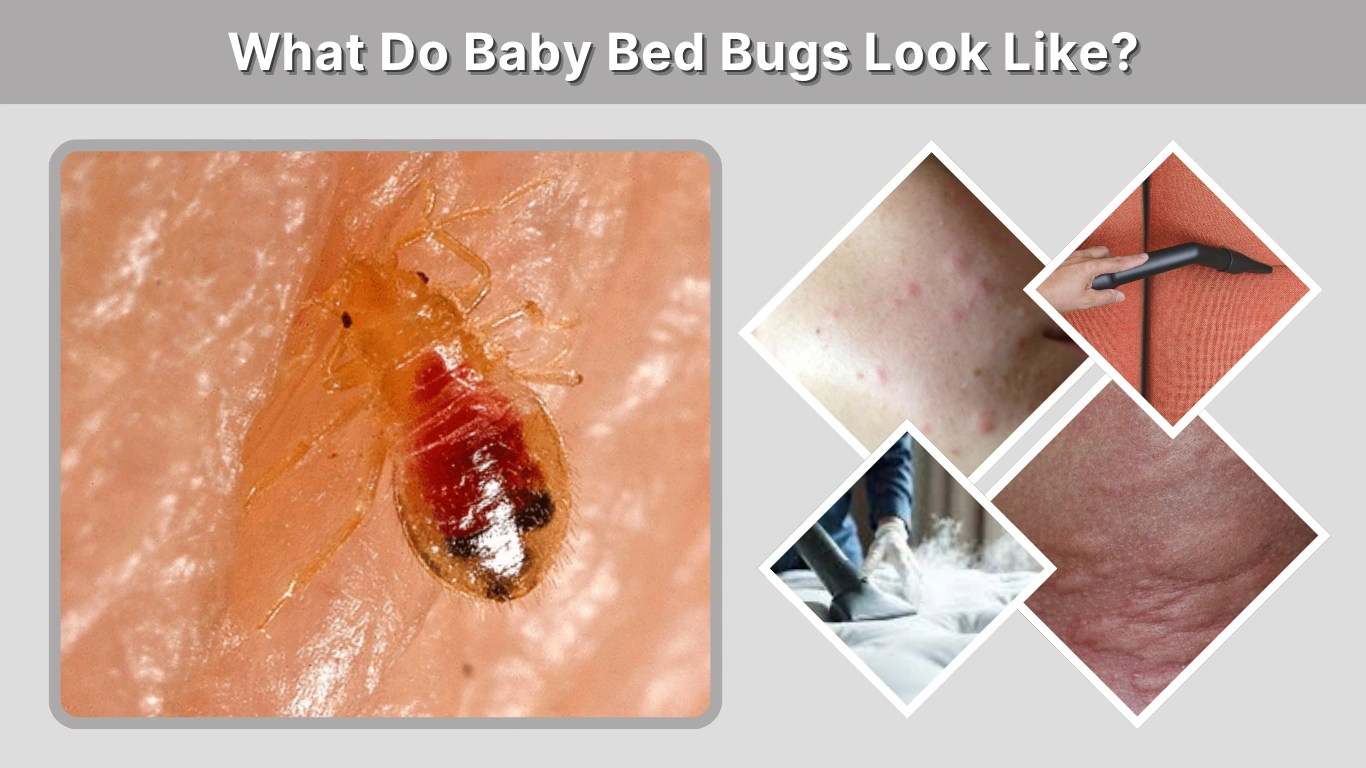
Baby bed bugs—also called nymphs—are one of the most important signs of a growing infestation. They are tiny, fast-growing, and often harder to spot than adults. Because they must feed to survive and molt, identifying baby bed bugs early can stop a small problem from turning into a major invasion. This guide explains what baby bed bugs look like, how big they are, how they behave, and how to eliminate them before they multiply.
What Are Baby Bed Bugs?
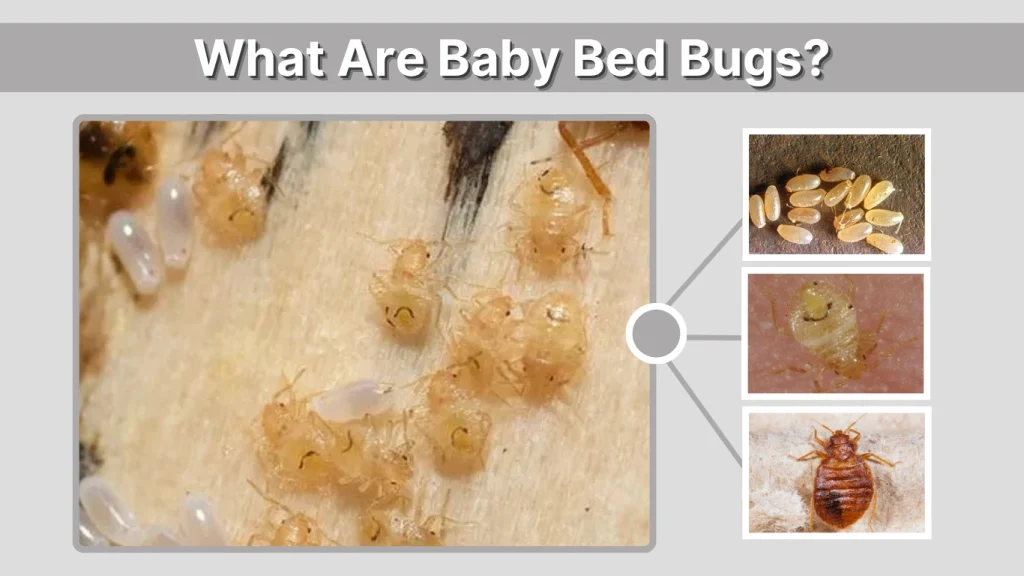
Baby bed bugs are newly hatched bed bug nymphs. They begin life as translucent, pin-sized insects that must feed on blood to grow. Unlike adult bed bugs, which are reddish-brown and easier to see, baby bed bugs can appear almost invisible on light-colored surfaces.
Overview of Bed Bug Life Stages
Bed bugs go through seven stages during their life cycle:
- Egg
- Nymph Stage 1
- Nymph Stage 2
- Nymph Stage 3
- Nymph Stage 4
- Nymph Stage 5
- Adult
Each nymph must feed and shed its skin to reach the next stage. Because they grow quickly when food is available, spotting baby bed bugs often means the infestation has been active for weeks.
What Do Baby Bed Bugs Look Like?
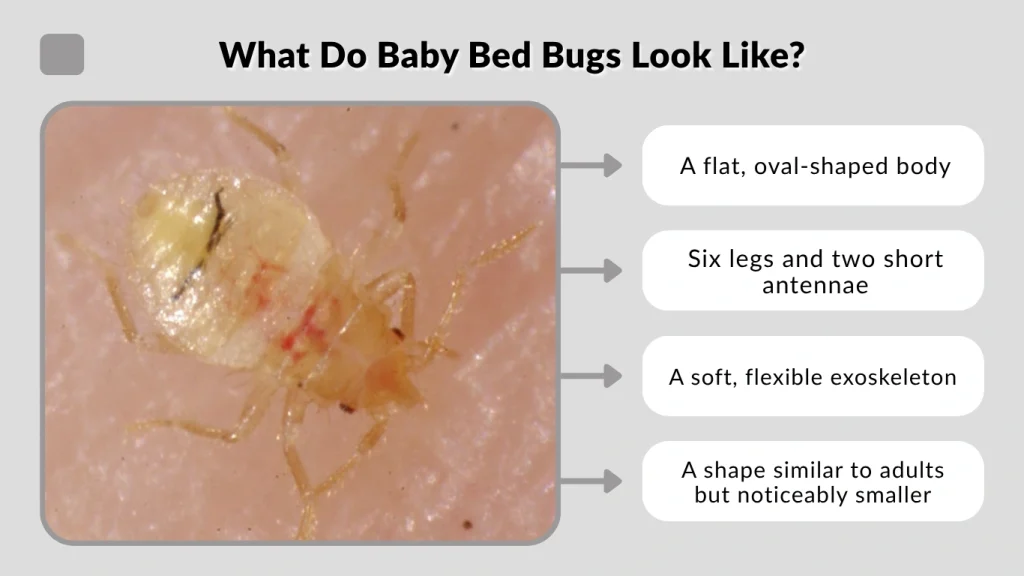
Baby bed bugs have a very distinct appearance, though their small size makes them easy to overlook. Once you know the key features—shape, color, and visibility—they become much easier to identify.
General Appearance
Baby bed bugs have:
- A flat, oval-shaped body
- Six legs and two short antennae
- A soft, flexible exoskeleton
- A shape similar to adults but noticeably smaller
They are not fuzzy, not hairy, and not round like beetles. Instead, their flat, tear-drop shape helps them hide in seams and cracks.
Colors at Different Stages
A baby bed bug’s color changes as it grows and feeds:
- Newly hatched: Clear, translucent, or milky white
- Before feeding: Pale yellow or slightly beige
- After feeding: Bright red because blood is visible through the clear skin
- Older nymphs: Brownish as their exoskeleton becomes thicker
Because their skin is so thin, even a tiny blood meal dramatically changes their color.
Are Baby Bed Bugs Visible to the Human Eye?
Yes, baby bed bugs are visible, but they appear extremely small—often mistaken for dust or lint.
Visibility depends on:
- Background color: They disappear on light sheets
- Feeding status: A fed nymph looks dark red and is much easier to spot
- Lighting: Direct light helps reveal their translucent bodies
Although they can seem “microscopic,” they are generally between 1 mm and 3 mm, meaning you can see them with your naked eye if you look closely.
Pictures vs. Real-Life Identification
Photos online usually show baby bed bugs at extreme zoom. In reality:
- They are far smaller
- They blend into fabric
- You may only notice them when they move
This difference often leads homeowners to underestimate an early infestation.
Baby Bed Bug Size & Growth
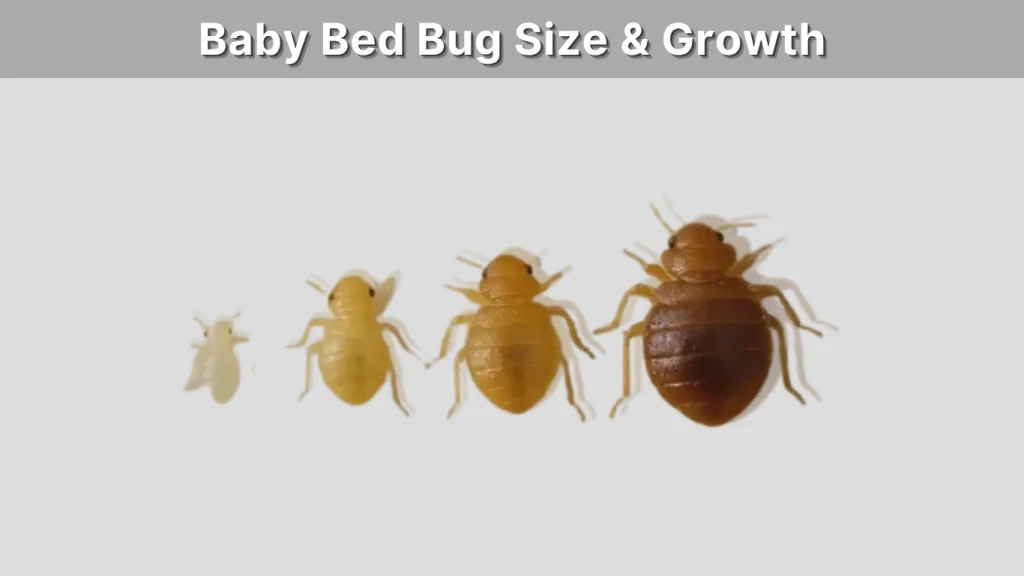
Baby bed bugs grow quickly, especially when they can feed regularly. Their small size is one of the main reasons infestations spread unnoticed.
How Small Are Baby Bed Bugs?
A first-stage nymph is about the size of:
- A grain of salt
- A pinhead
- A tiny sesame seed
Typical size ranges from 1 mm to 1.5 mm, making them one of the smallest visible household pests.
How Big Do They Get as Nymphs Progress?
Each of the five nymph stages increases their size by about 0.5 mm. By the fifth stage, they reach 3–4 mm, approaching adult size.
Why Baby Bed Bugs Seem Smaller After Feeding
Before feeding, baby bed bugs are extremely flat—almost paper-thin.
After feeding:
- They swell
- Their color darkens
- Their size increases by nearly double
This dramatic change makes them easier to spot immediately after a blood meal.
Baby Bed Bug Behavior
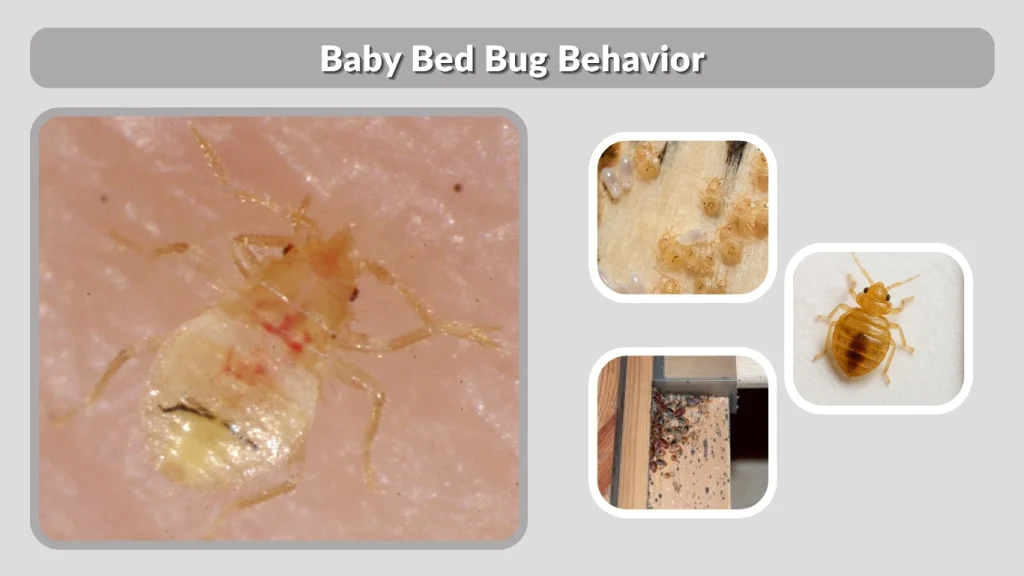
Baby bed bugs behave similarly to adults, but they are more vulnerable and require food more frequently.
Movement (Fast or Slow?)
Baby bed bugs can move surprisingly fast for their size.
They:
- Crawl quickly when searching for a hiding place
- Do not jump
- Do not fly
- Can navigate fabric, wood, and mattress seams with ease
They tend to move faster after feeding because heat and carbon dioxide guide them back to hiding spots.
Hiding Habits
Baby bed bugs hide in extremely tight spaces, including:
- Mattress seams
- Box spring edges
- Cracks in furniture
- Behind baseboards
- Inside electrical outlets
- Under carpeting edges
Because they can fit into spaces thinner than a credit card, baby bed bugs often remain hidden until the infestation grows.
Do Baby Bed Bugs Bite?
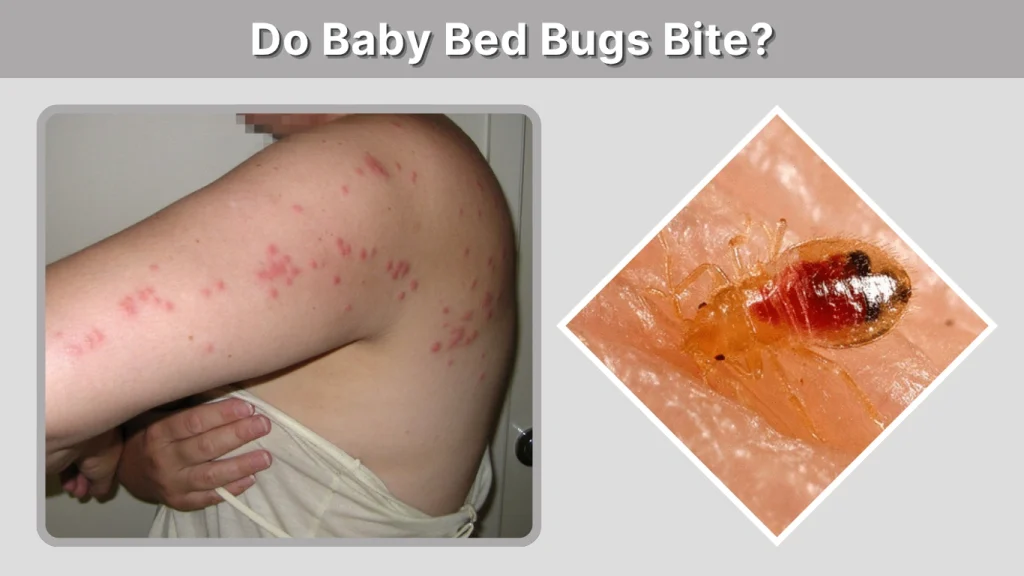
Baby bed bugs must bite to survive. Each nymph stage requires a blood meal to proceed to the next molt.
Can Baby Bed Bugs Bite Humans?
Yes. In fact, baby bed bugs bite as soon as they hatch. Their mouthparts are fully functional from day one.
They typically feed:
- Every few days
- At night
- For only a few minutes
Their bites are often just as irritating as adult bites.
What Baby Bed Bug Bites Look Like
Baby bed bug bites can appear:
- As small red bumps
- In clusters or straight lines
- Similar to adult bed bug bites
- Sometimes smaller due to shorter feeding time
Because their saliva causes irritation, sensitive skin may react strongly—especially in infants or children.
Are Baby Bed Bug Bites Harmful?
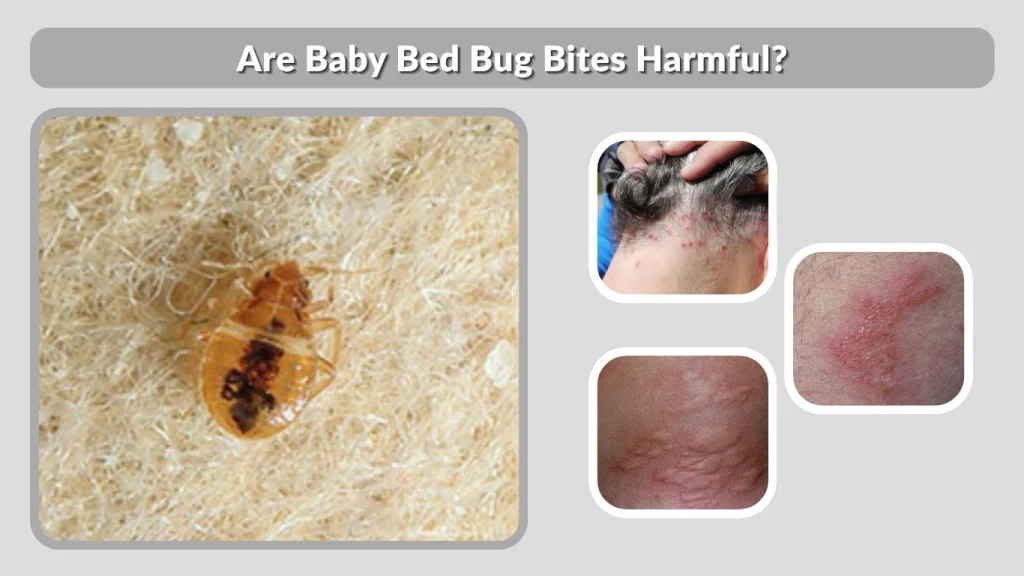
For most healthy adults, baby bed bug bites are more of a nuisance than a danger. However, reactions vary widely. Some people experience almost no symptoms, while others develop intense itching, swelling, and clusters of red welts.
In rare cases, scratching the bites can lead to:
- Skin infections
- Inflammation
- Secondary allergic reactions
Babies and young children are more sensitive, so extra care is needed when they are exposed to an infestation.
Baby Bed Bug Life Cycle & Reproduction
Understanding how bed bugs reproduce is essential for controlling an infestation. Baby bed bugs grow quickly, and females lay eggs continuously—leading to rapid population spikes.
How Bed Bugs Have Babies
Bed bugs reproduce through a process called traumatic insemination, where the male pierces the female’s abdomen to deposit sperm. This method allows females to lay eggs soon after feeding.
A female bed bug can lay 1–5 eggs per day, depending on temperature and food availability.
How Many Babies Bed Bugs Produce
Over her lifetime, a single female can lay:
- 200–500 eggs
- Eggs hatch in 6–10 days
- All babies enter the first nymph stage immediately after hatching
This high reproduction rate means that even a few adult bed bugs can create thousands of babies within months.
How Long Baby Bed Bugs Survive Without Feeding
Baby bed bugs cannot survive nearly as long as adults without food. While adults may endure months without blood, nymphs typically last:
- 2–3 weeks in warm environments
- Up to 4–6 weeks in cooler temperatures
Because they must feed on molt, their survival depends heavily on access to a host.
Baby Bed Bugs vs Other Small Insects
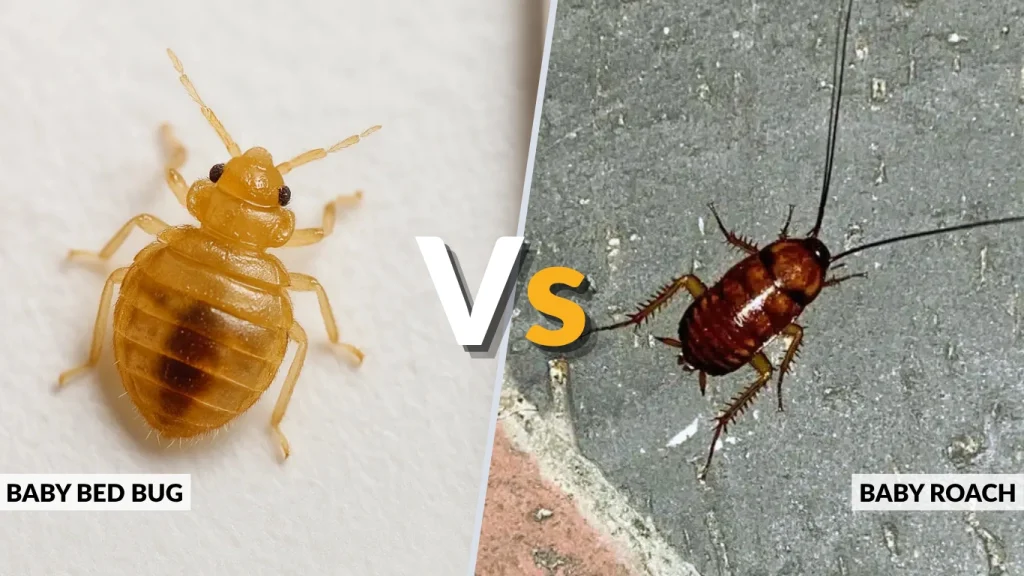
Certain insects can be mistaken for baby bed bugs, especially baby roaches.
Baby Bed Bugs vs Baby Roaches
Key differences include:
| Feature | Baby Bed Bug | Baby Roach |
| Shape | Oval, flat | Longer, cylindrical |
| Color | Pale, clear, red after feeding | Brown or dark |
| Speed | Slow to moderate | Much faster |
| Feeding | Blood only | Food, crumbs, garbage |
| Movement | Crawling only | Can move swiftly and hide deeply |
If in doubt, capturing a specimen for identification makes treatment easier.
Baby Powder & Bed Bugs – Does It Work?
Many homeowners attempt DIY solutions, and baby powder is one of the most commonly mentioned. However, its effects are often misunderstood.
Can Baby Powder Kill Bed Bugs?
No. Baby powder does not kill bed bugs in any meaningful way. Unlike diatomaceous earth, which dehydrates bed bugs by cutting their exoskeleton, baby powder has no such properties.
Does Baby Powder Suffocate Bed Bugs?
Another common myth is that baby powder suffocates bed bugs. Bed bugs breathe very slowly and can survive many hours in low-oxygen environments. Powder lightly covering their body cannot suffocate them.
Is Baby Powder a Repellent?
Baby powder does not repel bed bugs. In fact:
- Bed bugs are not attracted to or repelled by scented talcum powder
- They do not avoid areas dusted with baby powder
- The powder offers zero protection against bites
Because it provides no measurable benefit, baby powder should not be relied on for bed bug control.
How to Get Rid of Baby Bed Bugs
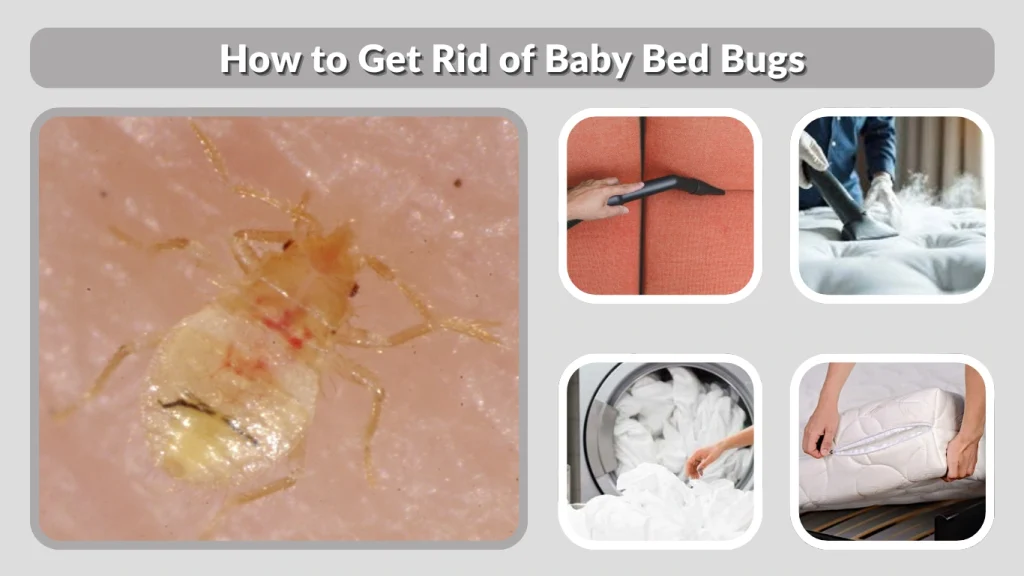
Baby bed bugs are easier to kill than adults because their shells are softer and thinner. However, the challenge is finding them.
Immediate Steps
These simple actions can help reduce their numbers quickly:
- Vacuum thoroughly along seams, cracks, and edges
- Steam clean areas above 120°F (49°C) to kill bugs and eggs
- Wash and dry bedding at high heat
- Use mattress encasements to trap remaining bugs
These steps reduce the active population but do not eliminate the infestation alone.
Effective Long-Term Solutions
Professional or heat-based treatments provide the best long-term results:
- Whole-room heat treatments (130–140°F sustained for hours)
- Targeted professional insecticides applied to hiding spots
- Integrated pest management combining monitoring, heat, and chemical treatments
Without thorough treatment, new baby bed bugs will continue hatching for weeks.
Common Mistakes Homeowners Make
People often fail to control infestations because they:
- Only treat visible bugs
- Rely on ineffective DIY powders
- Skip follow-up treatments
- Ignore eggs hidden deep in cracks
Bed bug control requires persistence and professional-level strategies.
Bed Bugs & Human Babies (Infants)
Infants are particularly vulnerable to bed bug bites due to their soft skin and inability to avoid scratching.
Are Bed Bugs Dangerous for Babies?
While bed bugs do not transmit diseases, their bites can still pose risks to infants:
- Excessive itching
- Swelling
- Sleep disruption
- Skin infections from scratching
A large infestation can lead to multiple bites per night, increasing stress on both baby and caregiver.
Can Babies Get Sick from Bed Bug Bites?
Most infants experience mild symptoms, but some may suffer:
- Allergic reactions
- Hives
- Secondary infections
Seek medical attention if bites blister, ooze, or cause fever.
Do Bed Bugs Prefer Babies Over Adults?
Bed bugs are attracted to:
- Heat
- Carbon dioxide
- Human scent
Because babies emit warmth and CO₂ continuously, they may be bitten more often, though bed bugs do not “prefer” them specifically.
When to Call a Professional
Trying to manage baby bed bugs alone often leads to worsening infestations. Professionals can quickly pinpoint hiding locations and eliminate bugs at every life stage.
Signs You Need Expert Help
Call a pest specialist if you notice:
- Baby bed bugs appearing repeatedly
- Bite patterns growing in number
- Black fecal stains around the bed
- Eggs or shed skins
- Bugs spreading to furniture or other rooms
Treatment Options Professionals Offer
Professionals typically use:
- Whole-home heat treatments
- Residual insecticides
- Follow-up inspections
- Protective encasements
These methods target eggs, nymphs, and adults simultaneously for full elimination.
FAQs
How big are baby bed bugs compared to adults?
Baby bed bugs are extremely small—usually 1–3 mm depending on their stage—while adult bed bugs reach 5–7 mm. Nymphs grow with each molt, but even the largest nymphs remain smaller and lighter in color than adults.
What color are baby bed bugs when they first hatch?
Newly hatched bed bugs are clear, white, or translucent. Their color becomes red right after feeding because blood shows through their thin exoskeleton.
Can you see baby bed bugs with the naked eye?
Yes, baby bed bugs are visible without magnification, though they may appear tiny or dust-like. Good lighting makes them much easier to detect, especially after they have fed.
Do baby bed bugs bite more than adults?
They don’t bite more often, but they must feed every few days to molt. Because they grow quickly, multiple nymphs in one area can lead to frequent bite clusters.
Does baby powder kill baby bed bugs or adults?
No. Baby powder does not kill or repel bed bugs of any age. It does not suffocate them, dry them out, or stop them from biting. Effective treatments require heat, chemicals, or professional pest control.
