
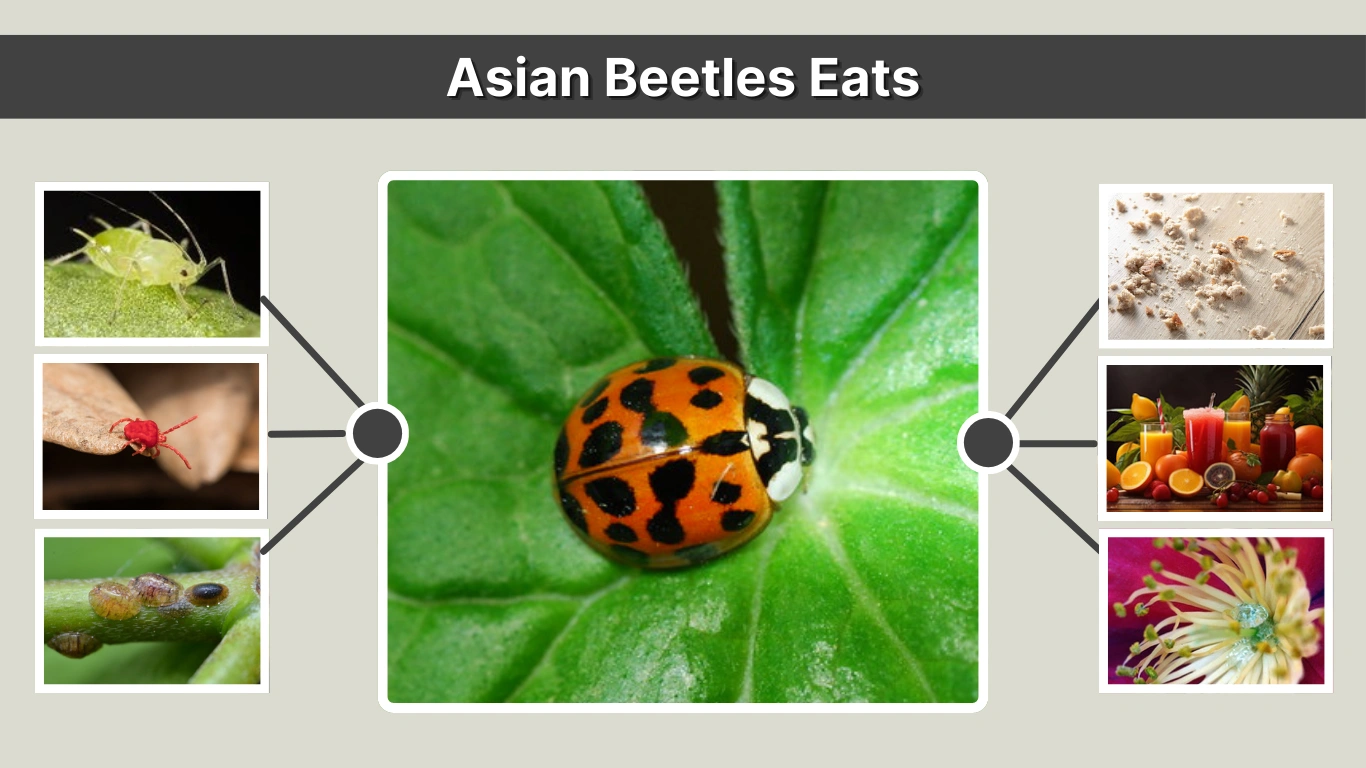
When people mention “Asian beetles,” they may be referring to several different insects. The two most common are the Asian lady beetle (Harmonia axyridis) and the Asian longhorned beetle (Anoplophora glabripennis). Despite sharing a similar name, their diets and behaviors are completely different. Asian lady beetles are often seen as both helpful predators and household nuisances, while Asian longhorned beetles are destructive tree pests. Understanding what these beetles eat helps gardeners, farmers, and homeowners manage their impact more effectively.
General Diet of Asian Beetles
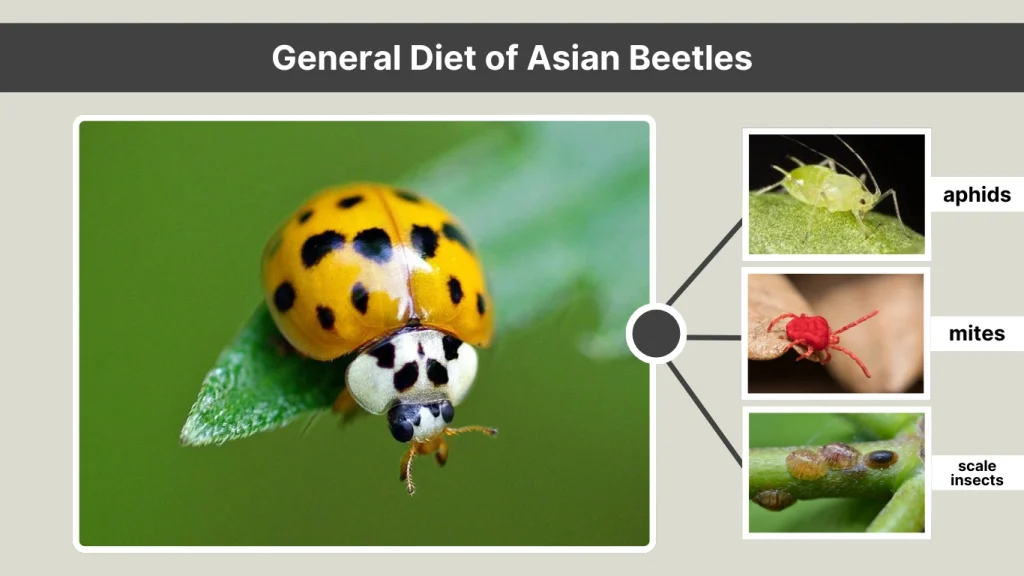
So, what do Asian beetles eat? The answer depends on the species. Some are predators, feeding on soft-bodied insects, while others are wood-boring pests that damage trees.
- Asian lady beetles: Consume aphids, mites, scale insects, and other small pests.
- Asian longhorned beetles: Their larvae bore into hardwood trees, feeding on internal tissues.
- In homes: When beetles move indoors, they survive mainly on stored fat reserves and rarely feed on anything.
This wide variation in diet makes it important to distinguish between species when discussing “Asian beetles.”
Asian Lady Beetle Diet Basics
The Asian lady beetle is often confused with the familiar red-and-black spotted ladybug. Unlike the native ladybug, though, this beetle is more aggressive and invasive. Gardeners often ask, “what do Asian lady beetles eat?” The good news is that they primarily feed on pest insects.
Their diet includes:
- Aphids: Their favorite prey, often found on roses, beans, and fruit trees.
- Mites: Another soft-bodied pest they readily consume.
- Scale insects and mealybugs: They help reduce infestations on garden plants.
Because of this predatory diet, Asian lady beetles are considered beneficial outdoors. Farmers even introduced them in North America as a form of natural pest control.
Asian Lady Beetles Indoors
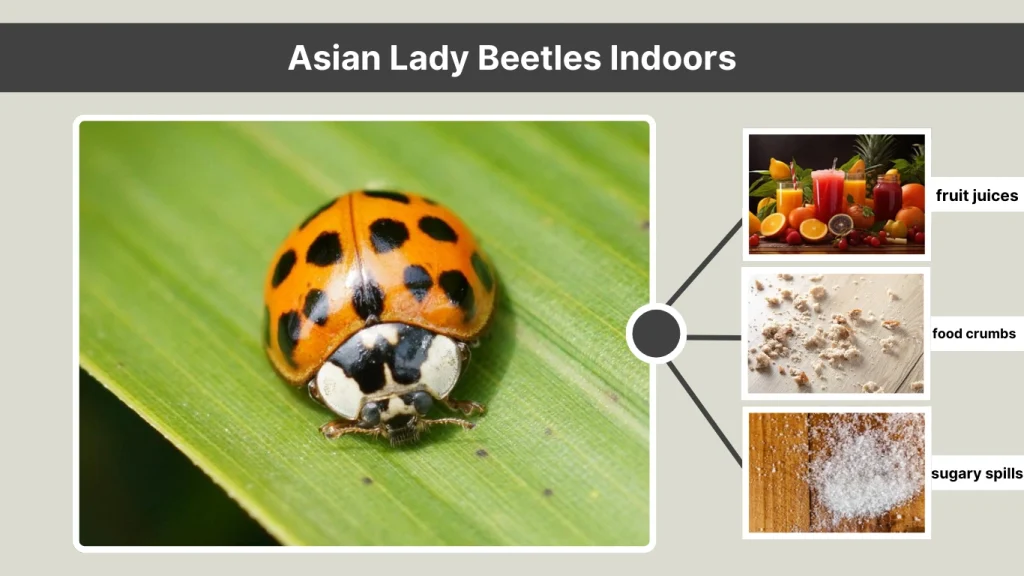
While helpful outside, Asian lady beetles become a problem when they enter homes in the fall. People often wonder, “what do Asian lady beetles eat in my house?” The truth is that once indoors, they usually do not find much food.
Instead, they:
- Rely on stored fat reserves built up during summer.
- Occasionally nibble on fruit juices or food crumbs if available.
- Sometimes sip from condensation or sugary spills.
Most of the time, they cluster in attics, walls, or window frames simply for warmth, not to feed.
Asian Lady Beetles in Winter
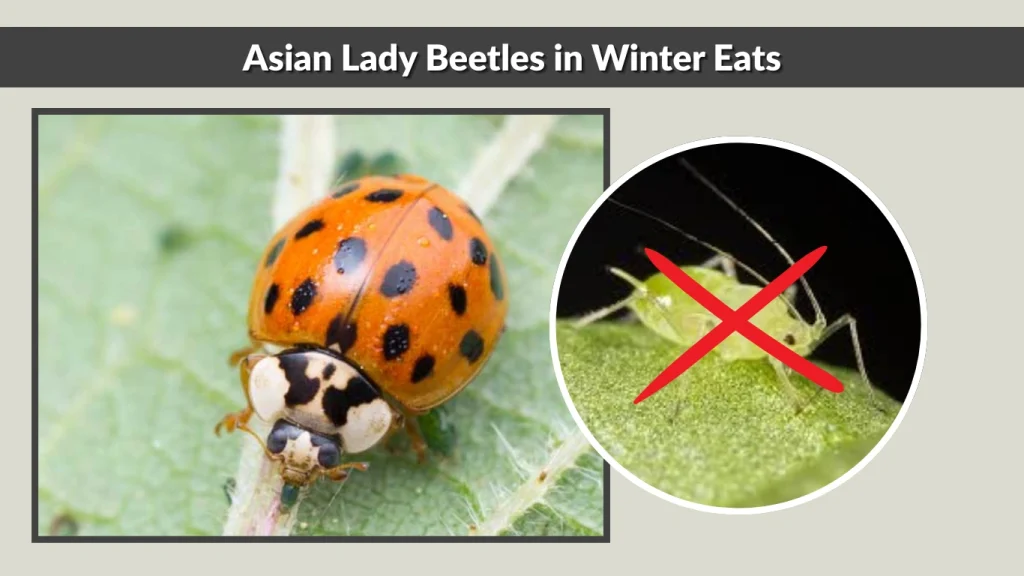
A common seasonal question is, “what do Asian lady beetles eat in the winter?” The answer: almost nothing. Like many insects, they go into a semi-hibernation state known as diapause.
- During winter, they slow their metabolism.
- They survive by burning through stored body fat.
- Their main priority is shelter, not food.
This explains why large groups gather inside homes—warm indoor spaces help them conserve energy until spring.
What Asian Lady Beetles Drink

Food is one thing, but many also ask, “what do Asian lady beetles eat and drink?” While insects make up the bulk of their diet, they also consume plant-based liquids.
They can drink:
- Nectar and pollen from flowers.
- Sap or fruit juices from damaged plants.
- Water droplets or dew in outdoor environments.
Indoors, they may sip from tiny water sources or sugary spills. While this helps them survive, they still rely heavily on insect prey when outdoors.
Multicolored Asian Lady Beetles
Another related question is, “what do multicolored Asian lady beetles eat?” This species is simply a variation of the Asian lady beetle, showing a wide range of colors from yellow-orange to red with varying numbers of spots.
Their diet is the same as standard Asian lady beetles:
- Large numbers of aphids, which makes them valuable in agriculture.
- Mites and scale insects, especially in fruit orchards.
- Occasional consumption of nectar when prey is scarce.
Because of their aggressive feeding habits, they are considered both a blessing (pest control) and a curse (household nuisance).
Asian Longhorned Beetle Diet Basics
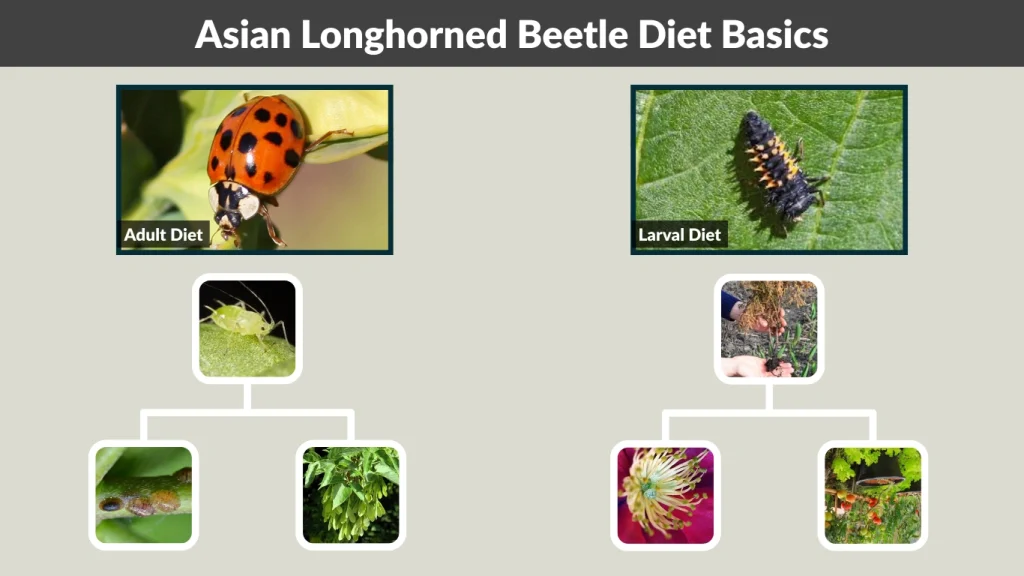
Unlike the helpful Asian lady beetle, the Asian longhorned beetle (ALB) is a serious threat to trees. People often ask, “what do Asian longhorned beetles eat?” The answer depends on their life stage.
- Larvae: The most destructive phase. They tunnel deep into tree trunks and branches, feeding on xylem and phloem tissues. This disrupts water and nutrient flow, slowly killing the tree.
- Adults: Less damaging, but they still feed on tree bark, twigs, and leaves.
Because the larvae remain hidden inside wood, infestations are difficult to detect until major damage has occurred.
Trees Eaten by Asian Longhorned Beetles
One of the most devastating aspects of ALB infestations is their wide appetite for hardwood trees. People searching “what trees do Asian longhorned beetles eat” will find that dozens of species are at risk.
Commonly targeted trees include:
- Maple – one of their top preferences, making them a major threat in North America.
- Birch – highly vulnerable in both urban and forest settings.
- Elm and willow – frequently attacked in infested regions.
- Ash and horse chestnut – provide both food and breeding habitat.
- Poplar – another common host tree.
The destruction of these trees not only affects landscapes but also disrupts ecosystems and forestry industries.
Trees and Plants Targeted by Asian Beetles
Some confusion arises with the broader phrase “what plants do Asian beetles eat.” It’s important to distinguish between species:
- Asian lady beetles: They do not eat plants directly. Instead, they eat pests living on plants such as aphids and mites. In doing so, they actually protect crops and flowers.
- Asian longhorned beetles: They eat the trees themselves. Unlike lady beetles, they damage plants directly by boring into wood.
When people ask “what trees do Asian beetles eat,” they are usually referring to longhorned beetles, which target hardwoods.
Asian Beetles Indoors (General)
A frequent question is, “what do Asian beetles eat in my house?” This mostly applies to Asian lady beetles, since longhorned beetles do not infest homes.
Indoors, lady beetles:
- Survive on stored fat instead of actively eating.
- May occasionally consume juice from fruit, crumbs, or sugary spills.
- Do not damage wood, clothing, or household structures.
Their presence inside homes is more of an annoyance than a feeding threat.
Asian Beetles in Winter (General)
Another seasonal concern is, “what do Asian beetles eat in the winter?” The truth is that both major species survive differently:
- Asian lady beetles: Enter diapause (hibernation-like state). They cluster in warm areas and live off stored body fat.
- Asian longhorned beetles: Larvae continue to slowly tunnel and feed inside trees, protected from the cold. Adults emerge in summer.
This contrast explains why homeowners see lady beetles in winter, while longhorned beetle damage often becomes noticeable only in warmer months.
What Asian Beetles Like to Eat
If we summarize what these beetles “like” to eat, the difference between species becomes clear:
- Asian lady beetles: Prefer soft-bodied pests like aphids. Their feeding makes them beneficial outdoors.
- Asian longhorned beetles: Prefer hardwood trees like maple, birch, and elm, making them highly destructive.
So when people ask, “what do Asian beetles like to eat,” the answer depends on whether they are discussing a beneficial predator or a damaging wood-borer.
How to Manage Asian Beetle Feeding Damage
Since these beetles affect gardens, homes, and forests differently, management strategies vary.
For Asian lady beetles:
- Seal entry points around windows, doors, and siding.
- Use a vacuum to remove indoor clusters safely.
- Avoid leaving sugary spills or uncovered fruits indoors.
For Asian longhorned beetles:
- Inspect trees regularly for boreholes, sawdust, or weak branches.
- Report infestations to local agricultural or forestry authorities.
- Infected trees may need to be removed and destroyed to prevent spread.
- Quarantine measures are critical to stop transportation of infested firewood.
Balancing the roles of Asian beetles means appreciating lady beetles as allies while treating longhorned beetles as dangerous invaders.
