
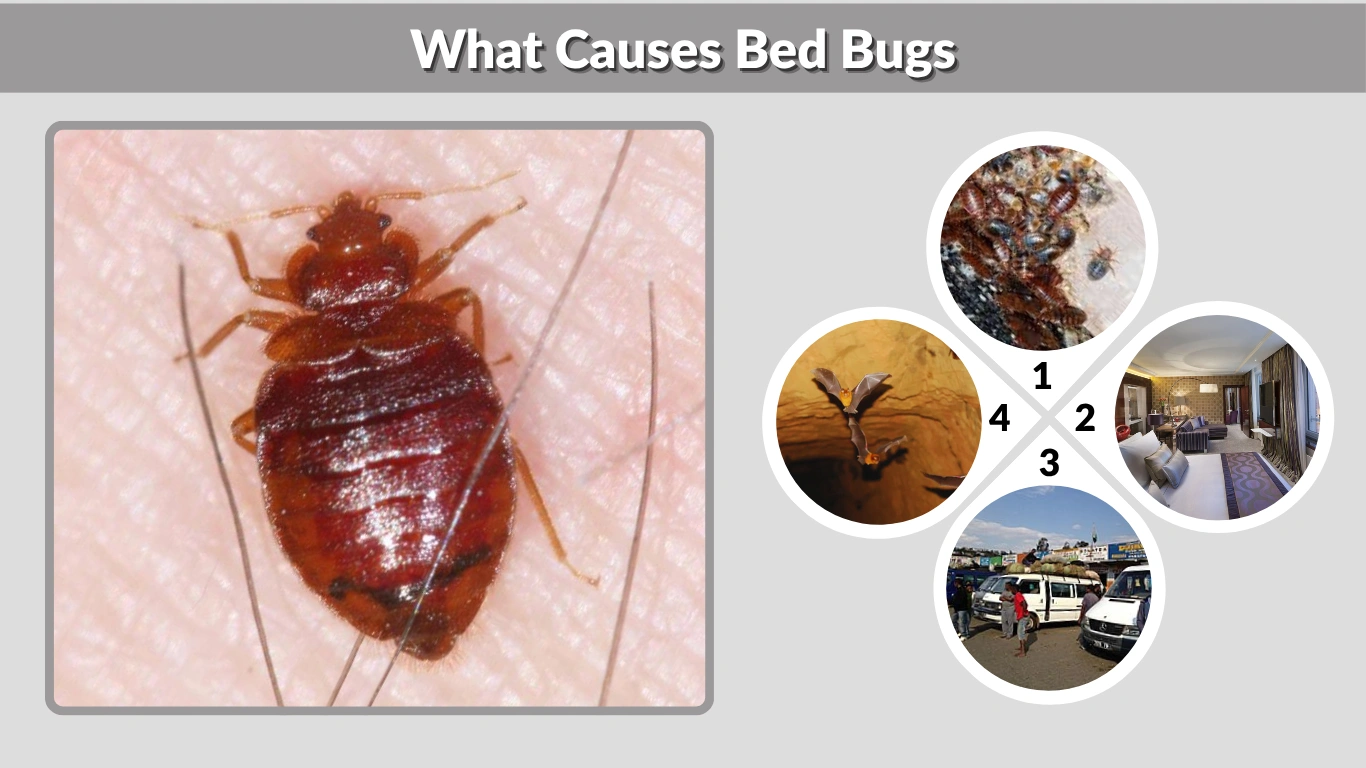
Bed bugs are tiny, blood-feeding insects that can infest homes, hotels, and apartments with surprising ease. Despite their small size, they cause major discomfort through itchy bites and sleepless nights. Many people assume that bed bugs appear because of dirt or poor hygiene, but that’s a myth. These pests are expert travelers that spread through human activity. Understanding what causes bed bugs and how they infest homes is the first step in keeping them away.
Understanding Bed Bugs
What Are Bed Bugs?
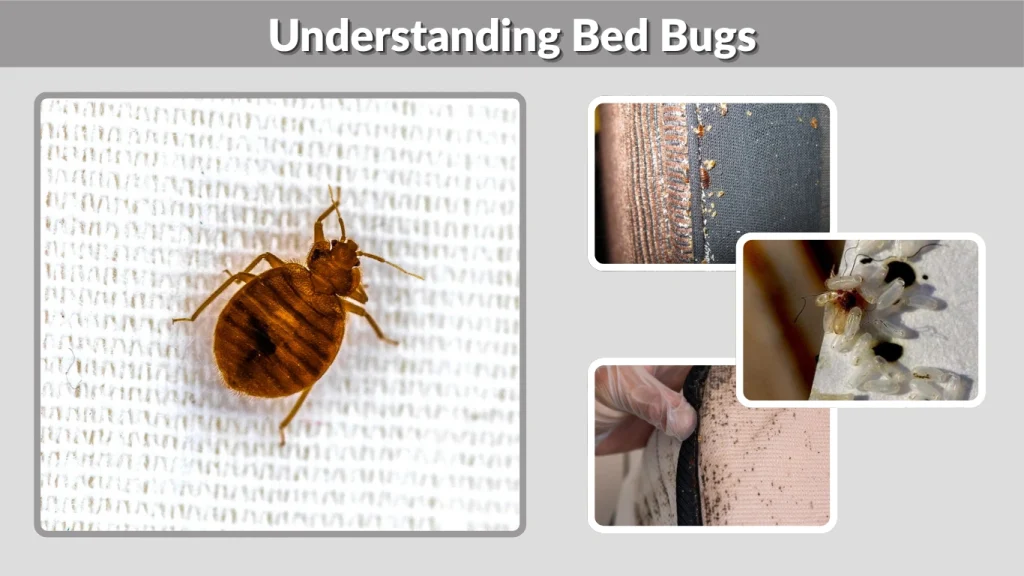
Bed bugs (Cimex lectularius) are small, reddish-brown insects about the size of an apple seed. They feed on the blood of humans and animals, usually at night while their hosts are asleep. Because they prefer warmth and carbon dioxide, they often live near beds, furniture, or crevices close to people.
They hide during the day in tight spaces — such as mattress seams, headboards, baseboards, or electrical outlets — and come out only to feed. Bed bugs can survive for months without food, which makes them particularly hard to eliminate once established.
How Bed Bugs Spread
Bed bugs don’t fly or jump. Instead, they hitchhike from place to place by crawling onto clothing, luggage, or furniture. A single infested suitcase or used couch can transport hundreds of bugs into a new home.
They thrive in locations with high human turnover, such as hotels, hostels, dormitories, public transport, and apartment complexes. Because of this, anyone can unknowingly carry them — regardless of cleanliness or lifestyle.
Main Causes of Bed Bugs
Human Movement and Travel
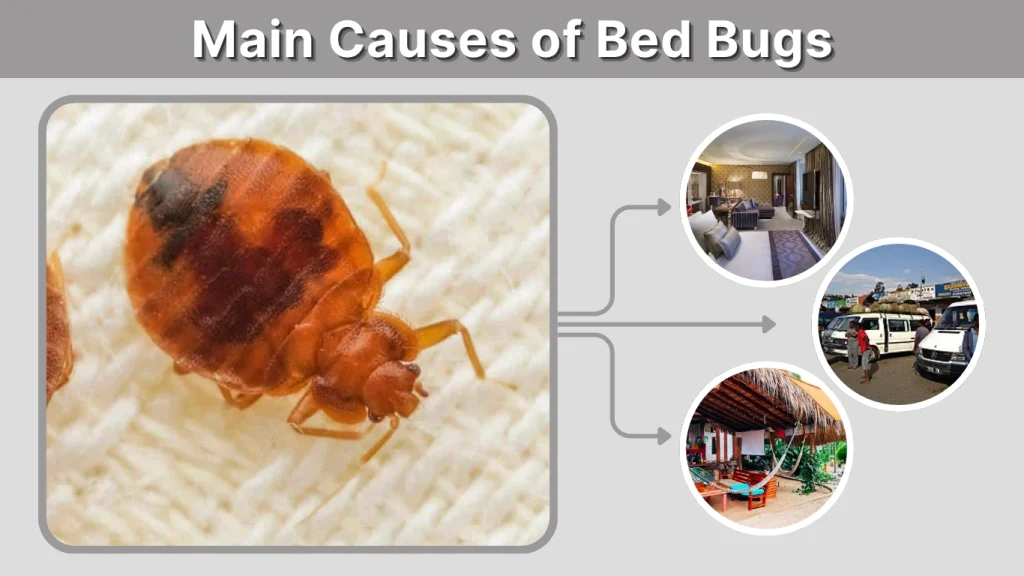
The number one cause of bed bug infestations is human travel. Whether it’s a business trip, a vacation, or a stay at a friend’s home, bed bugs easily move with people and their belongings.
Hotels, airplanes, buses, and trains can all harbor bed bugs. Once they latch onto luggage, they hitch a ride back home. Even one fertilized female bed bug can start an infestation. Travelers who place luggage on hotel beds or carpets often risk carrying bed bugs back unknowingly.
Common travel-related sources include:
- Hotels and motels with high guest turnover.
- Shared transportation (buses, taxis, trains).
- Vacation rentals and hostels.
- Visitors or guests who unknowingly bring them in.
Used Furniture and Household Items
Buying secondhand furniture, mattresses, or clothing is another major cause of bed bug infestations. Bed bugs hide deep inside seams, joints, or padding — areas often overlooked during cleaning.
When these items are brought home, the bugs come too. Even small furniture items like nightstands or lamps can contain hidden eggs. It’s essential to inspect used furniture carefully and clean it with heat before bringing it indoors.
Risky items include:
- Secondhand beds, couches, and recliners.
- Upholstered chairs and rugs.
- Antique wood furniture with cracks.
- Storage unit contents exposed to infestations.
Shared Living Environments
Bed bugs thrive in multi-unit buildings like apartments, dorms, and hotels. Because they crawl through wall cracks, electrical outlets, and vents, they can easily move between units.
Even if one apartment is treated, untreated neighboring units can cause reinfestation. Shared laundry facilities and maintenance activities also allow bugs to spread. In cities or high-density housing, bed bugs can travel from one home to another within days.
Where Bed Bugs Come From
Natural Origins
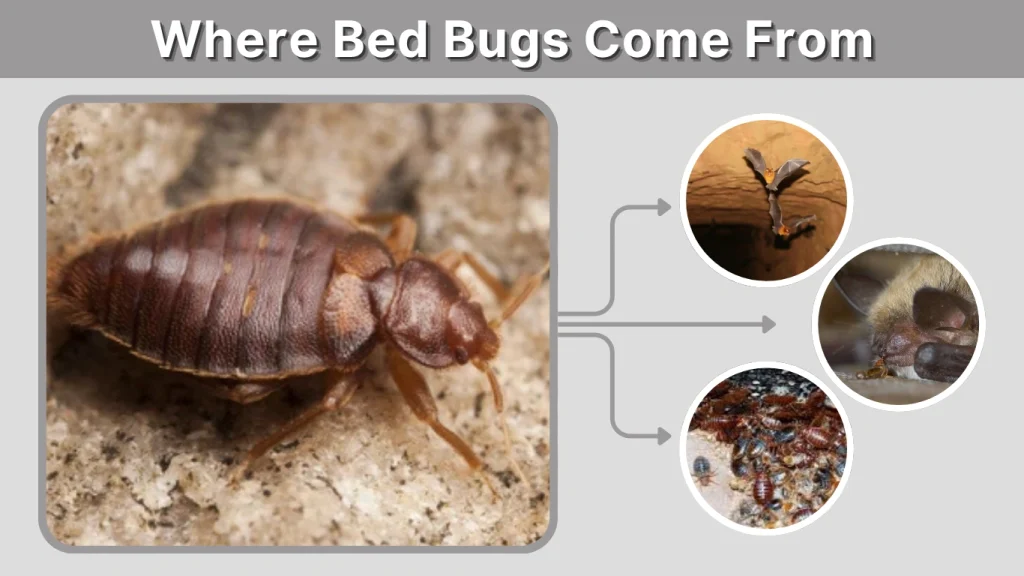
Bed bugs are ancient insects that originally lived in caves, feeding on bats and birds before adapting to humans thousands of years ago. Today, they are found on every continent except Antarctica.
Their evolution has made them highly resilient, capable of surviving extreme conditions and long periods without feeding. Once considered nearly eradicated in the mid-20th century, bed bugs resurged due to global travel and pesticide resistance in recent decades.
Human Habits That Encourage Bed Bugs
While bed bugs can infest any home, certain habits make infestations more likely:
- Leaving luggage or travel bags on the bed after trips.
- Buying or accepting used furniture without inspection.
- Cluttered rooms that provide hiding places.
- Not checking hotel rooms before unpacking.
Clutter, while not the cause, makes it harder to detect and treat infestations — allowing bugs to spread unnoticed.
What Causes Bed Bugs in Specific Places
In Homes and Apartments
Bed bugs enter homes by hitching rides on clothing, visitors’ belongings, or deliveries. Once inside, they quickly find a host and begin reproducing. Apartments and shared housing face higher risk because bed bugs can crawl through tiny openings between units.
Neglecting early signs such as small black stains (fecal spots), shed skins, or bites can turn a small problem into a large infestation in just a few months.
In Hotels and Public Spaces
Hotels are a major source of bed bug transmission. With guests constantly arriving from around the world, even luxury hotels can experience infestations. Bed bugs hide in mattresses, curtains, and luggage racks. When new guests arrive, they unknowingly carry them away.
Public places like libraries, movie theaters, and office chairs can also harbor bed bugs. They cling to clothing or bags, spreading from one person to another. Regular inspections and cleaning are key to prevention.
How Bed Bugs Spread
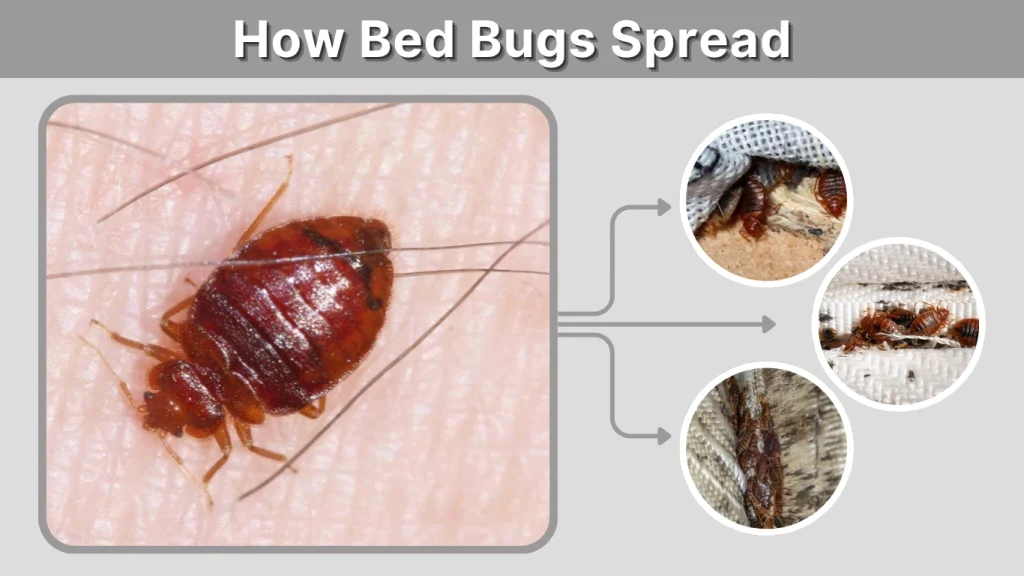
Movement and Reinfestation
Once bed bugs are inside a building, they move easily between rooms and apartments. They crawl along walls, electrical outlets, vents, and baseboards, seeking new hiding spots. In multi-unit homes, this makes control difficult, as bugs spread between units.
They can also travel in bags, clothes, shoes, or bedding, clinging to fabric for hours without detection. Bed bugs don’t live on humans like lice, but they move with us from one place to another. Because of their small size and nocturnal habits, they can go unnoticed until an infestation grows large.
Environmental Conditions
Bed bugs thrive in warm environments between 65°F and 85°F (18°C–30°C) — the same temperature range most homes maintain. They prefer dark, undisturbed spaces and reproduce faster when humidity is high.
If nearby apartments or hotels remain untreated, the infestation can return even after cleaning. Eggs left behind in cracks or furniture can hatch weeks later, restarting the cycle.
What Causes Bed Bugs to Die
Natural Death Factors
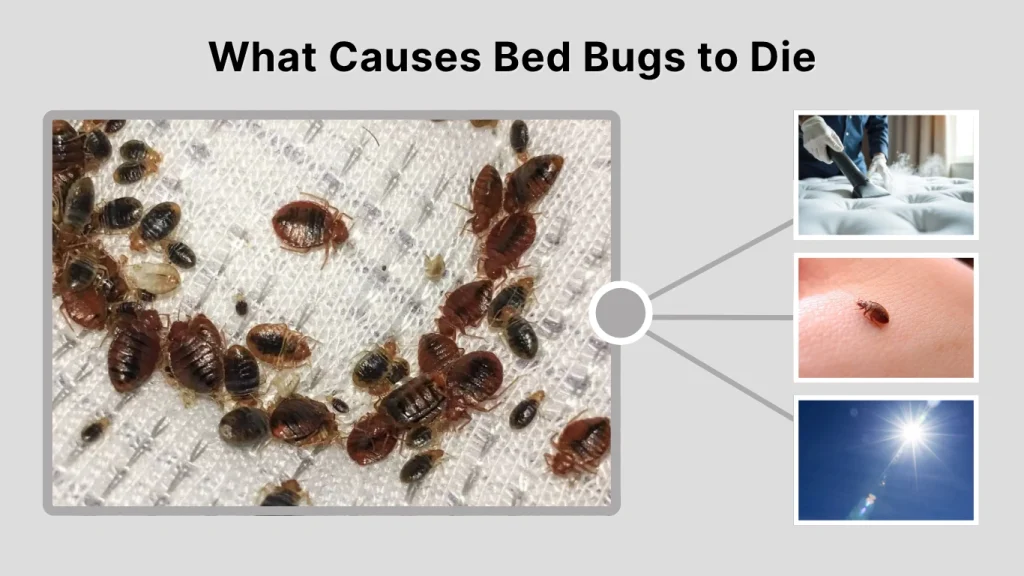
While resilient, bed bugs are not indestructible. Extreme conditions can kill them at any life stage:
- Heat above 120°F (49°C) kills both adults and eggs within minutes.
- Cold below 0°F (–18°C) for several days is also lethal.
- Starvation eventually kills bed bugs after two to four months without blood, though some adults can survive longer in cool environments.
- Sunlight exposure and dry air dehydrate them faster.
These factors explain why heat treatments are the most effective extermination method — they reach into crevices where chemicals can’t.
Professional Elimination Methods
When infestations persist, professional pest control becomes necessary. Common treatments include:
- Thermal remediation: Raising room temperature to lethal levels.
- Insecticidal dusts: Like diatomaceous earth, which dries out the bugs.
- Vacuuming and steaming: Removes eggs and adults from surfaces.
- Encasing mattresses and pillows: Prevents bed bugs from hiding or biting.
Success depends on consistency. Missing just a few eggs can restart an entire infestation within weeks.
Health Problems Caused by Bed Bugs
Skin Reactions
Bed bug bites typically appear as small, red, itchy bumps — often in clusters or straight lines. These marks are caused by an allergic reaction to proteins in bed bug saliva. While not dangerous, the itching can be intense and uncomfortable.
Some people experience mild irritation, while others develop swelling or blister-like reactions. Scratching can cause secondary infections such as impetigo or cellulitis if bacteria enter the skin.
Emotional and Psychological Effects
The stress of a bed bug infestation can be overwhelming. People often report anxiety, insomnia, and paranoia about being bitten. Even after successful treatment, fear of re-infestation may persist.
This emotional distress can affect mental health, leading to loss of sleep and overall fatigue. Unlike most pests, bed bugs affect not only physical comfort but also psychological well-being.
Secondary Health Concerns
Although bed bugs are not known to transmit diseases, their bites can lead to health issues indirectly:
- Allergic reactions requiring medical care.
- Infections from open sores or excessive scratching.
- Anemia in extreme cases of heavy, prolonged infestations.
Prompt identification and treatment are essential to prevent complications.
What Causes Bed Bug Infestations to Worsen
Ignoring Early Signs
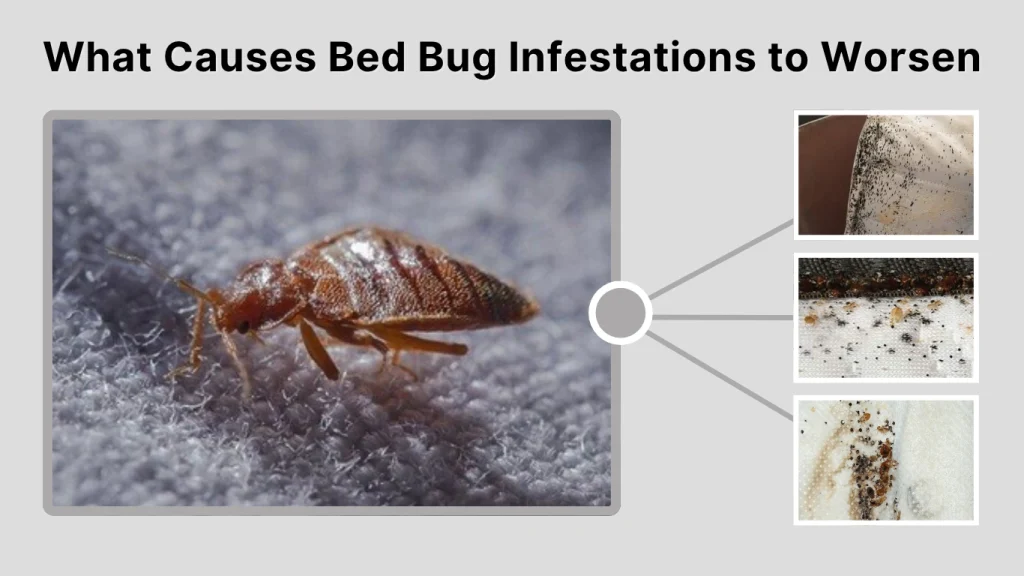
The biggest mistake homeowners make is ignoring the early warning signs — small dark fecal spots on sheets, tiny shed skins, or unexplained bites. Bed bugs reproduce quickly, and one female can lay up to 500 eggs in her lifetime.
A small, localized infestation can become severe in just a few months if not treated promptly.
Improper Cleaning or DIY Treatments
Moving infested furniture or spraying random chemicals can make the problem worse. Bed bugs scatter and hide in deeper cracks, spreading the infestation further.
Many over-the-counter sprays only kill on contact and do not eliminate eggs, which hatch later and reignite the problem.
Reintroduction After Treatment
Even after successful extermination, bed bugs can return if reintroduced from an untreated area. This often happens in apartment complexes, hotels, or workplaces. Preventing reinfestation requires constant vigilance and monitoring.
Prevention and Protection
How to Prevent Bed Bugs
While total prevention is difficult, a few smart habits can reduce your risk dramatically:
- Inspect hotel beds, mattresses, and furniture before unpacking.
- Keep luggage off floors and beds; use stands or hard surfaces.
- Wash travel clothing immediately in hot water (above 120°F).
- Vacuum suitcases and store them away from bedrooms.
Preventing Infestations at Home
At home, prevention starts with cleanliness and awareness — not because dirt attracts bed bugs, but because a tidy environment makes them easier to detect.
- Encase mattresses and box springs with bed bug-proof covers.
- Seal cracks and crevices in walls and furniture.
- Avoid secondhand upholstered furniture unless professionally treated.
- Use intercepting traps under bed legs to monitor activity.
Regular inspection is the best defense. Early detection prevents costly treatments and widespread infestations.
Myths and Facts About Bed Bugs
| Myth | Truth |
| Bed bugs only infest dirty homes | Clean homes can get them too. |
| Bed bugs live only in beds | They hide in furniture, outlets, curtains, and baseboards. |
| Pets cause bed bugs | Pets don’t attract them, but bugs can crawl onto pet bedding. |
| Bed bugs spread disease | They don’t transmit disease but cause discomfort and anxiety. |
| Chemical sprays always work | Heat treatment and professional extermination are more effective. |
FAQs
What Is the Main Cause of Bed Bugs?
Human travel is the top cause. Bed bugs hitchhike on luggage, clothing, or furniture, entering homes unnoticed.
Where Do Bed Bugs Come From?
They evolved from parasites of bats and birds but now thrive in human environments worldwide, especially in urban areas.
Can Clean Homes Get Bed Bugs?
Yes. Cleanliness doesn’t prevent infestations — bed bugs only care about access to warm hosts and hiding spots.
What Kills Bed Bugs Instantly?
Heat above 120°F (49°C) kills bed bugs and eggs within minutes. Steam cleaning and professional heat treatment are most effective.
How Can You Prevent Bed Bugs from Coming Back?
Inspect regularly, use protective mattress covers, seal cracks, and avoid bringing used furniture into your home.
