

June bugs, also known as May beetles, are scarab beetles that appear in late spring and early summer. They are found worldwide and play key roles in ecosystems—though their larvae, known as white grubs, can be major pests of lawns and crops. This guide covers 15 common types of June bugs, detailing their identification, habitats, behaviors, lifecycles, and diets to help recognize and manage these fascinating yet sometimes destructive insects.
1. Southern June Beetle

The Southern June Beetle (Phyllophaga crinita) is a large, brown scarab beetle native to the southern United States and parts of Mexico. Like other June beetles, it is active during late spring and early summer, often seen flying around lights at night. Though generally harmless to humans, its larvae (white grubs) can cause serious damage to lawns, gardens, and agricultural crops by feeding on roots.
Identification
- Scientific name: Phyllophaga crinita
- Size: 1.5–2.5 cm (0.6–1 inch) long.
- Color: Shiny reddish-brown to dark brown.
- Shape: Oval, stout body with a hard, smooth exoskeleton.
- Distinctive feature: Dense fine hairs on the underside of the body; typical of Phyllophaga species.
Habitat
Southern June Beetles are found throughout the southern United States, particularly in Texas, Oklahoma, Louisiana, and Arkansas, extending into northern Mexico. They inhabit grasslands, gardens, and farmlands, preferring sandy or loamy soil for egg-laying. The larvae live underground, feeding on the roots of grasses and other plants.
Behaviors
Adults are nocturnal and often attracted to bright lights during warm summer nights. They emerge in large numbers after spring rains. While adults feed sparingly on foliage, the underground larvae are the real pests—gnawing on plant roots, which leads to yellowing and wilting in turf and crops.
Lifecycle & Diet
The life cycle consists of egg, larva (white grub), pupa, and adult stages. Females lay eggs in soil, where larvae hatch and feed on plant roots for several months before pupating. The entire cycle may take 1–2 years, depending on temperature and moisture.
- Larvae diet: Grass roots, crop roots, and decaying organic matter.
- Adult diet: Minimal feeding on leaves and tree foliage.
2. Rough June Beetle
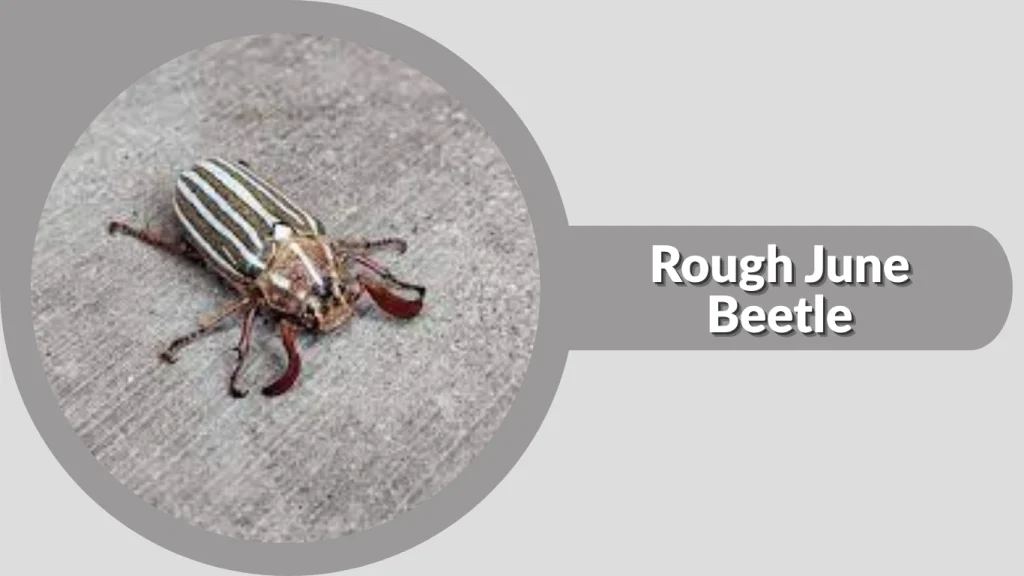
The Rough June Beetle (Phyllophaga rugosa) is a medium to large scarab beetle common in North America, especially in the central and southern United States. It gets its name from the rough, textured surface of its outer shell. The larvae, commonly called white grubs, live underground and feed on the roots of grasses and crops, often causing significant turf and agricultural damage.
Identification
- Scientific name: Phyllophaga rugosa
- Size: 1.5–2 cm long.
- Color: Dull brown to reddish-brown.
- Shape: Oval, robust body with rough or wrinkled elytra (wing covers).
- Distinctive feature: The coarse, grainy texture on the back distinguishes it from smoother species like P. crinita.
Habitat
Rough June Beetles are found in grasslands, farmlands, and suburban lawns, particularly in warm temperate areas of North America. They prefer well-drained soils for egg-laying and grub development. The larvae live underground, where they feed on grass and crop roots.
Behaviors
Adults are nocturnal fliers, strongly attracted to lights at night. They are most active from May to July and can be seen clumsily flying around street lamps and porches. Adults feed lightly on foliage, while larvae cause root damage that leads to patches of dead or dying grass.
Lifecycle & Diet
The Rough June Beetle has a one- to two-year life cycle. Females deposit eggs in the soil; larvae hatch and feed on roots before overwintering underground.
- Larval diet: Grass roots, plant roots, and decomposing organic matter.
- Adult diet: Tree leaves and other soft vegetation.
3. Common June Beetle
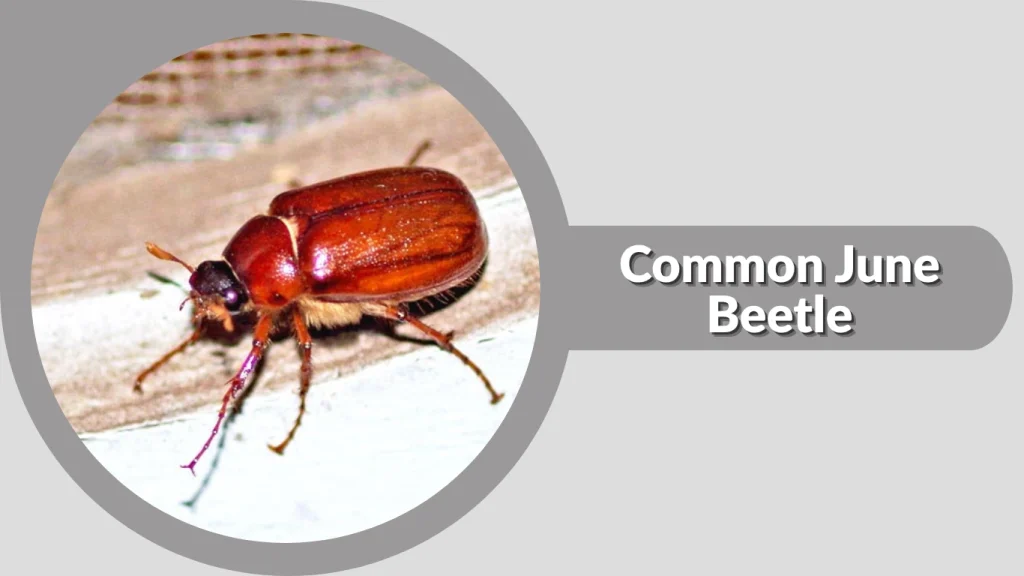
The Common June Beetle (Phyllophaga implicita) is one of the most frequently encountered June bugs in North America. It is known for its heavy, buzzing flight and tendency to collide with windows or lights on summer evenings. Although harmless as adults, their larvae are notorious lawn pests, feeding on the roots of turf and ornamental plants.
Identification
- Scientific name: Phyllophaga implicita
- Size: 1.5–2.2 cm in length.
- Color: Shiny reddish-brown to dark mahogany.
- Shape: Oval and slightly elongated with a smooth shell.
- Distinctive feature: Glossy, uniform color and short antennae ending in clubbed tips typical of Phyllophaga beetles.
Habitat
Common June Beetles are found across eastern and central North America, in lawns, gardens, and agricultural fields. They prefer sandy or loamy soil where females lay eggs, and larvae develop underground.
Behaviors
Adults are most active at dusk and night, often flying toward artificial lights. They emerge in late spring and early summer. Males are more active fliers, while females spend more time near the ground, laying eggs in soft soil. The grubs feed underground and can destroy turf by cutting off root systems.
Lifecycle & Diet
The life cycle spans 1–3 years, depending on environmental conditions. Eggs hatch into larvae that feed underground, overwintering before pupating and emerging as adults the following summer.
- Larval diet: Roots of grasses, corn, and other crops.
- Adult diet: Minimal feeding on leaves and tender plant shoots.
4. Northern June Beetle

The Northern June Beetle (Phyllophaga anxia) is one of the most widespread June bug species in North America. It thrives in temperate regions and is often found in lawns, pastures, and agricultural fields. The larvae, or white grubs, are destructive soil pests that feed on the roots of grasses and crops.
Identification
- Scientific name: Phyllophaga anxia
- Size: 1.5–2.5 cm in length.
- Color: Reddish-brown to blackish-brown with a shiny, smooth shell.
- Shape: Oval and stout, with a slightly curved body when viewed from the side.
- Distinctive feature: Males have large, fan-shaped antennae used to detect female pheromones.
Habitat
Northern June Beetles are found throughout Canada and the northern United States, preferring sandy or loamy soils with abundant vegetation. They are common in lawns, golf courses, pastures, and forest edges. The larvae live underground, feeding on the roots of grasses and crops.
Behaviors
Adults emerge from the soil in late spring to midsummer and are nocturnal fliers attracted to lights. They often fly clumsily around porch lamps or windows at night. While adults feed minimally on foliage, larvae are the main pests, causing irregular dead patches in turf and reduced crop yield.
Lifecycle & Diet
The Northern June Beetle typically has a three-year life cycle. Larvae spend two years feeding on roots underground before pupating and emerging as adults in the third summer.
- Larval diet: Roots of grasses, corn, and cereal crops.
- Adult diet: Light feeding on leaves and tree foliage.
5. Small June Beetle

The Small June Beetle (Phyllophaga congrua) is a smaller species of the Phyllophaga genus, distributed across North America. Though less destructive than some of its larger relatives, its larvae still pose a threat to lawns and agricultural areas.
Identification
- Scientific name: Phyllophaga congrua
- Size: 1–1.5 cm long.
- Color: Light brown to reddish-brown.
- Shape: Oval, compact body with fine hair on the underside.
- Distinctive feature: Smaller size and smoother elytra (wing covers) compared to most June beetles.
Habitat
Small June Beetles inhabit grasslands, forest edges, and suburban lawns, particularly in the eastern and southern United States. They prefer well-drained soils and are often found in grassy areas where they lay eggs close to food sources for larvae.
Behaviors
Adults are active during warm evenings in late spring and early summer, flying around lights and vegetation. Their flight is quieter and less erratic than larger species. Larvae live underground and can damage turfgrass by feeding on roots.
Lifecycle & Diet
Their life cycle is generally annual, shorter than larger June beetles. Eggs hatch in summer, and larvae feed through autumn before pupating in late spring.
- Larval diet: Roots of grasses and small plants.
- Adult diet: Limited feeding on leaves of trees and shrubs.
6. Hairy June Beetle
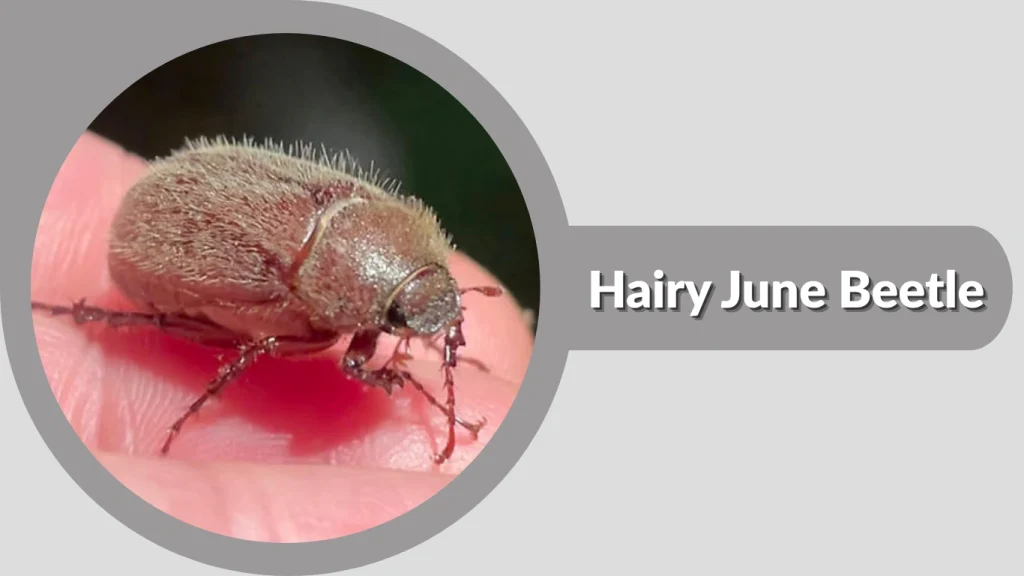
The Hairy June Beetle (Phyllophaga ephilida) is a distinctive member of the June beetle family, known for the dense hair-like setae covering its body. It is native to North America, especially the central and eastern United States, where it thrives in grassy and agricultural areas. Though adults are harmless, their larvae can damage lawns and crops by feeding on roots.
Identification
- Scientific name: Phyllophaga ephilida
- Size: 1.5–2.2 cm in length.
- Color: Dull reddish-brown to dark brown.
- Shape: Oval, robust body with fine, dense hair covering the thorax and abdomen.
- Distinctive feature: Noticeable hair on the elytra (wing covers) and underside, giving a velvety appearance.
Habitat
Hairy June Beetles inhabit lawns, meadows, and agricultural lands, especially areas with sandy or loamy soil. They are most abundant in the Midwest and southeastern U.S., where warm, humid conditions favor their development.
Behaviors
Adults emerge in late spring and early summer, often seen buzzing around lights at night. They are sluggish flyers and typically feed on leaves of deciduous trees and shrubs. The larvae (white grubs) live underground for most of their lives, feeding on plant roots and causing turfgrass damage.
Lifecycle & Diet
The species has a two- to three-year life cycle. Females lay eggs in soil; larvae hatch and feed underground for multiple seasons before pupating.
- Larval diet: Roots of grasses, corn, and ornamental plants.
- Adult diet: Foliage of trees and shrubs such as oak and elm.
7. Green June Beetle
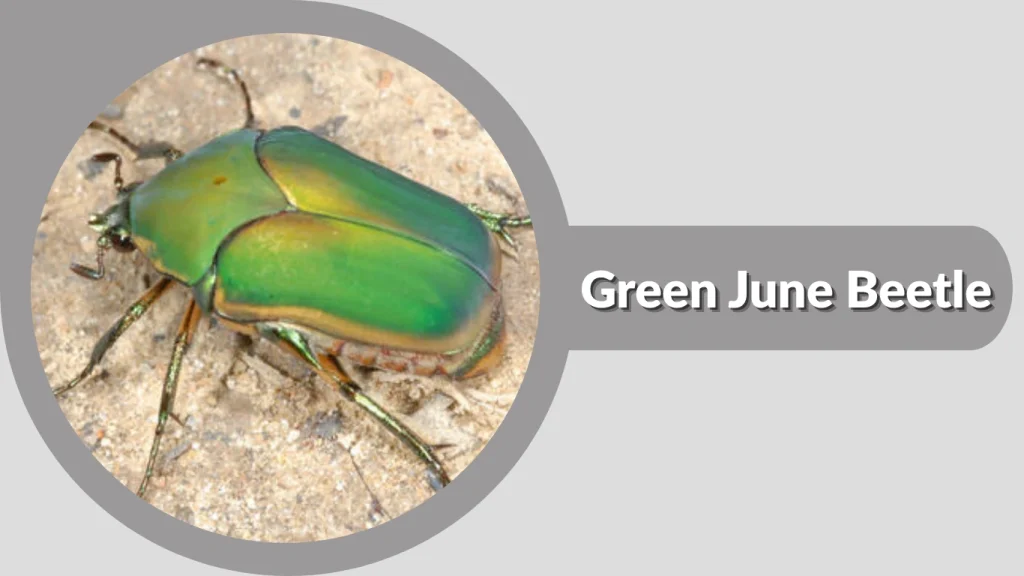
The Green June Beetle (Cotinis nitida), also known as the Green June Bug, is one of the most recognizable species due to its metallic green and bronze coloration. Common across the southeastern United States, it is larger than most June beetles and is often seen during the day, unlike its mostly nocturnal relatives.
Identification
- Scientific name: Cotinis nitida
- Size: 2–3 cm in length.
- Color: Shiny metallic green upper body with bronze or gold margins on the wings.
- Shape: Elongated oval body with smooth, hard wing covers.
- Distinctive feature: Iridescent green coloration and loud buzzing flight similar to bumblebees.
Habitat
Green June Beetles are found in gardens, pastures, orchards, and compost-rich soils throughout the eastern and southern United States. They prefer moist, organic-rich soil for laying eggs, often in lawns or fields with decaying vegetation.
Behaviors
Unlike most June beetles, Green June Beetles are diurnal (active in the daytime). They can often be seen flying low over lawns or feeding on ripened fruits. Adults are strong fliers and are attracted to fermenting fruit and nectar. The larvae, called white grubs, live underground and feed on decaying organic matter rather than living roots.
Lifecycle & Diet
This species typically completes its life cycle in one year. Eggs are laid in moist soil, and larvae overwinter before pupating in late spring.
- Larval diet: Decaying plant material, compost, and manure.
- Adult diet: Sweet fruits (like peaches, apples, grapes) and plant sap.
8. Figeater Beetle

The Figeater Beetle (Cotinis mutabilis), also called the Green Fruit Beetle, is a large, metallic-green scarab native to the southwestern United States and Mexico. Closely related to the Green June Beetle, it is active during the summer months and commonly seen feeding on ripe fruit. Despite its size and loud flight, it is not considered a major pest.
Identification
- Scientific name: Cotinis mutabilis
- Size: 2.5–3.5 cm in length.
- Color: Metallic green with bronze or gold reflections on the elytra (wing covers).
- Shape: Elongated and smooth-bodied with strong legs adapted for digging.
- Distinctive feature: Brilliant emerald coloration and audible buzzing flight; often mistaken for the Japanese beetle.
Habitat
Figeater Beetles inhabit desert and semi-arid regions of the southwestern U.S., including California, Arizona, New Mexico, and Texas, extending into Mexico. They prefer gardens, orchards, and compost piles, where organic matter and fruit are abundant.
Behaviors
These beetles are diurnal, active during hot sunny days, and often fly in groups over lawns and orchards. Adults feed on soft, overripe, or fermenting fruit such as figs, peaches, plums, and grapes. The larvae, known as crawly backs, live in soil or compost, moving on their backs and feeding on decaying organic material.
Lifecycle & Diet
Figeater Beetles complete their life cycle in about one year. Females lay eggs in moist, decaying matter; larvae develop through the summer, overwinter in the soil, and emerge as adults the following year.
- Larval diet: Decaying leaves, manure, and compost.
- Adult diet: Ripe or fermenting fruit, tree sap, and nectar.
9. Ten-lined June Beetle
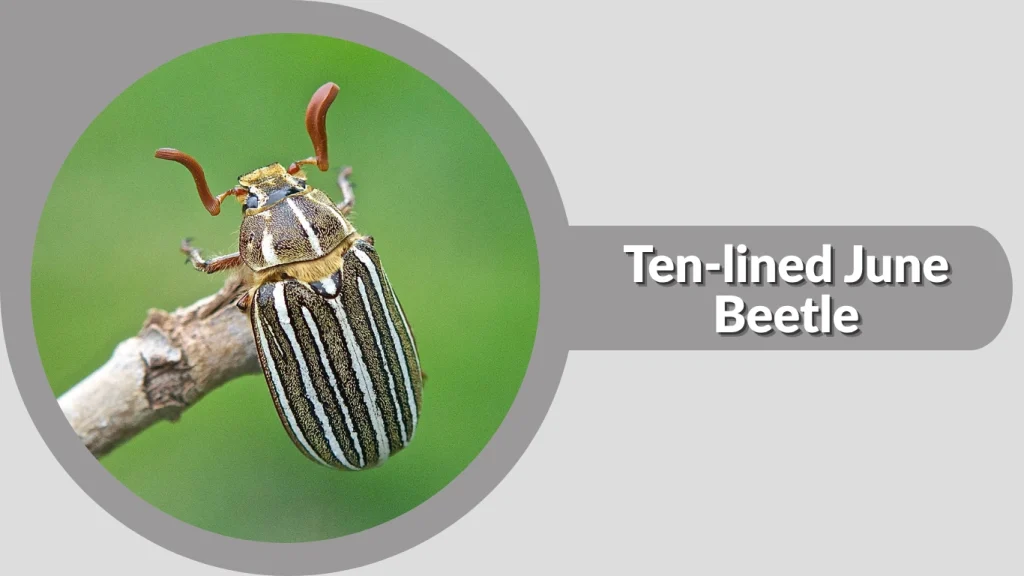
The Ten-lined June Beetle (Polyphylla decemlineata) is one of the largest and most striking June beetles in North America. Named for the ten distinct white stripes running down its back, it is known for its loud hissing sound and heavy, lumbering flight. Although intimidating, it is harmless to humans.
Identification
- Scientific name: Polyphylla decemlineata
- Size: 2.5–3.5 cm in length.
- Color: Brown with ten prominent white or yellow longitudinal stripes on the elytra.
- Shape: Large, oval body with long legs and antennae ending in fan-like clubs.
- Distinctive feature: Bold striped pattern and audible hissing produced by rubbing the abdomen against wing covers.
Habitat
This beetle inhabits western North America, especially in California, Nevada, Colorado, and the Pacific Northwest. It prefers sandy soils, pine forests, and grasslands, where larvae feed underground.
Behaviors
Ten-lined June Beetles are nocturnal and strongly attracted to lights at night. They are clumsy fliers, often crashing into windows or porch lights. When handled, they produce a defensive hissing noise. Adults feed sparingly, while larvae (white grubs) spend several years feeding on plant roots and decomposing matter underground.
Lifecycle & Diet
The life cycle lasts up to three years. Eggs are laid in the soil; larvae feed and grow for two to three seasons before pupating and emerging as adults in midsummer.
- Larval diet: Roots of shrubs, trees, and grasses.
- Adult diet: Minimal feeding on leaves and needles of coniferous trees.
10. Northern Masked Chafer
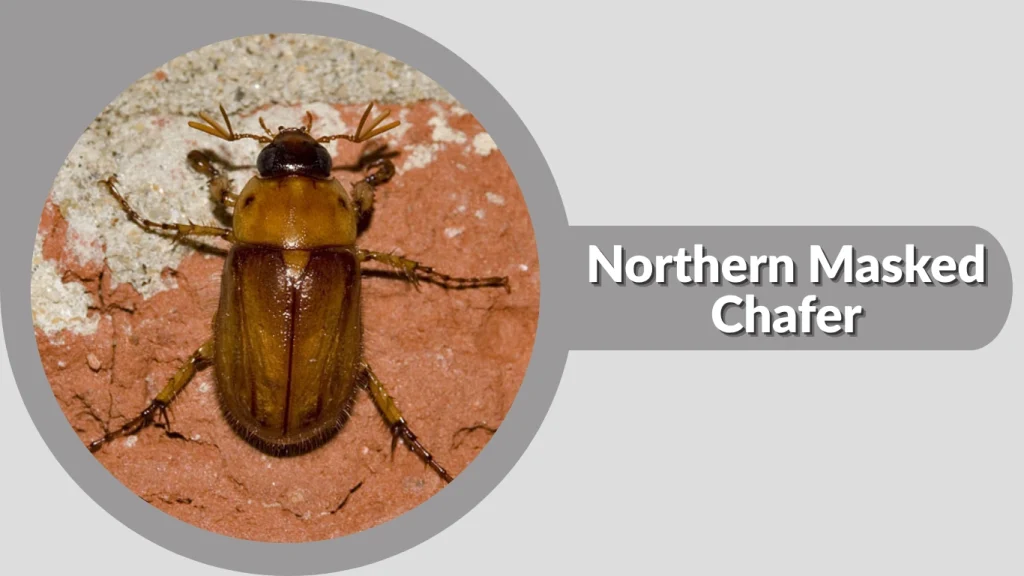
The Northern Masked Chafer (Cyclocephala borealis) is a medium-sized scarab beetle common throughout North America. Although adults are harmless, their larvae—known as masked chafer grubs—are serious pests of lawns, golf courses, and pastures, feeding extensively on grass roots.
Identification
- Scientific name: Cyclocephala borealis
- Size: 1.2–1.8 cm long.
- Color: Shiny golden-brown to light tan.
- Shape: Oval, smooth body with a slightly rounded back.
- Distinctive feature: A dark “mask-like” marking on the face between the eyes.
Habitat
Northern Masked Chafers inhabit lawns, golf courses, and fields throughout the northern and central United States and southern Canada. They prefer moist, well-drained soil with thick turf for egg-laying.
Behaviors
Adults are nocturnal, emerging in late June and July. They do not feed as adults but are often seen flying around lights on warm summer nights. The larvae (white grubs) are the damaging stage, feeding on grass roots and creating dead patches in lawns and turf.
Lifecycle & Diet
This species typically has a one-year life cycle. Eggs are laid in the soil during summer, larvae hatch and feed on roots through fall, overwinter underground, and pupate in late spring.
- Larval diet: Roots of grasses and turf plants.
- Adult diet: None or very minimal feeding.
11. Spotted June Beetle
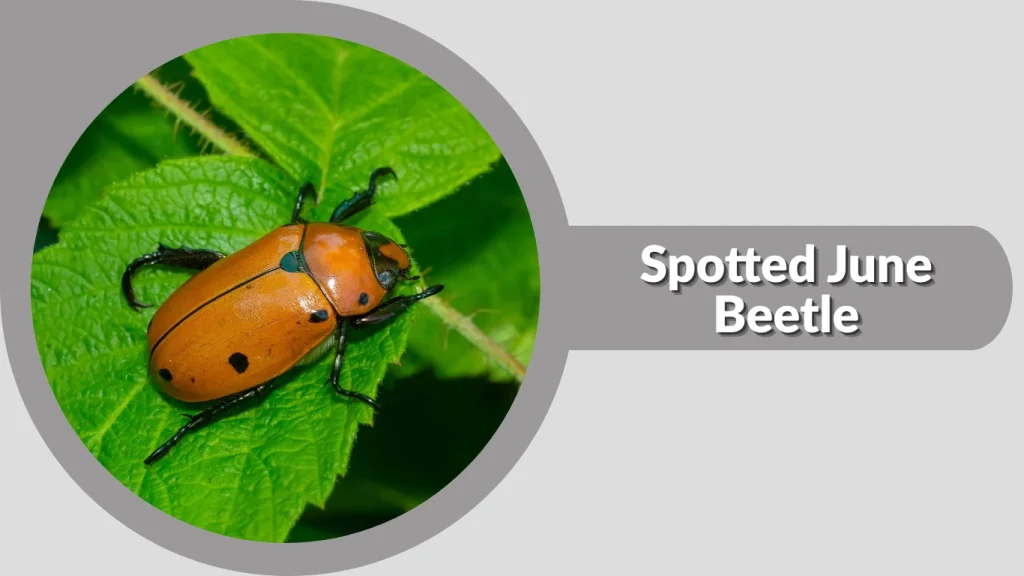
The Spotted June Beetle (Cyclocephala immaculata) is a member of the scarab beetle family, recognized for its distinctive spotted or patterned wing covers. It is distributed widely across North America and is often mistaken for the Northern Masked Chafer.
Identification
- Scientific name: Cyclocephala immaculata
- Size: 1.3–1.9 cm long.
- Color: Light brown or tan with dark spots or blotches on the elytra.
- Shape: Smooth, oval body with shiny wing covers and short legs.
- Distinctive feature: Presence of small, irregular dark markings on otherwise light-colored wings.
Habitat
Spotted June Beetles are found in grasslands, farmlands, and suburban lawns throughout the Midwest and southern United States. They prefer loose, fertile soils, ideal for burrowing and egg-laying.
Behaviors
Adults are active during summer evenings, flying near lights or low vegetation. They are generally harmless, while larvae cause turf and crop damage similar to other June beetles. Their activity peaks during humid, warm nights after rainfall.
Lifecycle & Diet
They have an annual life cycle, with larvae feeding on plant roots and overwintering underground. Pupation occurs in late spring, and adults emerge in early summer.
- Larval diet: Grass and crop roots.
- Adult diet: Minimal feeding on leaves or flower petals.
12. Oriental Beetle
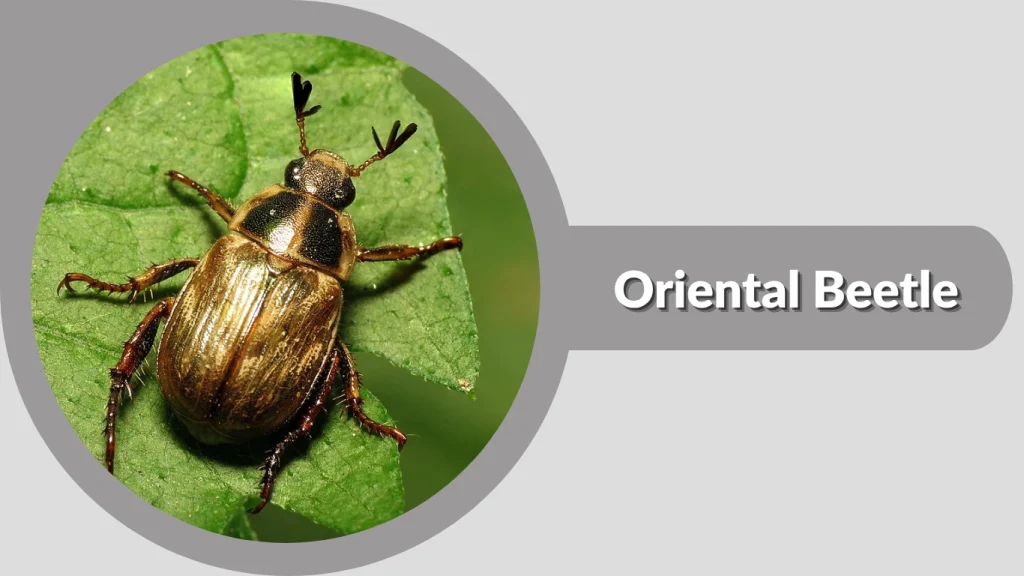
The Oriental Beetle (Anomala orientalis) is a small scarab beetle originally native to Asia but now widely established in North America, especially in the eastern United States. It is a significant pest of turfgrass and ornamental plants, with larvae that damage roots and adults that feed on flowers and foliage.
Identification
- Scientific name: Anomala orientalis
- Size: 1–1.4 cm long.
- Color: Variable—ranging from light tan to dark brown, often with iridescent bronze or black mottling.
- Shape: Oval, smooth body with short legs and fine hairs.
- Distinctive feature: Distinct mottled or marbled pattern on wing covers; smaller than most June beetles.
Habitat
The Oriental Beetle inhabits lawns, gardens, nurseries, and ornamental plantings, especially in the northeastern and mid-Atlantic United States. It thrives in moist, sandy soils rich in organic matter.
Behaviors
Adults are active at night and often fly near porch lights during the summer months (June to August). They feed on a wide variety of flowers such as roses, dahlias, and lilies. The larvae (white grubs) feed underground, damaging turfgrass and ornamental plant roots.
Lifecycle & Diet
The Oriental Beetle completes its life cycle in one year. Eggs hatch in mid-summer, larvae feed on roots through fall, overwinter underground, and pupate in spring.
- Larval diet: Grass and ornamental plant roots.
- Adult diet: Flower petals, leaves, and soft plant tissues.
13. European May Beetle
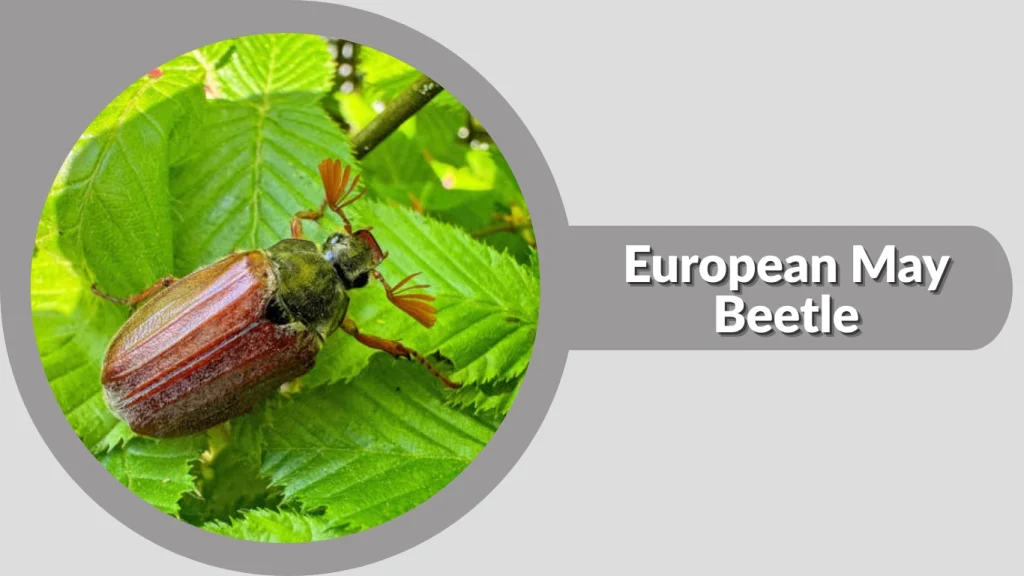
The European May Beetle (Rhizotrogus majalis), also known as the Common Cockchafer, is one of Europe’s most well-known scarab beetles. It is a major agricultural pest whose larvae cause extensive root damage to crops and pastures.
Identification
- Scientific name: Rhizotrogus majalis
- Size: 2–3 cm long.
- Color: Chestnut brown with fine white hairs on the underside.
- Shape: Large, robust body with fan-shaped antennae.
- Distinctive feature: White triangle-shaped patches along the sides of the abdomen.
Habitat
European May Beetles inhabit woodlands, meadows, and farmlands across Europe, North Africa, and western Asia. They prefer light, sandy soils for egg-laying and larval development.
Behaviors
Adults emerge in May and early June, often swarming around trees at dusk. They are clumsy fliers and can be heard buzzing loudly. Adults feed on tree foliage—especially oak, beech, and fruit trees—while larvae live underground for years feeding on plant roots.
Lifecycle & Diet
The lifecycle of the European May Beetle lasts three to five years. Larvae (known as “cockchafer grubs”) feed underground for multiple seasons before pupating.
- Larval diet: Roots of grasses, cereals, and tree seedlings.
- Adult diet: Foliage of deciduous trees and shrubs.
14. Golden-backed June Beetle
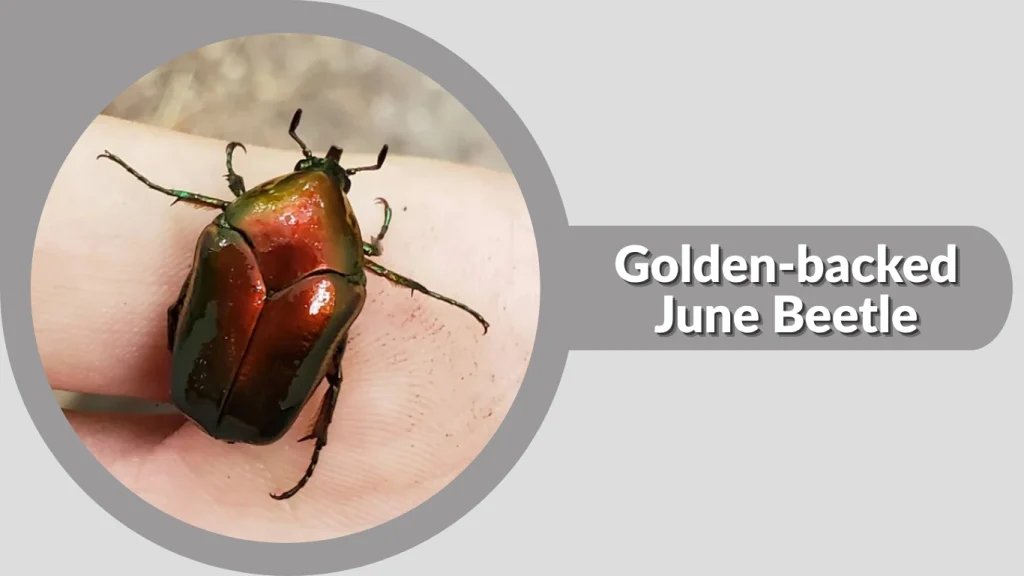
The Golden-backed June Beetle (Anomala flavipennis) is a small, brightly colored scarab beetle found in tropical and subtropical regions. It is especially noted for its golden sheen and smooth, metallic appearance. Although not as destructive as some other species, its larvae may damage turfgrass and ornamental plants by feeding on roots.
Identification
- Scientific name: Anomala flavipennis
- Size: 1–1.5 cm long.
- Color: Metallic gold or yellow-green with bronze highlights.
- Shape: Oval, compact body with smooth, shiny wing covers.
- Distinctive feature: Brilliant golden hue on the back (elytra), which reflects light.
Habitat
Golden-backed June Beetles inhabit gardens, grassy fields, and forest edges in Central America, the Caribbean, and southern parts of the United States. They prefer moist, warm soils with abundant vegetation for egg-laying.
Behaviors
Adults are nocturnal and often attracted to lights on humid summer nights. They are strong fliers but tend to remain near grassy or garden areas. While adults feed lightly on flowers and leaves, their larvae can damage turf and ornamental roots.
Lifecycle & Diet
This species completes its life cycle in one year. Eggs are laid in soil during early summer; larvae develop and overwinter underground, emerging as adults the following spring.
- Larval diet: Roots of grasses and ornamental plants.
- Adult diet: Flower petals, leaves, and soft plant tissues.
15. Silky June Beetle
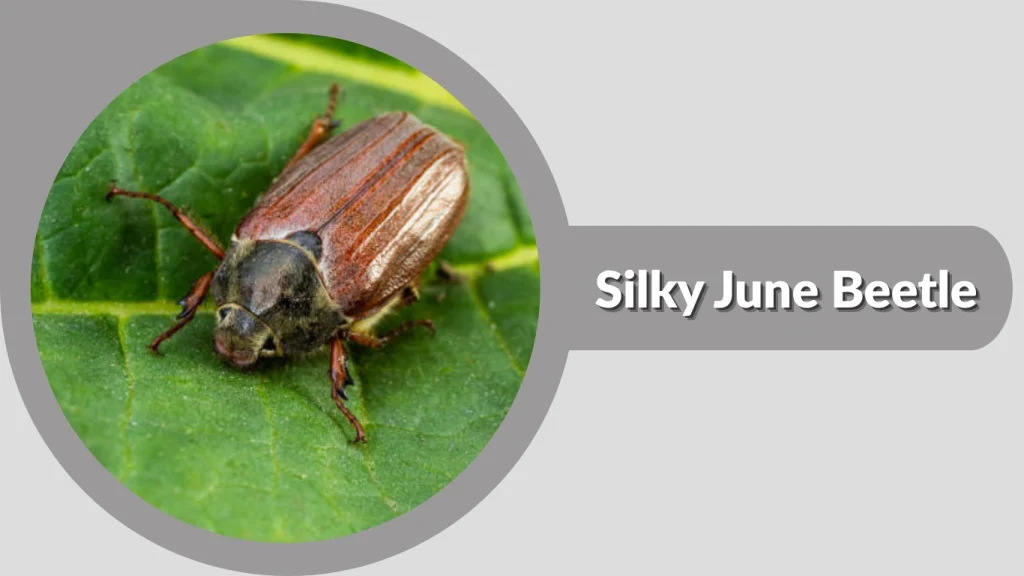
The Silky June Beetle (Serica sericea) is a small scarab beetle commonly found throughout North America. Its smooth, silky texture and bronzy coloration give it its name. Though less conspicuous than larger June bugs, it is widespread and can cause damage to turf and crops through its larval stage.
Identification
- Scientific name: Serica sericea
- Size: 0.8–1.2 cm long.
- Color: Silky bronze to dark brown, with a glossy sheen.
- Shape: Small, oval, and slightly elongated.
- Distinctive feature: Smooth, silky wing covers with faint longitudinal lines.
Habitat
Silky June Beetles are found in lawns, gardens, and agricultural areas across the United States and southern Canada. They favor moist soils and grassy habitats for breeding and development.
Behaviors
Adults are nocturnal, active from June through August, and are often seen around lights. They have a quiet, short flight pattern. Larvae live underground and feed on plant roots, sometimes damaging turf and ornamental plantings.
Lifecycle & Diet
Their life cycle typically lasts one year. Females lay eggs in late summer, and grubs feed on roots through autumn and spring before pupating.
- Larval diet: Roots of turfgrass, cereals, and garden plants.
- Adult diet: Mild feeding on leaves, flowers, and decaying organic matter.
