
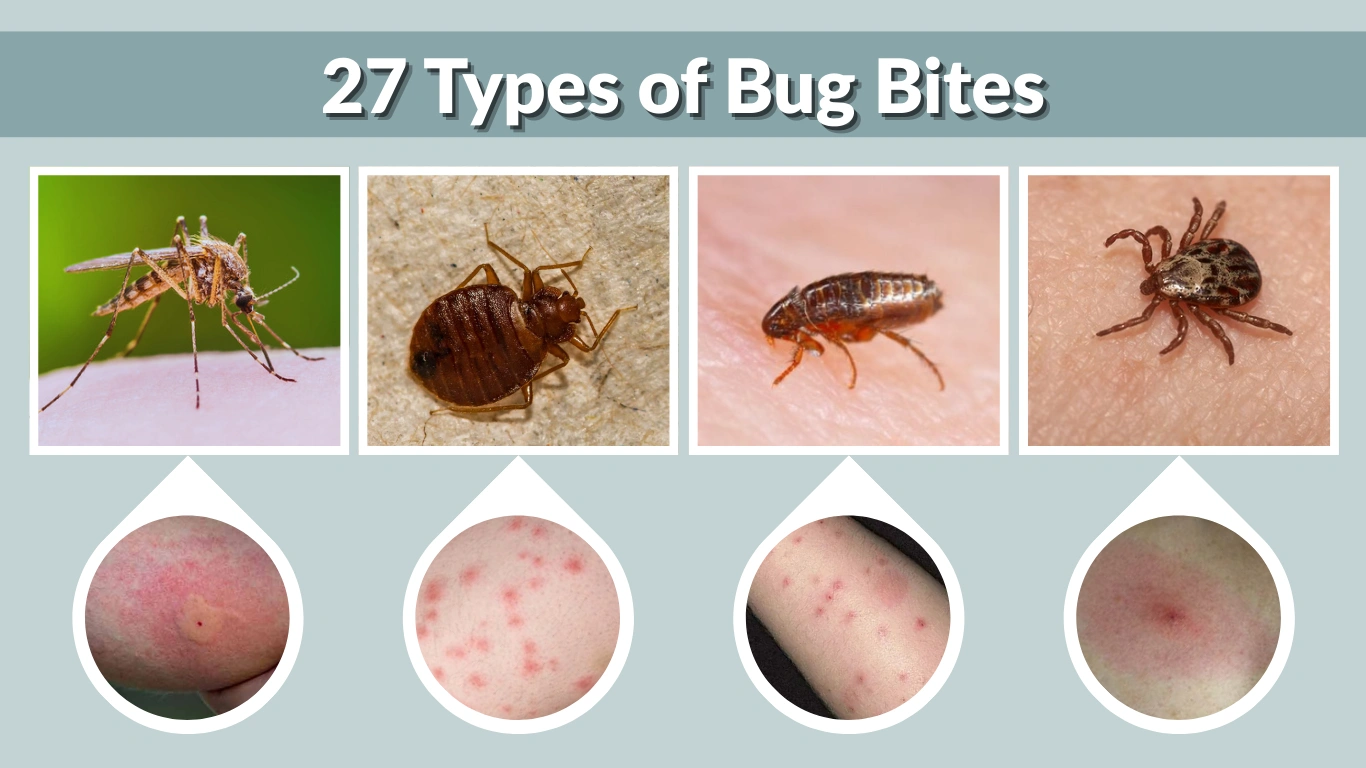
Bug bites are a common nuisance that most people experience at some point, whether from mosquitoes, fleas, or other biting insects. While many bites cause only minor irritation, some can lead to allergic reactions, infections, or even serious diseases. Understanding how to identify different bug bites, recognize their symptoms, and apply the right treatment is essential for both comfort and safety. This guide explores 27 types of bug bites, their effects on humans, and the best immediate care practices.
1. Mosquito Bites
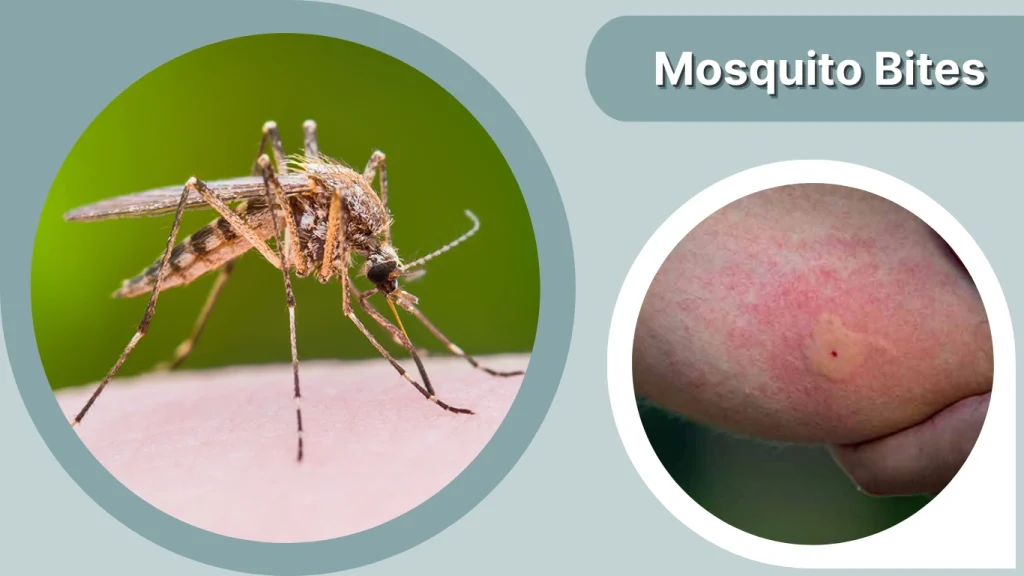
Mosquitoes are among the most widespread biting insects, active mostly in the evening and night. Female mosquitoes bite to feed on blood, which helps them produce eggs. While most bites cause only mild irritation, in some regions they are vectors of dangerous diseases.
Bite Identification
- Small, raised bumps that appear within minutes
- Red or pink in color, often with a central puncture mark
- May appear singly or in clusters on exposed skin
Symptoms
- Itching and mild swelling
- Redness and slight inflammation around the bite
- Occasional blister-like bumps in sensitive individuals
- Persistent irritation, especially if scratched
Reaction
Most people experience minor itching and swelling. However, some individuals develop exaggerated allergic responses known as “skeeter syndrome,” which causes large red welts and discomfort.
Danger to Humans
Beyond irritation, mosquitoes are known carriers of diseases such as malaria, dengue fever, Zika virus, chikungunya, and West Nile virus, depending on the region. These illnesses can pose serious health risks if contracted.
Immediate Treatment
Clean the bite with soap and water to prevent infection, then apply a cold compress to reduce swelling. Over-the-counter anti-itch creams or oral antihistamines can ease discomfort. Avoid scratching, as this increases the chance of secondary infection.
2. Bed Bug Bites
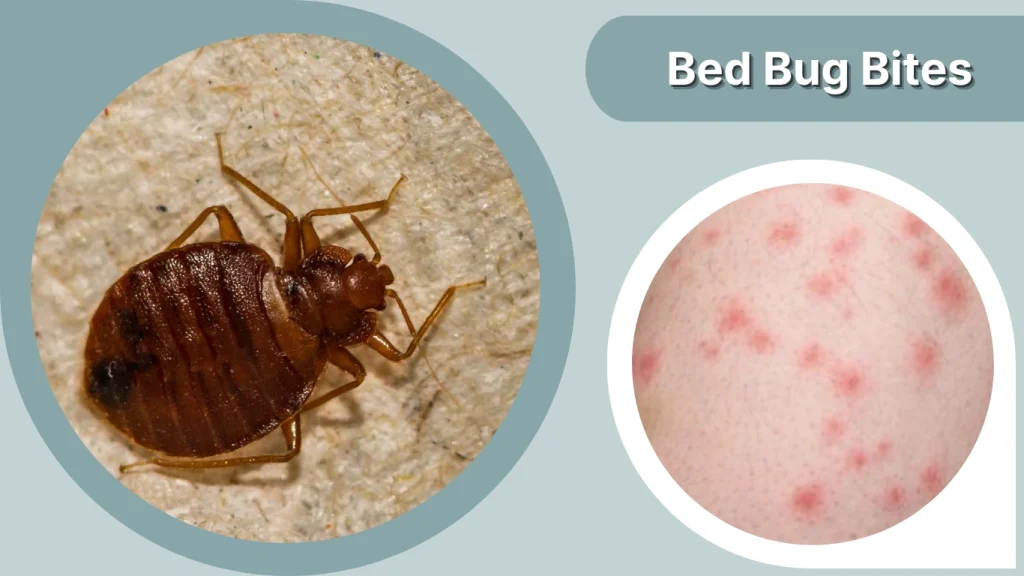
Bed bugs are nocturnal insects that hide in bedding, furniture, and cracks during the day and come out at night to feed on human blood. Their bites often appear in noticeable clusters or lines and can cause discomfort, though they are not known to spread diseases.
Bite Identification
- Small, red, itchy welts often arranged in rows or clusters
- Usually found on exposed skin like arms, neck, and legs
- May develop a darker red center over time
Symptoms
- Itching and irritation that may intensify over several days
- Mild swelling and redness around bite sites
- Some individuals may develop small blisters or hives
- Repeated exposure can cause increased sensitivity
Reaction
Most people experience mild reactions, but some may develop more pronounced allergic responses, including widespread rashes or skin inflammation. The psychological stress of infestation can also intensify the discomfort.
Danger to Humans
While bed bugs are not known to transmit diseases, their bites can lead to secondary infections from scratching. In severe infestations, loss of sleep and anxiety are common, which can affect overall well-being.
Immediate Treatment
Wash the affected area with soap and water to reduce the risk of infection. Apply an anti-itch cream or take an oral antihistamine to control itching. If bites become infected, a doctor may prescribe topical or oral antibiotics.
3. Flea Bites
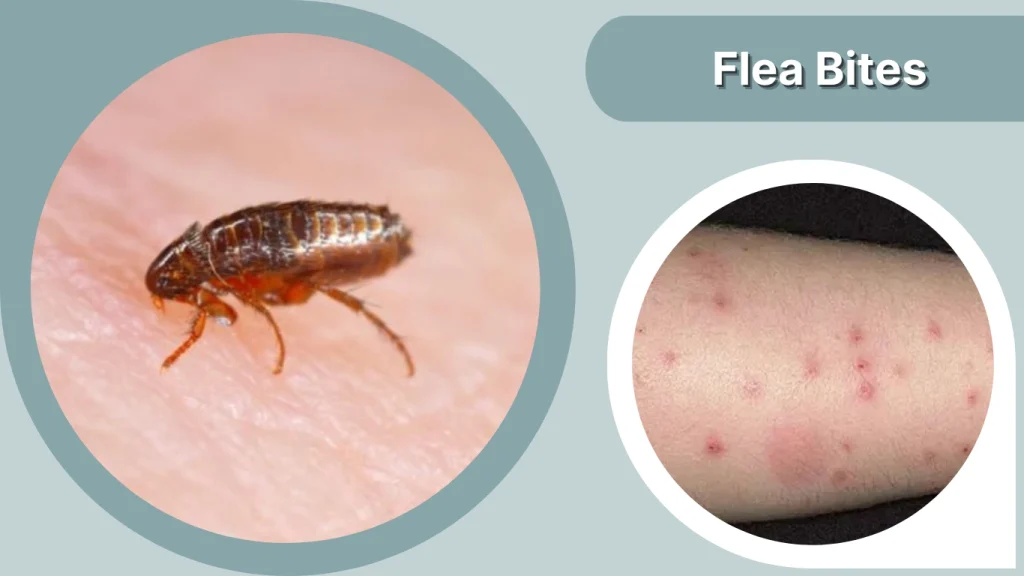
Fleas are small, jumping insects that often infest pets, but they also bite humans. Their bites are usually concentrated around the ankles, legs, and waistline. Flea bites are intensely itchy and can be mistaken for other insect bites due to their clustered pattern.
Bite Identification
- Small, red bumps with a central puncture mark
- Commonly appear in groups or clusters, especially on legs and feet
- Surrounded by a reddish halo
Symptoms
- Severe itching and irritation shortly after being bitten
- Swelling and redness around each bite
- Rash or clusters of bumps in heavily infested areas
- Possible blistering in sensitive individuals
Reaction
Most people experience localized itching and discomfort, but allergic individuals may develop more severe skin reactions. Continuous scratching can lead to open wounds and skin infections.
Danger to Humans
Fleas are capable of transmitting diseases such as plague, murine typhus, and cat scratch fever. They can also spread tapeworms if ingested accidentally. Persistent infestations may cause anemia in pets and humans due to blood loss.
Immediate Treatment
Wash the bites with soap and warm water, then apply an antiseptic. An ice pack or calamine lotion helps reduce itching. Oral antihistamines can ease allergic reactions. If infection develops, medical attention may be necessary.
4. Tick Bites
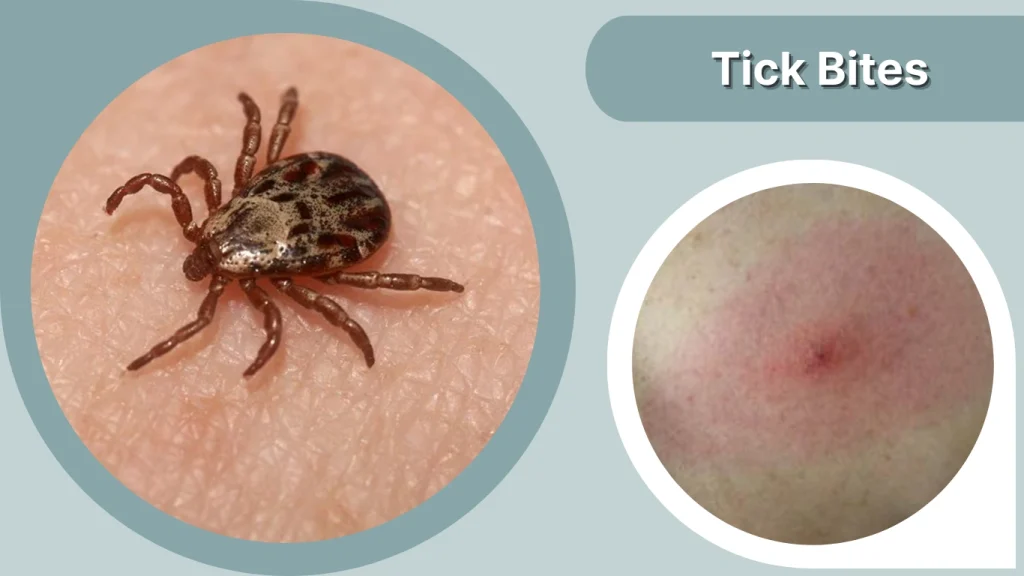
Ticks are parasitic arachnids that attach firmly to the skin and feed on blood. They are commonly found in grassy or wooded areas and can stay attached for hours or days if not removed properly. Their bites are often painless at first but can transmit serious diseases.
Bite Identification
- Small red bump at the site of attachment
- Tick may still be visible, attached to the skin
- Circular rash (erythema migrans) may develop with Lyme disease
Symptoms
- Mild itching, redness, and swelling around the bite
- Flu-like symptoms (fever, fatigue, muscle aches) if infection occurs
- Enlarging bull’s-eye rash in case of Lyme disease
- Multiple bites may cause skin irritation
Reaction
Most people have mild local reactions, but some may develop significant allergic responses. Ticks that remain attached for long periods increase the risk of transmitting pathogens.
Danger to Humans
Ticks can transmit serious diseases such as Lyme disease, Rocky Mountain spotted fever, ehrlichiosis, babesiosis, and tick-borne encephalitis. These infections can have long-term health consequences if untreated.
Immediate Treatment
Carefully remove the tick with fine-tipped tweezers by grasping close to the skin and pulling steadily upward. Clean the area with soap, water, and antiseptic. Monitor for rash, fever, or unusual symptoms and seek medical care if they appear.
5. Lice Bites
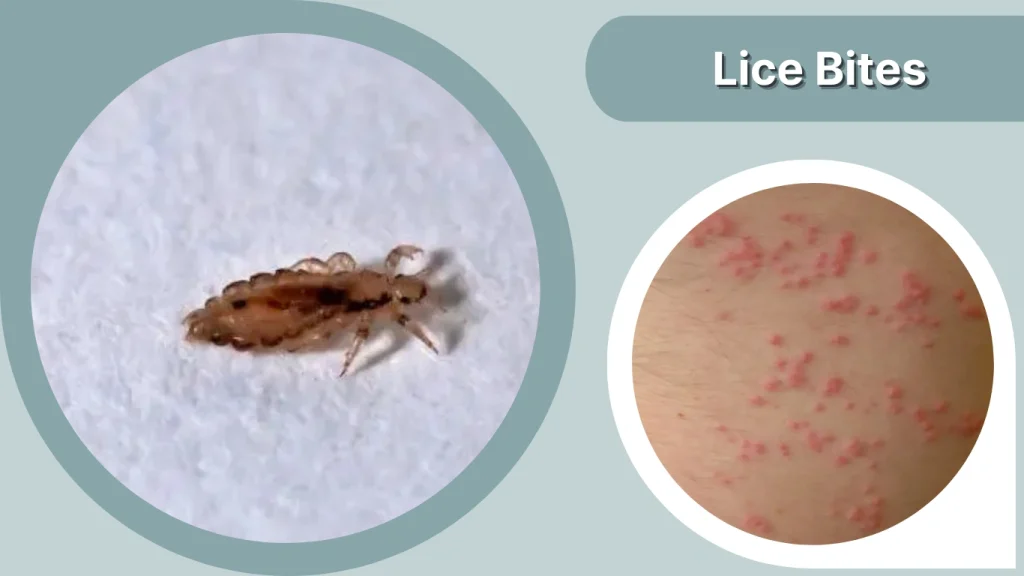
Lice are tiny parasitic insects that live on the scalp, body, or pubic area and feed on human blood. While they do not fly or jump, they spread through close contact or shared personal items. Their bites cause persistent itching and discomfort.
Bite Identification
- Small red bumps on the scalp, neck, shoulders, or pubic area
- Sometimes appear in clusters with scratch marks
- May leave tiny dark spots (lice feces) on skin or clothing
Symptoms
- Intense itching, especially at night
- Redness and irritation at bite sites
- Small sores caused by frequent scratching
- Thickened or crusty skin in long-term infestations
Reaction
Most people develop itching and mild inflammation, but repeated bites may cause secondary bacterial infections. In severe infestations, swollen lymph nodes and skin thickening may occur.
Danger to Humans
While lice are more of a nuisance than a direct health threat, they can cause skin infections from scratching. Body lice, in rare cases, can transmit diseases such as trench fever, epidemic typhus, and relapsing fever.
Immediate Treatment
Use medicated shampoos or lotions containing permethrin or other approved treatments to kill lice. Wash bedding and clothing in hot water and vacuum living areas. For severe infestations, medical advice and prescription treatments may be needed.
6. Horsefly Bites
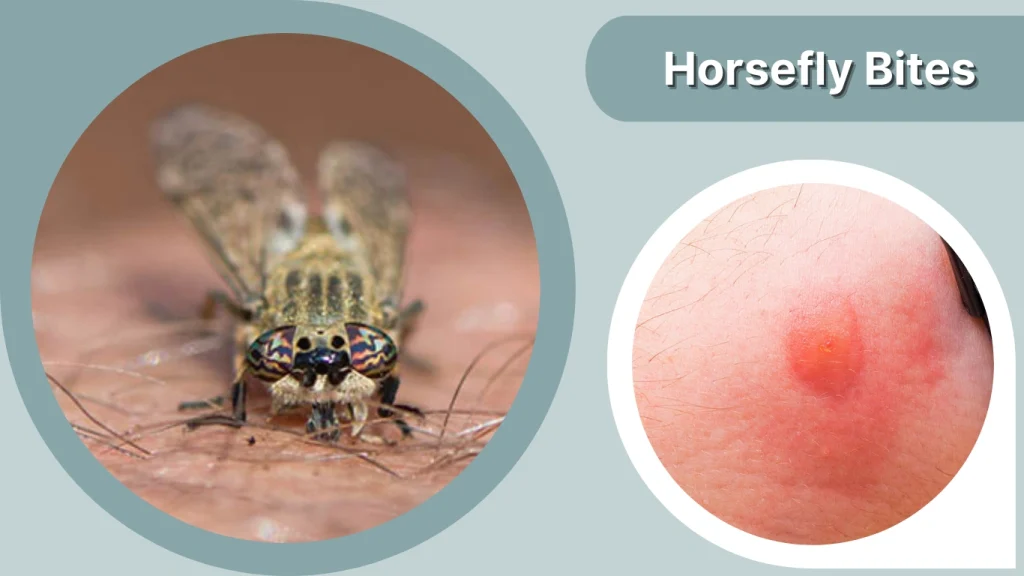
Horseflies are large, fast-flying insects commonly found near water, farms, and wooded areas. Only females bite, using sharp mouthparts to cut the skin and feed on blood. Their bites are painful and often leave noticeable marks.
Bite Identification
- Large, red, raised welt at the bite site
- Visible cut or split in the skin from the bite
- Often appears singly rather than in clusters
Symptoms
- Immediate sharp pain at the time of the bite
- Swelling, redness, and inflammation around the area
- Itching or burning sensation that lasts for hours
- In rare cases, dizziness or weakness after multiple bites
Reaction
Horsefly bites cause stronger reactions than mosquito bites due to the way they cut into the skin. Some people may develop allergic responses, including hives or difficulty breathing, though this is uncommon.
Danger to Humans
While horseflies are not major disease carriers, their bites can lead to secondary infections from open wounds. They may also spread anthrax or tularemia among livestock, raising indirect human health concerns in agricultural areas.
Immediate Treatment
Clean the wound with soap and water, then apply a cold compress to reduce swelling. Over-the-counter antihistamines or anti-itch creams can relieve discomfort. If severe allergic reactions occur, seek medical attention immediately.
7. Deer Fly Bites
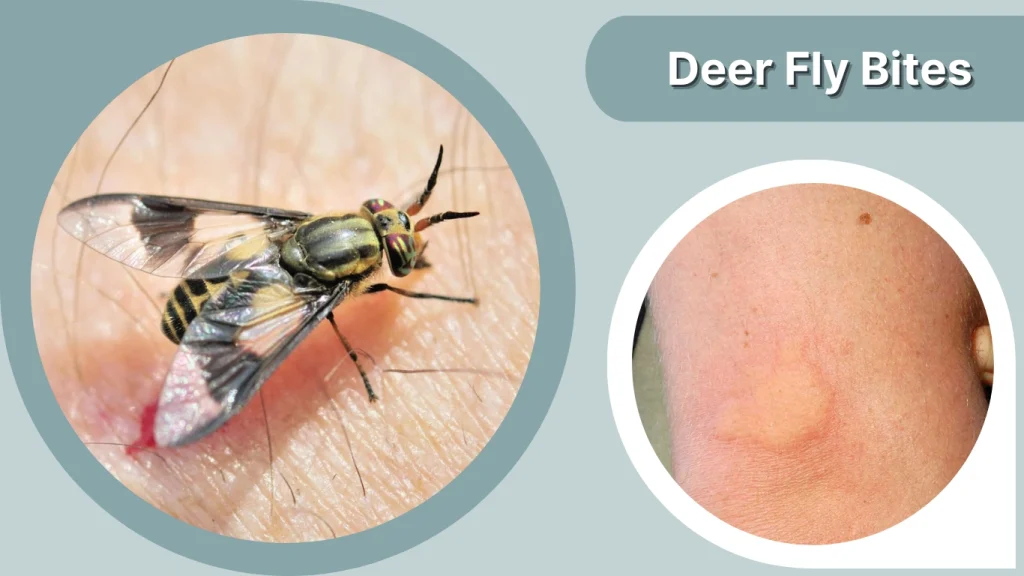
Deer flies are small bloodsucking flies related to horseflies. They are active during the day, especially in warm, humid environments near lakes, rivers, or forests. Like horseflies, only females bite, and their bites can be painful and irritating.
Bite Identification
- Painful, red welt with a central puncture mark
- Bite often appears as a single lesion rather than clusters
- May bleed slightly due to the fly’s cutting mouthparts
Symptoms
- Sharp pain at the moment of the bite
- Redness, swelling, and itching within minutes
- In some cases, blistering or rash around the site
- Lingering soreness for several hours or days
Reaction
Deer fly bites often cause stronger reactions than mosquito bites, with noticeable pain and swelling. Sensitive individuals may develop larger welts, allergic hives, or even mild systemic symptoms.
Danger to Humans
Deer flies can transmit diseases such as tularemia and, in rare cases, loiasis (eye worm infection in Africa). Infected bites can also lead to bacterial skin infections if scratched excessively.
Immediate Treatment
Wash the bite thoroughly with soap and water to prevent infection. Apply an ice pack to ease pain and swelling. Use topical antihistamines or corticosteroid creams for itching. Seek medical care if unusual symptoms such as fever, rash, or eye irritation occur.
8. Black Fly Bites
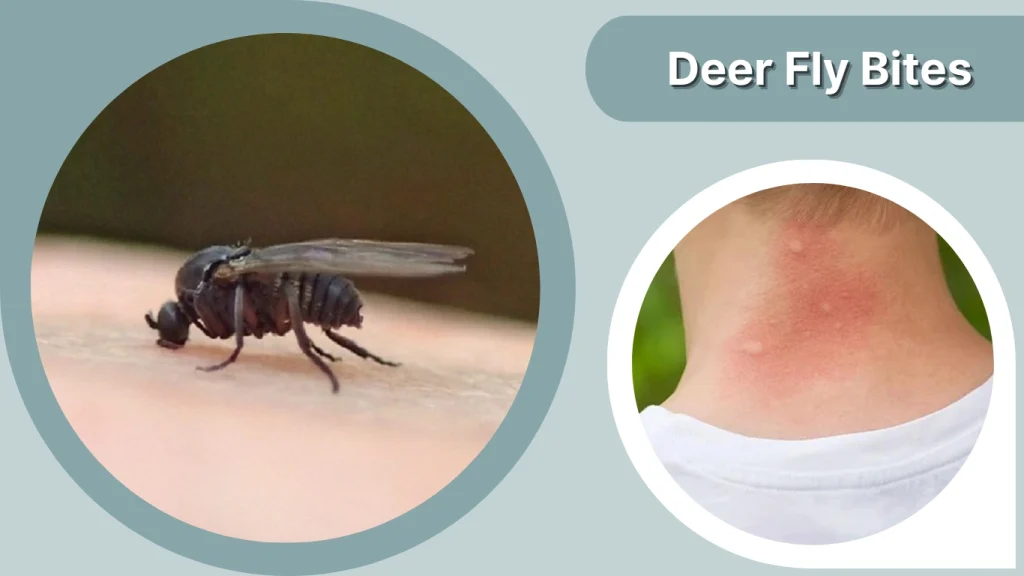
Black flies, also known as buffalo gnats, are small biting flies commonly found near rivers and streams. They are daytime feeders and often attack in large numbers, making their bites particularly irritating.
Bite Identification
- Small puncture wounds surrounded by red, swollen skin
- Often appear in clusters on exposed areas like arms, neck, and face
- May ooze clear fluid or blood in severe bites
Symptoms
- Immediate sharp pain followed by intense itching
- Swelling and redness around each bite
- Headache, nausea, or fever after multiple bites
- In sensitive people, welts or hives can develop
Reaction
Reactions to black fly bites can be more severe than mosquito bites. The injected saliva causes irritation, swelling, and sometimes systemic symptoms such as fatigue or fever when bitten repeatedly.
Danger to Humans
In certain regions, black flies are vectors of diseases like river blindness (onchocerciasis). Even without disease transmission, heavy biting can lead to blood loss, secondary infections, and systemic allergic reactions.
Immediate Treatment
Clean the area with soap and water, then apply a cold compress to reduce swelling. Use anti-itch creams, calamine lotion, or oral antihistamines for relief. If severe allergic reactions or persistent symptoms occur, seek medical attention promptly.
9. Sandfly Bites
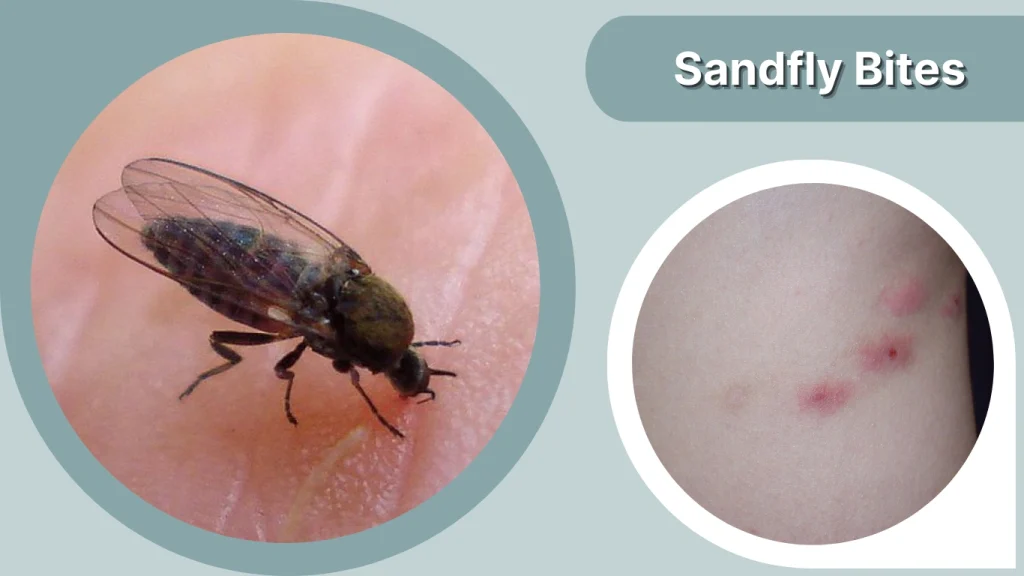
Sandflies are tiny, hairy-bodied insects that are most active during dusk and night. They thrive in warm, tropical, and subtropical climates. Their bites are painful and can transmit dangerous diseases in some parts of the world.
Bite Identification
- Small red bumps or welts, often clustered on exposed skin
- Central puncture may be visible
- Frequently found on legs, arms, face, and neck
Symptoms
- Painful stinging sensation at the moment of the bite
- Persistent itching and redness
- Swelling and rash in sensitive individuals
- In severe cases, skin ulcers may develop if infected
Reaction
Most people develop itching and mild swelling, but repeated bites can cause more serious skin irritation. In endemic areas, bites may progress to lesions if parasites are transmitted.
Danger to Humans
Sandflies are known carriers of leishmaniasis, a serious parasitic disease that can affect the skin, mucous membranes, or internal organs. Even without infection, their bites can cause intense irritation and secondary infections from scratching.
Immediate Treatment
Wash the bite with soap and water, then apply antiseptic. Cold compresses help reduce pain and swelling. Anti-itch creams, antihistamines, or topical corticosteroids can relieve symptoms. Medical evaluation is necessary if ulcers or unusual symptoms appear.
10. Midge Bites (Biting Midges / No-See-Ums)
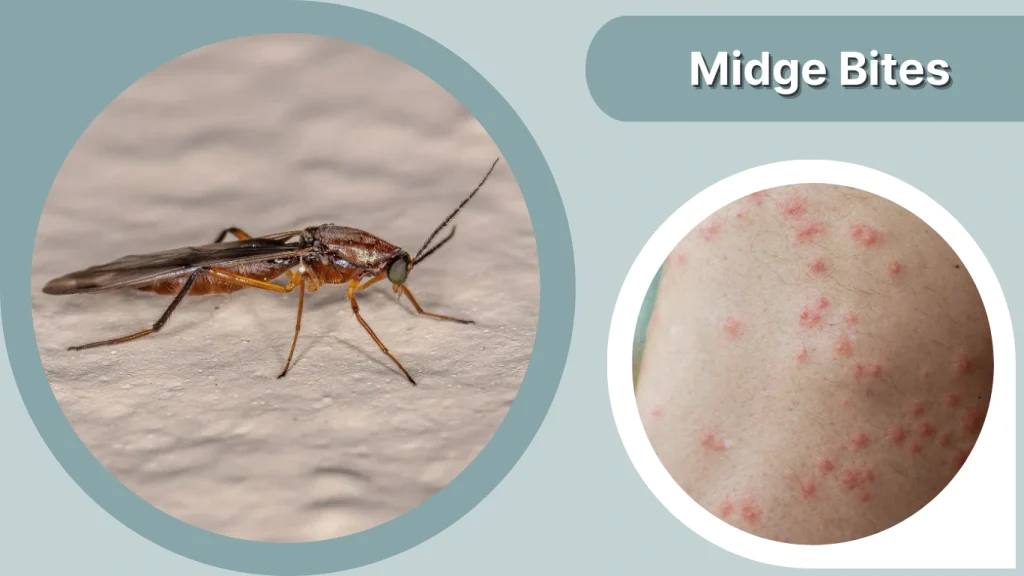
Midges, often called no-see-ums, are tiny biting flies that thrive near wetlands and coastal areas. Despite their small size, their bites are painful and can cause severe itching. They usually bite at dawn and dusk.
Bite Identification
- Small red spots, sometimes with a darker center
- Often appear in clusters on exposed skin
- Can resemble mosquito bites but are usually smaller
Symptoms
- Intense itching and burning sensation
- Swelling and redness that may last several days
- Blistering in sensitive individuals
- Rash-like appearance when many bites occur together
Reaction
Reactions vary widely: some people show only mild irritation, while others experience large, swollen welts or allergic responses. Multiple bites can cause significant discomfort, making outdoor activities difficult.
Danger to Humans
Midges are not major disease vectors in most regions, but in some parts of the world they can transmit parasitic worms and viral infections to animals and humans. The biggest risk for most people is severe itching, secondary skin infections, and allergic flare-ups.
Immediate Treatment
Clean the affected area with soap and water. Apply a cold compress to reduce swelling, followed by anti-itch cream or calamine lotion. Oral antihistamines may help with severe itching. Seek medical advice if blistering or allergic reactions worsen.
11. Kissing Bug Bites (Assassin Bugs / Triatomine Bugs)
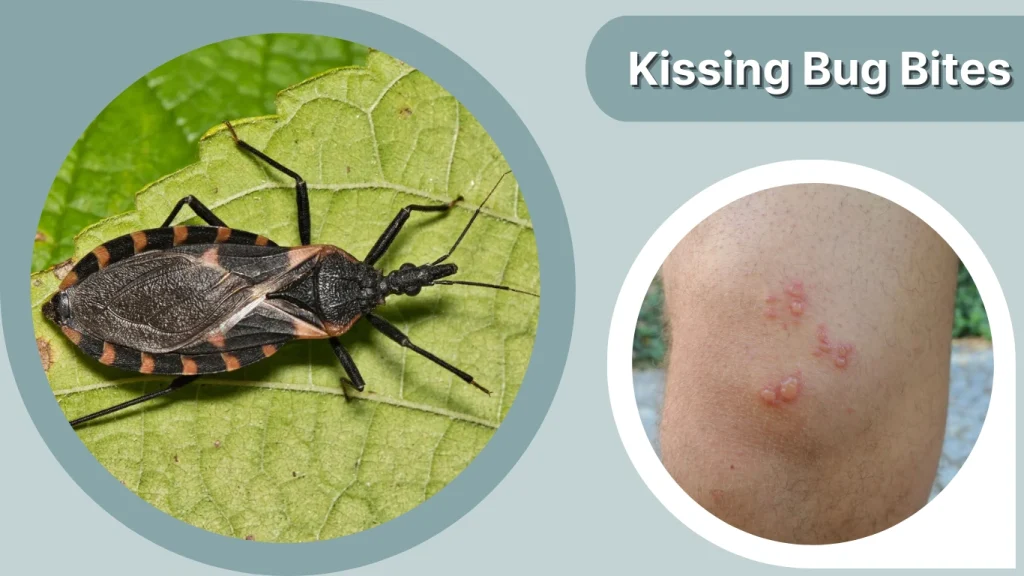
Kissing bugs are nocturnal insects that feed on human blood, usually biting around the face while people sleep. They are commonly found in the Americas and are notorious for transmitting Chagas disease.
Bite Identification
- Small red bumps, often near the lips, eyes, or face
- May appear in clusters or lines
- Sometimes painless at first, making them easy to overlook
Symptoms
- Itching, swelling, and redness around the bite
- Development of welts or rash in sensitive individuals
- Possible allergic reactions such as hives
- In rare cases, severe swelling of the face or eyelids
Reaction
While the bite itself may not be highly painful, the reaction can be significant. Many people develop strong allergic responses, and scratching increases the risk of infection.
Danger to Humans
Kissing bugs can transmit Trypanosoma cruzi, the parasite that causes Chagas disease, through their feces deposited near the bite wound. Chagas can lead to serious long-term heart and digestive complications if untreated.
Immediate Treatment
Wash the bite thoroughly with soap and water, then apply antiseptic. Cold compresses and antihistamines help reduce swelling and itching. If symptoms of Chagas disease (fever, fatigue, or swelling at the bite site) appear, seek medical attention promptly.
12. Fire Ant Bites
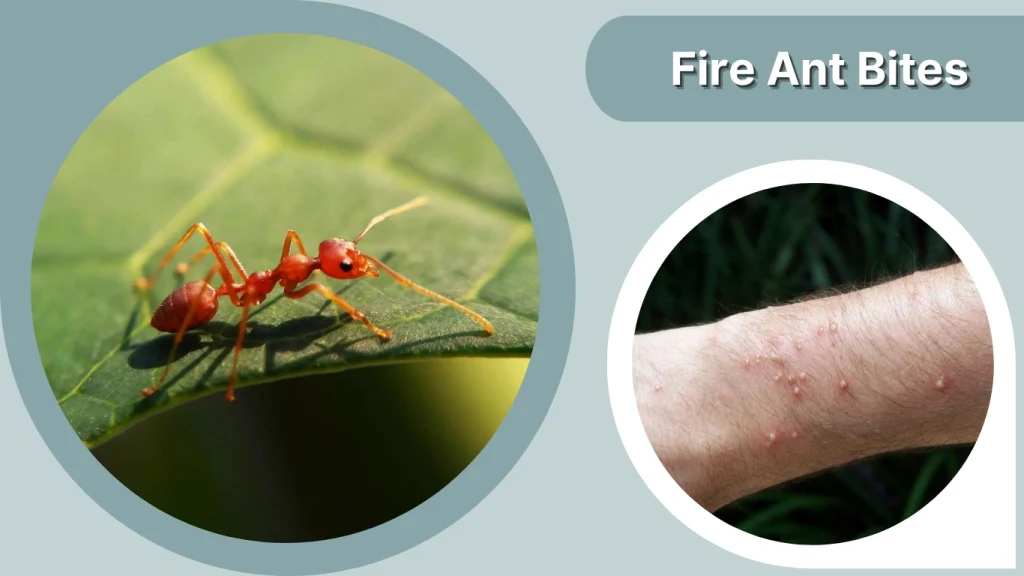
Fire ants are aggressive stinging ants that attack in groups when disturbed. Their bites and stings cause immediate pain followed by burning, itching, and pustule formation. They are common in warm regions such as the southern United States.
Bite Identification
- Red bumps with a central blister or white pustule
- Often appear in clusters due to multiple ants attacking at once
- Located on feet, ankles, and legs when stepped on or disturbed
Symptoms
- Immediate burning or stinging pain
- Redness and swelling at the site of each sting
- Itching that intensifies after several hours
- Pustules that may last for days and risk infection if scratched
Reaction
Most people experience localized pain and pustules, but allergic individuals may develop severe reactions, including hives, dizziness, or anaphylaxis. Multiple stings can cause extensive skin irritation and discomfort.
Danger to Humans
While fire ant stings are not usually life-threatening, they can trigger dangerous allergic reactions in sensitive individuals. Repeated stings may lead to serious swelling and, if untreated, secondary bacterial infections.
Immediate Treatment
Wash the area with soap and water and apply a cold compress to reduce swelling. Over-the-counter hydrocortisone creams or antihistamines help relieve itching and pain. Seek emergency medical care if signs of a severe allergic reaction appear.
13. Bullet Ant Bites (Stings)
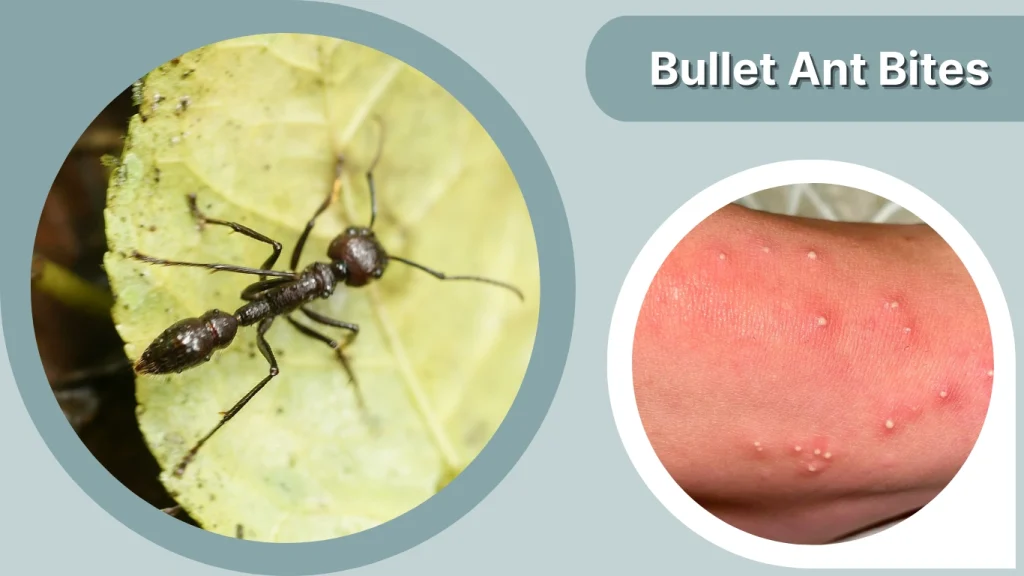
Bullet ants, native to Central and South America, are famous for having one of the most painful insect stings in the world. Their sting is described as feeling like being shot, hence the name “bullet ant.”
Bite Identification
- Single, large red bump or welt at the sting site
- Noticeable swelling in the surrounding skin
- Usually occurs on feet, hands, or legs when disturbed
Symptoms
- Immediate, excruciating pain that can last up to 24 hours
- Redness and intense throbbing at the site
- Temporary paralysis or shaking in severe cases
- Prolonged tenderness even after pain subsides
Reaction
Most reactions are localized but extremely painful. Some individuals may develop allergic responses such as hives, dizziness, or difficulty breathing. Multiple stings can cause overwhelming pain and systemic effects.
Danger to Humans
Bullet ant stings are not typically fatal, but the extreme pain and risk of allergic reactions make them dangerous. In remote areas, repeated stings could cause significant physical stress or complications.
Immediate Treatment
Clean the sting site with soap and water, then apply a cold compress to reduce swelling. Pain relief may require oral analgesics. In case of allergic reaction or breathing difficulty, seek emergency medical attention immediately.
14. Crazy Ant Bites
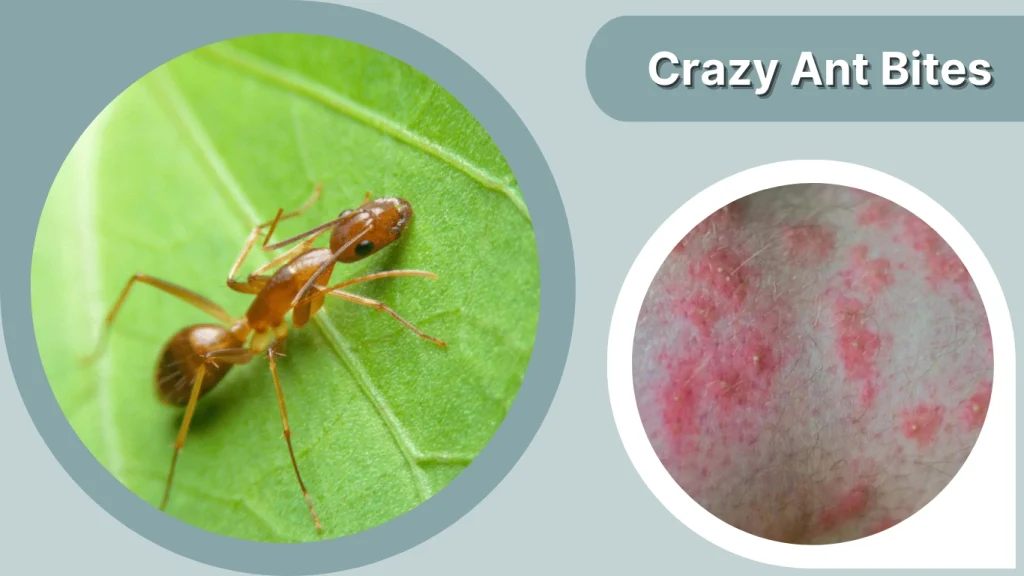
Crazy ants, named for their fast and erratic movements, are invasive ants found in many warm regions. Unlike fire ants, their bites and stings are less potent but can still cause irritation when large numbers attack.
Bite Identification
- Small red bumps that may resemble minor pimples
- Appear in clusters when multiple ants bite at once
- Usually found on feet, ankles, and hands after contact with colonies
Symptoms
- Mild to moderate pain at the bite site
- Itching and localized swelling
- Burning sensation that may last several hours
- In sensitive individuals, small blisters may form
Reaction
Most people experience only temporary discomfort, but some may have stronger allergic responses, including hives or widespread itching. Repeated bites can worsen irritation.
Danger to Humans
Crazy ants are not considered major health threats, but heavy infestations can cause frequent biting incidents. In rare cases, allergic individuals may experience severe reactions. More commonly, their danger lies in damaging electrical equipment, creating indirect human risks.
Immediate Treatment
Wash the area thoroughly with soap and water. Apply a cold compress to reduce swelling and itching. Over-the-counter antihistamines or anti-itch creams can provide relief. Seek medical help if an allergic reaction occurs.
15. Army Ant Bites
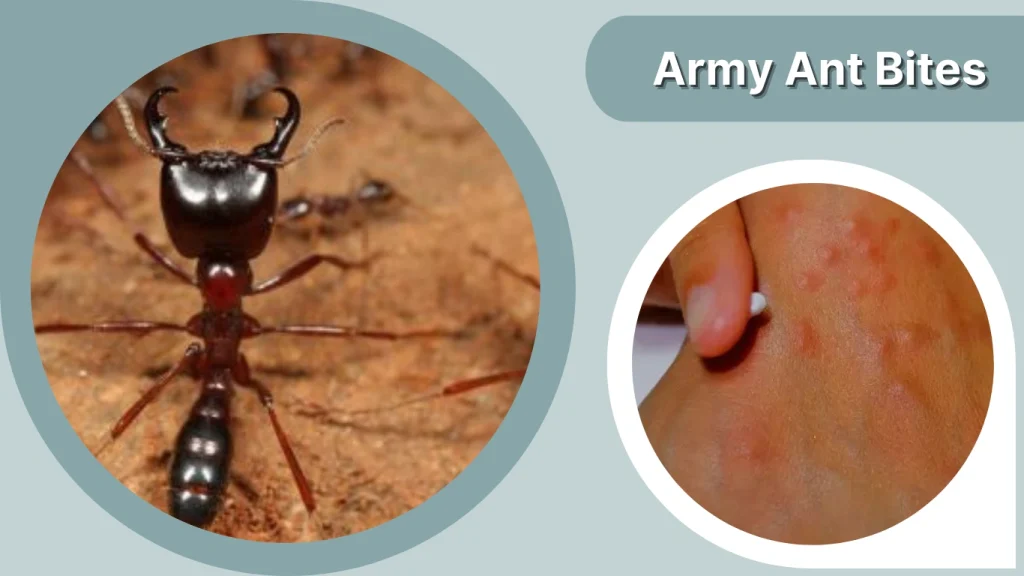
Army ants are aggressive, nomadic ants that travel in large swarms, mainly in tropical regions. They attack in groups, delivering painful bites with strong mandibles while injecting formic acid, which increases irritation.
Bite Identification
- Multiple red welts clustered closely together
- Visible puncture marks from sharp mandibles
- Often found on legs, feet, and exposed skin when crossing their path
Symptoms
- Intense burning pain at the site of each bite
- Swelling and redness that can last for hours
- Itching and irritation, sometimes with blister formation
- Multiple bites may cause significant discomfort
Reaction
Most reactions are localized, but because army ants bite in large numbers, the cumulative effect can be severe. Sensitive individuals may develop allergic responses such as hives or systemic symptoms.
Danger to Humans
While army ant bites are not usually fatal, large swarms can overwhelm and severely injure small animals or incapacitated humans. Repeated bites may cause blood loss, infections, or allergic complications.
Immediate Treatment
Remove yourself quickly from the swarm’s path. Wash the affected area with soap and water, apply cold compresses, and use anti-itch creams or antihistamines for relief. Seek medical care if symptoms worsen or signs of allergy appear.
16. Leafcutter Ant Bites
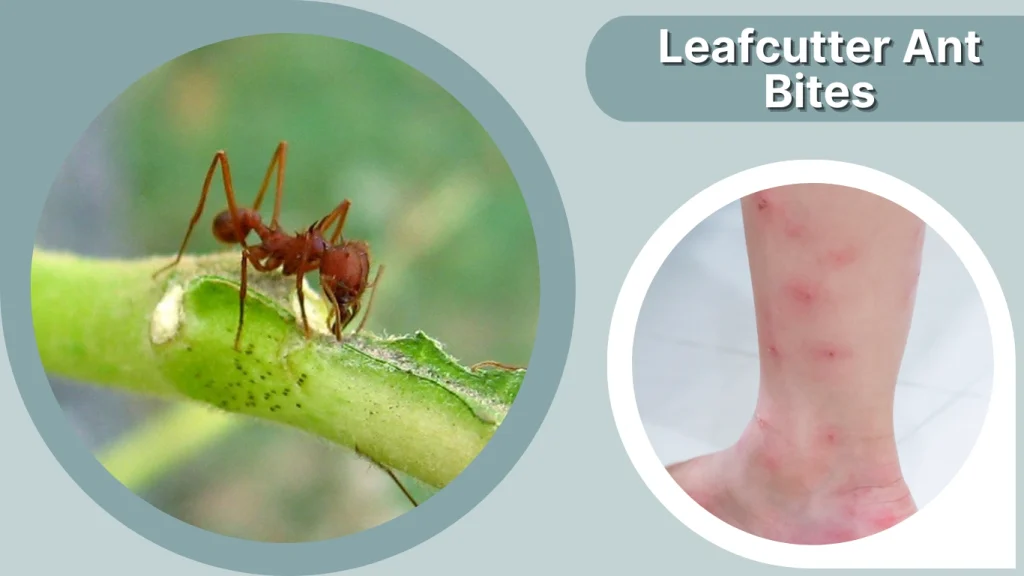
Leafcutter ants are well known for carrying pieces of leaves to their underground colonies. Although they primarily focus on vegetation, they can bite aggressively when threatened, using their sharp mandibles.
Bite Identification
- Small red puncture marks on the skin
- Often accompanied by minor cuts due to strong mandibles
- Bites usually appear on hands, arms, or legs after contact with a colony
Symptoms
- Sharp, pinching pain at the moment of the bite
- Redness and mild swelling around the site
- Itching and irritation lasting for several hours
- In some cases, small welts or blisters may form
Reaction
Leafcutter ant bites usually cause mild reactions, but their powerful jaws can break the skin, increasing the risk of secondary infection. Allergic individuals may experience stronger skin irritation or localized swelling.
Danger to Humans
Leafcutter ants are not major disease carriers, but their strong mandibles can cause painful bites, particularly if multiple ants attack at once. In rare cases, they may trigger allergic responses or leave small open wounds prone to infection.
Immediate Treatment
Clean the bite thoroughly with soap and water. Apply a cold compress to minimize swelling and use anti-itch creams for relief. If signs of infection or allergic reaction develop, seek medical attention.
17. Carpenter Ant Bites
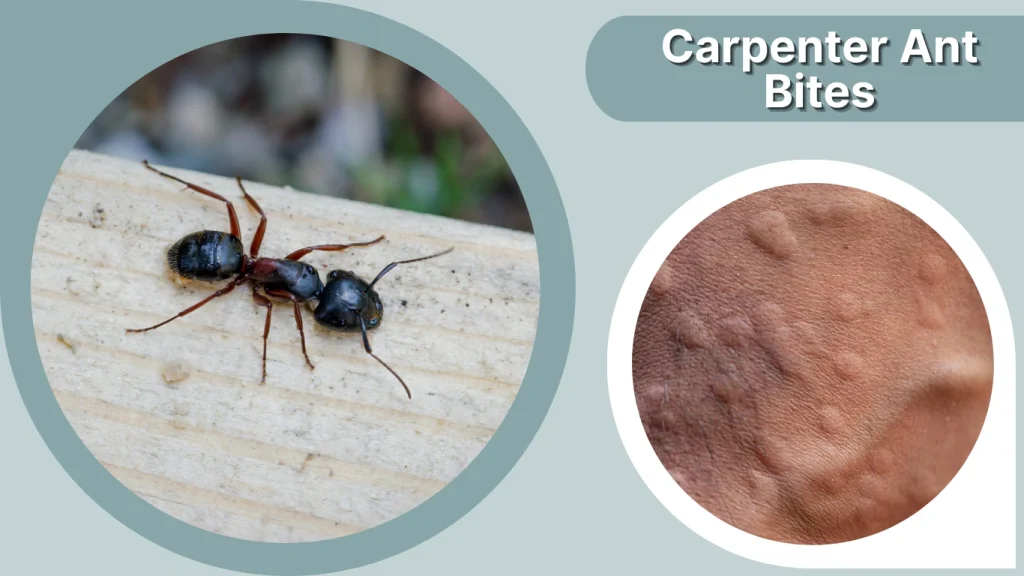
Carpenter ants are large ants that commonly infest wooden structures. While they don’t sting, they defend themselves with strong mandibles, delivering painful bites. They can also spray formic acid into the wound, increasing irritation.
Bite Identification
- Noticeable red marks with small puncture wounds
- Sometimes accompanied by a burning sensation
- Bites usually occur on hands, arms, or legs when nests are disturbed
Symptoms
- Sharp, pinching pain at the bite site
- Redness and swelling that may last for several hours
- Itching or mild burning sensation
- Rarely, small blisters may form
Reaction
Most people experience mild discomfort and localized swelling. However, the formic acid sprayed into the bite may cause stronger irritation for sensitive individuals.
Danger to Humans
Carpenter ants are not major health threats, but their bites can be painful and irritating. They pose a bigger danger to property, as they can damage wood and structures when nesting.
Immediate Treatment
Wash the bite with soap and water, then apply a cold compress to reduce swelling. Over-the-counter anti-itch creams or oral antihistamines can provide relief. If irritation persists or signs of infection appear, consult a doctor.
18. Red Imported Fire Ant Bites
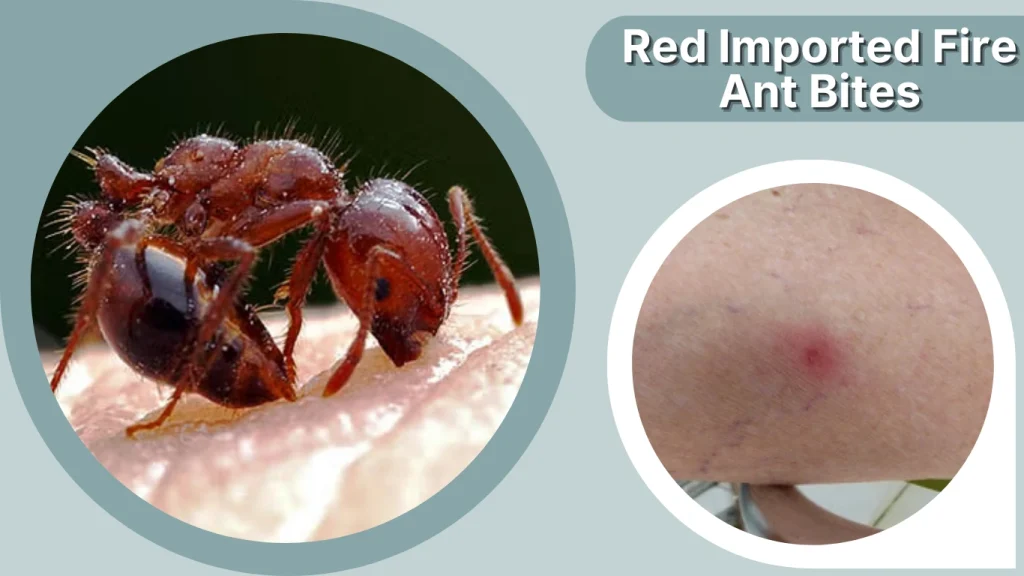
Red imported fire ants are an invasive species known for their aggressive behavior. When disturbed, they swarm and sting repeatedly, injecting venom that causes painful pustules. They are commonly found in the southern United States and other warm climates.
Bite Identification
- Red, raised bumps with a white pustule in the center
- Appear in clusters due to multiple ants attacking at once
- Often found on feet, ankles, and legs after stepping on nests
Symptoms
- Immediate burning and stinging sensation
- Swelling, redness, and itching that may persist for days
- Formation of painful pustules that can rupture and scab over
- In severe cases, hives or widespread skin reactions
Reaction
Most reactions are localized but painful. Sensitive individuals may develop severe allergic responses such as dizziness, difficulty breathing, or anaphylaxis. Multiple bites can significantly increase discomfort.
Danger to Humans
Red imported fire ant stings are not typically fatal, but they pose serious risks for people with allergies. Secondary bacterial infections may develop if pustules are scratched and broken open.
Immediate Treatment
Clean the affected area with soap and water, then apply a cold compress to reduce swelling. Use antihistamines or topical hydrocortisone to relieve itching and pain. Seek emergency medical care if symptoms of a severe allergic reaction occur.
19. Chigger Bites (Harvest Mite Larvae)
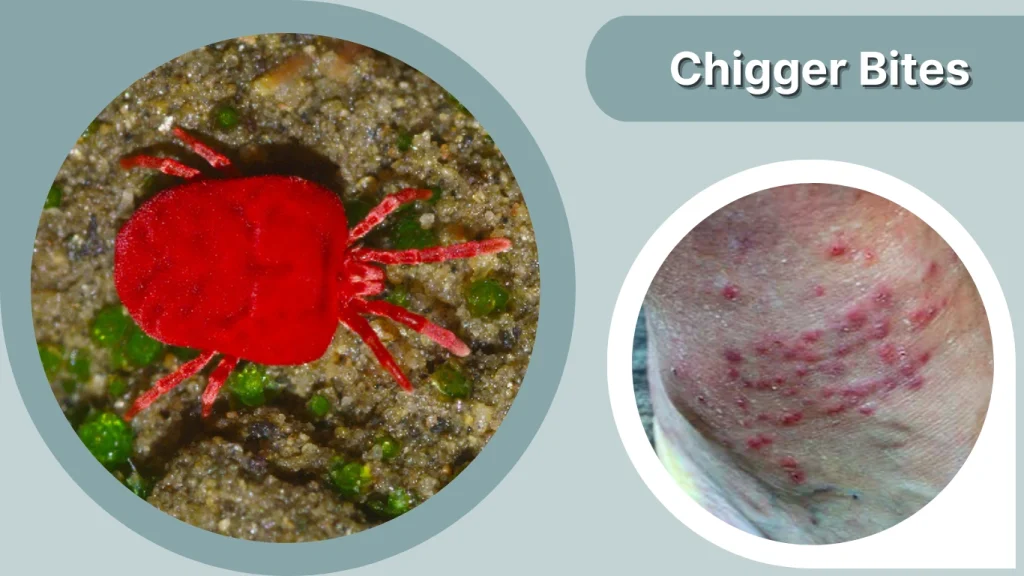
Chiggers are the larval stage of certain mites, commonly found in grassy fields, forests, and damp areas. They don’t burrow into the skin but attach to it and inject digestive enzymes, which cause intense irritation.
Bite Identification
- Small red bumps, often with a bright red center
- Commonly appear in clusters around the waist, ankles, or armpits
- Sometimes mistaken for a rash or insect allergy
Symptoms
- Severe itching that begins a few hours after the bite
- Redness and swelling around affected areas
- Rash-like patches with multiple small welts
- Itching that may last for several days to a week
Reaction
Chigger bites usually cause intense itching and irritation but no lasting harm. Excessive scratching, however, can break the skin and lead to infection.
Danger to Humans
Chiggers do not transmit diseases in most parts of the world, but in some regions, they can spread scrub typhus. The main danger comes from secondary skin infections due to prolonged scratching.
Immediate Treatment
Wash the skin with hot, soapy water to remove any remaining chiggers. Apply anti-itch creams, calamine lotion, or oral antihistamines to relieve discomfort. If severe itching or infection develops, medical treatment may be required.
21. Scabies Mite Bites
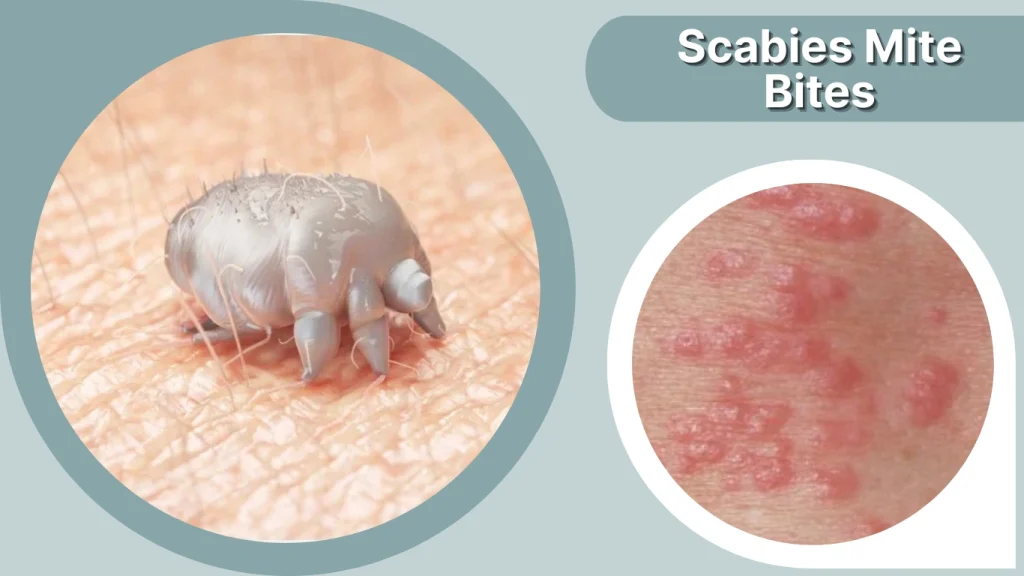
Scabies mites are microscopic parasites that burrow into the skin to lay eggs. Their activity causes intense itching and a rash that worsens at night. Scabies spreads easily through close contact or shared clothing and bedding.
Bite Identification
- Tiny red bumps or pimple-like spots
- Thin, wavy burrow lines on the skin (often between fingers, wrists, waist, or armpits)
- Rash commonly appears in clusters
Symptoms
- Severe itching, especially at night
- Red, inflamed patches with scratch marks
- Small blisters or sores caused by scratching
- Widespread rash in severe infestations
Reaction
The irritation comes from both the mites and the body’s allergic response to them. Without treatment, the infestation worsens, leading to skin thickening and secondary infections.
Danger to Humans
Scabies is highly contagious and can spread quickly in households, schools, and care facilities. While not directly life-threatening, untreated infestations can cause severe skin infections and discomfort.
Immediate Treatment
Medical treatment with prescription creams such as permethrin is required to kill the mites. Bedding, clothes, and towels should be washed in hot water to prevent reinfestation. Infected individuals should avoid close contact until fully treated.
22. Bird Mite Bites
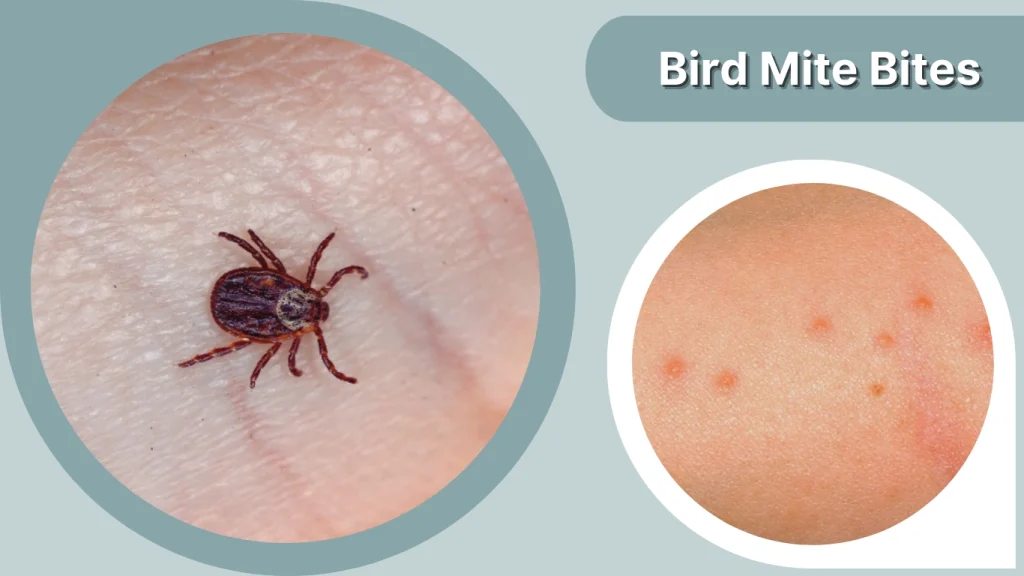
Bird mites are tiny parasites that normally feed on birds but will bite humans when their primary hosts are absent. Infestations often occur in homes near bird nests, particularly in attics, eaves, or vents.
Bite Identification
- Small red spots that resemble flea or mosquito bites
- Often appear in clusters or lines on arms, legs, neck, or torso
- Intense itching without a visible puncture mark
Symptoms
- Severe itching and irritation that worsen at night
- Red, inflamed welts or rash
- Secondary sores from scratching
- In some cases, crawling sensation on the skin
Reaction
Bird mite bites are highly irritating but usually do not transmit diseases. However, repeated bites can cause allergic reactions, rashes, and psychological stress due to the feeling of infestation.
Danger to Humans
While bird mites rarely spread illnesses to humans, heavy infestations can cause extreme discomfort, sleep disruption, and skin infections from scratching. The main risk is continued exposure if bird nests are not removed.
Immediate Treatment
Wash the bites with soap and warm water, then apply anti-itch cream or calamine lotion. Oral antihistamines can help reduce itching. Elimination of nearby bird nests and professional pest control are essential to prevent recurring bites.
23. Cat Flea Bites
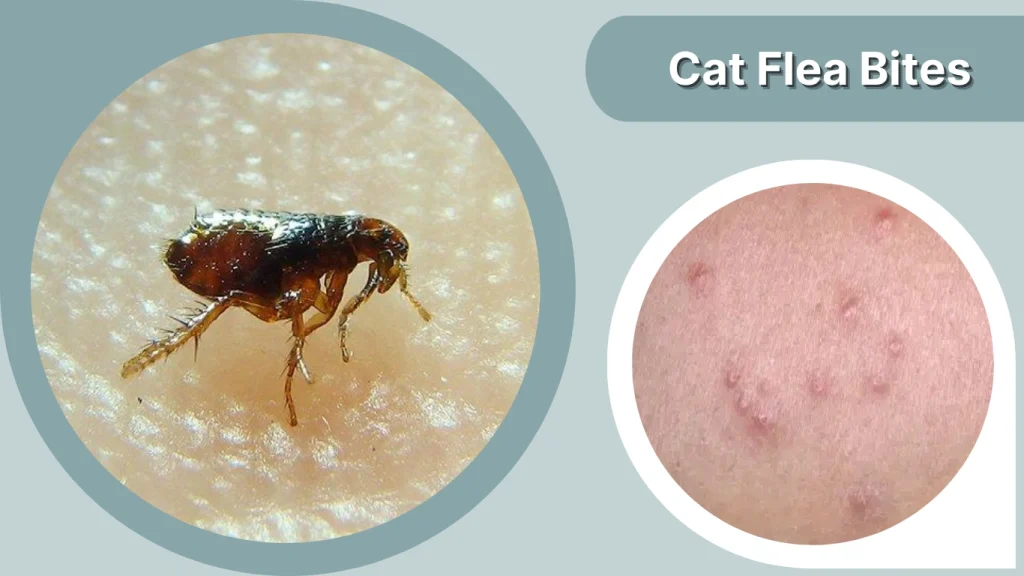
Cat fleas are among the most common flea species that infest both pets and humans. They thrive in carpets, bedding, and furniture, feeding on warm-blooded hosts when given the chance.
Bite Identification
- Small, red bumps with a central puncture spot
- Typically appear in clusters or lines on ankles, legs, and waistline
- Surrounded by a reddish halo
Symptoms
- Intense itching and irritation shortly after being bitten
- Redness and mild swelling around the bites
- Rash-like clusters in areas of repeated exposure
- Possible blistering in sensitive individuals
Reaction
Most people develop localized itching and irritation. However, repeated exposure can increase sensitivity, leading to larger welts or allergic dermatitis. Scratching often worsens the reaction and risks infection.
Danger to Humans
Cat fleas can transmit tapeworms if accidentally ingested and may spread bacterial infections such as Bartonella (cat scratch disease). Though rarely severe, infestations can cause significant discomfort and health risks if untreated.
Immediate Treatment
Wash the affected area with soap and warm water, then apply antiseptic. Cold compresses and anti-itch creams like calamine lotion provide relief. Treating both the home environment and pets is essential to stop recurring bites.
24. Dog Flea Bites
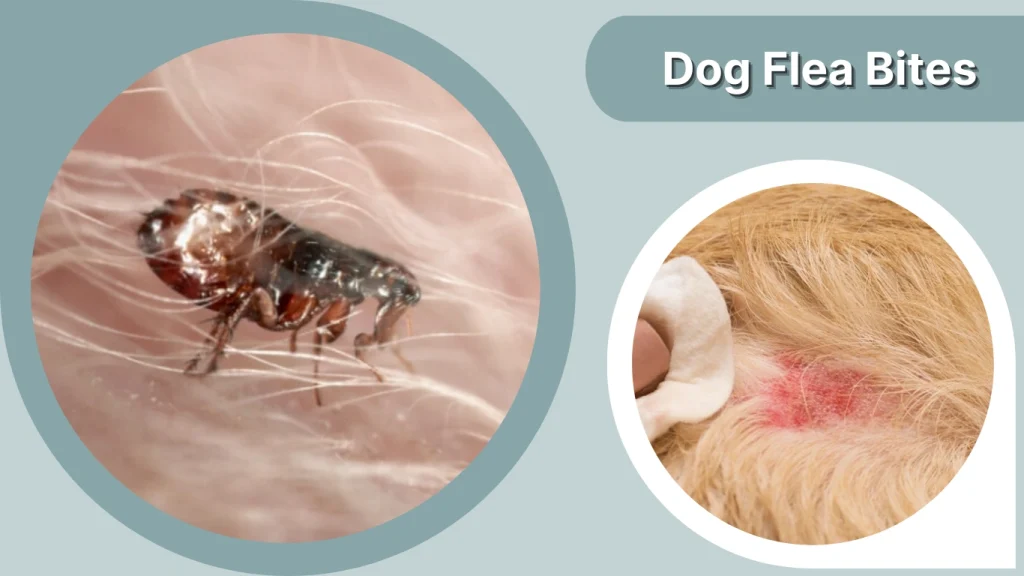
Dog fleas are close relatives of cat fleas and commonly infest domestic pets. When populations are high, they also bite humans, leaving irritating marks primarily on the lower body.
Bite Identification
- Small, red bumps with a pinpoint puncture in the center
- Appear in clusters or lines, especially on legs, ankles, and waist
- Surrounded by a slightly inflamed halo
Symptoms
- Persistent itching and irritation soon after being bitten
- Redness and swelling that may last for several days
- Clusters of rash-like spots in heavily exposed areas
- Occasional blistering in sensitive individuals
Reaction
Most reactions are localized, but people with allergies to flea saliva may experience exaggerated swelling, hives, or secondary skin infections from scratching.
Danger to Humans
Dog fleas can carry and transmit parasites such as tapeworms, as well as bacteria like Bartonella. While not typically life-threatening, repeated exposure can cause significant discomfort and health issues if left untreated.
Immediate Treatment
Clean the bites with soap and water, then apply a cold compress to reduce swelling. Anti-itch creams, calamine lotion, or oral antihistamines help manage symptoms. Eradication of fleas from pets and the environment is crucial to prevent repeated bites.
25. Stable Fly Bites
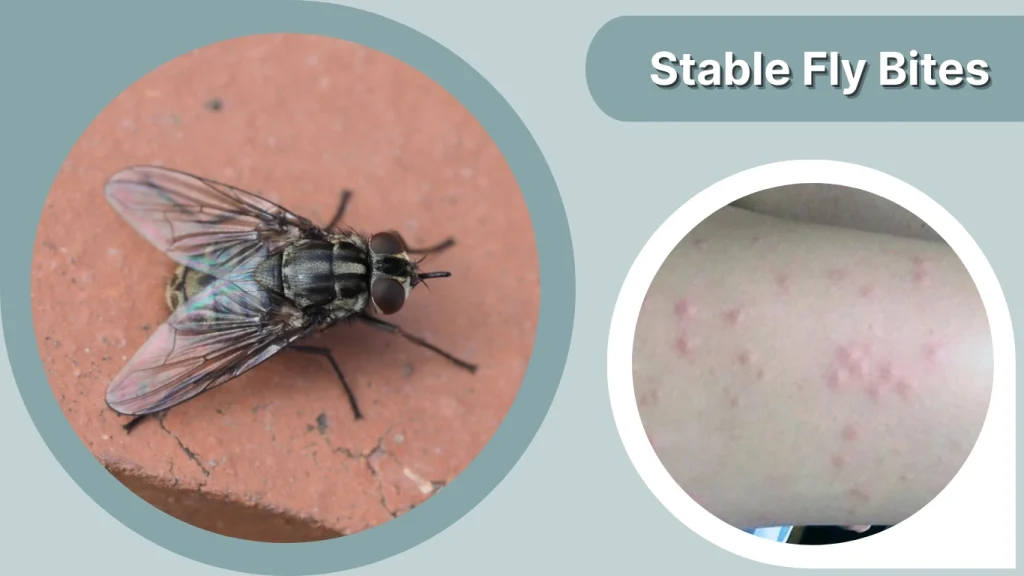
Stable flies, often mistaken for houseflies, are blood-feeding pests commonly found around livestock and damp environments. Unlike houseflies, both males and females bite, using their sharp mouthparts to pierce the skin.
Bite Identification
- Painful red bump with a small puncture mark
- Usually found on legs, ankles, and arms
- Bites often appear singly but may occur in groups in infested areas
Symptoms
- Immediate sharp, stabbing pain during the bite
- Redness, swelling, and itching afterward
- In some cases, welts or blister-like sores develop
- Persistent irritation lasting several days in sensitive individuals
Reaction
Stable fly bites are more painful than mosquito bites and often cause stronger local irritation. People who are bitten repeatedly may develop increased sensitivity or allergic skin reactions.
Danger to Humans
Stable flies are not major vectors of human disease, but they can transmit pathogens to livestock, indirectly affecting human health. Their painful bites and frequent attacks can also reduce comfort and productivity in outdoor environments.
Immediate Treatment
Wash the area with soap and water to prevent infection. Apply ice packs to reduce swelling and pain. Use topical anti-itch creams or oral antihistamines for relief. If bites become infected, seek medical treatment.
26. Tsetse Fly Bites
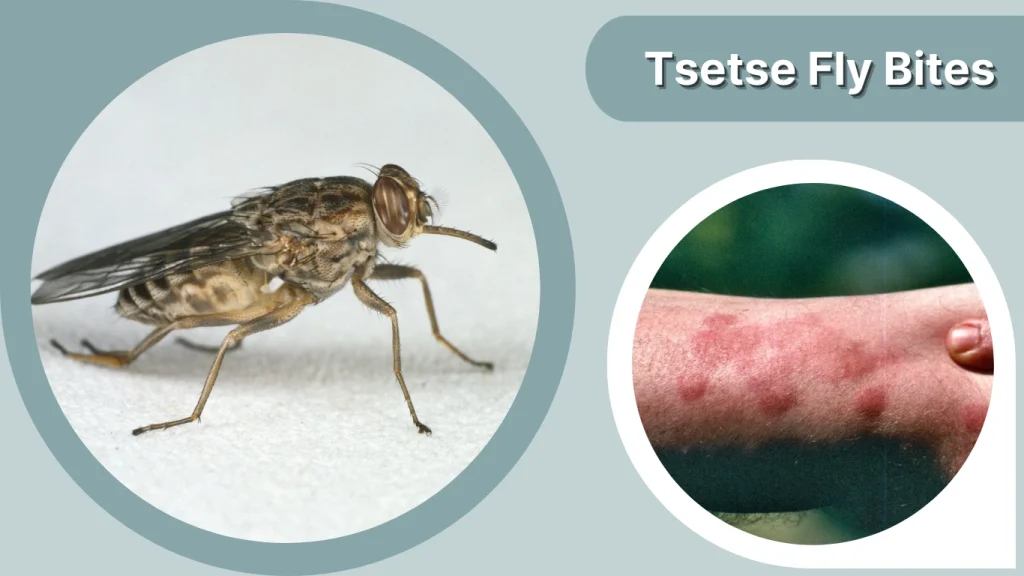
Tsetse flies are large blood-feeding flies found in sub-Saharan Africa. They are notorious for transmitting sleeping sickness (African trypanosomiasis), a serious parasitic disease. Both males and females bite using sharp mouthparts that pierce the skin.
Bite Identification
- Painful red bump or swelling at the bite site
- Central puncture mark often visible
- Bite area may quickly enlarge and become inflamed
Symptoms
- Immediate sharp pain at the time of the bite
- Swelling and redness that may last several days
- Fever, headache, or fatigue in cases of infection
- Rash or enlarged lymph nodes may develop in advanced cases
Reaction
Most people experience painful swelling and irritation. Infected individuals may develop systemic symptoms, including fever and extreme fatigue, which signal the onset of sleeping sickness.
Danger to Humans
Tsetse flies are dangerous because they transmit Trypanosoma brucei, the parasite that causes African sleeping sickness. If untreated, this disease can affect the nervous system, leading to confusion, sleep disturbances, organ failure, and death.
Immediate Treatment
Clean the bite thoroughly with soap and water, then apply a cold compress to reduce pain and swelling. Seek immediate medical evaluation if fever, fatigue, or neurological symptoms appear, especially in regions where sleeping sickness is endemic.
27. Assassin Bug Bites (General Species)
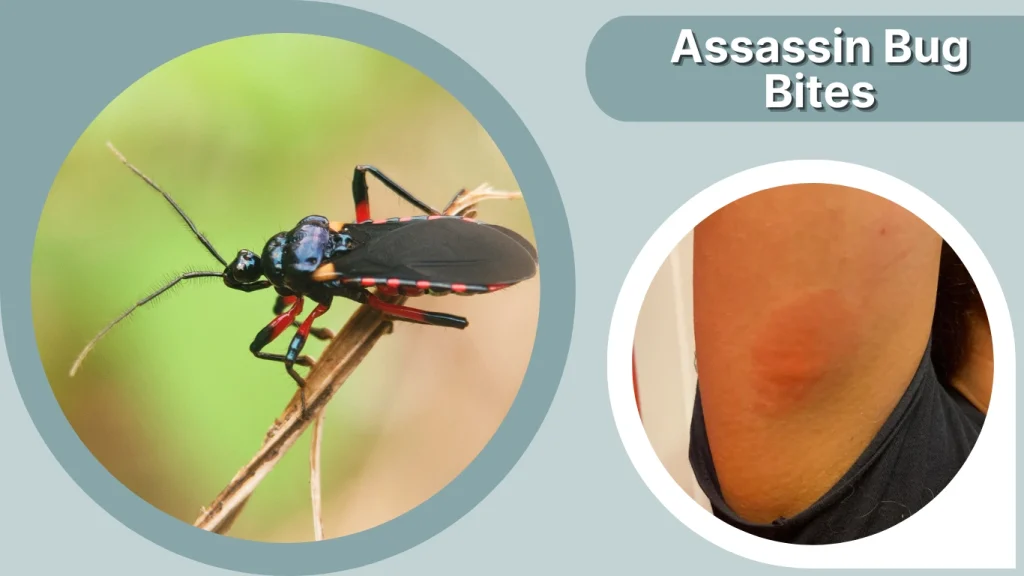
Assassin bugs are predatory insects found worldwide. While many species prey only on other insects, some, like kissing bugs, also feed on human blood. Their bites are painful and can cause noticeable skin reactions.
Bite Identification
- Red, swollen bumps with a visible puncture mark
- Bites often appear on exposed areas such as arms, legs, or face
- Sometimes confused with mosquito or flea bites but usually more painful
Symptoms
- Immediate sharp pain at the bite site
- Redness, swelling, and itching that may persist for days
- In sensitive individuals, welts or blisters may form
- Rarely, mild fever or systemic discomfort after multiple bites
Reaction
Reactions vary depending on the species. Most assassin bug bites are painful but harmless. However, kissing bugs (a type of assassin bug) pose a much higher risk because of their ability to transmit disease.
Danger to Humans
While most assassin bug bites are not medically significant, some species are vectors of Trypanosoma cruzi, the parasite that causes Chagas disease. This makes them a potential danger in certain regions of the Americas.
Immediate Treatment
Wash the bite thoroughly with soap and water, then apply an antiseptic. Cold compresses and anti-itch creams can relieve swelling and irritation. Medical attention is recommended if symptoms worsen or if exposure occurs in Chagas-endemic areas.
