
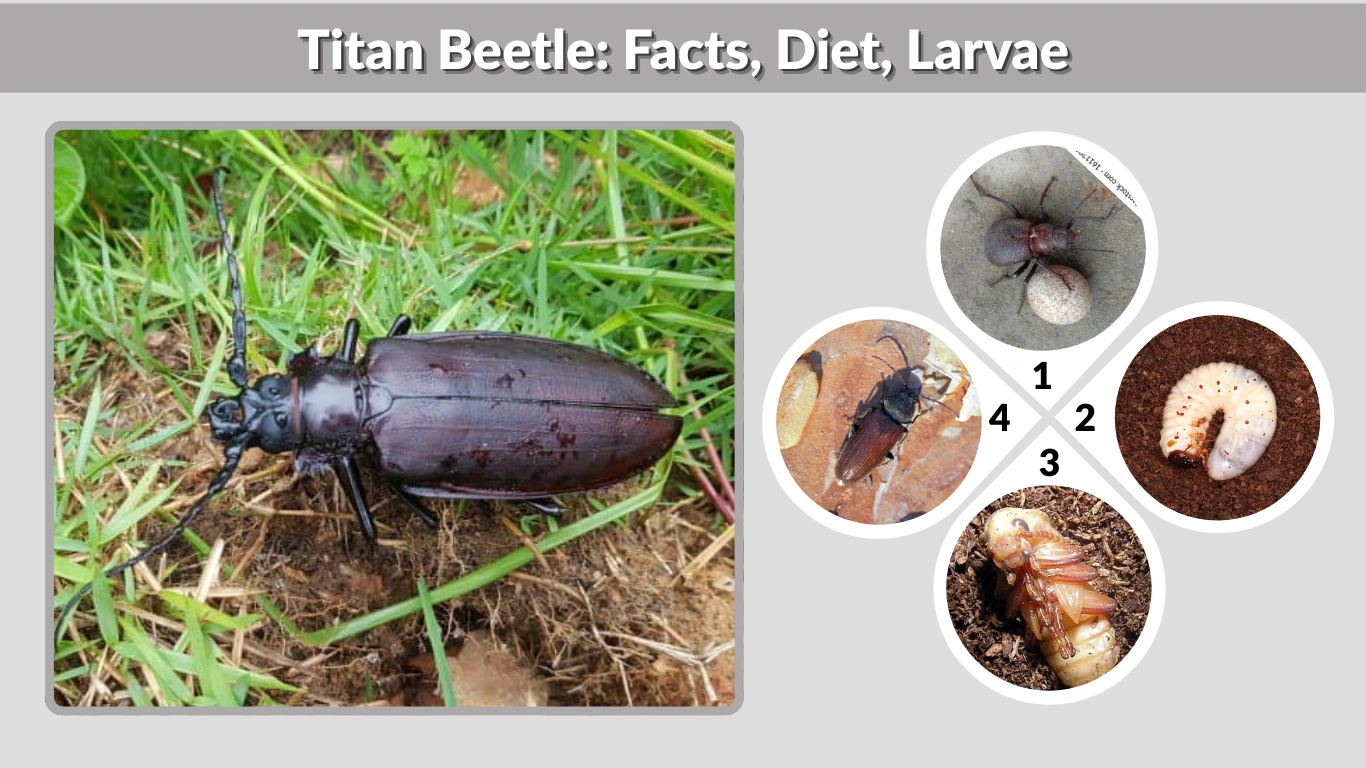
The titan beetle is one of the most impressive insects on Earth. Known for its enormous size and powerful mandibles, this beetle lives deep within the Amazon rainforest. Scientists and insect enthusiasts are fascinated by the titan beetle because it is among the longest beetles ever discovered. Despite its large size, it remains mysterious since it is rarely seen in the wild. In this article, you will learn important titan beetle facts, its diet, details about titan beetle larvae, and how it compares to another giant insect—the goliath beetle.
What Is a Titan Beetle?
The titan beetle (Titanus giganteus) is a species of longhorn beetle belonging to the Cerambycidae family. It is famous for its incredible length, making it one of the largest beetles in the world. The titan beetle is native to the Amazon rainforest in South America, where dense forests provide the perfect environment for its development.
Like other longhorn beetles, the titan beetle has an elongated body and long antennae. However, what truly makes this insect stand out is its massive size and powerful jaws. Its mandibles are strong enough to snap small twigs and can even cut through pencils. Because of its impressive features, the titan beetle has become one of the most well-known giant insects in the world.
Titan Beetle Facts
There are many interesting facts about the titan beetle that make it unique among insects.
First, the titan beetle can grow up to around 16 to 17 centimeters (about 6.5 inches) in length. This makes it one of the longest beetles ever recorded. Its large body and strong legs help it move through forest environments effectively.
Another fascinating fact is its extremely powerful mandibles. These jaws are mainly used for defense. If threatened, a titan beetle can deliver a strong bite. Although they are not aggressive toward humans, their bite can be painful if the insect is handled carelessly.
Titan beetles are also mostly nocturnal. They tend to be active at night and are sometimes attracted to artificial lights. Because of this behavior, some specimens have been discovered near lights in forest research stations.
Despite their impressive size, titan beetles are rarely seen in the wild. Much of their life cycle remains a mystery to scientists, especially their larval stage. This rarity makes them even more fascinating to researchers.
Titan Beetle Size and Physical Characteristics
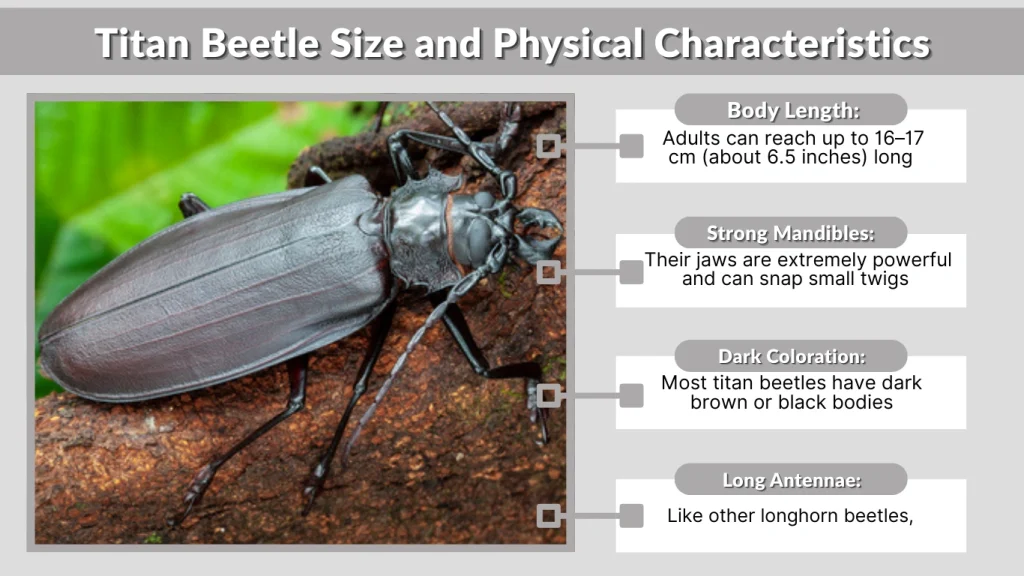
The titan beetle (Titanus giganteus) is widely recognized for its remarkable size and powerful body structure. Native to the Amazon rainforest, this beetle is considered one of the longest beetles in the world. Its large body, strong mandibles, and durable exoskeleton help it survive in dense tropical environments. These physical features not only make the titan beetle impressive in appearance but also provide important protection and defensive abilities in the wild.
Key physical characteristics of the titan beetle include:
- Body Length: Adults can reach up to 16–17 cm (about 6.5 inches) long, making them one of the largest beetles on Earth.
- Strong Mandibles: Their jaws are extremely powerful and can snap small twigs or even pencils.
- Dark Coloration: Most titan beetles have dark brown or black bodies that help them blend into forest environments.
- Hard Exoskeleton: A thick outer shell protects the beetle from predators and environmental damage.
- Long Antennae: Like other longhorn beetles, titan beetles have antennae that help them detect their surroundings.
- Powerful Legs and Claws: Their legs are strong and equipped with sharp claws for gripping bark, branches, and other surfaces.
These characteristics make the titan beetle one of the most fascinating and powerful insects found in tropical rainforests.
Titan Beetle Habitat and Distribution
Titan beetles are native to the Amazon rainforest, one of the most biodiverse ecosystems in the world. They are mainly found in South American countries such as Brazil, Peru, Ecuador, Colombia, and Bolivia.
These beetles prefer humid tropical forests where there is an abundance of decaying wood. The forest floor and fallen logs provide suitable environments for their development and shelter.
Adult titan beetles are sometimes attracted to lights, which is why some specimens have been discovered near lamps or research stations located within rainforest regions. However, most of their natural behavior remains hidden within dense forest habitats.
Titan Beetle Diet
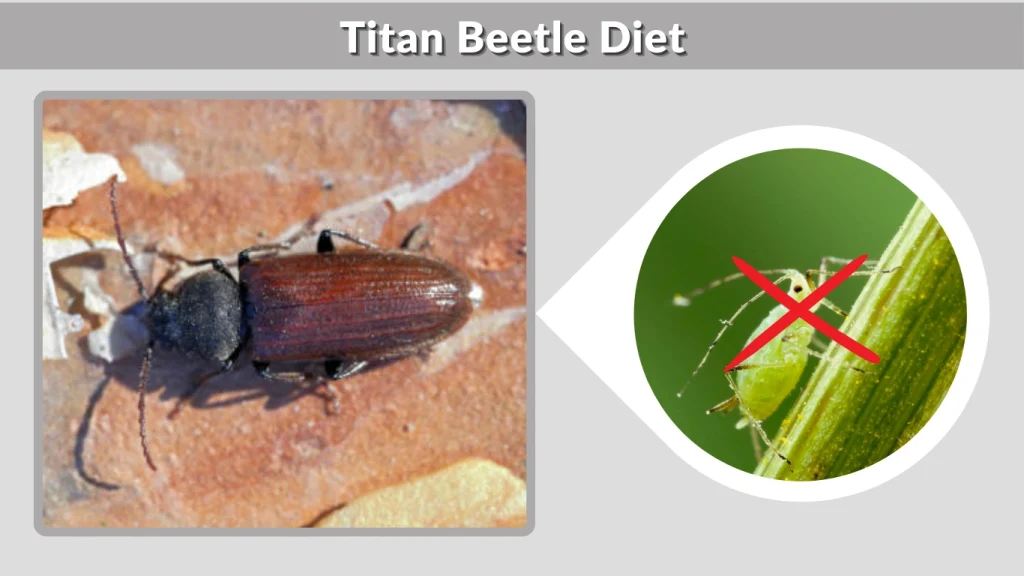
Adult Titan Beetle Diet
Interestingly, scientists believe that adult titan beetles do not eat at all. Instead, they rely on the nutrients stored during their larval stage. Like several other longhorn beetles, their adult life is primarily focused on reproduction rather than feeding.
Because adult titan beetles live for only a short period, the energy reserves they build as larvae are enough to sustain them through adulthood.
Larval Feeding Habits
While adult titan beetles may not feed, their larvae likely have a very different diet. Titan beetle larvae are believed to live inside decaying wood where they feed on wood fibers and plant material.
This feeding behavior allows them to accumulate the nutrients needed for growth and development. The larval stage is essential because it provides the energy required for the beetle’s later stages of life.
Titan Beetle Larvae
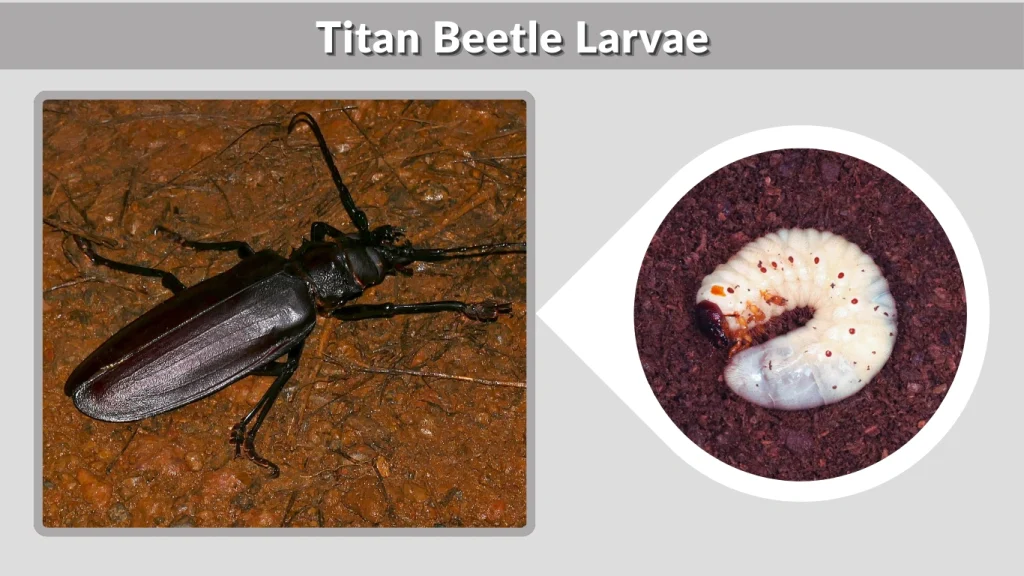
Appearance of the Larvae
Titan beetle larvae are believed to look similar to the larvae of other longhorn beetles. They likely have large, soft, grub-like bodies with thick segments and a pale or creamy color. These larvae can grow quite large before reaching the pupal stage, although very few have been directly observed by scientists. Because the larval stage happens hidden inside wood or underground, detailed information about their exact appearance remains limited.
Habitat of the Larval Stage
The larvae are thought to live deep inside decaying logs or buried within the soil of rainforest environments. Rotten wood provides both shelter and food for the developing larvae. Inside these protected spaces, they can grow safely away from predators.
The Amazon rainforest contains large amounts of fallen trees and decaying plant material, which creates the perfect habitat for titan beetle larvae. These hidden environments are one reason why the larvae are rarely seen in the wild.
Development Period
The larval stage is believed to last several years. During this time, the larvae feed continuously on decaying wood and plant fibers, allowing them to store large amounts of energy.
Eventually, the fully grown larva forms a pupal chamber where it transforms into an adult beetle. This stage, known as pupation, is when the beetle develops its hard exoskeleton, wings, legs, and mandibles before emerging as an adult.
Titan Beetle Life Cycle
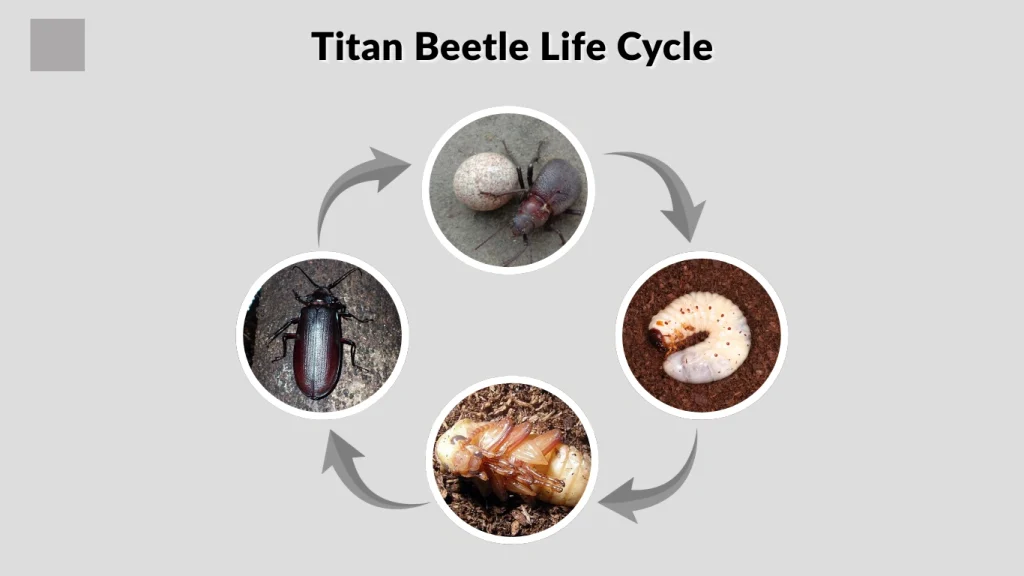
Like most beetles, the titan beetle goes through a complete metamorphosis consisting of four stages: egg, larva, pupa, and adult.
The life cycle begins when the female lays eggs in or near decaying wood. Once the eggs hatch, the larvae begin feeding on wood and organic matter. This stage is the longest part of the beetle’s life and is responsible for most of its growth.
After reaching full size, the larva enters the pupal stage. During this stage, the insect undergoes transformation and develops its adult features. Eventually, the fully formed titan beetle emerges as an adult.
The adult stage is relatively short compared to the larval stage. During this time, the beetle focuses mainly on reproduction before completing its life cycle.
Titan Beetle vs Goliath Beetle
Size Comparison
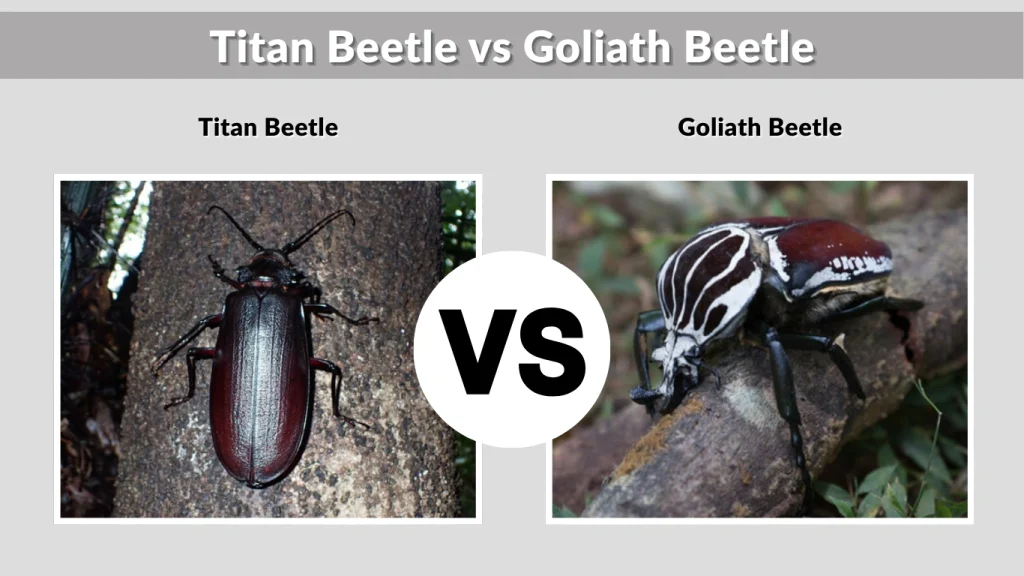
Both the titan beetle and the goliath beetle are among the largest beetles in the world, but they differ in how their size is measured.
The titan beetle is generally considered the longest beetle, reaching lengths of up to about 17 centimeters. In contrast, the goliath beetle is heavier and bulkier, making it one of the heaviest insects on Earth.
Habitat Differences
Another key difference between these two giant beetles is their habitat. Titan beetles live in the Amazon rainforest of South America, while goliath beetles are found in tropical forests across Africa.
Both environments provide warm temperatures, high humidity, and abundant plant material that supports large insect populations.
Diet Comparison
Goliath beetles actively feed as adults, usually consuming fruit, tree sap, and other sugary substances. This diet helps them maintain their large body size.
Titan beetles, however, are believed not to eat during adulthood. Instead, they rely on the energy stored during their larval stage to survive long enough to reproduce.
Appearance Differences
The titan beetle has a long, narrow body with a dark brown or black color. Its appearance is more elongated and streamlined.
Goliath beetles, on the other hand, have a broader body and often display striking black-and-white patterns on their shells. These patterns make them easily recognizable among beetle species.
Are Titan Beetles Dangerous to Humans?
Titan beetles are not considered dangerous to humans. They are not aggressive and typically try to avoid confrontation. However, if the beetle feels threatened or is handled improperly, it may use its powerful mandibles to bite in self-defense.
Because of their strong jaws, a bite from a titan beetle can be painful. For this reason, people who encounter these insects in the wild should observe them from a safe distance rather than attempting to handle them.
Overall, titan beetles pose very little threat to humans and are generally harmless when left undisturbed.
Importance of Titan Beetles in the Ecosystem
Titan beetles play an important role in rainforest ecosystems. Their larvae help break down decaying wood, which contributes to the natural recycling of nutrients within the forest.
By feeding on decomposing plant material, titan beetle larvae help speed up the decomposition process. This activity enriches the soil and supports plant growth in the surrounding environment.
Like many insects, titan beetles are also part of the complex food web found in tropical forests. They contribute to biodiversity and help maintain ecological balance in their habitat.
FAQs
How big can a titan beetle get?
Titan beetles can grow up to about 16–17 centimeters (around 6.5 inches) in length. This impressive size makes them one of the longest beetles in the world.
What do titan beetles eat?
Adult titan beetles are believed not to eat during their short lifespan. Instead, they rely on nutrients stored during the larval stage, when they feed on decaying wood and plant material.
Where are titan beetles found?
Titan beetles live in the Amazon rainforest across several South American countries, including Brazil, Peru, Ecuador, Colombia, and Bolivia.
Which is bigger, titan beetle or goliath beetle?
The titan beetle is longer in body length, while the goliath beetle is heavier and bulkier. Both are considered among the largest beetles in the world.
Are titan beetles rare?
Yes, titan beetles are rarely seen in the wild. They live deep within tropical rainforests and are mostly active at night, which makes sightings uncommon.
