

Stink bug eggs are frequently found on outdoor plants, window screens, or leaves, and their appearance often raises concerns about indoor infestations. With species like the brown marmorated stink bug spreading across many regions, understanding their reproductive habits is essential for gardeners and homeowners. This guide explains what stink bug eggs look like, where they are laid, how they hatch, and whether they pose any risk inside your home.
Do Stink Bugs Lay Eggs?
Stink bugs reproduce rapidly during warm seasons, making their eggs common across gardens and agricultural crops. Female stink bugs lay eggs outdoors, choosing places where their young can easily feed once they hatch. Their reproductive cycle is active during spring and summer, though adults may overwinter inside homes.
Basic Reproduction Behavior
Stink bugs lay eggs in carefully arranged clusters, typically on the underside of leaves. These clusters help protect the eggs from predators and sunlight. Eggs are never laid randomly; stink bugs prefer smooth surfaces where their young can safely emerge. Despite the fear homeowners feel, these insects almost always reproduce outdoors, not inside human living spaces.
How Many Eggs a Stink Bug Lays
A single female can lay multiple clusters over her lifetime, with each cluster containing about 20–30 eggs. In total, a female brown marmorated stink bug may produce up to 400 eggs in a season. Warmer climates can increase egg production, allowing populations to grow rapidly if not managed.
What Do Stink Bug Eggs Look Like?

Understanding the appearance of stink bug eggs is key to identifying them correctly. While all stink bug eggs share some general traits, variations exist between species, making identification important for pest control.
General Appearance
Stink bug eggs are small, barrel-shaped objects typically measuring around 1 millimeter. They have smooth surfaces and are often neatly arranged in clusters. The colors range from pale green to white or yellow depending on the species. Because of their unique structure, they stand out compared to the eggs of moths, spiders, or other insects commonly found around homes.
Color Variations by Species
Each stink bug species has its own egg characteristics:
- Brown marmorated stink bug eggs are typically pale green or light white and appear in tight clusters.
- Green stink bug eggs are bright green and very glossy.
- Southern green stink bug eggs often range from lime to yellow-green.
- Predatory stink bug eggs and darker species may appear gray, brown, or slightly darker than standard plant-feeding stink bugs.
These subtle differences help identify which insects are inhabiting your garden.
“Smiley Face” or “Faces” Pattern
Some stink bug eggs feature tiny dots arranged in a pattern that resembles a face or a pair of eyes. This pattern is part of the natural egg anatomy and is often a helpful clue when identifying stink bug clusters. Because of the unusual appearance, many people mistake them for fungus, mold, or even butterfly eggs.
Species Breakdown: Egg Identification Guide
Brown Marmorated Stink Bug Eggs
This species is one of the most widespread and recognizable. Their eggs come in clusters of roughly 28 and are pale green with a distinct barrel shape. They are usually laid on the underside of leaves but may occasionally appear on outdoor surfaces such as siding or window screens.
Green Stink Bug Eggs
These eggs are glossy, smooth, and vibrant green. They blend easily with garden foliage, making them harder to spot. Green stink bug eggs are frequently found on tomatoes, beans, and other vegetable plants.
Black & Predatory Stink Bug Eggs
Predatory stink bugs lay darker eggs that may appear brown or gray. Unlike plant-feeding stink bugs, predatory varieties sometimes lay fewer eggs in scattered patterns instead of tight clusters.
Southern Green Stink Bug Eggs
Brightly colored and usually lime green or yellow, these eggs are found mostly in southern regions with warm climates. They commonly appear on crops such as beans, cotton, and fruit plants.
Identification Section

Stink bug eggs can be recognized by these unique features:
- Cluster of roughly 20–30 eggs
- Barrel-shaped with rounded tops
- Colors ranging from white to yellow or pale green
- Smooth exterior surface
- Found mostly on underside of leaves
- Some species have tiny face-like dot patterns
These traits make them easier to distinguish from other insect eggs in gardens or around homes.
Where Do Stink Bugs Lay Their Eggs?
Stink bugs are selective about where they place their eggs. Their choices are based on food availability, sunlight exposure, and the safety of the emerging nymphs.
Outdoor Locations
The vast majority of stink bug eggs are laid outdoors. Common places include:
- Undersides of leaves
- Garden plants and vines
- Fruit-bearing plants such as raspberries and strawberries
- Vegetable crops, tomatoes, beans, corn, and peppers
Leaves provide moisture and shade, helping eggs survive until hatching.
Do They Lay Eggs in Homes?
Homeowners frequently worry that stink bugs may lay eggs indoors, but this is extremely rare. While adults may overwinter inside homes, they do not reproduce there. Indoor environments lack the food sources required for newly hatched nymphs, making it unsuitable for egg-laying.
Stink Bug Eggs Indoors: Myths vs. Reality

While stink bugs often enter homes during fall and winter, they do not treat indoor environments as breeding sites. Misidentifications are common, especially when homeowners discover small egg-like clusters on walls, screens, or curtains, but these usually belong to other insects.
Do Stink Bugs Lay Eggs in Your House?
Stink bugs do not lay eggs indoors. Their eggs require plant material and specific humidity levels to support nymph development, conditions that indoor environments do not provide. When stink bugs invade homes, they are simply seeking warmth to overwinter, not a place to reproduce.
Can They Lay Eggs in Hair or Clothes?
No. Stink bugs do not lay eggs on animals, people, bedding, clothing, or hair. They avoid moving objects and prefer stationary substrates like plant leaves. Any claims about stink bugs laying eggs on humans are myths caused by confusion with lice, fleas, or textile pests.
Lifecycle: When Do Eggs Hatch?
Understanding the lifecycle helps identify the window of time for egg removal before they hatch into nymphs.
Hatching Timeline
Under warm conditions, stink bug eggs typically hatch within 4–7 days. Environmental factors—especially temperature and humidity—play a crucial role. In hotter seasons, eggs hatch more quickly, promoting rapid population growth.
What Newly Hatched Eggs Look Like
When stink bug eggs hatch, the empty shells resemble tiny open barrels. The tops appear popped open, leaving transparent cases behind. Newly emerged nymphs are often red, black, orange, or patterned depending on species. These nymphs quickly spread to nearby plants to feed.
Stink Bug Eggs on Plants, Screens & Surfaces
Stink bug eggs appear in many outdoor environments, which can worry homeowners unaware that the insects almost always reproduce outside rather than indoors.
Eggs on Leaves
The underside of leaves is the most common place to find stink bug egg masses. These locations offer shade and protection, allowing eggs to remain hidden from predators. Crops such as tomatoes, peppers, beans, raspberries, and strawberries are especially vulnerable.
Eggs on Window Screens & Windows
Although rare, stink bugs may occasionally lay eggs on outdoor-facing window screens or glass. This usually happens when plants are nearby or when the insect mistakes the screen texture for a leaf. Indoor-facing window screens, however, almost never host stink bug eggs.
Eggs on Fruits or Vegetables
In agricultural settings, stink bug eggs can sometimes appear on fruit surfaces like raspberries or strawberries. They may also be found on lettuce, salad greens, or leaves of produce. While uncommon, these occurrences usually come from field conditions before harvest.
How to Get Rid of Stink Bug Eggs
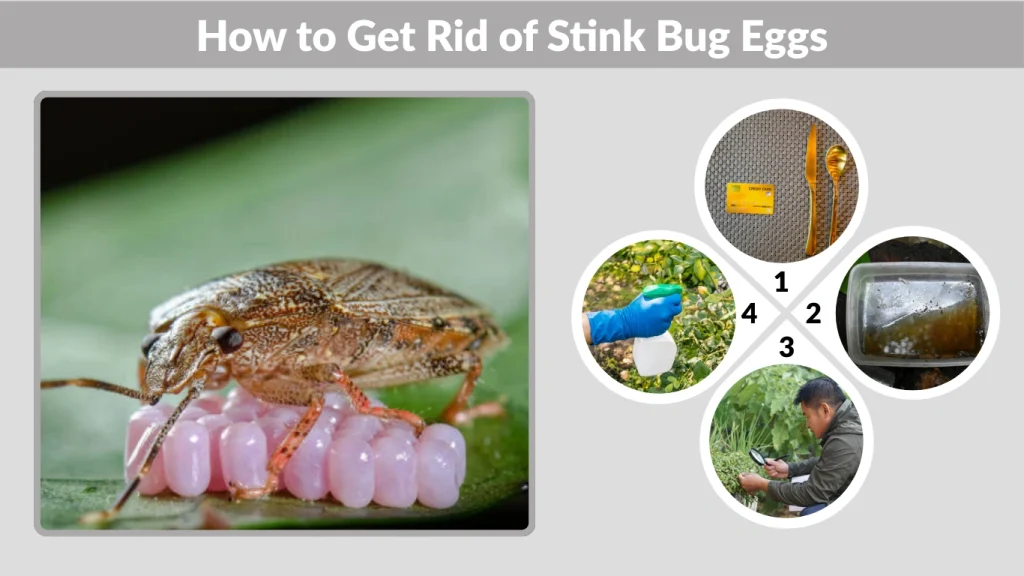
Preventing stink bug populations starts with safely removing their eggs before they hatch. Gardeners who catch egg clusters early can significantly reduce infestation levels.
Manual Removal
The simplest and most effective method is physically removing the eggs.
- Gently scrape the egg mass off the leaf using a credit card or spoon.
- Drop the eggs into a container of soapy water to prevent hatching.
- Avoid crushing eggs on surfaces, as this can release odor and attract predatory birds or insects.
Egg Removal from Plants
For larger infestations, manual removal may not be enough.
- Inspect garden plants every few days.
- Treat heavily infested plants with insecticidal soap.
- Remove and dispose of affected leaves if necessary.
These steps reduce the stink bug population before nymphs emerge and begin feeding aggressively.
Indoor Prevention
Because stink bugs don’t lay eggs indoors, prevention focuses on keeping adults out:
- Seal cracks and gaps around windows and siding.
- Repair torn window screens.
- Reduce nighttime lighting that attracts stink bugs.
- Vacuum rather than crush indoor stink bugs to avoid odor release.
Stink Bug Eggs vs. Other Insect Eggs
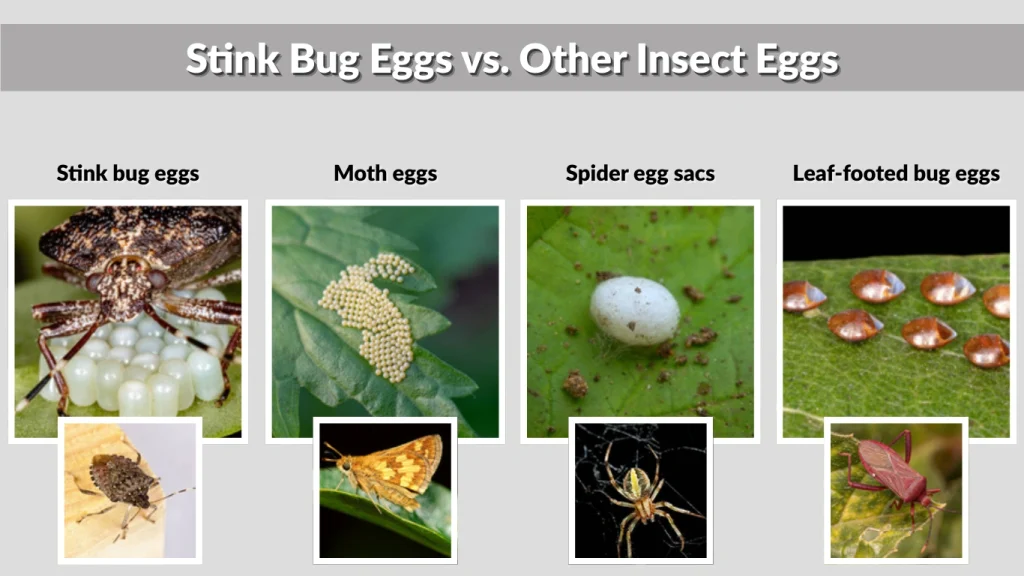
Many people mistake stink bug eggs for other insects. Identifying them correctly prevents unnecessary concern.
| Type | Shape | Color | Location | Bite Risk |
| Stink bug eggs | Barrel | Pale green/white | Leaves/screens | None |
| Moth eggs | Round | White/cream | Walls, ceilings | None |
| Spider egg sacs | Silky ball | White/tan | Corners | None |
| Leaf-footed bug eggs | Cylindrical | Copper/brown | Leaves | Low |
This comparison is especially helpful when examining egg clusters found near gardens or windows.
Are Stink Bug Eggs Dangerous?
Stink bug eggs are harmless to humans but can pose a threat to gardens and crops.
Risks to Humans
Stink bug eggs do not contain toxins, do not cause skin irritation, and do not infest indoor environments. While finding them on produce can be alarming, simply washing fruits and vegetables removes the eggs without risk.
Risks to Plants
The primary concern is agriculture. When eggs hatch, nymphs feed on plant juices, damaging fruits, stems, and vegetable crops. Large populations can significantly reduce yields, making early detection important for gardeners.
FAQs
What do stink bug eggs look like?
Stink bug eggs appear as small, barrel-shaped clusters that range from pale green to white or yellow. They usually come in groups of about 20–30 and are commonly found on the undersides of leaves. Some species have tiny dots resembling “faces” on the egg surfaces.
Do stink bugs lay eggs in your house?
No. Stink bugs do not reproduce indoors because their eggs require fresh plant material for nymphs to feed on. Adults may overwinter inside homes, but they do not lay eggs there. Any clusters found indoors typically belong to moths or other insects.
How long do stink bug eggs take to hatch?
Stink bug eggs hatch within 4–7 days under warm conditions. After hatching, the egg shells remain as empty barrel shapes, while the nymphs quickly disperse to nearby plants. Cooler temperatures can slow the hatching process.
Where do stink bugs lay their eggs?
Stink bugs lay their eggs outdoors on leaves, especially on fruit trees, vegetable plants, and garden foliage. They prefer sheltered spots like leaf undersides to protect the eggs from predators and sunlight.
How do you kill stink bug eggs safely?
The best way is to scrape egg clusters into soapy water, which prevents them from hatching. For garden infestations, insecticidal soap can help reduce egg numbers. Avoid crushing egg masses, as the smell and residue may attract other insects.
