

The six-spotted tiger beetle (Cicindela sexguttata) is one of the most fascinating insects in North America. Known for its bright metallic-green body and lightning-fast hunting speed, this beetle is both beautiful and beneficial. It plays an essential role in natural pest control, preying on smaller insects in forests and open trails. Let’s explore how to identify this striking species, where it lives, and why it’s admired by entomologists and nature lovers alike.
Identification and Appearance

Physical Characteristics
The six-spotted tiger beetle is easily recognized by its iridescent green or blue-green body and six bright white spots along its wing covers. Some individuals may display slight color variations, appearing bluish or bronze depending on the light.
- Size: About 10–13 millimeters long.
- Shape: Long-legged and slender, built for speed.
- Head: Large with bulging eyes and strong, curved mandibles.
- Markings: Six distinct white spots — though some may have fewer or more.
These beetles are highly alert and can dart away quickly when approached. Their glossy exoskeleton helps them blend with sunlit vegetation, acting as camouflage from predators.
Six-Spotted Tiger Beetle vs. Other Green Beetles
They’re often mistaken for the emerald ash borer, another metallic-green insect. However, the tiger beetle’s body is slimmer, and its movement is far more agile. The emerald ash borer is a tree-destroying pest, while the six-spotted tiger beetle is a beneficial predator that helps control harmful insects.
Habitat and Distribution

Preferred Environment
Six-spotted tiger beetles prefer sunny forest edges, dirt paths, and sandy open areas where they can run and hunt efficiently. They are usually found along woodland trails, clearings, or near water sources where prey is abundant.
These beetles thrive in well-drained soils, often choosing slightly elevated, dry spots to lay eggs or dig burrows.
Geographic Range
The species is widespread across eastern and central North America.
They are frequently found in:
- Ohio, Maryland, and Michigan
- Missouri, Arkansas, and Texas
- Southern Canada, especially Ontario and Nova Scotia
Their range extends from the Great Lakes region down to the Gulf of Mexico, and eastward from the Appalachians to the Atlantic Coast. They are particularly active in spring and early summer when temperatures are warm and prey is plentiful.
Behavior and Adaptations
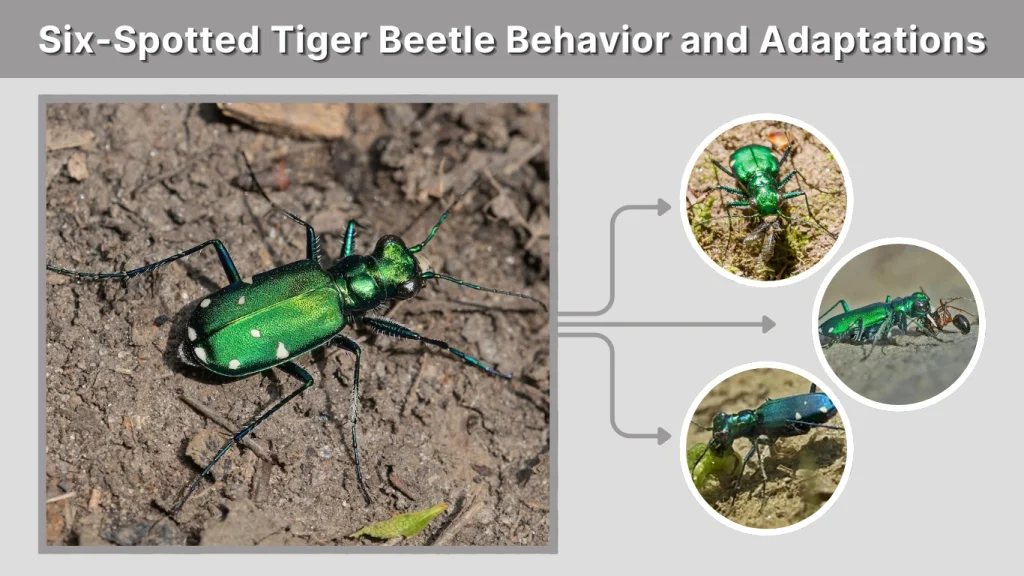
Speed and Hunting
Six-spotted tiger beetles are among the fastest running insects relative to body size. They can sprint several times their body length in a second, pausing frequently to refocus their vision.
They are visual hunters, relying on sharp eyesight to detect movement. Once prey is spotted, they chase it down and seize it with powerful mandibles, often devouring it whole.
Flight Ability
When startled or chasing prey, they take flight quickly — a behavior that helps them escape predators or relocate to sunnier hunting grounds. Their short, darting flights are a common sight along woodland trails during spring days.
Defensive Behavior
Despite their fierce hunting habits, these beetles are harmless to humans. They prefer to flee rather than fight. If captured, they may emit a faint odor as a mild defense mechanism. Their metallic sheen also serves as natural camouflage, blending into green and sunlit surroundings.
Diet and Feeding Habits
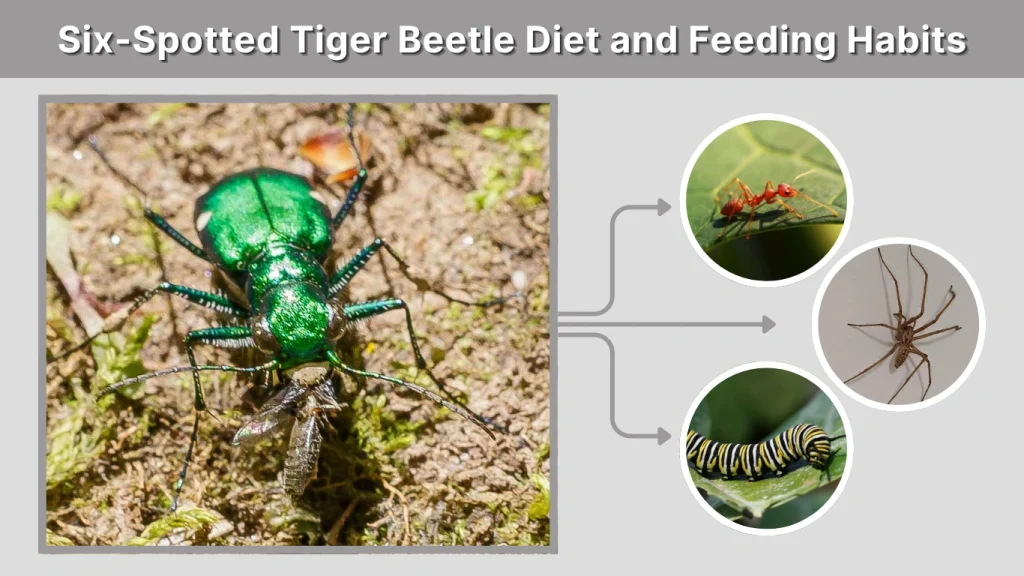
What Do Six-Spotted Tiger Beetles Eat?
These beetles are voracious predators. Their diet mainly includes:
- Ants
- Spiders
- Small beetles
- Caterpillars
- Flies and other soft-bodied insects
They play a vital ecological role by keeping pest populations under control. Their hunting strategy involves patience, speed, and precision — waiting motionless before ambushing unsuspecting prey.
Larval Feeding Behavior
The larvae are equally impressive hunters. They live in vertical burrows dug into sandy soil, waiting near the entrance with open jaws. When a small insect walks by, the larva lunges upward, grabs it, and drags it underground to consume safely.
This ambush method allows them to conserve energy while feeding effectively. They remain in the larval stage for several months before pupating into adults.
Life Cycle and Reproduction
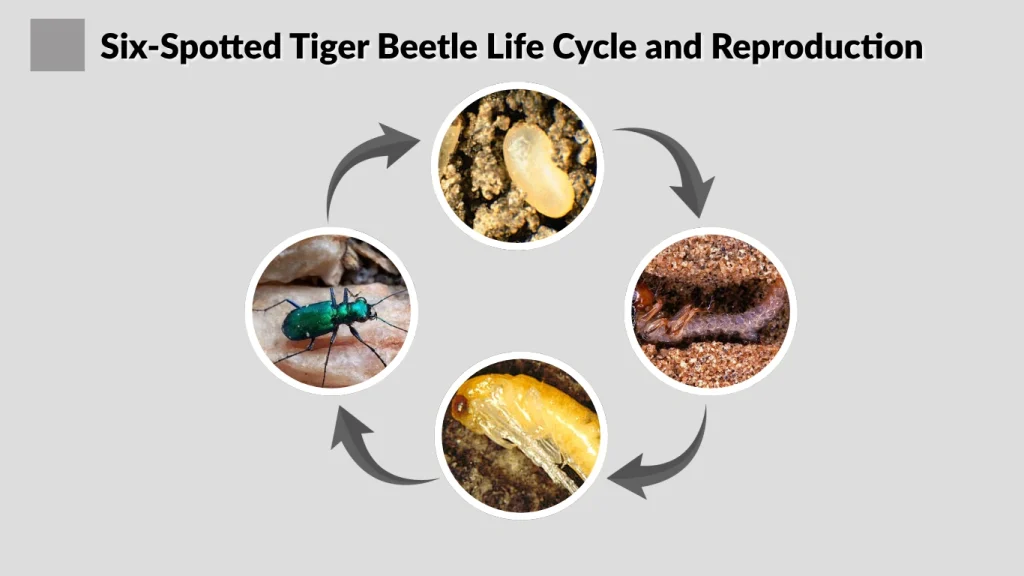
Life Stages
The life cycle of the six-spotted tiger beetle includes four main stages: egg, larva, pupa, and adult.
- Egg Stage: Females lay eggs in dry, sandy soil during late spring or early summer.
- Larval Stage: Tiny larvae hatch and immediately begin digging burrows. They feed on passing insects for weeks or months.
- Pupal Stage: The larvae seal themselves underground to pupate, transforming into adults.
- Adult Stage: Adults emerge fully developed and active in spring, living for nearly a year if conditions remain favorable.
Seasonal Activity
Adult beetles are most active between April and July, particularly on sunny days. In colder climates, they overwinter as larvae or pupae, emerging as adults once temperatures rise. Their seasonal appearance often marks the start of spring’s insect activity.
Predators and Defenses

Natural Predators
Despite being skilled hunters, six-spotted tiger beetles face threats from:
- Birds and amphibians
- Larger beetles
- Parasitic wasps that target larvae in burrows
Their speed and flight reflexes are their best forms of defense, allowing quick escapes from danger.
Defensive Adaptations
- Camouflage: Their metallic coloration helps them disappear in sunlight.
- Speed: Quick bursts of movement confuse predators.
- Flight: Short flights help them evade capture efficiently.
These traits make them one of nature’s most finely tuned insect predators.
Are Six-Spotted Tiger Beetles Harmful?
Do They Bite Humans?
Six-spotted tiger beetles are harmless to people. They do have strong mandibles for catching prey, but they rarely bite unless handled roughly. If a bite occurs, it feels like a mild pinch and does not break the skin. Their aggressive appearance can be deceiving — these beetles are far more interested in hunting insects than bothering humans.
Are They Poisonous or Dangerous?
They are not poisonous or toxic to humans, pets, or other animals. Unlike some beetle species that release harmful chemicals, the six-spotted tiger beetle relies on its speed and camouflage to avoid threats. It is considered one of nature’s beneficial predators, keeping insect populations balanced in forest ecosystems.
Six-Spotted Tiger Beetle vs. Emerald Ash Borer
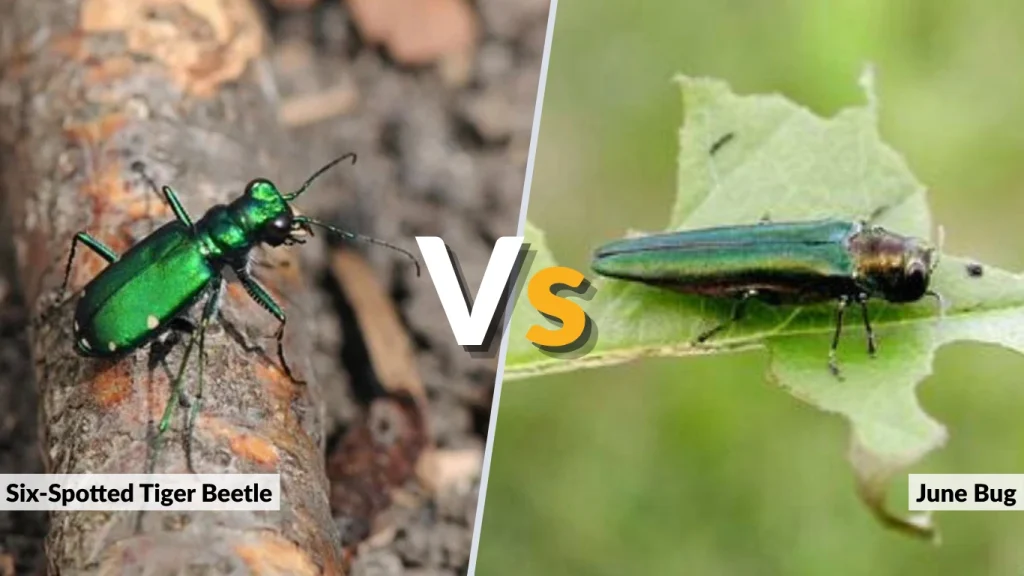
Although both insects share a similar green sheen, their behavior and ecological roles are very different.
| Feature | Six-Spotted Tiger Beetle | Emerald Ash Borer |
| Color | Metallic green with white spots | Solid metallic emerald |
| Role | Predator that controls pests | Tree-killing invasive pest |
| Body Shape | Slender with long legs | Compact and bullet-shaped |
| Habitat | Forest trails, open fields | Inside ash tree bark |
| Impact | Beneficial to ecosystems | Damaging to native trees |
The tiger beetle actively hunts small insects on the ground, while the emerald ash borer burrows into trees, causing severe ecological damage. Understanding the distinction helps prevent unnecessary harm to this helpful beetle.
Interesting Facts
- The species name Cicindela sexguttata means “six-spotted,” referring to the white dots on its wing covers.
- They can run so fast that their eyes lose focus, forcing them to pause mid-chase to regain vision.
- Their metallic sheen can appear blue, green, or bronze depending on sunlight.
- Entomologists consider them indicators of healthy forest ecosystems.
- Spiritually, the six-spotted tiger beetle symbolizes speed, precision, and awareness, representing a balance of power and grace in nature.
Observation and Collection
Where and How to Find Them
These beetles are easiest to spot along sunny forest paths between April and July. They prefer open spaces with patches of sand or loose soil. Walk slowly and quietly — they are alert and will fly away if startled. They often perch on the ground or low vegetation, darting away when approached.
Ethical Observation
Naturalists are encouraged to observe rather than capture. Photography and documentation help preserve populations. If kept temporarily for study, provide sandy soil and live insects for feeding, and release them promptly to their natural environment.
Conservation and Ecological Importance
Environmental Role
The six-spotted tiger beetle is an important predator in forest ecosystems. It helps regulate populations of ants, flies, and caterpillars that could otherwise become pests. Its presence indicates ecological balance and biodiversity.
Threats and Protection
Habitat loss and pesticide use pose the greatest risks to their populations. As forest trails are developed and chemicals spread in nearby areas, their natural hunting grounds shrink. Protecting woodland corridors and reducing pesticide usage supports the survival of this beneficial insect.
FAQs
Are Six-Spotted Tiger Beetles Poisonous?
No, they are completely harmless. They do not sting or contain any toxins. Their fierce jaws are used only to catch prey, not to harm humans or pets.
What Do Six-Spotted Tiger Beetles Eat?
They primarily eat ants, spiders, and other small insects. Their sharp mandibles allow them to hunt quickly, helping control insect populations naturally.
Where Do Six-Spotted Tiger Beetles Live?
They live in sunny forest trails, open fields, and sandy patches throughout eastern North America and southern Canada. They prefer areas with both sunlight and dry soil.
Do Six-Spotted Tiger Beetles Fly or Run Faster?
They are remarkable in both ways — capable of sprinting several times their body length per second and taking short, quick flights when threatened or chasing prey.
Why Are They Called Six-Spotted Tiger Beetles?
The name comes from their six white spots and tiger-like hunting style. They stalk, chase, and seize prey with astonishing precision and strength.
