

Rhino beetle larvae are the hidden phase of one of nature’s most fascinating insects. These large, C-shaped grubs live beneath the soil, silently recycling organic material and preparing for their transformation into powerful adult beetles. Found in decaying wood, compost piles, and moist soil, they play a key role in decomposition and soil health. For beetle enthusiasts, raising rhino beetle larvae is a rewarding experience that combines science, patience, and curiosity.
Overview and Identification

What Are Rhino Beetle Larvae?
Rhino beetle larvae represent the early stage of rhinoceros beetles, members of the Scarabaeidae family. After hatching from eggs laid by females, they develop underground for several months to years, feeding on decaying organic matter. They are known for their robust bodies and slow growth, which prepares them for the metamorphosis into one of the strongest insects on Earth.
Physical Appearance
These larvae are easily recognizable by their pale white or cream-colored bodies, orange-brown heads, and six small legs near the front. Their bodies are soft, segmented, and curved into a C-shape when resting. Depending on the species, larvae can reach between 5 to 15 centimeters in length and weigh over 80 grams. Larger species like the Hercules and Dynastes rhino beetles produce the biggest larvae in the insect world.
Size and Growth Stages
Rhino beetle larvae go through three main stages of growth, known as instars:
- First Instar (L1): Small and newly hatched, feeding lightly on soft decaying wood.
- Second Instar (L2): Larger, stronger jaws, increased feeding activity.
- Third Instar (L3): The final and largest stage, where the larvae eat the most and prepare for pupation.
During each stage, they molt — shedding their skin to accommodate growth. The L3 stage can last several months, depending on temperature and food availability.
Habitat and Natural Environment

Where Rhino Beetle Larvae Live
In the wild, rhino beetle larvae inhabit areas rich in organic decay. You can find them under rotting logs, compost piles, tree stumps, or deep in forest soil. They prefer warm, humid environments that stay damp but not flooded. Tropical regions like Southeast Asia, Central America, and parts of Africa are home to many species, including Coconut, Hercules, and Japanese rhino beetles.
Preferred Substrate
Substrate quality determines larval health and growth rate. The ideal environment contains moist, decomposed wood fibers mixed with soil and leaves. Flake soil (fermented wood substrate) is commonly used by breeders because it’s rich in nutrients and soft enough for burrowing. The texture should remain damp but not soggy, similar to a wrung-out sponge. If the substrate becomes dry, larvae may stop feeding or enter stress, delaying development.
How to Find Rhino Beetle Larvae
In nature, larvae can often be found by gently digging around decaying logs or compost piles rich in organic matter. However, it’s important not to disturb natural populations or damage ecosystems. For hobbyists, purchasing captive-bred larvae from reputable insect breeders is the ethical way to start, ensuring species conservation and proper handling.
Diet and Feeding Behavior
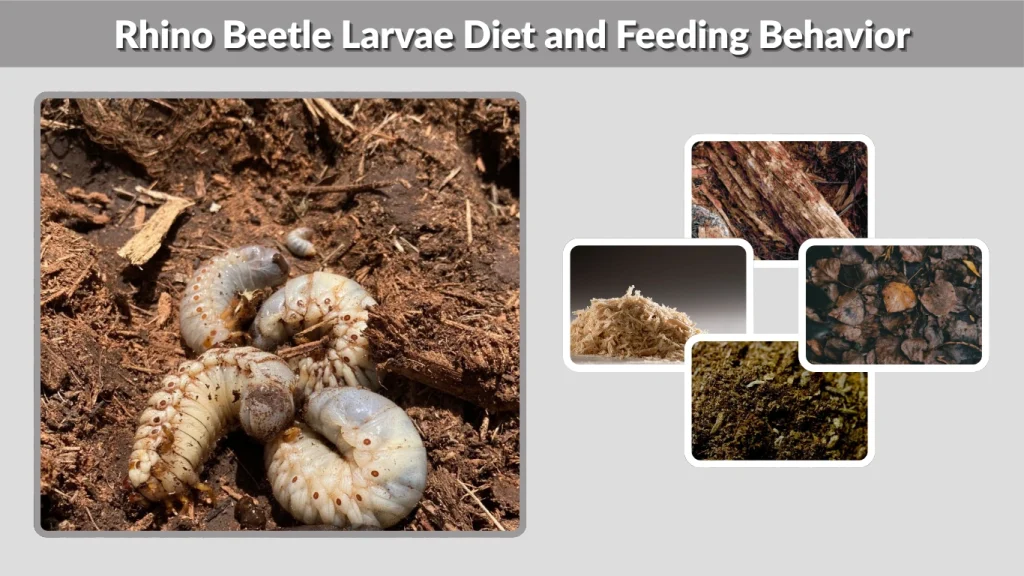
What Rhino Beetle Larvae Eat
Rhino beetle larvae are decomposers that feed primarily on rotting wood, decaying leaves, and organic compost. Their diet helps recycle nutrients and improves soil quality. They prefer well-decomposed wood, especially from broadleaf trees like oak. They do not eat fresh wood or live plants — instead, they rely on soft, fermented materials rich in microorganisms.
Rhino Beetle Larvae Food in Captivity
In captivity, breeders commonly use flake soil or fermented oak sawdust, which mimics the larvae’s natural food. Some also mix in decayed leaves and organic compost. A few species, such as the Coconut rhino beetle, may prefer slightly coarser materials. The substrate itself serves as both their habitat and food source, so it should be replaced or “refreshed” regularly to maintain nutrition levels.
Nutritional Value and Protein
Rhino beetle larvae are incredibly protein-rich, which is why they sometimes appear in survival shows like Bear Grylls: Man vs. Wild. They provide high energy and essential amino acids but are not typically consumed outside of survival or cultural contexts. In nature, their high protein content helps support rapid growth before pupation.
How Often to Feed or Change Substrate
Since larvae consume the substrate itself, feeding involves refreshing the soil rather than providing separate food. The substrate should be replaced every 1–2 months, depending on the number of larvae and the visible decomposition. When the soil becomes dry, compacted, or loses its earthy smell, it’s time for a change. Always keep at least 10–15 cm of depth to allow comfortable burrowing and feeding.
Life Cycle and Development
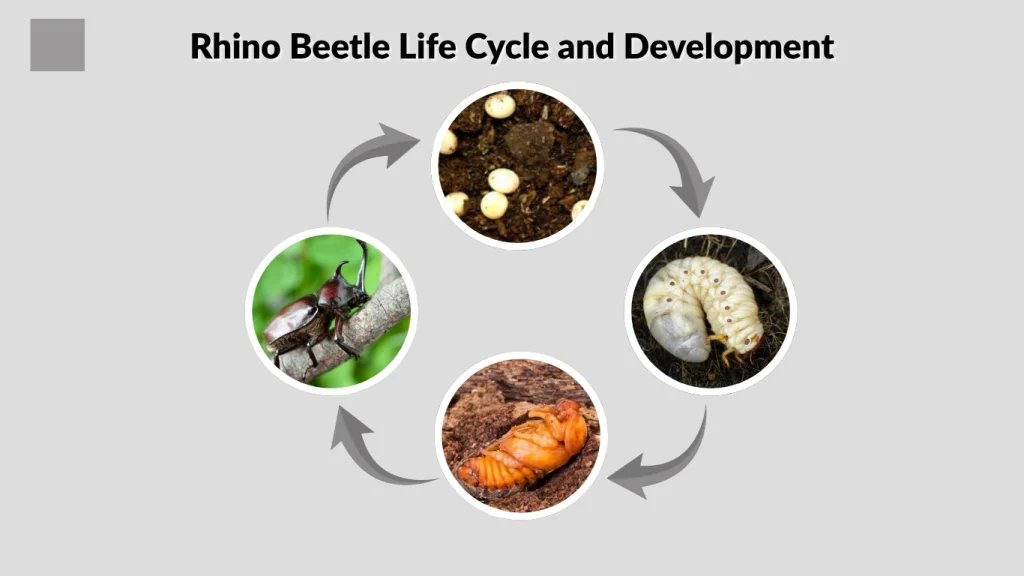
Egg Stage
The female rhino beetle lays her eggs in soft, moist soil near decaying logs or compost piles. These eggs are small, round, and white, hatching within two to four weeks. The larvae immediately begin feeding and growing in the surrounding organic material.
Larval Stages (L1 – L3)
The larval phase lasts the longest — typically six months to two years depending on the species. During this time, larvae molt three times as they grow larger and stronger. The third instar is the most critical period when they store fat and prepare for metamorphosis.
Pupal Transformation
Preparing for Pupation
As rhino beetle larvae mature, they enter one of the most remarkable transitions in the insect world. Near the end of the third instar stage, they stop eating and begin constructing a hardened chamber called a pupal cell deep within the soil or substrate. This chamber protects them during metamorphosis. The larva curls inside, sealing the entrance with soil and saliva to maintain humidity and safety.
Pupal Stage
Inside the cell, the larva transforms into a pupa — an inactive stage resembling a pale, soft adult beetle. Over several weeks, internal organs rearrange and the exoskeleton hardens. The horn, wings, and legs begin forming, gradually darkening as the beetle nears emergence. This process takes roughly 30–60 days, depending on temperature and species. Once complete, the adult rhino beetle breaks through the chamber, ready for its short but active life above ground.
Care and Rearing Guide
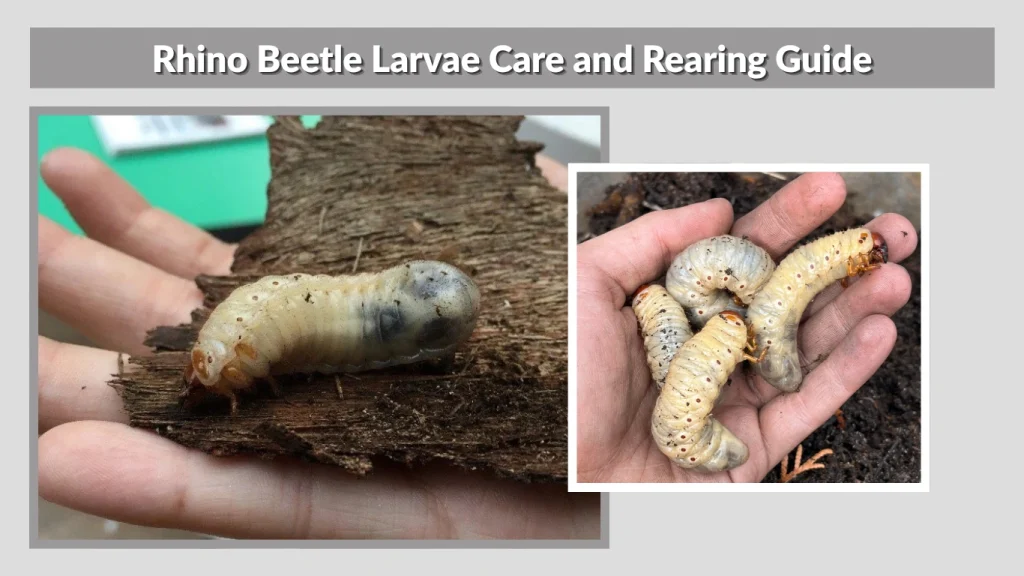
Housing Setup
When raising rhino beetle larvae at home, the setup should mimic their natural underground habitat. Use a deep plastic or glass container with at least 15–20 centimeters of substrate depth. A mix of flake soil, decayed wood, and humus works best. Keep the substrate evenly moist — never waterlogged — to prevent mold and suffocation. Multiple larvae can share a space, but overcrowding may reduce growth and increase stress.
Temperature and Humidity
The ideal temperature range for rhino beetle larvae is 22–28°C (72–82°F). Colder temperatures slow growth, while excessive heat can cause dehydration or death. Maintain 70–85% humidity using a fine mist spray when needed. Containers should be kept in shaded, stable environments away from direct sunlight or cold drafts.
Handling and Observation
Although larvae are large and gentle, their bodies are delicate. Always handle them carefully with clean, slightly moist hands or a soft scoop. Avoid squeezing or dropping them. Observing larvae is easiest during substrate changes — once every one to two months — when you can check their health, size, and activity levels.
Cleaning and Maintenance
Replace the substrate when it becomes dry, compacted, or emits a foul odor. The ideal replacement schedule is every 6–8 weeks, though large larvae may require more frequent refreshes. When cleaning, remove uneaten food, mold, and any dead organic matter. Always keep a small portion of the old substrate to retain beneficial microbes that aid digestion.
Rhino Beetle Larvae for Sale
Buying and Ethical Considerations
Rhino beetle larvae are popular among collectors and educators worldwide. They are often sold in insect fairs, specialty pet stores, or online from beetle breeders. Always buy from ethical, captive-bred sources to prevent illegal trade or environmental disruption. Wild-caught larvae may carry parasites and harm native populations.
Common Species Available
Popular larvae for sale include:
- Coconut Rhino Beetle (Oryctes rhinoceros) – common in tropical regions.
- Hercules Beetle (Dynastes hercules) – the world’s largest species.
- Dynastes granti – North American variety, prized for its size.
- Japanese Rhino Beetle (Trypoxylus dichotomus) – easy to raise and popular in Japan.
Each species varies in size, diet preference, and rearing time.
Price and Availability
Larvae prices range from $10 to $50 depending on species and size. Giant species such as the Hercules beetle larvae may cost more. In the UK and some countries, import laws require permits, so buyers should confirm regulations before purchasing.
Edibility and Human Interaction
Are Rhino Beetle Larvae Edible?
Yes — in some cultures, rhino beetle larvae are considered edible and nutritious. They are occasionally featured in survival programs like Bear Grylls: Born Survivor. These larvae are rich in protein, iron, and healthy fats, offering sustainable nutrition. However, they should only be eaten if sourced from clean, farm-raised environments — never collected from the wild.
Safety and Preparation
When prepared as food, larvae are typically roasted or boiled to remove bacteria. Eating raw larvae is not recommended due to potential pathogens. In most cases, their use remains educational or for research rather than culinary.
Interesting Facts
- Some rhino beetle larvae can grow as thick as a human thumb.
- The Hercules beetle larva can weigh up to 120 grams before pupating.
- They recycle nutrients by decomposing organic waste in forests.
- The larval stage lasts up to two years, while the adult stage lasts only months.
- They are often featured in educational kits for children learning about metamorphosis.
FAQs
What do rhino beetle larvae eat?
They feed on decaying wood, compost, and leaf litter. In captivity, fermented oak sawdust or flake soil works best. The substrate doubles as both food and habitat.
How big can rhino beetle larvae grow?
Depending on species, they can reach 10–15 cm in length and weigh up to 120 grams, especially in large beetles like the Hercules or Dynastes granti.
How often should I change the larvae’s substrate?
Every 1–2 months, or when the soil becomes dry, compacted, or discolored. Frequent substrate replacement ensures proper nutrition and prevents mold buildup.
Are rhino beetle larvae safe to handle?
Yes. They are gentle and non-aggressive but should be handled carefully to avoid injury. Avoid handling right after feeding or during molting stages.
Where can I buy rhino beetle larvae for breeding?
They can be purchased from licensed insect breeders, pet stores, or online retailers specializing in exotic insects. Always confirm they are captive-bred and legally sourced.
