
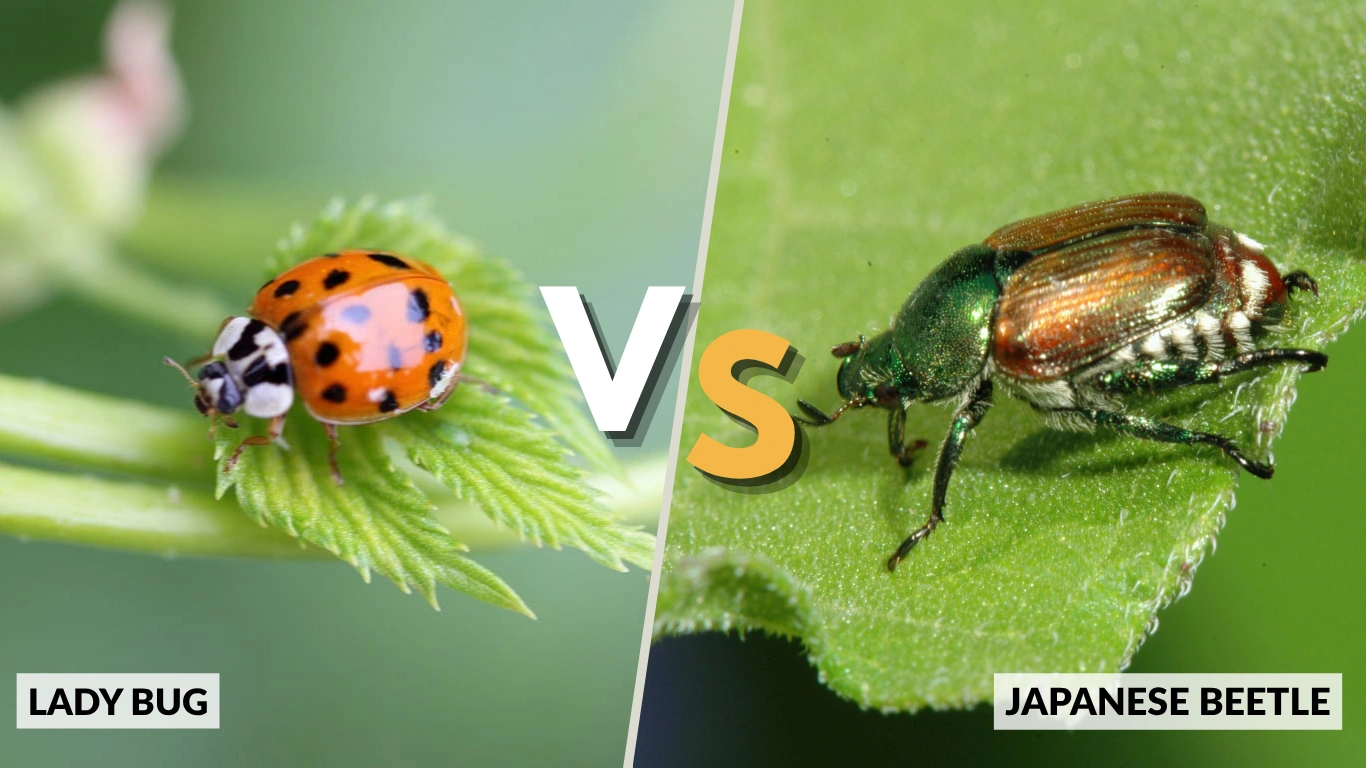
Lady bugs and Japanese beetles are often confused because of their bright colors and similar size, but they are very different insects with opposite effects on gardens. While lady bugs are beneficial predators that protect plants from aphids, Japanese beetles are destructive pests that feed on flowers and leaves. To make things even trickier, the Japanese lady beetle—also known as the Asian lady beetle—looks like a lady bug but can bite and invade homes.
Understanding the Three Common Beetles
There are three insects most people mix up: the lady bug, the Japanese beetle, and the Japanese lady beetle.
- Lady Bug (Coccinellidae family): A friendly garden insect that feeds on aphids, mites, and soft-bodied pests.
- Japanese Beetle (Popillia japonica): A shiny green pest that chews through leaves, fruits, and flowers.
- Japanese Lady Beetle (Harmonia axyridis): An invasive beetle resembling a lady bug but more aggressive, known for biting and invading homes during fall.
Each species behaves differently and has a distinct role in the ecosystem—some helpful, some harmful.
Key Differences Between Lady Bug and Japanese Beetle
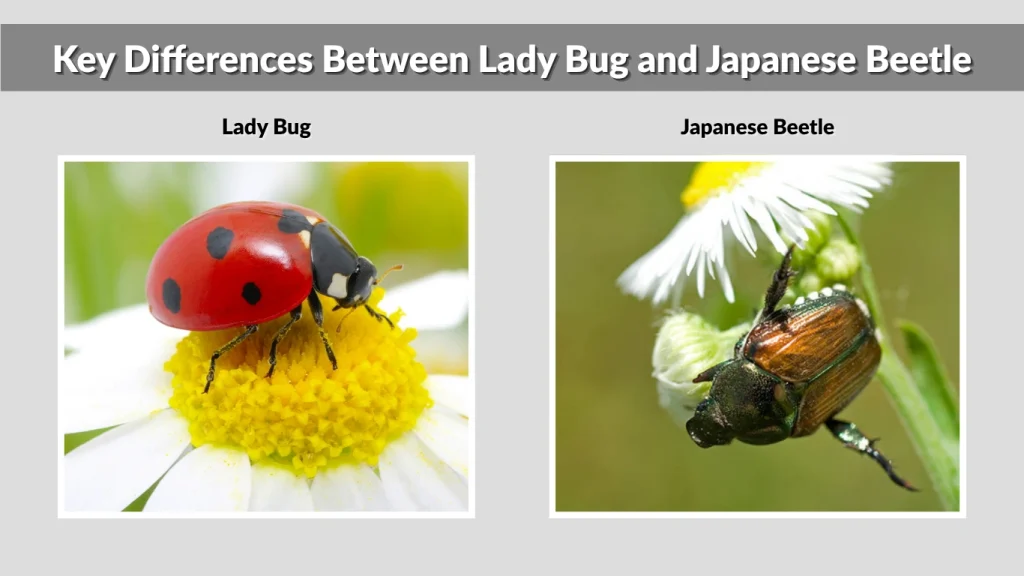
| Feature | Lady Bug | Japanese Beetle |
| Color | Bright red or orange with neat black spots | Metallic green with copper-brown wings |
| Shape | Small, round, and dome-shaped | Oval and larger in size |
| Diet | Eats aphids and garden pests | Feeds on plant leaves, flowers, and fruit |
| Behavior | Harmless and beneficial | Highly destructive and invasive |
Lady bugs are natural pest controllers, while Japanese beetles destroy over 300 plant species, including roses, grapes, and fruit trees.
Japanese Lady Beetle vs Lady Bug
The Japanese lady beetle (often called an Asian lady beetle) looks almost identical to a native lady bug but has key differences.
- Color tone: They’re usually orange or tan instead of bright red.
- Distinct mark: They have an “M” or “W”-shaped white marking on the area behind their head.
- Behavior: They emit a foul odor when disturbed and often gather inside homes during cooler months.
- Bites: Unlike native lady bugs, they can bite humans, though the bites are harmless.
Japanese lady beetles were originally introduced to the U.S. to control crop pests but soon became invasive and displaced native species.
Identification Tips
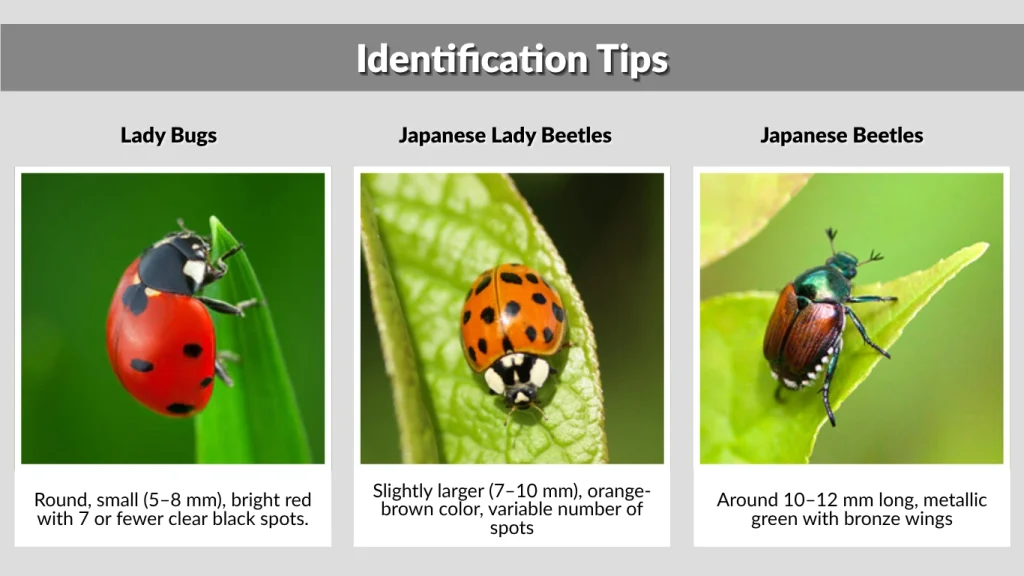
Here’s how to quickly recognize each insect:
- Lady Bugs: Round, small (5–8 mm), bright red with 7 or fewer clear black spots. Found mostly on plants with aphid infestations.
- Japanese Lady Beetles: Slightly larger (7–10 mm), orange-brown color, variable number of spots, white “M” behind the head, and tend to swarm in groups.
- Japanese Beetles: Around 10–12 mm long, metallic green with bronze wings, and commonly seen on rose bushes or fruit plants during summer.
These details help homeowners identify which insect they are dealing with—crucial for determining whether to protect or eliminate them.
Do Japanese Lady Beetles Bite?
Yes, Japanese lady beetles can bite humans. Their bites don’t pierce the skin deeply, but they can cause mild irritation or redness. The bite happens when the beetle feels trapped or threatened. Though not dangerous, repeated bites can be unpleasant, especially during infestations in homes where they cluster on walls and ceilings.
Are Japanese Lady Beetles Harmful or Invasive?
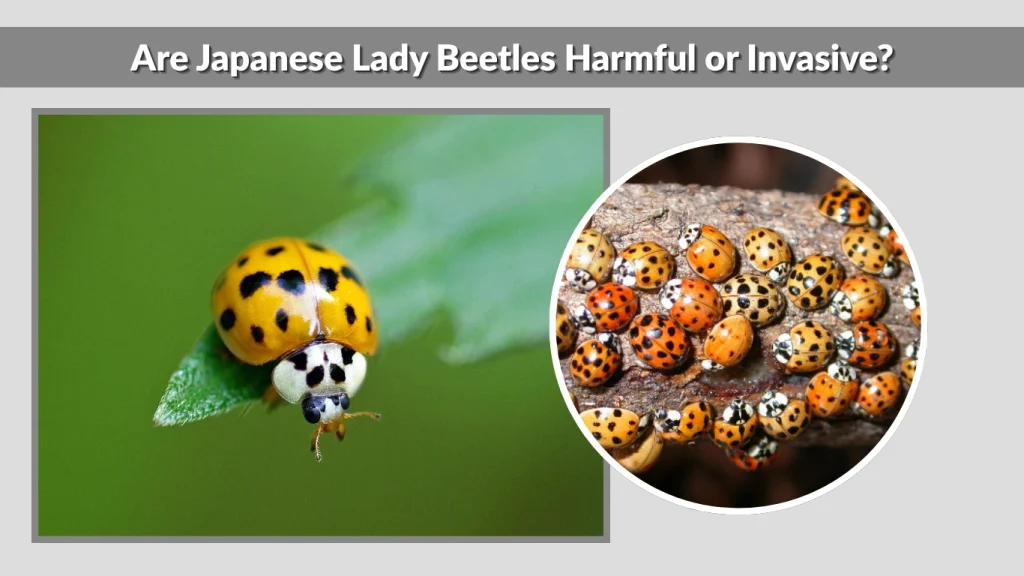
Japanese lady beetles are considered invasive in North America. Introduced in the 1900s to control agricultural pests, they quickly spread beyond intended areas. They now outcompete native lady bugs for food, invade homes during fall, and secrete a yellow fluid that stains fabrics and releases a foul odor. Some people also develop allergic reactions to this fluid or airborne particles from large infestations.
In addition, they pose a mild risk to pets. If swallowed, the beetles can irritate a dog’s mouth, leading to drooling or discomfort. Their ability to survive indoors through winter makes them especially hard to manage once they’ve settled in.
Japanese Beetles vs Lady Bugs in Gardens
When it comes to gardening, lady bugs are friends, while Japanese beetles are foes.
- Lady bugs feed on aphids, scale insects, and whiteflies—keeping plants healthy and reducing the need for pesticides.
- Japanese beetles, on the other hand, chew through leaves until only the veins remain—a condition known as “skeletonization.”
A heavy infestation can defoliate entire plants within days. They also release pheromones that attract more beetles, leading to rapid spread across gardens and farms. Recognizing which beetle you have is essential for protecting plants and maintaining natural pest control balance.
How to Get Rid of Japanese Lady Beetles
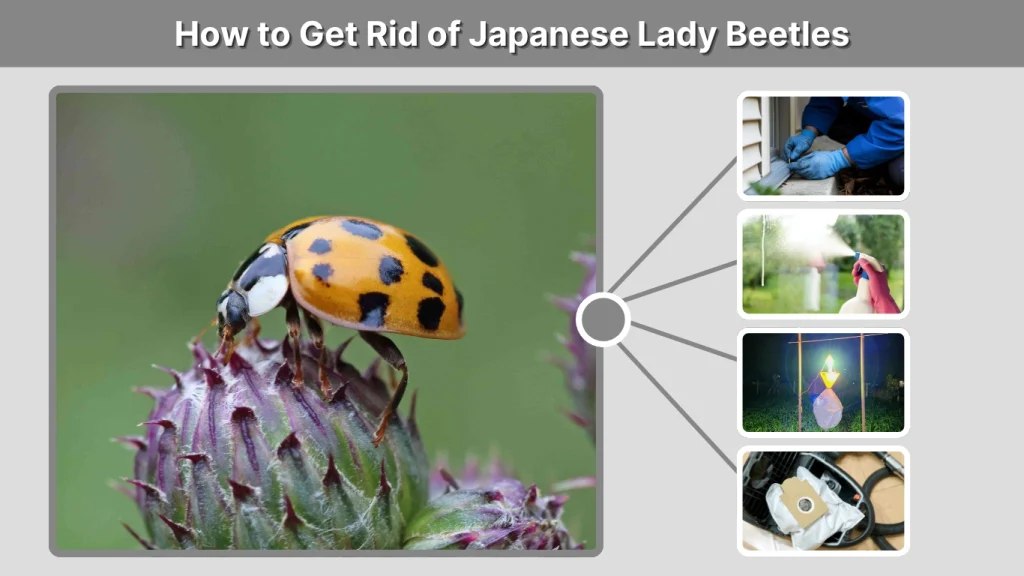
Japanese lady beetles can be removed using natural and preventive methods:
- Seal entry points: Close gaps around windows, vents, and door frames.
- Use vinegar sprays: A light vinegar-water solution can repel them from walls and ceilings.
- Set up light traps: Place a small light near sticky traps to attract and capture beetles at night.
- Vacuum safely: Use a hose vacuum to collect them, then empty the bag outside.
- Avoid crushing: They release yellow stains and odor when squashed.
These steps can reduce infestations without using harsh chemicals, keeping homes safe for both people and pets.
Natural Repellents and Traps
Essential oils like citronella, clove, peppermint, and lemon are effective deterrents against Japanese lady beetles. You can mix a few drops with water in a spray bottle and apply it to entry points or window frames.
For Japanese beetles, pheromone traps can be set up outdoors to lure and capture them before they reach plants. However, place these traps far from gardens to prevent attracting more beetles to your home area.
What Attracts Japanese Lady Beetles
Japanese lady beetles are naturally drawn to light-colored houses, warm walls, and sunny windows—especially during the fall season. They look for cracks, vents, and gaps to enter homes as they seek warm places to overwinter. Their attraction increases around sunset when temperatures drop. They’re also drawn to the scent of other beetles because they release pheromones signaling a safe nesting area, which is why infestations often occur in the same homes every year.
Japanese Lady Beetle and Pets
While Japanese lady beetles aren’t deadly to pets, they can cause irritation if accidentally ingested. Dogs sometimes lick or eat them out of curiosity, leading to mouth ulcers or drooling. The beetles secrete a bitter chemical defense fluid that can stick inside the mouth and throat. If your dog shows discomfort after exposure, gently clean its mouth and contact a veterinarian. Avoid using chemical insecticides indoors, as they pose greater risks than the beetles themselves.
Comparison: Japanese Lady Beetle vs Asian Lady Beetle
The Japanese lady beetle and Asian lady beetle are the same species—scientifically known as Harmonia axyridis. The terms are used interchangeably in different regions. Originally from Asia, they were introduced to control crop pests, but their rapid reproduction and adaptability turned them into a nuisance. Both share identical characteristics: orange coloration, the white “M” mark, biting behavior, and clustering indoors during winter. The only difference is the name preference used locally or in research materials.
FAQs
Are Japanese lady beetles poisonous?
Japanese lady beetles are not poisonous, but they release a yellowish defensive fluid that smells bad and can irritate skin or allergies. If crushed, this secretion may stain fabrics or walls. While harmless to most humans, sensitive individuals or pets may experience mild allergic symptoms when exposed to large infestations.
Do Japanese beetles eat lady bugs?
No, Japanese beetles feed exclusively on plant material such as leaves, flowers, and fruit. They don’t eat lady bugs or other insects. Lady bugs, on the other hand, prey on soft-bodied pests like aphids. Although they share similar names, their diets and roles in the environment are entirely different.
How did Japanese lady beetles get to the U.S.?
Japanese lady beetles were introduced to the United States in the early 1900s as a natural pest control method for crops. They were imported from Asia to help reduce aphid populations. Over time, they adapted too well, spread widely, and became invasive, often replacing native lady bug species and invading homes each fall.
Are lady bugs and Japanese beetles related?
No. Lady bugs belong to the Coccinellidae family, while Japanese beetles are part of the Scarabaeidae family. Their similarities are purely visual, as both are rounded and colorful. Lady bugs are beneficial insects, while Japanese beetles are plant-damaging pests. Understanding this distinction helps gardeners decide which insects to protect or remove.
How do I naturally repel Japanese lady beetles from my house?
You can keep Japanese lady beetles away using essential oil sprays (citronella, lemon, or peppermint), vinegar-water mixtures, and tight sealing around entry points. Place light traps in darker corners and keep outdoor lighting minimal at night. These natural repellents prevent infestations without using toxic chemicals, keeping homes safe for pets and children.
