
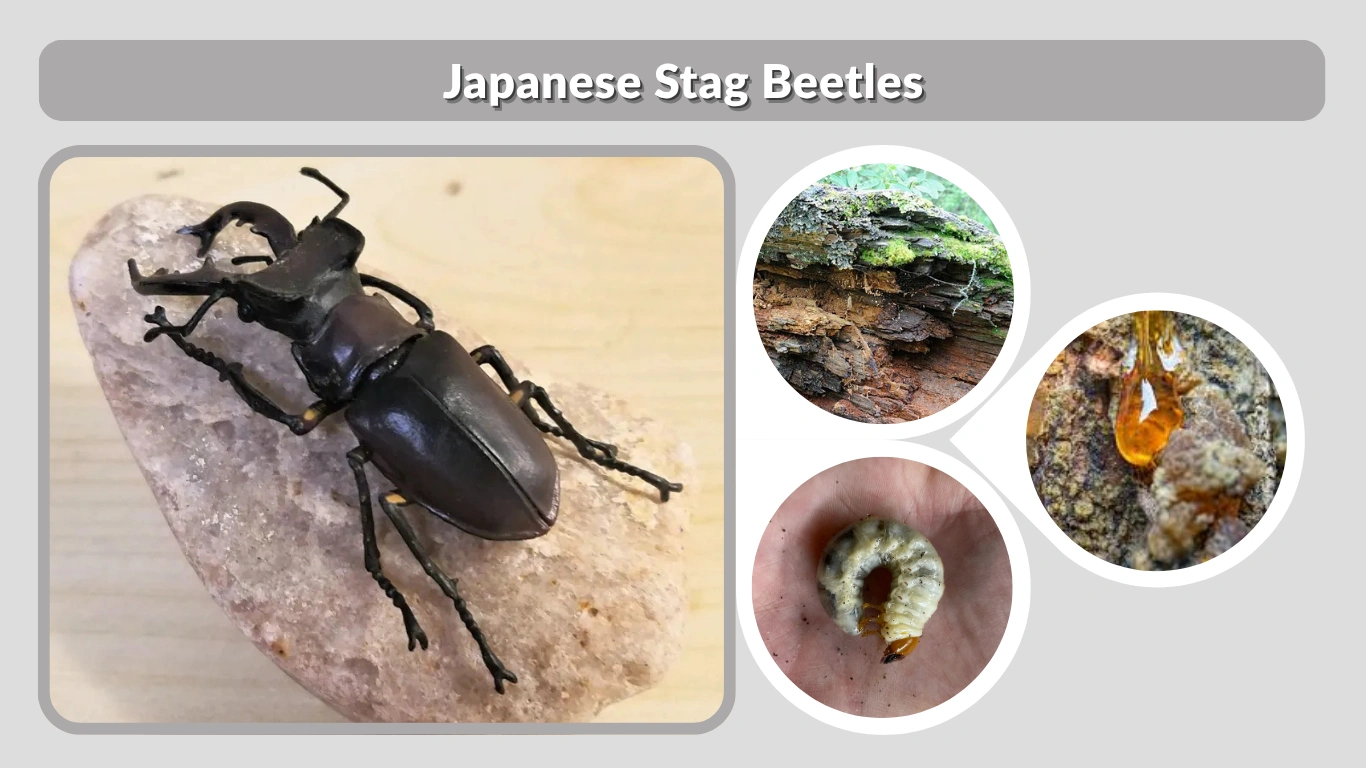
The Japanese stag beetle—known for its impressive mandibles and glossy armor—is one of Japan’s most iconic insects. Admired as a pet, a cultural symbol, and even a character in children’s battles and anime, this beetle remains beloved across Asia. Its gentle behavior, easy care requirements, and fascinating life cycle make it a standout species for both beginners and enthusiasts. This guide explores its species variations, life stages, lifespan, diet, enclosure needs, and cultural relevance.
What Is the Japanese Stag Beetle?
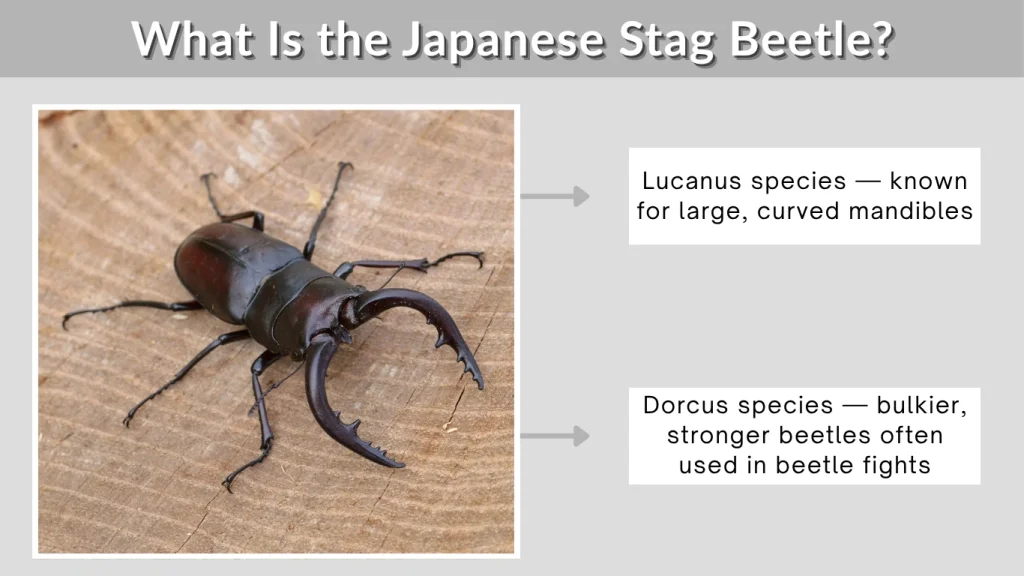
The Japanese stag beetle belongs to the Lucanidae family and is most famously represented by Lucanus maculifemoratus and several Dorcus species. These beetles are instantly recognizable by their strong jaws, shiny exoskeleton, and calm temperament. Unlike aggressive pest beetles, stag beetles are prized for their unique appearance and friendly behavior, making them popular in beetle-keeping communities around the world.
Scientific Name & Classification
Most Japanese stag beetles fall into two primary groups:
- Lucanus species — known for large, curved mandibles
- Dorcus species — bulkier, stronger beetles often used in beetle fights
Both groups share similar life cycles and care needs but differ in jaw shape and overall size.
Stag Beetle in Japanese (Japanese Names)
In Japan, stag beetles are called クワガタ (Kuwagata).
Male beetles with large jaws are often called Ō-kuwagata, while smaller species or females may be referred to simply as Kuwagata-mushi. These names appear heavily in Japanese media, toys, and cultural traditions.
Japanese Stag Beetle Species Overview
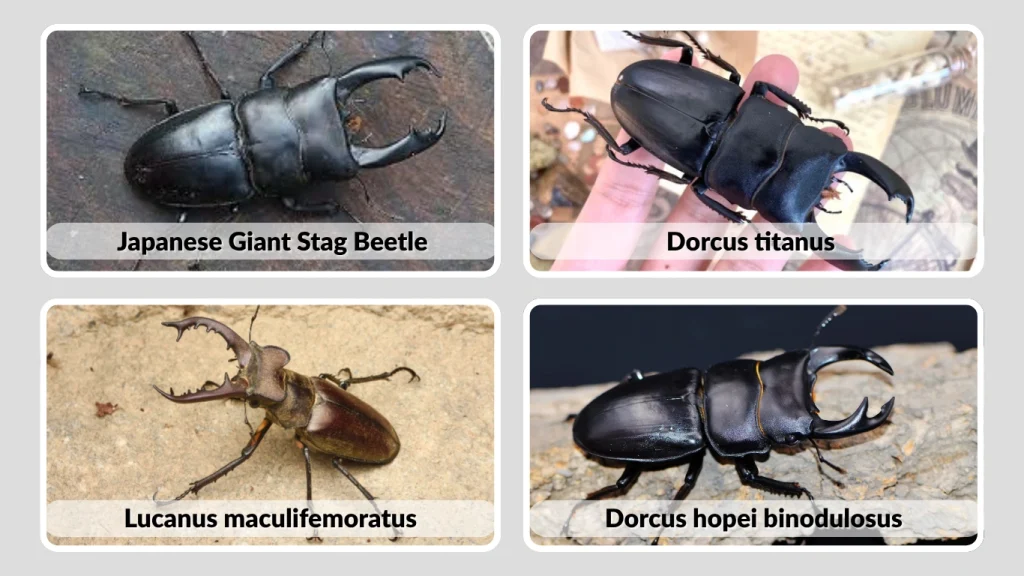
Japan hosts several well-known stag beetle species, each with unique characteristics.
Japanese Giant Stag Beetle
This large, impressive species is celebrated for long mandibles and robust build. Its striking appearance makes it a favorite in the pet trade and in beetle-themed artwork.
Pet-Trade Favorites in Japan
Commonly kept species include:
- Dorcus titanus (one of the strongest stag beetles)
- Lucanus maculifemoratus (classic Japanese stag beetle)
- Dorcus hopei binodulosus (prized for size and jaw strength)
Male vs Female Differences
Males have oversized mandibles and larger heads, while females are smaller, rounder, and have smoother dorsal plates. This dimorphism is essential for mating behavior and easy identification.
Life Cycle of the Japanese Stag Beetle
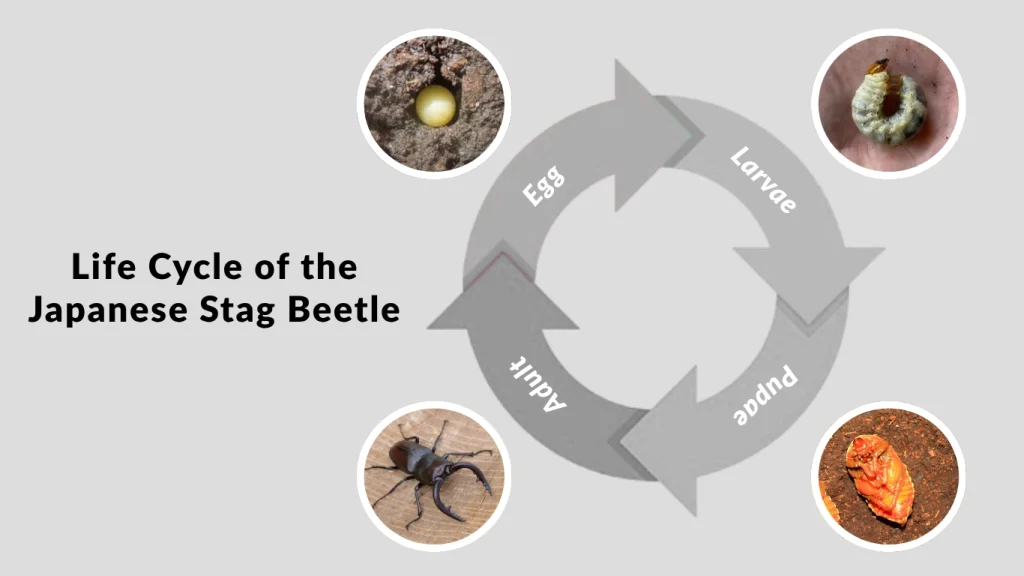
Egg Stage
The female lays eggs in soft, decaying wood or nutrient-rich substrate. Eggs are small, round, and typically hatch within a few weeks depending on temperature and humidity.
Larvae (Grub) Stage
The larval stage is the longest and most important part of development. Grubs feed on decomposing wood, growing through multiple instars.
Key traits include:
- Cream-colored, C-shaped body
- Strong head capsule for chewing
- Slow, steady growth over months or even years
Owners often keep larvae in deep substrate to encourage healthy development.
Pupa Stage
Once fully developed, the larva constructs a hard chamber and pupates. During this stage, the beetle transforms dramatically from grub to adult. Temperature stability is crucial here, as pupae are extremely delicate.
Adult Stage
After emerging from the pupal chamber, the stag beetle hardens for several days before becoming active. Adults feed on tree sap, beetle jelly, or fruits. Males display their mandibles during dominance contests, while females focus on burrowing and egg-laying.
Japanese Stag Beetle Lifespan
Japanese stag beetles typically live:
- Larvae: 8 months to 2 years
- Adults: 3 to 12 months depending on species and care
Captive conditions—especially proper substrate and consistent humidity—can significantly extend their lifespan.
Habitat & Enclosure Setup
Natural Habitat
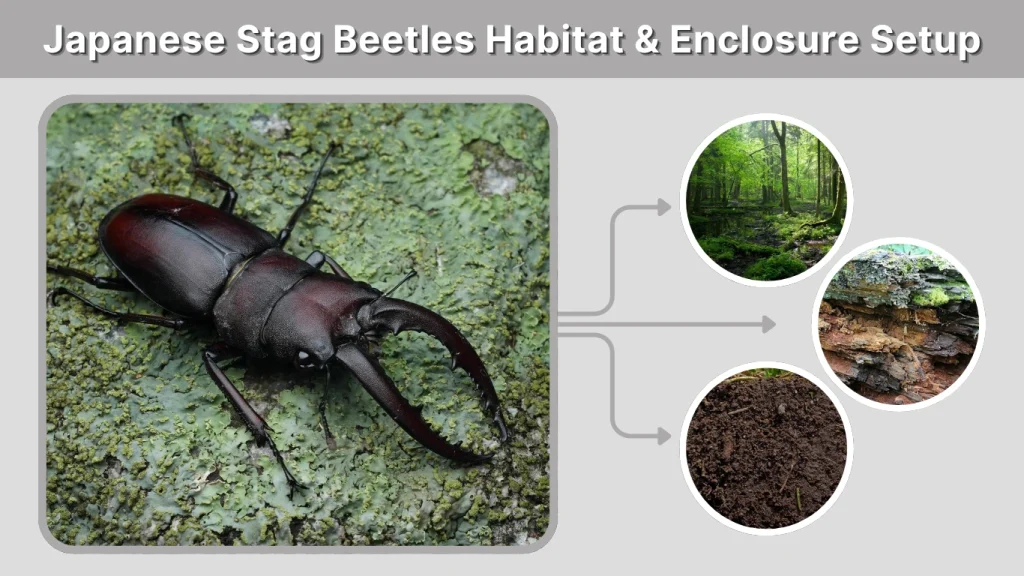
In Japan’s forests, stag beetles thrive in rotting logs, humid soil, and shaded woodland areas. They are most active at night and feed on tree sap sources like oak and beech.
Required Enclosure Setup (Including in Oregon or Similar Climates)
When keeping a Japanese stag beetle as a pet, the enclosure should include:
- 4–6 inches of decomposed wood substrate
- Stable humidity (60–80%)
- Hiding spots such as cork bark
- Proper ventilation with minimal light
A cool, stable environment is key—especially outside Japan, where climates differ significantly.
Japanese Stag Beetle Diet
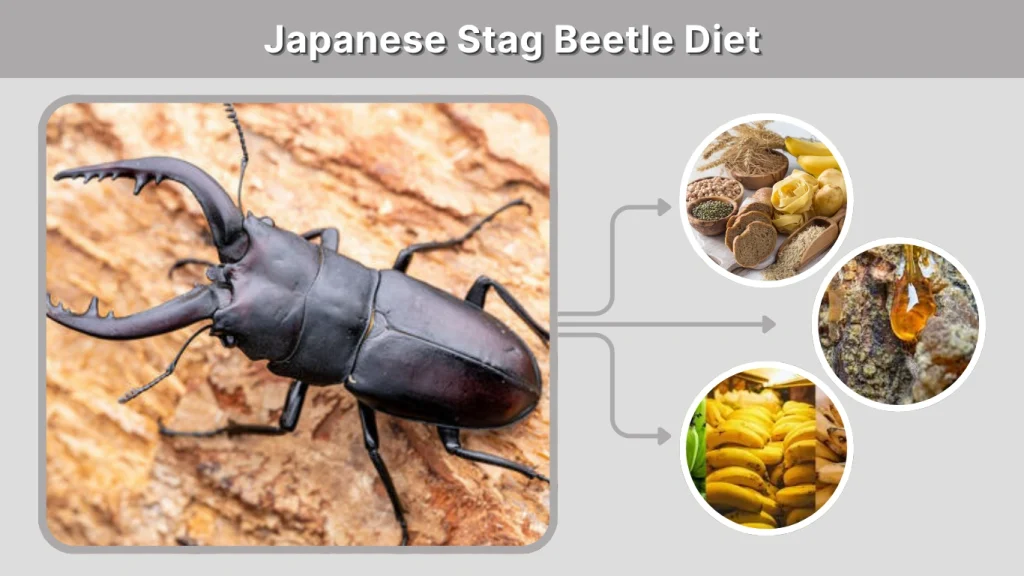
Adult Japanese stag beetles rely on soft, sugar-rich foods. In the wild, they feed primarily on tree sap, which provides energy for climbing, flying, and mating. In captivity, keepers commonly offer beetle jelly, a nutritious and clean alternative that supports hydration and longevity. Fresh fruits such as bananas, apples, and pears can also be provided, though they spoil faster and attract pests.
Larvae require a very different diet. They feed exclusively on decayed wood fibers, fermented substrate, or flake soil. Proper larval nutrition is essential because the size and strength of the adult beetle depend heavily on what the grub eats during this long developmental phase.
Japanese Stag Beetles as Pets
Japanese stag beetles are popular pets due to their gentle disposition and manageable care requirements. They do not bite aggressively unless provoked, making them suitable for beginners. Males are prized for their impressive mandibles, while females are valued for breeding.
When purchasing a Japanese stag beetle, it’s important to research local import laws, especially in Western regions such as the United States. Some species require permits, and others may be restricted. Reputable breeders often sell larvae, pupae, or adults during beetle season, along with care supplies like substrates and beetle jellies.
Beetle Battles & Japanese Culture
In Japan, stag beetles have deep cultural roots. They appear in traditional childhood games, regional folklore, and modern entertainment. Beetle fights—known locally as “Kuwagata Battles”—pit males against each other using their natural behavior of pushing and lifting rivals. While popular in Japanese media and toy lines, responsible owners avoid encouraging aggression as it can harm the beetles.
Art featuring stag beetles is widespread, ranging from kawaii illustrations to detailed traditional ink drawings. The iconic shape of the mandibles and shiny black exoskeleton makes them ideal subjects for artists. These insects also appear in beetle wrestling shows, collectible cards, and animated series, reinforcing their role in Japanese pop culture.
Japanese Stag Beetle vs Other Japanese Beetles
Stag beetles should not be confused with the Japanese beetle (Popillia japonica), a plant-damaging pest found in gardens across the world. Unlike the harmless stag beetle, the Japanese beetle feeds on leaves, flowers, and crops, with larvae that damage turf and roots.
The stag beetle is larger, darker, and equipped with powerful mandibles, while the Japanese beetle is small, metallic, and primarily a nuisance insect. Understanding the difference helps prevent confusion, especially in regions where both species may be present.
FAQs
How long do Japanese stag beetles live?
Japanese stag beetles typically live 8 months to 2 years as larvae and 3 to 12 months as adults. Their total lifespan varies by species, environment, and diet. Proper substrate, stable humidity, and high-quality food help adults live toward the longer end of their natural range.
What do Japanese stag beetles eat?
Adult stag beetles eat tree sap, beetle jelly, and soft fruits. Their larvae require fermented wood, flake soil, or decayed wood fiber. A nutrient-rich larval diet directly influences adult size, strength, and health.
What is the Japanese word for stag beetle?
The Japanese word for stag beetle is クワガタ (Kuwagata). It refers broadly to all stag beetle species in Japan and is commonly used in media, toys, and beetle-collecting culture.
Are Japanese stag beetles good pets?
Yes. They are gentle, low-maintenance, and safe to handle. They require simple enclosures, moderate humidity, and beetle jelly for feeding. Their calm nature makes them excellent for beginners and children interested in insect pets.
How do you care for Japanese stag beetle larvae?
Larvae need deep substrate, low disturbance, and nutritious decayed wood. Keep them in individual containers to avoid stress and ensure stable humidity. Proper larval care is crucial because it determines the adult beetle’s size and strength.
