
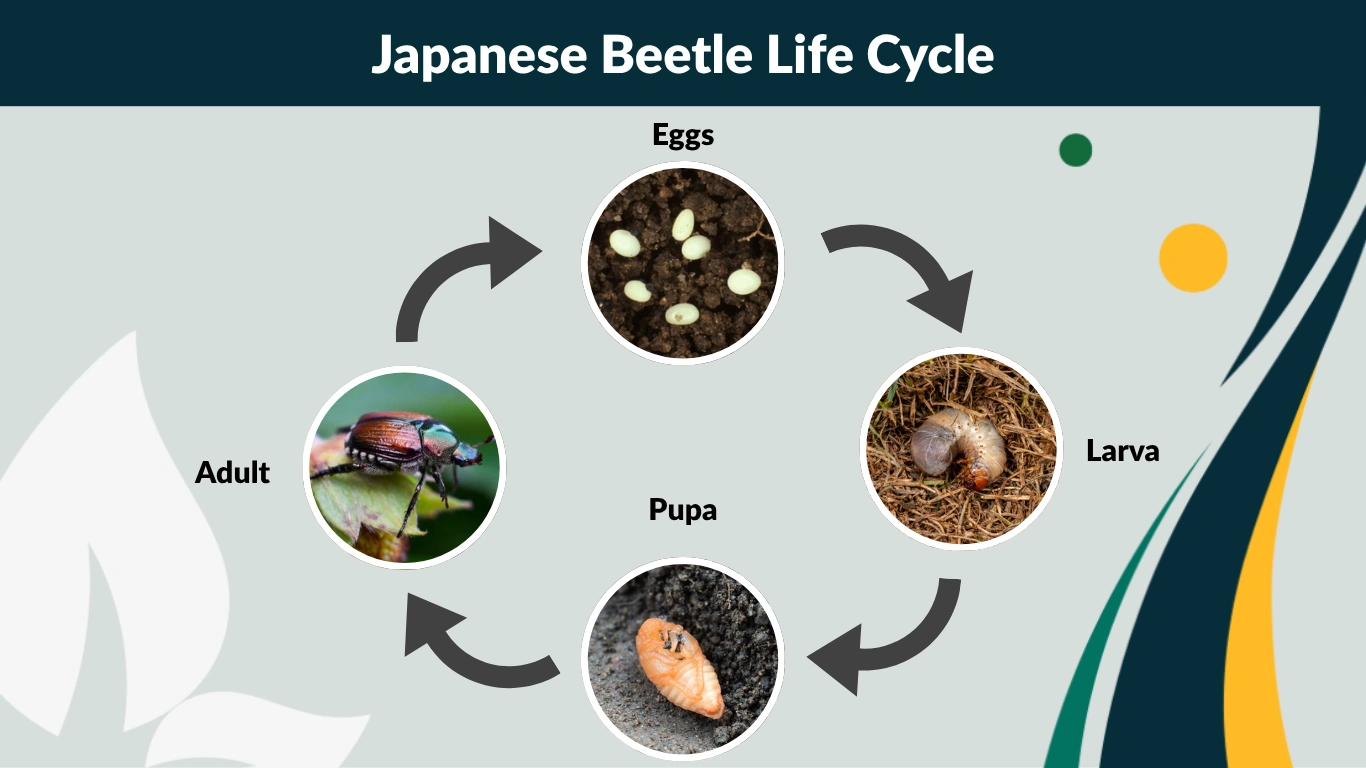
The Japanese beetle (Popillia japonica) is one of the most destructive garden and lawn pests across North America. Understanding its life cycle is the key to effective control. This insect undergoes a complete metamorphosis, transitioning through egg, larva (grub), pupa, and adult stages. Each phase has distinct behaviors, feeding habits, and vulnerabilities that determine the best time for treatment.
Overview of the Japanese Beetle Life Cycle
Japanese beetles complete their life cycle in about one year, though environmental conditions such as soil temperature and moisture can slightly alter the timeline. The cycle typically begins in mid-summer, when adult beetles lay eggs in the soil. After hatching, the larvae feed on grass roots before overwintering underground. They reemerge in spring, pupate, and transform into adults by early summer, restarting the cycle.
This predictable pattern makes it easier to plan control methods around their most active and vulnerable phases—particularly during the larval and egg stages.
Stage 1: Egg Stage
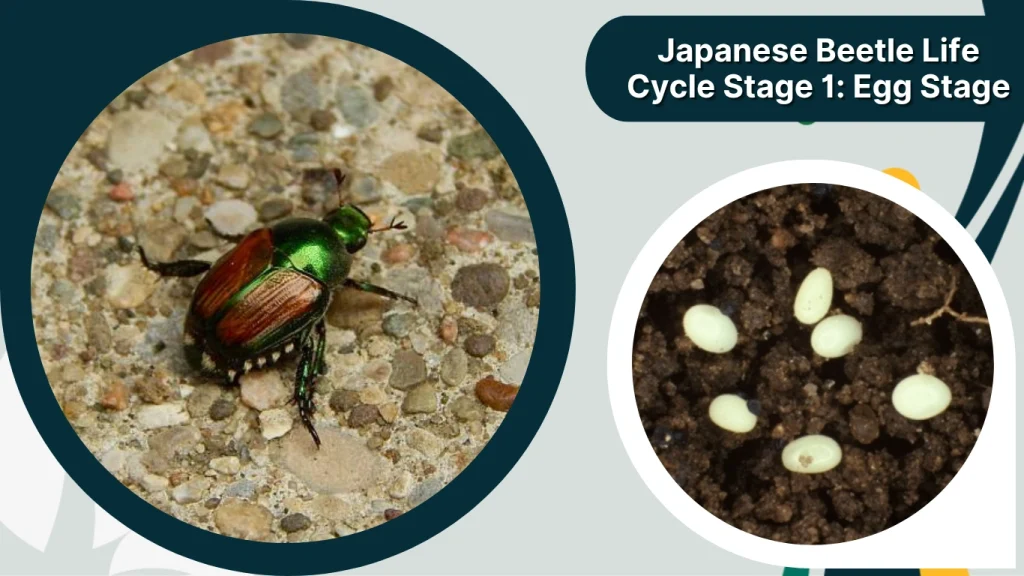
The life of a Japanese beetle begins in the egg stage, which occurs in mid to late summer. Female beetles lay 40 to 60 eggs during their lifetime, usually in moist, well-irrigated lawns or garden soils. The eggs are tiny, white, and oval-shaped, buried about two inches below the surface.
The eggs hatch in about two weeks, depending on soil temperature and moisture. Warm, moist soil encourages faster hatching, while dry or compacted soil can reduce egg survival rates. Managing soil moisture during this period is a practical strategy to minimize the number of larvae that emerge.
Stage 2: Larva (Grub) Stage
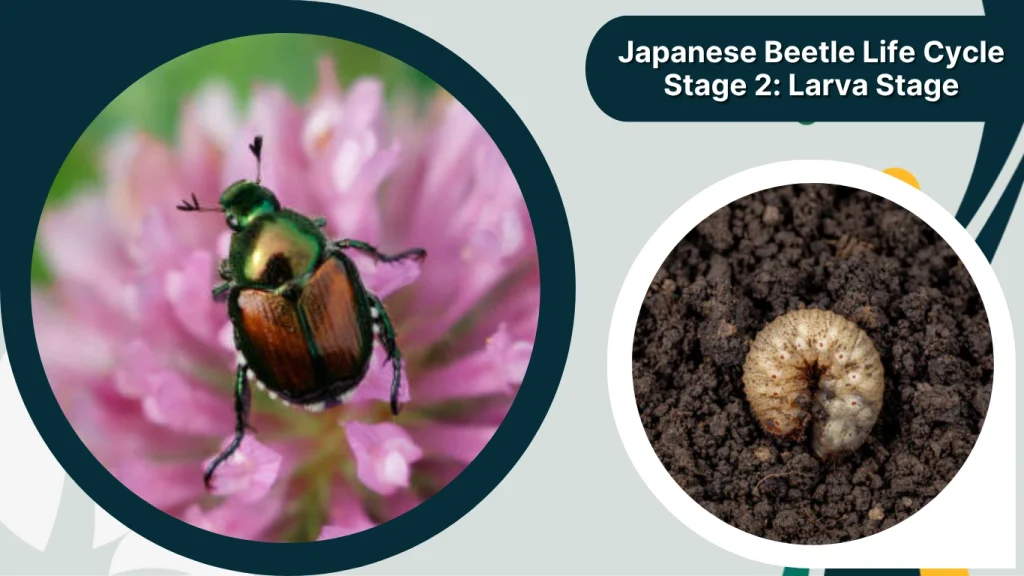
After hatching, the larvae—commonly called grubs—begin feeding on grass roots and organic matter. This is the most damaging stage of their life cycle. The grubs go through three developmental stages, known as instars, growing larger with each molt. During late summer and early fall, they feed aggressively near the surface, causing noticeable lawn damage such as brown or wilted patches.
As temperatures drop, the larvae burrow deeper into the soil to overwinter. In spring, they return to the upper soil layers to resume feeding before entering the pupal stage. Because the larvae spend most of their time underground, controlling them requires targeted soil treatments at specific times.
Identification of Japanese Beetle Grubs
Japanese beetle larvae are easily identified by their C-shaped bodies, white or cream color, and brown heads. They measure about ½ inch long when mature and feature a darkened rear end due to soil and digestive contents. The most reliable identifying feature is the V-shaped raster pattern—a group of fine hairs on the underside near the tail.
These characteristics distinguish them from other grub species like June beetle or chafer larvae. Observing these traits or comparing images and diagrams can confirm the presence of Japanese beetle grubs before applying any treatment.
Stage 3: Pupa Stage
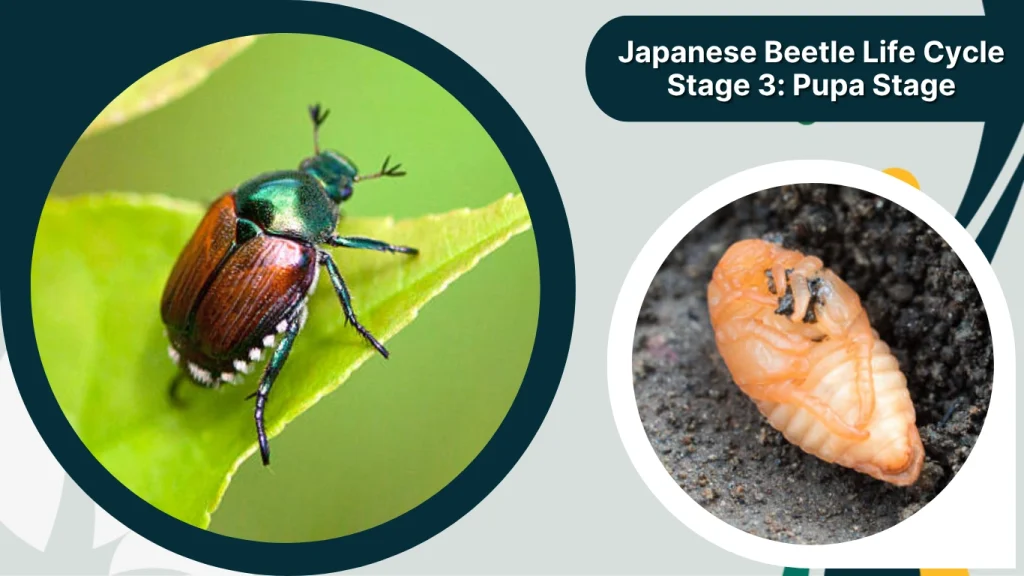
The pupal stage marks the beetle’s transformation from grub to adult. As soil temperatures rise in late spring, mature larvae create small earthen chambers and begin to pupate. This stage lasts about one to three weeks, during which the grub’s body reorganizes internally, forming wings, legs, and other adult features.
Pupae start off pale cream and gradually darken to brown as they near emergence. They remain underground during this entire process, making this stage less visible but crucial in timing adult control measures.
Stage 4: Adult Stage
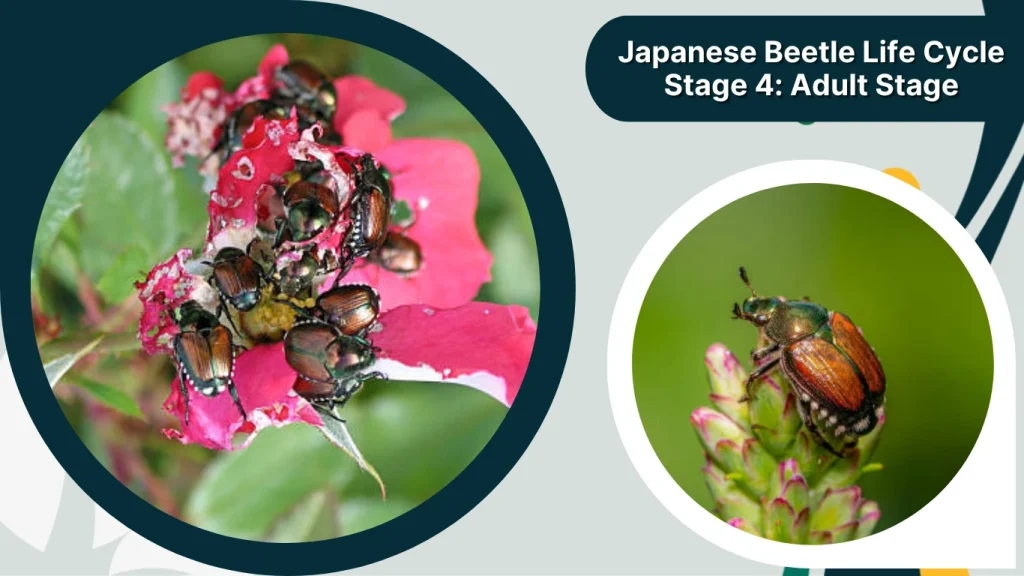
Adult Japanese beetles emerge from the soil in early to mid-summer, depending on climate and location. These beetles are about ½ inch long with metallic green bodies and bronze-colored wings. They feed on more than 300 plant species, including roses, grapes, linden trees, and fruit crops. Their feeding causes skeletonized leaves, leaving only the veins intact.
Adult beetles typically live 30 to 60 days. During this time, they feed, mate, and lay eggs to restart the cycle. Peak activity occurs in July, making this the most visible and destructive stage of their life cycle.
Duration and Seasonal Timing
The Japanese beetle’s life cycle generally follows a one-year pattern, though it can vary slightly by region. Here’s a simplified timeline:
- June–August: Adult beetles feed and lay eggs.
- July–September: Eggs hatch, and larvae feed on roots.
- October–April: Larvae overwinter deep in soil.
- May–June: Pupation and emergence as adults.
In northern regions like Wisconsin or Ontario, emergence may be delayed until late June. In southern states like Florida, the cycle may progress faster due to warmer temperatures and longer growing seasons.
Complete vs. Incomplete Life Cycle
The Japanese beetle undergoes a complete metamorphosis, meaning it passes through four distinct stages: egg, larva, pupa, and adult. Each stage differs in form and function. In contrast, insects with incomplete metamorphosis, such as grasshoppers, do not have a pupal stage. Understanding this distinction helps gardeners and pest managers apply the right control measures at each developmental stage.
Geographic Variations
Regional conditions strongly influence beetle development:
- Illinois, Missouri, and Ohio: The beetle follows a typical one-year life cycle with winter dormancy.
- Florida and southern states: Beetles may complete the cycle slightly faster due to mild winters.
- Ontario and northern areas: Cooler soil temperatures delay egg hatching and shorten adult feeding seasons.
Despite these differences, all regions experience peak adult activity during the warmest months of the year.
Control and Management by Stage
Egg and Larval Stage Control
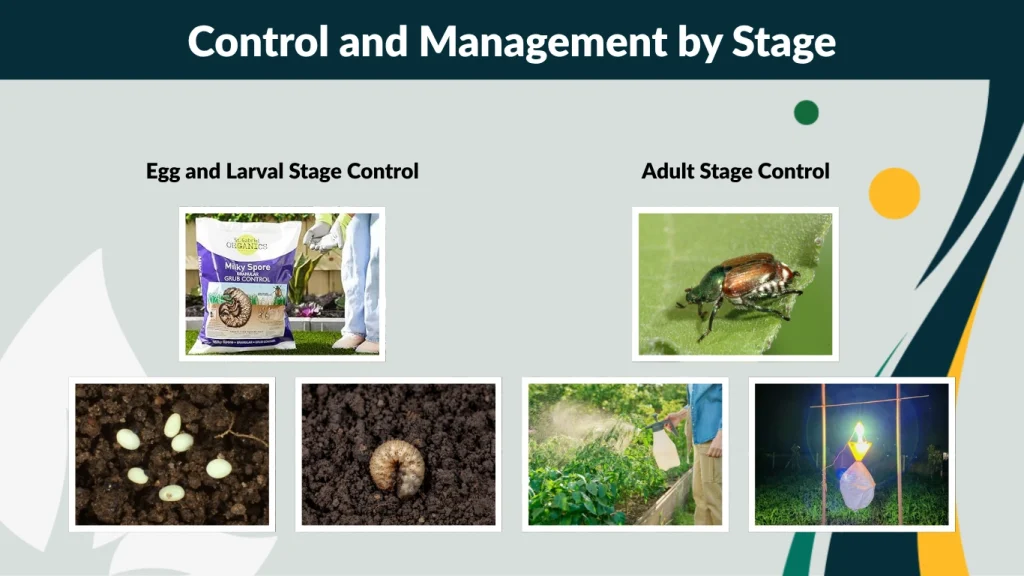
The most effective control methods target eggs and larvae. Applying beneficial nematodes or milky spore powder in late summer destroys developing grubs underground. Maintaining drier soil conditions during midsummer discourages egg-laying by adult females.
Aerating the lawn and avoiding excessive watering also help prevent larvae from thriving. These steps significantly reduce grub populations before they can overwinter.
Adult Stage Control
Adult beetles can be managed through handpicking, traps, or insecticidal sprays. Spraying neem oil on affected plants reduces feeding and egg production. For larger infestations, carbaryl or pyrethrin-based insecticides may be applied, but timing is critical—preferably when adults first appear in early summer.
Visual Guide: Life Cycle Diagram and Images
Including a life cycle diagram or set of images enhances understanding of each developmental stage. A labeled chart showing the transitions from egg to adult provides visual clarity, especially for gardeners identifying the pests in different seasons.
Key Environmental Factors
Several environmental conditions affect the Japanese beetle’s development:
- Temperature: Warm, humid weather accelerates egg hatching and larval growth.
- Soil Moisture: Moist soil favors egg survival, while drought can limit populations.
- Food Sources: Areas with lush turf or ornamental plants attract more adult beetles.
Understanding these factors allows for better timing of treatments and preventive lawn care practices.
Japanese Rhinoceros, Lady, and Stag Beetle Life Cycles (Comparison)
Although all belong to the beetle family, their life cycles differ in length and habitat:
- Japanese Rhinoceros Beetle: Has a longer larval period, often lasting up to one year in decaying wood.
- Japanese Lady Beetle: Completes its cycle in 3–4 weeks and preys on aphids.
- Japanese Stag Beetle: Spends several years as a larva inside rotting wood before maturing into an adult.
This comparison highlights how diverse beetle development can be, even among species from similar regions.
FAQs
What is the life cycle of a Japanese beetle?
The Japanese beetle’s life cycle includes four stages: egg, larva, pupa, and adult. It typically lasts one year, starting in midsummer with egg-laying and ending the following summer when new adults emerge.
How long does a Japanese beetle live?
Adult Japanese beetles live for about 30 to 60 days, depending on weather and food availability. During this period, they feed on plants, reproduce, and lay eggs to begin the next generation.
Do Japanese beetles have a complete life cycle?
Yes. Japanese beetles undergo complete metamorphosis, transitioning through four separate stages—egg, larva, pupa, and adult. Each stage has a unique form and purpose in the beetle’s development.
When do Japanese beetles lay eggs?
Females lay eggs from late June to early August, burying them a few inches deep in moist soil or turfgrass. The eggs hatch within two weeks, leading to the grub stage that causes root damage.
How can I control Japanese beetles throughout their life cycle?
Apply milky spore or beneficial nematodes to target larvae in summer. For adults, use traps, neem oil, or insecticides early in their feeding season. Keeping your lawn healthy and well-drained helps prevent re-infestation year after year.
