
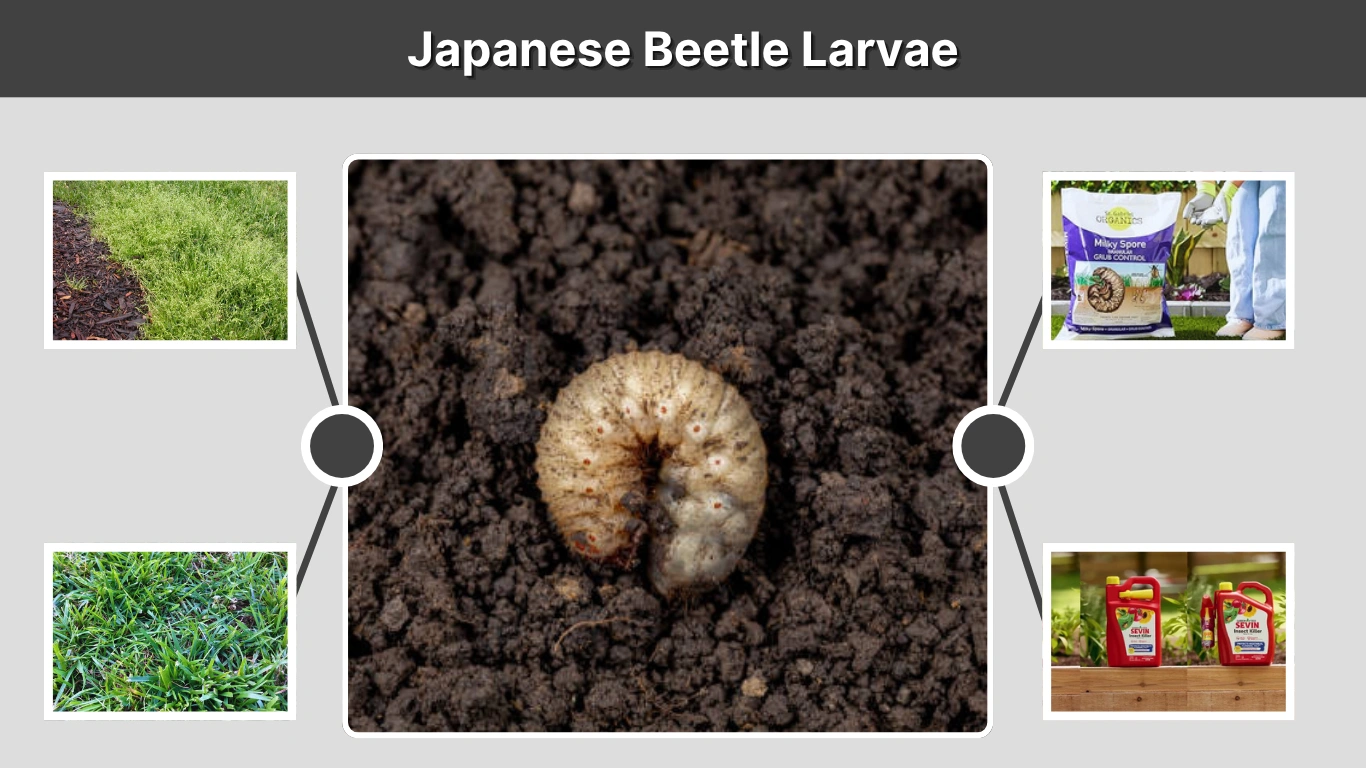
Japanese beetle larvae are one of the most destructive lawn pests found across North America. These white, C-shaped grubs live underground and feed on grass roots, causing large brown patches and turf damage. Early detection and proper treatment are essential to protect lawns, gardens, and ornamental plants from severe infestations.
Understanding Japanese Beetle Larvae
Japanese beetle larvae are the immature stage of the adult Japanese beetle (Popillia japonica). They spend most of their life underground, feeding on organic matter and grass roots. As they mature, these grubs develop into adult beetles that emerge in summer, feeding on over 300 plant species. Understanding their life cycle helps homeowners target the most vulnerable stage for control.
Identification and Appearance

What Do Japanese Beetle Larvae Look Like?
Japanese beetle larvae are easily recognized by their C-shaped bodies, creamy white color, and brown heads. They measure about ½ inch long when mature and have three pairs of tiny legs near the head. A distinct rastral pattern—a series of hairs arranged in a V-shape on their tail end—helps differentiate them from other grubs such as June bugs.
Japanese Beetle Larvae vs June Bug Larvae
Although both look similar, Japanese beetle larvae are smaller and have a unique raster pattern not found in June bug larvae. June bug grubs are typically larger, with a less defined rear-end marking. Japanese beetle larvae are more aggressive feeders and cause more extensive turf damage in a shorter period.
Life Cycle and Development Stages
The life cycle of the Japanese beetle consists of three main stages—egg, larva, and adult. Adult beetles lay eggs in midsummer, which hatch within two weeks. The larvae begin feeding on grass roots during late summer and continue growing through the fall. They then burrow deeper into the soil to overwinter. In spring, they return to the upper soil layer to feed again before pupating into adult beetles by early summer.
This cycle repeats annually, making late summer and early fall the best times to target larvae before they go dormant for winter.
Common Habitats and Feeding Behavior
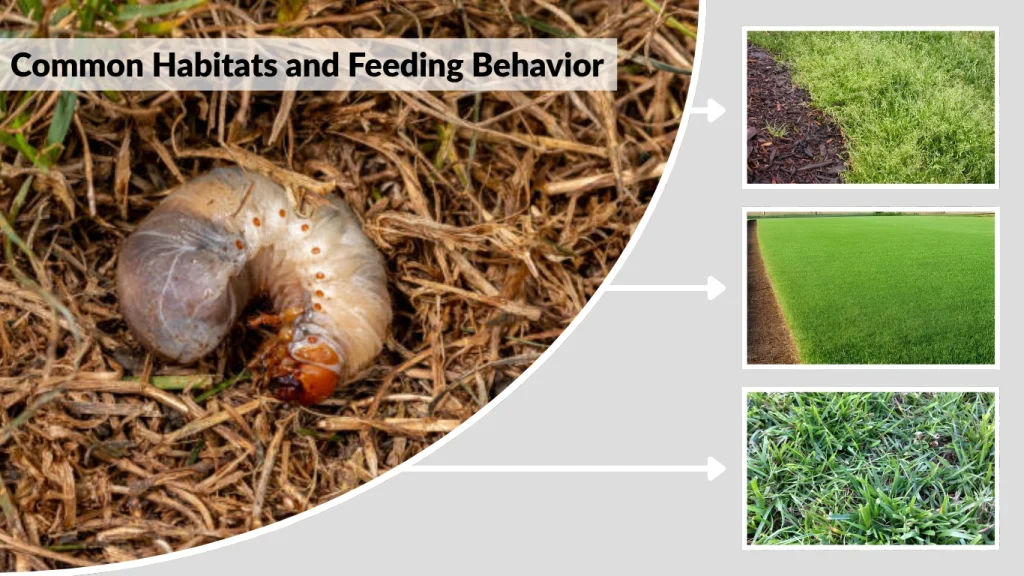
Japanese beetle larvae prefer moist, well-maintained lawns with abundant grass roots. They are often found 1–3 inches below the soil surface. The larvae feed primarily on the roots of turfgrasses like Kentucky bluegrass, ryegrass, and fescue. Their feeding causes grass to weaken and die, resulting in patchy brown areas that can be easily pulled up due to root damage.
Damage Caused by Japanese Beetle Larvae
The most noticeable damage from Japanese beetle larvae appears in late summer to early fall, when their feeding peaks. Grass begins to wilt, turn brown, and peel away like carpet. In severe infestations, entire lawns can die off, and wildlife like raccoons and skunks may dig up the turf in search of grubs, worsening the destruction.
In gardens, these larvae also attack ornamental plants and vegetable roots, causing stunted growth and nutrient deficiency.
Effective Control and Treatment Methods
Biological Controls
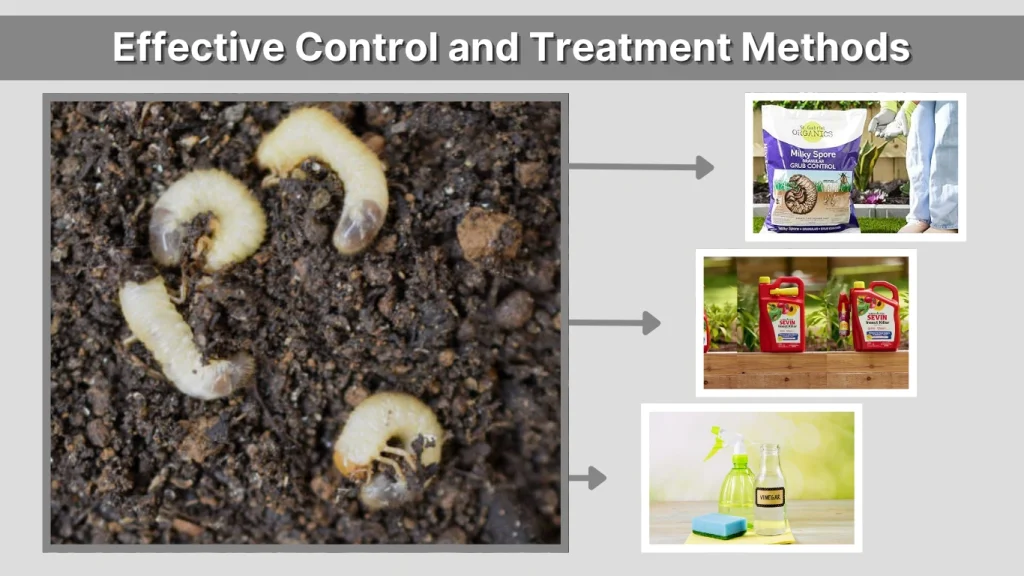
Natural options are highly effective and eco-friendly. Beneficial nematodes such as Heterorhabditis bacteriophora invade and kill larvae underground within days. Another long-term solution is milky spore disease (Paenibacillus popilliae), a soil bacterium that infects and kills Japanese beetle larvae, multiplying naturally over time to provide years of control.
Chemical Treatments
Insecticides like Sevin (carbaryl) or imidacloprid-based products can be used for quick results. These chemicals are best applied in late summer to early fall, when larvae are young and closer to the surface. Always water the treated area to help the insecticide penetrate the soil effectively.
Natural Remedies
Home remedies include vinegar sprays or the use of cedar chips, which repel grubs by altering soil scent. Encouraging natural predators like birds, skunks, and moles can also keep larvae populations under control without synthetic chemicals.
Seasonal Control Timing
The timing of control efforts is crucial for success. Late August through September is the most effective period since larvae are actively feeding near the surface. Spring treatments are possible but less effective because larvae are larger and harder to reach. Cold weather and freezing can kill some larvae, but many survive by burrowing deeper into the soil.
Prevention Tips
Maintaining a healthy lawn is the best long-term defense. Reduce watering during beetle egg-laying season to make your soil less attractive for laying eggs. Mow regularly, aerate the soil, and avoid over-fertilizing, as thick, moist turf attracts beetles. Choosing grub-resistant grass species can also help minimize infestations year after year.
Special Notes
Not all beetle larvae found in soil are pests. Japanese rhinoceros beetle larvae and stag beetle larvae, for instance, are beneficial decomposers rather than turf destroyers. Also, reports of Japanese beetle larvae in Miracle-Gro soil or Virginia creeper plants are often misidentifications. Always confirm using the raster pattern before treatment.
FAQs
What do Japanese beetle larvae look like?
Japanese beetle larvae are white, C-shaped grubs with brown heads and dark tails. They measure about half an inch long and feature a V-shaped raster pattern of hairs. This pattern is the key characteristic that separates them from other grub species.
How do you kill Japanese beetle larvae naturally?
The best natural methods include using beneficial nematodes, milky spore powder, or neem oil. Keeping lawns dry for short periods reduces egg survival, while attracting birds and skunks provides natural pest control through predation.
When should I treat my lawn for Japanese beetle larvae?
Treat lawns from late summer to early fall when larvae are small and active near the surface. This timing ensures higher success rates compared to spring treatments, where larvae are deeper and more mature.
Do freezing temperatures kill Japanese beetle larvae?
Severe, long-lasting freezes can kill some larvae, but many survive by digging deeper below the frost line. Relying solely on weather conditions is unreliable; it’s better to combine cultural and biological control methods for consistent results.
Are grubs always Japanese beetle larvae?
No, not all grubs are from Japanese beetles. Grubs may also come from June bugs, chafer beetles, or masked chafers. Japanese beetle larvae are distinct due to their smaller size and V-shaped raster pattern on the rear segment.
