
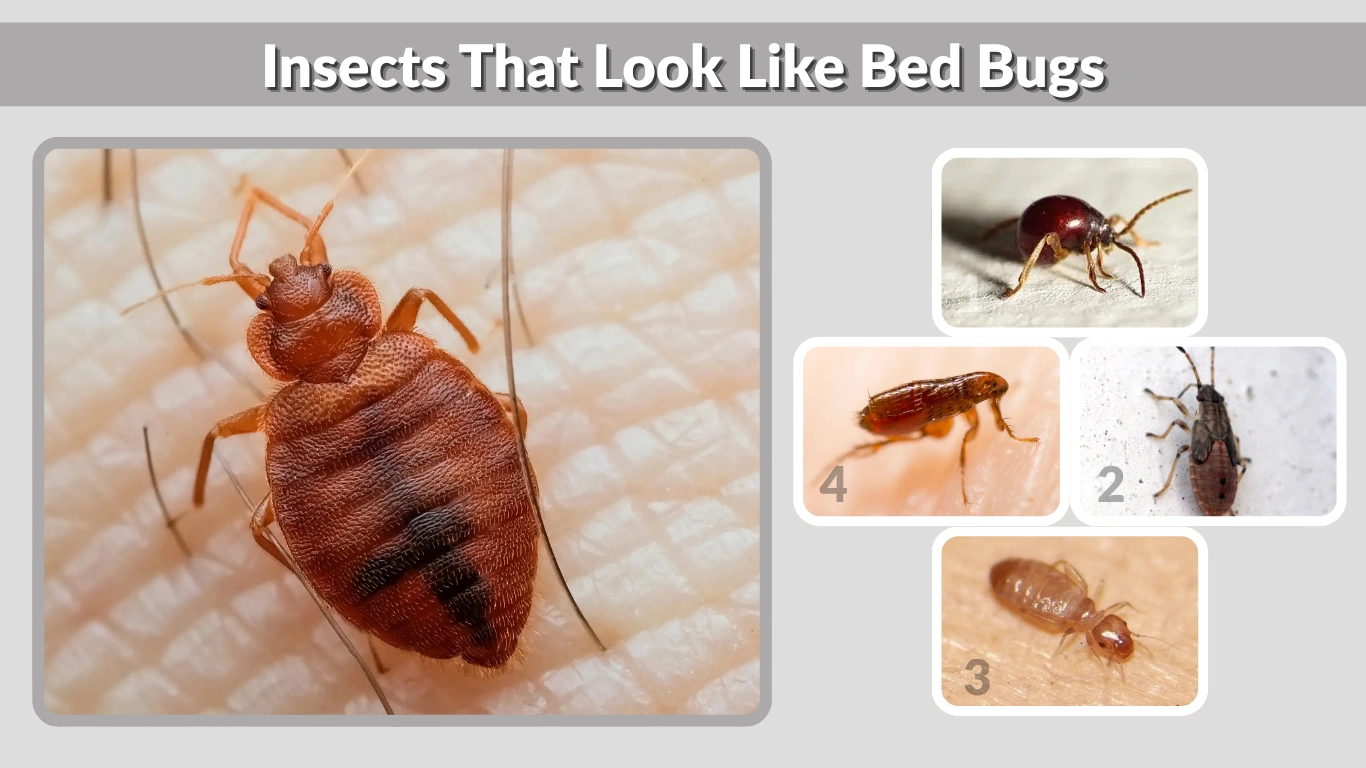
Finding a small, reddish-brown insect in your home can send anyone into panic mode, especially since bed bugs are notoriously difficult to eliminate. However, not every tiny bug that resembles a bed bug is actually one. Many harmless or unrelated insects share similar size, shape, and coloration, leading to frequent misidentification. Correctly identifying the insect you’ve found can save you time, money, and unnecessary stress.
This guide explores the most common insects that look like bed bugs, how to tell the difference, and why some insects produce similar-looking bites.
What Bed Bugs Actually Look Like
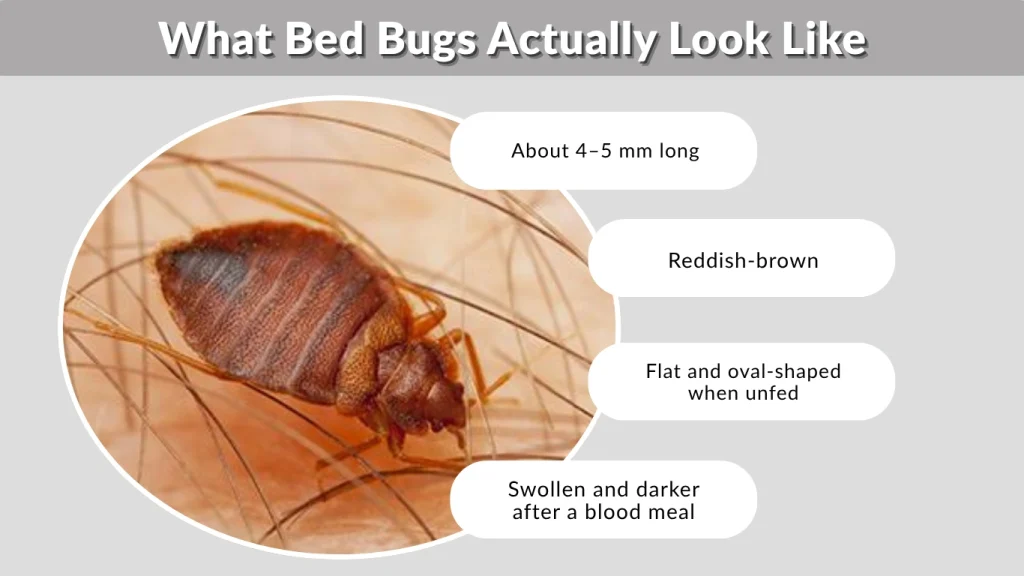
Before comparing look-alike insects, it’s important to understand a bed bug’s true appearance. Many misidentifications come from a lack of baseline knowledge about how bed bugs actually look and behave.
Size, Shape & Color
Adult bed bugs are:
- About 4–5 mm long
- Reddish-brown
- Flat and oval-shaped when unfed
- Swollen and darker after a blood meal
Bed bug nymphs (babies) are smaller, pale, and almost translucent until they feed. All stages have six legs and a distinct, segmented body.
How Bed Bugs Move & Behave
Despite common myths, bed bugs do not fly and do not jump. They crawl slowly and clumsily. Because they feed at night, they remain hidden during daylight hours. This secretive lifestyle is part of why infestations grow unnoticed for weeks.
Common Bed Bug Hiding Places
Typical hiding spots include:
- Mattress seams
- Box springs
- Bed frames
- Furniture crevices
- Behind baseboards
- Wall cracks
If you find an insect in these areas, it increases the chance you are dealing with bed bugs—but doesn’t guarantee it.
Insects Most Commonly Mistaken for Bed Bugs
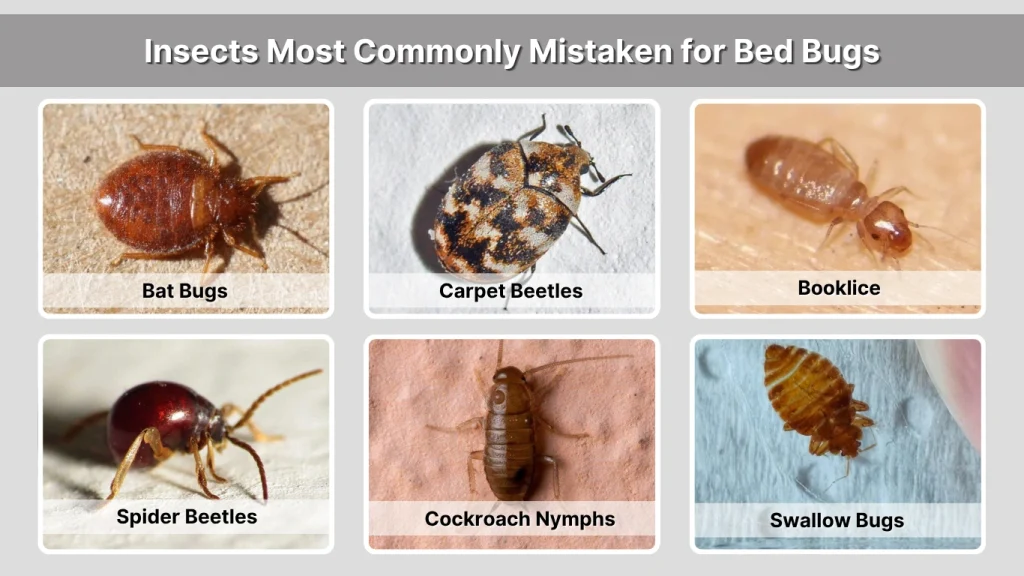
Dozens of insects resemble bed bugs, but a few cause confusion more often than others. Understanding their differences is the key to proper identification.
1. Bat Bugs
Bat bugs are the insect most frequently mistaken for bed bugs because they look nearly identical. Their main difference is longer fringe hairs on the upper body, which require close inspection or magnification to notice.
They usually live where bats nest—attics, chimneys, or walls—and may wander into living spaces after bats leave. While bat bugs can bite humans, they do not infest beds in the same way bed bugs do.
2. Carpet Beetles (Adults & Larvae)
Carpet beetles often trigger false bed bug alarms. Adults are rounder and have patterned, fuzzy bodies, while larvae are elongated and hairy.
They do not bite, but their tiny hairs can irritate skin, causing rashes that people mistake for bed bug bites. They live in carpets, clothing, and stored fabrics—not beds.
3. Booklice (Psocids)
Booklice are tiny, pale insects frequently seen in humid places like bathrooms, basements, or windowsills. Their translucent bodies resemble bed bug nymphs, especially at a glance.
Unlike bed bugs, booklice:
- Thrive in moisture
- Feed on mold
- Do not bite or infest bedding
They’re annoying but harmless.
4. Spider Beetles
Spider beetles look like bed bugs with a rounder, shiny body. Some species resemble tiny spiders—hence the name.
They may appear in dark areas such as cupboards or attics. Although similar in size to bed bugs, spider beetles have:
- Long antennae
- A pear-shaped body
- The ability to move faster
They don’t bite and are not related to bed bugs.
5. Cockroach Nymphs
Baby cockroaches can strongly resemble bed bugs. Newly hatched nymphs are small, brown, and oval-shaped. However, they move much faster and have a more cylindrical body.
Cockroach nymphs frequent kitchens, bathrooms, and areas near food or moisture—unlike bed bugs, which stay close to sleeping areas.
6. Swallow Bugs
Swallow bugs are close relatives of bed bugs and share almost the same shape and size. The key difference lies in their association with birds.
They are found around bird nests—especially swallows—and may enter homes when nests are removed or abandoned. Like bed bugs, they bite, but infestations remain near nesting sites rather than bedding.
7. Ticks
Ticks can be confused with bed bugs when they haven’t fed yet. Unfed ticks have a similar color and roundness, but the key difference is eight legs, compared to a bed bug’s six.
Ticks also attach to skin, which bed bugs never do. Once fed, ticks swell dramatically, making identification easy.
Winged Insects That Look Like Bed Bugs
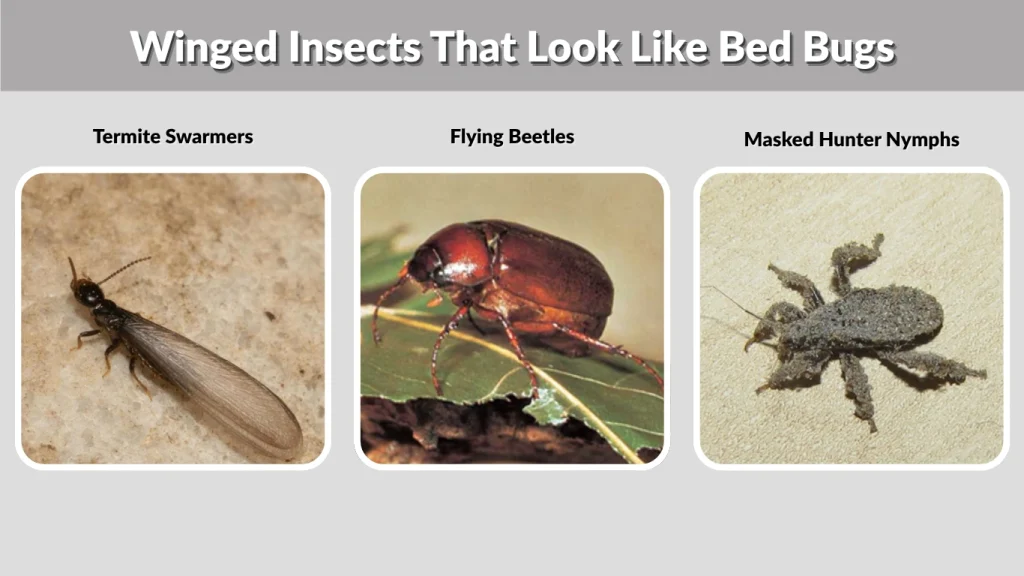
Bed bugs do not have functional wings and cannot fly, but some insects that look like them do.
Do Bed Bugs Have Wings?
Bed bugs technically have wing pads but no usable wings. If you see a similar-looking insect with wings, it’s not a bed bug.
Common Winged Look-Alikes
1. Termite Swarmers – Dark, elongated bodies with long wings.
2. Flying Beetles – Some small beetles resemble bed bugs in coloration.
3. Masked Hunter Nymphs – A predatory insect known as the “masked bed bug hunter”; its nymph stage looks similar to a bed bug but is usually dust-covered and more elongated.
Tiny or Small Insects That Look Like Bed Bug Nymphs
Because bed bug nymphs are extremely small and light-colored, many tiny insects can be confused with them. Early-stage nymphs are only 1–2 mm long and nearly transparent until they feed, making visual identification difficult.
Baby Cockroaches
Baby cockroaches, especially German cockroach nymphs, are a common source of confusion. At birth, they are:
- Small, round, and dark
- Similar in shape to bed bug nymphs
- Fast-moving
However, roach nymphs quickly develop a longer, more cylindrical shape and prefer areas with food or moisture, not mattresses or beds.
Early-Stage Carpet Beetle Larvae
Carpet beetle larvae often resemble small, fuzzy grains of rice. Homeowners sometimes mistake them for young bed bugs because they:
- Appear near beds (attracted to fabrics and fibers)
- Cause skin irritation from microscopic hairs
Nonetheless, they have a tapered, hairy body—not the smooth, segmented shape of a bed bug nymph.
Booklice and Other Moisture-Loving Insects
Booklice (psocids) are extremely tiny and pale, often appearing near moist walls or window frames. Their translucent bodies look like newly hatched bed bugs at a quick glance.
Key differences:
- Booklice are much smaller (1 mm)
- They move quickly
- They do not bite and are harmless
If you see tiny pale insects near bathrooms or kitchens, they’re far more likely to be booklice.
Outdoor Insects Resembling Bed Bugs
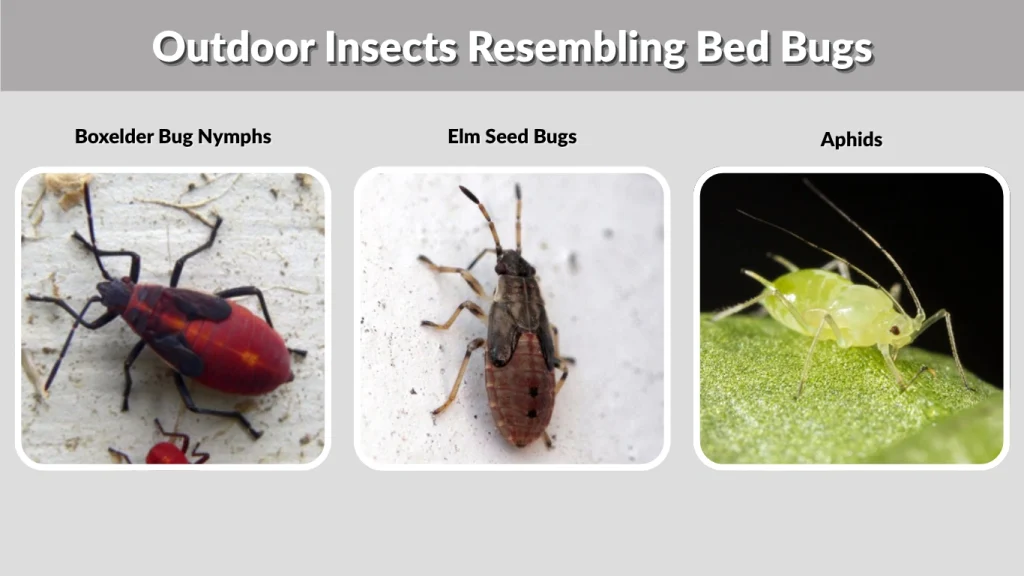
Some outdoor insects wander into homes and are easily mistaken for bed bugs, especially in warm seasons.
Boxelder Bug Nymphs
Boxelder bug nymphs are small, bright red, and oval-shaped. Although more colorful, their shape and clustering behavior confuse homeowners.
Unlike bed bugs, they:
- Live outdoors
- Feed on trees
- Don’t bite humans
They mainly enter homes during seasonal changes.
Elm Seed Bugs
Elm seed bugs are small, flat, and reddish-brown—similar to bed bugs in size and color. They often invade buildings in large numbers.
However, they have distinct wing patterns and release an odor when crushed.
Aphids (Certain Varieties)
Some aphids, especially brown or red ones, may resemble bed bug nymphs. But aphids:
- Are soft-bodied
- Usually remain on plants
- Have cornicles (tiny “exhaust pipes”) on their backs
If you find the bug on houseplants, it’s almost never a bed bug.
Insect Bites That Look Like Bed Bug Bites
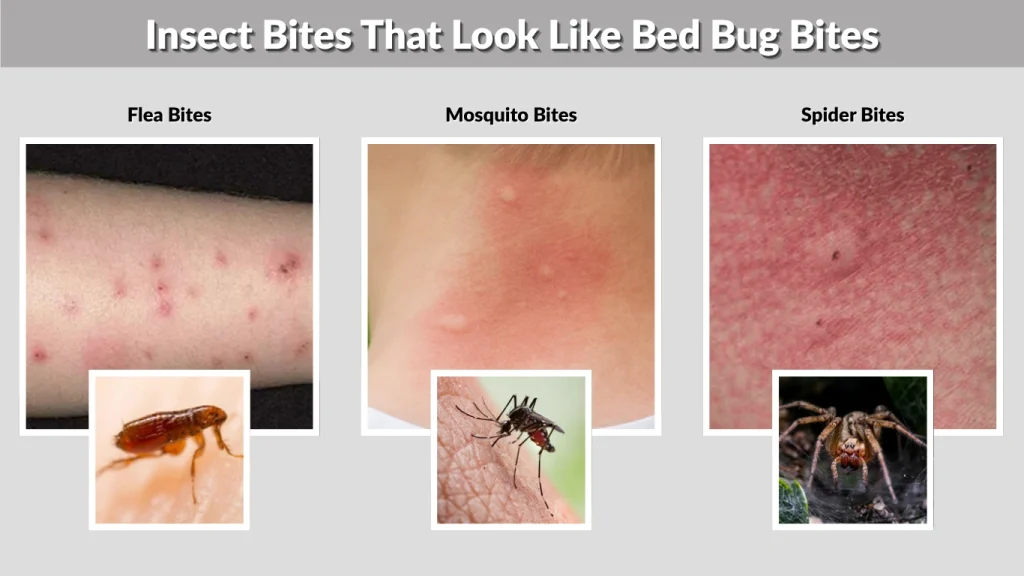
Sometimes people don’t see insects at all—they see bites and assume bed bugs. But many insects produce very similar skin reactions.
Flea Bites
Fleas leave itchy red bumps, often in clusters or lines, especially around the ankles. Many people mistake flea bites for bed bug bites because they:
- Appear in multiples
- Are intensely itchy
- Swell or redden quickly
If you have pets, flea bites are far more likely.
Mosquito Bites
Mosquito bites can resemble bed bug welts, especially when they appear overnight. Differences include:
- Mosquito bites are more raised
- Bed bug bites often appear in “breakfast, lunch, dinner” lines
- Mosquitoes usually bite exposed areas outdoors
Mite or Chigger Bites
Chiggers cause clusters of tiny red bumps that look nearly identical to bed bug bites. The key clue is location—chigger bites commonly appear after being outdoors in grassy or wooded areas.
Spider Bites
Spider bites are usually singular but may swell dramatically, mimicking a severe bed bug bite. They tend to be more painful, whereas bed bug bites are primarily itchy.
How to Tell the Difference Between Bed Bugs and Look-Alike Insects
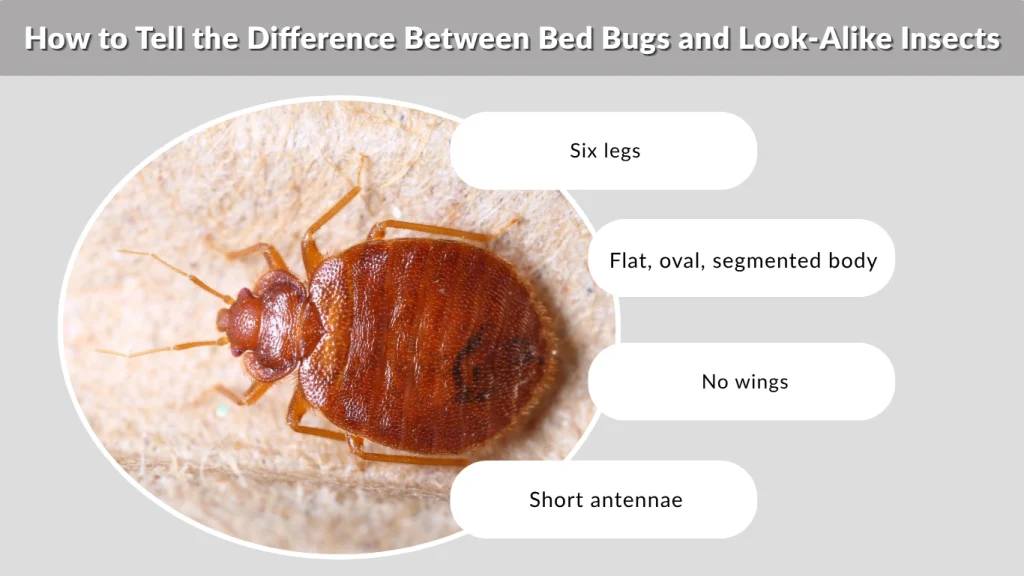
Accurate identification requires more than a quick glance. Paying attention to behavior, body shape, and hiding locations can help distinguish a bed bug from an imposter.
Body Structure & Segmentation
Identifying features of true bed bugs:
- Six legs
- Flat, oval, segmented body
- No wings
- Short antennae
Look-alikes such as ticks have eight legs, while beetles have hard, rounded shells.
Movement & Behavior Clues
- Bed bugs move slowly
- Cockroach nymphs and beetles move fast
- Booklice dart quickly in humid spots
- Ticks crawl but do not live in beds
Behavior often reveals the insect faster than appearance.
Where You Found the Insect
Location is a major identification clue:
- On bed or mattress → bed bug or bat bug
- In bathroom or kitchen → booklice or cockroach nymphs
- On carpets or clothing → carpet beetles
- Near birds or nests → swallow bugs
- On pets → fleas or ticks
Bed bugs rarely roam far from sleeping areas.
Visual Identification Tips (With Photo Suggestions)
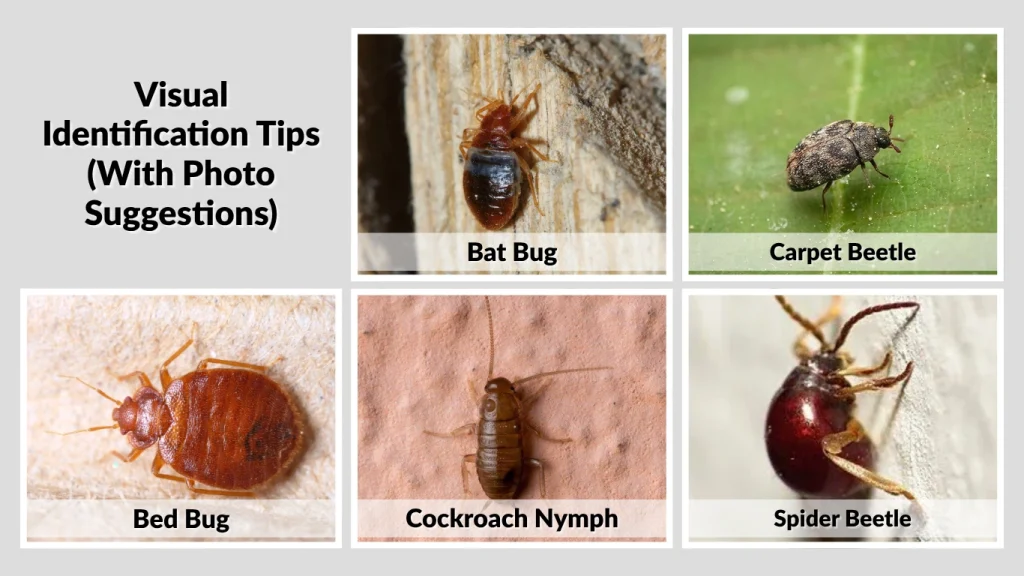
Even without pictures here, you can prepare to add them when publishing.
Bed Bug vs Bat Bug
Nearly identical, but bat bugs have more hair. Usually found near attics or chimneys.
Bed Bug vs Carpet Beetle
Carpet beetles are rounder and hairy, while bed bugs are flat and smooth.
Bed Bug vs Cockroach Nymph
Cockroach nymphs are more cylindrical and move very fast.
Bed Bug vs Spider Beetle
Spider beetles are shinier and have a more bulbous abdomen.
Why Proper Identification Is Essential
Identifying the insect correctly helps avoid unnecessary panic and wasted money.
Avoiding Wrong Treatments
Bed bug treatments won’t eliminate carpet beetles or booklice. Misidentification can lead to ineffective DIY methods and ongoing frustration.
Saving Money & Time
Professional treatments are expensive. Knowing the exact insect prevents paying for pest control you don’t need.
Reducing Anxiety
Mistaking harmless insects for bed bugs is extremely common. Proper identification brings peace of mind.
What To Do If You’re Not Sure What Insect You Found
Capture the Insect Safely
Place it in a jar, clear tape, or plastic bag for examination.
Examine Using a Magnifier or Phone Camera
Zoom in to identify:
- Leg count
- Body shape
- Wing presence
H3: When To Call a Professional
Call a pest expert if:
- You find multiple bugs
- You notice bites
- You cannot confidently identify the insect
FAQs
What bugs are most commonly mistaken for bed bugs?
The most common bed bug look-alikes include carpet beetles, bat bugs, booklice, spider beetles, cockroach nymphs, and swallow bugs. These insects share similar shapes or colors but differ in behavior, habitats, and whether they bite. Proper identification prevents unnecessary bed bug treatments.
How can I tell if it’s a bed bug or something else?
Bed bugs have flat, oval bodies, six legs, short antennae, and no wings. They move slowly and hide near beds. If the insect has wings, moves fast, has a rounder body, or appears in kitchens or bathrooms, it’s likely a different insect such as a beetle or roach nymph.
Are there insects that look like bed bugs but don’t bite?
Yes. Carpet beetles, booklice, and spider beetles look similar but do not bite. Carpet beetles may cause skin irritation from their hairs, but they cannot feed on blood. Identifying whether the insect bites helps separate true bed bugs from harmless look-alikes.
Which insects create bites that look like bed bug bites?
Fleas, mosquitoes, mites, chiggers, and some spiders can produce red, itchy welts similar to bed bug bites. Fleas typically bite ankles, while bed bugs bite upper body areas. Bite appearance alone isn’t reliable—identifying the insect is important for proper treatment.
Should I call a professional if I can’t identify the insect?
Yes. If you find multiple insects, notice unexplained bites, or cannot confirm what the insect is, consulting a pest control professional is recommended. Misidentifying insects can lead to wasted money on the wrong treatments or allow a real infestation to grow unnoticed.
